Japan Immigration Procedures: Arrival, Registration & Departure

Japan immigration procedures do not end with a visa or the inspection at the airport. The steps that apply to you depend on your nationality, purpose of travel, authorized status, and whether you will be a short-term visitor or a resident. This guide follows the practical timeline from preparation before departure to arrival, local registration, reporting during a stay, and permanent departure. It also explains the Japan arrival card, Visit Japan Web, residence cards, and the main authorities responsible for each procedure.
Which Japan Immigration Procedures Apply to You?
The first step is to identify your administrative category. A tourist, a business visitor, an exchange student, and an employee may all enter Japan as foreign nationals, but their continuing duties can be very different. Do not classify yourself only by the number of days you expect to stay. The status of residence, landing permission, purpose of travel, and official conditions are also important.
Short-Term Visitors and Mid- to Long-Term Residents
A short-term visitor normally enters for tourism, business meetings, visiting relatives, or another temporary purpose. A short-term visitor generally does not receive a residence card and does not enter the resident registration system at a municipal office. The traveler must still complete immigration and customs procedures and must leave, or otherwise obtain lawful permission, by the end of the authorized stay.
An eligible mid- to long-term resident is a foreign national who is permitted to reside in Japan under a status of residence for a continuing purpose such as study, employment, family residence, or another recognized activity. This category normally involves a residence card, address registration with a municipality, connection to the Basic Resident Registration system, and additional reporting duties when relevant personal or organizational information changes.
| Traveler category | Main arrival documents | After-arrival administration |
|---|---|---|
| Short-term visitor | Passport, applicable visa or visa-exempt basis, and arrival information | Usually no residence card or municipal resident registration; follow the authorized stay and departure rules |
| Eligible mid- to long-term resident | Passport, status-related documents, and landing permission | Residence card, municipal address registration, resident record, and applicable immigration notifications |
There are categories and individual circumstances that do not fit neatly into a simple table. For example, the same broad purpose may involve different requirements depending on the status of residence or the permission granted at entry. Before departure, confirm your nationality, purpose of travel, status or visa basis, and authorized period through the relevant Japanese embassy, consulate, Immigration Services Agency information, or another official authority.
Visa and Status of Residence Are Not the Same as Administrative Procedures
A visa and a status of residence serve different roles. In general, a visa is connected with a request to travel to Japan and seek landing permission, while the status and period of stay permitted at entry control what the person may do and how long the person may remain. A visa-exempt traveler also has an immigration status and an authorized period after landing, even though no visa was obtained before travel.
This article is about administrative procedures rather than how to obtain a visa. It does not explain eligibility for a Certificate of Eligibility, a particular work or study status, a change of status, or an extension of the period of stay. Those matters must be handled through current consular or Immigration Services Agency guidance. Registering an address or completing an online form cannot correct an unsuitable, expired, or otherwise invalid immigration status.
A Timeline of the Main Steps
Most travelers can understand the process through five stages. The exact tasks depend on the category identified above.
- Before departure: confirm the basis for entry, prepare consistent travel information, and use Visit Japan Web if its current instructions are appropriate for your trip.
- At arrival: complete immigration inspection, receive or confirm landing permission, complete customs procedures, and collect a residence card if you are eligible to receive one at that location.
- After settling: an eligible resident registers the first address with the responsible city, ward, town, or village office, generally within the applicable 14-day period.
- During the stay: report applicable changes to address, school, employment, or an accepting organization through the correct municipal or immigration channel.
- At departure: distinguish a temporary trip from a permanent move, complete the relevant municipal and status-related tasks, and leave before the authorized period ends.
Use this decision path: if you are visiting temporarily, concentrate on entry information, customs, and the authorized departure date; if you will live in Japan, prepare for a residence card and local address registration; if you are a student or worker, ask whether your status creates accepting-organization notifications; if you change address or leave permanently, contact the relevant municipal office as well as any immigration or organization contact that applies.
Before Departure: Prepare for Japan Entry Procedures
Good preparation reduces inconsistencies at the border. Immigration officers and customs officials handle different questions, so keep your passport, travel details, accommodation information, and status-related documents easy to access. Online registration can organize information, but it does not replace the legal conditions for entry.
Visit Japan Web and Online Arrival Registration
Digital Agency Services describes Visit Japan Web as a web service that can be used for immigration clearance and customs declaration. Travelers can use the service to enter trip and arrival information and follow the digital workflow shown for their circumstances. It is the current official service name commonly associated with Japan online immigration registration and customs preparation.
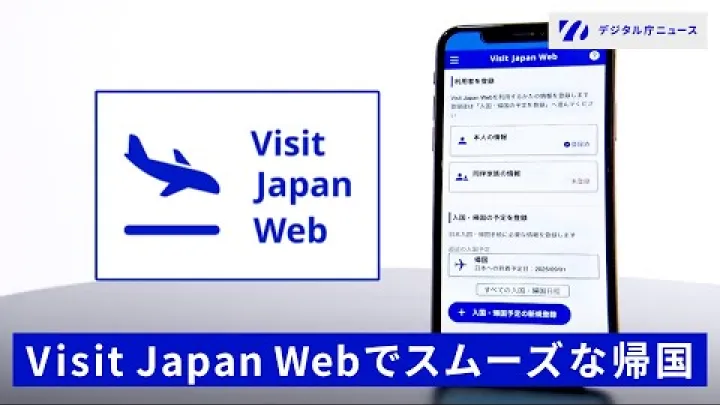
Visit Japan Web is not a visa, a status of residence, or a guarantee that a traveler will be admitted. Completing an online form does not remove the need to hold the correct passport, visa or visa-exempt basis, supporting documents, and authorized purpose. It also does not replace instructions from immigration or customs officials. The service, available fields, digital results, and airport procedures can change, so use the official Digital Agency page rather than an unofficial registration website and follow the instructions displayed when you prepare your trip.
Keep access to the relevant confirmation or digital information available during travel, but do not rely on a screenshot or QR code as the only evidence of your identity or entry basis. Your passport and any required status documents remain important. If an online service is unavailable or your circumstances do not fit its workflow, follow the current instructions provided by the airline, airport, immigration counter, or customs officer.
Arrival Cards and the Information You Declare
The phrase Japan arrival card commonly refers to the foreign national arrival or disembarkation card used to provide information for immigration processing. Visit Japan Web may allow relevant arrival information to be submitted electronically as part of its immigration workflow. The exact digital or paper process can depend on current official instructions, the point of entry, and the traveler's circumstances.
Do not assume that an older paper form, a previously used website, or a saved instruction is still the current process. Follow the official arrival instructions available for your trip. If a paper or airport-provided form is required, complete it carefully. If the current workflow uses information already submitted online, make sure the details remain accurate and available when requested.
Keep the information on the arrival card or online registration consistent with your passport and other documents. This includes your name, date of birth, nationality, purpose of visit, intended length of stay, and Japanese accommodation or contact details when requested. Give truthful answers and explain any material difference rather than trying to make separate records appear consistent when the facts have changed. An arrival card is not the same as a visa application and should not be treated as a substitute for one.
Documents and Details to Prepare
The following is a general preparation guide, not an exhaustive list of Japan immigration requirements. The documents requested from a short-term visitor may differ from those requested from someone entering to live, work, or study.
- Passport: carry the passport used for the trip and make sure the personal details match your travel records.
- Entry basis: have the applicable visa, visa-exempt basis, or other permission-related information available.
- Purpose and duration: be ready to explain why you are entering Japan and how long you intend to stay.
- Japanese accommodation or address: keep the name and address of your first hotel, residence, school housing, employer-arranged accommodation, or other requested contact detail accessible.
- Status-related documents: if you are entering to work, study, join family, or reside for another continuing purpose, carry the documents that the responsible Japanese authority or your sponsoring organization instructed you to bring.
- Online registration information: if you use Visit Japan Web, retain access to the trip information and follow the current airport instructions for presenting it.
Students and workers should obtain their document list from the school, employer, or other accepting organization, while visa and nationality-specific questions should be directed to the Japanese embassy or consulate responsible for the application. A carrier or border official may ask for information that differs by traveler category. Do not assume that a document prepared for a visa application is automatically sufficient for every later immigration or municipal procedure.
At the Japanese Border: Immigration, Residence Cards, and Customs
Arrival processing has several separate parts. Immigration decides whether the traveler may land and under what authorized conditions. Customs handles goods and declarations. These procedures may appear close together in an airport workflow, but satisfying one does not automatically satisfy the other.
Immigration Inspection and Landing Permission
At immigration inspection, an officer reviews the traveler's identity, travel purpose, passport, visa or applicable entry basis, supporting information, and other conditions relevant to landing. The officer may ask questions about the planned stay or request clarification of documents. A completed online arrival form does not guarantee admission.
If landing permission is granted, the status and period recorded through entry control establish the lawful framework for the stay that follows. This is different from simply counting the days on a flight booking or hotel reservation. Before leaving the inspection area, check the relevant passport record, landing permission information, or residence card when possible. If a personal detail or authorized period appears incorrect, ask the responsible officer promptly instead of waiting until a later administrative deadline.
Keep a clear record of the authorized end date. The date controls the immigration stay even if a travel plan changes, a flight is canceled, or accommodation is extended. Questions about changing the status or period are separate immigration matters and should be raised with the Immigration Services Agency before the existing permission becomes a problem.
Residence Card Issuance for Eligible Residents
Eligible mid- to long-term residents receive a residence card as evidence of their authorized status and period of stay. The Immigration Services Agency explains that residence cards are issued to people who reside in Japan for a medium to long term as a result of permission related to their status of residence.
Where the relevant airport or port currently provides airport issuance, the card may be issued as part of arrival processing. In other cases, issuance or delivery may occur later under the applicable procedure. The address may also need to be entered or updated after the resident reports a Japanese address to the responsible municipality. A traveler should therefore follow the instruction given for the specific arrival point rather than assume that every resident receives a card in exactly the same way.
A residence card is not a passport, a visa, or a substitute for landing permission. The passport identifies the traveler and records nationality or travel information. The visa concerns the pre-entry process where one is required. The landing permission and residence card show the conditions that govern the authorized residence. Carry the documents that apply to your category and check that the information is accurate.
Customs and the Digital Arrival Workflow
Immigration and customs are separate authorities and separate decisions, even when Visit Japan Web presents information for both in one online workflow.
| Procedure | Main subject | Traveler action |
|---|---|---|
| Immigration | Identity, purpose, entry basis, status, and authorized period | Provide truthful arrival information and follow the immigration officer's instructions |
| Customs | Goods, baggage, and declarations required under customs rules | Declare accurately and follow the customs process at the airport or port |
Visit Japan Web can support customs declarations as well as immigration-related arrival information. Answer customs questions accurately, including questions about goods or baggage, and use the route or counter directed by airport staff. Immigration clearance does not automatically approve a customs declaration, and a customs declaration does not establish a status of residence. Do not rely on claims about guaranteed faster processing or automatic approval unless an official authority expressly provides that information.
After Arrival: Residence Cards and Address Registration
For a person who will live in Japan, border processing is followed by local administration. The residence card and municipal resident record serve different purposes: one documents immigration status, while the other records the person's registered address for local administration. Completing one does not eliminate the other.
What the Residence Card Records
A residence card is both a certificate of authorized residence and a record of information connected with that residence. Depending on the person's status and circumstances, it may show personal details, nationality or region, status of residence, period of stay, work-related permission, and registered address. The card is intended to show the conditions under which an eligible foreign resident is permitted to remain in Japan.
Short-term visitors and people outside the eligible mid- to long-term resident categories generally do not receive a residence card. A card also does not mean that every job, course of study, or activity is permitted. The holder must follow the conditions of the status and any separate permission. Keeping the card current is part of a wider set of immigration and municipal responsibilities, not a replacement for address registration or status reporting.
Register Your First Address with the Municipality
An eligible resident must notify the city, ward, town, or village office responsible for the place where the resident lives. The general rule is to report the address within 14 days after moving into the residence. The rule is connected to establishing a residence for local registration and is not automatically identical to the date of landing at an airport.
If your first accommodation is temporary, such as a short hotel stay before you move into a longer-term home, ask the responsible municipal office how the rule applies to your circumstances. The correct starting point can depend on when you establish the address that should be registered. Calendar the applicable deadline after you understand that point, rather than waiting until other local services are needed.
Prepare a short municipal-office checklist:
- Identify the office responsible for your actual address, not simply the office nearest to the airport or school.
- Check the counter's opening hours, reservation requirements, language information, and accepted identification before visiting.
- Bring the residence card if it has been issued and the passport or other documents requested for your case.
- Have the full Japanese address, including the building or room information when available.
- Ask how to retain proof that the notification was submitted and when a resident certificate or related record can be requested.
Municipal document requirements can vary, especially when a residence card has not yet been issued or when a person is registering with family members. The municipal office can tell you which forms and documents apply. Keep any receipt, confirmation, or copy provided after the notification.
Moving Within Japan: Notifications Between Addresses
The correct address procedure depends on whether the old and new addresses are in the same municipality. A move within one city, ward, town, or village usually uses a change-of-address notification with that municipality. A move to a different municipality normally involves a move-out notification connected with the former municipality and a move-in notification with the new one.
| Situation | Main municipal action | What to confirm |
|---|---|---|
| Move within the same municipality | Report the change to the existing municipal office | Which form and deadline apply after moving |
| Move to another municipality | Complete the former municipality's move-out step and the new municipality's move-in step | Whether either step can be submitted online or by mail and when an in-person visit is required |
| Permanent move outside Japan | Notify the municipality that the registered residence is ending | The office's timing, documents, and related local administration to close or update |
The former and new municipal offices may each have a role, so do not assume that telling a landlord, school, or employer updates the official resident record. Some municipalities provide online or mail options for parts of the process, while others require a visit or additional identification. Ask the relevant office which steps apply to your exact move and retain confirmation of each submission.
Basic Resident Registration and Proof of Address
Address registration connects eligible foreign residents with Japan's Basic Resident Registration system. It creates an official local record of the person's registered residence and supports municipal administration. This is different from an immigration status application, but it is an important part of living in Japan as a resident.
A current resident record can matter when a person needs proof of address or other municipal certificates, receives official correspondence, or completes everyday administrative procedures. An address that is not updated can cause documents to go to the wrong place and can make later procedures more difficult. Related systems such as My Number are connected with municipal administration, but My Number is not a visa, a status of residence, or permission to work.
Ask the municipal office which certificates, forms, and identification documents are currently available for your situation. When moving, update the registered address through the municipal process rather than relying only on a private address change with a bank, school, employer, or delivery service.
Reporting and Identification Duties During Your Stay
Residents may have duties after the initial address registration. These duties are not one universal periodic report for every foreign national. They depend on the status of residence, the relationship with a school or employer, the accepting organization, and the type of change. Treat each change as a prompt to ask which authority must be notified and by when.
Changes to Work, Study, or Accepting Organizations
Some students, workers, and other mid- to long-term residents must notify immigration authorities when information about an accepting organization changes. Depending on the status, relevant events may include leaving a school, changing an employer or educational organization, completing an arrangement, or a change in the organization's name or address. A notification may also be relevant when the organization ceases to serve its role.
Not every foreign resident must submit every accepting-organization notice. The applicable duty depends on the status of residence and the specific event. Some notifications have a short deadline, and a 14-day period applies to certain types of change, but that is not a universal deadline for every immigration application or notification. Ask your school, employer, supervising organization, or regional immigration services office which notice is required, where it must be sent, and when it is due. A practical summary of accepting-organization reporting channels is also provided by Kobe University, but the rule for your status should come from the responsible authority.
When a change is possible, record the date it occurs and begin the confirmation process promptly. Keep copies of submitted notices and any delivery or online confirmation. A school or employer may help explain the process, but the resident remains responsible for understanding the duty that applies to the resident's status.
Online Residence Applications and Electronic Notifications
Visit Japan Web is designed for entry-related immigration clearance and customs declaration. It is not the same as the Immigration Services Agency channels used for residence applications or electronic notifications during a stay. Depending on the matter, a separate official system or procedure may apply to an extension of the period of stay, a change of status, a status-related application, or a notification about an organization.
Online submission may be available only for certain applicants, representatives, organizations, or notification types. A digital account or an online form does not by itself establish eligibility, approval, or an extension of lawful stay. The applicant must still meet the legal deadline, enter accurate information, upload or provide the required documents, and attend an immigration office if the procedure requires it.
Use the current Immigration Services Agency instructions for the particular application or notification rather than searching for one generic Japan online immigration registration form. Keep the submission receipt, reference number, or other confirmation, and check whether the submission is complete or requires a later action. A submitted application is not necessarily an approved application.
Carry and Present the Residence Card
Applicable residents are required to carry their residence card and present it when it is requested by an authorized immigration or law-enforcement official. The Immigration Services Agency FAQ explains the duty to carry the card and present it when requested by the relevant officials.
Keep the card secure but accessible during daily travel. It is not interchangeable with a passport, and it does not prove that an activity outside the person's status is permitted. If the card is lost, stolen, or damaged, use the official reporting and replacement procedure promptly. Depending on the circumstances, this may involve reporting the loss or theft to the police and contacting a regional immigration services office for the immigration procedure. Do not alter the card or rely on an unofficial replacement.
Leaving Japan and Avoiding Problems with the Authorized Stay
Departure is the final stage of the same immigration timeline. A short trip abroad during an ongoing residence and a permanent move away from Japan have different administrative consequences. The resident should coordinate the municipal record, immigration documents, and school or employment arrangements instead of treating an airline booking as the only departure task.
Leaving Japan and Updating Municipal Records
A temporary trip abroad does not automatically mean that a registered residence in Japan has ended. If you are permanently leaving a municipality or Japan, ask the municipal office about the appropriate moving-out notification and its timing. The office can explain which address records and local procedures must be closed or updated.
Residents who are ending a long-term stay should also coordinate with their school, employer, accepting organization, housing provider, insurer, and other local contacts where relevant. Ask immigration officials what to do with the residence card at departure for your specific travel and re-entry circumstances, and follow the instruction given at the border. Do not discard immigration documents before confirming whether they must be returned, retained, or used for another lawful procedure.
Make a written departure list that separates a temporary absence from a permanent move. This helps prevent a resident from submitting a municipal notice too early or failing to submit one when the registered residence has actually ended.
Track the Authorized Period of Stay
Record the authorized end date shown on your landing permission or residence card. Do not rely on a flight booking, hotel reservation, employer schedule, or personal estimate of the permitted number of days. If plans change, the immigration date remains the date that matters unless a lawful new permission is granted.
Remaining in Japan after the authorized period can create serious immigration problems. If illness, a canceled flight, an emergency, or another circumstance may prevent timely departure, contact the Immigration Services Agency or the appropriate regional immigration services office before the end date. Ask about the lawful procedure for the specific circumstances. This is general information, not individualized legal advice, and contacting an authority does not guarantee that a particular remedy will be available.
When to Contact an Official Authority
Use a simple authority map to decide where to start:
- City, ward, town, or village municipal office: first address registration, changes of address, moving-out notifications, resident records, and related municipal certificates.
- Regional immigration services office or Immigration Services Agency: status of residence, period of stay, residence cards, accepting-organization notifications, immigration applications, and possible overstay concerns.
- Japanese embassy or consulate: visa eligibility, visa applications, and nationality-specific questions before travel.
- School, employer, or accepting organization: information about the relationship or event that may trigger a status-specific notification.
Contact an authority promptly if you are uncertain about your resident category, have not received an expected residence card, missed an address-notification deadline, changed schools or employers, lost or damaged an immigration document, or may be unable to leave before the authorized date. Municipal offices generally handle address records, while immigration offices handle status and residence-card matters. If the facts are complex or a serious immigration consequence is possible, consider obtaining advice from a qualified immigration professional.
A Practical Japan Immigration Procedures Checklist
Use this checklist as a starting point, then match each item to your category. Short-term visitors will usually use the first group and arrival steps, while students, workers, and other residents will need the additional local and ongoing steps.
Before Travel Checklist
For every traveler:
- Confirm your nationality-specific basis for entry, travel purpose, and intended period of stay.
- Check the current official Japanese entry instructions and any applicable visa or visa-exempt conditions.
- Ensure that your passport details match your airline, accommodation, arrival-card, and online registration information.
- Prepare your first Japanese accommodation or contact address and the information needed for arrival processing.
- Review the current Visit Japan Web instructions on the official Digital Agency page if you plan to use online arrival registration.
For a person entering to live, work, or study:
- Confirm the status-related documents and instructions supplied by the school, employer, family sponsor, or other accepting organization.
- Understand whether a residence card is expected at the arrival point or may be issued later.
- Identify the municipal office responsible for the first address and note its hours and procedure requirements.
- Record the authorized period that you expect to receive at landing, then check the actual date after immigration inspection.
Arrival and First 14 Days Checklist
- Complete immigration inspection and answer questions about identity, purpose, documents, and intended stay truthfully.
- Confirm the landing permission and authorized end date before leaving the inspection area when possible.
- Receive or confirm the residence card if you are eligible and follow instructions if issuance occurs later.
- Complete customs separately and declare goods accurately according to the current airport or port instructions.
- If you will live in Japan, determine when your registered residence begins, especially if your first accommodation is temporary.
- Within the applicable 14-day address-notification period, visit the correct municipal office with the residence card, passport, address details, and other requested documents.
- Keep copies or confirmations of municipal forms and ask how to obtain proof of address or other resident certificates.
The first 14 days are especially important for a new resident. If you move again soon after arrival, ask whether the first address should be registered and how the next move should be reported. Local instructions can differ in form, timing, and available submission method.
Ongoing Stay and Departure Checklist
- Keep your residence card secure, carry it when required, and use official procedures if it is lost, stolen, or damaged.
- Keep your registered address current with the municipality whenever you move.
- Ask your school, employer, or accepting organization whether a change in study, work, or organizational information creates an immigration notification.
- Submit the correct notification or residence application through the required municipal, immigration-office, mail, or online channel within the applicable deadline.
- Record the authorized end date and act before it if a change of plan may affect timely departure or another lawful application.
- For a permanent departure, confirm the municipal moving-out process and coordinate applicable school, employer, insurance, housing, residence-card, and immigration steps.
Japan immigration procedures are easiest to manage when each step is matched to the correct authority and deadline. Because forms, online services, and local instructions can change, use current information from the Immigration Services Agency, regional immigration services offices, municipal offices, Visit Japan Web, and the Japanese embassy or consulate relevant to your case.
Select area
Create a post
Posting is free and no registration is required.