Nara Getting There: Routes from KIX, Osaka, Kyoto & More

Getting to Nara is straightforward once you choose the right gateway and arrival station. Most visitors come through Kansai International Airport, Itami Airport, Osaka or Kyoto, then continue by regional rail, airport limousine bus or highway bus. This guide compares routes by travel time, cost, transfers, pass compatibility, luggage convenience and arrival location. It also explains how to continue from JR Nara or Kintetsu-Nara to Nara Park, Naramachi and Nishinokyo.
Choose Your Nara Route by Gateway and Travel Priority
Nara does not have one dominant arrival mode. The best route depends on where you begin, whether you value a direct ride or rail-pass coverage, and whether your accommodation is closer to JR Nara or Kintetsu-Nara. Published travel time is only part of the journey: airport exit time, waiting, station transfers and the final walk can change the practical result.
Match the Gateway to Your Priorities
For a broad orientation, the official Visit Nara guide describes Nara as just over 30 minutes by train from Kyoto and Osaka and highlights connections with shinkansen routes from major Japanese cities. Use that description as regional context rather than as a guaranteed station-to-station time.
| Route choice | Transfers | Time and fare | Pass consideration | Arrival in Nara |
|---|---|---|---|---|
| KIX airport bus | None on the bus | 1 hr 43 min is listed for the route; check the current fare | Separate bus ticket rules | JR Nara or Kintetsu-Nara when served |
| KIX via Tennoji | Change at Tennoji | Live rail time and fare depend on the service | May suit eligible JR coverage | JR Nara |
| KIX via Namba | Change between Namba operators | Live rail time and fare depend on the service | Nankai and Kintetsu conditions are separate | Kintetsu-Nara |
| Osaka-Namba | Usually a direct Kintetsu route | Check the service type and current fare | Compare Kintetsu products | Kintetsu-Nara |
| Kyoto Station | JR or Kintetsu route options | Short regional journey; exact time and fare vary | Choose the network covered by your pass | JR Nara or Kintetsu-Nara |
| Shinkansen gateway | One onward regional journey | Combine the long-distance and local fares | Coverage depends on the full itinerary | Usually JR Nara for a JR continuation |
| Highway or overnight bus | None or a feeder connection | Traffic and operator schedule affect the journey | Advance bus booking is separate | Stop varies by operator |
Choose a direct airport bus when reducing transfers is more important than rail speed. Choose Kintetsu when you are near Osaka-Namba or want to arrive close to Nara Park. Choose JR when you are based near Osaka Station, arriving through a JR itinerary or using eligible JR coverage. For a long-distance trip, compare Kyoto and Shin-Osaka as shinkansen gateways before buying the onward ticket.
Getting to Nara from Kansai International Airport
Kansai International Airport, commonly called KIX, is the main international gateway for Nara. From the airport, the practical choice is between a direct airport limousine bus and a rail route through Tennoji or Namba.
Take the Direct Airport Limousine Bus to Nara
The direct airport limousine bus is attractive when you have large bags or do not want to change trains after an international flight. The Nara route can serve stops such as JR Nara and Kintetsu-Nara, but the stop pattern depends on the selected departure. Check the destination shown for your specific bus instead of assuming that every departure serves both stations.
The official KATE route page lists a journey time of 1 hr 43 min for the Nara service. Treat this as an indicative operating time because road traffic, terminal procedures and the exact departure can affect the total journey. The same page should be used to read the current fare and ticket instructions rather than relying on an older travel guide.
Reservation rules can differ by direction. The route information notes a reservation requirement for services going to Kansai Airport, but that statement does not automatically establish the rule for a KIX-to-Nara trip. Read the instructions for your direction, date and stop. A direct bus removes a rail transfer and can simplify luggage handling, but it may take longer than a well-timed train connection and is less flexible if your flight is delayed.
| Option | Transfers | Time and fare | Luggage | Best for |
|---|---|---|---|---|
| Direct KIX limousine bus | None | Route page lists 1 hr 43 min; current fare required | No station change with bags; follow baggage rules | Simple arrival and heavy luggage |
| Rail via Tennoji | One main change | Depends on live connection and rail ticket | Requires station corridors and a platform change | JR users and flexible rail travel |
| Rail via Namba | Change from Nankai Namba to Osaka-Namba | Depends on Nankai and Kintetsu services | More complicated with large bags | Kintetsu-Nara access |
Use Train Routes from KIX via Tennoji or Namba
There are two useful rail patterns from KIX. Neither should be treated as automatically fastest, because the result depends on the next departure, waiting time, station walking and ticket conditions.
- JR via Tennoji: Travel from Kansai Airport to Tennoji on a JR airport service. At Tennoji, change to a Yamatoji service for JR Nara. From JR Nara, continue to your accommodation or sightseeing area on foot or by local bus.
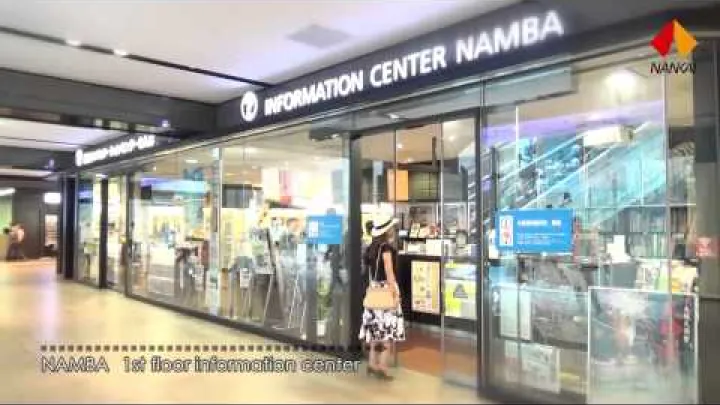
- Nankai and Kintetsu via Namba: Travel from KIX to Nankai Namba. Then follow signs for the transfer to Osaka-Namba, which is a different station area and operator connection. Continue on Kintetsu to Kintetsu-Nara.
The Tennoji route is easier to understand if your trip is already based on JR services. The Namba route can be attractive when your destination is near Kintetsu-Nara, but changing between Nankai Namba and Osaka-Namba requires more attention than changing on one railway. Check the complete connection, including the final train to Nara, and allow extra time at these large stations.
Pass coverage also differs. An eligible JR pass may help with the JR route, while Nankai and Kintetsu are governed by separate products and conditions. Compare the total price of the airport leg, the Nara leg and any supplements instead of judging the route by one ticket alone.
Getting to Nara from Itami Airport
Osaka International Airport, usually called Itami Airport, is useful for domestic flights. It is closer to the Osaka urban area than KIX, but the best route to Nara depends on whether a direct service is operating on your date.
Compare Direct Bus and Rail Alternatives from Itami
Treat a direct Itami-to-Nara limousine bus as a conditional option. Use it only when a current airport or operator timetable confirms the service, departure time and Nara arrival stop. A listing in an older guide is not enough to establish that the bus is running now.
- If a direct bus is confirmed: Choose it when the stop matches your accommodation and you want to avoid carrying bags through an Osaka interchange.
- If no suitable direct bus is confirmed: Travel into an Osaka interchange, then continue by JR toward JR Nara or by Kintetsu from Osaka-Namba toward Kintetsu-Nara. Select the interchange that matches your starting airport connection and hotel location.
- If your flight arrives late: Compare the final airport-to-Osaka and Osaka-to-Nara connections before booking. Do not build the plan around a last connection that is not shown for your date.
Rail may be more convenient for travelers already using Osaka rail connections or eligible passes, while a direct bus can be simpler with large luggage. Exact Itami travel times and fares are not stated here because they depend on current operation, route choice and service date.
Getting to Nara from Osaka and Kyoto
Osaka and Kyoto offer frequent regional connections, but the most convenient Nara station changes with the departure area. Decide whether JR Nara or Kintetsu-Nara is the more useful endpoint before selecting a service.
Travel from Osaka Station and Shin-Osaka by JR
From Osaka Station, look for a Yamatoji service to JR Nara. Depending on the departure and route display, the train may be shown in connection with the Osaka Loop Line or another JR service pattern. The important destination is JR Nara, not simply a train heading toward the southern Osaka area.
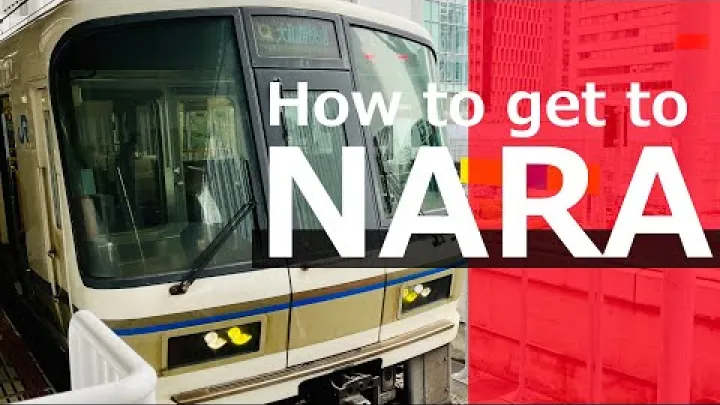
Shin-Osaka is different from Osaka Station. Travelers arriving by shinkansen must leave the shinkansen part of the journey and continue on conventional JR rail toward Nara. A shinkansen ticket does not mean that a shinkansen train runs directly to Nara. A route search may direct you through Osaka Station or another JR interchange, so follow the exact station sequence shown for your departure.
| Starting point | Typical JR pattern | Nara endpoint | Practical point |
|---|---|---|---|
| Osaka Station | Yamatoji service toward Nara | JR Nara | Useful for Osaka Station-area hotels and JR itineraries |
| Shin-Osaka | Shinkansen arrival followed by conventional JR rail | JR Nara | Allow time for the change from shinkansen platforms |
JR is often a logical choice for travelers staying near Osaka Station or using eligible JR coverage. The trade-off is the final connection from JR Nara to Nara Park and some central neighborhoods. Use a current route search for the exact train type, departure time, fare and any required change.
Travel from Osaka-Namba by Kintetsu
Osaka-Namba is one of the strongest starting points for a direct Nara trip. Kintetsu services run from Osaka-Namba toward Kintetsu-Nara, making this route useful for travelers staying around Namba or planning to begin sightseeing near Nara Park.
Regular express-type services and Kintetsu Limited Express services should be treated differently. A regular service generally uses the basic rail fare, while a Limited Express service has a reserved seat and requires an additional limited express charge on top of the basic fare when that service is selected. A pass may cover one part of the journey without covering that supplement.
Use the current Kintetsu timetable to compare the service type, departure and arrival at Kintetsu-Nara. The best choice is not always the train with the shortest displayed running time. Waiting time, seat preference, fare and the distance from Kintetsu-Nara to your accommodation all matter.
Travel from Kyoto Station by JR or Kintetsu
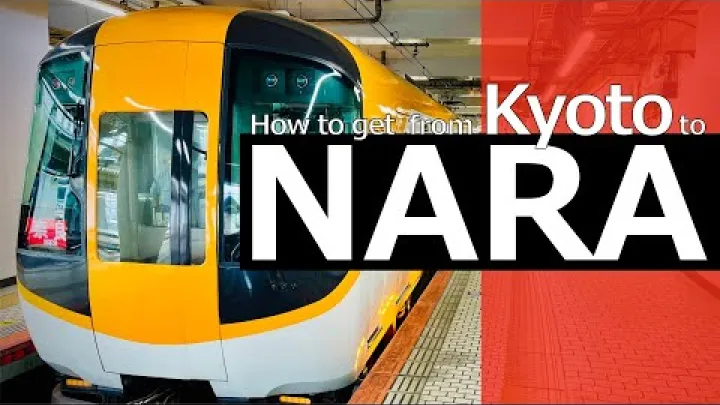
Kyoto Station gives you two main rail choices. JR Miyakoji services go to JR Nara, while Kintetsu express and Limited Express services go toward Kintetsu-Nara. These options are often direct or nearly direct from Kyoto Station, but the exact service pattern should be checked for the travel date.
| Route | Arrival station | Speed and simplicity | Fare and pass point | Best fit |
|---|---|---|---|---|
| JR Miyakoji service | JR Nara | Simple regional rail option from Kyoto Station | Check ordinary fare and JR coverage | JR pass users and JR-connected itineraries |
| Kintetsu Express | Kintetsu-Nara | Often a straightforward service pattern; confirm the departure | Check Kintetsu fare and pass conditions | Travelers prioritizing central Nara access |
| Kintetsu Limited Express | Kintetsu-Nara | Reserved-seat option; service time varies | Basic fare plus limited express supplement | Travelers who value a reserved seat |
Choose JR when your accommodation is near Kyoto Station, your itinerary uses JR or your pass makes that network more suitable. Choose Kintetsu when arrival near the historic center and Nara Park is more important. All time and fare figures are date-sensitive, and the fastest option can change when waiting and transfer time are included.
Reaching Nara from Other Japanese Cities
For longer journeys, Nara is usually reached by combining a shinkansen trip with a regional rail journey. Kyoto and Shin-Osaka are the main gateways to compare.
Use Kyoto or Shin-Osaka as the Shinkansen Gateway
Think of a long-distance rail trip to Nara as two stages: the shinkansen to a Kansai gateway, followed by regional rail into Nara. Tokyo and Nagoya travelers commonly compare a shinkansen arrival at Kyoto with a JR or Kintetsu continuation. Travelers coming from western Japanese cities often compare a shinkansen arrival at Shin-Osaka with a conventional JR route toward Nara.

| Long-distance starting area | Gateway to compare | Second stage | Planning focus |
|---|---|---|---|
| Tokyo or Nagoya | Kyoto | JR to JR Nara or Kintetsu to Kintetsu-Nara | Compare pass coverage and hotel location |
| Western Japanese cities | Shin-Osaka | Conventional JR rail toward JR Nara | Allow time to leave the shinkansen platforms |
Do not assume that a long-distance ticket automatically covers every onward train or private railway. Check whether your chosen pass covers the regional leg, whether a reserved-seat condition applies and whether the ticket ends at Kyoto or Shin-Osaka. A gateway with a slightly longer shinkansen journey may still be easier if it matches your accommodation and onward network.
Consider Overnight and Highway Buses
Highway and overnight buses can be an alternative for travelers from Tokyo and other long corridors. They may reduce the upfront cost or save one night of accommodation, but the journey is longer and road traffic can cause delays. Early arrival can also create a gap before hotel check-in, and onward local transport may be less convenient than it is during the daytime.
| Traveler profile | Why consider a bus | Important check |
|---|---|---|
| Budget traveler | May reduce the upfront transport or accommodation cost | Compare the complete fare and arrival time |
| Limited daytime | Overnight travel can preserve daytime hours | Plan sleep, early arrival and hotel check-in |
| Large luggage | Avoids a rail transfer during the long journey | Confirm baggage rules and the final stop |
Book only a service that appears on a current operator schedule. A listing described simply as Nara may arrive at a Nara City stop or at a location elsewhere in Nara Prefecture. Before booking, identify the exact arrival stop, map any feeder train or bus to central Nara, and confirm how you will reach the hotel if you arrive before check-in.
Choose the Right Nara Arrival Station
JR Nara Station and Kintetsu-Nara Station are separate gateways. Choosing the right one before you buy a ticket can save a long walk with luggage and place you closer to your first sightseeing stop.
Choose Between JR Nara Station and Kintetsu-Nara Station
Kintetsu-Nara is generally the more convenient station for an immediate visit to Nara Park. JR Nara is the natural endpoint for many JR routes from Osaka, Kyoto and KIX, and it may be the better choice when your accommodation or onward itinerary is connected to the JR network.
| Station | Operator | Position for sightseeing | Best use | Last-mile implication |
|---|---|---|---|---|
| Kintetsu-Nara Station | Kintetsu | Close to the historic center; Nara Park is a short walk east | Park-first plans and Osaka-Namba routes | Often the simpler walk for central sightseeing |
| JR Nara Station | JR West | Useful for JR arrivals and departures | JR itineraries and JR-connected accommodation | Plan a walk or local bus toward the park area |
The official Visit Nara Park guide describes the park as a short walk east of Kintetsu-Nara. Before searching for tickets, set JR Nara or Kintetsu-Nara as the destination according to your accommodation, luggage and first sightseeing stop. Then check the route from that station to the specific hotel rather than relying only on a neighborhood name.
Continue to Nara Park, Naramachi, and Nishinokyo
The final leg is short for some destinations but should still be included in your arrival plan. Nara Park and Naramachi are close to the central station area, while Nishinokyo is outside the immediate station-and-park core.
| Destination | From Kintetsu-Nara | From JR Nara | Luggage and effort |
|---|---|---|---|
| Nara Park | Short walk east | Walk along Sanjo-dori Street or use a Nara Kotsu bus | Kintetsu is usually simpler with bags |
| Naramachi | Walk or use a short local connection | Walk or use a short local connection | Check the accommodation side of the neighborhood |
| Nishinokyo | Separate local train or bus leg | Separate local train or bus leg | Plan it as a distinct journey, not a station walk |
From JR Nara, walking east along Sanjo-dori Street can be practical when your bags are manageable. A local Nara Kotsu bus may be more comfortable when the weather is poor, the accommodation is farther away or you have children. For Nishinokyo, search from the station to the individual temple or destination because the correct local connection depends on the exact stop.
Handle Luggage, Accessibility, and Late Arrival
Early arrival: An overnight bus or early airport arrival may leave several hours before hotel check-in. Confirm whether the accommodation can store luggage and decide whether the first stop should be near the arrival station. Avoid adding a distant destination if you will still be carrying large bags.
Daytime arrival: A direct airport bus can reduce the number of times you lift or roll luggage. Rail routes may involve long station corridors, stairs, platform changes and a further walk from JR Nara. Travelers with mobility needs, children or heavy bags should check step-free station routes and bus boarding arrangements in advance.
Late arrival: Check the final train or bus from the airport and the connection from Osaka or Kyoto to Nara. Then confirm the accommodation's late check-in policy. Local service frequency and taxi availability should not be assumed after the last scheduled rail or bus connection, so a late arrival may require a different hotel or an earlier departure.
Tickets, Local Buses, and Practical Arrival Planning
Ticket choice is part of route planning. A basic rail fare, a reserved-seat supplement, an airport bus ticket and a highway bus booking are different products with different rules.
Compare Tickets, Passes, and Booking Requirements
| Travel type | Ticket or supplement | Booking point | Pass consideration |
|---|---|---|---|
| Ordinary JR or Kintetsu train | Basic rail fare | Check whether the selected service has reserved seating | Coverage depends on the specific JR or Kintetsu product |
| Kintetsu Limited Express | Basic fare plus limited express charge | Reserved-seat purchase is required for the selected service | A pass may not include the supplement |
| KIX airport bus | Airport bus ticket | Check direction-specific reservation and ticket rules | Do not assume a rail pass covers it |
| Highway or overnight bus | Advance bus booking | Confirm the operator, stop and baggage conditions | Separate from rail pass coverage |
| Nara Kotsu local bus | Local fare or bus pass | Check the route and payment conditions | Separate conditions from JR and Kintetsu |
Eligible JR West or nationwide JR coverage can change the value of a route through Tennoji, Osaka Station or Kyoto. Kintetsu passes follow different validity conditions, and Nara Kotsu bus passes are separate again. Limited Express supplements may be excluded even when the basic journey is covered. An IC card can simplify ordinary rail where it is accepted, but it does not remove a required reserved-seat supplement or an airport and highway bus booking rule.
Compare pay-as-you-go travel with a pass across the whole Kansai itinerary, not only the trip into Nara. Include airport transport, Osaka or Kyoto travel, local buses and return journeys. Use current prices beside the exact product and date because pass validity, sales conditions and reservation rules can change.
Check Current Timetables, Fares, and Service Status
Before departure, use the relevant official pages for KATE, JR West, Kintetsu and Nara Kotsu. Travel guides, forums and route aggregators are useful for understanding the general pattern, but the operator information should determine whether a service is available and what it costs.
- Enter the exact travel date and confirm whether it is a weekday, weekend or holiday.
- For an airport trip, confirm the airport terminal, departure time and the bus stop or rail station used.
- Check whether the selected airport bus serves JR Nara, Kintetsu-Nara or another stop.
- Confirm the final connecting train or bus, especially after an evening flight or overnight bus arrival.
- Check the service type, reservation requirement and any Limited Express or reserved-seat supplement.
- Read temporary service notices for construction, timetable changes or other operating changes.
Make this check again if your flight, shinkansen or long-distance bus is delayed. A connection that works on a daytime itinerary may not work after the final local departure.
Avoid Common Arrival Mistakes
Use this short checklist when reviewing your booking and arrival plan:
- Wrong Nara station: Confirm whether the ticket ends at JR Nara or Kintetsu-Nara and match it to your hotel and first sightseeing stop.
- Confusing Namba stations: Nankai Namba and Osaka-Namba are connected station areas but belong to different operators. Allow time to follow signs when transferring.
- Assuming an airport bus runs every hour: Airport services can have selected departures and stop variations. Read the exact timetable instead of assuming a regular frequency.
- Missing the Limited Express supplement: A Kintetsu pass or basic fare may not include the additional charge for a reserved Limited Express seat.
- Underestimating the final walk: Include the distance from the arrival station to the hotel, especially when carrying luggage or arriving after an overnight journey.
- Accepting an unsolicited taxi ride: If a taxi is necessary, use a marked official taxi stand and confirm the destination and fare before boarding.
Final Recommendations for Getting to Nara
For the simplest KIX arrival, choose the direct airport limousine bus when the current departure serves the stop you need. Choose the JR route via Tennoji when JR coverage or a rail-based itinerary matters, and choose the Nankai-to-Kintetsu route when Kintetsu-Nara and the central sightseeing area are the priority.
From Osaka, Osaka-Namba to Kintetsu-Nara is a strong central-access option, while Osaka Station or Shin-Osaka to JR Nara suits JR travelers. From Kyoto, compare JR and Kintetsu by pass coverage, service type and final walking distance. For every route, set the correct Nara station, allow for the last mile and confirm the operator's timetable, fare and service notices for your exact date.
Select area
Create a post
Posting is free and no registration is required.