Fukuoka Where to Stay: Best Areas & Accommodation Guide

Choosing where to stay in Fukuoka is mainly a question of route, evening atmosphere, and room needs, not simply picking the closest hotel to a landmark. For most first-time visitors, the practical search area is between JR Hakata Station and Tenjin, with Hakata better for transport and Tenjin better for city life. This guide compares Hakata, Tenjin, Nakasu, Ohori Park, Momochi, and the airport area, then matches hotels, hostels, and apartment-style stays to different trips. It also explains when a Fukuoka City base works best for day trips around Fukuoka Prefecture and Kyushu.
Where to Stay in Fukuoka: The Short Answer
For a first visit, start your accommodation search between JR Hakata Station and Tenjin. Choose Hakata if you value simple airport access, shinkansen and JR connections, regional day trips, or easy luggage handling. Choose Tenjin if your priority is restaurants, shopping, cafes, nightlife, and an urban walking experience. These two areas are the best default bases because they combine the widest choice of accommodation with convenient access to much of central Fukuoka.
| Area | Best for | Main trade-off |
|---|---|---|
| Hakata Station | Transport, short stays, families, rail trips | Busy and commercial around the station |
| Tenjin, Daimyo, Kego, and Imaizumi | Food, shopping, cafes, and city evenings | More active streets and variable prices |
| Nakasu | Nightlife, yatai atmosphere, central access | Possible late-night crowds and noise |
| Ohori Park | Green space, calm evenings, longer stays | Fewer immediate late-night dining choices |
| Momochi | Waterfront walks, space, and hotel leisure | Less convenient for dense city sightseeing |
| Fukuoka Airport area | Very early flights, late arrivals, and transit nights | Limited value for a sightseeing base |
If you are unsure, book near Hakata for a logistics-first trip or near Tenjin for a city-first trip. Move to Ohori Park or Momochi only when calm surroundings, green space, or the waterfront are central to your plans. An airport-area stay makes sense when the flight schedule is the reason for the overnight stay.
How to Choose the Right Fukuoka Neighborhood
The right Fukuoka neighborhood becomes easier to identify when you compare three things: your transport gateway, your total accommodation value, and the atmosphere you want after dark. A district can be excellent for one itinerary and inefficient for another.
Match Your Base to Your Transport Plan
Begin with the sequence of your trip. The important gateways are Fukuoka Airport, JR Hakata Station, Tenjin, the main city attractions, and the stations used for regional day trips. Hakata is the rail-first choice, while Tenjin is the city-first choice. The Fukuoka City Subway Airport Line makes the airport, Hakata, and Tenjin part of the same central transport decision, but they are not equally convenient for every hotel or route.

Quieter areas change the balance. Ohori Park can provide a calmer daily base while remaining connected to central Fukuoka. Momochi is more suitable when waterfront time is part of the accommodation experience. A property that appears close to a station can still involve stairs, a long platform walk, luggage handling, or a less convenient exit.
- Choose Hakata for JR travel, an early departure, a late arrival, or substantial luggage.
- Choose Tenjin when most days end with restaurants, shopping, or downtown walks.
- Choose Ohori Park when green space and a slower evening matter more than immediate retail access.
- Choose Momochi when the waterfront and hotel facilities are part of the trip.
- Choose the airport area only when the flight schedule matters more than access to central Fukuoka.
Before booking a property whose value depends on transport, open the current route map and identify the actual station exit, walking route, transfers, and first and last service times for your dates. Allow for luggage and the difference between a station entrance and the accommodation door. This is more reliable than choosing from a broad ward label or relying on a general travel-time claim.
Compare Price, Room Space, and Length of Stay
There is no permanent price ranking for Fukuoka neighborhoods. The total changes with dates, occupancy, demand, room category, and cancellation conditions. Tenjin, Hakata, and Nakasu can all contain both budget and high-priced properties, while an apparently cheaper location may require more transport or a larger room to meet your needs.
Match the accommodation type to the length and purpose of the stay. A business hotel or compact city hotel can be efficient for a short visit. A hostel can reduce the cost for a solo traveler who accepts shared facilities. A private hostel room may suit a couple on a budget, while an apartment-style unit can provide better value for a family or longer stay when laundry and meal preparation matter.
- Compare the full total for the intended dates, occupancy, taxes, and fees.
- Check whether the quoted amount is for a dorm bed, private room, family room, or entire apartment.
- Compare cancellation rules with your actual flexibility.
- Value laundry, kitchen access, luggage storage, breakfast, and room space according to your itinerary.
Do not treat a nightly label such as cheap, mid-range, or premium as a guarantee. A lower rate can be less useful if the room does not fit everyone, the property lacks a lift or laundry, or the cancellation terms are restrictive. Compare like with like, especially when traveling with children or booking several nights.
Use Nightlife, Quiet, and Night Walkability as Filters
Fukuoka offers different evening patterns within a small central area. Nakasu has the strongest late-night atmosphere, Tenjin has busy commercial and dining streets, and Ohori Park and parts of Momochi feel calmer after the main sightseeing day. The best choice depends on whether you want to continue walking after dinner or return to a quiet room.
Central location does not automatically mean a comfortable night. Two properties in the same area can differ because one faces an active street, has a quiet rear entrance, or is several blocks from the busiest entertainment zone. Noise-sensitive travelers should look for recent comments about street activity, room sound, construction, and the position of sleeping rooms. Families may prefer a route with fewer late-night crowds, while solo travelers may value a well-used, straightforward walk back after dinner.
- For light sleepers: avoid choosing solely by distance to nightlife; examine the exact street and room orientation.
- For families: prioritize a simple, well-lit route and easy access to food and transport.
- For solo visitors: compare the route used after evening transport ends with the property entrance and check-in arrangement.
- For late diners: choose proximity to the places you will actually visit, not just a district name.
Do not use a broad impression of city safety as a substitute for checking the exact accommodation. Read recent property reviews and inspect the late-night walking route for lighting, foot traffic, entrance visibility, and the distance from the station before choosing a nightlife area or a quiet side street.
Best Central Areas to Stay in Fukuoka
Hakata, Tenjin, and Nakasu form the main central comparison. They are all useful bases, but they serve different versions of a Fukuoka trip.
Hakata Station and Hakata Ward: Best for Transport and Short Stays
Hakata Station is the strongest practical base for travelers who want to move efficiently. JR Hakata Station brings together shinkansen, JR services, buses, and subway connections, making it useful for regional travel as well as city sightseeing. It is especially convenient when Fukuoka is one stop in a wider Kyushu itinerary or when the first and last travel days involve trains.

JR Hakata City adds shopping and dining around the station, which helps travelers carrying luggage, arriving late, or traveling with children. The area is also a straightforward choice for a short stay when there is little time to learn the city layout. Family-focused travel guidance often places Hakata among the easiest bases for a short visit because transport, food, and practical services are close together.
The trade-off is atmosphere. The immediate station area can feel busy and commercial rather than distinctly local. When comparing properties, look at the station exit and the actual route to the entrance. A hotel described as near Hakata Station may be convenient, but the practical experience changes with luggage, weather, crowds, and the side of the station where it is located.
Tenjin, Daimyo, Kego, and Imaizumi: Best for City Life
Tenjin is the best central choice for visitors who want Fukuoka city life outside their accommodation. The area combines department stores, underground retail, restaurants, cafes, bus connections, and busy streets that support flexible daytime and evening plans. It is a strong base when shopping, dining, and urban exploration matter more than direct JR access.
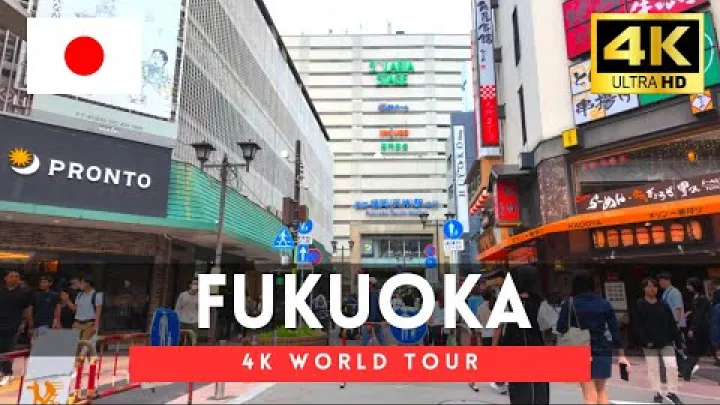
The nearby districts add different forms of character. Daimyo is known for smaller streets, independent shops, cafes, and restaurants. Kego and Imaizumi also offer a neighborhood-oriented walking experience with stylish coffee shops, boutiques, and less formal places to eat. The Fukuoka City Official Tourist Guide highlights these districts as areas to explore rather than treating Tenjin as one uniform block.
Tenjin can be more active and may cost more than some Hakata options, especially when demand is high. The exact street matters: a property beside major retail and nightlife may feel very different from one on a quieter edge of Daimyo, Kego, or Imaizumi. Choose Tenjin when the city itself is your evening plan, not simply because it is centrally located.
Nakasu: Best for Nightlife, Yatai, and Central Access
Nakasu is the riverside island between the Naka and Hakata rivers. Its location puts evening dining, bars, riverside views, and central attractions within an easy walking pattern for many visitors. It suits couples, food-focused travelers, and people who expect dinner and nightlife to be a major part of the trip.
The area is also associated with Fukuoka's yatai atmosphere. Individual stalls and their operating conditions can vary with weather, the operator, and local rules, so treat yatai as an experience to fit into your evening rather than a guaranteed service at a fixed time. Nearby areas, including routes toward Canal City Hakata, can add shopping and dining choices, but the best base still depends on the exact property location.
Nakasu's main trade-off is late-night activity. Crowds, entertainment streets, and evening traffic can affect noise and the feel of the walk back. If you want central access without sleeping beside the busiest streets, look just outside the most active zone and pay attention to where the hotel entrance and guest rooms are positioned.
Quieter and Specialized Areas to Stay in Fukuoka
Outside the main Hakata-Tenjin corridor, Fukuoka offers bases chosen for lifestyle rather than maximum transport efficiency. These areas work well when the surroundings are part of the trip.
Ohori Park and the Fukuoka Castle Area: Best for Green Space and Calm
Ohori Park provides a calmer central setting built around open space and walking routes. Ohori Park Station, the Fukuoka Art Museum, and the Fukuoka Castle ruins are useful anchors when comparing properties. The area can suit families, runners, slow travelers, and longer-stay visitors who prefer a residential feeling after a busy day.
Ohori Park remains connected to central Fukuoka, but it does not offer the same immediate concentration of shopping and late-night dining as Hakata or Tenjin. Plan for a shorter choice of restaurants close to the property, particularly late in the evening. Station-to-property walking distance matters more here because a quiet accommodation may be farther from the most convenient entrance.
Apartment-style units and smaller accommodations can be attractive in this area when a kitchen, laundry, or living space supports a slower routine. Those facilities are not standard across every property, so treat Ohori Park as a lifestyle choice and compare the actual room arrangement rather than assuming that the neighborhood provides hotel-like services.
Momochi Seaside and Fukuoka Tower: Best for a Resort-Style Stay
Momochi Seaside is defined by Momochi Seaside Park, waterfront promenades, Marizon, and Fukuoka Tower. It is a good alternative for families and couples who want seafront scenery, more space, and time spent at or near the hotel. A walk by the water can be more important here than being surrounded by restaurants and retail stores.
The compromise is central access. Momochi is less convenient for a schedule built around repeated trips between downtown attractions, and some properties require buses, taxis, or a longer walk from the most convenient subway stations. This makes it less suitable as the default base for a short first visit focused on efficient city sightseeing.
Room rates, views, pools, breakfast, and other leisure facilities are property-specific. A waterfront address does not guarantee a particular view or resort service. Compare the current listing, room category, access arrangements, and transport needs before choosing Momochi for those features.
Near Fukuoka Airport: Choose It Only for Flight-Driven Stays
An airport-area hotel is mainly useful for a very early departure, a late arrival, a short transit, or a traveler who does not need central Fukuoka during the overnight stay. It is a functional choice rather than a sightseeing base. Staying near the airport can remove one city-hotel transfer, but it also places you farther from Tenjin's dining and Hakata's broad shopping and transport options.
Current booking searches show airport-area options such as Hotel Front Inn Fukuoka Airport, Hotel Grand View Fukuoka-Kuko, and Stay Airport. An Agoda search can illustrate the type of accommodation available, but a changing booking page should not be treated as a permanent ranking.
Before selecting this area, confirm the relevant terminal, shuttle arrangements, luggage policy, breakfast hours, and early-morning transport. Airport proximity is not the same as a simple door-to-terminal journey, especially when a shuttle has limited hours or the property is outside the terminal complex.
Where to Stay in Fukuoka by Trip Type
The best area changes with the people traveling, the number of nights, and the way you expect to spend your evenings. Use the following comparisons after narrowing your search to a realistic route.
First-Time Visitors and Short City Breaks
For most first-time visitors, begin between JR Hakata Station and Tenjin. This central corridor reduces the need to learn several disconnected transport patterns and gives you access to the city's main dining, shopping, and sightseeing areas. It is also the easiest place to compare different room types without giving up central access.
- Favor Hakata for a short stay with an early flight, several rail day trips, heavy luggage, or a route that starts and ends at JR Hakata Station.
- Favor Tenjin when the main plan is restaurants, shopping, cafes, nightlife, and walking through downtown districts.
- Consider Nakasu when evening food and nightlife are the main reason for choosing a central location.
The station that best serves your itinerary matters more than whether a property is technically in Hakata Ward or another ward. If the two central areas are otherwise similar, choose Hakata for simple logistics and Tenjin for stronger city atmosphere. That gives first-time travelers a clear default without claiming that one neighborhood is best for every route.
Families with Children
Hakata is practical for families on short, transport-heavy trips because food, station services, luggage handling, and connections are concentrated around JR Hakata Station. Tenjin can be better for families who want shopping, covered retail areas, and a wide range of dining. Momochi offers more of a waterfront leisure setting, while Ohori Park can support a slower routine with green space.
A family-focused comparison by Little Kyushu Adventures also distinguishes Hakata's short-stay convenience, Tenjin's central dining, and Momochi's roomier alternative. Treat these as area-level patterns rather than guarantees about every hotel.
- For a short visit: Hakata usually simplifies arrival, departure, and day-trip logistics.
- For older children: Tenjin provides easy access to shopping and varied meals after sightseeing.
- For stroller users: examine lift access, station exits, pavement, and the complete walking route.
- For longer stays: compare room size, laundry, kitchen facilities, and space for daily routines.
At the property level, confirm occupancy limits, bed configuration, lift access, room size, luggage storage, laundry, kitchen facilities, breakfast arrangements, and child policies. A family room label does not by itself explain whether the beds, storage, and shared space will work for your group.
Couples and Food-Focused Travelers
Tenjin, Daimyo, Kego, and Imaizumi are strong choices for couples who want cafes, independent restaurants, boutiques, and flexible evening walks. The appeal is the ability to build an evening around several small stops rather than returning to the hotel after one attraction.
Nakasu suits travelers who want riverside nightlife, yatai atmosphere, and a late dining routine. Choose a property just outside the busiest entertainment streets if you want the location without as much night activity. Momochi is the quieter alternative for seafront walks, views, and hotel-based relaxation, but it is less convenient for dense restaurant-hopping.
Choose according to the evening you want: independent restaurants and shopping suggest Tenjin, yatai and riverside activity suggest Nakasu, and waterfront scenery suggests Momochi. Restaurant and attraction hours can change, so confirm the current opening times and the practical route back to the accommodation after dinner.
Solo Travelers, Backpackers, and Longer Stays
Central Hakata, Tenjin, and selected Nakasu properties are practical for solo travelers who value food, easy movement, and opportunities to meet other travelers. The choice between a hostel and a private hotel should be based on privacy, storage, shared facilities, and social atmosphere as much as on price.
Hostel dorms can provide a social common area and travel information, while a private hostel room or budget hotel offers more control over sleep and personal space. Compare lockers, female-only rooms where relevant, shared bathrooms, desk space, laundry, age policies, and late check-in arrangements. A low headline price is not automatically good value if storage or sleep quality is unsuitable.
For a longer stay, Ohori Park or an apartment-style property can provide a calmer daily environment. Laundry, kitchen access, workspace, and room to separate work from sleep may matter more than being beside the busiest nightlife. Central Tenjin or Hakata remains preferable when frequent dining out and easy transport are the main priorities.
Choose an Accommodation Type That Fits Your Trip
Fukuoka has accommodation for short city breaks, social budget travel, family routines, and longer visits. Compare the service model as carefully as the neighborhood.
Business and City Hotels
Business hotels are common around JR Hakata Station and central Tenjin because they offer predictable basics for short stays. They often suit travelers who want compact rooms, a desk, Wi-Fi, straightforward check-in, and a front desk that supports simple daily logistics.
Choose this type for a city break, business trip, rail itinerary, or first visit where convenience matters more than a distinctive neighborhood atmosphere. Station-front efficiency is usually stronger than the character found in Daimyo, Nakasu, or Ohori Park, but the trade-off can be worthwhile when every day begins with transport.
Room size, luggage storage, breakfast, laundry, and early check-in vary by property. Compare those details with your actual schedule rather than assuming that all business hotels provide the same facilities.
Hostels and Guesthouses
Hostels and guesthouses can work well for backpackers, solo travelers, and budget visitors who value communal spaces or local travel information. Central Hakata, Tenjin, and selected Nakasu locations are useful areas to compare because they combine access with different social atmospheres.
A dorm bed is not equivalent to a private room. Look at the number of beds, locker size, shared bathroom arrangement, female-only room options, common areas, and whether couples can book a private unit. Also consider noise, privacy, luggage storage, age policies, check-in hours, and cancellation terms.
- Choose a dorm when social contact and the lowest room cost are priorities.
- Choose a private hostel room when you want hostel facilities but need more privacy.
- Choose a budget hotel when sleep, storage, and a front desk matter more than a communal atmosphere.
This comparison helps solo travelers and couples judge overall value instead of treating every low-cost property as interchangeable.
Serviced Apartments and Apartment-Style Stays
Serviced apartments and apartment-style properties can suit families, digital nomads, and longer stays because they may provide a kitchen, laundry, living space, and a more flexible meal routine. A quieter central residential street, including around Ohori Park, can complement city access when you want a home-like base rather than a hotel corridor.
The trade-off is the operating model. An apartment may use remote or limited check-in, provide less daily service, schedule cleaning differently, and have no staffed front desk. Luggage storage, support, and access to the building can also work differently from a conventional hotel.
Before booking, confirm the current check-in process, exact address access, luggage storage, cleaning schedule, kitchen equipment, laundry access, front-desk hours, and support arrangements directly in the listing or with the operator. Do not assume that a photograph or general apartment description proves that every advertised facility will be available throughout your stay.
Ryokan, Onsen, and Rural Stays Beyond Central Fukuoka
Central Fukuoka City is primarily a modern urban accommodation destination. Traditional inns and onsen-focused stays are more relevant in wider Fukuoka Prefecture, rural areas, hot-spring towns, or other parts of Kyushu. They should be planned as regional experiences rather than treated as neighborhoods near Hakata or Tenjin.
This geographic distinction matters when building an itinerary. A city hotel is convenient for Fukuoka's urban attractions and transport, while a ryokan or onsen stay may be the reason to spend a separate night outside the city. The Visit Fukuoka Official Travel Guide is useful for distinguishing Fukuoka Prefecture destinations such as Dazaifu, Yanagawa, and Mojiko from accommodation areas inside Fukuoka City.
Add a regional overnight when the experience itself is important or when a long return journey would undermine the plan. Keep the main city base separate from the regional lodging decision so a rural stay does not make central sightseeing unnecessarily difficult.
Plan Day Trips and Multi-Stop Kyushu Travel from Fukuoka
Fukuoka works well as a base for nearby attractions and as a gateway to wider Kyushu. The best neighborhood depends on the departure station and on how much luggage movement your route involves.
Use Hakata for Rail-Heavy Kyushu Itineraries
Choose Hakata when the itinerary includes several regional rail journeys, early departures, or a return to Fukuoka before a flight. Proximity to JR Hakata Station can matter more than a small difference in evening atmosphere when you will repeatedly carry luggage through the station.
Plan the first and last travel days around the station that actually serves your destinations. Hakata is the natural rail-first base, while Tenjin's private railway access can be useful for some plans involving Dazaifu or Yanagawa. The relevant operator, route, and departure pattern determine which base is more convenient, so do not assume that every regional trip starts from the same station.
For example, a traveler arriving by shinkansen, visiting several Kyushu cities, and flying from Fukuoka may gain more from staying near Hakata throughout the city portion. A traveler spending most days in central Fukuoka and making one separate outing may prefer Tenjin and accept a different departure point.
Use a Central Base for City and Prefecture Day Trips
Hakata and Tenjin can both support day trips to Dazaifu, Yanagawa, Mojiko, and selected coastal or cultural destinations. The practical choice depends on the operator, departure station, route, reservation needs, and the time you want to spend returning to the city.
Separate easy city outings from longer prefectural or regional journeys. A central base is usually efficient when most nights and sightseeing remain in Fukuoka City. Changing hotels only to move between Hakata and Tenjin rarely adds value unless your transport or evening priorities clearly change.
For a longer day trip, compare the complete route from the accommodation door to the departure station, not just the train or bus segment. Check current operators, departure times, and advance booking requirements for the relevant date, particularly when a route has limited departures or reserved seating.
When to Split the Stay
Keep one central Fukuoka base when city sightseeing is the main purpose and day trips are manageable from Hakata or Tenjin. One hotel reduces check-in, luggage movement, storage, and the risk of losing sightseeing time between properties.
A split stay can make sense when the itinerary includes a separate onsen, rural, coastal, or regional experience that would require a long return journey. It can also work when the final night needs to be close to an early flight, although an airport-area night should be judged against the extra move.
Use a simple test: add a second base only if it changes the experience or significantly improves the route. Trip length, luggage, flight timing, and the number of nights outside Fukuoka City should all support the decision. Do not change hotels merely to experience both Hakata and Tenjin unless your priorities genuinely change.
Final Recommendation: Choose the Base That Matches Your Route
For most travelers asking where to stay in Fukuoka, Hakata and Tenjin are the right places to begin. Hakata is the default for transport, short stays, regional travel, luggage, and early flights. Tenjin is the default for restaurants, shopping, cafes, nightlife, and a stronger downtown atmosphere.
Choose Nakasu for evening energy, Ohori Park for green space and calm, Momochi for waterfront leisure, and the airport area only for a flight-driven night. Once the area is clear, select the lodging type that fits your budget, room needs, privacy, and length of stay. The best Fukuoka base is the one that makes your actual route easier without sacrificing the kind of evenings you want to have.
Select area
Create a post
Posting is free and no registration is required.