Okayama Where to Stay: Best Areas for Every Trip

Where to stay in Okayama depends mainly on how much you value rail access, sightseeing, dining, or a distinctive local atmosphere. For most first-time visitors, the most flexible choice is the central corridor between JR Okayama Station and Korakuen Garden. This guide compares that corridor with the station area, downtown Omotecho, Kurashiki, and Uno Port, then matches each base with practical accommodation types. It also explains how to check transport, room details, nighttime comfort, and total booking cost before you reserve.
Where to Stay in Okayama: Quick Recommendation
Okayama is compact enough for a central base, but different neighborhoods support different travel styles. The best choice is usually the area that reduces the most difficult part of your itinerary, whether that is carrying luggage from the station, reaching Korakuen Garden, returning after dinner, or catching an early ferry.
The Best Default Base for First-Time Visitors
The central corridor between JR Okayama Station and Korakuen Garden is the best default base for many first-time visitors. It combines access to regional trains with a reasonable position for Okayama Castle, Korakuen Garden, the Asahi River, downtown restaurants, and evening walks. It is not a formal neighborhood with one uniform character, so the exact street and hotel location still matter.
Choose the station side if your trip includes several rail day trips, an early departure, a late arrival, or an airport bus. Choose a hotel farther toward Korakuen if you want to begin the day near the city's main cultural sights and prefer a less purely commercial setting. The middle of the corridor works well when you want both advantages and do not want to change hotels.
This is an area recommendation, not a permanent ranking of individual hotels. Hotel management, room conditions, availability, and prices change. The useful decision is to select the right base first, then compare current properties by their exact map position, room type, and policies.
Choose a Base by Trip Priority
Use the following guide to narrow the search before looking at individual properties. The cost descriptions are relative categories, not guaranteed nightly rates.
- Best for transport: JR Okayama Station, especially for a short stay, an early train, or a schedule that includes Kurashiki, Uno Port, Takamatsu, and other regional destinations. The area ranges from budget to moderate depending on dates and room type.
- Best for sightseeing: The Korakuen and Okayama Castle area. It suits visitors who want easy access to gardens, the castle, river scenery, and a slower daily rhythm. Costs range from moderate to higher depending on proximity and accommodation style.
- Best for dining and nightlife: Downtown Omotecho and the Momotaro Odori area. This is a practical urban choice with restaurants, shopping, cafes, and entertainment. It can offer budget and moderate options, but exact-street noise varies.
- Best for historic atmosphere: Kurashiki, particularly around JR Kurashiki Station and the Kurashiki Bikan Historical Quarter. It is worth considering when the preserved townscape is a central part of the experience rather than a short sightseeing stop.
- Best for an art-island schedule: Uno Port. It is a specialized base for ferry plans to Naoshima and nearby Seto Inland Sea destinations, but it has a smaller lodging and dining ecosystem than central Okayama.
For most travelers, staying in Okayama City is simpler than moving between several bases. A second base becomes worthwhile when an early ferry, a late arrival, or a strong desire to experience Kurashiki after the day visitors leave changes the time calculation.
Okayama Area Comparison at a Glance
The boundaries below are approximate. A hotel on one side of a station exit can feel different from one on another side of the same station, so use the table as a starting point rather than a substitute for the property map.
| Area | Best for | Transport access | Atmosphere | Night noise potential | Relative cost | Main limitation |
|---|---|---|---|---|---|---|
| JR Okayama Station | Rail trips and short stays | Strongest overall | Modern and functional | Depends on exact street | Budget to moderate | Less historic |
| Station to Korakuen corridor | First-time balance | Good, with local connections | Urban to scenic | Usually location-specific | Budget to moderate | Not every hotel is equally close to both sides |
| Korakuen and Okayama Castle | Sightseeing and slower evenings | Tram and bus dependent | Riverside and cultural | Often quieter, property-specific | Moderate to higher | Less convenient for early trains |
| Omotecho and Momotaro Odori | Dining and nightlife | Central and walkable | Lively city center | Higher near venues | Budget to moderate | Evening activity may affect sleep |
| Kurashiki | Historic immersion | Local train from Okayama | Preserved and atmospheric | Varies after tourist hours | Moderate to higher | Less direct for wider regional trips |
| Uno Port | Naoshima-focused plans | Built around ferry timing | Small port town | Usually limited, location-specific | Varies with supply | Smaller accommodation selection |
If you have no special requirement, begin with the station-to-Korakuen corridor. Then move toward the station for transport, toward Korakuen for sightseeing, or toward downtown for evening activity.
Okayama Station Area: Best for Transport and Short Stays
The area around JR Okayama Station is the most practical base when movement matters more than historic atmosphere. It is especially useful for travelers arriving with luggage or using Okayama as a hub for several destinations.
What the East and West Sides Offer
The east side of JR Okayama Station leads toward Momotaro Odori and the central city. It is a useful direction to consider if you want restaurants, shopping, and a more direct relationship with the downtown and sightseeing sides of Okayama. The west side includes the Hokancho Shopping Arcade and is also important when you are comparing access to buses serving Okayama Momotaro Airport.
Station-adjacent hotels and hostels reduce luggage friction. You can avoid a long walk with bags, and the station gives you a clear reference point when you arrive in an unfamiliar city. However, the practical route depends on the exit, underground passages, crossings, and the building's precise position. A property that appears close on a booking map may be less convenient if it is across a busy route or far from the exit you need.
The station district includes a broad range, from compact business hotels to hostels and guesthouses. Current listing pages, such as Expedia, are useful for comparing the available category, room configuration, and location on your actual dates. Treat those pages as a current search tool, not as a fixed list of the best hotels.
A simple selection rule is to favor the east side when your evenings and sightseeing plans point toward central Okayama, and the west side when airport-bus access or a straightforward station approach is more important. If your itinerary is rail-heavy, give priority to the exit and luggage route rather than choosing by district name alone.
Why Station Hotels Work for Regional Day Trips
JR Okayama Station is a strong base for an itinerary that moves in several directions. The Sanyo Shinkansen connects Okayama with major cities along western Japan, while local JR services support trips toward Kurashiki and other destinations. The station is also a practical starting point for travel toward Uno Port and onward to Takamatsu, as well as for wider journeys that use Okayama as an interchange.

This advantage becomes larger when you stay for only one or two nights. Each unnecessary transfer can involve checking out, storing luggage, finding a new platform, and learning another local area. A station hotel lets you return to the same base after a day trip instead of rebuilding your route each evening.
There are several useful patterns. A traveler visiting Kurashiki can leave from Okayama and return without changing hotels. A traveler combining Okayama sights with a trip toward Uno Port can keep the same room while using the station as the departure point. A traveler continuing by Shinkansen can place the final night near the station and reduce the morning journey.
The airport limousine bus is another reason to compare station-area properties. The airport's access information describes bus service to Okayama Station and notes additional services timed to some international-flight arrivals. Check the current bus stop, operating time, and hotel walking route when planning an arrival or departure, especially if you have large luggage or a late flight.
Trade-Offs of Staying Beside the Station
The station area is modern, dense, and functional. It is easy to find everyday services, food, luggage facilities, and onward transport, but it generally offers less historic character than Korakuen or Kurashiki. If your ideal evening is a garden-side walk or a traditional townscape, the station may feel like a base rather than an attraction in itself.
Hotel density increases choice and can make comparison easier, but it does not automatically guarantee the lowest total price. Demand, dates, occupancy, breakfast, and cancellation conditions all affect the result. Compare properties on the same terms rather than assuming that a station label means better value.
Sleep quality is also an exact-location question. A hotel near a busy road, restaurants, or entertainment venues may have a different nighttime experience from one only a few blocks away. Read recent property reviews and look at the map pin, then compare room-facing direction and floor information when those details are available.
Korakuen and Okayama Castle: Best for Sightseeing and Quieter Nights
The area around Korakuen Garden and Okayama Castle offers a different version of Okayama. It places gardens, riverside scenery, and the city's main cultural landmarks closer to the start of the day.
Best for Korakuen, Okayama Castle, and Riverside Walks
The Asahi River, Korakuen Garden, and Okayama Castle form the cultural and scenic core of the city. Staying nearby can change the rhythm of a visit: instead of traveling from the station for every sightseeing session, you can begin with the area itself and return to it between activities.
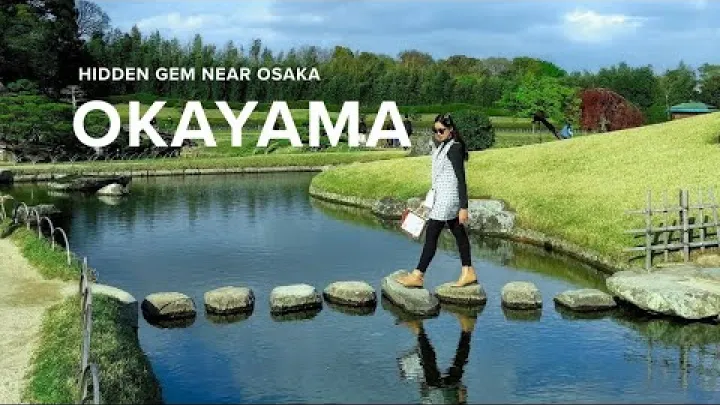
This location suits visitors who want a morning walk, a slower afternoon, or a hotel environment that feels less focused on commuter traffic. It can also be appealing for a one- or two-night stay centered on Okayama's own attractions. The benefit is not simply a shorter route to one landmark. It is the ability to spend more of the day around the river, garden, castle, and nearby streets without treating each visit as a separate trip from the station.
Accommodation close to Korakuen ranges from conventional hotels to properties with a more scenic or leisure-oriented position. Booking.com provides current examples of accommodation described as being close to Korakuen, including properties listed within walking distance. Use that information to identify the area, then assess the individual property's room quality, facilities, and current terms rather than assuming proximity proves value.
Getting Between the Cultural Core and Okayama Station
The Okayama Electric Tramway is an important local connection between the station side and the cultural core. Shiroshita tram stop is a useful map reference when comparing accommodation near Okayama Castle and Korakuen. Buses also connect the station area with the garden and castle side, although the best option depends on the hotel, time of day, and your destination.
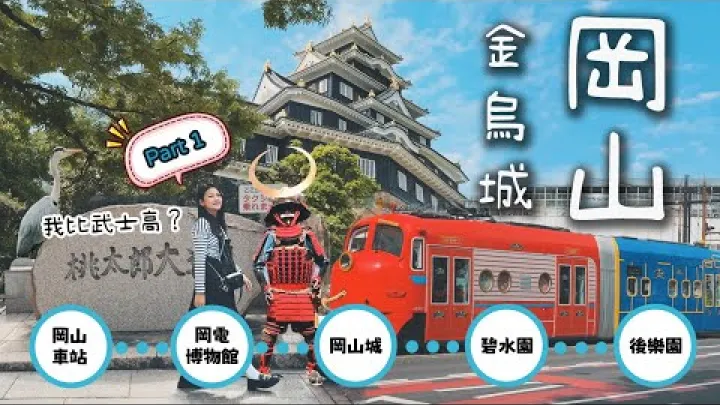
For a sightseeing-focused day, this area can be convenient because the main attractions are close to your base. For an early Shinkansen departure, however, a station hotel may be simpler because you remove the first local tram or bus connection from the plan. Conversely, if your train leaves later, the cultural area can work well when you prefer to spend the final morning near the sights and travel to the station afterward.
Do not build a fixed connection from an old guidebook estimate. Before relying on a tram or bus, check the current route, timetable, fare, and first service. This matters most for early trains, late arrivals, holidays, and any connection where one missed service would affect the rest of the day.
Who Should Choose This Area—and Who Should Not
Choose this area if:
- Your main purpose is Korakuen Garden, Okayama Castle, the Asahi River, and nearby cultural sights.
- You are staying for one or two nights and want sightseeing to begin close to your room.
- You prefer a slower pace, a scenic setting, or evenings that are less centered on station commerce.
- You are traveling with family or want to compare properties near attractions rather than directly beside the rail hub.
Reconsider it if:
- You have several early regional trains or a schedule that changes direction each day.
- You arrive very late or leave very early and do not want to depend on a local tram or bus connection.
- You need the widest possible selection of ultra-budget lodging near the main transport hub.
Check the actual distance to JR Okayama Station, the room's size and configuration, the view, and recent comments about noise. Hotels in the same broad cultural area do not all offer the same practical advantages.
Downtown Omotecho and Momotaro Odori: Best for Dining and Nightlife
Downtown Okayama is a useful middle option for travelers who want a city-center base rather than a purely station-front or garden-side stay. Its strongest reason to choose it is the ability to combine daytime shopping with restaurants, cafes, performances, and evening activity.
Omotecho, Momotaro Odori, and Central Nightlife
Use Omotecho Shopping Arcade, Momotaro Odori, and Nishigawa-ryokudo Park as local anchors when searching the map. These names help you distinguish central Okayama from the immediate station complex and from the quieter area near Korakuen. Omotecho provides a shopping-arcade setting, while Momotaro Odori is the prominent avenue in front of JR Okayama Station leading into the central city.
The downtown belt suits visitors who want to decide dinner after returning from sightseeing. Restaurants, cafes, shops, and entertainment venues make the area feel more like a lived-in city center than a transport interchange. It can also be convenient for travelers who want to walk between their accommodation and evening plans, while keeping local connections to the station and cultural core.
Daytime and nighttime can feel different. Shopping streets may be active during the day, while bars, karaoke venues, and restaurants become more important later. That does not mean every block is intense or noisy. It means the exact street matters more than the broad label downtown.
Nighttime Noise, Walkability, and Comfort
When comparing downtown accommodation, separate two questions: can you walk conveniently to dinner, and can you sleep comfortably afterward? A property close to bars, karaoke, or entertainment venues may have late-night street noise even when the wider city feels comfortable for visitors.
Look at the exact map pin and read recent reviews for comments about sound, entrances, elevators, and the surrounding street after dark. If sleep is important, request a higher-floor room or one away from the main street when the property allows requests. Also check how you will return if you stay out late, including the availability of taxis and the hotel's late check-in or entry arrangements.
For general preparation, the official Okayama Prefecture Tourism page compiles safety information and related links. Use official guidance for practical preparation, but avoid treating an entire neighborhood as uniformly safe, unsafe, quiet, or noisy. In downtown Okayama, the hotel entrance and immediate block are more useful decision points than an unsupported area-wide ranking.
Alternative Bases in Okayama Prefecture
Kurashiki and Uno Port can be better than Okayama City for specific experiences. They are not automatically better general bases, so choose them when their location directly serves your itinerary.
Kurashiki Bikan Historical Quarter for Historic Atmosphere
Kurashiki is the strongest alternative for travelers who value a preserved merchant-town setting, canal scenery, museums, cafes, and walking. The Kurashiki Bikan Historical Quarter offers a more distinctive historic atmosphere than a modern station district, and an overnight stay gives you time to experience the area at a gentler pace.
JR Kurashiki Station and the Bikan Historical Quarter are separate points to compare on the map. The station is the practical arrival point, while the historic quarter is the reason to stay in Kurashiki. Accommodation near the quarter may reduce the need for local transfers during sightseeing, whereas accommodation near the station can simplify rail access and luggage handling.
Okayama City remains a convenient base for a visit to Kurashiki because the two cities have a short local train connection. A day trip is usually simpler when your wider itinerary depends on JR Okayama Station, when you have only one base, or when you are also visiting Korakuen and Okayama Castle. Staying overnight in Kurashiki makes more sense when the historic district is one of the main experiences, when you want an early start there, or when a heritage-style property is part of the trip.
Ryokan and heritage lodging in or near the historic setting should be treated as an experience choice. Compare meal arrangements, room style, bathroom arrangements, luggage access, and check-in requirements. Do not choose a traditional property solely because it sounds atmospheric if your schedule requires easy early-morning rail travel.
Uno Port and Naoshima for Art-Island Itineraries
Uno Port is a specialized base for ferry travel to Naoshima and other Seto Inland Sea art destinations. Its value comes from ferry access, not from offering the same breadth of shopping, lodging, and dining as central Okayama.
There are two useful itinerary patterns. The first is to stay in central Okayama and make the art-island visit a day trip. This keeps your room near JR Okayama Station, Korakuen, downtown restaurants, and other regional routes. The second is to stay near Uno Port when an early ferry, a late return, or several days focused on the islands makes port access more important than city flexibility.
Choose Uno only when the ferry schedule justifies the extra move. A smaller lodging and dining ecosystem can be an advantage for a focused port stay, but it can be limiting if you want many evening choices or decide to change plans. Check the current JR connection between Okayama and Uno, the ferry timetable, the port departure point, and the time needed to transfer with luggage before fixing a Naoshima overnight plan.
Bitchu Matsuyama and Other Outlying Locations
Bitchu Matsuyama Castle near Takahashi and other peripheral destinations are generally better treated as day-trip targets when your wider trip is based in central Okayama. This keeps your accommodation close to the strongest rail hub and avoids choosing a small destination as a base without a clear reason.
Use an outlying overnight base only if that destination is the main purpose of the trip. It may be appropriate when you want an early start, a slower visit, or a specifically verified local property. In that case, confirm the current transport route, the last practical return connection, luggage arrangements, and available accommodation before moving away from Okayama City.
The evidence and lodging selection may be thinner in smaller destinations than in the central corridor. That is a reason to narrow the decision, not to invent a hotel ranking. If your itinerary includes only one peripheral attraction, compare the time and transfer cost of a day trip against the inconvenience of changing bases.
Which Accommodation Type Fits Your Trip?
After choosing an area, select the accommodation type that matches your purpose. A well-located compact room can be more useful than a larger property that adds transfers, while a traditional stay may be worth extra planning when atmosphere is the main goal.
Business Hotels and Station-Front Chains
Business hotels are the core practical option around JR Okayama Station and downtown. They often focus on compact, functional rooms and straightforward check-in, but the exact amenities differ by property. Check the room layout, bed width, luggage space, laundry facilities, breakfast, elevator access, and any public bath directly on the current listing.
This type works especially well for solo travelers, short stays, rail-heavy itineraries, and people who prefer predictable arrangements. It is also useful when you will spend most of the day outside and need a convenient place to sleep, shower, store luggage, and leave again.
Do not choose only by a chain name or star label. Compare the walking route from the correct station exit, the room configuration, check-in hours, and cancellation terms. A slightly less central property may suit you better if it provides the room size or facilities you need, while a very close property may be less comfortable for a family or a traveler carrying large bags.
Mid-Range City Hotels and Family-Friendly Rooms
Families and couples should compare rooms by usable space and sleeping arrangement rather than by hotel category alone. Check whether the room holds the actual number of guests, whether beds can be arranged as needed, and whether connecting rooms, elevators, laundry, breakfast, and luggage storage are available.
The corridor between the station and Korakuen is useful for this comparison because it offers a choice between direct transport access and a less purely commercial setting. Still, family suitability is listing-specific. A property near a park or attraction may not have a large room, and a station hotel may have better access but a compact layout.
Calculate the total booking cost for the actual number of adults and children. Compare the same dates, occupancy, breakfast inclusion, taxes or other added charges, and cancellation conditions. A double-room rate is not a reliable measure of family value if the room requires an extra bed, a second room, or a different occupancy plan.
Hostels, Guesthouses, and Budget Stays
Hostels and guesthouses can work well for solo travelers, backpackers, and visitors who value a social lounge or a lower-cost private room more than hotel services. A station-adjacent example such as KAMP Houkan-Cho illustrates the type of budget and social-stay option travelers may find near the station area, but the current room type and conditions must decide whether it fits your trip.
Compare a dormitory with a private room carefully. The practical differences may include shared or private bathrooms, sound insulation, luggage storage, reception hours, entry procedures, and the location of the sleeping area. A hostel is not automatically cheap after adding breakfast, private-room upgrades, or transport costs, and it is not automatically unsuitable for families if the available room and rules meet their needs.
Recent reviews are particularly useful for understanding shared-space noise, bed comfort, cleanliness, and the experience of arriving outside normal reception hours. Confirm the cancellation policy and the exact bathroom arrangement before assuming that a low headline rate represents the best total value.
Ryokan, Resorts, and Serviced Apartments
A ryokan is most compelling when the setting and traditional experience are central to your plans. Kurashiki's historic district or another specifically verified heritage location may suit travelers interested in architecture, atmosphere, special occasions, and a slower evening. Compare whether meals are included, how sleeping arrangements work, and whether the property is convenient with luggage.
Resort-style properties and serviced apartments should be evaluated as listing-specific options rather than as a large, uniform category in central Okayama. They may be useful for longer stays, families, or travelers who need more space, but the relevant facilities must be confirmed on the individual listing.
For a longer stay, check for a kitchen, cooking equipment, washing machine or laundry access, minimum-stay rules, check-in arrangements, room occupancy, transport access, and whether meals are included. A serviced apartment is useful only when those facilities are actually available and practical for your dates. A resort may offer more space but add distance from the station and the city's main sights.
Booking Checklist and Final Recommendation
The final choice should connect your accommodation with the actual sequence of your trip. Start with the map and transport pattern, then use current booking information to confirm that the room and price match your needs.
Match Your Base to Trip Length and Day-Trip Pattern
For one night or a rail-heavy itinerary, prioritize JR Okayama Station or the nearby central corridor. The main benefit is time: you reduce the luggage route and make early or late train connections simpler. This is usually more important than choosing a hotel beside one sightseeing landmark.
For two or three nights focused on Okayama City, compare three central patterns. Stay near the station if you expect to take regional trains on several days. Choose the station-to-Korakuen corridor if you want a balance between transport and sightseeing. Move closer to Korakuen if the garden, castle, river, and quieter daily rhythm are the main purpose. Choose downtown if evening meals, shopping, and entertainment are a major part of the plan.
For Kurashiki, a central Okayama base works well when you want a day visit alongside other destinations. An overnight in Kurashiki is more reasonable when the Bikan Historical Quarter is a central experience and you want to walk there early or later in the day. For Naoshima, stay in Okayama when you want flexibility across the city and region; choose Uno when ferry timing makes port access the priority.
For a Shikoku or Takamatsu connection, station lodging usually reduces the number of separate movements. For a one-night stay before an early ferry, a Uno-area room may save more time than it costs in hotel changes. Think of each move as more than a train ride: it includes checkout, luggage storage, finding the next property, and checking in again.
Verify Current Hotel Details Before Booking
Use this checklist immediately before payment:
- Confirm the exact map location and the station exit that gives you the simplest luggage route.
- Check the room's maximum occupancy, bed arrangement, bathroom type, and accessibility features.
- Compare the total rate for your actual dates and guests, including breakfast, taxes, other charges, and cancellation terms.
- Check check-in and reception hours, especially for a late arrival or a hostel with limited reception.
- Look for laundry, luggage storage, elevators, kitchen facilities, or a public bath only when those features matter to your trip.
- For families, confirm child policies, bed-sharing rules, extra-bed availability, and room size directly on the current listing.
- For an airport arrival, confirm the current airport-bus stop, operating schedule, payment method, and walking route from the station. The Okayama Momotaro Airport access page is the appropriate place to check bus information.
- For a tram, bus, JR, or ferry connection, check the current operator information rather than relying on an old travel-guide time or fare.
Current booking pages are useful for availability, room details, and cancellation conditions. Official airport and transport pages are more appropriate for time-sensitive connections. Keep those two kinds of information separate when planning: a booking page may describe a location, but it does not replace the operator's current timetable.
The Best Okayama Base for Different Travelers
- Choose JR Okayama Station for transport, short stays, airport-bus convenience, and early or late regional travel.
- Choose the station-to-Korakuen corridor for the best general balance on a first visit.
- Choose Korakuen and Okayama Castle for sightseeing, riverside scenery, and a slower evening rhythm.
- Choose downtown Omotecho and Momotaro Odori for dining, shopping, and nightlife, with attention to the exact street and room location.
- Choose Kurashiki for historic immersion in the Bikan Historical Quarter rather than for maximum regional rail flexibility.
- Choose Uno Port when ferry timing and a Naoshima-focused itinerary justify a specialized base.
For most first-time visitors asking where to stay in Okayama, the central corridor between JR Okayama Station and Korakuen Garden is the strongest starting point. Adjust toward the station, cultural core, downtown, Kurashiki, or Uno according to your itinerary, then finalize the reservation only after checking live availability, current transport schedules, and recent hotel conditions.
Select area
Create a post
Posting is free and no registration is required.