Kochi Getting There: Routes to Kochi, Shikoku, Japan

Kochi Getting There planning is mainly a choice between speed, cost, comfort, and the number of connections you want to manage. Kochi City is on Shikoku, with Kochi Ryoma Airport as its main air gateway and JR Kochi Station and the Kochi Station Bus Terminal as the main central arrival points. Direct flights are often the simplest option from Tokyo and other cities with suitable services, while rail via Okayama is a strong choice from Osaka, Kyoto, and western Honshu. This guide compares the major routes and explains how to continue from each gateway into central Kochi.
Choose the Best Way to Get to Kochi
The best route depends on where you start and whether Kochi City is your only destination. Compare the full journey from your accommodation to your Kochi hotel, not only the time on a plane or train.
Best Route by Starting Point and Travel Priority
For travelers starting in Tokyo, a direct domestic flight to Kochi Ryoma Airport is usually the first option to investigate when speed is important and a suitable service is available. The airport is outside Kochi City, but the city transfer is straightforward compared with making several long-distance rail connections. A flight can also work well from Nagoya or Fukuoka when the date has a convenient nonstop service.
From Osaka or Kyoto, compare both air and rail. Flying may have a shorter time in the air, but airport access, check-in, security, baggage collection, and the airport-to-city transfer add time. Rail follows a clear route through Okayama and may be more comfortable for travelers who prefer city-center stations, want to use a suitable rail pass, or enjoy the Seto-Ohashi and mountain scenery. A highway bus is the main budget alternative from Kansai and can be useful when the departure terminal is convenient.
From Takamatsu, Matsuyama, or Tokushima, a Shikoku rail or highway-bus connection may be more practical than traveling back through a major airport. The best choice varies with the timetable and the number of transfers. Driving becomes more attractive when Kochi City is only the starting point for river valleys, coastal areas, mountain communities, or several rural destinations across Kochi Prefecture. For a city-only stay, public transport normally involves less booking and parking work.
Comparing Time, Cost, Comfort, and Booking Difficulty
The table below gives a planning-level comparison. Cost labels are relative rather than fixed fare claims because prices depend on the date, booking time, seat type, luggage, tolls, and the operators included in the itinerary.
| Mode | Best starting points | Time pattern | Cost pattern | Comfort | Main arrival gateway |
|---|---|---|---|---|---|
| Flight | Tokyo, Osaka, Nagoya, Fukuoka | Fast when nonstop; add airport time | Low to high | Good onboard; more formalities | Kochi Ryoma Airport |
| Rail | Tokyo, Osaka, Kyoto, Okayama, Takamatsu | Several hours to a full travel day | Medium to high | Good space and city-center arrival | JR Kochi Station |
| Highway bus | Tokyo, Osaka, Kyoto, Kansai Airport, Shikoku cities | Long; overnight options available | Often lower | Depends on seat layout | Kochi Station Bus Terminal or listed stop |
| Rental car | Honshu or another Shikoku city | Flexible; depends on road route | Rental, fuel, tolls, parking | Private space and itinerary freedom | Chosen accommodation or destination |
| Ferry combination | Kansai via Wakayama and Tokushima | Several legs; longer overall | Ferry plus road or rail costs | Sea crossing; more coordination | Tokushima first, then Kochi |
Air travel is usually the fastest long-distance choice when there is a direct service, but the cheapest advertised fare may not be the cheapest door-to-door option after airport transport and baggage are added. Rail is easier to understand once the Okayama transfer is clear. Bus travel can reduce the ticket cost and, for an overnight service, may reduce one hotel night, but the long ride can affect your first day in Kochi. A car provides flexibility rather than a guaranteed time saving. The ferry is a special-purpose choice for a sea crossing or vehicle transport, not normally the simplest route to the city.
Fly to Kochi Ryoma Airport
Kochi Ryoma Airport is the main air gateway for Kochi and is located in Nankoku, outside the city center. After landing, travelers continue by airport bus, taxi, or rental car.
Direct Domestic Flights to Kochi Ryoma Airport
Kochi Ryoma Airport, identified by the airport code KCZ, serves Kochi Prefecture from a location outside Kochi City. The Kochi Ryoma Airport site lists scheduled nonstop links with four major Japanese city markets, including Tokyo, Osaka, Nagoya, and Fukuoka. The exact airlines, departure airports, and frequency can change, so treat this list as a starting point rather than as a promise that every route operates on every date.

A direct flight is especially useful from Tokyo because the alternative rail journey requires a long overland trip and a transfer at Okayama. The same comparison applies to travelers from other regions when a nonstop flight is available. However, compare total journey time. You need to reach the departure airport, complete the airline's check-in and security process, collect baggage after landing, and travel from KCZ into Kochi.
From Osaka, the result may be less obvious. A flight can be convenient when the airport is easy to reach and the schedule fits, but a train from a central Osaka or Kyoto station avoids an airport transfer and brings you directly to JR Kochi Station. A direct flight should therefore be judged by the whole itinerary, not only by the flight duration shown in a search result.
International Arrivals and Connections Through Japan
Many international itineraries to Kochi require a connection through a major Japanese gateway before the domestic flight to KCZ. Tokyo and Osaka are common places to compare, but the airport named on the international ticket matters. An international arrival in Tokyo may involve Haneda or Narita, while an itinerary arriving at Kansai International Airport may require a separate transfer to the domestic airport or departure terminal used for the Kochi flight.
Read the complete itinerary before paying. Check whether the domestic flight is included on one ticket, whether baggage is checked through to Kochi, and whether you must collect and recheck it in Japan. Also check the minimum connection time shown by the airline against the practical time needed for immigration, customs, security, terminal movement, and any airport change.
Separate tickets require a larger safety margin because the second airline may not protect you if the international flight is delayed. A missed connection can mean a new fare and an unexpected night near the gateway airport. Any seasonal direct international service should be treated as date-sensitive and confirmed through the airport or airline rather than assumed from an old itinerary or search result.
Booking a Flight and Reaching the City
Use a short checklist when comparing flights to Kochi:
- Confirm the departure airport and the arrival airport code, KCZ.
- Check the baggage allowance, seat conditions, change rules, and cancellation terms.
- Add the cost and time of reaching the departure airport and leaving Kochi Ryoma Airport.
- Check whether a connection uses one ticket or separate tickets.
- Compare the full price after baggage, seat selection, airport access, and other optional charges.
A low headline fare can become less attractive after these additions. The flight timetable also matters if you plan to use the last airport bus or collect a rental car after landing. Use an official airline booking or timetable page, such as the JAL domestic timetable, together with the airport's own route information. The airport bus and city-center options are covered below, so you can compare the complete arrival plan before selecting the ticket.
Travel to Kochi by Train
Rail is a practical way to reach Kochi from Honshu and a good fit for travelers who prefer central stations, a larger seat, and a continuous overland journey. The key connection for the main route is Okayama.
Tokyo, Osaka, and Kyoto via Okayama
The standard rail route from Tokyo, Osaka, or Kyoto is to travel by Shinkansen to Okayama, transfer there, and continue on the Limited Express Nanpu toward JR Kochi Station. The train crosses from Honshu to Shikoku over the Seto-Ohashi route and then continues through the Dosan Line corridor toward Kochi. You do not need to treat Okayama as a destination; it is the main transfer point on the journey.
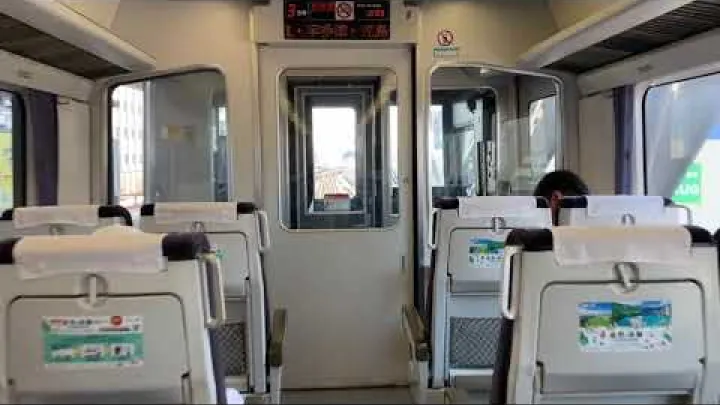
For rough planning, Tokyo to Kochi by rail is a long travel day, commonly in the broad range of six to eight hours once the transfer and waiting time are included. Osaka to Kochi is usually a several-hour journey, often around three to five hours depending on the Shinkansen connection and the selected limited express. Kyoto can take a little longer than Osaka because of the extra approach to the departure station. These are planning bands, not fixed schedules. A route-specific NAVITIME Japan Travel timetable can help you examine the current Dosan Line and limited express pattern.
The rail journey appeals to travelers who enjoy changing landscapes. The Seto-Ohashi crossing provides a distinct sea-crossing section, followed by a more mountainous approach toward Kochi. The practical challenge is Okayama Station. With large luggage, allow enough time to identify the next platform, move through the station, and board without rushing. A short connection that looks efficient on a planner may be uncomfortable if you are unfamiliar with Japanese station signs.
Train Connections Within Shikoku
From Takamatsu, travelers can compare limited express connections toward Kochi using the Dosan Line corridor. Depending on the date and departure time, a direct or connecting service may be available. The journey can be a useful part of a wider Shikoku itinerary because it avoids returning to Honshu, but the best departure may not be the first result shown by a general search.
Matsuyama and Tokushima can also be included in a Shikoku loop, although their rail connections to Kochi may be less direct or less convenient than the main Okayama–Kochi route. A traveler leaving Tokushima, for example, may find a highway bus simpler than combining several train legs. From Matsuyama, compare the rail route with a regional bus and consider whether the transfer location is convenient for your accommodation.
Rail is a strong choice when scenery, a larger seat, and a predictable station arrival matter. A bus may be better when there is a direct service, the fare is lower, or you want to avoid transfers. In either case, use JR Kochi Station as the consistent arrival anchor. It places you near the central local transport network and makes the next city transfer easier to understand.
Rail Passes, Reservations, and Transfer Planning
A regional Shikoku rail pass may be worthwhile for a trip that includes several rail journeys within Shikoku. For one trip to Kochi, individual tickets may be simpler and may cost less after you account for the parts of the itinerary that the pass does not cover. Do not assume that a pass covers every leg from your origin.
Make the comparison by listing the journey in separate parts:
- Travel from your starting city to Okayama, if using the Honshu route.
- Travel from Okayama to Kochi on the limited express.
- Add any later journeys within Shikoku.
- Compare the pass coverage and total price with individual tickets for exactly those legs.
Pay particular attention to Shinkansen coverage and to any third-party or non-JR segment. A pass designed for Shikoku may not cover the Shinkansen needed to reach the island, and a highway bus or ferry will normally require a separate booking. Coverage, validity, and reservation conditions are product-specific and can change.
For the Limited Express Nanpu, check whether a reserved seat is appropriate for your date and luggage. Review the rules for reserved and non-reserved seating, and expect busy periods to reduce flexibility. At Okayama, allow extra platform time if you have large bags, children, or a tight connection. A pass is useful only when its coverage and the convenience of using it match your actual route.
Take a Highway Bus to Kochi
Highway buses connect Kochi with Kansai, Tokyo, and other parts of Shikoku. They can offer a lower ticket price and, on overnight services, a way to travel while the city is sleeping.
Overnight Highway Buses from Tokyo
Where a current operator offers a Tokyo–Kochi overnight service, it is mainly a budget and time-use choice rather than a comfort choice. You leave in the evening, spend the night in a reclining seat, and arrive in the morning after a long road journey. This can reduce the need for a hotel night and may be attractive when airfares are high or airport access is inconvenient.
The trade-off is significant. A reclining bus seat is not the same as a bed, and rest-stop breaks can interrupt sleep. Seat width, privacy, legroom, curtains, power outlets, and toilet access depend on the selected vehicle and operator. Look at the actual seat layout instead of assuming that every overnight bus has the same facilities.
When the selected ticket lists the Kochi Station Bus Terminal, that is a useful central arrival point. Some services can use different stops, so follow the stop printed on the booking confirmation. Avoid arranging a tight morning connection, an important appointment, or a nonrefundable activity immediately after arrival. A late bus or a poor night's sleep can affect the rest of the day.
Daytime and Overnight Buses from Osaka, Kyoto, and Kansai Airport
Highway bus links are available on some dates between Kochi and Osaka, Kyoto, and Kansai Airport. The route may be direct or may include intermediate stops, and the departure and arrival pattern can vary by operator. The JR Shikoku Bus operator information is a useful place to identify services connecting Kochi with major cities in Kansai and Shikoku.
From Osaka or Kyoto, compare the bus with the Shinkansen and Limited Express Nanpu route. The bus may be less expensive and may leave from a convenient city terminal, but it usually provides less freedom to move and can take longer on the road. From Kansai Airport, examine whether the selected service boards at the airport itself or requires a separate trip to an Osaka bus terminal. The airport label in a search result does not always describe the whole journey from your hotel.
Regional buses can also be practical from Takamatsu or Matsuyama, depending on the day's service. They may avoid a rail transfer and provide a simple intercity connection. Compare the directness of the route, the arrival stop, luggage rules, and the time of day. The cheapest ticket is not necessarily best if it requires a difficult terminal transfer or arrives far from your accommodation.
Bus Booking, Seating, and Delay Planning
Use this booking sequence for a long-distance bus:
- Search the exact date, origin, destination, and direction.
- Compare operators, departure times, and seat layouts.
- Confirm the full name of the departure terminal and the Kochi arrival stop.
- Read baggage limits, boarding instructions, payment rules, and cancellation conditions.
- Save the booking confirmation where you can show it at boarding.
Standard four-row seating is generally more compact than a three-row or premium arrangement, but the exact comfort features belong to the selected vehicle. Check whether the listing states the seat width, privacy curtain, power supply, toilet, or other amenity. Do not pay extra for a feature that is not shown on your specific service.
Arrive early enough to identify the correct platform, especially at a large Osaka or Kyoto terminal. Highway-bus arrival times are affected by traffic, holiday demand, road incidents, and extended stops. Treat the scheduled arrival as a planning estimate and leave room before a separate ticket, tour, or hotel check-in promise.
Drive or Use a Ferry to Reach Kochi
Driving and ferry combinations are most useful when the journey to Kochi is part of a wider road trip. They offer flexibility or a sea crossing, but they usually require more planning than a direct flight or the standard rail route.
Driving from Honshu and Around Kochi
Drivers from Honshu can reach Shikoku through bridge and expressway routes, including the Seto-Ohashi connection, and then continue toward Kochi. The best road depends on the departure city, the intended stops, and the condition of the route on the travel date. A navigation app can calculate the current route, but the result should be considered alongside tolls, rest stops, and the time needed to return a rental car.
A car is particularly valuable for rural Kochi. River valleys, coastal viewpoints, mountain communities, and dispersed attractions can take much longer by public transport, especially when buses operate infrequently. If Kochi City is the only destination, however, a rental car may add cost and parking work without improving the visit. Consider renting only for the rural portion of the itinerary if city access is easier by train or bus.
Budget for more than the daily rental rate. Main cost categories include fuel, expressway tolls, parking, insurance or protection options, child seats, and one-way or drop-off charges. The cheapest rental rate may not be the cheapest complete trip. Avoid quoting a fixed drive time or toll total unless it has been calculated for your actual departure point, vehicle, and route.
International visitors should confirm driving eligibility and rental conditions before booking. Requirements can depend on the country that issued the license and the type of document presented. Do not assume that a home-country license alone will be accepted. Ask the rental company or an appropriate Japanese authority which documents are required, and plan realistic driving days with rest breaks rather than treating a long route as a single uninterrupted trip.
The Wakayama–Tokushima Ferry Route
The Wakayama–Tokushima ferry is an optional multimodal route from the Kansai region. It does not bring you directly to Kochi. The sequence is to reach the departure point in Wakayama, board the ferry to Tokushima, and then continue toward Kochi by car, bus, or another form of public transport.
This option can appeal to travelers who want a sea crossing or need to take a vehicle to Shikoku. It can also fit a road trip that includes Wakayama, Tokushima, and Kochi. For a city-only visit, the extra movement between Osaka or another Kansai starting point, the Wakayama port, the Tokushima arrival point, and Kochi usually makes the route more complex than rail, bus, or air travel.
Plan each leg separately: transport from Osaka or your accommodation to the Wakayama departure point, the sailing, the port exit in Tokushima, and the onward route to Kochi. Sailing times, fares, vehicle space, reservation requirements, and operating conditions are date-specific. Confirm them with the current ferry operator, particularly if you are traveling with a rental car or during a busy period.
When a Car or Ferry Makes Sense
Use this decision framework:
- Choose a car when your itinerary includes rural valleys, coastal areas, mountain roads, several distant stops, or a group with substantial luggage.
- Choose the ferry when the sea crossing is part of the experience or when moving a vehicle is an important purpose of the trip.
- Choose rail, air, or a highway bus when Kochi City is the main destination and you value a simpler arrival.
Compare door-to-door time and total cost. For a car, include tolls, fuel, parking, and drop-off conditions. For the ferry, include the road or public-transport legs on both sides of the sailing. A low ferry fare or rental rate can be misleading if the additional connections consume most of a day.
Reach Kochi City Center from Your Arrival Gateway
Once you reach Kochi, the correct last-mile choice depends on your gateway. The airport is outside the city, while JR Kochi Station and the Kochi Station Bus Terminal are already close to the central transport network.
From Kochi Ryoma Airport to Kochi Station or Harimayabashi
The airport limousine or shuttle bus is the standard public-transport link from Kochi Ryoma Airport toward JR Kochi Station and the Harimayabashi area. The official tourism guidance for Kochi describes the airport shuttle bus and rental cars as the main access choices for reaching Kochi City. Select the stop closest to your accommodation rather than automatically riding to the station.
Published timetable examples have shown a journey of roughly 34 to 35 minutes between Kochi-eki Bus Terminal and Kochi Ryoma Airport. This is an orientation only. The actual time depends on the stop, traffic, boarding conditions, and the timetable in force on your date. A route listing from NAVITIME Japan Travel can help you understand the pattern.
The airport bus is a good fit for most visitors with ordinary luggage and a hotel near the central area. A taxi can be more practical for a late arrival, a group, heavy luggage, or a hotel away from the main stops. A rental car makes more sense when you will leave the city soon for rural Kochi. If your flight arrives late, check the last airport bus for that arrival date before you travel. If it does not match the flight, arrange a taxi or a nearby fallback instead of assuming another bus will be available.
Arriving at Kochi Station and the Highway Bus Terminal
JR Kochi Station and the nearby Kochi Station Bus Terminal are the main central arrival points for train passengers and many long-distance bus travelers. From the station area, you can continue by local bus, tram, taxi, or on foot when the accommodation is close enough. Kochi-Ekimae is an important local transport reference near the station, and the route toward Harimayabashi connects the station area with the central city.
Arriving here generally places you closer to central accommodation than arriving at the airport or a cruise port. It also makes a rail-to-hotel or bus-to-hotel transfer easier because several local modes are available in one area. If you have a hotel reservation, check which stop is closest before boarding a local tram or bus.
Read the exact arrival information on your long-distance ticket. Operators may use different stopping points or terminal entrances even when a booking result uses a broad label such as Kochi Station. After leaving the platform or bus, identify the station exit, confirm the local stop, and keep the booking confirmation available until you have reached the correct area.
Arriving by Cruise Ship
A cruise-port arrival is different from a train, bus, or airport arrival. The port is outside the central station area, and cruise passengers usually have a limited shore-call window. The practical downtown options are a shuttle arranged by the cruise line or port, a taxi from a marked rank, or a pre-booked excursion or transfer that is timed to the ship's schedule.
Do not assume that walking is the default way to reach central Kochi. Port access, pedestrian routes, and shuttle arrangements can differ by ship and docking date. Ask the cruise line or port representative where authorized transport boards and how much time is needed to return to the ship.
Use marked cruise-port shuttle services and official taxi arrangements. Avoid accepting unsolicited rides from people approaching passengers at the port. Confirm the return meeting point and allow time for traffic, port procedures, and boarding. A low-priced informal ride is not worth the risk of missing the ship or losing track of the approved transport area.
Final Booking Checklist for Kochi
Geographic facts such as the role of KCZ, Okayama, JR Kochi Station, and the Kochi Station Bus Terminal are relatively stable. Routes, fares, departure times, seasonal services, and arrival arrangements are not. Use the following checklist immediately before committing to a journey.
Check Current Routes, Fares, and Service Status
Use the official source that controls each part of the journey: the airport and airline for flights, railway operators or a current timetable tool for trains, the bus operator or booking platform for highway coaches, and the current ferry or port notice for a sea crossing. A travel guide can explain the route structure, but it cannot replace a live booking or service-status check.
- Confirm the travel date and the exact departure airport, station, bus stop, or ferry terminal.
- Confirm the arrival gateway in Kochi and the final city transfer.
- Check connection times, terminal changes, baggage rules, seat reservations, and ticket conditions.
- Compare the complete price, including airport access, transfers, luggage, tolls, parking, and separate tickets.
- Read cancellation, change, refund, and missed-connection rules before payment.
- Check whether a route is seasonal, whether the bus stop has changed, and whether port arrangements apply to your ship and docking date.
Route frequencies, fares, seasonal international services, bus stops, and port arrangements can change after an itinerary is first researched. Make the final choice from the date-specific operator information, then save the confirmation and departure details where they are easy to access.
Build a Backup Plan for Late or Disrupted Arrivals
Leave extra time for every important connection between international flights, domestic flights, trains, buses, ferries, and rental-car desks. A plan that works only if every segment arrives exactly on time is fragile, especially when separate tickets are involved.
Heavy rain, typhoons, road traffic, rail disruption, and ferry cancellations can affect different parts of a Kochi journey. Before leaving for the departure point, and again before a critical connection, check the operator notice and local weather. If conditions are poor, a later connection, a flexible ticket, or an overnight in the gateway city may be safer than forcing the original itinerary.
A different mode can also be a useful backup when it is operating and practical. The best way to get to Kochi depends on your starting point, budget, comfort preference, arrival time, and plans for the wider Shikoku region. Choose the route that remains manageable even after you include the final trip into the city center.
Select area
Create a post
Posting is free and no registration is required.