Nagano Getting There: Train, Bus, and Air Routes
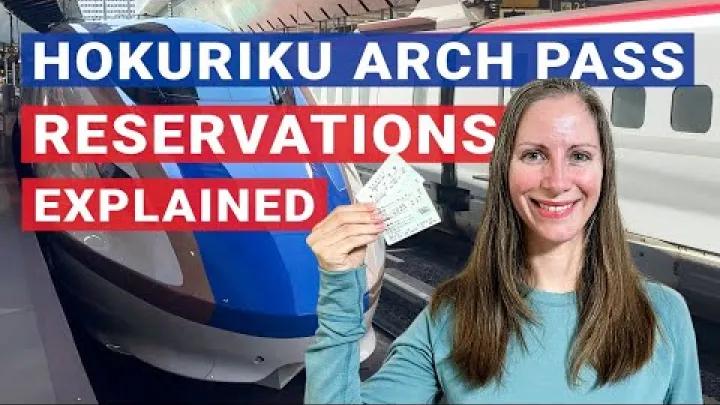
Planning how to get to Nagano is easiest when you first identify the exact destination. Nagano City and Nagano Station are well connected by high-speed rail and long-distance buses, while Matsumoto, Hakuba, and other parts of Nagano Prefecture may require different routes. This guide compares train, bus, and air-plus-ground travel from Tokyo, Nagoya, Kyoto, Osaka, and major airports. It also explains how to book, manage transfers, arrive at Nagano Station, and prepare for late arrivals or winter disruption.
Start by Defining Your Nagano Destination
Nagano is both the name of a city and the name of a large prefecture. A route that is convenient for Nagano City may not be the best choice for Matsumoto, Hakuba, or a mountain resort. Confirm the address of your accommodation before selecting a fixed train or bus ticket.
Nagano City, Nagano Station, or Another Part of the Prefecture?
For most visitors, Nagano means Nagano City, and Nagano Station is the main arrival reference. The station is the central rail and long-distance bus hub for the city. The Hokuriku Shinkansen arrives there, and buses connect the station with destinations in and beyond central Nagano.
- Nagano City: Use Nagano Station as the normal arrival point for hotels in the city center and visits to places such as Zenkoji.
- Matsumoto: This is a separate city in the prefecture. A route through Matsumoto Airport or a train to Matsumoto may be more suitable than traveling first to Nagano Station.
- Hakuba and mountain areas: These destinations generally need a further regional train or bus connection. The best arrival hub depends on your accommodation and the service operating on your date.
Entering only “Nagano” into a journey planner can therefore produce a misleading result. Check whether the destination field refers to Nagano Station, a local station, an airport, or a resort bus stop. If your hotel offers access instructions, compare those instructions with the station or terminal shown on your ticket before paying for a non-refundable journey.
Choose Between Rail, Bus, and Air
There is no single best way to reach every destination in Nagano Prefecture. Rail is usually the clearest baseline for Tokyo and Nagoya. Long-distance buses can offer a direct or overnight journey, while air is most useful when a suitable domestic flight and onward ground connection match your itinerary. Because Nagano is inland, ferries are not a practical arrival option; the relevant long-distance choices are rail, bus, or a flight followed by ground transport.
| Travel mode | Speed pattern | Cost pattern | Comfort and booking | Main issue |
|---|---|---|---|---|
| Shinkansen or limited express | Fast and scheduled | Usually medium to high | Comfortable; reservations are straightforward | Limited late-night service and possible transfers |
| Long-distance bus | About five to eight hours on some western routes | Variable; may be lower than rail | Simple route; reserve in advance for many services | Traffic, overnight comfort, and weather delays |
| Air plus ground transport | Flight time can be short, but total time varies | Highly dependent on flight and transfer costs | More booking steps and luggage transfers | Limited flights and an additional journey after landing |
Use the table as a decision guide rather than a promise about price. Bus fares change with the date, demand, seat type, and route. Air travel can look fast on a flight schedule but take longer door to door once airport access, check-in, baggage, and the onward connection are included. For central Nagano, a direct train often reduces the number of decisions you need to make.
Reach Nagano from Tokyo and Eastern Japan
Tokyo is the most convenient major gateway for Nagano City. Travelers arriving in eastern Japan can usually compare a direct Hokuriku Shinkansen journey with a highway bus, especially when the ticket price or departure time matters more than travel speed.
Take the Hokuriku Shinkansen to Nagano Station
The direct rail route runs from the Tokyo area to Nagano on the Hokuriku Shinkansen. Major boarding points include Tokyo Station, Ueno Station, and Omiya Station, so travelers do not always need to begin at Tokyo Station. The basic sequence is simple: board a Hokuriku Shinkansen service, remain on the train to Nagano Station, and then continue by local transport or a regional connection.
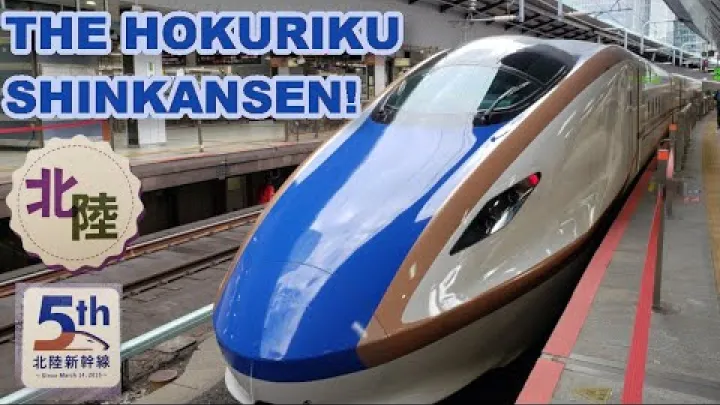
The service names relevant to the Tokyo-Nagano corridor include Kagayaki, Hakutaka, and Asama. Their stopping patterns are different, and the number of departures or the exact calling stations can vary by timetable. As a current-check reference, timetable information places the Tokyo-Nagano journey at approximately 80 to 110 minutes depending on the service. The Japan Travel by NAVITIME route timetable can help you compare a travel date, but the operator result for that date should control your final choice.
This is usually the simplest rail option for a stay in Nagano City because it avoids a change in Tokyo and delivers you to the city’s principal station. It is less direct for a final destination such as Matsumoto or Hakuba. In those cases, compare the time and cost of continuing from Nagano Station with a route that approaches your destination through a different regional hub.
Book Seats and Compare Shinkansen Options
There are four separate booking decisions: the route, the departure, the seat class, and any pass or fare product. JR East online booking is useful for travelers planning the Hokuriku Shinkansen, while station ticket offices and reserved-seat ticket machines are alternatives after arrival in Japan. JR East information describes advance booking windows of about one month for relevant products, with the exact opening time and conditions depending on the ticket or pass.
The JR-EAST information pages are the appropriate place to check booking timing, child-ticket conditions, pass eligibility, and the rules for changing or canceling a reservation. Do not assume that a regional rail pass, an overseas-purchased pass, and a normal point-to-point ticket have the same conditions. A complicated itinerary crossing JR areas may involve separate validity boundaries or exchange rules.
For seating, ordinary reserved seats provide a guaranteed seat when the reservation is confirmed. Non-reserved seating can be more flexible on services that offer it, but it does not guarantee that you will sit together or that a seat will be available. The service you select determines whether non-reserved cars are offered, so check the train details rather than assuming that every Hokuriku Shinkansen has the same arrangement.
Green Car provides a more spacious premium seating environment, and Gran Class is available on selected services and offers a higher level of service. Both cost more than ordinary seating. Reserved seats are particularly useful on busy weekends, public holidays, and periods of strong demand for access to the mountains. Before purchase, read the current conditions for exchange, cancellation, pass coverage, and child fares instead of relying on a fare remembered from a previous trip.
Reach Nagano from Nagoya, Kyoto, Osaka, and Kansai
Western Japan has two main rail ideas for Nagano: travel east to Nagoya and continue on the Limited Express Shinano, or use the Hokuriku corridor through Tsuruga. The Nagoya route is often the natural choice when Nagoya is already part of the trip. The Tsuruga route can add value when your itinerary includes Kanazawa, Toyama, or another Hokuriku destination.
Travel from Nagoya on the Limited Express Shinano
The Limited Express Shinano runs between Nagoya and Nagano via Matsumoto and the Kiso Valley. Its indicative journey time is about three hours, subject to the current service pattern. For many visitors, it is the most natural rail connection from Nagoya because it reaches Nagano directly without requiring a change at Matsumoto.
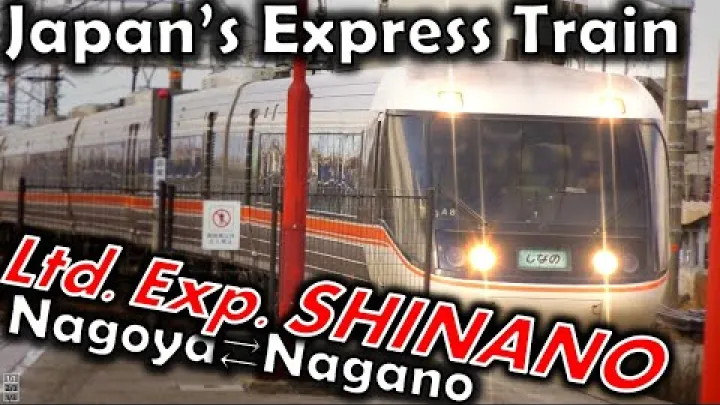
A common transfer sequence for travelers arriving by Tokaido Shinkansen is to arrive at Nagoya Station, follow the signs for the conventional limited express area, and board the Shinano for Nagano. Allow time to read the departure board, move between platforms, and collect food or luggage before boarding. The Tokaido Shinkansen segment and the Shinano segment are different services, so check whether your booking covers both parts and whether you need separate reservations.
Compared with a bus, Shinano usually offers a more predictable scheduled journey and a more conventional daytime train environment, but a bus may have a lower fare or a more convenient departure. The Hokuriku alternative can make more sense when Nagoya would take you away from the rest of your planned route. Compare the complete itinerary rather than choosing based only on the name of one train.
Travel from Kyoto or Osaka by Rail
The common rail pattern from Kyoto is Kyoto to Nagoya by Tokaido Shinkansen, then Nagoya to Nagano by Limited Express Shinano. From Osaka, the pattern is generally Osaka or Shin-Osaka to Nagoya, then Nagoya to Nagano. This route combines a high-speed segment with a conventional limited express segment, so it should be planned as a connection rather than treated as one direct train.
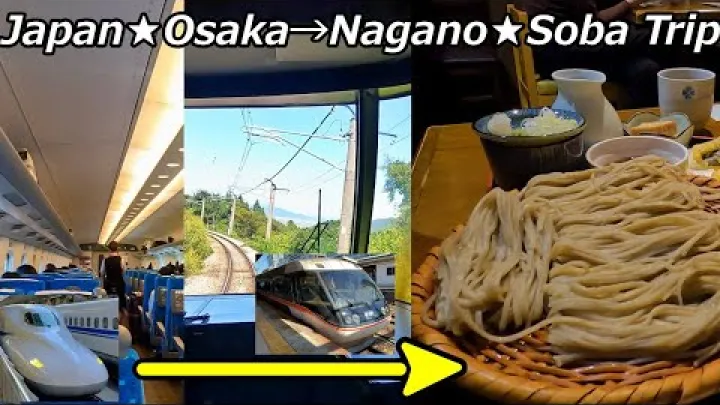
When buying the journey, consider which operator handles each segment and whether the reservation system treats them as one booking or separate tickets. The seat reservation, cancellation, and change rules may differ between the Tokaido Shinkansen and Shinano. Travelers using a rail pass should also check which portions are covered and whether a supplement or separate reservation is required.
This route is a good choice when speed and daytime rail comfort are priorities. A long-distance bus can reduce the number of rail changes and may suit a lower-cost or overnight plan, but its total time depends on road conditions. A useful comparison is therefore the complete door-to-door journey: access to Kyoto Station or Shin-Osaka, the Nagoya transfer, the Shinano departure, and the final trip from Nagano Station to your accommodation.
Use a sample sequence only as a planning pattern until it is matched to your date: leave Kyoto or Shin-Osaka, arrive in Nagoya, transfer to the next suitable Shinano, and finish at Nagano Station. Select a connection with enough time for platform navigation rather than choosing the shortest possible interchange.
Use the Hokuriku Route via Tsuruga When It Fits
The Hokuriku Shinkansen extension makes a western-Japan route through Tsuruga an alternative for reaching Nagano. A typical planning pattern is to travel from Kyoto or Osaka toward Tsuruga, transfer there to a Hokuriku Shinkansen service, and continue in the direction of Nagano. The first segment and the Shinkansen segment may have different reservation arrangements.
This route is most useful when your trip already includes Hokuriku destinations such as Kanazawa or Toyama. It avoids backtracking through Nagoya and can turn Nagano into the next part of a broader Hokuriku itinerary. It is not automatically the fastest or cheapest choice for every traveler starting in Osaka or Kyoto.
Compare the Tsuruga option with the Nagoya-Shinano route using four questions: Which direction already matches your itinerary? How many transfers are required on your date? Do the departure times provide a comfortable connection? Are the tickets and change conditions clear across the relevant JR operators? Current JR West and JR East schedules should decide the train combination, not a historic example of the route.
Use Airports as Part of a Nagano Journey
Nagano has no major international airport in the city, so air travel normally means reaching an airport, traveling by ground transport, and then continuing to Nagano. For international visitors, Haneda and Narita are usually compared with rail access through Tokyo. Matsumoto Airport is a smaller domestic option for selected itineraries within the prefecture.
Travel from Narita or Haneda to Nagano
International arrivals have two broad choices. The first is to travel from the airport into the Tokyo rail network and continue from Tokyo, Ueno, or another suitable station by Hokuriku Shinkansen. The second is to use a direct or near-direct highway bus when a service operates at a useful time.
Rail normally has a clearer timetable once you reach the station and is less exposed to highway congestion. It does, however, require an airport-to-station transfer, luggage handling, and navigation through a large Tokyo terminal. A bus can reduce the number of changes and may take luggage directly toward Nagano, but its travel time is affected by traffic and its departures may be limited.
The ALPICO Group route page provides a current reference for the Narita Airport to Nagano service, including airport terminal information and departure details. Listings for Haneda-Nagano highway buses can also change by date and operator. Treat an airport bus as a practical option only after confirming the operating day, terminal, boarding location, and reservation requirement.
Use this simple decision path:
- Early arrival: Compare the first practical airport-to-Tokyo rail connection with a daytime bus. Rail may be attractive if you want a scheduled arrival and a direct Shinkansen from the city.
- Daytime arrival: Choose between a Tokyo rail transfer and a bus by weighing luggage, traffic, price, and the location of your accommodation.
- Late arrival: Check the final same-day train or bus departure before booking the flight. If the connection is not realistic, plan a confirmed overnight stay near the airport or in the Tokyo area rather than assuming that Nagano can be reached that night.
Use Matsumoto Airport for Selected Domestic Flights
Matsumoto Airport, also called Shinshu-Matsumoto Airport, is Nagano Prefecture’s regional domestic airport. It is not a substitute for an international airport serving Nagano City, and its domestic flight availability is limited compared with the major gateways around Tokyo, Osaka, and Nagoya.
Flight routes and operating days can change, so identify a suitable flight from your origin before building the rest of the itinerary. After landing, you still need ground transport toward Matsumoto and, if Nagano City is your final destination, an onward rail or bus journey. A short flight does not automatically create the shortest door-to-door trip once airport access and the second ground segment are included.
Matsumoto Airport may be logical when Matsumoto, the central Alps, or another nearby part of the prefecture is the main focus. For a trip whose only destination is Nagano City, compare the full airport itinerary with the direct Tokyo-Nagano Shinkansen before booking. The airport and airline schedule should be the basis for any current route decision.
Travel from Kansai International Airport
Kansai International Airport is a western-Japan gateway, not an airport near Nagano. Reaching Nagano from KIX normally involves several rail or bus segments, so compare the transfer points and total journey before selecting a flight to Osaka.
Example rail pattern: travel from KIX to the Osaka rail network, continue to Shin-Osaka, take the Tokaido Shinkansen to Nagoya, and transfer to the Limited Express Shinano for Nagano. This is a clear pattern when the Nagoya route has a suitable connection, but it involves airport access, a Shinkansen transfer, and a limited express reservation.
Alternative Hokuriku pattern: travel from KIX toward Kyoto or another suitable interchange, continue to Tsuruga, and transfer to a Hokuriku Shinkansen service toward Nagano. This can fit better when the itinerary includes Hokuriku destinations, while a bus to Kyoto followed by rail may be another combination shown by a journey planner.
Use journey planners to compare these patterns, but verify each segment with the relevant airport, railway, or bus operator before purchase. The route with the lowest displayed price may involve a longer transfer, separate tickets, or an arrival time that leaves little margin for a missed connection. KIX travelers should also avoid assuming that a late flight can connect with a final Nagano train on the same night.
Take a Long-Distance Bus to Nagano
Long-distance buses are useful when a direct route, overnight departure, or lower potential fare is more important than the fastest daytime journey. They can also avoid a transfer through central Tokyo or Nagoya. The trade-off is a longer journey and greater exposure to traffic, road closures, and winter conditions.
Use Direct and Overnight Buses from Osaka or Kyoto
ALPICO and other bus operators list long-distance services linking Osaka or Kyoto with Nagano when those services are operating. Depending on the date, the timetable may include a daytime journey, an overnight bus, or both. The research-supported planning range for these routes is roughly five to eight hours, but the actual time depends on the route, stops, traffic, and departure schedule.
Read the booking confirmation carefully. It should identify the exact boarding area, destination, departure date, and arrival location. A city name such as Osaka or Kyoto may cover more than one boarding point, and a familiar station is not necessarily the correct bus terminal. Arrive early enough to find the stop and complete any ticket or check-in process required by the operator.
Many highway buses use reserved seating and are sold as one-way journeys, but fare conditions, child-ticket rules, seat layouts, and luggage limits are operator-specific. A bus may cost less on one date and more on another. It can be a sensible choice for budget travelers or people who want to travel overnight, but the longer ride and reduced sleep quality should be part of the decision.
Use Bus Routes from Tokyo or Narita
Direct or overnight buses from Tokyo-area locations and Narita can avoid an urban rail transfer. They may suit travelers who prioritize price, an overnight departure, or an early arrival in Nagano. The alternative is to reach Tokyo or Ueno by airport rail and take the Hokuriku Shinkansen, which is generally less affected by road traffic after you are on the train.
Airport buses require close attention to terminal selection. Narita has multiple passenger terminals, and a bus may serve only selected terminals or use a particular departure order. A Tokyo-area bus may also leave from a named terminal rather than the station entrance you expect. Match the terminal and boarding address on the confirmation with your airport arrival plan.
Overnight reservations create a calendar issue that is easy to miss. When an operator describes a midnight-date rule, a bus leaving shortly after midnight on Saturday may be listed under Saturday even if you think of it as Friday night travel. Do not rely on an informal description such as “Friday night”; follow the date wording on the current operator reservation page and confirm the correct calendar date before payment.
Check the luggage policy as well. A large suitcase may need to fit in the underfloor storage area, and the operator may limit the number or size of bags. Plan what you will do after an early-morning arrival, including hotel check-in, luggage storage, breakfast, and the onward trip if Nagano is not your final destination.
Compare Bus Cost, Time, Comfort, and Booking Effort
The most useful bus-versus-rail comparison is not simply “cheap versus expensive.” Consider when you travel, how much luggage you have, whether you can sleep on a bus, and how serious a delay would be for your plans.
| Factor | Long-distance bus | Rail | Best question to ask |
|---|---|---|---|
| Price | Variable by date, demand, and seat type | Usually clearer, with class and reservation choices | What is the total fare on my date? |
| Journey time | Longer and traffic-dependent | Faster on the main Tokyo and Nagoya corridors | Does the arrival time matter? |
| Comfort | Seated for the whole route; overnight sleep varies | More freedom to move and use facilities | Can I rest comfortably for this duration? |
| Booking effort | Usually one route booking, but terminal details matter | May require separate connected reservations | Which ticket rules apply to each segment? |
| Delay exposure | Traffic and weather can affect arrival | Rail disruption is possible but not traffic-based | What happens if I arrive late? |
Do not assume that buses are always the cheapest option. Compare the fare for the exact date and seat type, then add any local transport needed at each end. One-way policies and child fares also differ by operator, so use the route-specific conditions rather than a general rule.
Arrive at Nagano Station and Continue Smoothly
Nagano Station is more than a Shinkansen stop. It brings together high-speed rail, local and regional trains, long-distance buses, and city transport. Knowing which side of the station you need before you arrive can make the final part of the journey much easier.
Use Nagano Station as Your City-Center Arrival Point
For travelers staying in Nagano City, Nagano Station is usually the main arrival hub. After leaving the train gate, decide whether your accommodation is within practical walking distance or whether you need a local bus or taxi. The correct direction depends on the hotel and destination, not simply on the transport mode you used to arrive.
The two local orientation points most visitors see are the East Exit and the Zenkoji Exit. Use the exit shown in your hotel instructions or on the station information signs. The Zenkoji side is associated with access toward the temple and parts of the central city, while the East Exit serves a different side of the station and may be more suitable for particular hotels or bus departures. Confirm the destination locally instead of assigning every hotel to one exit.
A simple arrival sequence is:
- Leave the correct train or bus gate and check the station map.
- Collect luggage or use a marked luggage facility if you cannot go directly to your accommodation.
- Choose the East Exit or Zenkoji Exit according to your hotel or onward connection.
- Use a marked local bus stop or taxi area if walking is not practical.
Ticket offices, tourist information, and luggage services can help resolve questions about onward travel. The Nagano Station guide provides additional orientation about exits, ticket facilities, luggage storage, and local connections.
Find the Correct Exit, Bus Area, and Onward Connection
Travelers continuing to Hakuba or another regional destination should identify the exact bus stop before leaving the station. A city bus, an airport bus, and a regional bus may use different areas even when their signs appear similar. Check the destination, stop number, departure time, and whether the service is reserved or non-reserved.
Use this short checklist at Nagano Station:
- Destination: Confirm the full place name, not just the prefecture or town.
- Stop: Match the stop number or named boarding area with the ticket or operator notice.
- Ticket: Check whether you need a reservation, a printed ticket, a mobile confirmation, or payment when boarding.
- Time: Allow time for luggage, station navigation, and ticket collection after a Shinkansen arrival.
- Operator: Follow signs for the named railway or bus company rather than an unofficial instruction.
Use signed stops, official ticket counters, and named operator staff. If someone offers transport without a clear company identity or directs you away from the marked boarding area, decline and return to the station information desk or official counter. This cautious approach helps you avoid confusion without assuming that every informal approach is a specific local scam.
Book and Verify Your Journey Before Departure
Transport schedules in Japan are organized, but a good route can still fail if the airport terminal, station, calendar date, or final connection is wrong. Use the following checklist on your phone before you pay and again immediately before departure.
Check Current Timetables, Reservations, and Service Status
- Confirm the endpoint: Make sure the booking says Nagano Station, Nagano City, Matsumoto, Hakuba, or the precise stop you need.
- Check the timetable: Record the departure and expected arrival time for every segment, including the local journey after Nagano Station.
- Check the station or terminal: Tokyo, Ueno, Omiya, Nagoya, Shin-Osaka, Kyoto, Tsuruga, Narita, and Haneda are not interchangeable boarding points.
- Check the transfer: Allow time to change platforms, collect a ticket, move with luggage, or pass through a different station area.
- Check the seat rule: Confirm whether the service is reserved, non-reserved, or assigned a seat during booking.
- Check the ticket conditions: Review cancellation, exchange, child-fare, pass, and separate-ticket rules before selecting a non-refundable product.
- Check service status: Look at the latest notice from JR East, JR Central, ALPICO, the airport, airline, or bus operator immediately before departure.
Journey planners are useful for comparing possible routes, but they should not be the only authority for a tightly connected or non-refundable itinerary. Use official operator pages for the final departure, fare, reservation, and service-status details. Exact times and fares are meaningful only when tied to the date and product you are actually booking.
Before committing to an airport arrival, check the last practical train or bus rather than only the first available connection shown in a general search. For a multi-operator journey, save each confirmation separately and keep the names of the transfer stations visible while traveling.
Plan for Late Arrivals, Peak Travel, and Winter Disruption
Rail and local transport do not operate around the clock. A late international arrival may leave too little time to reach the last Shinkansen or regional connection. In that situation, a Tokyo-area or Osaka-area overnight stay may be more realistic than trying to force a same-night arrival in Nagano. A confirmed overnight bus can be another option when its departure time, terminal, and arrival plan are suitable.
Demand is often stronger on busy weekends, public holidays, and during ski-season travel. Reserve earlier when the operator allows it, especially if you need seats together, a particular departure, or an onward mountain connection. A flexible departure can be more valuable than saving a small amount on a ticket that is difficult to change.
Highway buses can be affected by congestion, while heavy snow and other severe weather can affect both road travel and connections to mountain areas. Check the latest winter service notices and avoid planning a connection with no margin. If missing one bus or train would require an unplanned overnight stay, choose a realistic buffer and keep a backup route or accommodation plan.
Conclusion: Choose the Best Route to Nagano
For Nagano City, the Hokuriku Shinkansen from Tokyo is usually the clearest starting point, while the Limited Express Shinano is the natural rail connection from Nagoya. Travelers from Kyoto, Osaka, and Kansai can compare the Nagoya route with the Hokuriku route via Tsuruga, and long-distance buses provide direct or overnight alternatives when price or schedule is the priority. Airports can work for selected itineraries, but they add a ground journey and should be judged by total door-to-door time.
Begin with your exact destination, compare the full journey rather than one segment, and confirm the current timetable, terminal, reservation conditions, and service status before departure. With those checks complete, Nagano Station provides a reliable base for continuing into Nagano City and the wider prefecture.
Select area
Create a post
Posting is free and no registration is required.