Japan Major Cities: Population, Roles & Travel Guide

Japan’s major cities are more than a population ranking. Tokyo is the national capital, Yokohama is the largest incorporated city, Osaka is a commercial center, and regional hubs such as Sapporo, Fukuoka, Kyoto, and Hiroshima serve very different purposes. This guide explains how city-proper populations differ from metropolitan areas, profiles the most important cities in Japan, and shows how to choose cities for a first trip or a wider itinerary.
Japan's Major Cities at a Glance
Japan’s urban geography is concentrated along several connected corridors, but each major city has its own administrative boundary, economy, history, and travel identity. A useful Japan cities list therefore needs more than a single ranking. It should show which places are national centers, industrial cities, port cities, cultural capitals, and gateways to wider regions.
What Counts as a Major City in Japan?
There is no single official definition of a major city in Japan. Population is one measure, but administrative importance, employment, transport connections, universities, business activity, culture, and tourism also matter. A city can be nationally influential without being one of the four largest municipalities, while a large suburban municipality may be economically important but less familiar to international visitors.
For population comparisons, the most useful unit is usually the municipality. Japan has many legally incorporated cities, including large designated cities with substantial administrative responsibilities. Tokyo requires separate treatment because Tokyo is a metropolis rather than an incorporated city named Tokyo. Its central 23 special wards, western municipalities, and island municipalities are part of Tokyo Metropolis but do not form one ordinary city boundary.
This distinction also prevents common category errors. Kyoto, Osaka, and Kobe are cities; Kansai is a wider region. The Tokyo-Yokohama urban area is an urban system, not a single municipality. Similarly, a famous attraction, island, prefecture, or airport should not be added to a Japan cities list as though it were a city.
Tokyo Is Both the Capital and the Largest City
Tokyo is Japan’s political capital and its largest urban center by the broadest commonly used measures. The national government, major corporations, financial institutions, universities, media organizations, and international transport networks are concentrated across Tokyo Metropolis. However, saying that Tokyo is the largest city needs a boundary explanation.
Tokyo Metropolis includes the central 23 special wards, cities west of the wards, towns, villages, and island communities. The 23 wards are the part most visitors mean when they say central Tokyo, but they are individually administered and together are not legally the same as an incorporated city. A population figure for Tokyo Metropolis, the 23 wards, or the wider Tokyo metropolitan area will produce a different result.
The Statistics Bureau publishes national population indicators and census materials, but readers should still identify the geographic unit behind any Tokyo figure. For travel, this administrative structure is practical: Tokyo is best understood as a collection of distinct urban districts rather than as one compact downtown. A stay centered on Shinjuku, Tokyo Station, Shibuya, Ueno, or another area can create a very different experience even though all are within the same metropolis.
Largest Cities in Japan by Population
The rankings below use rounded 2020 Population Census figures for municipalities, except that Tokyo is discussed separately because it is a metropolis. The figures are intended for consistent comparison rather than as a claim about the current population in 2026. Estimates and later local counts may differ because Japan’s population is changing and because boundaries and reference dates are not always identical.
How to Compare City-Proper Population
City-proper population means the people counted inside a defined municipal or administrative boundary. It does not necessarily represent the continuously built-up area that travelers experience. A municipality may include dense neighborhoods, industrial zones, mountains, farmland, or smaller settlements. Conversely, a dense urban area may cross several municipal borders.
The Statistics Bureau Population Census provides the official census framework and municipality-level tables used for a consistent comparison. A census count is different from a current estimate, and a city-proper count is different from a metropolitan-area count. Before comparing cities, check that every population figure uses the same city-proper boundary and reference date.
For example, Yokohama is a municipality with a population of roughly 3.8 million, while the Tokyo-Yokohama urban area includes many additional municipalities. The same principle applies in Kansai, where Osaka, Kobe, Kyoto, Sakai, and other cities are linked by commuting, business, and transport even though they retain separate boundaries. Built-up urban-area studies such as Demographia World Urban Areas use a different concept from a national census municipality.
The Four Largest City-Proper Populations
Among Japan’s incorporated municipalities, these four cities form the clearest top tier in the 2020 census comparison. Tokyo is not included in this table because there is no incorporated municipality called Tokyo with the same status as Yokohama, Osaka, or Nagoya.
| City | Prefecture | Approximate 2020 population | Main role |
|---|---|---|---|
| Yokohama | Kanagawa | 3.78 million | Port, business, and residential center |
| Osaka | Osaka | 2.75 million | Commercial and cultural center of Kansai |
| Nagoya | Aichi | 2.33 million | Industrial and transport center |
| Sapporo | Hokkaido | 1.97 million | Regional capital of Hokkaido |
These figures show why a simple answer to the question of Japan’s biggest cities can be misleading. Tokyo is the dominant capital and metropolis, but Yokohama is the largest ordinary city by municipal population. Osaka and Nagoya are major national business centers, while Sapporo is geographically distant from the main Honshu corridor but is the essential urban center of Hokkaido.
The Next Tier of Large Regional Centers
The next group includes cities that are large enough to function as independent regional economies or major parts of a larger metropolitan system. Their order is useful, but their roles are often more important than small differences in population.
| City | Prefecture | Approximate 2020 population | Regional significance |
|---|---|---|---|
| Fukuoka | Fukuoka | 1.61 million | Kyushu gateway and business center |
| Kawasaki | Kanagawa | 1.54 million | Tokyo-area industrial and residential city |
| Kobe | Hyogo | 1.53 million | Port and Kansai regional hub |
| Kyoto | Kyoto | 1.46 million | Historic, academic, and cultural center |
| Saitama | Saitama | 1.32 million | Greater Tokyo administrative and commuter city |
| Hiroshima | Hiroshima | 1.20 million | Western Japan regional center |
| Sendai | Miyagi | 1.10 million | Tōhoku regional capital |
Fukuoka and Sendai are especially important because they organize activity beyond their immediate city limits. Kyoto has a smaller population than the largest commercial cities, but its cultural and educational influence is much greater than a ranking alone suggests. Kawasaki, Saitama, and nearby cities are closely integrated with Tokyo, yet they remain separate cities with their own governments, workplaces, and neighborhoods.
Additional Cities for a Broader Japan Cities List
A broader list should include cities that are important ports, prefectural capitals, manufacturing centers, or regional service hubs even when they are below the first two population tiers. Approximate 2020 census figures for several of these cities are shown below.
| City | Prefecture | Approximate 2020 population | Why it matters |
|---|---|---|---|
| Chiba | Chiba | 0.97 million | Tokyo-region city and prefectural capital |
| Kitakyushu | Fukuoka | 0.94 million | Industrial and port city in northern Kyushu |
| Sakai | Osaka | 0.83 million | Large Osaka-region municipality |
| Hamamatsu | Shizuoka | 0.79 million | Manufacturing center between Tokyo and Nagoya |
| Niigata | Niigata | 0.79 million | Sea of Japan port and regional capital |
| Kumamoto | Kumamoto | 0.74 million | Central Kyushu service and cultural center |
| Sagamihara | Kanagawa | 0.73 million | Large western Tokyo-region municipality |
| Okayama | Okayama | 0.72 million | Transport and regional center in western Honshu |
| Shizuoka | Shizuoka | 0.69 million | Prefectural capital between Tokyo and Nagoya |
Population is only one reason to include these places. Niigata and Kitakyushu have strong port and regional identities; Hamamatsu is associated with manufacturing; Okayama is a useful base in western Honshu; and Kumamoto is an important Kyushu city. For names, prefectures, and a wider inventory, the List of Cities in Japan can help with orientation, while official census tables are the better basis for numerical comparison.
Core City Profiles: Tokyo, Yokohama, Osaka, and Nagoya
These four cities explain much of Japan’s national urban structure. Tokyo leads in political and global influence, Yokohama combines port activity with a large residential population, Osaka is Kansai’s commercial core, and Nagoya connects central Japan’s manufacturing economy with the main high-speed rail corridor.
Tokyo: National Capital and Global Megacity
Tokyo is the strongest choice for travelers who want the widest range of urban experiences in one metropolitan area. Government, finance, technology, retail, entertainment, higher education, museums, restaurants, and international business all operate at a very large scale. The city also offers strong contrasts between dense commercial districts, quieter residential streets, historic neighborhoods, waterfront areas, and suburban municipalities.
The most important practical point is scale. Tokyo is not a compact city that can be understood from one central square. The 23 special wards contain many separate activity centers, and a visitor should choose accommodation based on the districts they expect to use most. A trip focused on museums and traditional neighborhoods may work better from one area, while nightlife, shopping, or business meetings may favor another.
Tokyo is also the main gateway for many international visitors and a natural starting point for a first Japan trip. It works well as a stand-alone destination, but it can also anchor journeys toward Yokohama, Nagoya, Kyoto, Osaka, or northern and western Japan. Its metropolitan scale is an advantage for choice and a challenge for time management.
Yokohama: Japan's Second-Largest City and Major Port
Yokohama is Japan’s second-largest city by municipal population and the capital of Kanagawa Prefecture. Its history as an international port shaped a city with maritime trade, foreign connections, business districts, museums, shopping, and a broad residential area. It is closely connected to Tokyo, but it is not simply a neighborhood of Tokyo; it has its own municipal government, waterfront, history, and city center.

The Minato Mirai 21 waterfront is a useful orientation point for visitors because it brings together modern architecture, public spaces, cultural venues, hotels, and views across the harbor. The city is a good choice for travelers who want a major urban setting with a strong port identity or who prefer to combine central Tokyo with a separate day or overnight stay.
Yokohama can be visited independently or paired with Tokyo in a wider metropolitan itinerary. Allowing time for the journey between the two city centers is still sensible, especially when traveling with luggage or connecting to a fixed reservation. Treating the Tokyo-Yokohama urban area as one destination is useful for planning, but the two cities should remain distinct in a city list or population table.
Osaka: Commercial Powerhouse of Kansai
Osaka is the commercial heart of the Kansai region and one of the most useful bases for exploring western Japan. Its business history, wholesale districts, food culture, entertainment, shopping, and dense rail network give it a more openly commercial and energetic character than Kyoto. It is also a practical base for combining several cities in one trip.

Dotonbori and Namba are familiar reference points for the city’s food and entertainment identity, but Osaka is much larger than those districts. Umeda, Osaka Castle’s surrounding area, bay districts, and residential neighborhoods show different sides of the municipality. Visitors who stay only in the busiest entertainment streets may miss the city’s business, historical, and everyday dimensions.
Osaka is especially valuable for a first trip because it can be paired with Kyoto and Kobe while maintaining a single Kansai base. The Osaka-Kobe-Kyoto urban area functions as a connected regional system, but each city has a different atmosphere and purpose. Osaka suits visitors who prioritize food, shopping, nightlife, and convenient regional connections.
Nagoya: Industrial Heart of Central Japan
Nagoya is the largest city in the Chūbu region and a major center of manufacturing, engineering, logistics, and commerce. Its position between Tokyo and Kyoto-Osaka makes it an important stop on the central Japan corridor. The surrounding region has a strong industrial base, and the city is useful for travelers interested in Japan’s manufacturing history, technology, and modern business economy.
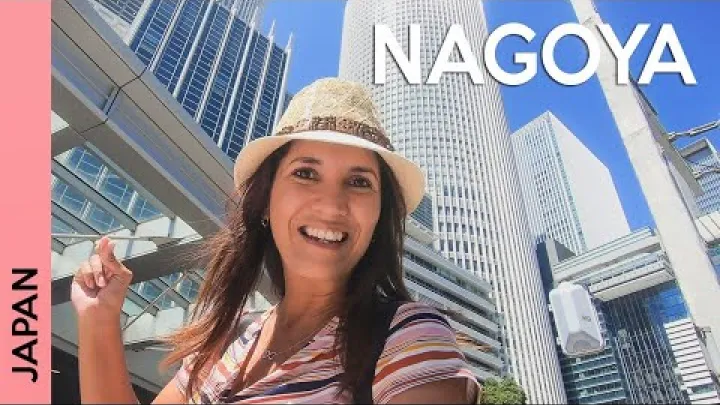
Nagoya Station is the principal orientation point for many visitors because it combines intercity rail, local transport, hotels, offices, and shopping. Nagoya Castle and Atsuta Shrine provide different historical and religious reference points, helping visitors see that the city is not defined only by industry.
Nagoya is often overlooked when travelers plan only around Tokyo and Kyoto, but it can work as a short stop, a business destination, or a base for central Japan. Its appeal is strongest for people who want a large, efficient city with a less tourism-centered identity, or who want to break a long journey between the Kanto and Kansai regions.
Regional and Cultural Centers: Sapporo, Fukuoka, Kyoto, and Kobe
These four cities demonstrate why population does not equal travel importance. Sapporo and Fukuoka organize large island regions, Kyoto has exceptional cultural influence, and Kobe combines port history with a distinctive position in the Kansai network.
Sapporo: Gateway to Hokkaido and Northern Urban Center
Sapporo is the largest city in Hokkaido and the main urban, administrative, commercial, and transport center for Japan’s northernmost main island. Its scale makes it feel like a major national city, but its regional role is just as important as its population. Visitors often use Sapporo as the starting point for wider Hokkaido travel.
The city is associated with open urban planning, food, winter conditions, and seasonal events. The Sapporo Snow Festival is a major example of how the city’s winter identity shapes travel demand, although Sapporo is also worth considering in warmer seasons. Seafood, agricultural products, nearby natural areas, and a distinct northern climate add to its regional character.
Sapporo is a strong choice for travelers who have already seen the main Honshu corridor, who want a different climate and landscape, or who are planning an itinerary focused on Hokkaido. Because Hokkaido is large, Sapporo should be treated as a regional base rather than as a substitute for every destination on the island.
Fukuoka: Kyushu's Regional Gateway
Fukuoka is the largest major urban center on Kyushu and a gateway for the island’s business, education, food, and cultural activity. Its location in the southwest of Japan also gives it historical and commercial connections with the wider East Asian region. For travelers, it offers a large-city experience without requiring the same multi-district planning as Tokyo.
Fukuoka is useful as both a destination and a base. Visitors can explore the city’s urban neighborhoods, food culture, waterfront areas, and local history, then continue toward other parts of Kyushu. The city is also a practical choice for travelers arriving in western Japan by air or using Kyushu as the main focus of a trip.
Choose Fukuoka when regional exploration matters as much as famous individual sights. It suits visitors interested in local food, a modern regional center, and a less central-Japan-focused route. The city should not be confused with Kyushu as a whole: the island contains several distinct cities and long travel distances.
Kyoto: Former Capital and Cultural Center
Kyoto was Japan’s imperial capital for many centuries and remains one of the country’s most important cultural and educational cities. Its historic urban form, temples, shrines, gardens, traditional architecture, crafts, and seasonal customs give it a role that cannot be measured by population alone.
Kyoto is a city, not simply a collection of attractions. Its neighborhoods vary widely, from busy central streets to residential areas and historic districts. Visitors should plan by area and by the type of experience they want rather than attempting to cross the entire city repeatedly in one day. Early starts, grouped visits, and respect for residential streets can make the experience more comfortable for both travelers and residents.
Kyoto is an obvious choice for first-time visitors who want history and traditional culture. It also works well with Osaka because the two cities are close but offer different travel experiences. Kyoto’s cultural importance makes it a major city in any Japan cities list even though Osaka, Yokohama, and Nagoya have larger municipal populations.
Kobe: Port City and Kansai Regional Hub
Kobe is a major port city in Hyogo Prefecture and an important part of the Kansai urban network. Its geography between mountains and the sea creates a distinctive physical setting, while its port history contributed to international trade, foreign communities, food culture, and modern urban development.
Kobe is close enough to Osaka and Kyoto to be included in the same regional itinerary, but it deserves separate treatment. The city has its own harbor districts, mountain views, shopping areas, neighborhoods, and culinary identity. A visitor who wants a calmer port-city experience may prefer Kobe to spend a full day away from the busiest commercial areas of Osaka.
Kobe is a good selection for travelers interested in ports, international history, urban scenery, and Kansai’s regional variety. It also illustrates why metropolitan areas should not replace city names: the wider Osaka-Kobe-Kyoto urban area is connected, but Kobe remains an individual city with its own role.
Other Major Regional Cities to Include
Japan’s urban system extends well beyond the best-known tourist route. The cities below are useful for understanding regional Japan, planning a more specialized trip, or choosing a place to study, work, or stay for longer than a short holiday.
Hiroshima and Sendai
Hiroshima is the leading regional center of western Honshu and has global historical importance because of its connection with the atomic bombing and the subsequent peace movement. A visit can combine serious historical reflection with an understanding of a functioning modern city. Hiroshima is also a practical base for exploring parts of the Seto Inland Sea region.
Sendai is the largest city in the Tōhoku region and serves as its administrative, commercial, educational, and transport center. It is a useful gateway for northeastern Japan and offers a different urban scale and climate from Tokyo or Osaka. The city can anchor trips into Tōhoku rather than being treated only as a stop between larger destinations.
Both cities are important because they organize activity across broad regions. They are strong choices for repeat visitors, students, business travelers, and anyone who wants to move beyond the Tokyo-Kyoto-Osaka route while remaining in a well-connected Japanese city.
Kawasaki, Saitama, and Chiba
Kawasaki, Saitama, and Chiba are major cities in or near the Greater Tokyo urban system. Their proximity to Tokyo can make them seem like suburbs, but each is an independent municipality with its own employment areas, public services, neighborhoods, and local identity.
Kawasaki has a strong industrial and waterfront history and sits between Tokyo and Yokohama. Saitama is a large northern Tokyo-region city and the capital of Saitama Prefecture, with extensive commuter and administrative functions. Chiba is the capital of Chiba Prefecture and an important eastern part of the Tokyo-region economy. Chiba city should not be confused with Narita, the separate city associated with one of the region’s major international airports.
These cities matter for relocation, business, study, and longer stays because accommodation and workplaces may be outside central Tokyo. They also demonstrate why a city-proper ranking can look different from the everyday experience of a connected metropolitan area.
Kitakyushu, Sakai, Niigata, Hamamatsu, Kumamoto, Sagamihara, and Okayama
Kitakyushu is a major industrial and port city in northern Kyushu, with a role distinct from nearby Fukuoka. Sakai is a large municipality in the Osaka region and has its own industrial, historical, and residential character. Both are important examples of cities that can be absorbed into a metropolitan narrative even though they remain separate urban centers.
Niigata is the largest major city on the Sea of Japan side of Honshu and serves as a regional port and administrative center. Hamamatsu is a manufacturing city located between the Tokyo and Nagoya areas. Its position and industrial history make it relevant to business and domestic travel even when it is not on a typical international tourist route.
Kumamoto is a central Kyushu city with important administrative, educational, and cultural functions. Sagamihara is a large municipality in the western Tokyo region, while Okayama is a significant transport and service center in western Honshu. These cities are best selected for regional depth, work, study, or a specific itinerary rather than simply because they appear on a population list.
Choosing the Best Major Cities to Visit in Japan
The best cities to visit depend on the length of the trip, arrival point, interests, season, and willingness to change hotels. A population ranking can identify scale, but it cannot decide whether a city fits your travel style.
Best Cities for a First Japan Trip
For many first-time visitors, Tokyo is the most flexible starting point because it combines national institutions, modern city life, history, shopping, food, and international connections. It works particularly well when the trip is short and the traveler wants variety without moving between several regions.
Tokyo, Kyoto, and Osaka form a classic first-trip combination. Tokyo provides the largest urban experience, Kyoto offers historic and cultural depth, and Osaka adds a commercial, food-focused, and highly social city atmosphere. The route is popular because it connects different city roles, not because the three places are interchangeable.
Travelers who prefer fewer hotel changes can base themselves in Osaka and visit Kyoto and Kobe as regional day trips, or stay in Tokyo and add Yokohama. Travelers with more time may choose Nagoya as a central Japan stop, Hiroshima for history, Fukuoka for Kyushu, or Sapporo for a different island and climate. The right choice is the route that leaves enough time to experience each city rather than collecting city names quickly.
Choose by Travel Interest and Season
Matching a city to an interest is often more useful than following the population order. The following guide gives a simple way to make that choice.
| Travel interest | Cities to consider | Why they fit |
|---|---|---|
| Large-scale urban life | Tokyo, Osaka, Yokohama | Dense districts, business, shopping, and entertainment |
| Historic and traditional culture | Kyoto, Nara, Hiroshima | Historic settings, cultural institutions, and serious history |
| Food and nightlife | Osaka, Fukuoka, Tokyo | Large dining scenes with different regional styles |
| Winter and northern travel | Sapporo, Sendai | Northern climate and access to regional landscapes |
| Industry and technology | Nagoya, Hamamatsu, Kawasaki | Manufacturing, engineering, logistics, and business history |
| Port-city identity | Yokohama, Kobe, Niigata, Kitakyushu | Harbors, trade history, waterfront districts, and regional links |
Season also changes the best choice. Sapporo has a strong winter identity, while Kyoto is especially attractive to visitors seeking seasonal scenery and historic settings but can feel demanding during busy periods. Tokyo and Osaka offer extensive indoor options in less comfortable weather. Fukuoka and Hiroshima can work well when the goal is to explore beyond the main central route, but their regional settings should guide the length of the trip.
Use Regional Hubs to Build a Wider Itinerary
Regional hubs make a longer Japan itinerary easier to organize. A Tokyo-centered plan can include Yokohama and other Kanto cities. A Kansai plan can connect Osaka, Kyoto, and Kobe. Nagoya can divide a journey between eastern and western Honshu, while Hiroshima can anchor travel farther west. Fukuoka can serve as a base for Kyushu, and Sapporo can begin a Hokkaido route.
Think in corridors rather than trying to visit every major city. The Tokyo-Nagoya-Kyoto-Osaka-Hiroshima line is a natural long-distance route, while Sapporo and Fukuoka usually require a separate northern or southern plan. A map can make distances look deceptively simple, so compare station locations, airport transfers, hotel check-in times, and the number of daily changes before committing to a route.
Transport details change by season, operator, engineering work, weather, and airport or station conditions. Before fixing an itinerary, confirm current rail, airport, and local transit schedules with the relevant operator. Check the actual departure station, reservation rules, luggage arrangements, final service of the day, and the time needed to reach your accommodation. This is particularly important when combining cities with flights, when making a same-day airport connection, or when traveling to and from Sapporo or Fukuoka.
For a comfortable trip, choose one or two regional bases and add day trips only when the connection is straightforward. For a deeper trip, stay overnight in the cities that interest you most. This approach gives each city enough time to reveal its local character instead of reducing the Japan cities list to a sequence of stations.
Key Takeaways About Japan's Major Cities
Tokyo is Japan’s capital and largest broad urban center, but it is a metropolis rather than an ordinary incorporated city. Yokohama, Osaka, Nagoya, and Sapporo lead the municipal population comparison, while Fukuoka, Kawasaki, Kobe, Kyoto, Saitama, Hiroshima, and Sendai are major regional or metropolitan centers. Cities such as Niigata, Hamamatsu, Kumamoto, Okayama, Kitakyushu, Sakai, Chiba, and Sagamihara add important industrial, port, administrative, and cultural roles.
For population research, use one boundary and one date throughout. For travel planning, choose cities by regional role, personal interest, season, and transport practicality. The strongest Japan itinerary is not necessarily the one with the most famous names; it is the one that gives you enough time to understand how each city is different.
Select area
Create a post
Posting is free and no registration is required.