Japan Official Languages: Is Japanese Official?
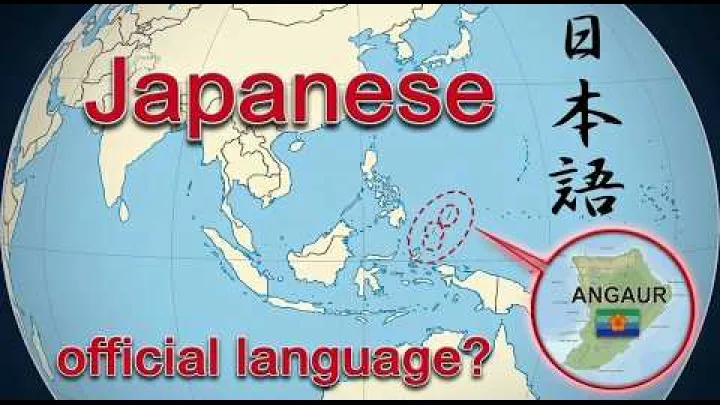
Japan has no nationally designated official language, but Japanese is the de facto national and working language used throughout public life. This distinction explains why Japanese is the main language in government, education, courts, Tokyo communication, and national media without being designated as official in a general national language law. Japan is also linguistically diverse, with Ainu, Ryukyuan languages, Japanese Sign Language, immigrant community languages, and foreign languages such as English playing different roles. The sections below separate legal status from practical use and explain why language counts and speaker percentages depend on definitions and source years.
Does Japan Have an Official Language?
The word official describes a legal status, while national and working language often describe how a language functions in society. Japan is a useful example of why these categories should not be treated as interchangeable.
Japan Has No Nationally Designated Official Language
The most accurate short answer to the question about Japan's official language is that Japan generally has no nationally designated official language. Available reference material describes Japanese as having no formal official status in Japan while functioning as the country's de facto national language. The Constitution and a general national language statute do not establish Japanese through a simple official-language clause comparable to the language provisions found in some multilingual states. This legal distinction should be stated carefully because the practical dominance of Japanese can otherwise make it appear that the country has formally declared Japanese its official language.
In daily institutional terms, Japanese is the language people normally encounter in national administration, legislation, public schools, courts, official forms, and most nationwide media. Government bodies can publish translations or offer interpretation, but those services do not automatically change the legal status of Japanese or create equal national status for another language. Japanese therefore has a powerful institutional position without needing a single law to declare it the official language.
This distinction is summarized in many general discussions of the Japanese language, but a formal legal interpretation should always be based on the current wording of Japan's constitutional and statutory texts. For a reader asking what language is spoken in Japan, the practical answer is Japanese. For a reader asking which language is legally official, the safer answer is that Japan has no nationally designated official language.
Official, National, Working, and Regional Languages
Four terms help clarify Japan's language profile:
| Term | Meaning | Japan's position |
|---|---|---|
| Official language | A language given a defined legal role by the state | No national designation |
| National language | A language associated with national identity or culture | Japanese in the de facto sense |
| Working language | The language institutions use for routine operations | Japanese in most national settings |
| Regional or minority language | A language rooted in a particular community or territory | Ainu and Ryukyuan languages have cultural and policy support, but no national co-official status |
An official language normally has a specified role in administration, courts, legislation, or education. A national language may be a symbol of identity even when legislation does not use that label. A working language is identified by actual institutional practice. A regional language can be protected, taught, or promoted without being required for all public business in its territory. Cultural programs, multilingual information, and local language classes should therefore not be treated as proof of official or co-official status.
How Japanese Functions in Public Life
Japanese is the language that ties together national institutions and most everyday public communication. Its role is reinforced by administration, schooling, broadcasting, writing standards, and the expectation that people can interact with public institutions in Japanese.
Government, Courts, Education, and Public Communication
Japanese is the default language for national administration and for most written communication between public bodies and residents. Laws, regulations, applications, notices, public-school materials, and official correspondence are ordinarily prepared in Japanese. The same pattern applies to most mass communication, including national broadcasting, newspapers, publishing, and public information campaigns.
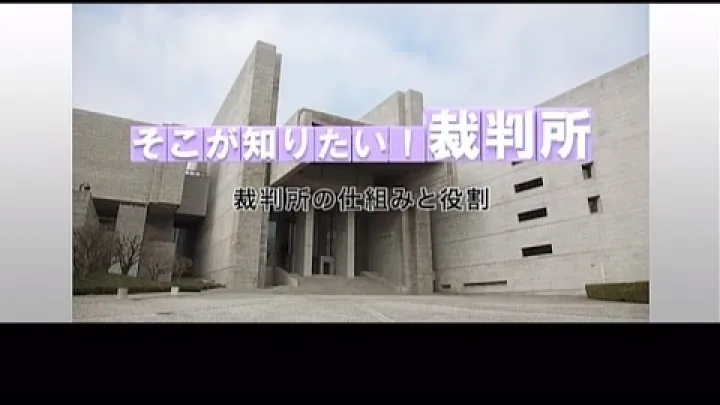
Courts and legal administration also normally operate in Japanese. A person who does not understand Japanese may be able to obtain interpretation or translated information, but the availability, form, and scope of that assistance can depend on the proceeding and institution. A translation supplied for convenience or access should not automatically be assumed to have the same legal authority as the Japanese text. This is one reason that students, workers, and residents dealing with contracts or official procedures may need qualified language assistance rather than relying only on an informal translation.
Education gives Japanese an especially strong nationwide role. Public schooling uses Japanese for instruction across the curriculum, while English is generally taught as a foreign language rather than as a second national medium. Private schools, universities, international programs, and individual classrooms can provide other language options, but those exceptions do not replace Japanese as the general language of the education system.
Tokyo illustrates the difference between a practical standard and a separate official language. Japanese is the main language of public communication in Tokyo, and formal settings commonly use standard Japanese. Tokyo does not have a separate Tokyo official language. Visitors may encounter English or other languages in selected institutions and commercial settings, but the underlying public-language system remains Japanese.
The National-Language School Subject and Standard Japanese
Japanese schools commonly use the subject name Kokugo, which can be translated as national language. In this context, Kokugo is the school subject devoted to Japanese language and literature. The term reflects the language's place in national education; it is not itself a constitutional declaration that Japanese is an official language. Nihongo is another common term for the Japanese language and is often used when Japanese is being taught to non-native speakers or discussed as a language of communication.
Schooling, broadcasting, publishing, and formal public communication have helped promote a broadly shared standard variety of Japanese. Standard Japanese has a historical connection with the Tokyo variety and is used as the expected model in many formal and nationwide settings. It supports communication between people from Hokkaido, Tokyo, Okinawa, and other parts of the country even when their home speech includes different regional features.
This national standard does not eliminate regional speech. Japan has many dialect areas, and some varieties traditionally described as dialects have histories and structures that are important to their communities. The boundary between dialect and language can depend on linguistic classification, history, identity, and political context. In particular, the Ryukyuan languages are often discussed as distinct languages rather than simply as local forms of standard Japanese.
For an international reader, the useful distinction is functional. Standard Japanese is the safest expectation for formal communication across Japan, while local varieties express regional identity and may be heard in homes, communities, entertainment, and informal conversation. The existence of these varieties does not create a separate official language for each region.
Japanese Writing Systems and Public Standards
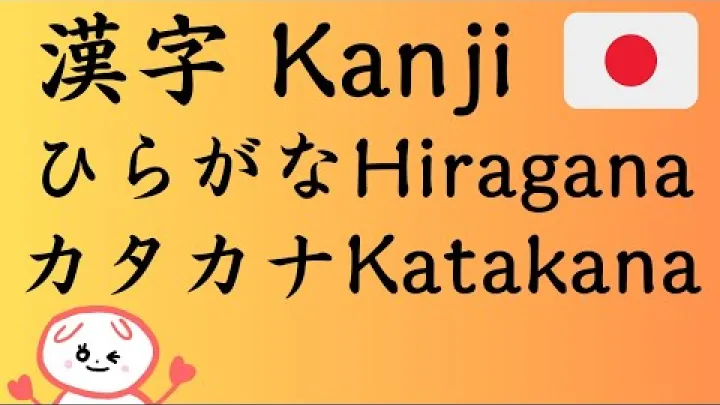
Written Japanese combines several writing systems. Kanji characters carry much of the lexical content, while hiragana and katakana are syllabic scripts used for grammatical endings, native words, borrowed terms, names, and other purposes. The Latin alphabet also appears in selected contexts, such as international names, technology, brands, transport information, and abbreviations. A normal Japanese text can therefore contain kanji, hiragana, katakana, and occasional Latin letters in the same document.
The Agency for Cultural Affairs has an important role in Japanese-language policy, Japanese-language education for foreigners, and the consolidation of writing standards. Its work includes standards such as the common-use kanji list and modern kana conventions. The Agency for Cultural Affairs provides information about these language-related responsibilities.
Writing standards make national education, publishing, examinations, public notices, and digital communication more consistent. They help readers recognize the expected forms of common words and characters even when regional pronunciation differs. At the same time, a writing standard is not the same thing as an official-language clause. The existence of a national writing policy demonstrates administrative coordination and educational standardization, not by itself a formal legal designation of Japanese as official.
Indigenous and Regional Languages in Japan
Japan's language profile is broader than the standard Japanese used by national institutions. Indigenous and regional languages carry histories associated with Hokkaido, Okinawa, and the Amami Islands, although many have experienced major disruption in transmission and use.
Ainu: Indigenous Language and Cultural Protection
Ainu is an Indigenous language historically associated most strongly with Hokkaido. It is distinct from Japanese rather than a regional dialect of standard Japanese. Ainu has its own vocabulary, grammar, oral traditions, and cultural significance. The language is important not only as a means of communication but also as a record of Indigenous knowledge, place relationships, history, and identity.
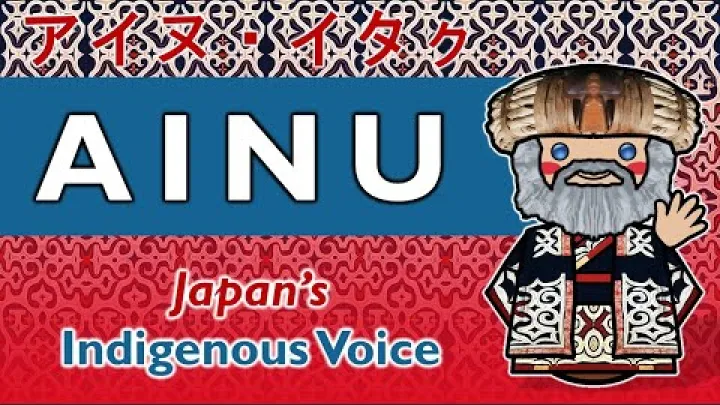
Assimilation policies and the expansion of Japanese-language schooling severely disrupted intergenerational transmission. As Japanese became necessary for education, administration, employment, and wider social participation, fewer families were able to pass Ainu to children as a first or everyday home language. This history helps explain why cultural recognition and revitalization are central to current discussions of Ainu.
Japan's Ainu-related policy framework has supported cultural activities, language instruction, educational work, and revitalization. The 1997 law promoting Ainu culture helped create a basis for language-related activities, and the framework commonly called the Ainu Policy Promotion Act added broader recognition and policy measures. A discussion from Chuo University is useful for understanding why Indigenous recognition and cultural policy should be separated from the question of co-official language status.
These measures do not make Ainu a nationally co-official language, and they should not be read as a guarantee that all public services, court proceedings, or general education are available in Ainu. Language classes, cultural institutions, recordings, exhibitions, and revitalization projects can be valuable without creating a right to use Ainu in every administrative setting. In Hokkaido, people interested in Ainu language history should distinguish between a program that teaches or preserves the language and an institution that provides routine services in Ainu.
Reliable speaker figures for Ainu are difficult to state without a defined survey year and definition. A count of fluent speakers, people learning Ainu, people with some family knowledge, and people who identify culturally with the Ainu community would produce different results. The central point is therefore the language's Indigenous status, historical decline, and continuing revitalization rather than an unsupported single number.
Ryukyuan Languages in Okinawa and Amami
The Ryukyuan languages are associated with the Ryukyu Islands, especially Okinawa Prefecture and the Amami Islands of Kagoshima Prefecture. They are not one uniform language spoken identically across the islands. The group includes regional varieties associated with areas such as Amami, Okinawa, Miyako, Yaeyama, and Yonaguni, although classifications and names can differ.
Several linguistic classifications treat Ryukyuan varieties as distinct from standard Japanese. A frequently cited discussion of the region reports a UNESCO classification of six languages of the Luchu or Ryukyu Islands and describes different degrees of endangerment, with Yaeyama and Yonaguni identified as especially severely endangered in that account. The Asia-Pacific Journal discussion also emphasizes that language status cannot be understood separately from the history of the islands and the rise of standard Japanese.
State integration, Japanese-language schooling, migration, media, and social pressure contributed to the decline of many Ryukyuan varieties. Younger speakers may understand local forms without using them as their main language, while older speakers may retain a much broader vocabulary and grammar. The pattern is not identical on every island, so Okinawa should not be treated as linguistically uniform.
Preservation work can include local documentation, recordings, community classes, performances, educational projects, and the use of regional speech in media. These activities support cultural continuity, but the supplied evidence does not establish a general prefectural rule making all Ryukyuan languages co-official in administration or courts. A person researching language use in Naha, an outlying Okinawan island, or the Amami Islands should therefore identify the specific variety and institution rather than assuming that one language policy covers the entire region.
Preservation Does Not Equal Regional Official Status
Language preservation and official recognition are related but separate policy choices. Preservation may involve documentation, archives, language classes, cultural events, broadcasting, community media, school projects, or heritage signage. These measures can increase visibility and support learning without requiring a government office, court, or school to conduct all routine business in the language.
Formal regional official status would normally involve a clearly defined legal role. A law or ordinance might specify where a language can be used, whether public bodies must accept it, whether residents have a right to receive documents or education in it, and who must provide interpretation. A cultural initiative or a sign in Ainu or a Ryukyuan language does not answer those administrative questions by itself.
Ainu in Hokkaido and Ryukyuan languages in Okinawa and Amami show why this distinction matters. Japan can acknowledge Indigenous and regional linguistic heritage, fund revitalization, and encourage public awareness while still using Japanese as the default national working language. Linguistic diversity therefore broadens the cultural picture of Japan without changing the national status described at the beginning of this article.
Other Languages Spoken in Japan
Contemporary Japan also includes languages used by immigrants, international residents, families, students, workers, visitors, and long-established communities. These languages add to Japan's social and educational diversity, but their presence should not be confused with national official status.
Immigrant and Community Languages
Community languages are used in homes, neighborhoods, religious institutions, community associations, supplementary schools, workplaces, and online networks. Their distribution is locally variable. A municipality with a larger international resident population may have more translated notices, interpretation, multilingual consultation, or community-led education than another municipality with fewer resources or different population needs.
A language may be important within a household or community even if it has little role in national administration. Children can grow up using one language with family, Japanese at school, and English or another language in a professional or international setting. These patterns make the phrase languages spoken in Japan more complex than a simple national ranking.
Public support can also differ by institution. A city office may provide selected multilingual information, while a school, clinic, court, bank, or employer may have a different policy. Community interpretation can supplement formal services, but it is not the same as a national language right. For relocation or study decisions, the relevant question is not only which languages exist in Japan but whether the particular municipality, school, employer, or service provider supports the language needed.
It is also better to avoid presenting any immigrant language as the second most spoken language without a current source and a clearly defined measurement. Rankings can change depending on whether they count nationality, country of birth, home language, usual language, or language ability.
How Many Languages Are Spoken in Japan?
There is no single universally useful answer to how many languages are spoken in Japan. A language inventory may count Japanese, Ainu, several Ryukyuan languages, Japanese Sign Language, immigrant community languages, and foreign languages studied or used in Japan. Another inventory may group some varieties as dialects, exclude sign languages from a spoken-language count, or include historical and endangered varieties.
The answer also changes with geographic scope. A national inventory, an inventory of Hokkaido, and an inventory of Okinawa will identify different patterns. The Amami Islands may be included with Kagoshima Prefecture, the broader Ryukyu region, or a separate island-language study. A survey of residents will produce a different result from a catalog of all languages that have a community, educational presence, or documented history in the country.
The cautious answer is that Japan has Japanese alongside multiple Indigenous, regional, sign, immigrant, and foreign languages. The existence of several categories is well established, but the available evidence here does not support one universal current number. A partial list should never be presented as exhaustive, and a language count should be labeled with its classification system rather than treated as a fact independent of method.
Most importantly, the language-count question is different from the official-language question. A language can be present in Japan without being used by the national government. Conversely, Japanese can be the dominant working language without having a formally declared official status.
Why Language Percentages Need a Source Year and Definition
Speaker percentages are easy to misread because the word speaker covers several different measurements. A study may count a person's mother tongue, home language, usual language, self-reported ability, tested proficiency, or participation in language education. These categories are not interchangeable. Someone can study English for many years without using it at home, while a bilingual resident may use Japanese at work and another language with family.
Nationality and language are also different variables. A demographic table organized by nationality or country of birth may help describe a population, but it does not automatically show which language its members use. Similarly, a school enrollment figure may show demand for a language class without measuring the number of fluent speakers in the whole country.
Before relying on a percentage or ranking, identify:
- Source year: Language patterns change as migration, education, and demographic conditions change.
- Population: Check whether the figure covers all residents, citizens, households, students, workers, or a selected sample.
- Definition: Determine whether the measure is native language, usual language, home language, self-assessed ability, or tested proficiency.
- Coverage: See whether the source includes sign languages, endangered languages, temporary residents, and people who use more than one language.
- Unit of count: Confirm whether the source counts individual languages, language varieties, dialects, or language groups.
If a reliable source does not provide a current percentage under a clear definition, it is better to state that the figure is unavailable than to supply a precise-looking estimate. This approach gives readers a more accurate understanding of Japan's multilingual reality than a ranking detached from its method.
Japanese Sign Language and Public Access
Japan's language profile includes signed languages as well as spoken and written languages. Japanese Sign Language has its own linguistic identity and should be considered separately from questions about Japanese-language public administration.
Japanese Sign Language Is a Natural Language
Japanese Sign Language is a natural language with its own grammar, vocabulary, patterns of expression, and community history. It is not simply Japanese words reproduced with hand movements. Sign-supported Japanese and other communication practices may follow spoken or written Japanese more closely, while Japanese Sign Language has structures that cannot be reduced to a manual version of standard Japanese.
This distinction matters in education, interpreting, media, and public services. Recognition of Japanese Sign Language as a language is not identical to the provision of disability accommodations. A public body may acknowledge the language but still need separate policies, trained interpreters, accessible technology, captioning, or written alternatives to make communication effective.
Japanese Sign Language belongs in any serious account of languages used in Japan, but its inclusion does not by itself make it a co-official national language. Nor should a general statement about support for Deaf people be treated as proof that every public office, school, hospital, or court provides services in Japanese Sign Language.
Population estimates for Japanese Sign Language users also require caution. The result will vary according to whether a survey counts people who use it as a primary language, people who understand it, interpreters, learners, or people who use multiple communication modes. A precise user total should therefore be tied to a named source, year, and definition.
Promotion Measures Versus Full Legal Recognition
Research and advocacy discussions describe measures intended to promote sign language and improve communication access in Japan. Such measures can encourage public awareness, support interpretation, guide local policy, or establish responsibilities for accessible communication. Their practical value can be substantial even when they do not use the legal model of a national official-language law.
The exact effect of a sign-language measure depends on its wording and scope. A national policy, a local ordinance, an institutional guideline, and a service contract may create different levels of responsibility. Promotion may set a policy direction without guaranteeing that every public service is delivered in Japanese Sign Language, and a local commitment may not apply to institutions outside that municipality.
For a specific need, ask the institution what it actually provides. Useful questions include whether a qualified Japanese Sign Language interpreter is available, whether advance booking is required, whether video interpretation is supported, and whether captioned or written communication can be offered. This practical check is more reliable than assuming that a language-promotion measure guarantees identical access everywhere.
English and Other Foreign Languages
English is highly visible in Japan, especially in education and international communication, but visibility is not the same as official status or universal fluency. Other foreign languages also appear in schools, workplaces, tourism, research, and community life according to local and institutional needs.
English in Education and International Communication
English has a prominent role as a foreign language in Japanese education. It is taught because of its importance in international communication, higher education, business, science, technology, travel, and access to global information. Students may study English for many years, and some universities, companies, research groups, and professional sectors use English for selected documents, meetings, or programs.
This educational and international role does not give English national official status. Japanese remains the normal language of national public administration, general schooling, domestic legal communication, and most everyday interactions. English may be essential in a particular workplace or academic program while being unnecessary for many other tasks in the same city.
English-proficiency indexes should also be read as measurements with a defined method, not as a census of the whole population. An index may use a particular edition year, test format, participating sample, age range, or online population. Its score cannot automatically be converted into the percentage of all residents who can conduct a conversation, complete a government procedure, or work professionally in English.
For students and professionals, the useful question is domain-specific: Is English the teaching language of this course? Does the employer use English for internal work? Are documents accepted in English? Is interpretation available for the relevant procedure? These questions provide better guidance than a general assumption about English proficiency in Japan.
English Availability Is Not Uniform
English availability varies by municipality, institution, company, school, and service provider. A major airport, international hotel, university office, or global company may offer substantial English support, while a small local office or private service may operate mainly in Japanese. Multilingual signs or an English website can be helpful, but they do not necessarily mean that staff can handle every question in English.
The same principle applies to tourism, housing, health care, banking, education, and local government. A translated form may be available without an English-speaking employee being present. A website may provide general information without translating every rule or contract. A company may advertise an international environment while requiring Japanese for administrative tasks or team communication.
When language support affects an important decision, check the specific provider's current options. Ask which documents are translated, whether appointments must be made in advance, whether interpretation is professional or informal, and whether the service covers the full process. This verification principle is more useful than promising that English will be sufficient throughout Japan.
Who Shapes Japan's Language Policy?
Japan's language environment is shaped by several policy layers rather than by one official-language statute. National cultural and education policy establishes common standards, while local governments, schools, communities, and service providers address specific linguistic needs.
The Agency for Cultural Affairs and Writing Standards
The Agency for Cultural Affairs, known in Japanese as Bunka-chō, is a central national institution for cultural administration and Japanese-language policy. Its responsibilities include promoting Japanese-language education for foreigners and supporting the consolidation of Japanese writing systems. This work helps maintain shared expectations for written communication across schools, publishers, public institutions, and the media.
The common-use kanji list and modern kana conventions are examples of standards that influence how Japanese is taught and written. They help define commonly expected forms without claiming that every other character, spelling, regional expression, or historical form is invalid. Writers may still encounter specialized kanji, proper names, technical vocabulary, and stylistic variation outside the most common standards.
The agency's role also shows the difference between language administration and legal designation. A government institution can promote a language, coordinate educational policy, and maintain writing conventions without acting as the body that declares a national official language. Language use is also shaped by the education system, courts, legislatures, local authorities, broadcasters, employers, and communities.
Schools and Local Language Support
National school curricula reinforce Japanese as the core language of education. Students learn literacy and subject content through Japanese, while English has a major role as a foreign-language subject. Schools can also provide Japanese-language support for students who are still developing proficiency, although the form and availability of that support can vary by school and municipality.
Local governments may publish selected information in multiple languages, provide interpretation, operate consultation services, or cooperate with community organizations. These measures can make housing, health, education, disaster information, and administrative procedures more accessible to residents who do not use Japanese comfortably. They do not automatically create co-official language status because practical service support and legal language rights are different policy layers.
Cultural preservation follows another policy layer. Ainu and Ryukyuan language programs protect heritage and support revitalization, while Japanese-language education helps residents participate in national institutions. English classes and international programs serve foreign-language and global communication goals. Keeping these functions separate makes the overall picture clearer: Japanese is the default public language, while other languages receive more limited, domain-specific, local, cultural, or community support.
Key Takeaways About Japan's Official Language Status
Japan's language situation is best understood by separating legal designation from everyday institutional practice. The main conclusions are:
- Japan has no nationally designated official language in the simple legal sense used by many multilingual countries.
- Japanese is the de facto national and working language used in government, education, courts, public communication, and most nationwide institutions.
- Tokyo uses Japanese, including standard Japanese in formal public settings, and does not have a separate Tokyo official language.
- Ainu is an Indigenous language associated especially with Hokkaido and supported by cultural-protection and revitalization measures, but it is not a national co-official language.
- Ryukyuan languages are associated with Okinawa and the Amami Islands and include several regional varieties with different levels of endangerment and preservation activity.
- Japanese Sign Language is a natural language with its own grammar and community, while sign-language promotion and access measures should not automatically be treated as full national official-language recognition.
- English is important in education and selected international settings, but its availability and practical usefulness vary by institution and location.
- There is no single meaningful count of all languages in Japan unless the source defines whether it counts languages, dialects, sign languages, endangered varieties, learners, or community languages.
- Any speaker percentage should state its source year, population, definition, and measurement method.
For most formal communication in Japan, learning or arranging support for Japanese is the safest assumption. At the same time, understanding Ainu, Ryukyuan, Japanese Sign Language, community languages, and English gives a more accurate picture of Japan than describing the country as linguistically uniform. The key answer remains simple: Japanese is Japan's de facto national and working language, but it is not established as a nationally designated official language.
Select area
Create a post
Posting is free and no registration is required.