Kanazawa Getting There: Train, Plane & Bus Routes
Getting to Kanazawa is straightforward once you choose the right gateway. The Hokuriku Shinkansen provides the simplest rail arrival from Tokyo, while travelers from Kansai and Nagoya usually change trains at Tsuruga. Komatsu Airport is the main air gateway, and long-distance buses can reduce the fare or provide an overnight option. This guide compares journey time, cost, transfers, booking effort, and arrival points, then explains how to continue from Kanazawa Station, the airport, the port, and regional bus terminals.
Choose the Right Way to Reach Kanazawa
For most visitors, the best route depends more on the starting city and the complete door-to-door journey than on the fastest individual vehicle. A train arriving at Kanazawa Station can be easier than a short flight that requires airport check-in, baggage handling, and a road transfer. A bus may be attractive when the fare is the priority or when an overnight departure saves daytime travel.
Compare rail, air, and bus by speed, cost, and effort
The following table is a practical starting point. It shows planning profiles rather than guaranteed live fares or schedules. The cost of a rail journey can change with seat type, discounts, and pass coverage. Airfares are date-sensitive, and a bus fare can vary by operator, seat category, and demand.
| Route type | Journey profile | Cost profile | Transfers | Typical arrival |
|---|---|---|---|---|
| Tokyo rail | About 2.5 hours on a direct Hokuriku Shinkansen service | Higher fixed fare; discounts and passes depend on current rules | None from Tokyo Station | Kanazawa Station |
| Kansai rail | Limited express to Tsuruga, then Shinkansen | Compare the complete through fare and seat charges | One planned transfer | Kanazawa Station |
| Nagoya rail | Usually Shirasagi to Tsuruga, then Shinkansen | Rail is generally a higher-cost but more comfortable option | One or more, depending on the route | Kanazawa Station |
| Haneda–Komatsu | Flight plus airport bus or other road connection | Airfare is variable; add access, baggage, and bus costs | At least one connection after landing | Station or central Kanazawa stop |
| Long-distance bus | Direct services; Tokyo journeys are about 7–8 hours | Often the lower headline fare, but date and seat type matter | None on a direct service | Usually the Kanazawa Station area |
Choose rail when you want a predictable city-center arrival, do not want to manage an airport transfer, or are carrying substantial luggage. Choose air when the Haneda–Komatsu timetable fits your wider itinerary and the total price remains competitive after adding the airport bus. Choose a bus when the lower fare, a direct departure, or an overnight schedule matters more than travel time and sleeping comfort.
Before booking, compare the current total fare rather than only the advertised base price. Include transfers, reserved-seat charges, airport access costs, baggage charges where applicable, and the cost of reaching your accommodation from the arrival point. This prevents a discounted flight or apparently cheap bus from looking better than it is in a door-to-door comparison.
Reach Kanazawa by Rail from Tokyo and Eastern Japan
Tokyo is the clearest eastern gateway to Kanazawa because the Hokuriku Shinkansen connects Tokyo Station and Kanazawa Station without a train change. Travelers arriving internationally can first travel from Haneda Airport or Narita Airport to Tokyo Station, then use the same direct rail route.
Take the Hokuriku Shinkansen from Tokyo Station
The Hokuriku Shinkansen is usually the easiest way to travel from Tokyo Station to Kanazawa. The journey is commonly planned at roughly two and a half hours, although the exact time depends on the service, stopping pattern, and timetable. The important practical advantage is the lack of a transfer between Tokyo and Kanazawa. That makes this route particularly useful for first-time visitors, travelers with large bags, and anyone who prefers to remain on one train.

Use a current JR East train-information or booking page to see the departure time, current journey time, service status, and fare for your date. Do not treat a timetable from an older guide as a complete list of current departures. Different services can stop at different stations, so the fastest result and the most convenient departure may not be the same.
Reserved seats are a sensible choice when you are traveling on a busy date, have a fixed hotel check-in time, or want to sit together. Standard and upgraded seating may be available, with the price depending on the train and ticket conditions. Online booking can reduce station time, but a station ticket office or machine can be more practical when you need help combining tickets or are unsure about pass eligibility. Check the full fare for the exact seat and discount before assuming that a rail pass is cheaper.
Kanazawa Station is a convenient end point because you can move directly from the train into the station concourse and then choose a taxi, local bus, or walk toward the central districts. You do not need to budget for a separate airport-to-city journey, which is one reason the Tokyo rail route often has a lower effort level even when its headline fare is not the lowest available.
Continue from Haneda or Narita to Tokyo Station
International visitors commonly use a two-stage itinerary: travel from the arrival airport to Tokyo Station, then board the Hokuriku Shinkansen for Kanazawa. Haneda Airport is closer to central Tokyo in general travel terms, so its airport-to-city connection is usually shorter. Narita Airport is farther from Tokyo Station and requires more time for the airport-city leg. The exact route should be selected using the airport and railway information available on your arrival date.
At Tokyo Station, follow signs for the Hokuriku Shinkansen and allow time to move from the airport connection to the correct ticket gates. Keep your airport arrival plan separate from your Shinkansen reservation when comparing options. Immigration, baggage collection, airport walking time, and delays can make a connection look comfortable on paper but difficult in practice.
Flying from Haneda to Komatsu is the main alternative to traveling from Haneda to Tokyo Station. Compare the complete sequence: airport check-in and security, flight time, baggage collection, the journey from Komatsu Airport, and the final trip into Kanazawa. A short flight is not automatically the shortest or simplest journey once these stages are included. If your international arrival is late in the day, use the actual arrival time and the available same-day rail or domestic-flight schedule rather than promising yourself a connection in advance.
Reach Kanazawa by Rail from Kansai and Nagoya
Travel patterns from Kyoto, Osaka, and Nagoya changed when the Hokuriku Shinkansen was extended to Tsuruga. The key planning point is that Tsuruga is now the interchange for the main rail routes from these western and central Japanese gateways.
Travel from Kyoto or Osaka via Tsuruga
From Kyoto or Osaka, the current pattern is a limited express journey to Tsuruga followed by the Hokuriku Shinkansen to Kanazawa. The complete trip takes a few hours, with the exact duration determined by the limited express departure, the Shinkansen connection, and the time spent changing trains. Kyoto and Osaka do not necessarily produce identical journey times because their departure points and available connections differ.
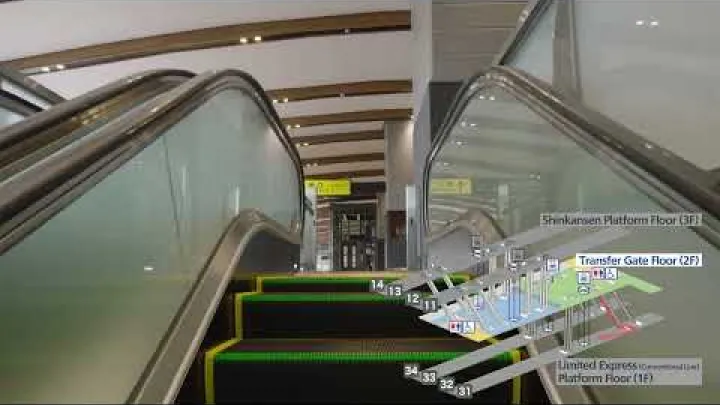
Older travel pages may describe a direct Thunderbird journey from Kyoto or Osaka to Kanazawa. Do not use that former direct pattern as your default assumption. Search the current itinerary so that the result includes the limited express leg to Tsuruga and the Shinkansen leg onward to Kanazawa. The current service name, train number, fare, and seat conditions should come from the booking result for your date.
When possible, search for and book the complete Kyoto–Kanazawa or Osaka–Kanazawa itinerary together. A through itinerary makes the transfer point clear and reduces the chance of selecting incompatible tickets. At Tsuruga, follow the English station signs for the Hokuriku Shinkansen and keep your ticket or digital reservation available. If you buy separate legs, confirm the departure station, time, and gates for both trains before leaving the first station.
Luggage is not transferred for you between trains, so keep bags with you during the change. Select a connection that leaves enough time to walk, read the signs, and board without rushing. There is no useful universal transfer time for every traveler: a visitor with several suitcases, a child, or a mobility concern needs more time than someone carrying one small bag.
Travel from Nagoya via Shirasagi and Tsuruga
The main rail pattern from Nagoya is Limited Express Shirasagi to Tsuruga, followed by the Hokuriku Shinkansen to Kanazawa. This is the simpler route to understand because it normally centers on one main interchange. The exact journey time and fare vary with the selected train and the connection at Tsuruga, so use a current route search rather than relying on one advertised fastest result.
![Preview image for the video "[Shirasagi] Take the express train from Nagoya to Takaoka [Tsurugi]".](/sites/default/files/styles/media_720x405/public/oembed_thumbnails/2026-08/az6-OoZbX4e_DO0nz9qYHgLJqjDxHy_oCKaW-1a-bFo.jpg.webp?itok=A_KZXBKW "Preview image for the video \"[Shirasagi] Take the express train from Nagoya to Takaoka [Tsurugi]\".")
A route through Maibara may also appear in a current search. It can use the Tokaido Shinkansen and may provide a meaningful time advantage for a particular departure, but it can also create an additional transfer and more complicated ticketing. Compare the one-transfer Tsuruga itinerary with the faster or more complex alternative in terms of total journey time, platform changes, luggage, and booking effort.
At Tsuruga, allow a transfer buffer before choosing a tight connection. A short connection may look efficient but can become stressful if you need to find the Shinkansen gate, move with luggage, or resolve a ticket question. When possible, arrange the multi-leg ticket and reserved seats together. If the booking system sells the legs separately, confirm that the connection is valid and note both train numbers before departure.
The rail route is usually chosen for comfort and a station-center arrival, while the direct Nagoya–Kanazawa highway bus may be attractive when its timetable and fare suit you better. Neither a single fastest time nor a single fare should be treated as guaranteed because the result changes with date, availability, and connection conditions.
Fly Through Komatsu Airport
Kanazawa does not have an airport in the city center. Komatsu Airport, located in Komatsu City, is the principal air gateway used for Kanazawa. The airport can work well for travelers whose flight schedule is convenient, but it must be compared with the full rail journey rather than with Shinkansen travel time alone.
Choose Haneda–Komatsu when the flight fits your itinerary
A domestic flight from Haneda to Komatsu can be useful when you are already near Haneda, when the available departure time fits your itinerary, or when an airline fare is competitive. It is not automatically the better choice from central Tokyo. Add the time needed to reach Haneda, check in, pass security, wait for boarding, collect baggage, and travel from Komatsu Airport toward Kanazawa.
Discounted airfare may reduce the headline cost, but the total can change after baggage, airport access, and the airport bus are included. The Hokuriku Shinkansen offers a direct station-to-station journey from Tokyo and avoids the road transfer after landing. Air travel may still be worthwhile for a particular schedule, for a traveler already using Haneda, or when the price difference is substantial.
Check the current airline and airport information for active Haneda–Komatsu services, departure times, baggage conditions, and any service notices. Do not assume that a route or flight frequency described in an older itinerary remains available. Komatsu Airport and Kanazawa are separate locations, so reserve time and money for the final ground connection.
Take the airport bus to Kanazawa Station and central stops
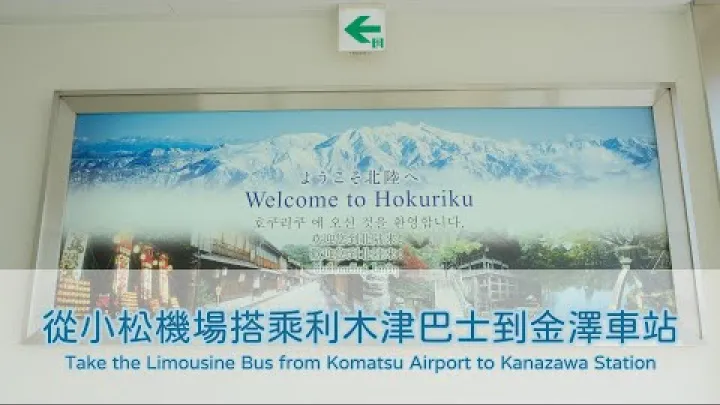
The practical road link from Komatsu Airport to Kanazawa is the Hokutetsu airport bus. Depending on the current timetable and traffic, the journey to Kanazawa Station West Gate is often planned at about forty minutes. Some services also serve central stops such as Korinbo. The airport bus is therefore useful both for travelers staying near the station and for those heading toward the central hotel and sightseeing districts.
A simple arrival sequence is to leave the terminal, follow signs for the airport-bus boarding area, identify the current Kanazawa-bound destination, and use the ticket or boarding process shown by the operator. The Hokutetsu page is the appropriate place to check the current stop list, fare, timetable, and ticket instructions. Do not assume that every bus at the airport uses the same destination or ticket method.
Pay close attention to direction. A bus traveling from Komatsu Airport to Kanazawa is different from a bus traveling from Kanazawa toward Komatsu Airport. The operator identifies the direction and may apply different boarding permissions at intermediate stops, including Kanazawa Station West Gate and Korinbo. Before boarding, confirm the airport-bus destination, the exact boarding stop, and the travel direction on the current Hokutetsu information.
West Gate is the useful station reference for many airport-bus arrivals. Once there, you can enter Kanazawa Station, take a local bus or taxi, or continue on foot toward your accommodation if it is nearby. If your flight arrives late, compare the last available airport bus with a taxi plan before departure, because the airport connection is a separate stage from the flight.
Reach Kanazawa by Long-Distance Bus
Highway buses are a direct alternative to rail and can be useful for budget travel, overnight trips, or routes that do not match the train timetable. Their main trade-off is time. A bus can remove a train transfer but still take longer overall, especially on a daytime journey affected by road traffic.
Use a Tokyo–Kanazawa daytime or overnight bus
Tokyo–Kanazawa highway buses commonly take roughly seven to eight hours, depending on the operator, route, traffic, and number of stops. They may cost less than rail, but the fare is not fixed across all dates. Seat type, booking time, weekday or weekend travel, and the availability of discounted seats can all affect the price.
A daytime bus uses much of the day but may suit travelers who prefer to remain awake and watch the route. An overnight bus can reduce the need for a hotel night and allow arrival in the morning, but sleeping quality varies. Reclining space, noise, lighting, and rest-stop interruptions make an overnight bus more physically demanding than a Shinkansen. Choose it because the schedule and budget fit your trip, not because the listed travel time looks similar to rail.
Departure areas are operator-specific. Shinjuku is a major Tokyo bus area, but do not assume that every Tokyo–Kanazawa service leaves from Shinjuku Expressway Bus Terminal. Use the selected operator's booking page to confirm the terminal, building, floor, and boarding bay. Kanazawa arrivals generally use the Kanazawa Station area, but the exact stop should also be checked on the reservation.
Reserve a seat and read the luggage conditions before paying. Highway buses may limit the number, size, or type of bags that can be placed in the luggage compartment, and a large suitcase can be less convenient than a smaller travel bag. Save the QR code, confirmation email, or paper ticket, and arrive early at a large bus terminal. Finding the correct platform can take time, especially when several operators use similar destination names.
Compare direct buses from Nagoya, Osaka, and Kyoto
Direct or limited-stop highway buses connect Kanazawa with Nagoya, Osaka, and Kyoto, but the operators, departure terminals, frequency, and arrival stops differ by corridor. A bus that is convenient from Nagoya cannot be assumed to have the same ticket rules as a service from Osaka or Kyoto.
Nagoya is the clearest example of the budget trade-off. A Nagoya–Kanazawa bus can be considered a roughly four-hour option in favorable timetable conditions, but the current journey time and fare must be checked for the selected departure. The Meitetsu Bus Center may be a departure point for some services, while another booking may use a different terminal. The JR Tokai Bus route information includes the Nagoya–Kanazawa line and is a useful reference for timetable, fare, and reservation details.
Compare the bus with the rail route through Tsuruga. The bus may save money or avoid a train change, while rail usually offers more space to move and a shorter journey for many departures. A low bus fare can be less valuable if it requires an inconvenient trip to the terminal, arrives after local transport has reduced, or does not match your accommodation check-in time.
For Osaka and Kyoto, search the exact corridor rather than applying Nagoya's timetable or fare. Reserve a seat, save the booking confirmation, and write down the exact boarding terminal instead of using a general label such as Kyoto Station or Osaka Station. At departure, use marked bus bays and the operator's signs. This is especially important at large terminals where several buses leave close together.
Use Kanazawa as a Base for Regional Connections
Kanazawa is also a useful base for reaching destinations in the wider Hokuriku and Hida regions. These regional bus journeys are different from long-distance travel into Kanazawa: they often require advance reservations, use specific station platforms, and may have seasonal stops or direction restrictions.
Reserve buses to Shirakawa-go, Gokayama, and Takayama
Reserved highway buses connect Kanazawa with Shirakawa-go, Gokayama, and Takayama. The relevant departures use the Kanazawa Station West Exit bus terminal, so travelers arriving by Shinkansen should allow time to leave the rail concourse and find the correct bus area. These services are popular because they provide road access to places that are not served by a direct Shinkansen.
As a broad planning scale, Shirakawa-go and Gokayama are usually treated as trips of about one to two hours, while Takayama is a longer regional journey of around two hours or more. Fares are route-specific and generally need to be planned as a separate reserved-coach expense. These figures are only provisional: the exact stop, route, operating date, and fare shown during booking are the figures to use for your itinerary.
Do not treat Shirakawa-go, Gokayama, and Takayama as one interchangeable service. A bus may stop at one destination but not another, and Gokayama stops or boarding permissions can be seasonal or direction-specific. Confirm the exact platform, departure time, operating months, and whether you may board or leave at your selected stop. The Kanazawa Station route guide describes the reserved connection operated jointly by Hokutetsu and Nohi Bus between Kanazawa, Shirakawa-go, and the Takayama Nohi Bus Center.
Reserve before going to the terminal when the operator requires advance booking. Save the reservation and arrive with enough time to identify the platform. If you are continuing beyond Takayama, the Takayama Nohi Bus Center can serve as the next transport point, but that onward journey should be booked and checked separately from the Kanazawa departure.
Continue toward Noto or Noto-Satoyama Airport
Noto-Satoyama Airport is a specialist gateway for an itinerary focused on the Noto Peninsula. It is not the default airport for reaching Kanazawa, and flying there does not place you in Kanazawa city. Travelers should first decide whether they are visiting Kanazawa or continuing directly into Noto.
Route information has reported a limited bus from Kanazawa Station West Gate to Noto-Satoyama Airport taking about two hours and thirty-nine minutes, with a reported fare range of approximately ¥1,800–2,500. Treat those figures as planning information rather than a promise of a daily departure. The service may be limited, and the timetable, stop permissions, fare, and operating status need to be confirmed for the date of travel.
If Noto is your destination, compare the airport connection with road services and other Kanazawa-based buses. If Kanazawa is your destination, do not choose Noto-Satoyama Airport simply because an airfare appears available; the onward trip can be long and may not fit your arrival time. Keep the question of getting to Kanazawa separate from the question of continuing from Kanazawa to the Noto Peninsula.
Arrive by Sea or Connect from Kanazawa Station
Most visitors arrive overland or by air, but Kanazawa also receives cruise passengers. The arrival procedure at the port is different from a normal city transport connection, so passengers should use the instructions for their particular ship.
Use Kanazawa Port for cruise arrivals
Kanazawa Port Cruise Terminal is mainly a cruise-related arrival point, not a regular ferry gateway for ordinary city-to-city travel. Cruise passengers should check the ship's daily instructions for the terminal access route, shuttle bus arrangements, pickup point, and final departure time. These details can be arranged by the cruise line, changed for a particular sailing, or connected to an organized excursion.
A ship shuttle may take passengers toward the station or central Kanazawa, but do not assume that every sailing provides a free shuttle or uses the same stop. Check whether the shuttle is included, whether it runs at fixed times, and where it returns for boarding. If you have a limited shore-excursion window, a taxi can be a more flexible fallback, subject to vehicle availability and traffic.
Keep the return journey in mind before leaving the terminal. A flexible sightseeing plan is safer than traveling far from the port without confirming the last shuttle or a practical taxi arrangement. Do not rely on an unsolicited offer of transport when marked pickup areas, ship staff, the terminal desk, or an official taxi area can provide clearer information.
Get from Kanazawa Station to the city center
Kanazawa Station is the main arrival anchor for the Hokuriku Shinkansen, conventional rail, airport buses, many highway buses, and regional coaches. The most important orientation point is the station exit. The East Exit is associated with the large Tsuzumi-mon Gate and is the useful side for continuing toward central Kanazawa. The West Gate is used by many airport and long-distance bus services, so bus passengers should check which side their service uses before walking across the station.
From the station, travelers can use a local bus, taxi, or walk toward central areas such as Korinbo, Katamachi, and the Kenrokuen area. The best choice depends on hotel location, luggage, weather, and arrival time. A taxi is simple when several people are sharing the fare or when bags make a local-bus connection inconvenient. Local buses can be more economical, while walking can work for accommodation close to the station.
One common trap is leaving through the wrong exit and then following an outdated or unclear boarding instruction. Check the destination and exit on the operator's ticket, use the station's marked signs and bus bays, and ask at an official information counter when the directions do not match. Avoid accepting unsolicited transport advice when an official counter, marked taxi area, or operator sign is available.
If you arrive by airport or highway bus, first identify whether you are at Kanazawa Station West Gate, the East Exit, or a nearby central stop such as Korinbo. This small check prevents an unnecessary walk across the station area and makes the next local connection easier to find.
Book and Verify Your Kanazawa Journey
Kanazawa routes use several booking systems rather than one universal ticket. Rail, domestic flights, airport buses, highway buses, and regional coaches may each have different reservation windows, payment methods, and cancellation rules.
Match tickets and passes to your route
A single rail booking is often the simplest choice for Tokyo–Kanazawa and for itineraries that include the Tsuruga transfer. Search the complete origin and destination so that the system can show the connecting trains, combined fare, and available reserved seats. Buying separate tickets can be reasonable when a booking system does not combine the journey, but then you must check both legs and understand whether a missed connection changes the ticket conditions.
Air travel normally requires a separate airline booking and a separate airport-to-city connection. The Komatsu airport bus may have its own payment and boarding instructions. Highway buses also use operator-specific systems, and regional buses to Shirakawa-go, Gokayama, and Takayama commonly require a reservation rather than an assumption that a seat will be available at the terminal.
Keep the QR code, confirmation email, or paper ticket accessible until the end of the journey. Check whether the booking is for a specific seat, a specific departure, or a flexible ticket. For limited express and Shinkansen travel, compare standard and upgraded seating only after checking the complete fare. For buses, check whether the fare includes a particular seat category and what happens if you need to change the departure.
Rail-pass eligibility should be checked against the complete itinerary and the current conditions, not just one segment. A pass that covers a Tsuruga–Kanazawa train may still cost more than ordinary or discounted tickets when the Kyoto, Osaka, or Nagoya leg is included. The same comparison applies when a flight looks inexpensive but requires a separate airport bus and local transport.
Booking difficulty is also a valid decision factor. An English-language online interface may be easiest for a simple direct trip, while a staffed station ticket office can help with a complex itinerary. For regional buses, use the operator's booking instructions and keep the reservation details separate from your main rail ticket so that you can show the correct confirmation at boarding.
Check the route on the day you travel
Use this short checklist before leaving for Kanazawa:
- Confirm the exact origin station or airport, including Tokyo Station, Haneda Airport, Narita Airport, Kyoto Station, Osaka Station, Nagoya Station, or Meitetsu Bus Center.
- Check the departure date, time, train or bus number, and the correct terminal or boarding bay.
- For routes through Tsuruga, confirm the transfer time and both parts of the ticket.
- Check the Kanazawa arrival point and exit, especially West Gate for many buses and the East Exit or Tsuzumi-mon Gate for central station access.
- Confirm that your reservation is active and keep the QR code, paper ticket, or booking email ready.
- Review the relevant operator, airline, airport, port, or bus-company service notice for delays, cancellations, seasonal stops, or timetable changes.
Prices, platforms, seasonal permissions, and route patterns can change, so use approximate figures as planning guidance rather than guarantees. Check the current rail information, Hokutetsu airport-bus information, highway-bus booking page, regional-coach page, and airline or port notice that applies to your chosen route.
If you have a tight hotel check-in time or an important onward connection, choose an earlier departure and keep a simple backup. That may mean identifying the next train, another bus departure, or a taxi option from the arrival point. A backup is especially useful when a trip includes a road section, a limited regional service, or a connection between separate bookings.
Choose the Best Arrival Route for Your Trip
For a direct and comfortable journey from Tokyo, the Hokuriku Shinkansen to Kanazawa Station is usually the clearest choice. From Kyoto or Osaka, plan around the Tsuruga transfer, while travelers from Nagoya can compare Shirasagi via Tsuruga with a direct highway bus. Haneda–Komatsu works when the flight schedule and total door-to-door cost are favorable, and a long-distance bus is most useful when budget, direct travel, or an overnight departure matters more than speed.
Once you arrive, remember the station orientation: many airport and highway buses use Kanazawa Station West Gate, while the East Exit and Tsuzumi-mon Gate provide the main reference for continuing into central Kanazawa. Confirm the exact operator details on your travel date, and choose the route that fits your time, luggage, budget, and tolerance for transfers.
Select area
Create a post
Posting is free and no registration is required.