Nagasaki Getting There: Flights, Trains, Buses & Ferries

Getting to Nagasaki is easiest when you choose the gateway for the part of the prefecture you actually want to visit. Nagasaki Airport serves the city and wider prefecture, while Hakata Station and Fukuoka Airport are important entry points for travelers coming through Kyushu; Nagasaki Station is the main city rail anchor, and Nagasaki Port serves island routes rather than ordinary city access. This guide compares flights, the Relay Kamome and Nishi Kyushu Shinkansen, highway buses, cars, and ferries by total time, cost, transfers, and booking complexity. It also explains the final connection into central Nagasaki and the checks that make separate or weather-sensitive itineraries safer.
Nagasaki Transport at a Glance
There is no single best route for every origin. Distance, arrival time, baggage, and your onward destination matter more than the headline travel time.
Choose by Origin, Speed, Price, and Simplicity
For travelers starting in Tokyo or another distant Japanese city, flying is usually the first option to compare. For Fukuoka, rail is fast and comfortable, while a direct highway bus can be easier when you prefer to avoid a train change. Cars are most useful for wider regional trips, not necessarily for a short stay in central Nagasaki. Ferries and high-speed boats are essential when Nagasaki is part of an island itinerary.
| Mode | Best suited to | Indicative journey pattern | Main trade-off |
|---|---|---|---|
| Flight | Distant domestic origins | About two hours from Tokyo in the air | Airport procedures and onward bus travel |
| Rail | Fukuoka and mainland Japan | About 85 minutes from Hakata when connections align | Transfer at Takeo Onsen |
| Highway bus | Fukuoka and budget travel | About 2.5 hours from Fukuoka | Traffic can delay arrival |
| Car | Several rural or coastal destinations | Route-dependent | Tolls, fuel, parking, and driving responsibility |
| Ferry or boat | Goto Islands and maritime routes | Destination-specific sailing | Limited departures and weather exposure |
These figures are planning guides, not permanent promises. Compare the complete journey: reaching the departure terminal, check-in or boarding time, waiting, transfers, and the last trip into your accommodation. A low fare may also change once seat reservations, baggage, airport transfers, or booking fees are added.
Know the Main Gateways Before Booking
A simple geographic distinction prevents many Nagasaki transport mistakes. Nagasaki Airport is the main air gateway, but it is outside central Nagasaki City in the Omura Bay area. After landing, you still need a bus or another onward connection. Fukuoka Airport is a useful arrival point for international and domestic travelers, but most ground journeys to Nagasaki begin at Hakata Station or a central Fukuoka bus terminal.
Hakata Bus Terminal and the Tenjin Highway Bus Terminal are important departure locations for direct buses. By rail, the usual route passes through Takeo Onsen, where travelers change between the Relay Kamome and the Nishi Kyushu Shinkansen Kamome. Nagasaki Station is the principal rail and city-arrival anchor.
Nagasaki Port Terminal and Sasebo Port serve different purposes from the airport and city station. Nagasaki Port is especially important for the Goto Islands, while Sasebo can be more convenient for northern parts of Nagasaki Prefecture and certain island routes. Huis Ten Bosch, Sasebo, the Goto Islands, and Tsushima are destinations in or connected with the wider prefecture; none should be assumed to be the same as central Nagasaki City.
Fly to Nagasaki Airport
Flying is most useful when the starting point is far from Kyushu or when a suitable direct domestic route is available. The important decision is not simply whether an airport has a flight, but whether the complete airport-to-city journey fits your arrival time and budget.
Use Nagasaki Airport for Domestic Access
Nagasaki Airport is the principal air gateway for Nagasaki Prefecture. Its position in Omura Bay means that it serves several parts of the prefecture, not only the city center. Tokyo connections are an important example for travelers coming from eastern Japan, but the availability of other domestic routes can depend on the airline, season, and travel date.
Use the airline booking page and current route calendar to confirm whether a direct flight operates on your intended date. Do not treat a route shown in an old guide or a general route map as a year-round timetable. Flight frequency, departure airports, aircraft, baggage rules, and fares can all differ between airlines.
International visitors will often reach Nagasaki through a larger Japanese gateway such as Tokyo, Osaka, or Fukuoka, then continue by domestic flight, rail, bus, or a combination of these. A surface route from Fukuoka can be practical when the domestic connection would require a long wait or a separate airport transfer. If you use separate tickets, plan the connection as a separate risk rather than assuming that a delayed first flight will protect the second booking.
Compare Flight Time with Total Journey Time
A flight from Tokyo to Nagasaki may take approximately two hours in the air, which can make it faster overall than traveling by rail from Tokyo. However, the flight time is only one part of the journey. Add travel to the departure airport, the airline check-in deadline, security, boarding, baggage collection, and the onward trip from Nagasaki Airport.
For a typical city-bound itinerary, the final airport bus to Nagasaki Station may add approximately 40 to 45 minutes, depending on the destination and traffic. This still can leave flying ahead of the long Tokaido-Sanyo Shinkansen and Kyushu rail route from Tokyo, but the difference becomes smaller if you have a very early or late arrival, a long airport wait, or a difficult transfer.
Compare costs in separate parts. The airline fare may be a discounted seat, a flexible full fare, or a price with restrictions. Then add checked-baggage charges, seat selection, payment fees where applicable, and the airport-to-city fare. A more expensive flight may be better value if it arrives at a useful time and avoids an overnight stay or a missed onward connection.
Continue from the Airport to Nagasaki or Nearby Destinations
Nagasaki Airport has onward transport to Nagasaki City and to other major areas of the prefecture. The Discover Nagasaki airport guide is useful for identifying the current access pattern, but the destination shown on the vehicle and the departure information at the airport should control your decision.
| Intended destination | Typical option to compare | Important distinction |
|---|---|---|
| Nagasaki Station | Airport bus | Normal direction for central Nagasaki |
| Huis Ten Bosch | High-speed boat or bus | Direct regional access, not city-center access |
| Sasebo or another area | Regional bus or another listed connection | The route may travel away from Nagasaki City |
Check the final destination before buying a ticket or joining a queue. A connection that is convenient for Huis Ten Bosch or Sasebo may be unsuitable if your accommodation is near Nagasaki Station. Exact departures, fares, boarding points, and operating days should be confirmed close to travel.
Take the Train via Hakata and Takeo Onsen
Rail is the main long-distance ground option for travelers coming from Fukuoka and a comfortable choice for many journeys from mainland Japan. The route is straightforward once you understand that Nagasaki requires a planned change at Takeo Onsen.
Ride the Relay Kamome and Nishi Kyushu Shinkansen
The standard rail sequence from Hakata is:
- Board a Relay Kamome at Hakata Station.
- Leave the train at Takeo Onsen.
- Change to the Nishi Kyushu Shinkansen Kamome for Nagasaki.
The Relay Kamome is a conventional limited express service. The Kamome after Takeo Onsen is the Nishi Kyushu Shinkansen. Takeo Onsen is therefore the planned interchange, rather than a place where travelers wait for a through Tokaido-Sanyo Shinkansen to Nagasaki. The main Tokaido-Sanyo Shinkansen route brings travelers as far as Hakata, after which the Kyushu connection begins.
The Shinkansen section from Takeo Onsen to Nagasaki is often approximately 25 minutes, and a well-matched Hakata-to-Nagasaki journey is commonly around 85 minutes. The exact total depends on the Relay Kamome departure, the connection time, and the current timetable. JR Kyushu provides the current Kamome station and timetable resources.
For Fukuoka-based travelers, this route is fast, comfortable, and relatively easy to plan. The direct bus can be simpler for someone who does not want to change trains, but rail avoids the main uncertainty of road traffic.
Plan Typical Rail Routes from Major Japanese Cities
From Tokyo: Take the Tokaido-Sanyo Shinkansen toward Hakata, then continue with the Relay Kamome and Kamome sequence. Flying is usually the first alternative to compare because the Tokyo flight segment is much shorter than the complete rail journey. Rail may still suit travelers who prefer a city-center departure, want to avoid airports, or have a rail pass that covers several long journeys.
From Osaka or Kyoto: Travel west by Tokaido-Sanyo Shinkansen, reach Hakata, and continue through Takeo Onsen. The total time and number of changes depend on the selected train and the connection at Hakata. A through booking can make the itinerary easier to follow, while separate tickets may require more attention at the transfer.
From Hiroshima: Use the Sanyo Shinkansen toward Hakata, then follow the same Kyushu sequence. This is a natural ground route for travelers already touring western Japan, although the bus may be more attractive only after reaching Fukuoka rather than from Hiroshima itself.
From Fukuoka: Compare the direct Hakata-to-Nagasaki rail journey with the highway bus from Hakata or Tenjin. Rail is generally the faster long-distance option, while the bus offers a direct seat-to-seat trip without a train transfer. The best choice depends on the ticket price, luggage, departure location, and traffic conditions.
From Kagoshima and southern Kyushu: A possible rail plan combines the Kyushu Shinkansen north toward Hakata with the Relay Kamome and Kamome route to Nagasaki. This can be useful on a multi-city Kyushu itinerary, but it involves a long journey and several planning elements. Compare the full fare, travel time, and any available flight or bus alternative rather than assuming that one pass or one train covers the entire trip.
Evaluate the JR Kyushu Rail Pass
A JR Kyushu Rail Pass can be relevant when Nagasaki is one stop in a broader Kyushu itinerary. The Northern Kyushu and All Kyushu products are the options many Nagasaki visitors will compare, while the Southern Kyushu product has a different geographic purpose. Coverage, eligibility, validity period, price, and reservation rules are product-specific and can change.
Check the current JR Kyushu conditions before purchase. Confirm whether you qualify as an overseas visitor, which trains and areas are covered, how many days the pass remains valid, and whether seat reservations or particular booking channels have restrictions. Do not assume that every JR train, private railway, bus, or ferry is included.
Test the value against your actual itinerary. Add the current prices of the long rail journeys you would otherwise buy, such as a Nagasaki return from Hakata plus other Kyushu segments, and compare that total with the current pass price. A pass may not be worthwhile for Nagasaki alone, but it can become useful when you add several substantial rail journeys. The reverse is also true: buying a pass for a short itinerary can cost more than individual tickets.
For practical planning, purchase or exchange the pass through an approved JR Kyushu channel, then make reservations according to the pass instructions. Keep the pass, reservation details, and passport or eligibility documents available when required. A pass does not remove the need to check the train name, departure time, and seat reservation before boarding.
Manage Rail Transfers and Reservations
There are two important transfer points on a long-distance rail itinerary. At Hakata, travelers arriving on a Tokaido-Sanyo Shinkansen connect to the Relay Kamome. At Takeo Onsen, travelers change from the Relay Kamome to the Nishi Kyushu Shinkansen Kamome. Follow the station signs for the train name and ask station staff if the platform or ticket route is unclear.

Use this short checklist before leaving each station:
- Confirm the station and the next train name.
- Check the departure time, car number, and seat number.
- Make sure the ticket or rail pass covers the planned segment.
- Check whether the reservation is confirmed or whether you need to reserve a seat.
- Allow enough time to move with luggage and locate the correct platform.
Your itinerary may be sold as one through journey or as separate tickets. The gate and reservation procedure can differ, especially when a pass is combined with paid tickets or when a journey includes a different operator. During busy travel periods, reserved seats can reduce uncertainty, but pass holders should confirm the current reservation rules instead of boarding an apparently suitable train without checking.
Travel by Highway Bus or Road
Road travel gives you two very different choices: a direct intercity bus for the Fukuoka-Nagasaki corridor, or a rental car for a wider regional trip. Both can be useful, but traffic and operating conditions make them less predictable than the headline schedule suggests.
Take the Direct Fukuoka-Nagasaki Bus
Direct highway buses commonly depart from central Fukuoka locations such as Hakata Bus Terminal and the Tenjin Highway Bus Terminal and continue toward Nagasaki Station. A typical journey is approximately 2.5 hours, although the actual arrival time depends on traffic, stops, weather, and the operator's schedule.
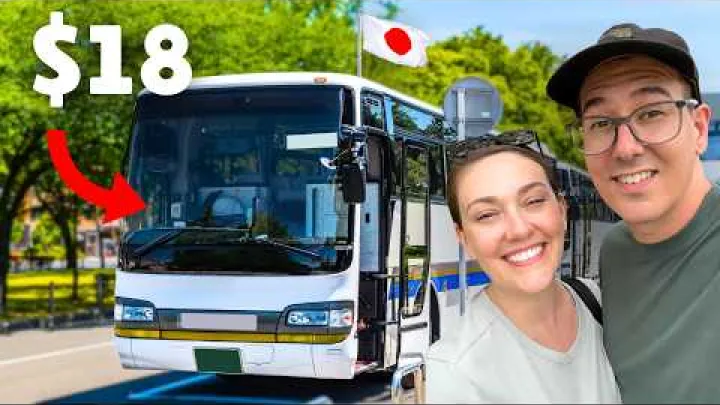
The bus has three clear advantages. You do not need to change trains, the departure points are central, and the fare may be lower than a full-price rail ticket when you are not using a rail pass. It can be a practical choice for travelers staying near Tenjin or Hakata who want a single boarding process.
Rail is usually faster from Hakata and is less exposed to road congestion. The bus may be the better value when the fare is discounted or when avoiding a transfer matters more than saving time. Before booking, confirm the current operator, exact boarding terminal, reservation or seat policy, baggage allowance, arrival stop, and rules for changing the ticket.
Consider an Overnight Bus from Kansai
An overnight bus from Kansai is a niche option for budget-focused travelers who want to reduce daytime travel or avoid paying for one night of accommodation. It is not automatically the cheapest choice once you consider sleep quality, local transport after arrival, baggage fees, and the cost of recovering from a delayed or uncomfortable journey.
The Yutaka Liner is a useful date-specific example rather than a permanent recommendation. Its Japanbusonline listing illustrates that the operating window and fare can be limited; a listed service window runs from August 21 to September 30, with fares shown in a broad range from approximately ¥5,200 to ¥15,400. Treat those details as applicable only to the listed dates and booking conditions.
Before reserving an overnight bus, check the exact Nagasaki arrival terminal, seat layout, reclining space, toilet or other onboard facilities, luggage rules, and scheduled arrival time. Confirm that the service actually operates on your travel date. An early arrival may save time, but it can also leave you waiting for accommodation or local services to open.
Choose a Car for Regional Flexibility
A rental car makes more sense when Nagasaki City is one part of a larger route through rural, coastal, or less frequently served areas of the prefecture. It can reduce dependence on fixed train and bus times and make it easier to carry luggage between several stops. It is less compelling when your plan is limited to central Nagasaki, where public transport avoids the need to manage a vehicle.
Calculate the full driving cost, including the rental rate, tolls, fuel, insurance options, parking, and any one-way drop-off charge. Also consider whether the driver is comfortable with left-side driving, narrow roads, navigation, and urban traffic. Do not assume that a car will make every city-center journey faster or that parking will be convenient.
Driving eligibility is a separate legal question from route planning. Before booking, confirm the documents accepted for your nationality and license with the rental company and the relevant Japanese authority. Requirements can depend on where the license was issued, so use current official guidance rather than relying on a general travel forum.
Reach Nagasaki's Islands and Regional Ports
Ferries and high-speed boats are not simply another way to enter central Nagasaki. They are the primary transport for some islands and regional maritime itineraries, so the correct port depends on the destination.
Depart from Nagasaki Port for the Goto Islands
Nagasaki Port Terminal is a major departure point for the Goto Islands. High-speed boats and conventional ferries connect the city with destinations associated with Goto City and Shinkamigoto Town. A high-speed boat can take at least about 1.5 hours for some destinations, while a conventional ferry is slower. The actual duration depends on the island, port, vessel, and sailing pattern.
Use a destination-first plan. Decide whether you are traveling to Goto City, a port in Shinkamigoto, or another island, then identify the correct vessel and arrival port. Do not assume that one boat serves every island or that a ticket for one port can be used for another. Check the departure terminal, reservation requirement, baggage arrangements, check-in time, and the final local connection after arrival.
The sea introduces a different type of travel risk from rail or road. Check the ferry or high-speed boat operator's same-day service notice before leaving for the port. Keep a meaningful buffer around the sailing, and have an alternative land plan or additional time available if the service is delayed or suspended. Avoid booking a tight onward connection immediately after a boat arrival.
The Discover Nagasaki island access guide is a useful starting point for understanding which services leave from Nagasaki Port, but the vessel operator's current notice and booking conditions should determine your final plan.
Compare Sasebo Port and Airport Boat Connections
Sasebo Port can be a better starting point for some northern Nagasaki Prefecture itineraries. If your destination is near Sasebo, Huis Ten Bosch, or an island served from the northern part of the prefecture, departing from Sasebo may avoid backtracking through Nagasaki City. Compare the complete land journey to the port, not only the sailing time.
The high-speed boat from Nagasaki Airport to Huis Ten Bosch is a regional connection with a different purpose. It takes you toward Huis Ten Bosch, not to Nagasaki Station or Nagasaki Port. If your intended destination is central Nagasaki, an airport bus in the Nagasaki direction is the relevant comparison.
The official Huis Ten Bosch access information lists both a high-speed boat and a bus from Nagasaki Airport. Compare the published travel time, arrival location, boarding procedure, capacity, and whether reservation is needed on your date. Conditions can differ between the boat and bus, so do not choose based only on the word boat or on a general map.
Treat Korea Connections as Multi-Leg Travel
Travel from Busan or another Korean origin to Nagasaki may involve several separate legs through Tsushima, Fukuoka, or another Japanese gateway. Tsushima is part of Nagasaki Prefecture, but it is not the same destination as Nagasaki City. Historical ferry combinations should not be treated as current direct access without checking the present operator information.
The planning issues are more complex than on a domestic flight. You may need immigration and customs procedures at the first Japanese port, separate ferry or airline bookings, a transfer between ports or airports, and a plan for a missed connection. Departure frequency can also be limited, making a same-day recovery difficult.
Consider this route only as a specialist option when the maritime journey is part of your travel purpose. For a simple visit to Nagasaki City, compare it with a current flight to Fukuoka or another Japanese gateway followed by rail or bus. Use current ferry, airline, airport, and rail information for every separate leg before committing to a Korea-Nagasaki itinerary.
Enter Nagasaki City from Its Main Gateways
Once you have selected the correct regional gateway, the final city connection is usually simple. The main challenge is knowing whether your transport is heading to central Nagasaki, a northern destination, or an island port.
Take the Airport Bus toward Nagasaki Station
The airport bus is the normal public transport connection from Nagasaki Airport to Nagasaki Station and the central city area. A trip to the station is commonly approximately 40 to 45 minutes, but traffic, the selected service, and the final stop affect the total. Include extra time if you have a hotel check-in deadline or a separate evening reservation.
After collecting your luggage, use the marked bus stops and ticket machines near the domestic arrivals area. Check the destination printed on the ticket and shown on the bus display. A bus serving Sasebo, Huis Ten Bosch, or another part of the prefecture is not a substitute for a Nagasaki Station service.
If you are going to Huis Ten Bosch, compare the direct boat and bus options instead of traveling first into Nagasaki City. If you are going to Sasebo or another regional destination, use the route listed for that destination. Exact fares, departure frequency, and the last bus should be checked for your arrival date.
Connect Nagasaki Station with Nagasaki Port
Nagasaki Station is the main arrival anchor for travelers using rail or the airport bus. To continue to a ferry from Nagasaki Port, find the tram stop near the Nagasaki Eki-mae area and take the service toward Ohato. From Ohato, walk toward the waterfront and follow signs for Nagasaki Port Terminal; Dejima Wharf and other waterfront signs can help with orientation.
This is a short city connection, but it is not an instant platform transfer. Allow time to find the tram stop, wait for the tram, walk with luggage, locate the correct terminal, and complete any ferry check-in. If your boat has a fixed boarding deadline, arrive in Nagasaki early enough to absorb a delayed train or airport bus.
Avoid Common Arrival and Ticketing Mistakes
Nagasaki's similar place names and several separate gateways create avoidable confusion. Use this arrival checklist:
- Destination: Confirm whether your ticket says Nagasaki Station, Nagasaki Port, Sasebo, Huis Ten Bosch, or an island port.
- Terminal: Check the exact airport, station entrance, bus terminal, or port building shown in the booking.
- Ticket: Confirm whether it is a reserved ticket, an open ticket, a rail pass reservation, or a separate boarding document.
- Last departure: If you arrive late, identify the last practical bus, train, or boat before you travel.
- Luggage: Check where baggage must be stored and whether the vehicle or vessel has special restrictions.
- Boarding point: Use marked stops, official counters, and operator booking channels rather than accepting unsolicited transport offers.
Late arrivals can leave you with fewer onward choices, especially when the final leg is a bus or boat with limited departures. If you are unsure, show the ticket and destination to staff at the official counter or station information point before boarding.
Check Current Schedules and Build a Reliable Plan
Transport information is most useful when it is checked against the date and the exact destination. Build the route first, then confirm the changeable details before paying.
Verify Operators, Fares, and Service Status
Use the current booking or service page for the operator that controls each leg. A route structure may remain stable while its departure times, fares, reservation rules, and terminal arrangements change.
- Flights: Check the airline route calendar, operating days, airport, baggage conditions, and check-in deadline.
- Rail: Check the JR Kyushu timetable, the Relay Kamome and Kamome connection, seat availability, and rail pass coverage.
- Highway buses: Check the current operator, Hakata or Tenjin boarding location, reservation procedure, luggage policy, and Nagasaki arrival stop.
- Ferries and boats: Check the port, vessel, destination island, reservation requirement, boarding deadline, and service notice.
- Airport access: Check whether the bus or boat goes to Nagasaki City, Sasebo, Huis Ten Bosch, or another area.
Official airline, railway, bus, airport, and port pages should be the final authority. Aggregators can help you discover possible routes, but they may not show a last-minute cancellation, a seasonal service, a terminal change, or a restriction on a particular ticket. Treat fares and timetables as date-dependent unless the operator clearly states otherwise.
Protect Connections on Complex Itineraries
A connection that looks efficient on paper can be fragile when it combines international arrivals, separate tickets, a terminal change, or several transport operators. The most important question is what happens if the first leg is late.
For example, compare two plans for an international traveler reaching Fukuoka. A single protected booking or a deliberately long connection may allow the traveler to handle immigration, collect baggage, reach the ground transport point, and continue even after a moderate delay. Separate bookings for a flight, a bus, and a hotel transfer may be cheaper, but a delay on the flight can mean losing the bus ticket and buying a new ticket, or staying overnight in Fukuoka.
Apply the same logic at Hakata, Takeo Onsen, Nagasaki Station, Nagasaki Port, and ferry terminals. Check the last onward departure before booking the arrival leg, and leave a buffer for walking, luggage, ticket gates, and information queues. If the itinerary depends on a boat or a final evening bus, reliability and recovery options may be more valuable than saving a small amount or selecting the fastest individual segment.
For separate tickets, do not rely on a connection that works only if every vehicle arrives exactly on time. Choose a later onward departure, an overnight stop, or a flexible ticket when the consequences of a missed connection would be serious.
Use a Priority-Based Booking Checklist
Choose the route according to your main priority rather than trying to maximize every benefit at once:
- Fastest arrival: From Tokyo or another distant Japanese city, compare a direct flight with the complete airport-to-city journey, including airport procedures and the bus from Nagasaki Airport.
- Simplest route from Fukuoka: Choose between the fast Hakata rail connection and the direct highway bus. Rail usually reduces traffic exposure; the bus removes the train transfer.
- Lowest total cost: Compare discounted flights, highway bus fares, individual rail tickets, pass prices, baggage charges, and the cost of a delay or overnight stay. The cheapest headline fare is not always the cheapest complete trip.
- Several Kyushu destinations: Add every planned rail journey and compare the result with the current Northern Kyushu or All Kyushu Rail Pass conditions. Buy a pass only when the coverage and total value fit your itinerary.
- Island-focused travel: Plan around the exact port, vessel, arrival island, and sailing schedule. Nagasaki City may be the starting point, but it is not the gateway for every island route.
This approach also makes booking easier. Decide first whether speed, simplicity, price, regional coverage, or island access matters most, then select the route that meets that priority with an acceptable backup plan.
Key Takeaways for Getting to Nagasaki
From Tokyo and other distant Japanese cities, start by comparing a direct flight with the full rail journey. From Fukuoka, Hakata Station offers the fast Relay Kamome and Nishi Kyushu Shinkansen route through Takeo Onsen, while the direct bus from Hakata or Tenjin can be simpler and sometimes cheaper. Nagasaki Airport is convenient for air arrivals, but you must still travel from the Omura Bay area into the city.
For the Goto Islands and other maritime destinations, choose the port and vessel for the exact island rather than treating Nagasaki City as the only gateway. Finally, confirm current schedules, fares, terminals, ticket conditions, and service notices before departure. The best way to get to Nagasaki is the route that matches your origin, destination, budget, and tolerance for transfers and delays.
Select area
Create a post
Posting is free and no registration is required.