Japan Flag: Meaning, History, Design & Rising Sun Differences

The Japan flag is one of the simplest national flags to identify: a white rectangle with one centered red disc. That simple design carries several layers of meaning, including Japan’s solar identity, maritime history, national law, and difficult wartime memories. This guide explains the flag of Japan in clear visual terms, examines the Japan flag colors and meaning, and shows how to distinguish it from the Rising Sun flag and the flag of Palau.
What the Japan Flag Looks Like
The White Field and Red Sun Disc
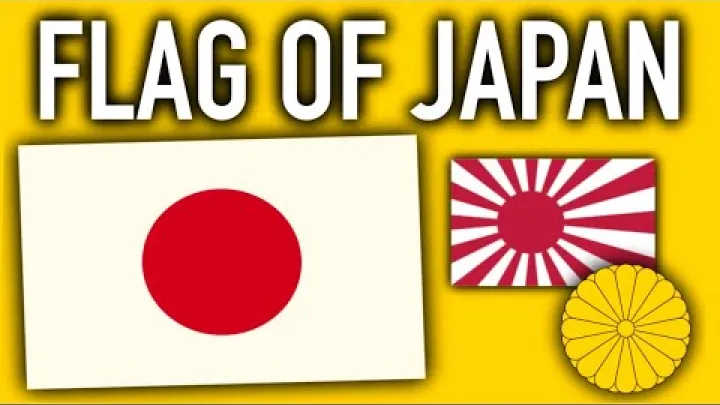
The current Japan national flag is a rectangular white field with one solid, deep-red sun disc at its center. The formal name is Nisshoki, which can be translated as the sun-mark flag. Hinomaru, meaning the sun circle, is the common name used in everyday speech. Both names refer to the plain national design, not to every Japanese flag that includes a sun.
The flag has no rays, stars, horizontal bands, vertical bands, lettering, crest, or coat of arms. Its visual message comes from the contrast between the white field, the red disc, and the rectangular outline. If an image shows a plain white flag with one centered red circle, it is showing the national flag of Japan.
Official Ratio and Disc Placement
Under the current legal standard, the flag has a height-to-width ratio of 2:3. In practical terms, a flag that is two units high is three units wide. The red disc is centered vertically and horizontally, and its diameter is three-fifths of the flag’s height.
For a simple construction example, a flag two units high and three units wide has a red disc 1.2 units across. This proportion makes the sun prominent without touching the edges of the field. The exact construction matters when making an official reproduction, while a small souvenir or digital icon may use a simplified version that still preserves the essential appearance.
Japan Flag Colors and Symbolism
The Japan flag colors are limited to white and red, but their interpretation depends on whether the explanation is legal, official, historical, or popular. The law describes the visible construction of the flag; it does not assign a separate moral quality to each color.
Why the Red Disc Represents the Sun
The red disc represents the sun. This meaning is directly reflected in both the formal name Nisshoki and the common name Hinomaru. The circular shape is not an abstract geometric mark or a national seal. It is a simple solar symbol shown against a white background.
Japan is often described as the Land of the Rising Sun. This expression has geographic, historical, and cultural context: from parts of the Asian mainland, the sun appears to rise in the direction of Japan. Japanese mythology also connects the imperial line with Amaterasu, a sun deity. These ideas help explain why solar imagery became powerful in Japan, but they should not be treated as a single proven origin story for the modern flag.
Solar designs appeared in Japanese court, ceremonial, military, and maritime settings long before the current legal specification. The red disc therefore connects a modern national emblem with a much older image of Japan as a country associated with the sun. Britannica also emphasizes the visual contrast between the warm red sun symbol and the cooler white background.
What the White and Red Colors Mean
The formal description identifies a white field and a red or deep-red disc. It does not define white as purity, honesty, or peace, and it does not define red as courage, sacrifice, vitality, or energy. Those associations may appear in cultural explanations, educational material, and popular writing, but they are not separate legal definitions of the flag’s colors.
A useful way to describe the symbolism is to separate three levels. The official visual meaning is a red sun on a white field. A common interpretation may connect white with clarity or purity and red with warmth, life, strength, or sincerity. A contested reading may interpret the same colors through the history of imperial state power, wartime mobilization, or postwar national identity.
These interpretations can coexist, but they should not be presented as equally official. When someone asks what the white and red mean, the most accurate direct answer is that the red disc is the sun and the field is white. Additional color symbolism is best introduced as traditional, common, or debated rather than as a statement issued by the Japanese government.
A Short History of the Flag of Japan
The modern flag developed from older solar imagery, but the history is not a single uninterrupted line from an ancient symbol to today’s standardized national flag. A court emblem, a military banner, a maritime ensign, and a national flag can all contain a sun while serving different purposes.
Early Solar Symbols and Maritime Adoption
Sun imagery has been used in Japan for centuries. It appeared in traditions connected with the imperial institution, in ceremonial objects, and in banners used by military or political leaders. Medieval battlefields could contain banners with circular or other solar motifs, but those banners identified a ruler, family, army, or unit. They were not necessarily national flags in the modern sense.

This distinction is important. A court emblem represents a ruling house or institution. A military banner identifies a commander or unit. A maritime ensign identifies a ship or its state affiliation. A national flag represents the country in public, diplomatic, and international settings. Earlier sun symbols may be part of the background of the Japan flag without having the same status or construction.
During the nineteenth century, Japan’s increased contact with foreign powers created a practical need for recognizable national markings at sea. A standardized sun-disc flag helped identify Japanese vessels. The move from varied solar imagery to a more consistent maritime design was an important step in making the disc a widely recognized symbol of Japan.
As the modern Japanese state developed during the Meiji period, the sun-disc design became associated with national authority as well as shipping. The flag’s later history was shaped by that state-building process, which made the symbol visible in government, military, educational, and public life.
The Meiji-Era 7:10 Standard
An older Meiji-era specification used a height-to-width ratio of 7:10, rather than the current 2:3 ratio. It also placed the sun disc slightly toward the hoist, the edge attached to the flagpole, instead of positioning it precisely at the geometric center.
The difference is small when viewed from a distance, but it matters in historical reproductions and flag construction. A flag made according to the 7:10 standard may look nearly identical to a current flag while having a subtly different outline and disc position. It should not automatically be called an inaccurate modern flag; it may be a historically accurate version.
The later standard changed the proportions and centered the disc precisely. The essential image remained the same: a plain red sun on white. The change therefore affected construction more than the basic solar idea.
The 1999 Act and the Current Legal Status
Japan formally designated its national flag through the Act on National Flag and Anthem, enacted in 1999. The translated text of the Act states that the national flag is the Nisshoki and gives the basic form of a white rectangular flag with a red circle. It also codifies the 2:3 ratio and the disc’s three-fifths diameter in the construction provisions.
The 1999 law formalized a design that had already been used in practice for many years. It did not invent the red sun and white field. Instead, it gave the national flag a clear legal designation and a precise current specification. This distinction helps separate three questions: when the image became associated with Japan, when it was used as a national or maritime emblem, and when the current design was formally defined in law.
The law’s text should also be kept separate from administrative guidance and institutional practice. The Act identifies the national flag and describes its form, but that wording does not by itself explain every ceremony, school procedure, display decision, or personal obligation. Questions about how the flag is used in a particular setting may involve education authorities, public institutions, or the rules of the host organization. Act on National Flag and Anthem is available there in translated legal discussion.
The Flag's Wartime History and Public Memory
The Japan flag cannot be understood only as a clean geometric design. Its twentieth-century use connected it with imperial expansion, state authority, military mobilization, and the experiences of people affected by Japanese rule. At the same time, the plain national flag is visually different from the ray-bearing military designs often called Rising Sun flags.
Imperial and Wartime Use of the Hinomaru
During the period of Japanese imperial expansion and World War II, the Hinomaru appeared in official ceremonies, public institutions, educational settings, military contexts, and state propaganda. It could represent the Japanese nation, the imperial state, or loyalty to a wartime political order, depending on where and how it was displayed.
This history affects the way some people remember the plain flag today. Communities that experienced colonial rule, occupation, forced mobilization, or wartime violence under the Japanese Empire may connect Japanese national symbols with those experiences. For them, the flag may carry a meaning that is more political or painful than its simple design suggests.
The plain Hinomaru should not be confused with the ray-bearing flags used by the Imperial Japanese Army and Navy. Those designs also used a red sun, but they added radiating rays and served military or naval purposes. The national flag was used during the same historical period, so the symbols could appear together, but they were not identical flags.
Postwar Use and Continuing Debate
After the war, the plain national flag continued to appear in public and international settings. It remained part of Japan’s representation abroad and could be seen at public institutions, schools, ceremonies, and national events. Continuing use did not erase wartime memories, however. Instead, the flag became part of an ongoing discussion about how Japan should represent national identity after imperialism and war.
Schools provide one clear example of this debate. Some ceremonies use the national flag and anthem as expressions of civic belonging, respect for the country, or participation in a shared public tradition. Some teachers and other participants have objected to expected actions at ceremonies because of personal conscience, constitutional concerns, or memories of wartime nationalism.
These disputes involve an interaction between national law, education-administration guidance, institutional decisions, and individual conscience. They should not be reduced to a claim that all supporters or all critics share one political position. The existence of controversy also does not mean that every Japanese person interprets the flag in the same way. A detailed account in The Asia-Pacific Journal discusses how the flag and anthem became connected with postwar debates over patriotism and school ceremonies.
The Rising Sun Flag Is Not the National Flag
The terms Hinomaru, Japan flag, and Rising Sun flag are sometimes used loosely, but they should not be treated as interchangeable. The plain national flag has one disc. The Rising Sun design adds rays, creating a different related flag with a different historical record and public meaning.
How the Rising Sun Design Differs
The easiest visual test is to look at the edge of the red sun. On Japan’s national flag, the disc is solid and has no lines extending from it. On a Rising Sun design, rays extend outward from the disc into the surrounding field. The rays may form different layouts, so the presence of radiating lines is more useful than memorizing one particular pattern.
The Rising Sun design has historical associations with the military and navy of imperial Japan. That is why an image with rays may evoke wartime history even when it appears in a modern cultural setting. The plain national flag and the ray-bearing design share a solar motif, but the added rays are a meaningful identifying feature.
Japan’s Ministry of Foreign Affairs describes the Rising Sun design as a sun-based image that is widely used throughout Japan and appears in cultural and celebratory contexts. That official position does not change the practical visual distinction: a plain centered disc is the national flag, while rays indicate a separate related design. When identifying an image, inspect the design itself before assigning a historical or political label. Ministry of Foreign Affairs of Japan explains the Japanese government’s position on the Rising Sun flag.
Why the Rising Sun Flag Remains Controversial
The controversy surrounding the Rising Sun flag concerns historical context and public meaning, not the basic fact that the design contains a sun. The Japanese government emphasizes the design’s long use in Japan and its appearance in festivals, sports, maritime settings, and other cultural activities. From this perspective, seeing rays does not automatically mean that a display supports militarism.
Critics in countries and communities affected by Japanese colonial rule or wartime occupation often read the rays differently. They associate the design with the Imperial Japanese military, expansion across East Asia, colonial domination, and wartime suffering. In those contexts, the image can function as a reminder of state violence rather than as a neutral decoration or good-luck symbol.
Both the official position and the critical perspective are part of the design’s present-day context. A display at a festival, a military-related setting, a sporting event, or a political gathering may be interpreted differently by different audiences. The controversy should be attached specifically to the ray-bearing Rising Sun design and its uses. It should not automatically be transferred to every display of Japan’s plain national flag, even though the national flag itself can also be debated in settings connected with wartime memory.
How to Tell Japan's Flag From Similar Designs
Many flags use a circle, a sun, or a moon. The most useful identification method is to check the disc’s placement, color, surrounding field, and whether it has rays. These details are more reliable than a general impression that one flag looks similar to another.
Japan and Palau
Japan’s flag has a centered red sun disc on a white field. Palau’s flag is commonly shown with a light-blue field and a yellow disc placed off center. The disc on Palau’s flag represents the moon rather than the sun.
The difference in placement is especially useful when an image is small or the colors are affected by lighting. Japan’s disc is centered within the rectangle. Palau’s disc is intentionally displaced from the center. The two flags share a simple circular motif, but they are not variants of one another and should not be described as the same national symbol.
When comparing the flags, ask two questions: Is the disc centered, and does the design identify a sun or a moon? A centered red disc on a plain white field points to Japan. An off-center disc on Palau’s different field points to Palau. The Flag of Palau reference explains the off-center placement and lunar meaning.
A Practical Identification Checklist
Use this short checklist for a picture, travel photograph, school assignment, or online image:
- White field: Japan’s national flag has a plain white rectangular background.
- One red disc: The national symbol is a solid red circle representing the sun.
- Centered position: The disc is centered horizontally and vertically under the current standard.
- No rays: Lines extending from the disc indicate a Rising Sun design, not the plain national flag.
- Off-center disc: An off-center circle should prompt a check for another country, especially Palau.
- No extra emblems: Stars, text, bands, or a coat of arms mean the image is not the plain Japan national flag.
Where the Japan Flag Appears Today
The Japan flag remains visible in civic, ceremonial, educational, diplomatic, sporting, and international settings. Its function depends on the setting: it may identify the Japanese state, mark participation in a public ceremony, represent a national team, or serve as part of a personal expression of national identity.
Public, Ceremonial, and International Use
In Japan, the flag may appear at government facilities, public ceremonies, schools, and events connected with national or local institutions. It is also used when Japan is represented internationally, including at diplomatic functions, official meetings, and global sporting events. In these settings, the plain red disc generally performs the practical role of identifying Japan.
Schools and ceremonies can give the flag a more specific social meaning. For some participants, it represents shared civic life and respect for the country. For others, the setting recalls debates about wartime nationalism, institutional pressure, or the relationship between national symbols and personal conscience. The same physical flag can therefore function as a routine civic marker in one setting and become a subject of disagreement in another.
For visitors, students, and international residents, context is the best guide. A flag outside an embassy, at an international event, or on a public building primarily identifies Japan. A flag displayed with a group, slogan, military symbol, or ceremonial practice may communicate an additional message. When attending a school or public ceremony, follow the host institution’s instructions and avoid assuming that every participant understands the symbol in exactly the same way.
Conclusion
The Japan flag is a white rectangle with a centered deep-red sun disc, formally called the Nisshoki and commonly called the Hinomaru. Its current legal construction uses a 2:3 ratio and a disc three-fifths of the flag’s height, while older Meiji-era specifications used a 7:10 ratio and a slightly shifted disc. The red sun connects the design with Japan’s long solar identity, but color interpretations such as purity or sacrifice are common readings rather than official definitions.
For image identification, remember the central distinction: a plain disc is Japan’s national flag, rays indicate the separate Rising Sun design, and an off-center disc may indicate Palau. Understanding both the geometry and the historical context makes it easier to identify the flag accurately and to recognize why its meaning can change with the setting.
Select area
Create a post
Posting is free and no registration is required.