Japan Capital: Tokyo, History, Location & Population
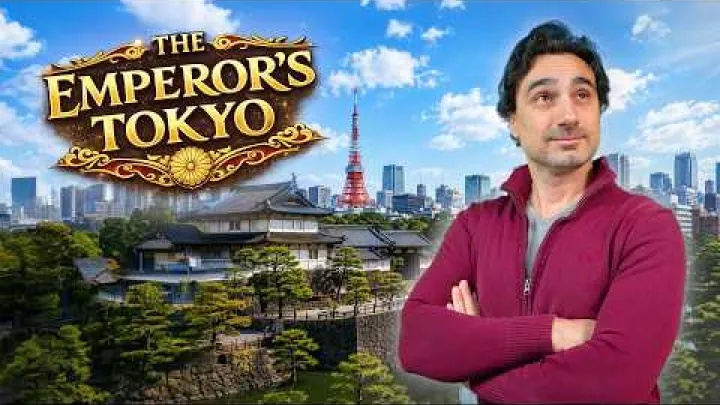
The capital of Japan is Tokyo. Tokyo is both Japan's current national capital and its largest urban center, but the word Tokyo does not always describe one statistical boundary. This guide explains where Tokyo lies in the Kanto region, how national institutions operate from Chiyoda Ward, and how Tokyo Metropolis differs from Greater Tokyo. It also follows the shift from Nara and Kyoto to Edo and Tokyo, then clarifies population figures and the status of any proposed backup-capital idea.
What Is the Capital of Japan?
Tokyo is the answer to both the common question about Japan's capital and the search for the Japan capital city. Its role includes national political institutions, central government administration, and the main imperial functions of the country.
Tokyo Is Japan's Current Capital
The capital of Japan is Tokyo. More precisely, the national capital operates within Tokyo Metropolis, the metropolis-level administrative area commonly called Tokyo. Tokyo is Japan's political, administrative, and imperial center: the National Diet meets there, the Cabinet and prime minister conduct central government work there, and the Imperial Palace anchors the imperial role. The Tokyo Metropolitan Government describes the city's geography, history, and government structure in its English city profile.
Capital status is most clearly understood through established national practice and the location and operation of these institutions. A reader looking for Japan's parliament, central ministries, Prime Minister's Office, or national political activity will find them in Tokyo. This practical role is distinct from the work of the Tokyo Metropolitan Government, which administers the metropolitan area rather than the Japanese nation as a whole.
Tokyo Is Also Japan's Largest City
Tokyo is also Japan's largest city when the term refers to the country's largest urban and metropolitan center. This means that Japan's political capital and its largest concentration of population, business, transport, and international activity are centered in the same place. Japan therefore does not present the common situation in which a smaller political capital is separate from the country's largest commercial city.
The word city can still create confusion. Tokyo may mean Tokyo Metropolis, the 23 special wards, or the much wider Greater Tokyo Area. These are related but different geographic units. So, when a source says that Tokyo is Japan's largest city, it is important to check whether the statement concerns an administrative boundary or the continuous urban region around it.
Where Tokyo Is and Why It Serves as the Capital
Tokyo's location helps explain its national reach. It sits in one of Japan's most connected and densely populated regions, while its capital functions depend on institutions and networks that extend beyond the city's administrative boundary.
Tokyo's Location in Japan
Tokyo is in the Kanto region of eastern Honshu, Japan's largest main island. It lies on the Pacific side of the country near Tokyo Bay and forms the central metropolitan hub of eastern Japan. Its location places it within a major population and economic corridor that connects government, universities, finance, manufacturing, ports, airports, and business services.
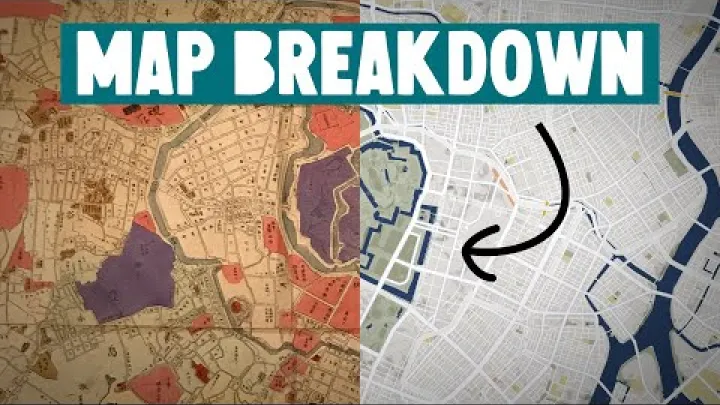
Tokyo is not Japan's geographic center, and the Tokyo Metropolis boundary is not the same as the wider National Capital Region. The metropolis includes the 23 special wards, municipalities in western Tokyo, and island areas. Beyond it, the capital's commuting and economic systems continue into neighboring prefectures. This distinction matters when a map, address, population table, or transport description uses the name Tokyo.
The Institutions Based in the Capital
Tokyo's capital role can be understood through three connected functions. The National Diet is the center of the legislative branch, where Japan's national lawmakers meet. The Prime Minister's Office and the Cabinet are central parts of the executive branch, coordinating national policy and government administration. These institutions are concentrated in central Tokyo, especially around Chiyoda Ward and the government districts.
The Imperial Palace gives Tokyo an additional imperial and ceremonial importance. It is not the same as a ministry or parliamentary building, but it is a major institutional and symbolic anchor in the capital. The Imperial Household Agency provides information about the palace facilities and visitor guidelines. Together, the National Diet, central executive offices, and Imperial Palace show why Tokyo functions as more than a large commercial city.
The Tokyo Metropolitan Government should be kept separate from these national institutions. It manages metropolitan services and planning, while the national government handles matters such as defense, foreign affairs, national taxation, and countrywide legislation. Both levels of government are based in Tokyo, which can make the city's administrative role appear more centralized than that of an ordinary municipality.
Tokyo's Administrative Structure
Understanding Tokyo's government structure is essential for interpreting addresses, maps, population figures, and descriptions of the capital. Tokyo is not simply one ordinary city government covering every place that people call Tokyo.
Tokyo Metropolis and the 23 Special Wards
Tokyo is officially administered as Tokyo Metropolis rather than as a conventional municipality named Tokyo City. Within the metropolis, the 23 special wards form the dense urban core. Areas such as Chiyoda, Shinjuku, Shibuya, and Taito are therefore identified as wards, not as separate cities outside Tokyo. A ward address can still be described internationally as a Tokyo address because all 23 wards are part of the capital's central urban area.

The 23 special wards have their own local governments and provide many services to residents. At the same time, the Tokyo Metropolitan Government performs metropolitan functions that require coordination across the whole area. These include broad planning, major infrastructure, and services that are not limited to one ward. Western Tokyo contains other municipalities, and the metropolis also includes islands, so Tokyo Metropolis is geographically broader than the 23-ward core.
This structure explains why official documents may use different expressions. Tokyo Metropolis is the administrative unit. The 23 special wards are the most continuously urbanized central area. Tokyo city is often a convenient informal label, especially in travel and international writing, but it should not automatically be treated as a precise statistical boundary.
The National Capital Region Beyond Tokyo Metropolis
Tokyo's daily systems extend beyond Tokyo Metropolis. People may live outside the metropolis while commuting into the capital for work, education, medical care, shopping, or government business. Rail connections, highways, airports, logistics centers, and business networks operate across prefectural boundaries, creating a functional region that is larger than the administrative capital.
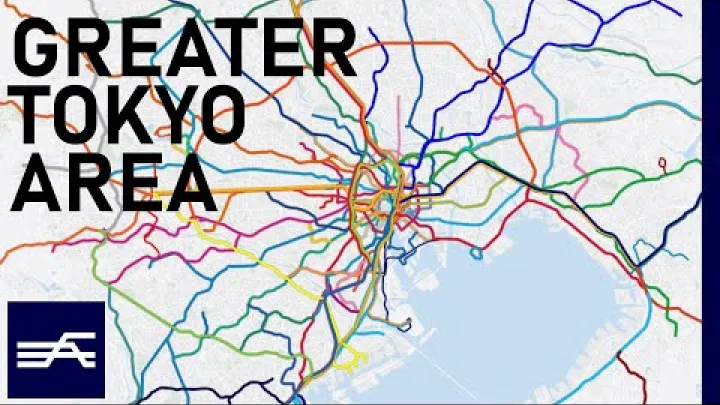
The terms National Capital Region and Greater Tokyo Area are useful for describing this wider system, but they are not automatically identical in every source. One report may use a legal or planning region, while another may use a commuting zone or urbanized area. For a population or economic statistic, readers should check the regional definition instead of assuming that every figure for Greater Tokyo describes Tokyo Metropolis itself.
How Tokyo Became the Capital of Japan
Tokyo's present role developed through several changes in the location of imperial and practical political power. The history is easier to understand when the formal seat of the imperial court is distinguished from the city where military or administrative power was exercised.
Nara and Kyoto Before Tokyo
Nara is associated with one of Japan's early imperial capitals and with the formation of the early Japanese state. The imperial court later moved to Kyoto in 794. Kyoto then became the court's seat and remained central to Japan's political, religious, artistic, and cultural history for more than a millennium.
However, Japan did not always have one city that controlled every part of national affairs in the modern sense. During periods of shogunal rule, practical military and administrative power could be exercised from other places, including Kamakura and Edo, while the imperial court remained in Kyoto. This distinction is important: Kyoto was the principal former imperial capital, but the effective center of government was not always identical to the court's formal location.
For the modern capital story, Nara provides an earlier historical starting point and Kyoto provides the most important predecessor to Tokyo. Kyoto's long connection with the imperial court explains why it remains so important to Japan's identity even after national government institutions moved east.
The Move from Edo to Tokyo in the Meiji Era
Edo became the political center of Japan under the Tokugawa shogunate. It was a large and influential city, but Kyoto remained the home of the imperial court. The Meiji Restoration changed this arrangement as Japan formed a modern centralized government under the emperor.
In 1868, Edo was renamed Tokyo, a name meaning Eastern Capital, and the imperial court moved to the city. The change connected the former shogunal center with the new national government and gave Tokyo a name that expressed its relationship to Kyoto in the east. Edo did not disappear from cultural memory; the name continues to describe the city's earlier history and influences its neighborhoods, food, arts, and identity.
The transition was not one undifferentiated legal event. The 1868 renaming and court-transfer events are distinct from the practical consolidation of Tokyo's capital role by 1869, when the court's move and the central government's arrangements became more established. This is why historical accounts may refer to 1868 or 1869 for different parts of the transition. Kyoto retained major historical and cultural importance, but Japan's central national institutions were now based in Tokyo.
Tokyo's Population: City, Metropolis, and Urban Area
There is no single Tokyo population number that answers every question. A resident count for Tokyo Metropolis, a count for the 23 special wards, and an estimate for Greater Tokyo describe different areas and should not be combined.
Tokyo Metropolis and the 23 Special Wards
At the administrative level, Tokyo Metropolis is often described as having approximately 14 million residents. This is a rounded city-profile description of the metropolis, not a timeless figure that can be used without a date. The exact total changes with the reference month or year and depends on whether a source counts registered residents, estimated residents, or another population category.
For a precise current figure, use a date-stamped table from the Statistics Bureau of Japan and state the geographic unit beside the number. A clear description would identify Tokyo Metropolis and the relevant reference date, rather than simply saying Tokyo has a certain population. This practice prevents a rounded profile estimate from being mistaken for an exact current count.
The 23 special wards contain the most densely built and continuously urbanized part of the metropolis, but they are not the whole of Tokyo Metropolis. A ward-level population excludes residents of western municipalities and the island areas. Resident population also differs from daytime population because large numbers of commuters, students, and visitors enter the central wards during the day. These measures answer different questions and should not be presented as interchangeable.
Greater Tokyo Area and Population Definitions
The Greater Tokyo Area is a broader urban or metropolitan construct. It includes Tokyo and connected areas outside Tokyo Metropolis, linked through commuting, housing, transport, industry, and services. The wider area can therefore have a population far above the resident count of the administrative metropolis without implying that the boundaries of Tokyo Metropolis have expanded.
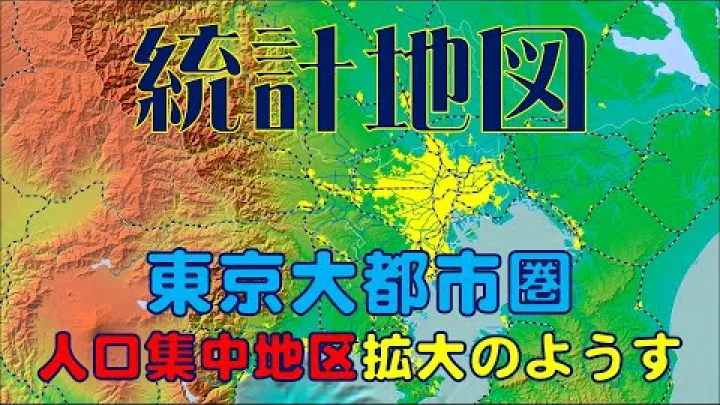
For an international comparison, UN Data lists Tokyo's capital-city population as 37,435.2 thousand for 2025, or about 37.4 million. This is a broad capital-city measure in an international dataset and should not be read as the number of residents inside Tokyo Metropolis or the 23 special wards. The UN Data entry is useful for showing the scale of the wider urban area, but its definition must remain attached to the figure.
The practical rule is simple: place the geographic unit and year immediately beside every population number. A local administrative count is useful for government and resident questions. A metropolitan or capital-city estimate is useful for comparing the scale of connected urban areas. Neither should be silently substituted for the other.
Tokyo and Kyoto: Current Status and Future Contingency Plans
Tokyo and Kyoto represent different layers of Japan's national history. Tokyo is the current political capital, while Kyoto remains a major historical and cultural center connected with the imperial court.
Tokyo and Kyoto Today
Tokyo is Japan's current national political and administrative capital. Kyoto is a former imperial capital and remains one of the country's most important cultural and historical cities. Its temples, palaces, traditional neighborhoods, ceremonies, and artistic traditions give it a continuing national role, but those qualities do not make it a co-equal current national capital.
Terms such as old capital or cultural capital are usually descriptive or cultural labels rather than replacements for Tokyo's national administrative role. Nara can be added to the historical sequence as an earlier capital, but current government operations are centered in Tokyo. The two cities therefore should not be presented as competing current capitals: Kyoto explains Japan's historical depth, while Tokyo is the location of the modern central state.
Does Japan Have a Second Capital?
Tokyo remains Japan's current capital. There has been discussion of a backup or secondary capital as a way to maintain government continuity during a major earthquake, disaster, or other emergency affecting Tokyo. Such a contingency idea would concern where government operations could continue temporarily; it would not automatically replace Tokyo as the country's capital.
A proposal, public debate, or possible emergency operating site is not the same as an enacted designation. A city should not be called Japan's second capital merely because it has been mentioned as a candidate or discussed in a continuity plan. Readers evaluating a recent claim should distinguish an official legal designation from a government proposal, a study, or informal advocacy, since those categories have different effects.
Unless a current authoritative government or legislative statement confirms a change, the accurate present-day description is that Tokyo is Japan's capital. Any alternate location should be described cautiously as a contingency or future policy discussion rather than as a second capital or a completed relocation.
Conclusion: Tokyo Is Japan's Capital
Tokyo is the capital of Japan and also the country's largest urban center. It lies in the Kanto region of eastern Honshu and serves as the base for the National Diet, central executive institutions, and the imperial center at the Imperial Palace. Administratively, Tokyo means Tokyo Metropolis, whose 23 special wards form the dense urban core but do not cover the entire Greater Tokyo Area.
The modern capital emerged when Edo was renamed Tokyo and the imperial court and central government shifted from Kyoto during the Meiji era. Kyoto remains a former imperial capital with exceptional cultural importance, while Nara belongs to an earlier stage of Japan's capital history. When comparing population figures or reading about a possible backup capital, always separate the administrative boundary, the wider urban area, and the current practical status: Tokyo remains Japan's national capital.
Select area
Create a post
Posting is free and no registration is required.