Kyoto Getting There: Airports, Trains and Bus Routes
Getting there in Kyoto usually means choosing a gateway outside the city and then completing the journey by train, bus, taxi, or a local connection. Kansai International Airport is the main international gateway, while Itami is often useful for domestic flights and the Shinkansen connects Kyoto directly with Tokyo, Nagoya, Hiroshima, and other major cities. This guide compares the main routes by speed, price pattern, luggage convenience, transfers, and booking difficulty. It also explains how to continue from Kyoto Station or another arrival stop to districts such as downtown Kyoto and Arashiyama.
Start With the Right Kyoto Gateway
The most convenient route depends on where you begin, when you arrive, and where you will stay. A route that looks short on a map may require several transfers, while a slightly longer direct service may be easier with luggage.
Kyoto Does Not Have an Airport in the City
Kyoto does not have a passenger airport in the city. Most visitors therefore combine an airport or long-distance gateway with a surface journey into Kyoto. The main arrival anchor is Kyoto Station, but some airport and intercity buses stop at central locations that may be closer to your accommodation.
Use this route map as a starting point:
- Kansai International Airport: Kansai-Airport Station to Kyoto Station by the Kansai-Airport Express Haruka, or a road journey by limousine bus or shared shuttle.
- Osaka International Airport, also called Itami: limousine bus, taxi, or a local rail combination to Kyoto and central Kyoto stops.
- Tokyo and eastern Japan: Tokaido Shinkansen from Tokyo or another major station to Kyoto Station.
- Osaka: JR services from Osaka Station, the Shinkansen from Shin-Osaka, or private railway services toward central Kyoto.
- Chubu Centrair International Airport: airport transport to Nagoya, followed by the Tokaido Shinkansen to Kyoto.
- Coastal ferry gateways: a ferry arrival at Tsuruga or Maizuru followed by a separate rail or bus journey.
Your final destination matters as much as the gateway. A traveler staying near Shijo Kawaramachi may prefer a central Kyoto bus stop or a private railway arrival, while a traveler staying near Kyoto Station may value a direct airport train even if another stop appears closer on a map.
Choose by Origin, Budget, Time, and Luggage
Start with your actual origin rather than choosing an airport only because it is geographically close. International flight availability may make KIX the practical choice, while a domestic traveler may save time by using Itami. A person already in Tokyo, Nagoya, or Osaka should usually compare the complete rail journey with the time and transfers needed to reach an airport.
| Gateway or origin | Typical route | Main strength | Main tradeoff |
|---|---|---|---|
| KIX | Haruka, limousine bus, or shuttle | Strong international flight network and direct options | Longer airport transfer than Itami |
| Itami | Limousine bus or local connection | Close to Kyoto for many domestic itineraries | No direct rail line to Kyoto and road traffic can matter |
| Tokyo | Tokaido Shinkansen | City-center to city-center rail journey | Requires a Tokyo-side transfer if starting at an airport |
| Osaka | JR, Shinkansen, or private railway | Frequent choices matched to different neighborhoods | Osaka stations are separate locations |
| Centrair | Airport transport to Nagoya, then Shinkansen | Useful when flights or a wider itinerary favor Nagoya | One additional intercity transfer |
| Tsuruga or Maizuru | Ferry plus rail or bus | Works for slow travel and unusual itineraries | Port connections and sailing times require more planning |
In general, direct rail is attractive when arrival time and predictable movement matter. Buses may have a lower upfront price or a more convenient stop, but the total cost should include the final local journey. Shuttles can reduce carrying between stations, while their convenience depends on advance booking and pickup arrangements. For every option, compare airport-to-Kyoto time with the full journey from your flight origin, including airport access, processing time, waiting, and the walk to your accommodation.
Reach Kyoto from Kansai International Airport
Kansai International Airport, or KIX, is the main international gateway for Kyoto. From the airport, most travelers choose between direct rail, an airport limousine bus, and a pre-booked shared shuttle.
Take the Haruka Train Directly to Kyoto Station
The Kansai-Airport Express Haruka runs from Kansai-Airport Station toward Kyoto Station. Its main advantage is a direct rail route without a change at an Osaka station. It is often the simplest choice for travelers who want a clearly defined arrival at Kyoto Station and prefer to avoid road traffic.
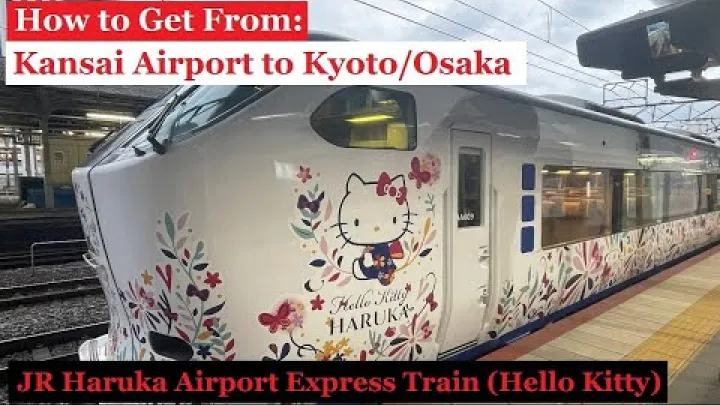
- After leaving the arrival area, follow signs for the airport railway station.
- At Kansai-Airport Station, choose a ticket or reservation product that covers the Haruka journey to Kyoto.
- Check the departure board, platform information, and seat instructions before boarding.
- At Kyoto Station, use the station signs to reach the correct exit or your next local connection.
The ticket structure is important. JR West explains that the Haruka requires both the basic train fare and a separate express fare. A rail pass, regional pass, or discount product may change how those parts are handled, but eligibility and conditions depend on the specific product. Do not assume that holding a pass automatically covers every seat or supplement.
Haruka is particularly practical when your accommodation is near Kyoto Station, when you have large luggage, or when you want to avoid finding an airport bus stop. If your hotel is in another district, remember that Kyoto Station is only the first part of the journey. Add the time and effort needed for a subway, local train, bus, taxi, or walk.
Compare the KIX Limousine Bus and Shared Shuttle
An airport limousine bus can be a useful alternative to Haruka when you prefer a road journey with an airport-specific luggage arrangement or when a scheduled Kyoto stop is closer to your accommodation. The current route information from Hankyu Kanko Bus should be used to identify the operating route and stop for your travel date. Kyoto Station’s Hachijo-guchi area is an important airport-bus planning point, but other stops may also operate.
| Option | Best for | Things to weigh |
|---|---|---|
| Haruka train | Direct arrival at Kyoto Station | Rail ticket and express-fare structure; luggage must be moved through the station |
| Limousine bus | Airport luggage and a direct road route | Traffic, stop location, and scheduled departures |
| Shared shuttle | Door-to-door convenience for a suitable address | Advance booking, pickup instructions, and possible multiple stops |
A shared shuttle is different from a regular bus. It may take you closer to your accommodation, but it normally requires advance booking and may collect or drop off other passengers. Confirm the address zone, baggage rules, cancellation conditions, and meeting point. A bus or shuttle may be easier than a train for several large bags, but the final stop may still require a walk or taxi.
Plan for Early Flights, Late Arrivals, and Missed Connections
The landing time printed on a flight itinerary is not the time you will reach the transport station. Immigration, baggage collection, customs, walking through the terminal, finding a ticket counter, and waiting for the next departure all use time. For an international arrival, compare the complete airport process with the last practical train or bus rather than with the flight landing time alone.
For a late arrival, prepare one realistic alternative before departure. This could be a later surface connection, a pre-arranged stay near the airport, or a different plan for reaching Kyoto the following morning. If a service is too tight after baggage collection, a slower but still available option may be safer than trying to make an uncertain connection.
Early flights require the same calculation in reverse. Work backward from the airport check-in and security requirements, then ask whether the first train or bus from Kyoto leaves enough time. When it does not, an airport-area overnight stay or a private transfer may be more practical. The right choice depends on the flight, terminal, luggage, and accommodation arrangement.
Reach Kyoto from Osaka International Airport (Itami)
Osaka International Airport, commonly called Itami or ITM, is primarily a domestic airport. It is often geographically closer to Kyoto than KIX, but the most convenient airport still depends on your flight connection and arrival time.
Understand When Itami Is the Better Airport
Itami has no direct rail line to Kyoto. The normal surface choices are a limousine bus, taxi, or a combination of local services. For many domestic flights, a direct bus is attractive because it avoids a trip through central Osaka before continuing to Kyoto.
Itami may be the better airport when your flight schedule is convenient, your final destination is close to one of the Kyoto bus stops, or you want a shorter airport-to-Kyoto transfer. KIX may still be the better overall choice when it offers the only practical international flight, a better connection, or a more convenient train departure. Distance alone should not decide the itinerary.
When comparing the airports, include the time needed to reach the airport from your original city, the possibility of a domestic connection, baggage arrangements, and the arrival-side journey. A nearby airport with an awkward flight or late surface connection may create more difficulty than a farther airport with a direct route.
Use the Limousine Bus to Kyoto Station or a Central Stop
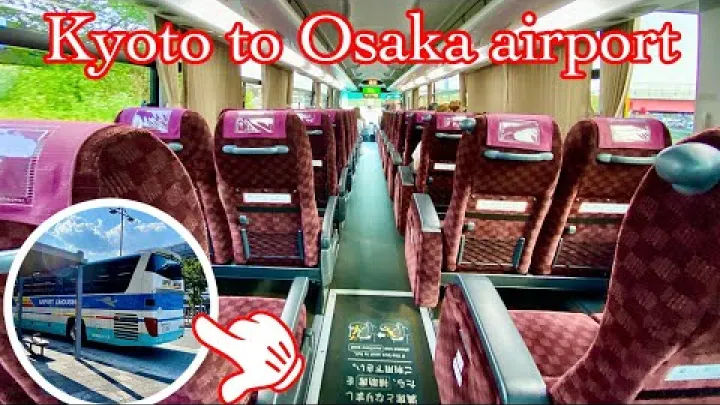
The Itami-to-Kyoto limousine bus is useful because the route can serve Kyoto Station and several central Kyoto arrival points. The current timetable and fare page from Hankyu Kanko Bus lists route entries for locations including Kyoto Station, Shijo Kawaramachi, Kyoto City Hall, Nijo Station, Shijo Omiya, and Demachiyanagi Station. Stops and operating details should be matched to the journey date.
| Possible stop | May suit | Next planning step |
|---|---|---|
| Kyoto Station | Accommodation near the station or connections to other rail lines | Choose Karasuma-guchi or Hachijo-guchi and plan the final walk |
| Shijo Kawaramachi | Downtown stays around the shopping and restaurant area | Check the walk from the stop to the exact hotel address |
| Kyoto City Hall | Central Kyoto locations north of Shijo | Compare the stop with a subway or taxi connection |
| Nijo Station or Shijo Omiya | West-central Kyoto and stays near Nijo | Check which stop is closer and whether luggage can be walked easily |
| Demachiyanagi Station | Some northeastern Kyoto locations | Confirm the neighborhood route after getting off the bus |
A central stop can reduce the final local transfer, but a scheduled bus stop is not the same as a hotel entrance. Save the accommodation address, identify the walking route, and consider whether a taxi from the stop is needed. Also check where you will board the return bus, since the inbound and outbound locations may not be identical.
Take the Shinkansen or Regional Rail to Kyoto
Rail is the main long-distance route for travelers already in Japan. Kyoto lies on the Tokaido-Sanyo Shinkansen corridor, making it accessible from Tokyo, Nagoya, Hiroshima, Fukuoka, and other major cities.
Travel from Tokyo and Eastern Japan by Tokaido Shinkansen
The Tokaido Shinkansen provides a direct rail route from Tokyo to Kyoto. The fastest services take roughly two hours, but the actual journey depends on the train, departure station, date, and current timetable. If you begin at Haneda or Narita airport, add the separate airport-to-Tokyo or airport-to-Shinagawa journey before comparing the total trip with flying.

| Train category | General characteristic | Planning point |
|---|---|---|
| Nozomi | Fastest pattern with fewer stops | Check seat, reservation, and pass conditions for the specific product |
| Hikari | Fewer stops than local services but a different schedule | Useful when its departure time matches your plans |
| Kodama | More stops and a longer journey | Choose it when the schedule or fare product makes sense |
Seat availability, reservation requirements, and rail-pass eligibility can differ by train category, date, and ticket product. The official Smart EX service provides current information for schedules, reservations, seat types, and fares. Use the traveler's actual starting point when comparing options: Tokyo Station to Kyoto is a different trip from Narita Airport to Kyoto, even though both may be described as Tokyo-to-Kyoto travel.
Flying can appear shorter in the air, but the comparison must include the trip to the airport, check-in and security, the flight, the transfer from KIX or another airport, and the final Kyoto connection. The Shinkansen is often attractive for a city-center itinerary because it arrives directly at Kyoto Station and avoids an additional airport process.
Connect from Nagoya, Hiroshima, Fukuoka, and Western Japan
From Nagoya, the Tokaido Shinkansen offers a direct high-speed rail route to Kyoto. This is particularly useful in a multi-city itinerary that visits Nagoya before Kyoto, because you can travel from the main city station rather than returning to an airport.
From Hiroshima and Fukuoka, the Tokaido-Sanyo corridor connects western Japan with Kyoto. Some current services may run through to Kyoto, while other schedules require a change at Shin-Osaka. Treat Shin-Osaka as a possible connection point rather than assuming that every train has the same stopping pattern. The same principle applies when traveling from another western city: first identify the main station, then compare a through service with a connection.
- Nagoya: airport or city arrival to Nagoya Station, then Shinkansen to Kyoto.
- Hiroshima: Shinkansen toward Kyoto, with a through service or a Shin-Osaka connection depending on the selected train.
- Fukuoka: begin at Hakata Station and compare the available through or connecting services to Kyoto.
- Other western cities: use the nearest major station and treat Shin-Osaka as the likely interchange when the route requires it.
For a multi-city trip, compare the time saved by staying on the rail corridor with the time needed to return to an airport. Kyoto is often easiest to reach as the next rail destination after Nagoya, Osaka, Hiroshima, or Fukuoka when the itinerary already places you near a major station.
Choose the Best Rail Route from Osaka
Osaka Station, Shin-Osaka Station, and central Osaka are not interchangeable. Shin-Osaka is the Shinkansen station, Osaka Station is the major JR station in the Umeda area, and central Osaka also includes neighborhoods served by private railways and subway lines. Begin by identifying the station or neighborhood closest to you.
- Starting at Shin-Osaka: use the Shinkansen to Kyoto Station when a fast, direct station-to-station journey is the priority.
- Starting at Osaka Station: compare JR Kyoto Line services to Kyoto Station. This is often more logical than traveling first to Shin-Osaka.
- Starting near Umeda and heading to downtown Kyoto: compare a private railway route toward Kyoto-Kawaramachi or another central Kyoto arrival point.
- Starting elsewhere in Osaka: calculate the local journey to the most useful departure station, including the walk between separate Osaka-area stations.
A simple decision tree is to choose the nearest suitable station first and the Kyoto arrival point second. Kyoto Station is useful for rail connections and many accommodations, while Shijo Station or the Shijo Kawaramachi area may be more convenient for downtown stays. A lower fare is not necessarily the best value if it adds a long local transfer with heavy luggage.
Use Long-Distance Buses to Kyoto
Long-distance buses connect Kyoto with Tokyo and other regional cities when suitable services are available. They can be useful for travelers who want an overnight journey, a reserved seat, or a potentially lower upfront transport cost.
Take an Intercity Highway Bus from Tokyo or Other Cities
Expressway buses may depart from major city terminals and arrive at Kyoto Station or another designated Kyoto stop. Routes, operators, seat layouts, luggage rules, and cancellation conditions vary. Look at the complete booking record rather than only the city names, because the departure terminal and arrival stop determine the local part of the journey.
Overnight buses can combine travel with a night on the road, and some travelers value the reserved seating and lower ticket price. Comfort is more dependent on the seat configuration and personal sleep needs than on the ticket category alone. Check whether the service has a standard seat, a more private arrangement, or another configuration before booking.
Road conditions can make bus arrival less predictable than rail travel. Do not connect a highway bus directly to a flight, ferry, event, or other departure that cannot be missed. Build a road-traffic buffer, especially when the next booking is time-sensitive. Operator booking pages and service-status notices are more useful than old route examples copied into travel guides.
Decide When a Bus Is Better Than a Train
A bus may be the better choice when your priorities are a lower transport budget, overnight travel, a direct terminal, or fewer station changes. It may also work well when the Kyoto arrival stop is close to your accommodation. A train is usually easier to justify when you need a predictable arrival, want more movement space, or have a connection that depends on precise timing.
Compare the whole journey, not just the intercity ticket. Add the local train, subway, taxi, or walk from the Kyoto bus stop to your accommodation. A bus with a low ticket price may require a costly taxi or a difficult luggage transfer, while a rail ticket may include a more useful arrival point.
- Confirm the seat type and whether the seat reclines in a way you can use comfortably.
- Check the baggage allowance, size limits, and whether large items require special handling.
- Read the cancellation and change rules before payment.
- Record the departure terminal and the exact Kyoto arrival stop.
- Check how you will continue from the stop at the expected arrival time.
Use Nagoya or Coastal Ferry Connections
Nagoya and the Sea of Japan coast can be useful alternatives when flight availability, a multi-city itinerary, or a preference for slower travel changes the normal Kyoto route.
Reach Kyoto from Chubu Centrair through Nagoya
Chubu Centrair International Airport, or NGO, can suit an itinerary that already includes Nagoya or offers a better flight than KIX. The general route has two separate parts: travel from Centrair to Nagoya, then continue from Nagoya Station to Kyoto by Tokaido Shinkansen.
- Choose the current airport train or bus connection from Centrair to Nagoya.
- Allow time to reach the correct area of Nagoya Station and obtain the next ticket.
- Take the Tokaido Shinkansen toward Kyoto.
- Continue locally from Kyoto Station to the accommodation.
Travel Japan describes Centrair as a gateway with access to Nagoya and destinations farther afield, including Kyoto. A direct bus to Kyoto should be treated as an option only when a current operator confirms it for your date. Keep the airport-to-Nagoya ticket and the Nagoya-to-Kyoto ticket as separate planning steps, and include the extra transfer when comparing Centrair with KIX or Itami.
Consider Ferry-Linked Routes via Tsuruga or Maizuru
Tsuruga and Maizuru are niche coastal gateways that can be combined with a ferry itinerary and a later rail or bus journey to Kyoto. These routes are more suitable for slow travel, unusual multi-city plans, or travelers who prefer to avoid a domestic flight than for most first-time visitors seeking the simplest arrival.
Use an optional ferry route only after confirming four separate parts of the plan:
- The ferry sailing date, departure port, arrival port, and booking conditions.
- How you will reach the port and how much time is needed at the port.
- The arrival time at Tsuruga or Maizuru and the available inland connection.
- The final Kyoto station, bus stop, or accommodation transfer after leaving the port.
A ferry ticket is not a Kyoto ticket. Port access, limited sailing dates, overnight arrival, and the inland connection can change the total journey substantially. If any one part does not connect comfortably, choose a different route rather than relying on an unconfirmed transfer.
Arrive at Kyoto Station and Continue Locally
Reaching Kyoto Station is often only the midpoint of the journey. Kyoto is spread across several districts, so the best last-mile route depends on the accommodation address rather than on the city name alone.
Understand Kyoto Station Exits and Arrival Points
Kyoto Station has two useful orientation names. Karasuma-guchi is on the north side, facing the central city, while Hachijo-guchi is on the south side. Airport limousine buses commonly use the Hachijo-guchi area, while Karasuma-guchi is a major orientation point for city buses and city-side connections. Follow the current station signs because platforms and stops can be separated by a long walk.
| Arrival mode | Arrival point to identify | Useful next action |
|---|---|---|
| Airport limousine bus | Usually the Hachijo-guchi area or another named Kyoto stop | Match the stop with the hotel address before walking away |
| Haruka or Shinkansen | Kyoto Station and the correct station-side exit | Choose the north or south side based on the next connection |
| Long-distance bus | Kyoto Station or a central stop shown on the booking | Do not assume every bus uses the same terminal |
| Local rail or subway | The station named on the route plan | Check the walking segment from that station |
Before leaving a large station, identify the exact exit, bus stop, or taxi stand you need. If the accommodation has a late check-in, confirm the arrival point and the final local option in advance. A few minutes spent orienting yourself inside the station can prevent a long walk with luggage in the wrong direction.
Choose a Local Connection by Kyoto District
Choose the local route according to the district and accommodation, not automatically according to Kyoto Station. Subway, local rail, bus, taxi, and walking combinations can all be useful, but the most convenient option changes from one address to another.
| Destination area | Useful arrival anchor | Route idea |
|---|---|---|
| Downtown Kyoto | Shijo Station or Shijo Kawaramachi | Use the Karasuma Line to Shijo, or compare a central private-rail arrival for the exact address |
| Arashiyama | Saga-Arashiyama Station | Use the rail route from Kyoto Station when it matches the accommodation and sightseeing plan, then walk or make a short local connection |
| Higashiyama | A nearby eastern rail, subway, or bus point | Choose based on the accommodation rather than treating Kyoto Station as the final stop |
| Northern Kyoto | A suitable subway, rail, or bus connection; Demachiyanagi may help for some stays | Check the final walk and the district-specific connection |
For Arashiyama, Saga-Arashiyama Station is a useful rail anchor for the bamboo forest area, but it is not the entrance to every attraction or hotel. Expect a walk or a local connection after the train. For downtown Kyoto, Shijo Station and Shijo Kawaramachi are nearby but different arrival points, so compare the actual hotel location. Higashiyama and northern sightseeing areas often require a combination of rail, subway, bus, and walking.
Manage Luggage, Crowds, and Unofficial Transport Offers
Kyoto Station and airport arrival areas can be crowded, and changing platforms with large bags can be tiring. Keep your ticket, booking confirmation, accommodation address, and destination stop easy to access. If the route is unclear, ask at a staffed information or ticket counter.
- Use marked taxi stands and official operator signs.
- Use staffed ticket counters or clearly identified ticket machines.
- Decline unsolicited transport offers and avoid entering an unmarked vehicle.
- Confirm the destination address and the fare or booking details before starting a paid ride.
- Keep the receipt or digital booking information until you reach the accommodation.
This practical approach avoids confusion without assuming that every unfamiliar offer is fraudulent. If you need a taxi, choose the marked stand and explain the full address clearly.
Check Your Route Before You Travel
Transport details can affect the success of the entire Kyoto itinerary. Make the final route check close enough to departure that the timetable, fare, reservation rules, terminal, and service status are relevant to your actual journey.
Verify the Operator, Station, Ticket, and Service Status
Use this checklist for every airport, rail, bus, or ferry route:
- Confirm the exact airport terminal, railway station, bus stop, or ferry port.
- Confirm the departure date and time, including the time zone and any overnight date change.
- Check the destination point in Kyoto: Kyoto Station, Karasuma-guchi, Hachijo-guchi, a central bus stop, or another station.
- Check the current fare, seat type, reservation requirement, ticket collection method, and change or cancellation rules.
- Check the service status and any route notice from the relevant operator.
- Confirm the local connection from the arrival point to the accommodation.
- Keep the address, booking record, and one fallback option available offline or in an accessible phone note.
For the Haruka route, use the current JR West information rather than an old fare or timetable. For Tokyo-to-Kyoto Shinkansen travel, use the current Smart EX information for the selected train and seat product. For the Itami limousine bus, use the current Hankyu Kanko Bus route page. Third-party route pages can help explain a journey, but an old fare, stop name, or timetable should not be treated as final confirmation.
Also check the destination side. A ticket to Kyoto Station does not tell you which exit is best, and a ticket to a central bus stop does not include the walk to the hotel. The exact arrival point is part of the route plan.
Build a Buffer and Prepare a Backup Route
Build the plan around the time you will actually be ready to travel, not only the scheduled arrival time of a flight or bus. Airport processing, station transfers, road traffic, ferry timing, and luggage collection can all affect the usable connection.
For a daytime airport arrival, choose the main route and save one alternative that still reaches a useful Kyoto arrival point. For a late arrival, decide in advance whether the practical backup is a later service, an airport-area night, or a revised Kyoto arrival the next morning. For a multi-city itinerary, compare the direct rail route from your current city with the extra transfers required to return to an airport.
Use this three-step plan:
- Choose the gateway: match the airport, station, or port to your origin, flight, budget, luggage, and Kyoto district.
- Confirm the current service: check the operator, exact station or stop, ticket conditions, and service status.
- Save the fallback: record a second realistic arrival plan and the local connection from the Kyoto arrival point.
Conclusion: Match Your Gateway to Your Priorities
The simplest way to get to Kyoto is usually a direct route matched to your real starting point: Haruka from KIX, a limousine bus from Itami, the Shinkansen from Tokyo or Nagoya, regional rail from Osaka and western Japan, or a carefully planned ferry-linked itinerary. The best choice also depends on the final neighborhood, luggage, arrival time, and tolerance for road traffic or transfers. Confirm the current operator information, identify the exact Kyoto arrival point, and keep one practical backup before you leave.
Select area
Create a post
Posting is free and no registration is required.