Kobe Where to Stay: Best Areas, Hotels & Transport
![Preview image for the video "Kobe Sannomiya Walking Tour - Hyogo Japan [4K/Binaural]".](/sites/default/files/styles/media_720x405/public/oembed_thumbnails/2026-08/ijKYJh9PdsUvl6EWRTKyZ1o9-nkrm4wDMlPb26C5vM0.jpg.webp?itok=YpkGe-Wb "Preview image for the video \"Kobe Sannomiya Walking Tour - Hyogo Japan [4K/Binaural]\".")
Where to stay in Kobe is easiest to decide when you treat the city as a set of different bases rather than one hotel zone. For most first-time visitors, Sannomiya offers the most useful balance of transport, restaurants, shopping, and accommodation choice, while Motomachi adds historic streets and food. Waterfront, hillside, sake, mountain, and hot-spring areas can be better when the stay itself is a main purpose. This guide compares access, walkability, noise, cost, lodging types, and booking checks so you can choose a Kobe base that fits your itinerary.
The Short Answer: Where Most Visitors Should Base Themselves
Kobe has a compact central area, but its waterfront, hills, sake district, and hot-spring town create very different travel experiences. Use the table as a quick filter, then read the detailed sections for station access, evening atmosphere, accommodation choice, and practical limitations. Cost levels are relative rather than fixed because Kobe hotel rates change by date, occupancy, season, and room type.
| Area | Best for | Access profile | Atmosphere | Cost and choice |
|---|---|---|---|---|
| Sannomiya | First visits, dining, day trips | Main urban station cluster | Busy and convenient | Broadest range |
| Motomachi | Food, shopping, history | Central rail and walking access | Characterful and active | Broad range |
| Harborland and Meriken Park | Views, walks, couples | Near Kobe Station or harbor attractions | Waterfront and scenic | Often higher for views |
| Kitano and Shin-Kobe | Historic streets and quiet stays | Gateway access with hillside walking | Quiet and residential in places | Smaller supply |
| Nada | Sake culture | Eastern Kobe rail access | Semi-suburban | Specialist choice |
| Mount Rokko | Nature and views | Mountain connections required | Retreat-like | Limited city convenience |
| Arima Onsen | Hot springs and ryokan | Separate hot-spring-town base | Traditional and quiet | Specialist, often meal-based |
Sannomiya Is the Default Base for First-Time Visitors
For travelers focused on urban sightseeing, dining, shopping, and regional day trips, start your search around Sannomiya Station. The area brings together several important rail and local transport services, and it has the largest concentration of restaurants, convenience services, and accommodation categories for a visitor who does not yet know Kobe.
Sannomiya is also a practical compromise. You can reach central sights without making the hotel itself the main attraction, and you have more alternatives if one property is full or unsuitable. The station area is not a single doorstep, however. A hotel described as being in Sannomiya may be several blocks from the station cluster, so inspect the exact address, nearest entrance, and walking route. The official Feel Kobe first-time guide is useful for understanding the contrast between a practical central base and more scenic Kobe stays.
Choose a Different Base When Your Trip Has a Clear Priority
Choose a specialist area when it directly supports the reason you are visiting Kobe. The decision rules are simple:
- Transport and broad sightseeing: Choose Sannomiya, or Motomachi if food and historic central streets matter more than having the largest station cluster.
- Waterfront atmosphere: Choose Harborland or the Meriken Park area when harbor views, promenades, and evening scenery are more important than the shortest connection to every rail line.
- Historic surroundings: Consider Kitano, with Shin-Kobe as a nearby transport gateway, if hillside streets and former foreign residences appeal to you.
- Sake: Choose Nada when brewery visits and sake museums are a central part of the itinerary.
- Nature: Choose Mount Rokko for a retreat focused on mountain scenery and outdoor activities.
- Hot springs: Choose Arima Onsen for a ryokan or bathing experience rather than as the most efficient base for city sightseeing.
The main trade-off is consistent: greater atmosphere and specialization usually mean less direct access to the wider city, fewer late-night dining choices, or a smaller selection of accommodation. Treat quietness or popularity as a description of the setting, not as a complete judgment about any district.
Sannomiya and Motomachi: The Most Practical Central Bases
Sannomiya and Motomachi are close enough to compare together, but they serve different travel styles. Sannomiya is the stronger transport and commercial base; Motomachi is often more appealing for visitors who want food, shopping, and historic Kobe within an urban setting.
Sannomiya: Transport, Dining, and Broad Hotel Choice
The Sannomiya station cluster includes JR Sannomiya, private railway services such as Hankyu and Hanshin, Kobe Municipal Subway connections, and the Port Liner. These services are not interchangeable: the best station depends on the destination and the operator serving that route. The Port Liner is especially relevant when planning access to Kobe Airport, while JR and private railways may be more useful for different regional journeys.
This makes Sannomiya a strong base for first-time visitors, short stays, business travelers, and people combining Kobe with other Kansai destinations. Restaurants, shopping, convenience stores, and practical services are concentrated around the urban core. Current listings near Sannomiya Station on Booking.com illustrate the range of hotels available, but a live listing page should be treated as an inventory snapshot rather than a permanent ranking.
The disadvantages are mainly urban. Main streets can be busy, and a room facing an active road or commercial area may not feel as calm as a hillside or waterfront property. When comparing hotels, check the actual station exit, the route with luggage, the building entrance, and whether the room faces the street or an interior side.
Motomachi: Chinatown, Shopping, and Historic Kobe
Motomachi Station places you near Motomachi Shopping Street, Nankinmachi, and Kyu-Kyoryuchi. The area is a good choice for travelers who want to combine food, shopping, architecture, and central sightseeing without staying directly beside the largest station cluster. Meriken Park and other harbor attractions are also within the wider central sightseeing area.
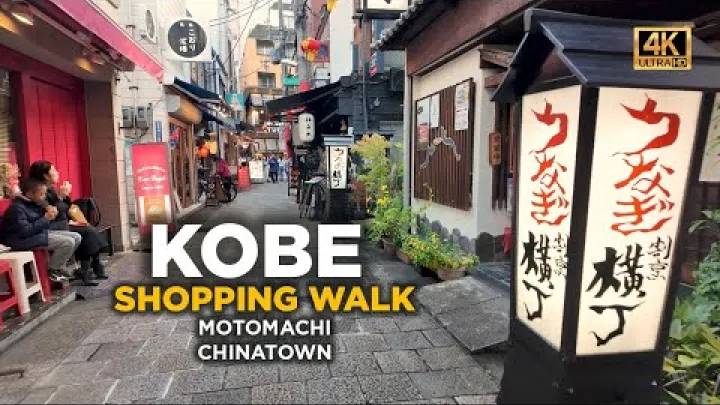
Compared with Sannomiya, Motomachi feels more defined by its shopping streets, restaurants, and historic character. It remains a practical urban base, but its main advantage is the experience of being near places you may want to explore on foot. A location-specific Expedia hotel page shows the current range of accommodation around Motomachi Shopping Street, from simple rooms to more distinctive stays.
Retail streets can be active during the day and around meal times, while nearby side streets may have a different feel. Do not choose only from the neighborhood label. Open the map for the exact property, look at the street leading to the entrance, and compare its evening dining options with those around Sannomiya.
Waterfront and Hillside Options for Atmosphere
Waterfront and hillside stays can make Kobe feel more distinctive, but they require a clearer decision about whether you value scenery or daily convenience. These areas are best when the setting is part of the trip rather than merely a place to sleep.
Harborland and Meriken Park: Waterfront Views and Evening Walks
Harborland near Kobe Station and Meriken Park near the central harbor attractions should be treated as related but separate choices. Harborland is associated with waterfront commercial facilities and entertainment, while Meriken Park is closer to harbor landmarks, open promenades, and night scenery. A property beside one may not be immediately beside the other.
![Preview image for the video "[4K ASMR] Kobe Japan Night Walk | Meriken Park & Harborland | Immersive Walking Tour (No Talking)".](/sites/default/files/styles/media_720x405/public/oembed_thumbnails/2026-08/qifW5xq0BEv4twa6iP2eMCDgT-FiznPWyegY-fIJz-w.jpg.webp?itok=MUBRP6aZ "Preview image for the video \"[4K ASMR] Kobe Japan Night Walk | Meriken Park & Harborland | Immersive Walking Tour (No Talking)\".")
Choose this area for harbor walks, views, relaxed evenings, and a hotel experience that matters to the trip. It suits couples particularly well, but it can also work for travelers who prefer a slower schedule and do not need to return to the main station cluster several times each day. Hotels in the bay area may offer views, balconies, spa facilities, or more extensive service, but those features should be checked on the individual property page rather than assumed from its location.
The trade-off is access. Kobe Station and the harborfront are central, but Sannomiya remains the more useful rail and commercial anchor for many wider journeys. Depending on the exact hotel, you may need a walk, bus ride, or rail connection to reach the station cluster. Waterfront rooms and full-service properties can also cost more, so compare the value of the view and facilities with the time spent traveling to other sights.
Kitano and Shin-Kobe: Quiet Streets Near Historic Attractions
Kitano and Shin-Kobe overlap geographically but are not the same stay decision. Kitano is known for former foreign residences, hillside streets, cafes, and boutique-oriented accommodation. Shin-Kobe is a transport gateway and a useful arrival or departure point, especially for travelers using Shin-Kobe Station, but it is not automatically the best everyday base for every itinerary.
![Preview image for the video "Amazing Kobe Kitano Walking Tour 🇯🇵 - Hyogo Japan [4K 2023]".](/sites/default/files/styles/media_720x405/public/oembed_thumbnails/2026-08/mInVEc6Ik11P6xf-D1usfF3uAFVu_YcvT80yi_Rw-yE.jpg.webp?itok=iuKanaQ_ "Preview image for the video \"Amazing Kobe Kitano Walking Tour 🇯🇵 - Hyogo Japan [4K 2023]\".")
This area suits couples, repeat visitors, and travelers who prefer a quieter setting near historic attractions. The price of that atmosphere is practical: Kitano includes uphill walking, and the evening choice of restaurants and shops is generally more limited than in Sannomiya or Motomachi. Hotel supply is also smaller, so the best property may depend heavily on your dates.
Slopes, stairs, station approaches, and luggage handling deserve special attention here. Check whether the route is step-free, whether the property has an elevator, and whether carrying bags uphill is realistic for your group. The Kobe City Loop bus may help connect Kitano, Shin-Kobe, and central attractions, but use current route and operating information rather than relying on an old map. The official Feel Kobe tourism portal provides useful local context for Kitano, Shin-Kobe, and the Nunobiki area.
Specialized Bases Beyond Central Kobe
Nada, Mount Rokko, and Arima Onsen are not simply alternative versions of downtown Kobe. They are destination-led bases, so choose them when their particular experience is important enough to shape your accommodation decision.
Nada: Stay Near Sake Breweries and Museums
Nada is an eastern Kobe base for travelers interested in sake breweries, museums, tastings, and industrial heritage. The sake district and brewery-museum cluster are the main reasons to stay nearby. The surrounding setting is more semi-suburban and less focused on shopping and dense restaurant choice than Sannomiya or Motomachi.
Nada works well for slow culinary travel or for a trip where brewery visits are a major priority. Rail connections make the central city reachable in general terms, but the best choice depends on the exact accommodation, station, brewery, opening hours, and tasting arrangements. Confirm that a property described as being in Nada is genuinely convenient for the places you plan to visit.
For a first Kobe visit centered on Nankinmachi, Harborland, Kitano, and day trips, Sannomiya or Motomachi will usually create less daily friction. Nada is a specialist base, not the default answer.
Mount Rokko: A Nature and View-Focused Retreat
Mount Rokko is a retreat-style base for mountain scenery, hiking, cooler surroundings, views, and outdoor attractions. It is not a convenient replacement for central Kobe. Access can depend on buses, ropeways, and other connecting services, so a mountain hotel requires more schedule planning than a central property.
The quiet evening atmosphere is an advantage if you want rest, nature, or a scenic stay. It is a limitation if you expect a wide choice of city restaurants or the ability to return easily after an evening in central Kobe. A split stay can work well: use Sannomiya or Motomachi for urban sightseeing, then spend a separate part of the trip on Mount Rokko.
Before booking a mountain property, check the current mountain weather, trail conditions, and operating status of buses, ropeways, and outdoor attractions. Also identify the last practical return or descent for each day. Do not promise yourself a particular panorama or an open facility until the accommodation and attraction information confirms it for your dates.
Arima Onsen: Choose a Ryokan for a Hot-Spring Stay
Arima Onsen is a distinct hot-spring-town experience north of central Kobe. Accommodation is often centered on ryokan hospitality, bathing, traditional room styles, and meals rather than on the convenience of a city hotel. It is a strong choice when the accommodation itself is one of the main reasons for visiting.
A ryokan stay may involve tatami rooms, futon bedding, set meal arrangements, public or private bathing facilities, and quieter evening patterns. A standard hotel usually offers a more independent schedule and easier access to urban restaurants. Choose Arima as a dedicated hot-spring segment or as a complementary base, not as the automatic location for intensive city sightseeing.
Current citywide accommodation listings on Booking.com show that Kobe has specialist ryokan and onsen-area properties as well as central hotels. Use such pages to identify current inventory, not to create a permanent ranking. Compare whether the quoted rate includes breakfast, dinner, bathing access, taxes, and any room or guest restrictions. Narrow streets and walking with luggage can also make Arima less frictionless than a central station base.
Kobe Accommodation Types, Budgets, and Booking Timing
The best accommodation type depends on how much privacy, space, service, and flexibility you need. Location often matters more than a hotel label, especially when a lower room rate comes with additional transfers or a long walk.
Budget Stays: Capsules, Hostels, and Business Hotels
Capsule hotels prioritize a low-cost sleeping space and often shared facilities. Hostels and guesthouses may offer dormitory beds, private rooms, shared kitchens, or social common areas. Simple business hotels usually provide a private, compact room with more predictable personal space and a convenient central location. Compare these categories by the feature that matters most to you, not just by the headline rate.
Sannomiya and other central areas are useful for budget travelers because food, transport, and convenience services are close. A guesthouse farther from the core may save on the room but add fares and time each day. Before payment, check the exact bed dimensions, bathroom arrangement, luggage storage, age rules, check-in hours, noise policy, and whether the room configuration accepts your group. A capsule or dormitory product may not suit every family, couple, or traveler with large luggage.
- Choose a capsule when price and a central bed matter more than room privacy.
- Choose a hostel or guesthouse when shared facilities and a social setting are acceptable.
- Choose a business hotel when a private room, reception, and predictable routine are more important.
Mid-Range, Boutique, and Waterfront Hotels
Mid-range hotels are the broadest practical category for most Kobe visitors, particularly around Sannomiya and Motomachi. They can offer a private room, reception service, breakfast, and a location that keeps daily planning simple. Business-oriented properties are often functional, while boutique hotels in historic areas may emphasize design and neighborhood character.
Waterfront hotels add views, service, room size, spa facilities, or design to the accommodation decision. That can be worthwhile for a couple or a relaxed itinerary, but it does not automatically make the hotel more convenient, quiet, or suitable for children. Compare what the higher rate actually buys: a view, larger room, breakfast, bath facilities, a better cancellation policy, or simply a more prestigious label.
When comparing listings, look at room occupancy, bed arrangement, breakfast terms, bath access, view direction, elevator access, and cancellation conditions. A nominal star category is less useful than a clear match between the property features and your itinerary.
Ryokan, Serviced Apartments, and Long-Stay Accommodation
Ryokan and long-stay accommodation solve different problems. Choose a ryokan when you want tatami rooms, traditional meals, hot springs, and an accommodation-led experience, especially in Arima Onsen. Choose a serviced apartment or extended-stay hotel plan when you need laundry, simple food preparation, workspace, or a more residential routine during a longer business, study, remote-work, or relocation period.
For an extended stay, compare housekeeping frequency, utilities, laundry access, kitchen equipment, parking, deposits, cancellation rules, and minimum-stay requirements. A room with a small refrigerator or kitchenette is not necessarily operated like a serviced apartment. Likewise, a ryokan may include meals and bathing in a way that makes its daily rate difficult to compare with a room-only city hotel.
Keep traditional lodging and residential lodging as separate use cases. Read the written plan and facility details as part of the booking decision, rather than assuming that similar labels mean the same service level.
Compare the Total Cost for Your Dates
Kobe accommodation value changes with weekdays, weekends, seasons, local events, room occupancy, and the size of the available inventory. This is especially important for waterfront rooms, boutique properties, mountain resorts, and ryokan, where there may be fewer comparable rooms.
Compare the complete cost for the exact dates and number of guests. Include the room rate, breakfast or ryokan meals, bathing access, taxes and fees, parking, local transport, and the value of a flexible cancellation policy. Then compare a central hotel with an outlying property after adding the cost and time of daily transfers. A cheaper room is not necessarily cheaper for the whole trip if it requires several extra connections.
- Search the same dates, occupancy, and room standard.
- Separate room-only rates from plans that include meals or breakfast.
- Add transport, parking, and any facility charges.
- Compare cancellation and payment conditions, not only the first displayed rate.
Check small-inventory properties early enough to understand the available choices, but avoid relying on a fixed booking lead time. Current rates and policies on the dates you need are more useful than permanent price bands.
Match the Base to Your Itinerary and Travel Style
Start with your daily route, not the hotel photograph. A base that is attractive at night may be inconvenient if most of your plans begin at a different station or require repeated transfers.
Sightseeing, Day Trips, and Short First Visits
For a short first visit centered on Kobe's urban sights, restaurants, shopping, and regional rail connections, choose Sannomiya or Motomachi. Central lodging reduces daily friction when visiting Nankinmachi, Motomachi Shopping Street, Kyu-Kyoryuchi, Harborland, Meriken Park, Kitano, and nearby attractions.
Sannomiya is the stronger choice when you want the broadest transport options or do not want to study several operators. Motomachi is a good alternative when food, shopping, and historic central streets are the main focus. Before booking, map one representative day trip from the exact hotel address. Do not assume that every property described as central has identical access to JR, private railways, the subway, or the Port Liner.
If you do not want to change hotels, keep Arima Onsen, Mount Rokko, and Nada as day-trip or secondary experiences when practical. If one of those experiences is the central purpose of the trip, a split stay may provide better value than commuting every day.
Couples, Families, Solo Travelers, and Longer Stays
| Traveler profile | Areas to compare | Lodging features | Main trade-off |
|---|---|---|---|
| Couples | Harborland, Meriken Park, Mount Rokko, Arima Onsen | View room, boutique hotel, or ryokan | Higher cost or more complex access |
| Families | Sannomiya or waterfront | Occupancy, breakfast, lifts, nearby facilities | Room rules and urban noise vary |
| Solo travelers | Sannomiya or Motomachi | Private room, clear reception, easy route | Busy streets or compact rooms |
| Longer stays | Central edge or a verified extended-stay property | Laundry, kitchen, workspace, housekeeping | Minimum stays and limited service |
Couples should choose between waterfront views, mountain nature, and traditional bathing rather than treating all romantic stays as the same. Families should check the permitted number and age of guests, breakfast arrangements, room layout, and access to practical facilities. Solo travelers may prefer a private room and a clearly managed reception over a dormitory, while also choosing an evening route that matches their own comfort.
Longer stays benefit from laundry, cooking facilities, workspace, and quieter surroundings, but only when those features are confirmed in the plan you book. Travelers with mobility or heavy-luggage needs should favor straightforward central access over an attractive but steep or transfer-dependent setting.
Booking Checklist: Location, Night Walkability, and Flexibility
Once you have chosen an area, the exact property page matters more than the neighborhood name. Use the following checks before you pay.
Verify the Exact Location, Route, and Evening Environment
Labels such as Sannomiya, Kobe Station, Harborland, Kitano, and Shin-Kobe can cover noticeably different streets and walking conditions. A hotel can be technically within an area while being inconvenient for the station, attractions, or evening meals.
- Copy the exact hotel address into a map and identify the nearest station, rail operator, and station exit.
- Check the walking route with luggage, including crossings, stairs, slopes, covered passages, and the final hotel entrance.
- Confirm elevator or step-free access, late check-in arrangements, luggage storage, and reception hours.
- Look at nearby restaurants, convenience stores, and the route you expect to use after dinner.
- Check current train, Port Liner, bus, and Kobe City Loop information for planned days, especially when several operators are involved.
- Confirm current opening hours and access arrangements for attractions such as ropeways, museums, and harbor facilities.
- Read the property's room, age, occupancy, payment, cancellation, and facility policies before completing the reservation.
For nighttime movement, inspect the actual route rather than assigning a safety label to a whole district. Use normal urban precautions, choose a route that is well lit and comfortable for you, and follow current local or official travel guidance. Conditions can differ from one block to the next, so do not assume that a popular area is completely safe or that a quiet area is unsafe.
Decide Whether a Split Stay Is Worth the Transfer
One central base is usually best for a short visit, a first trip, or an itinerary dominated by city sightseeing and day trips. It avoids packing, check-out, luggage storage, and a second check-in when the trip already has many activities.
A split stay adds real value when the second location changes the experience: for example, Sannomiya or Motomachi combined with a ryokan in Arima Onsen, a retreat on Mount Rokko, or a waterfront hotel chosen for its setting. The shorter the trip, the stronger the reason should be for changing hotels. For a longer stay, a second base may be worthwhile if it replaces repeated transfers and gives you enough time to enjoy the specialist area.
Count the full transfer, including moving luggage and navigating between Shin-Kobe, Kobe Airport, Kobe Station, Sannomiya Station, and different rail operators. Compare that time and cost with the value of the second accommodation experience. Split only when the distinctive setting is important enough to justify the logistical change.
Final Recommendation for Where to Stay in Kobe
If you are unsure, book around Sannomiya Station. It is the most flexible base for a first Kobe visit, with broad accommodation choice, restaurants, shopping, and access to several transport networks. Choose Motomachi instead when Nankinmachi, Motomachi Shopping Street, historic streets, and central food are your main priorities.
Choose Harborland or Meriken Park for waterfront atmosphere, Kitano for hillside history, Nada for sake, Mount Rokko for nature, and Arima Onsen for a ryokan and hot-spring experience. These areas are not universally better; they are better when their specific character matches your itinerary.
Finally, compare the exact address, route, room conditions, total stay cost, and cancellation terms. One well-located central hotel is often the simplest answer, while a carefully planned split stay can add a memorable specialist experience when the transfer is worth it.
Select area
Create a post
Posting is free and no registration is required.