Takamatsu Getting There: Flights, Trains, Buses & Ferries
How to get to Takamatsu depends on your starting point, travel date, budget, and whether Takamatsu is your final destination or a gateway to the Seto Inland Sea islands. Flights are useful for long-distance arrivals, while trains via Okayama provide a central and comfortable land route. Highway buses can reduce the fare on selected corridors, and ferries are especially practical when you are already in the Seto Inland Sea region. This guide compares the main options and explains how to reach central Takamatsu from the airport, station, or port.
Getting to Takamatsu at a Glance
Takamatsu has three main arrival hubs, and choosing the correct one makes the rest of the journey much easier.
The Three Transport Hubs in Takamatsu
Takamatsu Airport is south of the city. It is useful for domestic and selected international flights, but it is not in the central waterfront area. You need a road transfer after landing, usually the airport limousine bus or a taxi.
JR Takamatsu Station is the main rail arrival point and sits beside the waterfront. It is the natural destination for travelers using the shinkansen and the Rapid Marine Liner from Okayama Station. Station-area hotels, local transport, and the port are all nearby.
Takamatsu Port is mainly a regional and island gateway. It is convenient for travelers continuing to Naoshima, Teshima, Shodoshima, Megijima, or Ogijima, or arriving from another Seto Inland Sea port. It is not normally the replacement for a flight or train from Tokyo.
Central accommodation may be near the station, the waterfront, or Kawaramachi. These areas are connected, but they are not interchangeable when you have a particular ferry, bus, or train to catch. First decide whether you need central Takamatsu or a port for an onward island trip.
How to Choose the Best Route
Compare the complete journey rather than the vehicle time alone. Include the trip to the departure airport or station, check-in and baggage procedures, transfers, waiting time, local transport in Takamatsu, and any luggage restrictions. Comfort and booking difficulty also matter, especially for overnight services and island connections.
| Mode | Best suited to | Main arrival point | Main limitation |
|---|---|---|---|
| Flight | Long-distance and international arrivals | Takamatsu Airport | Airport transfer required |
| Rail | Honshu cities and rail-pass users | JR Takamatsu Station | Transfer at Okayama |
| Highway bus | Selected budget routes | City bus terminal | Traffic and variable comfort |
| Ferry | Seto Inland Sea and island itineraries | Takamatsu Port | Limited destinations and sailing conditions |
As a general choice, consider flying when total speed matters, rail when you want a predictable daytime route, a bus when the direct fare is attractive, and a ferry when the port is part of your itinerary.
Flying to Takamatsu Airport
Flying can avoid the land transfer through Okayama, but the airport-to-city connection must be included in your plan.
Domestic and International Flight Options
Takamatsu Airport is primarily a domestic regional airport. Research for the airport shows domestic connections from major Japanese gateways, including Tokyo airports and Naha, together with a limited international network focused mainly on East Asia. International destinations and airline frequencies can be seasonal or change with the timetable, so treat any route list found in a search result as a starting point rather than a permanent inventory.
A direct flight is attractive when the schedule fits your arrival city and you want to reach Shikoku without changing to a train at Okayama. The complete journey is still flight access, airport procedures, the flight itself, baggage collection, and a road transfer into central Takamatsu.
For an international trip, compare a direct service to Takamatsu with an itinerary that arrives at another Japanese gateway and continues by domestic flight or rail. A lower headline airfare may not remain lower after baggage, seat selection, airport transfers, and an overnight stay are added.
Choosing Haneda, Narita, or a Major Connecting Gateway
Choose Haneda or Narita according to your existing itinerary, not only the displayed airfare. Haneda may be the simpler choice when your international or domestic ticket already uses it. Narita may fit better when your through itinerary or a lower-cost carrier uses that airport. Traveling between the two airports is a separate transfer and should not be treated as a normal flight connection.
Be especially careful with separate international and domestic tickets. You may need to collect baggage, pass immigration and customs, change terminals, and check in again. A delay on the first ticket may leave you responsible for the second ticket. A protected through itinerary is safer; if you self-connect, leave a generous buffer rather than using a minimum connection time as a promise.
When a direct flight to Takamatsu does not fit, a major Japanese hub can be a practical alternative. Compare the full itinerary, including the domestic sector, baggage rules, airport changes, and the final airport bus. Full-service and low-cost options should be compared on the same basis, because the cheapest base fare may exclude services you need.
Taking the Train via Okayama
The standard land route to Takamatsu from Tokyo, Osaka, Kyoto, Hiroshima, and other cities on the main Honshu rail corridors is shinkansen to Okayama, followed by the Rapid Marine Liner.
Shinkansen and Rapid Marine Liner
At a basic level, the journey works in three steps:

- Take a shinkansen to Okayama Station from your origin city.
- At Okayama, follow the signs and departure screens for the connecting JR Shikoku service, usually the Rapid Marine Liner.
- Take the Marine Liner across the Great Seto Bridge to JR Takamatsu Station.
The Marine Liner is the important link between the Honshu shinkansen network and Takamatsu. It brings you directly into the central station area instead of requiring a separate airport transfer. From Tokyo, the rail journey is a long daytime segment. From Shin-Osaka, Kyoto, Hiroshima, or another western city, the same Okayama interchange often provides a straightforward route.
Exact journey time depends on the shinkansen chosen, the connection at Okayama, and the date. When changing trains, check the departure board rather than relying only on a booking app. Allow time to leave the arriving train, read the platform signs, and board the correct Marine Liner service.
Reserved seats can make a long trip more comfortable, particularly with luggage or during busy travel periods. If you use separate tickets, confirm whether you need to pass through a transfer gate or show both tickets. A single itinerary can simplify the transfer, but it is still useful to know the connecting train and platform shown in your reservation.
The Sunrise Seto Overnight Train
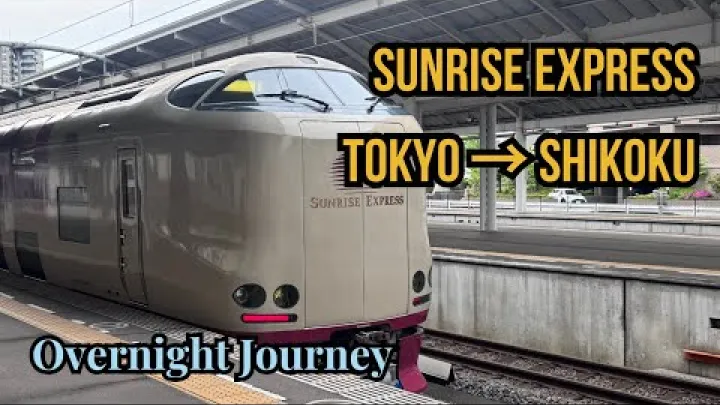
The Sunrise Seto is a special overnight rail option linking Tokyo and Takamatsu. Its main appeal is the arrival in Takamatsu in the morning while the overnight accommodation and long-distance transport are combined in one journey.
Accommodation ranges from private sleeping compartments to the less expensive nobi nobi option. Private compartments provide more personal space and privacy. Nobi nobi accommodation is a more basic shared sleeping arrangement and is better for travelers who accept less privacy in exchange for a lower supplement.
This is a niche choice, not the default Tokyo route. Capacity is limited, the accommodation must be reserved, and the service may not operate in the way you expect on every intended date. Confirm operation and reserve the specific accommodation before building your itinerary around it. If the desired berth is unavailable, compare daytime rail, a flight, or an overnight bus instead.
Rail Passes and Ticket Reservations
A national Japan Rail Pass or a regional Shikoku pass may change the value of the train route, especially when Takamatsu is one stop in a larger Japan itinerary. A pass is not automatically cheaper than individual tickets. Add the actual planned segments and compare the total price after considering eligibility, validity dates, covered operators, train types, and reservation rules.
Check whether the pass covers the shinkansen service you want and whether a supplement is required. Also confirm what it covers after you cross into Shikoku. Regional products may include selected JR Shikoku services, local railways, or ferry services only under specific terms.
Ordinary reserved seats and the Sunrise Seto are separate planning decisions. A pass may help with eligible rail travel, but it does not remove the need to reserve a Sunrise Seto accommodation or to check any applicable supplement. Reserve long-distance seats after your route is fixed, rather than buying a pass based on a general assumption of savings.
Using Long-Distance Buses
Highway buses provide direct access on selected routes and can be useful when the departure terminal is convenient.
Overnight Buses from Tokyo
A Tokyo to Takamatsu overnight bus is a direct alternative to both the daytime rail route and a flight. It can suit travelers who prioritize a lower fare, want to avoid a daytime journey, or hope to reduce hotel costs for one night.
The trade-off is a long road journey and variable sleep quality. Compare seat width, reclining arrangements, privacy features, rest-stop practice, baggage limits, and the planned arrival time. A bus may be economical for one traveler but less attractive if you need extra luggage, a reliable early arrival, or a taxi after reaching Takamatsu.
Overnight buses commonly require advance reservations, and the operator determines the departure terminal, boarding procedure, and baggage policy. Read the booking conditions carefully. Compare the complete bus cost with discounted flights, including checked baggage and transport to and from each airport, rather than comparing only the advertised base fare.
Direct Buses from Osaka and Kansai
The Takamatsu Sanuki–Osaka Express is a useful example of a direct highway bus between Osaka and Takamatsu. It avoids the rail transfer at Okayama and may suit travelers who are close to an Osaka departure terminal, are carrying luggage, or prefer a direct vehicle over a train change.

The current example page on Japan Bus Online displays fares in a date-dependent range of approximately 3,900 to 4,500 yen. Treat that as a booking example, not a guaranteed standard fare. Departure counts, seat availability, terminals, and prices can differ by date.
Rail through Okayama is generally easier to assess for a predictable journey, while the bus can be less expensive or simpler if the Osaka terminal is close to you. The bus remains exposed to highway traffic, and its terminal may be less convenient than a railway station. Kyoto and other Kansai origins should be planned separately: a traveler in Kyoto may first need local transport to the Osaka bus terminal, or may find rail through Okayama more convenient.
Arriving by Ferry
Ferries are usually a regional access option or the next leg of an island trip, rather than the normal long-distance route from Tokyo or Osaka.
When Takamatsu Port Is the Right Arrival Point
Takamatsu Port is the right arrival point when you are already in the Seto Inland Sea region, arriving from an island, or combining Takamatsu with an island itinerary. It is also convenient after arriving by rail because the port and JR Takamatsu Station are in the same central waterfront area.
If your main destination is a hotel in central Takamatsu, arrive at JR Takamatsu Station by train or use the airport bus. If your next destination is an island, plan the port leg at the same time as the long-distance journey. A rail arrival followed by a ferry can work well, but a flight to the airport followed by a ferry requires an additional road transfer across the city.
A route through Uno and the islands can be a special travel plan, but it is not the default way to reach central Takamatsu. Choose it because the island experience is part of your itinerary, not simply because a map shows a maritime route.
Routes to Naoshima, Teshima, and Shodoshima
From Takamatsu Port, the relevant destination depends on the island and the port shown on your booking. Examples include:
- Naoshima: Miyanoura Port.
- Teshima: Ieura and Karato ports.
- Shodoshima: Tonosho and Ikeda ports.
- Smaller nearby islands: Megijima and Ogijima.
These services are not one interchangeable ferry network. Different destinations may use different operators, berths, vessel types, and ticket counters. Some crossings are conventional ferries and others may use high-speed boats. The Art Takamatsu access information is a useful starting point for identifying local maritime destinations and port access.
Plan the ferry together with your arrival at Takamatsu. Check whether you need to collect a ticket, find a particular berth, or walk from the station area with luggage. Weather and sea conditions can cause cancellations or schedule changes. Check the ferry operator or port status on the travel day, and do not connect a ferry to a flight or long-distance train without a generous buffer.
Reaching Central Takamatsu After Arrival
The best last-mile route depends on whether you land at the airport, arrive at the central railway station, or come directly into the port.
Takamatsu Airport to JR Takamatsu Station
The Kotoden Airport Limousine Bus is the standard direct connection from Takamatsu Airport to the JR Takamatsu Station and JR Hotel Clement area. The operator describes it as the direct way to travel between the airport and the station area. See the current Kotoden Bus information for the latest route, fare, and boarding instructions.
Airport buses are road services, so the scheduled journey time is separate from baggage collection, ticket purchase, and waiting. After arriving, follow the airport signs to the designated limousine-bus ticket point and confirm the destination shown on the bus. In the station area, use the designated ticket location or machine for the return journey.
JR Takamatsu Station is a useful base for central accommodation, local transport, and the waterfront. If you need a ferry soon after landing, calculate the airport bus, luggage, and port connection as one journey rather than assuming that the airport is close to the terminal.
JR Takamatsu Station, Takamatsu Port, and Downtown
JR Takamatsu Station, the waterfront, and Takamatsu Port form the easiest orientation point for first-time visitors. Hotels near the station can be convenient for a morning train or ferry. Hotels farther into downtown or around Kawaramachi may be better for restaurants and local sightseeing, but they add a local transfer or a walk with luggage.
After arriving by train, first decide whether you are checking in, going to the waterfront, or continuing to a ferry counter. The station area is also a practical place to connect with local JR services, Kotoden trains, or buses. Central Takamatsu can often be explored on foot and by local transport, so a taxi is not automatically necessary for every short trip.
Buy rail, bus, and ferry tickets from the named operator counter or machine, and read the signs at the relevant terminal. Do not pay unsolicited sellers near a station, airport, or ferry terminal. If someone offers a ticket outside the official sales process, step away and use the operator's clearly marked point of sale.
Late Arrivals, Luggage, and Ticket Counters
Start with the last connection: if your flight lands late, check whether the airport limousine bus still has a departure after baggage collection. If it does not, the practical fallback categories are a taxi or an overnight stay near the airport or in the city, depending on what is available for your date.
Late arrival affects more than transport. Allow time for baggage collection, hotel check-in, and the opening time of a ferry counter or station facility the next morning. If your goal is an early island departure, staying near JR Takamatsu Station or the waterfront may be more reliable than forcing a same-night transfer after a late flight.
Do not assume that one ticket office sells every service. Airport bus sales points, JR counters, and ferry counters can have different locations and opening hours. Keep the booking confirmation for each leg accessible and know whether the next ticket must be collected in person.
Best Routes from Major Gateways
The best route changes with the city where you begin and with your onward plans. The following choices provide a practical starting point.
From Tokyo
Tokyo travelers can choose among flights, daytime rail, the Sunrise Seto, and an overnight bus. Compare the whole journey, not only the time in the air or on the train.
| Route | Time profile | Cost profile | Comfort and booking |
|---|---|---|---|
| Flight from Haneda or Narita | Usually the fastest vehicle option | Variable; add baggage and airport access | Simple with a protected itinerary |
| Shinkansen and Marine Liner | Long daytime journey | Higher typical fare; pass may change value | Comfortable with one main interchange |
| Sunrise Seto | Overnight arrival in Takamatsu | Variable by accommodation | Limited capacity; reserve early |
| Overnight bus | Longest road journey | Often considered for budget travel | Comfort varies; reservation required |
Choose a flight if speed is the priority and the airport connection works. Choose daytime rail if you prefer a central station arrival, want to use an eligible rail pass, or do not want a self-connection at an airport. Choose the Sunrise Seto for the overnight rail experience and morning arrival, but only after securing the accommodation. Choose the bus when its fare and terminal location are clearly better for your date.
If you plan to continue to an island, the rail and ferry combination can be convenient because both JR Takamatsu Station and Takamatsu Port are central. A flight may still work, but it adds the airport limousine bus before the ferry.
From Osaka, Kyoto, and Okayama
From Osaka or Kyoto, rail through Okayama and the Rapid Marine Liner is the main structured land route. It offers a clear interchange and a direct arrival at JR Takamatsu Station. From Osaka, the direct Takamatsu Sanuki–Osaka Express avoids the train change and may be preferable when the departure terminal is easy to reach.
The choice between bus and rail depends on terminal location, traffic tolerance, baggage, seating preference, and the fare for your date. A direct bus is not automatically simpler if you first need a long local connection to the Osaka terminal. Kyoto travelers should compare that extra movement with the rail route rather than assuming that Osaka bus service begins in Kyoto.
Okayama is the simplest rail gateway for many travelers already on the western Honshu network. Use the route through Uno and the islands only when the island is part of the travel plan. If the real destination is central Takamatsu, the shinkansen and Marine Liner normally provide a more direct structure.
From Other Shikoku Cities and Seto Inland Sea Islands
From Matsuyama, Kochi, or Tokushima, compare JR Shikoku services with highway buses for the specific date and departure point. The best choice depends on the current timetable, the number of changes, and whether your final destination is JR Takamatsu Station or Takamatsu Port.
Travelers arriving from Naoshima, Teshima, Shodoshima, Megijima, or Ogijima can use direct maritime links where the current service pattern provides them. Confirm the destination port carefully: an island may have more than one port, and the port named on the timetable determines where you arrive.
Regional rail or bus passes may help during a multi-city Shikoku itinerary, but check eligibility and current coverage before buying one. Regional services may run less frequently than the main Tokyo, Osaka, or Okayama corridors, so the exact departure time can matter more than the distance. Build the plan around the available service rather than assuming another departure will be available soon.
A Practical Booking and Verification Checklist
Transport in Takamatsu often involves two or more operators. Use one final checklist for the complete itinerary instead of checking only the long-distance ticket.
What to Confirm Before Departure
- Confirm the correct departure airport, station, ferry terminal, or bus terminal.
- Check the current flight, train, bus, or ferry departure time and arrival time.
- Check whether the route is seasonal, requires a reservation, or has changed terminals.
- Compare the fare after adding baggage, seat reservations, local transport, and supplements.
- Read baggage rules for flights, highway buses, and ferries.
- Confirm the operator, vessel or train type, ticket collection method, and cancellation conditions.
- For island travel, confirm the destination port, berth, ticket counter, and return connection.
- Check service notices and ferry weather or sea-condition information close to departure.
- Save booking confirmations, maps of each terminal, and a realistic backup route.
Use the relevant official airport, railway, bus, ferry, or port page for the final details. Search results and third-party booking pages can help compare options, but the operator page is the better place to confirm a timetable, fare, reservation rule, or service notice.
A Simple Arrival Plan for First-Time Visitors
You can plan almost any Takamatsu journey with four decisions:
- Choose the long-distance gateway. Decide between Takamatsu Airport, the Okayama rail connection, a direct highway bus, or a regional ferry.
- Choose the Takamatsu arrival node. Use JR Takamatsu Station for rail, Takamatsu Airport for flights, and Takamatsu Port for island or maritime travel.
- Confirm the last-mile connection. For an airport arrival, include the Kotoden Airport Limousine Bus or a taxi. For a station arrival, identify your hotel or the port counter. For a bus arrival, check the exact terminal.
- Add the onward plan. If you need a ferry, allow time for the walk, ticket collection, luggage, and the possibility that the ferry schedule does not match your arrival.
Typical flows are flight to Takamatsu Airport, airport bus to JR Takamatsu Station, then hotel or port; shinkansen to Okayama, Rapid Marine Liner to JR Takamatsu Station, then the waterfront; highway bus to the city terminal, then accommodation; or ferry to Takamatsu Port, then the station area or downtown. If you arrive late or have an early island departure, staying near the station or waterfront may be better than adding another connection at night.
For speed, start with a flight. For predictable land travel, start with rail via Okayama. For a lower-cost direct option, compare buses. For island access, prioritize Takamatsu Port and plan the maritime leg with the rest of the itinerary.
Conclusion
Getting to Takamatsu is straightforward once you identify the correct arrival hub. Flights connect the city with long-distance and selected international gateways, trains use the Okayama and Rapid Marine Liner connection, buses provide direct options from Tokyo or Osaka, and ferries link Takamatsu with the Seto Inland Sea islands. Compare door-to-door time, total cost, comfort, luggage, and booking requirements, then confirm every operator and connection for your travel date.
Select area
Create a post
Posting is free and no registration is required.