Kobe Getting There: Trains, Flights, Buses and Ferries

Getting to Kobe is usually straightforward once you identify the correct arrival point. Most visitors use Sannomiya for central Kobe, while Shin-Kobe, Kobe Airport, Kobe Port Terminal, and the Rokko Island ferry terminal serve different types of journeys. This guide compares shinkansen, regional trains, domestic and international airports, highway buses, and ferries by travel time, cost, luggage convenience, and booking difficulty. It also explains the final connection into central Kobe and the checks that matter on the day of travel.
Kobe Arrival at a Glance
Kobe lies between the mountains and Osaka Bay, with several transport gateways rather than one single city terminal. For a city-level orientation, the official Feel Kobe visitor guide is a useful starting point, but your ticket must still name the exact station, airport, or ferry terminal.
Use Sannomiya as the Main Target for Central Kobe
Sannomiya is the practical target for many central Kobe hotels, shopping streets, restaurants, and business districts. It is also the main interchange between regional rail, the municipal subway, the Port Liner, and airport or highway buses. If a booking or route planner simply says Kobe, check whether it means Sannomiya, Shin-Kobe, or JR Kobe before you pay.
Several operator-specific stations are grouped around the same area:
- JR Sannomiya Station: used by the JR Kobe Line and other JR services.
- Hankyu Kobe-Sannomiya Station: the Hankyu gateway from Osaka-Umeda and the Kobe Main Line.
- Hanshin Kobe-Sannomiya Station: used by Hanshin services from Osaka and Namba.
- Port Liner Sannomiya Station: the city-side end of the Kobe Airport monorail.
- Sannomiya Station and Sannomiya-Hanadokeimae Station: nearby Kobe Municipal Subway stations serving different lines and entrances.
JR Kobe Station is not another name for Sannomiya. It is farther west and is convenient for the waterfront, Harborland, and hotels near the Kobe Station area. Shin-Kobe is a separate station north of central Sannomiya and is the shinkansen gateway. The most suitable arrival point depends on your hotel as well as your long-distance transport.
- Choose Shin-Kobe when a direct shinkansen arrival is more important than being beside central hotels.
- Choose Sannomiya for the simplest access to most central districts.
- Choose JR Kobe Station when your accommodation is near Harborland or the western waterfront.
- Choose a direct bus when avoiding station transfers with large luggage is your main priority.
- Choose a ferry when you want overnight travel, need to carry a vehicle, or prefer sea travel.
Before boarding, match the exact station name and operator logo on the ticket with the intended destination. Kobe-Sannomiya, JR Sannomiya, Shin-Kobe, and JR Kobe are different arrival points.
Match Your Starting Point to the Best Kobe Gateway
Use this overview to select the detailed section that matches your journey:
- Tokyo and other distant cities: compare the Tokaido-Sanyo Shinkansen, a domestic flight to Kobe Airport or another Kansai airport, and an overnight highway bus.
- International arrivals: Kansai International Airport is the main gateway to compare with a direct airport bus, Bay Shuttle ferry, or rail route into Kobe.
- Domestic flights: Kobe Airport can provide the shortest local connection to Sannomiya, while Osaka Itami Airport offers more regional flight choices and a bus or rail connection.
- Osaka and Kyoto: use JR, Hankyu, or Hanshin depending on your departure station, fare preference, and destination in Kobe.
- Kyushu and Shikoku: compare ferry routes with air, rail, and bus travel, especially if you are bringing a car.
The gateway named on your ticket may not be the place where you sleep. A typical journey can be Shin-Kobe followed by a subway ride to Sannomiya, Kobe Airport followed by the Port Liner, or a ferry terminal followed by local rail. Separate the long-distance leg from the final urban transfer when estimating your total arrival time.
Getting to Kobe by Shinkansen and Regional Train
Rail is often the easiest way to reach Kobe from elsewhere in Japan because the main arrival stations are clearly defined and services run into established city centers.
From Tokyo and Other Cities by Shinkansen
The Tokaido-Sanyo Shinkansen connects Tokyo and major cities along the Tokaido corridor with Shin-Kobe. The scheduled train leg from Tokyo is commonly around three hours, but the exact duration depends on the service, stopping pattern, and departure time. Faster services generally make fewer stops than slower categories, so compare the actual itinerary instead of choosing a train name from memory.
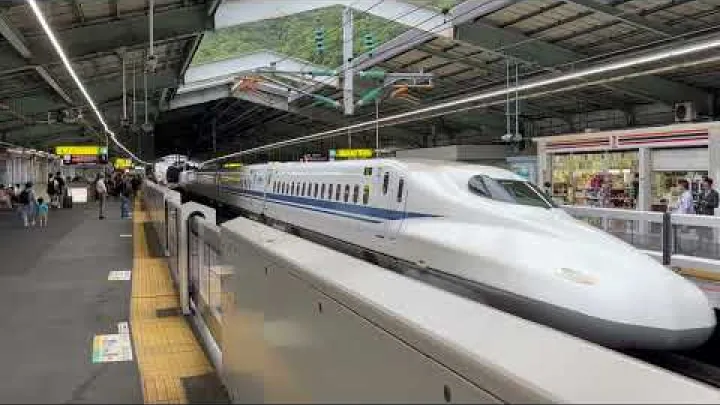
Shin-Kobe is the shinkansen gateway for Kobe, but it is not the same station as central Sannomiya. From Shin-Kobe, most visitors continue on the Kobe Municipal Subway to Sannomiya, then walk or transfer to a hotel. If your accommodation is near Shin-Kobe, the short local transfer may not be necessary. If you are traveling west toward Hiroshima or Hakata, the Sanyo Shinkansen corridor can also form part of a longer itinerary; search the complete origin and destination to see whether a change is required.
For Tokyo, shinkansen fares are structured around the base fare, the express supplement, seat type, and sometimes the travel period or booking product. An ordinary adult journey to Shin-Kobe is often planned in the range of approximately ¥15,000 to ¥16,000, but treat this as an indication rather than a quote. A reserved seat is useful during busy periods and for travelers with a fixed connection. A domestic flight may have a shorter time in the air, but it also includes the journey to the airport, check-in, security, baggage collection, and the transfer from the arrival airport. An overnight bus can cost less and save a hotel night, but it takes much longer and provides a different level of rest.
From Osaka and Kyoto by JR, Hankyu, or Hanshin
Osaka and Kyoto are close enough to Kobe that conventional rail is usually the most practical choice. The three main corridors are the JR Kobe Line, Hankyu Kobe Main Line, and Hanshin Main Line. They use different departure stations, fare systems, and arrival platforms, even when the station names appear similar.
JR: Start at JR Osaka Station and take a service toward JR Sannomiya. A rapid service commonly takes about 20 to 30 minutes, with an ordinary fare often in the lower hundreds of yen. JR is useful when you are already at Osaka Station or when your route connects directly from Kyoto or another JR station.
Hankyu: Start at Osaka-Umeda Station and travel on the Hankyu Kobe Main Line to Kobe-Sannomiya. Hankyu is often attractive for travelers staying near the Umeda area or using a Hankyu route from Kyoto. It normally has a low conventional-rail fare, but the exact service and duration vary.
Hanshin: Start at Hanshin Osaka-Umeda or, for some routes, Osaka-Namba, and travel toward Hanshin Kobe-Sannomiya. Hanshin can be convenient for Namba, southern Osaka, and travelers whose local ticket already uses the Hanshin network.
From Kyoto, common patterns include a JR service toward Sannomiya or a Hankyu journey with an Osaka-Umeda-area connection. A direct-looking route may still use different station buildings in Osaka, so allow time for a transfer if the route changes operators. As a broad planning guide, Osaka to central Kobe is often about 20 to 35 minutes, while Kyoto to Kobe is commonly about 50 to 75 minutes. The selected service, departure station, and final destination determine the actual time and fare.
Do not assume that Osaka Station and Osaka-Umeda are interchangeable for every ticket. Read the operator name and station name together. This is especially important when changing from Nankai to Hanshin at Namba or when transferring between JR and a private railway.
Continue from Shin-Kobe to Sannomiya
The usual onward connection from Shin-Kobe to central Kobe is the Kobe Municipal Subway Seishin-Yamate Line to Sannomiya. It is a short local ride, generally one stop, and is usually simpler than arranging a taxi or walking with luggage. Follow signs for Sannomiya rather than signs for JR Kobe Station, because these are different parts of the city.
At Sannomiya, you can continue on foot toward central hotels, Motomachi, and the shopping district, or transfer to another local railway for the waterfront or nearby neighborhoods. A taxi can be useful for very heavy luggage, mobility needs, or a hotel close to Shin-Kobe, but it is a secondary option for most shinkansen passengers.
Flying to Kobe Through Its Main Airports
Kansai has three relevant airports for a Kobe itinerary. Kobe Airport is closest to the city, Itami is a domestic airport on the Osaka side, and Kansai International Airport handles most international travel to the region.
Kobe Airport to Sannomiya by Port Liner
Kobe Airport is the most directly connected air gateway for central Kobe. The Port Liner runs from the airport to Port Liner Sannomiya Station, and the official airport access page gives a journey of just 18 minutes. The station is connected to the airport complex, so the arrival sequence is usually aircraft, baggage collection, signs to the Port Liner, train, and Sannomiya.
Kobe Airport is useful for domestic flights from major Japanese cities, including the Tokyo-Haneda corridor, although the regular network can change. Use the airport and airline schedule for your travel date rather than assuming that every route shown on an older travel page is operating. An advertised seasonal, charter, proposed, or future international route should not be treated as a regular scheduled option unless it appears in the current booking system.
Compared with the shinkansen from Tokyo, flying may be attractive when the fare is low, when your origin is far from the Tokaido-Sanyo corridor, or when your schedule aligns well with a direct flight. The shinkansen usually has a simpler city-center arrival, while flying requires airport procedures and the Port Liner transfer. For a hotel in central Kobe, compare the complete aircraft-to-Sannomiya journey, not only the time in the air. The official Kobe Airport access information explains the Port Liner connection and airport-side process.
Kansai International Airport to Kobe
Kansai International Airport, or KIX, is the main international gateway to the Kansai region. From KIX to Kobe, compare each route using the same basic format: approximate duration, indicative fare, changes, luggage handling, and the place where you arrive.
Bay Shuttle ferry via Kobe Airport: Travel from the airport area to the KIX ferry pier, take the Bay Shuttle to Kobe Airport, and then use the Port Liner to Sannomiya. This option combines sea travel with a simple airport-side rail connection. The airport pier is separate from the terminal building, so the transfer to the pier is part of the journey. A published comparison lists about 75 minutes and approximately ¥2,200 for a fast KIX-to-Sannomiya option; use that figure as an indicative comparison, not a fixed fare. This route can suit travelers who want to avoid a long rail transfer and do not mind changing between land, ferry, and monorail.
Airport limousine bus: A direct coach normally runs toward the Sannomiya area. It is attractive when you have large suitcases because you can place them in the luggage compartment instead of carrying them through several stations. The trade-off is road traffic, a fixed stop location, and less flexibility than rail. It is often the easiest choice for a first visit if the arrival time fits the timetable and your hotel is within a short walk or local transfer of Sannomiya.
JR via Shin-Osaka and Shin-Kobe: Travel from Kansai-Airport Station toward Shin-Osaka, change to the shinkansen for Shin-Kobe, and then continue by subway to Sannomiya. This can be comfortable for travelers who prefer rail, but it involves more station navigation and usually costs more than a basic conventional-rail route. A route that uses JR through Osaka and the JR Kobe Line can also be considered when the shinkansen transfer is unnecessary.
Nankai and Hanshin via Namba: Take Nankai from KIX to Namba, walk through the Namba area to the Hanshin Osaka-Namba side, and continue on the Hanshin network toward Kobe-Sannomiya. Route comparisons place this type of journey at roughly 110 minutes and about ¥1,390 to ¥2,090, depending on the selected services. It can be a lower-cost choice, but the walk between the Nankai and Hanshin areas is the main difficulty with luggage.
For a direct and luggage-friendly trip, compare the airport bus first. For a multimodal journey with a short final rail leg, compare Bay Shuttle. For rail users, the JR route is easy to understand once the Shin-Osaka and Shin-Kobe changes are clear. The Nankai-Hanshin route is most useful when price is more important than transfer simplicity. Current departure times, fares, and weather-related operating rules should be checked with the relevant airport, ferry, bus, or rail operator for your travel date.
Osaka Itami Airport to Kobe
Osaka Itami Airport, often called ITM, is a domestic airport. It is not the same as KIX, so international travelers should check the airport code on the flight confirmation before planning the Kobe transfer.
The most direct choice is usually an airport limousine bus to the Sannomiya area. The bus avoids several rail changes and is convenient with checked luggage. From its Sannomiya arrival point, continue on foot or by a short local transfer to your hotel. The bus duration depends on road conditions, so it is best for travelers whose hotel is close to Sannomiya and whose schedule has some flexibility.
Rail is an alternative for travelers who prefer trains or arrive when the bus is not suitable. A common pattern uses the Osaka Monorail from the airport to a Hankyu connection, followed by the Hankyu Kobe Main Line to Kobe-Sannomiya. It usually involves more walking and changes than the direct bus. One route-planner comparison gives a train estimate of about 1 hour 16 minutes and ¥500 to ¥700, but this is an indicative route result rather than a guaranteed timetable or fare. The Rome2Rio route page can help compare patterns, while the transport operators control the final details.
A taxi or private car can be useful for several passengers, bulky equipment, or a hotel outside the main rail area. It is usually more expensive than public transport, and the advantage depends on traffic and the exact destination.
Reaching Kobe by Long-Distance Bus
Long-distance buses provide another arrival option when price or overnight travel matters more than speed. Services and seat types vary considerably by operator and date.
Overnight and Highway Buses from Tokyo and Other Cities
Overnight buses from Tokyo and other distant cities are commonly listed for major Kobe arrival areas such as Sannomiya, and some listings may use Shin-Kobe. The route listing determines the actual stop. A bus can be much cheaper than a shinkansen and may save one night of accommodation, but the journey occupies most of a night and arrival can be early in the morning.
Standard coaches generally have more seats in each row and less personal space. Some services offer wider reclining seats, three-row layouts, curtains, partitions, or other comfort features. These descriptions do not guarantee sleep quality, and availability depends on the vehicle assigned to that departure. Compare the seat diagram, recline description, luggage allowance, and arrival time before booking.
Bus luggage rules also differ. A large suitcase may go in the underfloor compartment, while a small bag stays with you. Keep valuables, medication, travel documents, and items needed immediately after arrival in your hand luggage. A highway bus suits flexible travelers who can tolerate a long journey and an uncertain road arrival time. It is less suitable when you must meet a fixed morning appointment or connect immediately to another reserved departure.
Airport Limousine Buses into Sannomiya
Airport limousine buses from KIX and Itami provide a direct coach option into the Sannomiya area. They are particularly useful when you want to avoid carrying luggage through multiple rail stations. The journey ends at a designated bus stop or terminal near the central station area, not necessarily at your hotel, so check the final walk or local connection.
Compared with rail, the coach has fewer navigation decisions and usually handles large luggage more easily. Rail is less exposed to road traffic and may be preferable when you need a predictable journey. Compared with the KIX ferry, the bus keeps the journey on land and avoids the airport-pier transfer, but it does not provide the same sea route.
At the airport, identify the correct bus stop, buy the ticket through the stated counter, machine, or online channel, and confirm the destination shown on the bus sign. Late-evening and early-morning services can be more limited than daytime services. If your flight arrives late, plan the final connection from Sannomiya to the hotel rather than checking only the airport departure.
Arriving by Ferry or Cruise Port
Kobe is a maritime gateway, but its ferry terminals are spread across different waterfront areas. A ferry ticket is not complete until you know the exact Kobe terminal printed by the operator.
Domestic Ferries to Kobe from Kyushu and Shikoku
Ferry searches for Kobe may include routes associated with Oita, Kitakyushu or Shin-Moji, Miyazaki, and Takamatsu. These destination names are useful search terms, but route availability, vessel operator, departure terminal, and sailing pattern are specific to the current booking listing. Search the destination together with the operator shown on the official result instead of assuming that every route serves the same Kobe pier.
An overnight ferry is slower than a flight or shinkansen, but it can combine transport and accommodation. Travelers may choose a basic seat, a shared sleeping space, or a private cabin, depending on the vessel. The fare can change substantially with cabin class, travel date, meals, and vehicle transport. A car or motorcycle may be carried on some services, but vehicle space, dimensions, documents, and fees require a separate booking process.
Ferries are especially useful when you are carrying a vehicle, want to avoid flying, or prefer to travel while sleeping. They are less suitable when you need a precise arrival time or a same-day connection with little spare time. The Japan Guide domestic ferry overview is useful for understanding the wider network, including the fact that many regional ferries use Osaka Nanko rather than Kobe. The vessel operator remains the authority for the route, fare, sailing time, cabin rules, and booking conditions.
Reach the Correct Kobe Ferry Terminal
Do not treat Kobe Port Terminal and the Rokko Island ferry terminal as interchangeable. The vessel operator decides which terminal you need, and a ferry or cruise confirmation should be your first reference.
Kobe Port Terminal: From the Sannomiya area, the Port Liner is the main rail approach for services using the Kobe Port waterfront. Depending on the booking, you may also use a bus or a walking section from a nearby station. Follow the terminal name shown on the confirmation rather than searching only for Kobe ferry terminal.
Rokko Island ferry terminal: Services using Rokko Island are approached through the Rokko Liner side of the network, often after a connection from central Kobe through the Sumiyoshi or Uozaki area. A bus or short walking section may still be part of the final approach. The exact station and terminal entrance can differ by vessel.
After arriving at a Kobe port, use the local connection toward Sannomiya for central hotels, the subway connection toward Shin-Kobe, or the Port Liner connection toward Kobe Airport when appropriate. Cruise passengers should also check whether their ship uses a cruise berth or a different passenger terminal. Useful search terms include Kobe Port Terminal, Rokko Island ferry terminal, the vessel name, and the operator name.
Compare Kobe Routes by Time, Cost, Comfort, and Booking Difficulty
The table below gives planning ranges for common journeys. Durations usually mean the gateway to the named Kobe arrival point, not the time from your home to the hotel. Fares are indicative adult prices in Japanese yen and can change with the service, seat, date, cabin, or booking product.
A Practical Route Comparison for Different Origins
| Origin and route | Approximate duration | Indicative adult cost | Changes | Luggage and comfort | Booking difficulty | Best suited traveler |
|---|---|---|---|---|---|---|
| Tokyo to Shin-Kobe by shinkansen | About 3 hours, plus local transfer | About ¥15,000–¥16,000 | 0 to Shin-Kobe; 1 to Sannomiya | Comfortable; luggage stays with you | Simple; reserve for busy dates | Fast, predictable long-distance rail |
| KIX to Sannomiya by Bay Shuttle | About 75–100 minutes | About ¥2,200 or more | Ferry and Port Liner | Moderate; pier transfer required | Medium; departure-specific | International arrivals avoiding long rail changes |
| KIX to Sannomiya by limousine bus | About 75–100 minutes | Often about ¥2,000–¥3,000 | None to Sannomiya | Good for large luggage | Simple if timetable fits | Direct arrival and easy luggage handling |
| Itami to Sannomiya | About 40–60 minutes by bus | About ¥500–¥1,500 | None by bus; more by rail | Bus is convenient with cases | Simple to medium | Domestic flight arrivals |
| Osaka to Kobe by JR, Hankyu, or Hanshin | About 20–35 minutes | About ¥330–¥500 | Usually none | Easy rail; station walking varies | Easy; usually no reservation | Low-cost regional travel |
| Kyoto to Sannomiya by rail | About 50–75 minutes | About ¥1,000–¥1,500 | 0–1 depending on operator | Comfortable; manage station changes | Easy; usually no reservation | Day trips and Kansai connections |
| Kyushu or Shikoku to Kobe by ferry | Overnight or longer | Varies by route, cabin, and vehicle | Local transfer after port arrival | Cabin options; vehicle transport possible | Advance planning recommended | Overnight travel or vehicle owners |
These comparisons show why there is no single best way to reach Kobe. Shinkansen is usually the clearest long-distance rail choice. Kobe Airport is convenient when a suitable domestic flight is available. From KIX, a direct bus reduces transfers, Bay Shuttle offers a combined sea and rail journey, and the Nankai-Hanshin route may reduce cost at the expense of luggage handling. Osaka and Kyoto are best compared by departure station and final neighborhood. Ferries are strongest when the journey itself, an overnight cabin, or vehicle transport is part of the plan.
Tickets, Transfers, and Arrival-Day Checks
A good route can become difficult if the ticket covers only the first leg. Book the complete chain from the named gateway to the Kobe station or terminal closest to your accommodation.
Book Tickets and Check Pass Rules
Use the relevant official booking channel whenever possible. Shinkansen tickets can be bought through the applicable JR reservation service or at a station counter. Conventional rail tickets are normally available from station machines or counters. Flights should be checked with the airline, highway buses with the bus operator or its stated reservation channel, airport coaches through the airport or bus operator, and ferries through the vessel operator.
Advance booking is most useful for flights, overnight buses, ferries, reserved shinkansen seats, and popular travel periods. Local JR, Hankyu, and Hanshin trains usually do not require a seat reservation, but a reserved shinkansen seat can make a long journey easier with a fixed schedule or large bags.
Pass coverage is not automatically the same as route coverage. A pass may apply only to certain operators, railway sections, service categories, or seat types. Tourist products can also have eligibility, validity, and reservation conditions. Do not assume that a private railway, airport bus, ferry, or the fastest train is included simply because part of the journey uses a covered network.
Before paying, open the relevant operator page and confirm:
- the exact fare, passenger type, and seat or cabin category;
- whether a reservation is required and how to collect or use the ticket;
- which railway section, bus, ferry, or airport transfer a pass covers;
- refund, change, and cancellation rules;
- the last-service rule if your arrival is late; and
- the exact destination station or ferry terminal printed on the booking.
Handle Luggage, Late Arrivals, and Unofficial Transport Offers
Most travelers notice the Nankai-to-Hanshin transfer at Namba most when carrying a large suitcase. The route crosses a busy station area and requires walking between operator zones. Ferry terminals can also be difficult because the port may be away from the central station and may require a Port Liner, Rokko Liner, bus, or walking section. Allow more time than the minimum route result if you have multiple bags.
For a late arrival, check the final Port Liner, subway, local train, or bus connection to the accommodation. Reaching Sannomiya does not always mean that the hotel is immediately beside your arrival stop. Save the hotel address in Japanese and decide in advance whether you will walk, use a marked taxi rank, or use a previously booked transfer.
At an airport or port, use the marked taxi rank, the official airport or port transport counter, and clearly signed bus stops. If someone approaches you with an unsolicited transport offer, do not treat that offer as an official service. A simple preventative rule is to choose transport from a marked rank or official counter and keep the fare and destination clear before entering the vehicle.
Check Current Service Status and Weather Before Departure
On the day of travel, check the official notice for every important leg. Depending on your route, this may include the shinkansen, JR Kobe Line, Hankyu, Hanshin, Kobe Municipal Subway, Port Liner, airport, limousine bus, highway bus, or ferry operator. A route planner can help you find alternatives, but the operating company controls cancellations, delays, platform changes, and boarding rules.
Weather can affect each mode differently. Heavy rain or wind may affect a ferry, while an airport may continue operating with delays. Road traffic can slow a limousine bus even when rail is running normally, and a rail incident can make an otherwise reliable airport connection difficult. For a journey with several legs, check the notices for the whole chain rather than checking only the first departure.
Keep a realistic buffer for an international flight connection, a ferry check-in, a reserved shinkansen, hotel check-in, and any onward domestic service. A tight connection may fail even when each individual leg is on schedule. If the route matters for a flight, event, or final ferry departure, identify a fallback before leaving: the next conventional train, an airport bus, a different rail operator, or an overnight option. This makes disruption planning a normal part of a multimodal journey rather than an emergency decision.
A Practical Arrival Plan for Kobe
Choose the gateway first, then the transport mode, and finally the local connection. This three-step process prevents most Kobe arrival mistakes.
Choose Your Route in Three Steps
- Identify the origin and gateway. Decide whether your route leads to Shin-Kobe, Sannomiya, Kobe Airport, KIX, Itami, Kobe Port Terminal, or the Rokko Island ferry terminal. Use the gateway printed on the actual ticket or booking.
- Choose the mode by priority. Select shinkansen for predictable long-distance rail, Kobe Airport for a convenient domestic flight arrival, a bus for direct luggage handling, conventional rail from Osaka or Kyoto, an overnight bus for possible accommodation savings, or a ferry for sea travel and vehicle transport.
- Confirm the complete arrival chain. Check the exact station or terminal, the final walk or local transfer, booking and pass conditions, luggage rules, last service, and departure-day status.
For an international arrival, compare the KIX bus, Bay Shuttle, and rail routes according to transfers and luggage. For a domestic flight, Kobe Airport and the Port Liner are often the clearest central-Kobe combination, while Itami offers a direct bus and rail alternatives. From Tokyo, compare the total airport journey with the shinkansen and overnight bus rather than comparing flight time alone. From Osaka or Kyoto, choose JR, Hankyu, or Hanshin by departure station and hotel location. Ferry passengers should confirm the operator and terminal before traveling to the port.
Reaching Kobe is usually straightforward once the correct gateway and operator-specific station or terminal are selected. Start with the exact destination name, choose the route that matches your priority, and plan the final connection into the city center.
Select area
Create a post
Posting is free and no registration is required.