Japan Country Facts: Quick Facts & Country Profile

Japan country facts are easiest to use when stable national identifiers are separated from figures that change over time. This country profile begins with dated quick facts, then explains how Japan’s island geography, population, government, economy, language, culture, and international identifiers fit together. It distinguishes Tokyo as both the capital and largest urban center while recognizing its special administrative structure. It also separates total territory from land area so that commonly quoted statistics are easier to compare.
Quick Facts About Japan
Japan is an East Asian island country with a highly urban population, a parliamentary political system, and a long cultural history that continues to influence contemporary design, food, media, and technology. The table below provides a compact Japan country profile. Numerical values include a reference year, while codes and other identifiers are presented in their standard forms.
Japan at a Glance
| Fact | Details |
|---|---|
| Official name | State of Japan; Nihon-koku or Nippon-koku |
| Common English name | Japan |
| Capital | Tokyo |
| Largest city | Tokyo, understood as the country’s largest urban center |
| Region and continent | East Asia, Asia |
| Population | About 124.5 million people, 2023 estimate |
| Area | About 377,974 km² total territory, 2021 reference |
| Currency | Japanese yen, JPY, ¥ |
| Official-language status | No statutory national-language designation; Japanese is the principal and de facto national language |
| International calling code | +81 |
| ISO alpha-2 code | JP |
| ISO alpha-3 code | JPN |
| Country-code top-level domain | .jp |
| Time zone | Japan Standard Time, UTC+09:00 |
| Daylight saving time | Not observed |
| Form of government | Constitutional monarchy with parliamentary government |
The country’s formal name is commonly translated as State of Japan, while Japan is the normal English short name. Japanese references may use either Nihon-koku or Nippon-koku in romanization. A broad profile of the country’s name and national identity is available in this Japan overview.
Tokyo appears twice in the table because capital and largest city are different categories, even though they have the same answer in this case. Tokyo is the national political center and the country’s largest urban center. Administratively, however, Tokyo is a metropolitan prefecture with several types of local government inside it, and the wider Tokyo metropolitan area extends beyond its administrative boundary.
The area figure is total territory rather than land area alone. A 2021 geographic reference gives Japan’s land area as about 364,546 km², so total-area and land-area figures should not be treated as competing estimates. Population and area figures should always be quoted with their reference year, geographic definition, and source. This is especially important when a national estimate is compared with a census, a domestic administrative total, or a rounded figure from a general reference work.
Reading the Facts in Context
Country statistics are snapshots. Population totals can differ because sources use different dates, resident definitions, estimation methods, and rounding practices. Area figures can also vary slightly when sources define territorial waters, inland waters, or administrative boundaries differently. A small difference does not automatically mean that one source is wrong.
This article is a country entity profile, not a travel itinerary. Its purpose is to explain the basic facts that identify Japan and show why those facts matter. Island geography helps explain settlement patterns and natural hazards; population change helps explain demographic and economic pressures; the constitutional system explains national institutions; and language, culture, time, and country codes help international readers interpret information about Japan accurately.
Geography and Natural Environment
Japan’s physical setting is central to its history and present-day organization. The country combines a long Pacific island chain, extensive mountain areas, narrow plains, busy coastal zones, forests, and volcanic landscapes.
Location, Islands, and Territorial Scope
Japan lies in East Asia and forms an archipelago in the Pacific. Its territory is commonly explained through four main islands: Honshu, Hokkaido, Kyushu, and Shikoku. Honshu is the largest main island and contains Tokyo as well as many of the country’s largest population and industrial centers. Hokkaido lies to the north, Kyushu to the southwest, and Shikoku south of western Honshu. Japan also includes many smaller islands, so the four-island description is a useful framework rather than a complete inventory of the country.
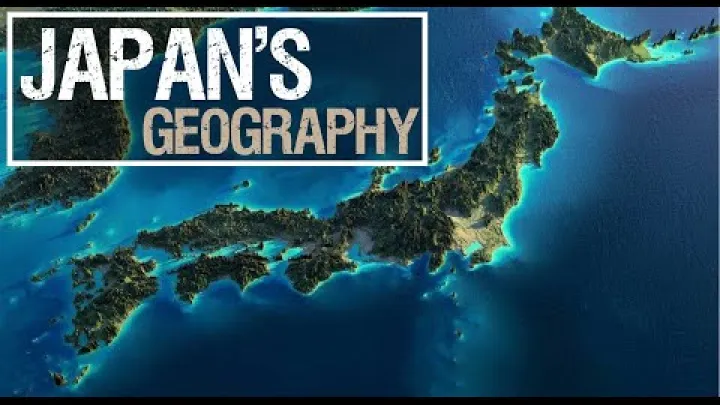
The island structure creates important regional differences. Mountain ranges occupy much of the interior, while population, transport infrastructure, agriculture, and industry are concentrated on plains and coastal lowlands. This pattern is visible around major urban areas on Honshu and in the regional centers of Hokkaido, Kyushu, and Shikoku. It also means that geographic distance, sea crossings, and local terrain can matter even within one national market.
Definitions matter when area is discussed. Japan’s total territory is reported at about 377,974 km² in the 2021 reference used for this profile, while its land area is smaller. The figures and the distinction between territory and land are summarized in the Geography of Japan reference. Readers comparing regions should use the same definition for every area figure.
Climate, Terrain, and Mount Fuji
Japan has substantial climate variation from north to south. Northern Hokkaido has colder conditions, while the southern islands have warmer and more subtropical environments. Seasonal rainfall, ocean influences, mountain elevation, and the country’s long north-to-south shape produce local differences in temperature and precipitation. These broad climate facts are more useful for a country profile than a day-by-day weather description, which changes continuously.
Japan’s mountainous and tectonically active setting shapes both its scenery and its infrastructure. Earthquakes, volcanic activity, tsunamis, landslides, and typhoons are part of the natural-hazard context that affects building practices, transport planning, coastal settlements, and emergency management. The presence of a hazard in the national profile does not describe conditions at a particular place or time; local authorities provide the appropriate information for current events.
Mount Fuji is Japan’s highest mountain, rising to about 3,776 metres on Honshu. It is a volcanic landmark as well as a major cultural symbol, appearing in art, literature, photography, and public imagery. Its importance illustrates how physical geography and cultural meaning overlap in Japan. Other representative environments include forested mountain slopes, coastal plains, volcanic terrain, and densely settled urban waterfronts.
Population and Urbanization
Japan’s population facts are closely linked to age structure, regional settlement, and the organization of services. A national total gives useful scale, but it does not show how strongly people and economic activity are concentrated in metropolitan areas.
Population Size and Demographic Trend
Japan had a population of about 124.5 million in 2023 in the internationally comparable series used for this profile. The World Bank Open Data series is useful for cross-country comparison, while Japan’s domestic statistical system may publish a figure based on a different date or population definition.
The documented direction of Japan’s population change has been downward in recent years. The main demographic explanation is natural decrease: the number of deaths has exceeded the number of births over the relevant period. Migration can affect the size and distribution of the population, but it has not removed the broader importance of low birth rates and population aging in national planning.
Population decline has practical consequences. A smaller working-age population can affect recruitment, local business activity, tax revenues, and the availability of services. At the same time, a larger older population increases demand for health care, social support, accessible housing, and community services. These effects are not identical everywhere, so a national figure should not be used to describe every prefecture or municipality.
Age Structure, Urban Concentration, and Tokyo
Japanese demographic tables commonly separate the population into children under 15, people of working age from 15 to 64, and older people aged 65 and over. A dated table should be used when exact percentages are required. The broad pattern is clear: Japan has a relatively old population and a smaller child cohort, which contributes to the country’s natural decrease and changes the balance between schools, workplaces, health services, and care needs.

Japan is also highly urban and metropolitan in its settlement pattern. Large urban regions concentrate employment, universities, transport connections, specialized medical services, manufacturing networks, and cultural institutions. This concentration exists alongside smaller cities, agricultural communities, mountain settlements, and remote islands. Rural and regional areas can therefore experience population aging and out-migration more sharply than the national average.
Tokyo is the clearest example of this concentration. It is the capital, the seat of national political institutions, and the country’s largest urban center. In administrative terms, Tokyo is a metropolitan prefecture rather than simply one ordinary municipality. The 23 special wards and other municipalities within Tokyo have distinct administrative roles, while the wider metropolitan region crosses prefectural boundaries. For that reason, a statistic labeled Tokyo may refer to the metropolitan prefecture, the special wards, or the larger urban area.
Government and Administrative Structure
Japan’s government combines a constitutional monarchy with parliamentary institutions and elected national and local bodies. Understanding the difference between symbolic, executive, legislative, judicial, and local roles makes basic political facts easier to interpret.
Constitutional Framework and National Institutions
Japan is a constitutional monarchy with a parliamentary government. The current Constitution of Japan took effect on May 3, 1947. A historical U.S. State Department fact sheet identifies the same constitutional framework and effective date.
The Emperor is the symbol of the state and the unity of the people. This is a constitutional and ceremonial position, not an executive presidency. Executive authority belongs to the Cabinet, which is led by the Prime Minister. The Prime Minister and Cabinet operate within the parliamentary system and are accountable through the institutions established by the Constitution.
Japan’s national legislature is the bicameral National Diet, made up of the House of Representatives and the House of Councillors. The Diet makes laws, approves the national budget, and participates in the designation of the Prime Minister. The Supreme Court stands at the top of the judicial system, with other courts handling cases under the national legal framework.
The constitutional structure is based on popular sovereignty and separation of powers. Article 9 contains Japan’s constitutional renunciation of war and language concerning the threat or use of force to settle international disputes. Its wording, interpretation, and relationship to later government practice are subjects of legal and political discussion, so a short country profile should distinguish the constitutional text from broader policy debates.
Prefectures and Local Government
Japan is a unitary state rather than a federal state. The country is divided into 47 prefectures, and prefectures are further divided into municipalities. A country brief from the Australian Government Department of Foreign Affairs and Trade describes this structure and lists 1,741 local municipalities in its profile.
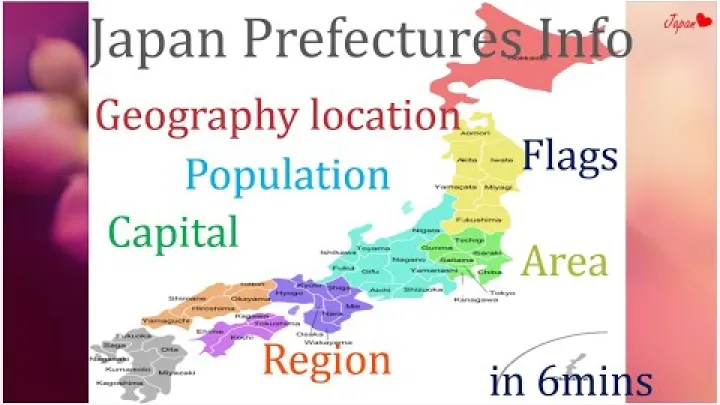
Prefectures have governors and elected assemblies. Municipalities have mayors and elected local assemblies. Their responsibilities include services such as local administration, education-related functions, public health programs, infrastructure, and community planning, although the exact division of responsibilities follows national law and administrative arrangements.
Tokyo has a distinctive metropolitan status and should not be treated as identical to a standard city municipality. Similar care is needed with terms such as Kansai, Kanto, or the Tokyo metropolitan area, which may describe broad geographic or economic regions rather than a single administrative unit. When comparing population, area, or public services, the boundary used by the statistic is part of the fact.
Economy and Currency
Japan’s economy is shaped by advanced manufacturing, a large service sector, dense urban networks, international trade, and demographic change. Its economic profile is broad, so no single industry or ranking fully represents the country.
Economic Structure and Global Role
Japan is a highly developed, high-income economy with strong service and manufacturing sectors. Services include finance, retail, transport, communications, health care, education, and business services. Manufacturing remains important through industries such as automobiles, machinery, electronics, precision manufacturing, and technology. These examples describe major parts of the economic structure rather than an exhaustive list.
Physical geography provides useful context. Limited flat land encourages dense development and competition for space around major cities and transport corridors. Japan also relies on international trade for many energy supplies, raw materials, food inputs, and industrial components. Ports, logistics systems, and global supply chains are therefore important to the national economy.
Demographic change adds another layer. Population aging and decline can reduce the available labor force in some regions, increase demand for care services, and make it harder for smaller communities to maintain businesses and infrastructure. Japan has responded through productivity improvements, automation, technology, immigration policies, and regional initiatives, but the effects differ by sector and locality. Precise GDP figures, debt ratios, rankings, and trade results require a dated economic source and are outside this basic country profile.
The Japanese Yen and Financial Institutions
The Japanese yen is Japan’s national currency. Its three-letter currency code is JPY, and its common symbol is ¥. JPY should not be confused with JPN, which is Japan’s three-letter country code. The code is useful in financial systems and international data, while the symbol is common in prices and general writing.
The Bank of Japan is the country’s central bank and is responsible for monetary policy and other central banking functions. The Japan Mint is a separate institution associated with the production of Japanese coins. This distinction matters because a central bank and a mint have different roles. Exchange rates, monetary policy decisions, and the circulation status of particular denominations can change, so they should be checked in a current financial reference when needed.
For a country facts article, the most stable currency details are the name, JPY code, and yen symbol. Payment methods, exchange rates, and financial advice belong in a separate, current guide rather than in a permanent national profile.
Language, Society, and Culture
Language and culture in Japan combine national institutions with strong regional and historical variation. A useful profile should describe common patterns without treating the country as culturally uniform.
Japanese Language and Communication
Japanese is the principal language used in national and local government, education, mainstream media, business, and everyday communication. It is widely described as Japan’s de facto national language, but the country does not have a broadly stated statutory national-language designation in the same way that some countries define an official language by law. The wording in the Quick Facts table preserves that legal distinction.
Standard Japanese is used in formal national communication and is widely understood across the country. Regional varieties and dialects remain important in local identity, family speech, entertainment, and community life. A dialect is not automatically a separate national language, so descriptions should distinguish regional variation from language status.
International readers may also encounter different romanizations of Japanese names. Nihon and Nippon are both established readings of the country name, while English references normally use Japan. When translating or comparing records, consistent romanization is more useful than assuming that every spelling difference identifies a different place or institution.
Cultural Heritage and Contemporary Influence
Japanese culture is layered rather than defined by one tradition. Historical influences include Shinto and Buddhism, court and warrior histories, regional customs, architecture, literature, crafts, visual arts, music, and cuisine. Shrines, temples, festivals, gardens, tea traditions, ceramics, textiles, and regional foods are examples of cultural forms that developed in different periods and places.
Contemporary culture has a strong international presence through manga, anime, games, design, fashion, film, music, and food. These modern forms have historical roots but also change through global exchange, digital distribution, and new creative communities. They are useful examples of Japan’s cultural influence, not a complete definition of Japanese society.
Cultural practices vary by region, generation, profession, religion, and personal preference. A balanced Japan country profile can mention recognizable traditions and popular culture while avoiding claims that all residents share the same beliefs, habits, or interests.
Digital and International Identifiers
Country codes help identify Japan in telephone networks, databases, internet systems, and international records. They are related identifiers, but they are not interchangeable.
Time Zone and Calling Code
Japan Standard Time is UTC+09:00. Japan does not observe daylight saving time, so clocks are not seasonally advanced under a national daylight-saving schedule. For a basic country profile, Japan can therefore be treated as using one standard national time zone. Local schedules still depend on business hours, public holidays, and the time zone of the reader or organization making the comparison.
Japan’s international telephone calling code is +81. The ITU lists Japan under that country code in its international numbering information. The calling code identifies the country in international dialing; domestic area codes, mobile prefixes, and local telephone-number formats are separate parts of the numbering plan.
ISO Codes and the .jp Domain
Japan uses several identifiers for different systems. The short comparison below shows why JP, JPN, +81, and .jp should not be treated as alternative spellings of the same code.
| Identifier | Value | Main use |
|---|---|---|
| ISO alpha-2 | JP | Two-letter country fields and international data systems |
| ISO alpha-3 | JPN | Three-letter country fields and international databases |
| Telephone calling code | +81 | International telephone routing |
| Country-code top-level domain | .jp | Internet domain names associated with Japan |
JP and JPN are country identifiers used in different field lengths. The plus sign in +81 indicates a telephone calling code, while .jp is an internet domain suffix. JPY is different again: it identifies the Japanese yen as a currency, not Japan as a country. Keeping these codes separate prevents errors in forms, statistical datasets, websites, and financial records.
Conclusion: Japan in Context
Japan is an East Asian archipelago whose national profile brings together dense metropolitan life, mountainous terrain, a large and aging population, a constitutional parliamentary system, an advanced economy, and a globally recognized cultural presence. Tokyo is both the capital and largest urban center, while Honshu, Hokkaido, Kyushu, Shikoku, and the many smaller islands create strong regional differences. Mount Fuji, the Japanese yen, the Japanese language, and the codes JP, JPN, +81, and .jp are useful entry points, but each represents a different part of the country’s identity.
The most reliable way to use Japan facts is to pair every changing number with its reference year and definition, then distinguish administrative boundaries from wider regions. That approach gives students, travelers, professionals, and researchers a clear starting point for deeper study of Japan’s population, geography, government, cities, language, and culture.
Select area
Create a post
Posting is free and no registration is required.