Fukuoka Getting There: Flights, Trains, Buses & Ferries

Getting to Fukuoka is straightforward once you match your origin with the right arrival gateway. Travelers can reach the city by international or domestic flight, shinkansen, regional train, long-distance bus, or ferry. The best choice depends on total door-to-door time, not only the advertised journey time or ticket price. This guide compares the main routes and explains how to continue from Fukuoka Airport, Hakata Station, Hakata Port, or a central bus terminal.
Choose the Best Way to Get to Fukuoka
Fukuoka is the main transport hub of northern Kyushu, so the most practical route changes considerably by starting point. Air travel is often strongest for overseas journeys and long domestic trips, while trains are especially convenient from Osaka, Kyoto, Hiroshima, and other cities on the Sanyo Shinkansen corridor.
Use the comparison below as a first decision. The times and prices are broad examples only. The final result depends on the date, operator, season, booking time, luggage, local transfers, and whether an overnight journey replaces a hotel night.
| Mode | Best for | Main arrival point | Main time factor |
|---|---|---|---|
| Flight | Overseas and long domestic trips | Fukuoka Airport (FUK) | Airport access, check-in, security, and city transfer |
| Shinkansen | Tokyo, Osaka, Kyoto, Hiroshima, and western Honshu | Hakata Station | Train type, fare rules, and connections |
| Highway bus | Budget travel and overnight journeys | Hakata or Tenjin | Traffic, seat type, and departure terminal |
| Ferry | Busan and selected island or regional routes | Hakata Port | Port check-in, immigration, and sailing date |
Match the Transport Mode to Your Origin and Priorities
Start with your actual location, not only the nearest major city. A flight from a regional airport may look quick but require a long ground journey, while a shinkansen from a central station can provide a simpler city-center-to-city-center trip. A low-cost bus may have the lowest ticket price but become less attractive after adding a taxi, luggage storage, or a hotel room for an inconvenient arrival time.
Air travel is usually worth comparing for Tokyo, Sapporo, overseas origins, and places without a convenient rail connection. The shinkansen is often the easiest option from Osaka, Kyoto, Hiroshima, and western Honshu because it arrives at Hakata Station. Long-distance buses suit flexible travelers who prioritize price or want to travel overnight. Ferries are more specialized, but they can be useful for Busan and certain island routes where carrying luggage by sea is convenient.
Compare these five parts of the journey together:
- Travel time: include the trip from your accommodation to the departure point and from the Fukuoka gateway to your hotel.
- Total cost: add airport or station transfers, reserved-seat supplements, luggage charges, and possible accommodation.
- Comfort: consider overnight rest, personal space, motion sensitivity, and the amount of luggage.
- Flexibility: check whether you can change the departure, seat, or ticket after purchase.
- Booking difficulty: note whether the route is easy to buy online or requires a separate reservation, terminal check-in, or immigration process.
Know Fukuoka's Main Arrival Gateways
Most visitors use one of five arrival points. Fukuoka Airport (FUK) handles domestic and international flights. Its Domestic Terminal and International Terminal do not provide the same direct connection into the city, so the terminal name on your itinerary matters.
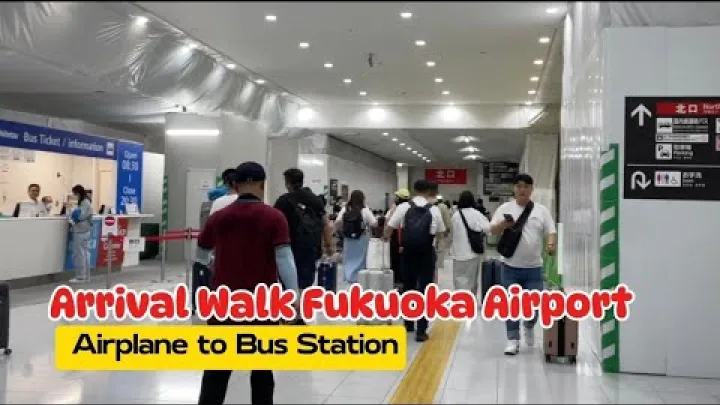
Hakata Station is Fukuoka's main rail interchange and is also beside the Hakata Bus Terminal. It is the most convenient arrival point for travelers staying near Hakata, using the Sanyo Shinkansen or Kyushu Shinkansen, or connecting to other parts of Kyushu. Tenjin is the other major downtown district, and the Nishitetsu Tenjin Expressway Bus Terminal is an important bus departure and arrival point there.
Sea travelers should look for Hakata Port International Terminal, associated with Bayside Place. Port facilities are separate from Hakata Station and the central bus terminals, so a ferry ticket should be read for the exact terminal rather than only the city name.
Arriving in Fukuoka by Air
Flying is the most common choice for international visitors and for domestic travelers from distant parts of Japan. Fukuoka Airport is close to the urban area, but the airport process and terminal transfer still belong in your total travel calculation.
Domestic Flights from Tokyo, Osaka, and Other Japanese Cities
Fukuoka Airport is the principal air gateway for Kyushu. Domestic services commonly connect Fukuoka with major cities such as Tokyo, Osaka, Nagoya, and Sapporo, although the available routes and departure times depend on the travel date. The airport's access information is useful for understanding the terminal layout and public transport options; see the Fukuoka Airport Official Website.
Tokyo is the clearest example of the air-versus-rail choice. A flight has a short time in the air, but the complete journey also includes travel to Haneda or another departure airport, check-in, security, boarding, baggage collection, and the transfer from Fukuoka Airport. A shinkansen leaves from a central station and arrives at Hakata, so it can be competitive even when the flight itself is shorter.
From Osaka, compare the flight's airport access and check-in requirements with a direct shinkansen from Shin-Osaka. Air can still be attractive when a fare is favorable, when the departure airport is convenient, or when the traveler is connecting from another flight. For regional origins without a direct shinkansen route, flying may avoid several train changes. Use the flight time as only one part of the comparison, and include baggage and local transport in the calculation.
International Flights and Regional Connections
Fukuoka functions as a regional international gateway for East Asia and selected destinations in Southeast Asia. Depending on the date, travelers may find direct options from Korea, Taiwan, mainland China, or Southeast Asian hubs. This can be more efficient than flying to Tokyo or Osaka first and then taking a domestic flight or train to Fukuoka.
International routes do not all have the same operating pattern. A service may be scheduled, seasonal, newly introduced, or temporarily suspended. The Fukuoka Airport Flight Schedules page provides a date-based starting point, but the airline's booking result is the practical test of whether a seat is available for your itinerary.
International arrivals use the International Terminal. Allow time for immigration, baggage collection, customs, and the journey from that terminal toward Hakata or Tenjin. When comparing a direct flight to Fukuoka with a connection through another Japanese airport, include the risk of an additional domestic transfer and the need to move between airport terminals.
Arriving in Fukuoka by Train
Rail is especially convenient when your journey begins in central Japan or elsewhere in Kyushu. The major long-distance arrival point is Hakata Station, where travelers can continue directly into the city or transfer to local and regional services.
Shinkansen from Tokyo, Osaka, Kyoto, and Hiroshima
Hakata Station is the northern Kyushu terminus for the Sanyo Shinkansen and connects with the wider Tokaido-Sanyo corridor. From Tokyo, a direct Nozomi journey is a long but simple city-center-to-city-center trip. A traveler-facing reference describes the direct journey as about five hours and gives an indicative one-way price of around 23,000 yen; use this only as a comparison example, not as a guaranteed fare.

| Origin | Typical rail pattern | Best fit |
|---|---|---|
| Tokyo | Long direct Nozomi journey or a combination of services | Central-to-central travel without airport procedures |
| Shin-Osaka | Direct Sanyo Shinkansen services are available in typical patterns | Fast access from Osaka with a central arrival |
| Kyoto | Tokaido-Sanyo route, direct or with a change depending on service | Travelers already near Kyoto Station |
| Hiroshima | Short Sanyo Shinkansen journey, often around one hour | A simple alternative to a domestic flight |
Nozomi, Hikari, and Sakura services do not have identical stopping patterns or ticket conditions. Nozomi is generally the fastest choice on the long corridor, while Hikari and Sakura may be relevant when a rail product includes them. The Central Japan Railway Company timetable page can help with the wider shinkansen network, while Japan Guide provides traveler-oriented context for comparing rail journeys.
The published time starts at the train platform. Add the trip from your accommodation to the station, time to find the correct platform, and any transfer between services. The main advantage remains the arrival location: Hakata Station puts you directly into Fukuoka's rail and subway network without airport security or a terminal-to-city transfer.
Rail Connections from Nagasaki, Kumamoto, Oita, and Other Kyushu Cities
The Kyushu Shinkansen is the main fast rail route from Hakata toward Kumamoto and further south toward Kagoshima. It is useful when the destination is close to a shinkansen station and when the traveler values a predictable central-station arrival.
The current rail pattern from Fukuoka to Nagasaki uses the Relay Kamome between Hakata and Takeo-Onsen, followed by a connection to the Nishi Kyushu Shinkansen. At Takeo-Onsen, passengers should expect to follow the instructions for the connection rather than assuming that the whole journey is one uninterrupted train. Do not confuse this current arrangement with future extension plans.
Other Kyushu origins may be better served by conventional trains or limited express services. Oita and Yufuin, Sasebo, Kitakyushu, and smaller cities each have different combinations of direct trains, changes, and highway buses. When comparing them, identify whether the journey is direct, requires a platform change, or ends at a station that still needs a local bus. A highway bus can be more convenient when the destination is away from a major rail station.
Rail Passes, Reservations, and Train Changes
A rail pass is valuable only when its area, validity period, included trains, and number of long-distance journeys match your itinerary. A traveler making several Kyushu trips may benefit from a regional JR Kyushu product, while a journey from Tokyo or Osaka to Hakata may involve the Sanyo Shinkansen and different operating rules.
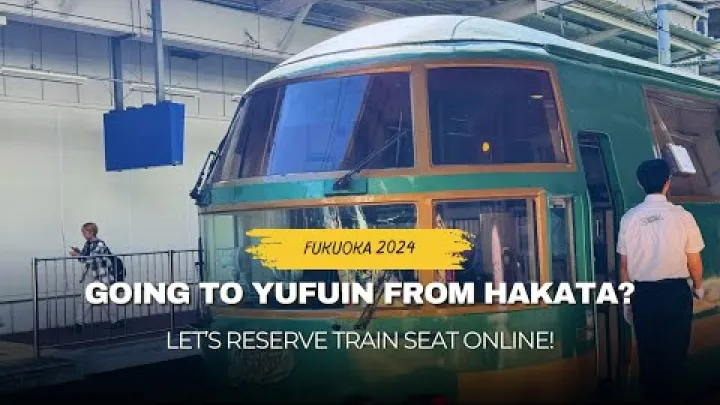
Pay particular attention to the boundary around the Kokura-Hakata section. A route that appears to be a single short trip on a map can involve different JR operating areas and may not be covered in the same way by every pass. Nozomi travel can also have separate conditions or supplements under some pass products, while Hikari and Sakura eligibility depends on the specific product.
Use a simple break-even test. List the current point-to-point prices for each long rail journey, add required seat or train supplements, and compare that total with the current pass price. For example, compare the cost of your long trip to Hakata plus planned journeys to Kumamoto, Nagasaki, or another Kyushu destination. If the pass does not cover every segment, include the uncovered tickets instead of treating the pass as an all-inclusive fare.
Reserved seats are useful for long trips, peak travel periods, families, and travelers with large luggage. Before purchase, match the pass to the exact train type, confirm whether a reservation is required, and keep the reservation details with your ticket. Rail-pass conditions and supplements are product-specific, so use the current terms rather than an old price or an assumption based on a different JR region.
Arriving in Fukuoka by Long-Distance Bus
Long-distance buses can reduce the ticket price and may save a night of accommodation, but their value depends on comfort, traffic, and arrival time. The departure terminal is also part of the route.
Overnight Buses from Tokyo and Osaka
Overnight buses are the main budget alternative from Tokyo and Osaka for travelers who accept a much longer journey than a flight or shinkansen. The Tokyo route is a particularly long-distance option, while Osaka provides a closer comparison with the shinkansen. A bus may be worthwhile when the fare is low, the traveler can sleep on board, and the arrival time works with hotel check-in.
Compare seat types rather than choosing only the cheapest listing. Reclining angle, personal space, privacy features, onboard facilities, and the number of stops can affect how rested you feel. Check the luggage allowance and loading procedure as well. A large suitcase may have to be placed in a lower compartment, while smaller bags may have to remain within the seating area.
Bus fares and times vary by operator, seat type, weekday, and season. An early-morning arrival can also create an extra cost if the hotel cannot provide early check-in or if you need luggage storage. Compare the full bus journey with the central arrival of the shinkansen, not only the headline ticket price.
Regional Highway Buses Across Kyushu
Highway buses link Fukuoka with regional destinations such as Nagasaki, Kumamoto, Oita, Kitakyushu, and other parts of Kyushu. They may be useful when the destination is not close to a major station, when rail requires a change, or when the bus schedule better matches your accommodation.
Departures may use Fukuoka Airport, Hakata, or Tenjin. This distinction matters if you arrive by plane or train and have luggage. A route from Tenjin may be convenient for a hotel in the downtown area, while a route from Hakata may be easier after arriving at Hakata Station.
Do not assume that a regional bus is a walk-up service. Some routes require advance reservations, and the reservation system, cancellation rules, and luggage conditions can differ by operator. Regional booking portals and bus passes can be useful only when the exact route is included. Japan Guide offers general access context for comparing buses with rail and air, but the route-specific booking page controls the actual reservation.
Hakata Bus Terminal and Tenjin Bus Terminal
Hakata Bus Terminal is beside Hakata Station and is a practical hub for many long-distance and regional buses. Nishitetsu Tenjin Expressway Bus Terminal is in the Tenjin district and is convenient for travelers staying in central Fukuoka or connecting to a route that specifically uses Tenjin.
Choose the terminal shown on your booking, not simply the terminal closest to your hotel. Before leaving for the bus, check:
- the exact terminal name and address;
- the platform or boarding area;
- the departure time and required boarding time;
- the operator name and booking reference; and
- the luggage limit and storage instructions.
Hakata and Tenjin are both in Fukuoka, but they are not interchangeable boarding points. Allow extra time if you must travel between them with luggage.
Arriving in Fukuoka by Ferry or Cruise
Sea travel is less universal than air or rail, but it provides an important international option from Busan and connections to selected islands. Port check-in and immigration make the total process different from a normal local ferry ride.
Fukuoka-Busan Ferry Options
The Fukuoka-Busan sea connection is a distinctive alternative to flying between Japan and South Korea. The Camellia Line appears in the supplied route references as an overnight ferry option. A Direct Ferries Camellia Line listing can help identify the route, but a third-party listing should not be treated as proof that a sailing is available on your date.
Compare the ferry with a flight by looking at the whole process. A ferry may offer a cabin or shared sleeping arrangement and can make checked luggage easier to manage, but it requires travel to Hakata Port, port check-in, immigration, and arrival procedures at the destination. The overnight format may reduce the need for a hotel night, but it is not equivalent to a full night's sleep for every traveler.
High-speed services should be treated separately from the overnight ferry. Do not assume that Queen Beetle or another high-speed service is operating because an older page, search result, or aggregator still displays it. For any Fukuoka-Busan ferry, confirm the current sailing date, departure terminal, booking status, check-in deadline, passport and immigration requirements, passenger documents, cabin or seat assignment, and cancellation rules with the ferry operator or port.
Hakata Port International Terminal and Other Sea Arrivals
The main reference point for international ferry and cruise arrivals is Hakata Port International Terminal at Bayside Place. The Hakata Port site provides port access information and helps distinguish the international terminal from other port facilities.
Hakata Port also supports routes to nearby islands such as Tsushima and other domestic or regional sea destinations. These services are not necessarily daily public transport, so travelers should identify the vessel, terminal, and sailing pattern attached to their ticket. Cruise passengers may have a prearranged shore transfer or a limited time in port, while independent ferry passengers must organize their own journey from the terminal.
After arrival, follow the terminal's marked exit and continue toward Hakata or Tenjin by local bus or taxi. Keep the port transfer separate from the sailing and immigration process when planning your arrival time.
Reach Central Fukuoka from Each Gateway
Hakata and Tenjin are the two most useful orientation points for the final part of the journey. Select the one closest to your hotel instead of automatically traveling to Hakata.
From Fukuoka Airport to Hakata and Tenjin
The Domestic Terminal has a direct connection with the Fukuoka City Subway. This makes the subway a natural choice for travelers heading to Hakata or Tenjin and for those who want a predictable route into central Fukuoka. Airport buses and taxis can be more convenient for large luggage, unusual arrival times, or hotels away from a subway station.
International passengers generally need to use the airport's inter-terminal shuttle before continuing by subway, bus, or taxi. The International Terminal does not have the same direct subway access as the Domestic Terminal. Read the terminal printed on the arrival information first, then choose the transfer. The Fukuoka Airport Official Website provides terminal-specific access guidance.
From Hakata Port and Bus Terminals to Central Districts
From Hakata Port, most independent travelers continue toward Hakata or Tenjin by local bus or taxi. The better choice depends on the hotel's district, the amount of luggage, and the arrival time. Hakata is useful for a hotel near the station or for a same-day rail connection. Tenjin may be the shorter final destination for hotels in the main downtown shopping and business area.
Hakata Bus Terminal is already beside Hakata Station, so a traveler arriving there usually needs only a short local connection or walk to a nearby hotel. The Nishitetsu Tenjin Expressway Bus Terminal places travelers in Tenjin but may require a separate connection to accommodation near Hakata. After reaching the port, follow the current bus-stop information for the relevant service rather than relying on an old route number.
Late Arrivals, Luggage, and Accessible Travel
A late flight, ferry, or overnight bus can arrive after the most convenient subway or local bus connection. Before confirming the itinerary, compare the scheduled arrival with the final public transport service, your hotel's check-in hours, available luggage storage, and a backup taxi plan. An early arrival can create a similar problem if you cannot enter the room or store a large suitcase.
Travelers who need step-free access should confirm the complete route, not only the destination. Check the specific airport terminal, station entrance, elevator route, bus vehicle, and ferry facilities. Accessibility can vary by vehicle, platform, and terminal, and staff assistance may need to be requested in advance.
Use official ticket counters, marked taxi stands, and designated bus stops. Do not accept unsolicited offers of transport in or around an airport, station, port, or bus terminal. Keep your ticket or booking confirmation available so you can match the operator and boarding point before entering a vehicle.
- Record the final public transport service and a backup option.
- Confirm hotel check-in and luggage storage arrangements.
- Keep enough space for luggage when selecting a bus or train.
- Request accessibility assistance for the exact terminal and vehicle where necessary.
- Use marked transport points and official staff for payment or directions.
Book and Verify Your Journey
Transport information is most useful when it is tied to the exact travel date. Use the following checks before paying for a ticket.
Check Date-Specific Schedules, Fares, and Service Notices
Build the itinerary from the original departure point to the hotel, then verify each operator separately:
- Flights: check the airport schedule and the airline booking result for the exact date, route, operating days, terminal, baggage allowance, and connection time.
- Rail: check the train type, departure station, platform-change requirement, seat availability, pass coverage, supplements, and reservation conditions.
- Buses: check the operator's booking page for the exact terminal, platform, seat type, luggage rules, boarding deadline, and cancellation policy.
- Ferries: check the operator and port for the sailing date, terminal, passenger documents, check-in deadline, cabin or seat status, and cancellation procedure.
- Local transfers: match the arrival time with the last subway or bus service, hotel check-in, and a practical backup route.
Weather, maintenance, commercial decisions, and seasonal operations can affect ferries, flights, buses, and some rail connections. Use indicative times and fares in trip planning, but rely on the date-specific operator result and service-notice page when you buy.
Compare Total Door-to-Door Cost and Booking Difficulty
Headline fares do not describe the same product. Compare each option using ticket price, access to the departure point, check-in or security time, arrival transfer, luggage, overnight accommodation, comfort, and flexibility.
| Mode | Cost pattern | Extra planning | Strongest use |
|---|---|---|---|
| Flight | Fare varies by airline and date | Airport access, check-in, baggage, and city transfer | Overseas and very long domestic journeys |
| Shinkansen | Higher ticket price but central arrival | Train type, seat reservation, and pass rules | Osaka, Kyoto, Hiroshima, and western Honshu |
| Highway bus | Often budget-oriented, with variable fares | Terminal, seat comfort, traffic, and luggage | Budget or overnight travel |
| Ferry | Fare depends on seat or cabin | Port access, check-in, immigration, and sailing status | Busan and selected island routes |
For Tokyo or another very distant domestic origin, compare a flight with the shinkansen and an overnight bus. For Osaka and western Honshu, the shinkansen is often the simplest central-to-central option, while a flight may work if airport access and fare are favorable. For Kumamoto, Nagasaki, Oita, Sasebo, and other Kyushu destinations, compare the actual rail connection with a bus from the terminal closest to your accommodation. From Busan, compare the ferry experience with a flight after adding port access and immigration time.
Reservations and seat availability become more important during major Japanese holiday periods and other peak travel dates. A slightly more expensive central-to-central ticket can be better value than a cheaper itinerary with several transfers, an airport change, or an arrival that requires another paid connection.
Avoid Common Terminal and Ticketing Mistakes
Most problems come from confusing similar names or assuming that a third-party listing reflects current operations. Use this short pre-departure checklist:
- Confirm whether your flight uses the Fukuoka Airport Domestic Terminal or International Terminal.
- Distinguish Hakata Station from Hakata Bus Terminal, even though they are beside each other.
- Distinguish Tenjin from the Nishitetsu Tenjin Expressway Bus Terminal when reading a bus confirmation.
- Check that the rail pass covers the chosen train, route, and operator, including any required supplement.
- Confirm whether the bus or ferry requires advance reservation and whether your luggage meets its rules.
- Do not assume that a ferry shown by an aggregator is operating on your date.
- Save the operator name, terminal name, departure time, and booking reference offline.
Keeping the terminal and booking details together makes it easier to follow signs in English or Japanese and reduces the chance of going to Hakata when your bus leaves from Tenjin, or the reverse.
Final Takeaways for Getting to Fukuoka
Choose flights for many overseas and very long domestic journeys, the shinkansen for Osaka, Kyoto, Hiroshima, Tokyo, and western Honshu when a central arrival is valuable, buses for budget or overnight travel, and ferries for Busan or selected island routes. In every case, compare the complete door-to-door journey and identify whether you will arrive at Fukuoka Airport, Hakata Station, Hakata Port, Hakata Bus Terminal, or Tenjin. Finish by checking the exact operator schedule, terminal, ticket rules, and service notices for your travel date.
Select area
Create a post
Posting is free and no registration is required.