Naha Getting There: Flights, Ferries, and Transfers

Getting to Naha, Okinawa, is mainly an air-travel decision because the city is separated from mainland Japan by sea. Naha Airport, with the airport code OKA, is the principal long-distance gateway, while the Kagoshima–Naha ferry is a specialist option for slow travel, vehicles, and travelers who prefer not to fly. After arriving at the airport, Yui Rail, buses, taxis, and rental cars serve different parts of Naha and the wider island. This guide compares the main routes by time, total cost, booking effort, terminal location, and connection risk.
How to Get to Naha at a Glance
For most visitors from mainland Japan or overseas, flying to Naha Airport is the fastest and simplest choice. The ferry can be worthwhile when the journey itself is part of the trip, but it needs more planning because it starts in Kagoshima and has limited departures.
The Default Choice for Long-Distance Travel: Fly to Naha Airport
Naha is on the southern part of Okinawa Island, so there is no direct rail or long-distance bus route from Tokyo, Osaka, or other mainland cities into the city. Rail and highway buses can take you to a departure airport or port, but they do not replace the sea crossing. For this reason, flights are the normal way to reach Naha from major Japanese gateways.
A direct flight from Tokyo, Osaka, Nagoya, or Fukuoka is usually much quicker than a sea journey. The air segment is only one part of the trip, however. Add the time needed to reach the departure airport, check in, pass security, collect baggage, and travel from OKA to your accommodation. A flight that looks short on a timetable can still become a long door-to-door journey if the departure airport is far from your starting point or if the arrival transfer is late at night.
Domestic and international routes change by season, airline, travel date, and operating day. Treat a route shown in an older guide or a general search result as a possibility, not a permanent service. Check the actual date on the airline or airport booking system, including the departure airport, baggage conditions, and whether the flight is direct or requires a connection.
When the Kagoshima–Naha Ferry Makes Sense
The Kagoshima–Naha ferry is a slow-travel alternative rather than the standard route. Published route listings have shown an overnight crossing of roughly 25 to 26 hours and a limited weekly pattern. Seasonal schedules and prices can change, so use current route information when planning; Direct Ferries is one place where the route and its changeable sailing pattern are listed.
The ferry may suit travelers who do not want to fly, want to bring a car or motorcycle, or enjoy spending a full day at sea. It can also be useful for a longer southern-island itinerary. It is less suitable when you need several departure choices, a quick arrival, or a guaranteed short connection to a fixed event in Naha.
Compare the whole journey, not only the passenger fare. Your calculation should include the trip to Kagoshima Port, any local transfer between a station and the port, the ferry accommodation category, meals, baggage, and vehicle charges. A low basic fare may not be the lowest total price once these items are added.
If Naha Is a Stopover for Another Okinawan Island
Reaching Naha and reaching another Okinawan island are separate transport questions. You may arrive at OKA and stay in Naha, travel from Tomari Port to a nearby island, or take another domestic flight from Naha Airport. The correct choice depends on the island and on whether its main gateway is a port, an airport, or both.
- Staying in Naha: Use Yui Rail, a bus, taxi, or rental car to reach your accommodation and explore the main island.
- Using Tomari Port: Choose this route for relevant ferry services to Tokashiki, Zamami, Aka, and some other regional destinations.
- Using a domestic flight: Consider this for farther islands such as Miyako or Ishigaki when a suitable flight operates.
Do not assume that an airport arrival automatically creates a same-day island connection. Airport-to-port travel, baggage collection, ticket collection, and separate operator check-in all take time. Check the airport, port, and island operator schedules together before committing to a tight itinerary.
Flying to Naha Airport
Air travel gives Naha the broadest range of arrival times and usually the lowest planning burden from mainland Japan. The best flight is not always the one with the lowest advertised fare, because airport access and optional charges can change the final result.
Domestic Flights from Japan's Major Gateways
Typical direct approaches to Naha include Tokyo, Osaka, Nagoya, and Fukuoka. Other large Japanese cities may have direct services on particular dates or may require a connection. The exact airline, departure airport, and number of flights can change, so search using OKA and your actual travel date rather than relying on a general list of routes.
As a representative example, the Tokyo–Naha air segment is often around two and a half to three hours, subject to the timetable and conditions on the day. That figure excludes the journey to Haneda or Narita, airport procedures, baggage collection, and the trip from Naha Airport into the city. A passenger starting in central Tokyo may need to compare the full access time to each airport rather than looking only at the flight duration.
Low-cost carriers can make the base fare attractive, but check the total before booking. A checked bag, seat selection, payment charge, airport access, and change or cancellation restrictions may be added separately. A flight with a higher starting fare can be faster or cheaper overall if it leaves from a more convenient airport or includes baggage that you would otherwise need to purchase.
For a practical comparison, write down the complete cost for each option: transport to the departure airport, airfare, baggage, seat, food if needed, and the arrival transfer in Naha. Also compare departure times. An early flight may require an airport hotel, while a late flight may make the final journey into Naha more difficult.
International Flights and Connections through Mainland Japan
Naha has selected direct international connections with parts of Asia, but the network is more limited and changeable than the domestic network. Services may vary by season, weekday, airline, and current operating plans. Check whether a direct regional service operates on your actual date before building the whole itinerary around it.

When a direct flight is not available, a common alternative is to fly first to a major Japanese gateway and then take a domestic flight to Naha. This can offer more departure choices, but the nominal flight time does not show the complete journey. You may need to move between airport terminals, complete arrival procedures in mainland Japan, collect and recheck baggage, or pass through another security checkpoint before the domestic leg.
Pay particular attention to whether the flights are on one booking or on separate tickets. With separate tickets, a delay on the first flight may leave you responsible for the missed domestic flight, baggage arrangements, and any overnight stay. An airport change within the same metropolitan area can create another transfer that is easy to underestimate.
Long-haul travelers should allow more connection time than the domestic flight duration alone suggests. If your connection is important to a ferry, tour, work appointment, or island departure, consider arriving in Naha the previous day rather than selecting the shortest possible layover.
Getting from Naha Airport to Central Naha
Once you have arrived at OKA, the best transfer depends on your hotel location, luggage, arrival time, and whether you will travel beyond the city. Yui Rail is usually the clearest public-transport choice for central districts, while buses, taxis, and rental cars cover places outside its corridor.
Yui Rail from Naha Airport to the City Center
Yui Rail, the Okinawa Urban Monorail, is the most straightforward airport-to-city link for many visitors. It reaches central Naha stations including Asahibashi, Miebashi, and Makishi, with useful access to different parts of Kokusai-dori. The line also continues toward Shuri, so it can serve some destinations beyond the central shopping area.
A commonly quoted orientation figure for the airport to a central Naha stop is about 15 minutes and approximately ¥300, but treat this as an indicative guide. The exact fare and time depend on the station, current operator rules, and the walk from the station to your accommodation. A hotel near one end of Kokusai-dori may be much more convenient from a different station than a hotel near the other end.
Visitors making several monorail journeys can compare a stored-value or accepted IC-card payment with a short-duration unlimited pass. The pass is most useful when you expect multiple rides rather than one airport transfer. Check the current payment rules before relying on a particular card or pass, and keep enough time for the walk, elevators, and luggage handling at the destination station.
Asahibashi is a useful reference for the Naha Bus Terminal and the southern side of the central area. Miebashi and Makishi can be more convenient for different sections of Kokusai-dori. Look up the station nearest your hotel before leaving the airport instead of assuming that every central Naha address is equally close to the monorail.
Buses, Taxis, and Rental Cars for Other Areas
Buses are useful when your accommodation is outside the Yui Rail corridor or when you are continuing to another part of Okinawa Island. Naha and the wider island have many bus routes, including services for destinations outside the city. The official airport-access guidance from Travel Japan identifies buses, taxis, and the monorail as the main immediate airport connections.
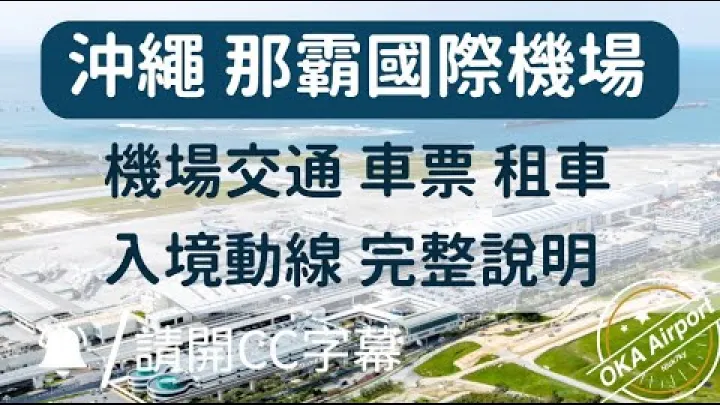
A taxi can be practical for a late arrival, heavy luggage, a group sharing the fare, or a hotel that is difficult to reach with transfers. Road travel time varies with traffic, so use the taxi when convenience and direct access matter more than the lowest price. Confirm the destination and fare conditions before departure, especially if the hotel has a similar name to another property.
Rental cars are more useful for visiting beaches, rural areas, and places beyond Naha than for moving around the city center. Parking, narrow streets, and traffic can make a car less convenient for a short central-Naha stay. The airport-access guide notes that rental-car counters are outside the terminal building, so allow time for the counter process and any transfer required by the rental company.
Use marked taxi ranks and official rental-car or ticket counters. If a person approaches you with an unsolicited transport offer, do not feel pressured to accept it. Go to the signed transport area, confirm the vehicle and destination, and keep your booking details available.
Arriving in Naha by Ferry
Ferry travel reaches Naha through port facilities rather than the airport. The most important planning distinction is between the long-distance Kagoshima route and local island services from Tomari Port. They are not interchangeable departures, and the terminal printed on your reservation should control your route to the port.
The Kagoshima–Naha Long-Distance Ferry
The Kagoshima–Naha ferry is a long overnight sea journey, commonly described as taking roughly 25 to 26 hours. Route listings have shown a limited schedule, with approximately three weekly sailings appearing in some listings, but frequency can vary seasonally. Treat those figures as indicative rather than as a timetable for your travel date.
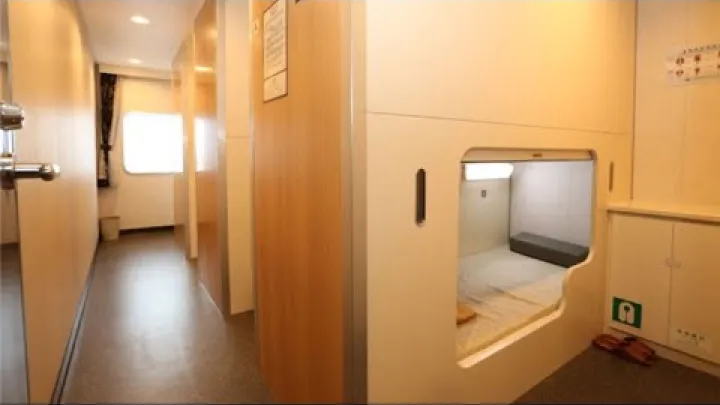
The journey begins in Kagoshima, not at a Naha city pier. You must first reach Kagoshima Port by rail, road, or another connection and then complete the ferry company's check-in process. At the Naha end, the ship also arrives at the facility assigned to the long-distance service. It should not be assumed that the arrival point is Tomari Port or that it is beside your hotel.
Passenger choices can include a basic foot-passenger fare, a cabin or other accommodation category, and a vehicle booking. These options affect comfort and cost during a crossing that lasts through a full day and night. Ask how baggage, meals, bedding, vehicle dimensions, and boarding requirements are handled before comparing the fare with a flight.
Use this booking sequence:
- Confirm the exact sailing date, departure port, arrival facility, check-in time, and reservation conditions with the ferry operator or booking service.
- Choose the passenger accommodation and add any vehicle, motorcycle, or special-baggage requirement.
- Check how you will reach Kagoshima Port and how you will leave the Naha arrival port.
- Only then buy non-refundable rail, road, or accommodation connections, allowing for delays and port procedures.
A ferry reservation is not automatically a protected connection with a railway or airline. Keep the operator's confirmation, cancellation terms, and check-in instructions accessible throughout the trip.
Finding the Correct Naha Ferry Terminal
Naha has multiple port facilities, so searching for Naha port without reading the full ticket can lead to a difficult or expensive mistake. Tomari Port is the key local departure point for many services to nearby islands. The long-distance Kagoshima service uses the facility stated by its operator, which may be different from the terminal used by Kerama ferries.
Miebashi Station is a useful city-side reference when you are going to Tomari Port, but the actual walking route depends on the berth, ticket office, and entrance named by the operator. For a long-distance sailing, Asahibashi Station or Naha Bus Terminal may appear as more useful city references on a map, but neither is proof that your ferry leaves there. Match the exact terminal name on the reservation to the map before leaving your hotel.
Allow time for the complete port arrival process. You may need to find the correct building, collect a ticket, complete check-in, leave or identify luggage, and walk to the assigned berth. Do not assume that all operators share one ticket office, entrance, or boarding area.
- Read the terminal and berth information on the reservation.
- Save the operator name and address, not only the words Naha port.
- Confirm the check-in deadline and ticket-collection rule.
- Plan the final walk or taxi transfer with luggage and opening hours in mind.
Using Naha as a Gateway to Okinawa's Islands
Naha is both a destination and a transfer point. Nearby islands are often reached by ferry from Tomari Port, while farther islands may be more practical by domestic flight from Naha Airport. The island name alone is not enough to choose a route; check its current airport, port, vessel, and departure schedule.
Tomari Port Ferries to the Kerama Islands
Tomari Port is the main Naha reference for high-speed and regular ferry services to the Kerama Islands. Tokashiki, Zamami, and Aka are separate destinations, even when a vessel or booking system serves more than one island. The official Kerama Islands information from Travel Japan describes high-speed services from Tomari, including a Tokashiki journey of about 40 minutes and a service pattern that has included two or three trips a day.
High-speed ferries normally reduce time at sea, while regular ferries can take longer and may have different fares, luggage rules, and sailing patterns. Do not turn an example such as 40 minutes or two or three daily departures into a fixed promise. Zamami and Aka may have different departure times or vessel types, so select the exact island when searching.
Popular sailings can fill, particularly when visitors are making a short island trip. Check whether advance reservation is required, where payment is made, when tickets must be collected, and how early passengers must check in. A reservation for Tokashiki does not authorize boarding for Zamami or Aka, and an airport arrival should be connected to the correct Tomari departure time.
Kume Island and Farther Islands: Ferry or Domestic Flight
Kume Island is a longer regional ferry journey than the short Kerama crossings, and its sailing days and frequency need current confirmation. Do not assume that a ferry displayed for one island continues to Kume Island or that a convenient departure operates every day. Compare the time in transit with the cost and effort of reaching the correct port.
For farther islands such as Miyako and Ishigaki, a domestic flight from Naha is usually the first option to investigate when a suitable service operates. Official island-hopping guidance describes a flight from Naha to Ishigaki taking just over an hour, followed by ferry connections for some smaller islands. This illustrates the gateway principle: Ishigaki and Miyako have their own airport networks, while Tomari Port does not serve every Okinawan island.
Build the itinerary from the actual arrival and departure times. If a flight lands at Naha after the last ferry check-in, or if a ferry reaches Naha after the onward flight has closed, the connection is not workable even when both services operate on the same date. Allow for the airport-to-port transfer, baggage, ticket collection, and separate operator rules.
Compare Naha Routes by Time, Cost, and Booking Effort
The most useful comparison is door to door. A short flight can require a long journey to a distant departure airport, while a ferry ticket can exclude the cost of reaching Kagoshima, the port transfer, accommodation, meals, and a vehicle.
| Mode | Best use | Indicative time | Booking effort | Main extra costs |
|---|---|---|---|---|
| Flight from mainland Japan | Most visitors and fixed dates | About 2.5–3 hours from Tokyo in the air | Low to medium | Airport access, baggage, seats, changes |
| International flight via Japan | Long-haul arrivals without a direct OKA service | Variable; layover plus domestic flight | Medium to high | Connection, terminal change, baggage |
| Kagoshima–Naha ferry | Slow travel or vehicle transport | About 25–26 hours at sea, plus Kagoshima access | Medium to high | Port access, cabin, meals, vehicle |
| Naha to a nearby island | Kerama and other onward trips | About 40 minutes to Tokashiki by high-speed ferry | Medium | Airport or port transfer, luggage, island ticket |
The Fastest and Simplest Choice: Compare Air Options by Total Cost
Flights normally suit short holidays, business travel, families with limited time, and travelers who must arrive in Naha on a particular day. They also provide more departure choices than the Kagoshima ferry. This makes it easier to move an itinerary by a few hours if your first choice sells out or no longer fits your arrival plans.
Compare each airfare as a complete package. Include transport to Haneda, Narita, Kansai, Chubu, Fukuoka, or another departure airport; the fare; checked baggage; seat selection; meals where relevant; and the airport-to-hotel transfer in Naha. For an international connection, also include the time and risk associated with a terminal change or separate ticket.
Do not treat a promotional fare as a normal travel price. A low base fare may be useful if you travel with light baggage and fixed plans, but a more flexible ticket may be better when weather, work, or a separate island booking makes a missed arrival expensive. The right choice is the option with the best total cost and acceptable arrival risk, not simply the smallest number in the first search result.
The Slow-Travel and Vehicle Option: Compare Ferry Costs Honestly
A ferry comparison should include every part of the journey:
- Rail, bus, car, or accommodation needed to reach Kagoshima.
- Local transport between Kagoshima station, your hotel, and the ferry port.
- The passenger fare and the accommodation category on board.
- Meals, drinks, baggage, and other costs during the long crossing.
- Vehicle charges, fuel, and any size or boarding requirements if you bring a car or motorcycle.
- Transport from the Naha arrival facility to your hotel or next connection.
The ferry's limited frequency can be as important as its price. A lower fare may require an extra night in Kagoshima or Naha, while a flight may allow you to travel on the date that best fits your accommodation. Ferry bookings can also use different deadlines, cancellation terms, and reservation systems from airline bookings.
For a multi-operator itinerary, confirm the ferry first when possible, then reserve rail, accommodation, and local transfers around the confirmed sailing. Treat the bookings as separate commitments unless one reservation explicitly protects the connection. This sequence reduces the chance of paying for a non-refundable train or hotel that becomes unusable if the ferry plan changes.
Weather, Schedule Checks, and Arrival-Day Planning
Okinawa travel requires a final operating check because flights and ferries can respond differently to typhoons, strong winds, and other severe weather. A route that appears in a booking search is not proof that the service will operate normally on your travel day.
Check Current Operations Before Leaving
Typhoons and severe weather can affect Naha Airport, domestic flights, international flights, and ferry services. The transport modes may not follow the same timetable or make the same cancellation decision. The official Naha Airport website publishes airport information and operating notices, including temporary closure notices during typhoon approaches.
Before leaving for the airport or port, check the latest notice from Naha Airport, your airline, and the relevant ferry operator. Look at the actual flight or sailing number, not only the route name. If you are changing transport in Kagoshima or Naha, check the next operator separately because one part of the itinerary may be running while another is delayed or cancelled.
When the forecast suggests a significant disruption risk, choose bookings that can be changed if possible and prepare a simple alternative. This might mean an extra night, a later island departure, or a decision to remain in Naha instead of attempting a tight connection. Do not assume that a ferry will always be a safer backup for a flight, or that a flight will always operate when a ferry is cancelled.
Avoid Missed Connections and Late-Night Arrival Problems
A flight landing shortly before a ferry departure is risky because several separate steps remain: leaving the aircraft, collecting baggage, finding the airport exit, traveling to the port, collecting or validating the ferry ticket, and completing port check-in before the deadline. Even a flight that lands on time may not leave enough practical time for a high-value or infrequent island connection.
Use an overnight stay in Naha, or leave a generous buffer, when missing the next ferry would disrupt accommodation, tours, or the rest of an island itinerary. The longer the wait for the next sailing, the more valuable the buffer becomes. The same principle applies to a domestic flight from Naha when your international arrival, baggage, or mainland connection is on a separate booking.
For a late arrival, check the current last Yui Rail and bus services for your date and keep your hotel name, address, and check-in instructions accessible. If public transport has finished, follow the airport's official directions to the designated taxi area or use the transport method confirmed by your accommodation. A late-night airport transfer is a separate problem from a missed ferry, so plan each one independently.
Final Route Recommendations for Getting to Naha
For most travelers from mainland Japan, book a flight to Naha Airport and compare the complete price of the available departure airports. Use Yui Rail for many central-Naha hotels, and choose a bus, taxi, or rental car when your accommodation or wider Okinawa itinerary makes those options more practical.
Choose the Kagoshima–Naha ferry when you specifically want slow travel, need to transport a vehicle, or can organize the extra time and port transfers. If Naha is only a gateway to another island, identify the correct airport or port first: Tomari Port for relevant Kerama services, and domestic flights for many farther-island itineraries. Finally, check the actual operator notices and leave a buffer whenever a missed connection would affect the rest of your trip.
Select area
Create a post
Posting is free and no registration is required.