Fukuoka Budget: Daily Travel Costs, Prices, and Ways to Save

A realistic Fukuoka travel budget depends more on your room, travel dates, and dining choices than on local transport. Fukuoka can suit both a low-cost city break and a more comfortable Kyushu trip, but the daily total changes quickly when you add private accommodation, yatai dining, day trips, or paid attractions. This guide explains typical Fukuoka prices in Japanese yen, shows three-day and four-day examples, and separates city spending from flights, intercity travel, shopping, and car rental.
How Much Does a Fukuoka Trip Cost?
For planning purposes, allow about ¥6,500 to ¥10,000 per person per day for strict budget travel, ¥13,000 to ¥20,000 for mid-range travel, and ¥25,000 or more for a comfortable trip. These are indicative ranges rather than fixed prices. Hotel demand, room sharing, meal choices, attraction plans, and the number of day trips can move the total substantially. A Fukuoka-specific budget overview from Japanactivity also presents daily spending as a range rather than a single universal figure.
Daily Fukuoka budget ranges at a glance
The table uses per-person spending. Accommodation is shown as the traveler’s share of a room or bed, not necessarily the price charged for the whole room. The strict and mid-range examples assume that a private double room may be shared by two people; a solo traveler using the same room will usually have a higher accommodation cost per person.
| Travel style | Accommodation | Food | Transport | Activities | Daily total |
|---|---|---|---|---|---|
| Strict budget | ¥3,500–¥5,500 share | ¥2,000–¥3,000 | ¥500–¥1,000 | ¥0–¥1,000 | ¥6,500–¥10,000 |
| Mid-range | ¥6,000–¥10,000 share | ¥3,500–¥6,000 | ¥800–¥1,500 | ¥1,500–¥3,000 | ¥13,000–¥20,000 |
| Comfortable | ¥12,000 or more | ¥8,000–¥12,000 or more | ¥1,500 or more | ¥3,000 or more | ¥25,000 or more |
For example, a strict-budget day could combine a shared hostel bed or room share at about ¥4,000, food at ¥2,500, local transport at ¥700, and a low-cost activity at ¥500. That produces an indicative total of ¥7,700. A free sightseeing day may cost less, while a Dazaifu outing or a specialty dinner may make one day more expensive.
What the daily estimate includes
The core Fukuoka daily budget has four parts: accommodation, food, local transport, and activities. Accommodation is normally the largest variable, especially on weekends and during high-demand events. Food can be adjusted easily by combining ramen, lunch sets, convenience-store items, and one more expensive dinner. Local transport covers subway, bus, and ordinary city travel, while activities include admission fees and small sightseeing expenses.
This daily estimate does not include international flights, Shinkansen tickets, long-distance buses, travel between Fukuoka and other Kyushu cities, major shopping, private tours, or a substantial car-rental bill. It is also not a fixed spending cap for every day. A traveler might spend ¥5,000 on a walking day and ¥12,000 on a day that includes Dazaifu, a museum, a yatai meal, and extra transport, while the trip average remains within the selected range.
How room sharing changes the budget
A hostel dorm bed is priced per person, but a private hostel room or hotel room is normally priced per room. This difference matters when comparing a solo trip with a trip for two. If a double room costs ¥12,000 per night, two travelers would use ¥6,000 each as the accommodation share. One solo traveler would normally account for the full ¥12,000, unless a smaller room or a dorm bed is selected.
Room sharing can therefore move a pair from a comfortable accommodation category toward a mid-range per-person budget. It does not reduce every cost. Local accommodation charges may be calculated per person per night, and two travelers still pay separately for meals, attraction tickets, and most transport. Compare the total room price, then divide it by the number of guests when building a per-person Fukuoka trip cost.
Accommodation Costs in Fukuoka
Fukuoka has dormitories, private hostels, compact business hotels, full-service hotels, and higher-end properties. The useful comparison is not only the headline nightly price. Location, room size, private facilities, breakfast, cancellation terms, taxes, and the number of people sharing the room all affect the final value.
Hostels, business hotels, and higher-end rooms
Hostel dorm beds are usually the first option to examine for a solo budget traveler. Private hostel rooms provide more privacy but may have a room-level price that is closer to a basic hotel. Business hotels often offer compact private rooms and convenient locations near Hakata Station or Tenjin. A guide from Japan Starts Here gives a broad basic business-hotel reference of about ¥5,000 to ¥10,000 per night, while noting that simple local meals can also be inexpensive. Treat such figures as planning examples, not guaranteed live rates.
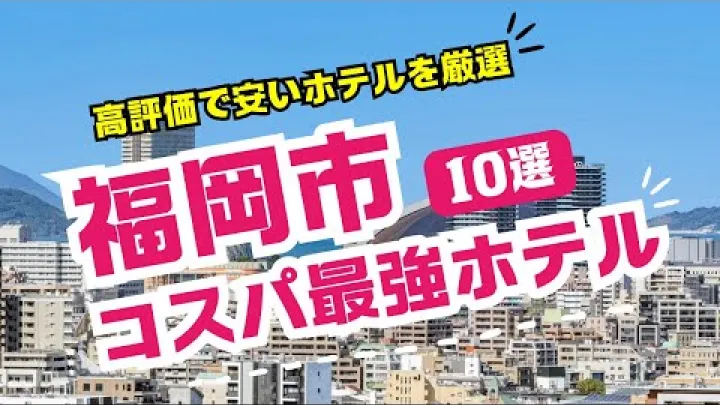
Booking snapshots also vary by month and property. A KAYAK hostel snapshot reported prices from about US$20 per night and an average that differed between June and October. Another snapshot showed that double rooms and four- or five-star rooms could be much more expensive. These figures demonstrate volatility rather than a permanent Fukuoka price list.
| Accommodation type | Price unit | Budget meaning |
|---|---|---|
| Hostel dormitory | Per bed, per night | Usually the clearest low-cost choice for solo travelers |
| Private hostel room | Per room, per night | Compare the total room rate before dividing between guests |
| Basic business hotel | Per room, per night | Useful for a private stay near a transport hub |
| Mid-range double room | Per room, per night | Often better value per person when shared by two travelers |
| Four- or five-star property | Per room, per night | Can move the daily budget above the comfortable range |
When comparing properties, look at the final total rather than only the base rate. A slightly higher room price may include breakfast, better cancellation terms, or a more convenient location. A lower rate may involve shared facilities, a distant station, a nonrefundable booking, or additional charges.
Accommodation tax and the final room total
The amount shown during a hotel search may not represent the final amount collected by the property. Some local accommodation taxes or surcharges are included in the booking total, while others may be shown separately or collected at the property. The calculation may be based on each guest per night rather than on the room as one unit.
Research on Fukuoka City describes a tiered accommodation-tax structure associated with a room-price threshold of around ¥20,000, but the exact current amount and treatment should not be assumed from an old listing. Add any separately shown charge to the room price multiplied by the number of nights, then check whether the property applies the charge per guest. If a booking shows a separate charge per person per night, multiply that charge by the number of guests and nights.
Do not transfer the rule from one municipality to another. Kitakyushu, elsewhere in Fukuoka Prefecture, publishes its own accommodation-tax information and lists a ¥200 charge per person per night in its tourism guidance. That example does not establish the current Fukuoka City amount. Check the booking total and ask the property whether Fukuoka accommodation tax is included, charged per person, or collected separately.
Choosing a base: Hakata, Tenjin, and the wider city
Hakata Station is a practical base for travelers who value rail connections, airport access, luggage convenience, and quick departures for regional trips. Tenjin is useful for central shopping, dining, and urban sightseeing. The Nakasu yatai area is a strong local anchor for evening food, although staying nearby is not automatically the cheapest choice on busy dates.
| Base | Good for | Budget trade-off |
|---|---|---|
| Hakata Station area | Rail access, airport connections, short stays | Convenience can carry a higher room price on busy dates |
| Tenjin | Central sightseeing, dining, and shopping | Good walking access, but demand can raise hotel rates |
| Nakasu area | Evening food and yatai experiences | Compare nightlife convenience with room price and noise preferences |
| Outside the central areas | Travelers who find a suitable lower room rate | Extra fares, longer journeys, or taxis can reduce the saving |
For a wider Kyushu itinerary, a rural, coastal, or resort base may fit the sightseeing plan, but the lowest nightly room price does not guarantee the lowest trip total. Add intercity fares, car rental, fuel, tolls, parking, and travel time before deciding. Fukuoka city accommodation is often easier to use for a short urban visit because many attractions can be grouped into walking or short local-transport days.
Food Prices and Dining Choices
Food is one of the easiest categories to control in a Fukuoka budget without making the trip feel limited. The city is known for Hakata ramen and yatai, but travelers can also use inexpensive breakfasts, lunch sets, bento meals, and casual restaurants to balance a more expensive dinner.
Low-cost meals, convenience stores, and Hakata ramen
As broad planning ranges, a convenience-store breakfast may be about ¥300 to ¥800, a bento or prepared meal about ¥500 to ¥1,000, and a snack or drink about ¥100 to ¥500. These are approximate examples, not fixed menu prices. A complete meal usually costs more than one individual item because it may include a drink, side dish, dessert, or extra topping.
A standard bowl of Hakata ramen generally fits the low-cost meal category. A basic bowl may be close to the ¥1,000 planning level used in local travel guidance, while extra meat, eggs, noodles, side dishes, and set menus raise the bill. Comparing the bowl price with the cost of a full set is important when estimating a daily food budget.
A practical low-cost pattern is a convenience-store breakfast, a ramen lunch, and a casual dinner or bento. This lets a traveler eat local food without cooking and leaves room for a café, snack, or small dessert. It is also more reliable than assuming that every meal at a food stall will be the cheapest option.
Yatai, lunch sets, and specialty dining
Yatai are an experience as well as a place to eat. Limited seating, small portions ordered separately, drinks, and several dishes can make a yatai evening more expensive than a basic ramen shop. For planning, treat a complete yatai meal as starting around ¥2,000 per person, with drinks potentially bringing the evening to about ¥3,000 or more. The final amount depends on the stall, dishes, and number of drinks.

A lunch teishoku or casual restaurant set can often provide a more predictable mid-range meal than an evening food stop. Seafood, sushi, yakiniku, and specialty restaurants create wider price ranges. Meat-based meals in Japan commonly rise to about ¥2,000 to ¥4,000 or more depending on the cut and quantity, and premium seafood or drinks can push a dinner higher.
Use a yatai visit as a planned experience rather than assuming it is the cheapest dinner in the Nakasu area. One useful saving decision is to choose a lower-cost lunch set, then reserve the evening budget for yatai dishes or a specialty meal. This protects the daily total while still including a distinctly Fukuoka food experience.
Daily food budgets by travel style
Food budgets can be grouped into three practical bands. A strict budget of about ¥2,000 to ¥3,000 per day usually requires inexpensive breakfasts, one or two simple meals, and limited drinks. A mixed casual budget of ¥3,500 to ¥6,000 allows ramen, lunch sets, cafés, snacks, or one modest yatai meal. Food-focused travel may require ¥8,000 to ¥12,000 or more for specialty dinners, seafood, several drinks, and frequent cafés.
| Food style | Daily food budget | Example pattern |
|---|---|---|
| Strict budget | ¥2,000–¥3,000 | Convenience-store breakfast, ramen, bento, limited drinks |
| Mixed casual dining | ¥3,500–¥6,000 | Breakfast item, lunch set, café or snack, casual dinner |
| Food-focused | ¥8,000–¥12,000 or more | Specialty lunch, yatai or seafood dinner, drinks and cafés |
A low-cost local pattern might be a bento in the morning, ramen at lunch, and a simple restaurant meal at night. A mid-range pattern could use a café breakfast, a teishoku lunch, and a yatai dinner. A food-focused day might include a specialty seafood meal, a café stop, and drinks. Menus, portions, and individual preferences vary, so use these examples to choose a spending level rather than to predict an exact bill.
Transport Costs Within Fukuoka and Beyond
Central Fukuoka is relatively manageable for a daily transport budget because many Hakata, Tenjin, and Nakasu locations can be combined on foot. The main cost decisions are whether to pay individual subway or bus fares, use a day pass, add airport access, or take a regional day trip such as Dazaifu.
Subway fares, buses, and day-pass decisions
Do not assume that a day pass is automatically cheaper. First list the journeys you actually expect to make, then compare the total of individual fares with the current price and coverage of the Fukuoka Subway one-day pass. A pass can make sense on a day with several included subway rides, but walking between nearby sights may make individual tickets better value.
The basic break-even calculation is simple: divide the current day-pass price by the current single-ride fare and round up to the next whole ride. If the planned number of qualifying rides is below that result, individual fares may be cheaper. If it is above that result, the pass may provide savings or convenience. Apply the same logic to a broader Nishitetsu pass, but compare the actual rail and bus coverage, validity period, and planned route.
Fukuoka Subway passes do not automatically cover every regional railway, JR service, or bus operator. A Nishitetsu product may cover only specified Nishitetsu services, and a regional day trip may require a separate ticket. Confirm current fares, pass coverage, and ticket validity on the relevant operator's official page before buying.
Airport access and the Dazaifu day-trip allowance
Fukuoka Airport, Hakata Station, and Tenjin are useful cost anchors when planning arrival and departure. Airport access is often a smaller line item than accommodation, but the exact cost depends on the terminal, transport mode, luggage, and final destination. Keep airport travel separate from ordinary sightseeing transport so that it is not forgotten on arrival and departure days.
Dazaifu should be treated as a regional transport day rather than as ordinary central Fukuoka travel. A commonly used planning example for a Dazaifu return journey is about ¥1,220, but treat that figure as provisional because fares, route choices, and pass products can change. Dazaifu Tenmangu itself may have no ordinary admission charge for general grounds, while the Kyushu National Museum is a separate paid activity.
| Cost line | Planning treatment |
|---|---|
| Airport access | Add one arrival or departure transport line |
| Central subway or bus | Estimate from planned individual rides or a suitable pass |
| Dazaifu transport | Use a separate regional-transport allowance |
| Museum admission | Add separately from the Dazaifu transport fare |
A Dazaifu day can therefore sit above a normal city-only budget even when the central sightseeing days are inexpensive. Keep regional transport, local Fukuoka transport, and attraction admission on separate lines in your travel worksheet.
When a rental car changes the budget
Car hire is usually an optional cost component for a wider Kyushu itinerary, not a necessary part of a central Fukuoka sightseeing budget. In Hakata, Tenjin, and Nakasu, parking, traffic, fuel, and the time required to return the vehicle can reduce the value of a car compared with public transport and walking.
A rental car may be more useful for rural, coastal, or multi-stop travel where rail and bus schedules do not match the itinerary. Compare three options: public transport for the complete route, a one-day rental for a specific out-of-town plan, and a multi-day rental for a longer circuit. Add every cost line before deciding.
- Vehicle rental price by date, vehicle class, and rental duration
- Insurance and optional protection
- Fuel and expressway tolls
- Parking in Fukuoka and at regional attractions
- Deposit, one-way, airport, or additional-driver charges
- Possible cost of returning the vehicle to a different location
Do not use a single advertised rental rate as a complete car budget. The final price depends on dates, vehicle type, insurance coverage, and the route. For a central Fukuoka stay, compare the full car total with the fares and parking you would otherwise pay.
Attraction Fees and Low-Cost Things to Do
Fukuoka has enough free outdoor spaces and neighborhood sights to create a low-cost sightseeing day. The most effective plan is usually to group nearby free places together and choose one or two paid experiences rather than paying admission at every stop.
Free city sights and low-cost days
Ohori Park, outdoor areas around Fukuoka Castle ruins, selected shrines, waterfront spaces, and neighborhood walks can form the main part of a low-cost day. These activities normally have little or no general admission cost, but related facilities may charge separately. A garden, museum, boat, observation area, parking space, or special event should not be described as free simply because the surrounding outdoor area is free.
One practical route concept is to spend part of the day walking around Ohori Park and the castle-ruins area, then continue to another open public space or shrine. Another is to explore central streets around Hakata, Tenjin, and Nakasu while reserving money for one meal or paid attraction. Grouping sights by area reduces both admission costs and unnecessary transport.
A free-heavy day is not necessarily a lesser day. It can include parks, shrines, waterfront views, architecture, markets viewed without major purchases, and local streets. Add one paid attraction only when it matches your priorities.
Ticketed attractions: tower, museum, and seaside park
Fukuoka Tower, the Kyushu National Museum in Dazaifu, and Uminonakamichi Seaside Park should be treated as separate paid experiences. The Kyushu National Museum permanent collection has been listed at about ¥700, while special exhibitions can have different prices. A Dazaifu budget should therefore show museum admission separately from the regional transport fare.
For Uminonakamichi Seaside Park, a recent guide from Japan Guide has described entrance fees in roughly the ¥500 to ¥600 range and internal bicycle or bus options around ¥300 per ride or ¥500 for a day pass. These are useful planning examples, but not a guarantee of the current total. Internal transport, seasonal services, special events, and optional activities may create additional costs.
Fukuoka Tower is also a paid attraction, but available fee information is not consistent enough here to state one definitive current adult price. Budget it as a separate ticket and use the current official ticket page when setting the final amount. For all three attractions, check current admission, special-exhibition, age-category, discount, and seasonal internal-transport fees before setting the day's budget.
Plan activity spending around paid and free experiences
Use about ¥0 to ¥1,000 for a mostly free sightseeing day, ¥1,500 to ¥3,000 for a mixed day with one modest paid experience, and ¥5,000 or more when several ticketed attractions, internal transport options, or paid activities are included. These figures exclude shopping and major nightlife.
A free-heavy day could combine Ohori Park, the Fukuoka Castle ruins area, a shrine, and a central neighborhood walk, leaving the activity budget almost untouched. A ticketed day could include transport to Dazaifu, the Kyushu National Museum, and additional local admission or food costs. Uminonakamichi may also need a separate allowance for admission and internal bicycle or bus use.
Choose one or two priority paid experiences, then fill the remaining time with free or low-cost places. This approach keeps the activity budget visible instead of allowing several small tickets to accumulate unnoticed.
When Fukuoka Costs More
Fukuoka prices do not rise equally in every category. Accommodation is usually the first part of the budget to change when demand increases, while basic ramen and ordinary local transport may remain easier to control. This is why the same sightseeing plan can have very different trip totals on different dates.
Weekends, holidays, festivals, and demand peaks
Room prices are particularly sensitive to weekends, public holidays, major events, cherry blossom periods, Golden Week, Obon, and popular autumn travel periods. A hostel or business hotel that fits a low-cost plan on a quiet weekday may be much more expensive when demand is high. A booking snapshot reported a hostel average of about US$43 in June compared with about US$75 in October, illustrating volatility rather than a permanent rule for every property.
Food and sightseeing choices can stay almost the same while the accommodation share changes sharply. If a room rises by ¥5,000 per night, that increase may be larger than the savings from reducing several meals or avoiding a few short rides. The accommodation effect should therefore be considered before minor discounts.
Check event dates and refundable booking terms before committing to accommodation during a high-demand period. A flexible booking can protect the plan if the date becomes unsuitable, while an advance nonrefundable rate may be useful only when the travel dates are certain and the total saving is clear.
Date flexibility and booking tactics
Moving a Fukuoka stay by one or two days can matter more than saving a small amount on meals. Compare weekday and weekend combinations, then compare the full room total rather than only the nightly headline rate. Include taxes, breakfast, cleaning or service charges, and any difference between refundable and nonrefundable conditions.
- Set the possible travel dates and identify any weekend, holiday, or event effect.
- Compare the total room cost for Hakata, Tenjin, Nakasu, and suitable outer areas.
- Review cancellation conditions and included facilities.
- Estimate the transport and taxi cost created by a less central room.
- Choose the option with the best complete-trip value, not necessarily the lowest nightly rate.
A convenient base can be better value when its additional room cost is lower than the fares, taxis, and time associated with a distant property. Keep seasonal recommendations conditional on current availability and the event calendar.
Sample Three-Day and Four-Day Fukuoka Budgets
Short-trip totals are easiest to estimate by multiplying a daily range, then adding excluded items such as airport access, intercity travel, or a car rental. The examples below are per person and assume that a shared room can reduce the accommodation share. A solo traveler in a private room may need to add substantially more.
Three-day budget, mid-range, and comfortable examples
| Travel style | Three-day total | Typical assumptions |
|---|---|---|
| Strict budget | ¥19,500–¥30,000 | Shared dorm or room, inexpensive meals, walking, few paid attractions |
| Mid-range | ¥39,000–¥60,000 | Private room share or basic hotel, mixed dining, local transport, selected tickets |
| Comfortable | ¥75,000 or more | Private room, frequent restaurant meals, paid attractions, more flexibility |
These totals exclude international flights and normally exclude Shinkansen or other intercity tickets. They also do not automatically include a large shopping budget or car hire. A three-day plan with two central walking days and one Dazaifu day may have two lower-cost days followed by a higher-cost day for regional transport, museum admission, food, and extra movement.
For illustration, a traveler might spend about ¥7,000 on a free-heavy city day, ¥8,000 on a day with a paid attraction and a casual dinner, and ¥10,000 on a Dazaifu or yatai-focused day. The resulting ¥25,000 city allowance is still within the broad strict-budget three-day range, but the exact room arrangement and excluded transport must be considered separately.
Four-day planning with day-trip and splurge days
| Travel style | Four-day total | Planning approach |
|---|---|---|
| Strict budget | ¥26,000–¥40,000 | Low-cost room share, inexpensive food, mostly free city activities |
| Mid-range | ¥52,000–¥80,000 | Basic private accommodation, mixed dining, one regional day |
| Comfortable | ¥100,000 or more | Private accommodation, restaurant-led meals, several paid experiences |
A balanced four-day plan could use two central Fukuoka sightseeing days, one Dazaifu or Uminonakamichi day, and one flexible day for shopping, rest, or a special dinner. The flexible day can be kept inexpensive if the regional day becomes more costly than expected. A longer stay does not automatically reduce the nightly room rate, but it can make the average easier to control because one expensive day is spread across several lower-cost days.
Costs to keep outside the daily estimate
Build a separate trip-level checklist so that a Fukuoka daily budget is not mistaken for the complete cost of a Japan itinerary.
- International flights and airport transfers outside ordinary local travel
- Shinkansen, domestic flights, highway buses, and other intercity tickets
- Car rental, insurance, fuel, tolls, and parking
- Shopping, souvenirs, nightlife, and large restaurant splurges
- Private tours, guides, and special experiences
- Large luggage fees, lockers, taxis, and delivery services
- Local accommodation taxes and special-exhibition fees
Use a daily base for accommodation, food, local transport, and activities, then add separate lines for arrival, departure, day trips, intercity travel, and personal spending. This method makes the budget easier to update when one price changes.
Practical Ways to Stay Within Your Fukuoka Budget
The most effective savings usually come from choosing the right dates and room before trying to reduce every small meal. Once the large decisions are under control, a flexible mix of food, walking, transport, and free sightseeing can keep the trip enjoyable.
Save on the largest decisions first
Start with accommodation dates, room sharing, and base location. A weekday room, a shared private room, or a property close to a useful station can change the total more than saving a few hundred yen on a meal. Compare the complete room price for Hakata, Tenjin, and suitable outer areas.
A cheaper room outside the center may not be cheaper after repeated subway fares, late-night taxis, and time lost traveling back and forth. Conversely, a traveler who plans long days outside the city may benefit from accepting a less central base. The best choice is the one that reduces the combined accommodation and movement cost for the actual itinerary.
After comparing rooms, review cancellation terms, included breakfast, and private or shared facilities. Reducing food quality should usually come after checking these larger decisions, because Fukuoka offers many ways to eat well at different price levels.
Build a flexible food, transport, and activity mix
A low-cost Fukuoka day could begin with a convenience-store breakfast, continue with a walk around Ohori Park and the Fukuoka Castle ruins area, use one simple ramen or lunch-set meal, and finish with a casual dinner near Hakata or Tenjin. Walking between nearby sights keeps local transport low, while one planned snack or dessert adds a local experience without changing the whole budget.
A mid-range day could include a café breakfast, a paid visit such as Fukuoka Tower or another selected attraction, lunch in Tenjin, and a planned yatai dinner in the Nakasu area. Use individual fares when the itinerary is compact, and consider a day pass only when the current coverage and break-even calculation support it.
Pair free parks, shrines, waterfront areas, and neighborhood walks with one or two paid attractions. This creates a better balance than paying admission at every stop and also leaves room for a Dazaifu or Uminonakamichi day during a longer stay.
Yen, exchange rates, cash, and payment planning
Keep the main budget in Japanese yen because hotel, food, transport, and attraction prices are charged in yen. Convert the total using a live JPY exchange rate close to the trip rather than relying on a fixed future assumption. Exchange-rate changes can make a foreign-currency budget appear stable while small yen overspending accumulates.
Cards and mobile payments are common at many hotels, department stores, chain restaurants, and larger businesses. Small eateries, yatai stalls, some ticket machines, and some day-trip vendors may still require cash. Carry a practical yen reserve for small meals, local fares, and unexpected minor expenses, while confirming card acceptance when possible.
- Keep a yen spending limit for each day.
- Carry cash for stalls, small restaurants, and ticket machines.
- Use a card or mobile payment where accepted, but do not rely on universal acceptance.
- Keep access to a backup card or emergency funds separate from your daily wallet.
- Track spending in yen so exchange-rate changes do not hide small overruns.
Fukuoka Budget Takeaways
A strict Fukuoka budget is about ¥6,500 to ¥10,000 per person per day, a mid-range plan about ¥13,000 to ¥20,000, and a comfortable trip ¥25,000 or more. The largest decisions are accommodation dates, room sharing, and location; food, walking, and free sights provide more flexible savings. Budget Dazaifu, Uminonakamichi, yatai dining, local taxes, airport access, intercity travel, and car rental as separate lines when they apply. Using yen ranges, checking the final room total, and comparing transport passes with your actual itinerary will give you a more reliable Fukuoka trip cost than relying on one average price.
Select area
Create a post
Posting is free and no registration is required.