Fukuoka Travel Guide: Plan Your First Trip to Kyushu
Fukuoka is one of the easiest cities in Kyushu to use as both a first Japanese city break and a base for wider regional travel. Its main visitor areas are easy to understand: Hakata for transport and history, Tenjin and Daimyo for shopping and dining, Nakasu for evening energy, and Momochi for the waterfront. This Fukuoka travel guide explains how long to stay, where to base yourself, what to see and eat, how to arrive and travel around, and how to plan for weather, costs, entry requirements, and safety. Use the itinerary frameworks at the end to build a trip that matches your pace rather than trying to visit every attraction.
Understand Fukuoka Before You Go
Fukuoka combines a substantial Japanese city with a manageable sightseeing area and direct access to northern Kyushu. Before choosing a hotel or booking day trips, decide whether your priority is city walking, food, regional rail travel, coastal scenery, or a mixture of these experiences.
Why Fukuoka Works Well for First-Time Visitors
Fukuoka suits travelers who want a modern city with clear transport hubs but do not want every day to involve long journeys between major attractions. Hakata Station, Tenjin, Nakasu, and Momochi each provide a different starting point, so you can choose a neighborhood according to your plans instead of treating the whole city as one uniform area.
A first visit can combine historic Hakata, a meal of Hakata-style ramen, shopping in Tenjin or Daimyo, an evening at a yatai food stall, and a waterfront visit near Fukuoka Tower. The city also gives you options beyond the center, including a cultural excursion to Dazaifu or a coastal day in Itoshima. This variety is useful for repeat visitors too: you can return for food, festivals, local neighborhoods, or a slower Kyushu journey.
The practical advantage is flexibility. If rain affects a waterfront plan, central shopping, museums, restaurants, and historic areas can fill the day. If you arrive with luggage or have an early departure, staying near a major station can reduce transfers. Fukuoka is therefore a good match for travelers who value choice and straightforward planning more than a single iconic landmark.
How Many Days to Spend in Fukuoka
Plan on two to three full sightseeing days for a balanced first experience of Fukuoka City. Do not count an arrival or departure day as a full sightseeing day if you need to transfer from the airport, collect luggage, check in, or travel onward. Add nights when you want a slower pace, a nearby excursion, or a wider Kyushu route.
| Stay length | Works well for | Planning note |
|---|---|---|
| Two-day city break | First-time highlights | Focus on Hakata, Tenjin, food, and one flexible attraction area. |
| Three days | City plus one nearby excursion | Keep two days for central Fukuoka and choose Dazaifu or Itoshima for the third. |
| Four to five nights | Slower travel or a Kyushu base | Add rest time, weather flexibility, and one or more carefully selected regional journeys. |
A two-day visit works best when you group nearby districts and avoid crossing the city repeatedly. Three days give you enough space to include a day trip without removing all flexibility from the city itinerary. Four or more nights make sense for families, food-focused travelers, visitors carrying substantial luggage, or anyone using Fukuoka as a base for destinations farther across Kyushu. Festival crowds, seasonal demand, and poor weather can also make a longer stay more comfortable.
Choose Between a Fukuoka City Break and a Kyushu Base
Use a simple decision rule: stay in Fukuoka when reducing hotel changes is more valuable than saving travel time, and move to another Kyushu base when a destination requires a long return journey or is central to your trip. A single hotel near Hakata is convenient for travelers with luggage, changing weather plans, or several rail excursions. It also lets you return to familiar restaurants and transport points each evening.
Remaining in Fukuoka works especially well for a short visit with Dazaifu or Itoshima as a single day trip. Moving on may be more efficient for a longer route that includes several distant cities, particularly when the next destination lies in the direction of your onward travel. Compare the total door-to-door time, not only the train or bus ride: include station transfers, hotel check-in, luggage handling, and the possibility of a missed connection.
If you are unsure, make Fukuoka the first base and reserve one unscheduled half-day. That space can become a regional excursion in good conditions or remain a city day if transport, weather, or energy levels make a long journey unattractive.
Choose Where to Stay in Fukuoka
The best place to stay in Fukuoka depends mainly on your transport pattern and preferred evening atmosphere. Hakata and Tenjin are the most practical choices for many first-time visitors, while Nakasu and Momochi suit more specific interests.
The Fukuoka City Official Tourist Guide also distinguishes the central districts by their different roles, which is useful when comparing hotels rather than choosing only by room price.
Hakata: The Best Base for Transport and Day Trips
Hakata is the strongest all-purpose base for travelers who want simple connections. Hakata Station brings together shinkansen and JR services, local transport, shopping, restaurants, and access to the historic Gion and Kushida Shrine area. It is a logical choice if you arrive or leave by rail, plan several excursions, travel with children, or prefer to make transfers near your hotel.

Hakata is also useful when your itinerary extends beyond Fukuoka City. After a regional journey, a hotel close to the station can reduce the final walk with luggage. The trade-off is atmosphere: the station district is modern, busy, and functional. It may feel less like a small neighborhood than Daimyo or the older streets near Gion, so choose a hotel by the station for convenience rather than expecting a quiet historic setting.
For a first visit, look for a hotel within a reasonable walk of Hakata Station and check the actual entrance, not only the station name. Large stations can involve longer indoor routes, and a map that looks close may be less convenient with bags or in heavy rain.
Tenjin, Daimyo, and Nakasu: Shopping, Nightlife, and City Energy
Tenjin is Fukuoka's central area for shopping, business, dining, and underground retail. Daimyo has a more independent character, with smaller boutiques, cafes, and local businesses. These districts suit travelers who want to walk between daytime activities and evening restaurants without making Hakata Station the center of every journey.

Nakasu has a stronger nighttime identity, with riverside streets, entertainment, and access to yatai culture. The area can be lively late into the evening, and some streets have adult-oriented businesses. Noise, crowds, and the character of a particular block can vary, so a hotel just outside the busiest nightlife streets may offer a better balance.
Choose Tenjin or Daimyo if shopping, cafes, and restaurants are the main purpose of your stay. Choose Nakasu only when its evening atmosphere is a deliberate priority. Travelers who want easy access to Nakasu without a nightlife-centered hotel location can stay in Tenjin, Daimyo, or a quieter part of Hakata and walk or use a short urban connection for dinner.
Momochi and How to Choose the Right Base
Momochi is a modern waterfront area with open space, beaches, museums, contemporary buildings, and Fukuoka Tower. It can appeal to families, travelers who want room for a slower day, and visitors who care more about waterfront views and leisure than about being beside a regional station.
| Area | Atmosphere | Strong point | Trade-off |
|---|---|---|---|
| Hakata | Busy and practical | Rail access and day trips | Less neighborhood-oriented |
| Tenjin and Daimyo | Urban and varied | Shopping, cafes, and dining | Less direct shinkansen access |
| Nakasu | Lively after dark | Evening food and entertainment | Possible noise and nightlife activity |
| Momochi | Open and waterfront-focused | Views, beaches, and family space | Less convenient for a central-city itinerary |
For most first-time Fukuoka trips, Hakata or Tenjin is the practical default. Momochi becomes the better choice when the waterfront is the main reason for your visit or when you prefer to spend much of the trip in one modern leisure area. Always compare the hotel location with your daily route, evening plans, and departure arrangements rather than choosing a district by reputation alone.
Plan What to See and Eat
Fukuoka sightseeing is easiest when planned by area. Pair historic Hakata with nearby temples, use Tenjin and Daimyo for a city afternoon, reserve an evening for food, and treat Momochi as a separate waterfront block.
Historic Hakata: Kushida Shrine, Gion Temples, and Old Streets
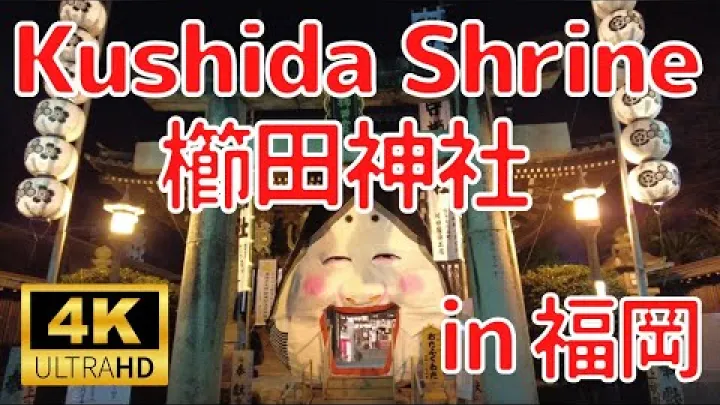
Begin a historic Hakata route around Kushida Shrine and the temple areas near Gion. This part of the city shows a different side of Fukuoka from the modern station district, with religious sites, older streets, and local history within a practical walking area. Kushida Shrine is also connected with Hakata's festival culture, making it a useful place to understand the city's identity even if your trip is not timed for a festival.
A sensible first-day sequence is to leave Hakata Station, walk toward the Gion area, visit the sites that are open, and continue toward Kushida Shrine before choosing lunch or returning to the center. Treat shrines and temples as active places of worship: keep voices low, follow signs and procedures, and avoid blocking entrances or photographing people who are worshipping. Check current opening arrangements for any interior visit because access can differ from the surrounding grounds.
Tenjin, Daimyo, and Nakasu: Shopping, Evening Streets, and Yatai
For an afternoon-to-evening route, start in Tenjin with the stores or underground retail areas that match your interests. Move into Daimyo for smaller shops, cafes, or a less formal meal, then continue toward Nakasu if you want an evening walk or a yatai experience. This sequence gives you choices: you can stop after shopping, focus on restaurants, or continue into the livelier streets.
Yatai are small food stalls with limited seating, usually centered on a shared counter rather than a private table. They are best approached as a short evening food experience, not as a large meal for a group that needs lots of space. Be prepared to wait, share seating, and order with consideration for the people around you. Current stall locations, operating patterns, menus, and prices can differ, so select a stall after looking at its displayed information and choose an ordinary restaurant if the format does not suit your group.
Momochi Waterfront, Fukuoka Tower, and Open-Air Time
Momochi provides a contrast to central Hakata and Tenjin. A visit can combine the waterfront, beach areas, modern architecture, museums, and Fukuoka Tower, with time to sit outdoors rather than moving between dense shopping streets. It works well as a half-day plan, or as a flexible full day for travelers who prefer a slower rhythm.
On a clear, comfortable day, place the outdoor portion in the middle of the visit and keep an indoor attraction or a central-city meal as an easy alternative. In strong heat, wind, or rain, shorten the waterfront walk and move the rest of the day to shopping, museums, cafes, or historic sites. From central Fukuoka, use a current route planner for the best subway or bus combination because the most convenient connection depends on your starting point and destination.
Fukuoka Food Guide: Ramen, Gyoza, Yakitori, and Yatai
Food is a central reason to visit Fukuoka, but you do not need a long restaurant list to eat well. Try Hakata ramen in a regular restaurant when you want a quick, structured meal, then compare that experience with gyoza, yakitori, oden, or other casual dishes in a neighborhood restaurant. Tenjin, Hakata, and Nakasu each offer different dining settings, so choose the area according to your evening plan.
A yatai visit is different from restaurant dining. Seating is limited, the counter may be shared, and the open-air setting makes it more social and less predictable. Look at the menu and displayed prices before ordering, ask about ingredients when you have allergies or dietary restrictions, and explain important needs clearly. Do not assume that every stall accepts the same payment method or can adapt every dish. If you need a guaranteed menu, a quiet table, or detailed dietary control, book or choose a conventional restaurant instead.
Get to and Around Fukuoka
Fukuoka's transport choices are easiest to understand when separated into arrival, city travel, and regional travel. Hakata Station and Tenjin are the main reference points, but the most suitable mode changes with your accommodation and destination.
Arrive by Fukuoka Airport, Shinkansen, Bus, or Ferry
Fukuoka Airport is close to the central city, which can make flying attractive for travelers arriving from elsewhere in Japan or from overseas. Hakata Station is the main rail gateway, with shinkansen access for journeys along the western side of Japan and through Kyushu. Highway buses can be useful when price, overnight travel, or direct service matters. Ferry itineraries using ports in the Kitakyushu area offer a different travel style, but they need more careful port and ground-transport planning than a city-center arrival.
| Arrival mode | Best for | Main planning point |
|---|---|---|
| Fukuoka Airport | Fast city access by air | Confirm terminal, airport transfer, and onward route. |
| Shinkansen | Rail travel from Honshu or Kyushu | Compare total fare, journey time, and reservation needs. |
| Highway bus | Budget-sensitive or direct travel | Check departure point, luggage rules, and arrival time. |
| Ferry via Kitakyushu | Sea travel and a slower journey | Plan the port connection and service schedule separately. |
Airport planning deserves particular attention because terminals and transfer arrangements matter. Recheck your arrival terminal, the route to the city or hotel, the service timetable, and the operator's current instructions shortly before travel. The Fukuoka Airport bus information identifies the airport bus stop in front of the terminal for services passing from Hakata and Tenjin, but use the current airport information for your specific arrival and departure.
Use the Subway, JR, Nishitetsu, and City Buses
Use the subway for many central Fukuoka journeys and for straightforward movement between key city areas and the airport system. Use JR when traveling beyond the city or planning a regional rail journey. Nishitetsu is important for routes such as Dazaifu, while city buses can reach destinations and neighborhoods that are less directly served by rail.
Hakata and Tenjin are useful mental anchors: identify which one is closest to your hotel and which one is the departure point for your next activity. Smartphone navigation can make transfers easier, but buses require more attention to the correct stop, boarding process, destination display, and announcements. Allow extra time for a first bus journey, especially when carrying luggage or traveling to an unfamiliar suburb.
For a short central itinerary, do not automatically choose the most complicated pass or route. Walking between nearby districts may be simpler, and a single subway or bus ride can be easier than changing modes several times. For regional travel, compare the station location and the final walk with the advertised train or bus journey.
Decide Between IC Cards, Day Passes, and Regional Rail Passes
Choose transport payment based on the shape of your trip. A prepaid IC card is mainly a convenient way to pay for eligible rides without buying a ticket each time. A city pass may be useful when its included attractions and transport match your actual plans. A JR Kyushu regional pass deserves comparison when you have several eligible rail journeys in a short period, but it is not automatically the cheapest choice for a city-focused visit.
The Fukuoka Prefecture Tourism Association notes that prepaid transportation cards are convenient for travel within Fukuoka Prefecture but do not provide the regular ticket discount by themselves. Treat payment convenience and financial savings as separate questions.
- List the journeys you expect to take, including airport travel, city rides, Dazaifu, Itoshima, and any longer rail routes.
- Check which operators and attractions each card or pass covers.
- Compare the current total cost of individual tickets with the current pass price.
- Read validity, eligibility, reservation, seat, activation, and refund conditions.
- Buy only after confirming that the product works for your exact dates and route.
Names, prices, coverage, eligibility, reservation rules, and validity can change. Some visitor products may require passport presentation or other eligibility checks. Use the relevant railway, subway, bus, or tourism operator information at the time of purchase rather than relying on an old pass description.
Plan Day Trips from Fukuoka
Choose a day trip by theme before choosing a transport ticket. Dazaifu is a culture-focused option with shrine and historic interest. Itoshima is better for coastal scenery, outdoor time, and a change from the urban center. Larger Kyushu cities are more suitable for a longer excursion, an overnight stay, or a route that continues away from Fukuoka.
| Destination type | Best for | Trip character | Choose it when |
|---|---|---|---|
| Dazaifu | Culture and shrine visits | Focused regional outing | You want history without changing hotels. |
| Itoshima | Coast and outdoor scenery | Weather-dependent day | You have suitable conditions and enjoy open-air travel. |
| Other Kyushu cities | Broader regional travel | Longer journey or route change | You have extra nights or are moving onward. |
Short stays usually support one excursion, not several distant destinations on the same day. Check the day's route in current operator journey planners, allow time for the return connection, and consider how much walking or local transport the destination requires after arrival. If your main interest is cultural and shrine-focused, choose Dazaifu; if it is coastal and outdoor, choose Itoshima. Let the actual conditions and your pace decide the rest.
Choose the Best Time to Visit
There is no single best month for every Fukuoka itinerary. Walking, festivals, flowers, food, waterfront time, prices, and crowd tolerance all point to different seasons.
Spring and Autumn for Comfortable Sightseeing
Spring and autumn are often preferred for walking through historic districts, visiting parks and temple areas, and spending time near the water because they are generally milder than midsummer. Spring brings seasonal flowers and the possibility of cherry blossoms, while autumn can bring foliage and lower humidity later in the year.
These seasons can also bring higher demand around popular dates, and blossom or foliage timing varies by year. A historical climate summary from Climate Japan describes broad monthly conditions rather than a travel-year forecast, with temperatures roughly spanning cool winter conditions to warm summer conditions and heavier precipitation in summer. Use such information to compare seasons, then base clothing and outdoor decisions on the conditions expected for your dates.
Choose spring if seasonal flowers are a priority and you accept uncertainty about timing and crowds. Choose autumn if you prefer comfortable city walking and foliage possibilities. For lower demand, look beyond the most popular holiday and festival periods, but do not assume that every week will be quiet or inexpensive.
Summer Rain, Heat, and Fukuoka Festivals
Summer in Fukuoka can be hot and humid, with a greater risk of heavy rain. That combination affects waterfront walks, coastal day trips, long outdoor queues, and the comfort of moving between attractions. Tropical systems can also disrupt flights, ferries, rail services, or outdoor events, so a summer itinerary should not depend on one exposed activity.
Major local events such as Hakata Dontaku and Hakata Gion Yamakasa can change crowd levels, accommodation demand, road conditions, and opening arrangements. If your dates overlap an event, use its current official information for dates, routes, access rules, and any local restrictions rather than assuming a normal sightseeing day.
Plan an early or late outdoor period, drink water, take a midday indoor break, and keep a flexible route. Before outdoor days, check the current forecast and official weather or disaster advisories. Keep an indoor alternative ready for heat, heavy rain, strong wind, or event-related disruption, and avoid treating historical averages as a go-or-no-go decision.
Winter Travel and Flexible Outdoor Planning
Winter is cooler and has shorter daylight, but it can work well for a city-focused trip. Build days around food, shopping, temples, museums, indoor attractions, and evening illuminations, then use the brightest part of the day for outdoor areas such as Momochi. The waterfront can feel colder than sheltered central streets, so layers and protection from wind are useful.
Travel outside major holiday periods may sometimes offer lower demand or more accommodation choice, but this is not guaranteed. New Year and other holiday periods can affect opening hours, restaurant availability, transport demand, and prices. Include operating hours in your daily plan and keep enough daylight for any outdoor route.
Set a Realistic Fukuoka Budget
Build a Fukuoka budget in categories rather than relying on one daily number. Accommodation, meals, local transport, admissions, shopping, and a contingency amount behave differently, and major intercity travel can change the total more than several days of city sightseeing.
Accommodation, Food, and Daily Spending
For rough planning, basic business hotels may sometimes be found around ¥5,000–¥10,000, but the room type, location, date, and booking conditions make a large difference. A broad Kyushu daily planning range of about ¥10,000–¥25,000 before major intercity transport can be a starting reference for a simple to moderate trip, not a guaranteed Fukuoka price.
| Planning level | Typical pattern | Illustrative guidance |
|---|---|---|
| Lower-cost | Simple room, casual meals, public transport | Plan near the lower end of the broad daily range. |
| Moderate | Central hotel, mixed dining, paid attractions | Plan near the middle or upper part of the range. |
| Higher comfort | Larger room, taxis, specialty meals, shopping | Allow more than the broad range and add a larger contingency. |
Solo travelers usually carry the full room cost themselves, while a couple can divide a shared room even if each person spends more on meals or activities. Families need to check room occupancy, child policies, luggage space, and the cost of multiple admissions. Festivals, weekends, holidays, advance booking, dining style, and neighborhood can all change the result.
Set a yen budget for each day and keep separate money for regional transport, shopping, and unexpected changes. Recheck accommodation, food, and activity prices for your exact travel dates before booking. Prices shown in a guide are planning examples, not a promise of availability.
Intercity Transport and Pass Costs
Keep intercity transport outside your basic city budget until you have chosen the route. Flights, shinkansen, conventional rail, highway buses, and ferries differ in price, comfort, departure location, luggage handling, and total travel time. A lower ticket price may involve a less central terminal or a longer transfer, while an overnight service may reduce one hotel night but affect the next day's energy.
Use this simple worksheet for each regional journey:
- Record the origin, destination, travel date, and preferred departure window.
- Compare flight, shinkansen, conventional rail, bus, and ferry options that actually operate on that route.
- Write down the full cash price, including local transfers, seat reservations, supplements, and port or airport access.
- Note the total door-to-door time, comfort, luggage requirements, and what happens if the connection is missed.
- Compare the result with any current regional rail pass, including its covered operators, eligible routes, validity, and reservation conditions.
A pass may be worth comparing when several eligible journeys are concentrated into a short period. It is less likely to be useful if most of your days are within Fukuoka City or if your chosen routes use different operators. Make the comparison after fixing the route, not before.
Booking Timing, Payments, and Price Checks
Accommodation and transport prices can change with weekends, festivals, holidays, room size, booking lead time, and cancellation terms. A low displayed price may be tied to a non-refundable room, a smaller configuration, or a location farther from the station than expected.
Before booking, check the hotel's exact map position, the walking route from the station, check-in and check-out rules, room occupancy, luggage arrangements, and cancellation policy. Confirm whether the attraction or restaurant you want requires a reservation, and read the current payment information for smaller venues. Do not assume that every restaurant, yatai, attraction, or transport product accepts the same payment method or follows the same reservation process.
For international visitors, save booking confirmations and the accommodation address in an offline format. Keep a small payment backup and enough flexibility for a changed arrival time, but do not carry more cash than you can manage safely. Your final price check should use the exact travel dates and the operator or venue's current conditions.
Prepare for Entry, Safety, and Disruptions
Administrative preparation is part of trip planning, not a task to leave until departure day. Confirm documents, medication rules, emergency contacts, and disruption plans before you commit to a complex itinerary.
Documents, Visas, Medication, and Travel Insurance
International visitors should confirm that their passport is valid for the entire stay and check whether their nationality requires a visa, qualifies for visa exemption, or has additional entry conditions. Requirements can depend on nationality, purpose, length of stay, and current policy. The Japan Travel Advisory is one current reference for travelers using United States government information, but it does not replace the requirements issued by your own government or Japanese authorities.
- Check passport validity, visa or visa-exemption status, and any applicable onward-travel or entry documentation.
- List prescription and over-the-counter medicines by generic name and confirm whether they may be brought into Japan.
- Carry medication in original packaging with supporting documentation, and do not assume a foreign prescription can be filled or accepted locally.
- Check airline, airport, and arrival procedures for your specific route.
- Choose travel insurance that matches your needs for medical care, evacuation assistance, baggage problems, and trip cancellation.
Medication import rules can differ from the rules in your home country, including for medicines that are ordinary prescriptions at home. Verify requirements with the relevant official authority before departure and allow time for any required application or documentation. This is general travel guidance, not individual legal advice.
Emergencies, Local Rules, and Everyday Safety
Use ordinary travel precautions in Fukuoka: keep track of your belongings, pay attention in crowded stations and nightlife areas, and make sure someone in your group knows the day's plan. Do not rely on broad statements that any destination is completely safe. Local rules, weather, transport disruptions, illness, and lost property can affect a trip even when the itinerary is simple.
- Call 110 for police emergencies and 119 for an ambulance or fire emergency.
- Save your accommodation name, address, and telephone number offline in a form that can be shown to a driver or station staff member.
- Keep passport copies, insurance details, and important contacts separate from the originals.
- Use official travel advisories and local instructions when a disruption affects your route.
- Have a basic plan for illness, lost belongings, a missed connection, or a late arrival.
Language support may be limited in some small venues or during stressful situations. A translation app, written address, and simple explanation of an allergy or medical need can help, but they are not a substitute for preparation. Save 110, 119, the accommodation address, and important emergency contacts offline before your trip.
Responsible Yatai, Shrine, and Neighborhood Etiquette
At Kushida Shrine, other shrines, and temples, behave as you would in an active place of worship. Follow signs and local procedures, keep your voice low, avoid interrupting ceremonies or worshippers, and ask before taking photographs when people or restricted areas are involved. Do not treat a religious site only as a photo background.
At a yatai, check the menu and prices before ordering, follow the stall's seating and queue instructions, and be considerate of shared counter space. Small stalls may serve a limited number of people at once, so avoid occupying a seat after finishing and keep group conversations at a reasonable volume. Dispose of items as instructed and avoid blocking the street or nearby businesses.
Separate cultural respect from legal requirements. A local custom may guide how you behave, while a posted rule or official regulation must be followed. Current requirements for stall operations, food service, price displays, waste, and permitted areas can change, so rely on information displayed at the venue and current local guidance.
Build a Two- to Five-Day Fukuoka Itinerary
Build each day around one main area and one clear purpose. That approach leaves room for meals, queues, rest, weather changes, and the slower pace that makes local neighborhoods more enjoyable.
A Two-Day First-Time Fukuoka Itinerary
Day one: Start near Hakata Station and walk through Gion toward Kushida Shrine and the historic Hakata area. Use the afternoon for a relaxed meal, additional central sightseeing, or shopping near Hakata. In the evening, choose Tenjin, Daimyo, Nakasu, or a yatai according to whether you want shopping, cafes, restaurants, or a livelier food experience.
Day two: Visit Momochi and Fukuoka Tower if the waterfront suits the conditions and your interests. Return toward Tenjin or Hakata for food and shopping, or replace Momochi with more historic sites and central neighborhoods if you prefer a city-focused trip. In heat or rain, make the outdoor section shorter and use indoor attractions, cafes, shopping areas, or a longer restaurant meal as the alternative.
This is a framework rather than an hourly schedule. Group nearby stops, leave time for meals, and avoid adding a distant day trip to a two-day visit unless it is the main purpose of the trip.
A Three-Day City Visit with One Nearby Excursion
Use two days for central Fukuoka and one day for either Dazaifu or Itoshima. Choose Dazaifu when your priority is shrine visits, culture, and history. Choose Itoshima when you want coastal scenery, open space, and outdoor time. Do not try to force both into the same short visit unless the current route, conditions, and your personal pace make that realistic.
A practical sequence is to use the first day for Hakata and Gion, the second for Tenjin, Daimyo, Nakasu, and food, and the third for your selected excursion. You can reverse the order if the weather or opening arrangements favor a different day. Keep one central evening flexible in case the excursion ends later than expected.
Before leaving the city, confirm the destination's opening hours, access details, seasonal conditions, and the day's transport schedule. The goal is one satisfying regional theme, not a list of places visited quickly.
A Four- to Five-Day Kyushu Base Itinerary
With four or five nights, use Fukuoka as a base for a slower city visit plus one or two regional journeys. Keep at least two blocks for Fukuoka itself, then select destinations such as Kumamoto, Beppu, Nagasaki, or Kagoshima only after comparing the route with your available time. A destination that looks close on a map may require a substantial door-to-door journey.
Remain near Hakata when rail access, early departures, luggage, or several different routes are central to the plan. Change accommodation when doing so removes a long backtrack or places you near the next destination for more than a single rushed visit. Avoid changing hotels simply to add another city to a checklist.
For a multi-city route, check current journey times and service availability, reserve seats when required, and decide where luggage will go during each transfer. Leave margin for weather, delays, and missed connections. If a regional day becomes impractical, keep the Fukuoka city plan as the reliable fallback rather than sacrificing the entire trip to one long connection.
Final Fukuoka Travel Checklist
A successful Fukuoka trip begins with choosing the right base for your route, not with filling every hour. Hakata is usually the most practical station base, Tenjin and Daimyo offer strong city energy, Nakasu suits planned evening activity, and Momochi is best when the waterfront is a main priority.
- Choose two or three central areas that fit your interests and group them by day.
- Decide whether Dazaifu, Itoshima, or a longer Kyushu journey deserves your limited excursion time.
- Compare the complete accommodation and transport cost for your exact dates.
- Save airport details, hotel information, bookings, maps, and emergency contacts offline.
- Carry the documents and medication information required for your nationality and needs.
- Keep one indoor or central-city alternative for an outdoor day.
With that preparation, you can enjoy Fukuoka's historic Hakata streets, Tenjin shopping, Nakasu evenings, local food, and Kyushu connections without turning the trip into a rushed checklist.
Select area
Create a post
Posting is free and no registration is required.