China National Anthem: March of the Volunteers

China's national anthem is March of the Volunteers, the official anthem of the People's Republic of China. Its Chinese title is 《义勇军进行曲》, written in pinyin as Yìyǒngjūn Jìnxíngqǔ. The song began in a 1935 film and later became a wartime patriotic anthem and formal state symbol. This article explains its title, creators, historical context, meaning, adoption in 1949, legal status, official uses, and distinction from other patriotic songs and from the anthem of the Republic of China.
The Official Name and Identity of China's National Anthem
The name of a national anthem matters because a familiar patriotic song is not automatically a formal state symbol. In the People's Republic of China, the official title and legal identity are clear, even though many other songs are associated with Chinese national feeling.
March of the Volunteers: Official Title and Chinese Name
The national anthem of the People's Republic of China is March of the Volunteers. Its original Chinese title is 《义勇军进行曲》, or Yìyǒngjūn Jìnxíngqǔ. The title refers to volunteers marching to defend the nation, reflecting the song's original historical setting.
March of the Volunteers is the standard official English rendering. Informal searches for “China national song” or “China anthem” may refer to the same work, but the formal answer to what is the national anthem of China is March of the Volunteers. It is a state symbol with constitutional and statutory recognition, not simply a popular patriotic song. An official overview is available from the China Government.
Lyricist, Composer, and Adoption Year
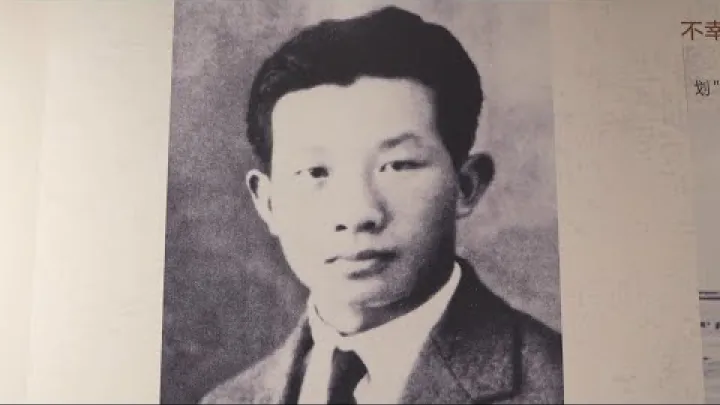
The lyrics were written by playwright and lyricist Tian Han, and the music was composed by Nie Er. The song originated in 1935, before the People's Republic of China was founded. In September 1949, the Chinese People's Political Consultative Conference selected it as the provisional national anthem.
The principal milestones are:
- 1935: The song appeared in the patriotic film Children of Troubled Times.
- 1949: It was selected as the provisional national anthem.
- 1978: Revised lyrics were adopted during a period of political change.
- 1982: Tian Han's original lyrics were restored.
- 2004 and 2017: The anthem received explicit constitutional recognition and then a dedicated National Anthem Law.
These are not several different adoption dates. They describe the song's creation, provisional selection, restoration of its original text, constitutional recognition, and later statutory regulation.
Origins in 1930s China
March of the Volunteers was created during a period when Chinese artists and audiences were responding to national danger and social upheaval. Its first life was in popular culture, especially the film world associated with Shanghai, before its meaning expanded through public singing and wartime circulation.
The Film Children of Troubled Times
The song first appeared in the 1935 patriotic film Children of Troubled Times. The film is associated with Shanghai's active 1930s film and cultural scene, where cinema reached large urban audiences. Rather than beginning as a tune written solely for a state ceremony, the anthem entered public life through popular culture.
The film connected individual experiences with the wider crisis facing China. The song gave that connection a direct and memorable expression: people were urged to recognize danger, overcome fear, and act together. This combination of dramatic storytelling and a forceful march helped the song move beyond the cinema. Audiences could remember it, sing it in groups, and connect it with their own understanding of national resistance.

Tian Han and Nie Er
Tian Han's contribution was the text: words shaped as a public call to resistance rather than a private reflection. His work as a playwright and lyricist helped give the song a dramatic voice. The lyrics speak to a collective audience and use urgent language suited to a time of national crisis.
Nie Er's contribution was the music. He created a march melody that gives the words forward movement and makes them practical for group singing. Their collaboration joined politically engaged writing with a clear musical design. Tian Han and Nie Er are remembered for creating a song that could function in film, public gatherings, and later state ceremonies.
From Film Song to Wartime Patriotic Anthem
After its film debut, March of the Volunteers circulated through recordings, broadcasts, rallies, and mass singing. These channels allowed it to reach listeners who had never seen the film. Its direct rhythm and collective language also made it adaptable to settings where large groups needed a shared song.
The song's wider circulation coincided with the period of resistance to Japanese aggression. It became associated with the idea that national survival required unity and sacrifice. Its importance came from broad public use in cultural, civic, and political settings rather than from one specific battlefield story.
By the time the PRC was established, the song already carried a strong public memory of collective action. That history helps explain why it was suitable for adoption as a state symbol, even though it had not originally been composed as the anthem of the People's Republic.
Themes and Musical Character
The anthem combines a clear historical message with music designed for public performance. Its words recall a specific period of danger, while its structure allows later generations to hear it as a broader statement of unity and national resolve.
What the Lyrics Mean
The lyrics focus on resistance to subjugation, recognition of national danger, collective sacrifice, unity, and continued advance despite risk. The volunteers are presented as people who must rise to meet a crisis rather than wait for someone else to protect them. The title describes both the singers and the action the song calls for.
One central image is a new Great Wall built through collective effort. This image turns defense of the nation into a shared responsibility. The repeated call to rise and march adds urgency and gives the song its public character. It is a rallying message meant to be heard and answered by many voices.

The original context was the anti-aggression struggle of the 1930s. Later political and ceremonial interpretations have added meanings including national unity, courage, and resolve. A thematic summary is more useful here than reproducing the complete lyrics.
Why the Music Works in Ceremonies
March of the Volunteers is a compact, forceful march with a strong pulse. Its clear phrases, repeated calls, and forward-moving melodic shape help a group stay together. The music supports many singers moving through the same lines rather than depending on an individual vocal performance.

Orchestral and military-band arrangements can make the anthem sound more formal, while a simpler arrangement preserves its directness. Repetition gives listeners a point of entry, and the rising musical movement supports the idea of collective advance. These features help explain its use in schools, public ceremonies, sporting events, broadcasts, and other settings where shared performance matters.
From Provisional Anthem to Constitutional Symbol
The anthem's legal history developed in stages. It moved from a popular wartime song to a provisional state symbol, then gained restored lyrics, constitutional recognition, and a specific legal framework governing its use.
Adoption in 1949 and the Founding of the PRC
In September 1949, the Chinese People's Political Consultative Conference selected March of the Volunteers as the provisional national anthem. The decision came shortly before the establishment of the People's Republic of China. The song was performed in connection with the founding of the new state, helping mark its transition from a widely known patriotic work to an official national symbol.

A familiar song was useful to a newly established government because it already had emotional and historical meaning. Many people recognized its melody and message of resistance. It could connect the new state with memories of national struggle while expressing the unity expected of citizens.
The choice also explains why the anthem should not be described as a song created specifically for the PRC. Tian Han and Nie Er created it in 1935, in a different political and historical setting. Its later adoption gave the existing song a new constitutional and ceremonial role without removing its earlier origins.
Changes During the Cultural Revolution and Restoration in 1982
During the Cultural Revolution, the anthem's political treatment changed. The original lyrics became difficult to use in the same way because Tian Han was politically condemned, and performances could omit or avoid the original words. Other revolutionary songs also received greater prominence. Historical accounts describe this period in different ways, so it is safer to say that the anthem's presentation and political status were heavily affected than to claim it was formally banned everywhere.
In 1978, revised lyrics were adopted. This altered the words used with the familiar melody and reflected the political language of that period. In 1982, Tian Han's original lyrics were restored, returning the anthem to the form associated with its 1935 creation and 1949 selection.
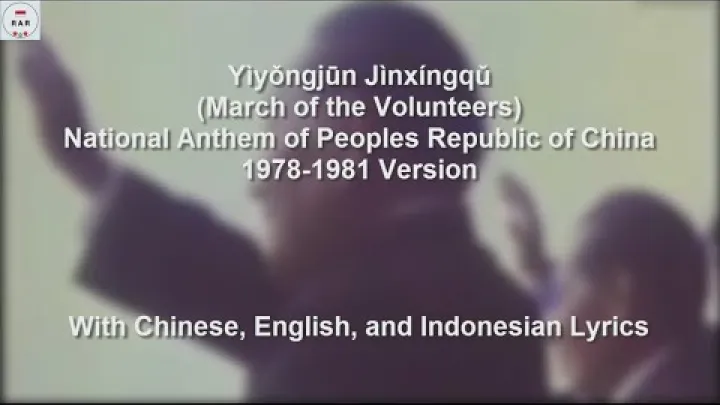
The changes did not create a new anthem with a different title or composer. They show how treatment of a national symbol can change during political campaigns and later be corrected through a formal decision.
Constitutional Recognition and the 2017 National Anthem Law
The national anthem received explicit recognition in the Constitution in 2004. The constitutional wording identifies the national anthem of the People's Republic of China as March of the Volunteers. This placed the song alongside the other core symbols of the state. The PRC Constitution provides the official English text.
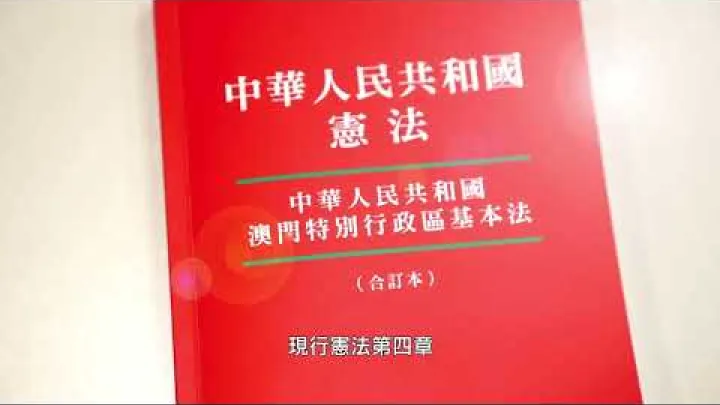
The 2017 National Anthem Law added a dedicated statutory framework. It addresses the anthem's performance, singing, playing, public use, education, and protection of its dignity. In practical terms, constitutional recognition establishes the anthem's status, while the law sets out how public institutions and individuals are expected to treat it.
The legal framework does not mean every ceremony in every location has an identical format. Organizers may have additional administrative procedures, and the setting can affect how the anthem is presented. It does mean that the anthem is more than a customary patriotic song: its public role is formally defined within the PRC's state-symbol system.
Where the China National Anthem Is Performed
The anthem appears where public authority, national representation, education, or collective achievement is being expressed. Its use ranges from state ceremonies and diplomatic events to school activities and major sporting occasions.
State, Diplomatic, and Memorial Ceremonies
Official political meetings and major state celebrations are among the most recognizable settings for the anthem. It can be included in flag-raising ceremonies, constitutional oath-taking ceremonies, national memorial events, and national-day programs. In these contexts, the anthem links the event to the institutions and symbols of the People's Republic of China.
It also has a diplomatic function. During state visits, official welcomes, and other formal international events, the PRC anthem may be performed together with the anthem of the visiting or host jurisdiction. The sequence and ceremonial details depend on the event, but the purpose is consistent: the anthem represents the state in an official international setting.
Tiananmen Square is a highly visible example of the anthem's connection with national ceremony and flag-raising. Daily schedules, visitor access, and arrangements for particular events can differ, so attendees should follow the instructions issued for that occasion.
Schools and Sporting Events
Schools use the anthem in flag-raising ceremonies and civic education. Repeated exposure helps students learn the melody, understand the anthem as a national symbol, and connect music with formal public conduct. The exact schedule and format can vary by school and locality.
Major sporting events are another familiar setting. The anthem may be played at opening or closing ceremonies and during medal presentations involving Chinese representatives. These performances connect individual or team achievement with national representation, making the anthem visible to international audiences at competitions held outside China as well.
Not every school activity or local sports match necessarily uses the anthem. Its most consistent role is in formal, widely documented settings where organizers represent an institution, a national team, or a public ceremony.
How the Anthem Differs from Other National and Patriotic Songs
China has many songs associated with patriotism, revolution, public memory, and national celebration. Popularity and frequent performance do not by themselves give a song the legal status of a national anthem.
Patriotic Songs That Are Not the National Anthem
The East Is Red and Ode to the Motherland are examples of well-known revolutionary or patriotic songs that may appear in public performances and cultural programs. They can carry strong historical or emotional importance without being the constitutional and statutory national anthem.
This distinction explains why a search for China national song can produce several titles. The phrase may be used informally for a song expressing national feeling, while the official answer remains March of the Volunteers. Legal status refers to recognition under the state's constitutional and statutory framework; cultural prominence refers to how widely a song is remembered, performed, or associated with a particular period.
The East Is Red did not replace March of the Volunteers as the formal national anthem. It may be discussed alongside the anthem because of its political and cultural significance, but the two works have different official roles.
The PRC Anthem and the Republic of China Anthem
The anthem of the People's Republic of China and the anthem of the Republic of China are separate works with different historical and political contexts. This article uses PRC or People's Republic of China when referring to March of the Volunteers and Republic of China when referring to the other jurisdiction's anthem.
The PRC anthem is March of the Volunteers, with lyrics by Tian Han and music by Nie Er. The Republic of China anthem is commonly identified in English as the National Anthem of the Republic of China and by the opening phrase San Min Chu-i, or Three Principles of the People. Its words derive from an address by Sun Yat-sen, and its music is credited to Cheng Maoyun. The Office of the President of the Republic of China provides official context for that anthem.
Online search results may use China as a broad geographic label, so readers should check the jurisdiction named by the source. The two anthems should not be combined or treated as alternate versions of one work.
Rules for Respectful Use
The anthem's legal and ceremonial status affects how it should be performed and used. Visitors, students, event organizers, and international audiences should understand the difference between formal legal requirements and general etiquette.
What the National Anthem Law Regulates
The National Anthem Law is intended to protect the dignity of March of the Volunteers and regulate its performance, singing, playing, and public use. It also supports education about the anthem and encourages citizens and organizations to perform it on appropriate occasions. The law treats the anthem as a protected national symbol rather than ordinary background music.
At a high level, formal performances should use the authorized lyrics and score. Deliberately distorting the anthem, treating it in a derogatory manner, or using it in an insulting public context can have legal consequences. An accidental musical mistake is not the same situation as deliberate public misuse.
For public, commercial, school, diplomatic, or broadcast events, organizers should consult the current National Anthem Law and applicable local or event rules. An accessible English rendering is provided by China Law Translate.
Performance Etiquette and Contexts to Avoid
During a formal performance, the practical expectation is to stand, remain solemn, avoid talking or disruptive behavior, and follow the authorized arrangement. Participants should pay attention to the event host or organizer, particularly when the anthem is part of a flag-raising, memorial, diplomatic, or school ceremony.
Casual, commercial, entertainment-oriented, or trivial use can be inappropriate when it treats the anthem as a joke, marketing device, or unimportant background music. Some restrictions come from the National Anthem Law, while others may come from administrative guidance, venue procedures, or ceremonial practice. These categories are not identical, and not every breach of etiquette carries the same legal consequence.
For international visitors and students, the safest approach is simple: treat the anthem as a formal state symbol, stand when others stand, remain quiet, and do not alter its words or use a casual remix during an official event. If you are organizing a program, ask the venue or responsible institution which current version and procedure apply.
Conclusion: Why March of the Volunteers Endures
March of the Volunteers endures because it carries several layers of meaning at once. It began as a 1935 film song connected with Shanghai's cultural life, became a widely circulated wartime anthem of resistance, and was selected as the provisional national anthem when the People's Republic of China was founded in 1949.
Its title, lyrics, and march rhythm express collective action, sacrifice, unity, and resolve. Later restoration of the original lyrics, constitutional recognition, and the 2017 National Anthem Law established its formal state status. Understanding that history makes it easier to distinguish China's official national anthem from other patriotic songs and from the separate anthem of the Republic of China.
Select area
Create a post
Posting is free and no registration is required.