Xi'an Travel Guide for First-Time Visitors: Plan Your Trip

Xi'an combines imperial history, Silk Road heritage, local Muslim culture, major archaeological sites, and the energy of a modern Chinese city. A first visit usually brings together the Terracotta Army, the Ancient City Wall, the Bell Tower, the Drum Tower, the Muslim Quarter, museums, and regional food. This Xi'an travel guide explains how long to stay, when to go, where to base yourself, how to move around, and how to plan bookings and daily costs. It focuses on Xi'an itself, while treating destinations outside the city as optional extensions.
Xi'an at a Glance for First-Time Visitors
Xi'an is easiest to plan when you separate the compact historic core from the southern heritage districts and the large attractions outside the center. The city rewards travelers who group nearby places together instead of trying to cross the entire urban area several times in one day.
Why Xi'an Belongs on a China Itinerary
Xi'an is a strong choice for travelers who want more than a single archaeological sight. The city was an important imperial capital and a major point on historic Silk Road routes, but it is also a working metropolis with modern transport, shopping areas, universities, restaurants, and contemporary neighborhoods.
The main appeal is the combination of experiences. You can study the Terracotta Army and other archaeological collections, walk or cycle on the Ancient City Wall, visit the Great Mosque of Xi'an, explore the Muslim Quarter, and compare Tang-era heritage areas with the present-day city. Museums such as the Shaanxi History Museum add context that helps connect individual sights to the wider history of Shaanxi.
Xi'an is not only an archaeology destination. It suits visitors interested in imperial history, religious architecture, regional food, urban walking, photography, and a manageable introduction to inland China. This guide stays focused on first-visit planning in the city rather than attempting to cover all of Shaanxi or Northwest China.
How Many Days to Spend in Xi'an
Two days can provide a workable introduction if the schedule is organized carefully. One substantial day can be devoted to the Terracotta Army complex, while the other can combine the Ancient City Wall with the Bell Tower, Drum Tower, Muslim Quarter, and an evening meal. This plan requires attention to travel time and personal energy.
Three days gives the trip more balance. The extra day can include the Shaanxi History Museum, Big Wild Goose Pagoda, Small Wild Goose Pagoda, Xi'an Museum, or Beilin heritage sites without forcing every stop into one crowded schedule. It also allows a slower food-focused evening or time to return to a favorite area.
Longer stays are useful for visitors with strong historical interests or plans for Mount Huashan, Hanyangling, or other sites around the city. These are extensions, not essential parts of a short Xi'an city visit. Their travel time and physical demands should be planned separately from central sightseeing.
Understand Xi'an's Main Visitor Zones
Use the following mental map when choosing a hotel and arranging each day:

- Central historic core: The Bell Tower, Drum Tower, Muslim Quarter, and nearby commercial streets form the most convenient area for a first overview of old Xi'an. The Ancient City Wall surrounds the historic center, with the South Gate and Yongningmen area serving as a useful access point.
- Beilin and the South Gate: This area is useful for the Ancient City Wall, Small Wild Goose Pagoda, Xi'an Museum, and Beilin Museum. It offers a heritage-focused alternative to the busiest food streets.
- Yanta and Qujiang: The southern cluster includes the Big Wild Goose Pagoda, the Da Ci'en Temple area, the Shaanxi History Museum area, landscaped public spaces, restaurants, and Tang-themed evening attractions.
- Out-of-center attractions: The Terracotta Army and the Qin Shi Huang Mausoleum Archaeological Site Park require a separate journey from central Xi'an. They should normally receive most of a day rather than being added to a tightly packed central itinerary.
- Arrival gateways: Xi'an Xianyang International Airport and Xi'an North Railway Station are outside the main sightseeing core. Xi'an Railway Station is closer to the central urban area, but your exact hotel and train time still determine the best transfer.
Prepare for Entry, Connectivity, and Bookings
Administrative requirements and digital access can affect a trip before the first attraction. Complete the parts that depend on your nationality and travel dates first, then prepare practical backups for payments, maps, translation, and tickets.
Check Entry Rules and Current Travel Advisories
China's visa, visa-waiver, transit, passport-validity, and arrival requirements depend on your nationality, passport type, purpose of travel, and length of stay. A policy that applies to one passport may not apply to another, so do not use another traveler's experience as your rule. Check the Chinese embassy or consular authority responsible for your nationality and the latest official immigration information.
Government travel advisories also cover matters beyond entry, including local laws, identification, photography, demonstrations, detention, and possible exit restrictions. The U.S. Department of State China advisory is an example of the type of current entry, exit, and local-law information travelers should review. If you are not a U.S. traveler, use your own government's guidance as the primary reference.
Keep the required passport and travel documents accessible, understand the conditions attached to your entry status, and avoid legally sensitive activity. Complete this check before making non-refundable hotel, rail, or tour commitments because requirements can change.
Prepare Payments, Maps, Translation, and Identification
Build an arrival checklist that does not depend on one foreign card, one mobile application, or a continuous internet connection. Digital payment acceptance and access to overseas services may differ from what you use at home.
- Payments: Set up at least one usable payment method before departure and carry a small cash backup. Test any required account or card arrangement before leaving rather than waiting until you reach a station or restaurant.
- Maps: Install or save map tools that you expect to use, and keep the names of your hotel, airport, railway station, and major attractions in Chinese characters. Offline information is helpful when a connection is slow or unavailable.
- Translation: Save common destination names and your accommodation address in Chinese. A written address can be more useful than an English pronunciation when communicating with a driver or asking for directions.
- Identification: Keep your passport and relevant booking details secure but accessible during hotel check-in, rail travel, and sightseeing. A secure copy of important documents can help if the original is lost.
Prepare these basics for the whole group if you are traveling with family or friends. Optional tools can make a trip easier, but a small cash reserve, written address, and accessible identification are more dependable than assuming every service will work exactly as it does at home.
Reserve High-Demand Attractions Before You Go
The Terracotta Army is the clearest example of a Xi'an attraction that should be treated as a planned visit rather than a walk-up stop. Its museum complex uses real-name online booking, and entry can be connected to the identity document used during reservation. Match the booking information to the traveler's document and use the museum's current official channel whenever possible.
Distinguish official booking from hotel assistance, tour agencies, and third-party ticket services. Assistance may be useful for some travelers, but it can have different fees or conditions. The Emperor Qinshihuang's Mausoleum Site Museum provides the current reference for its ticketing arrangements.
For the intended travel date, confirm the admission rules, opening hours, reservation window, identity requirements, entry gates, and any shuttle arrangements within the complex. Do not assume that the Terracotta Army process applies to every museum, pagoda, or city attraction. Each site can have its own access practice.
Choose the Best Time to Visit Xi'an
Xi'an can be visited throughout the year, but the comfort of walking, cycling, and spending time at exposed heritage sites changes by season. Your best month depends on how much outdoor sightseeing you want, how well you handle heat or cold, and whether you prefer lower demand to milder conditions.
Spring and Autumn: Comfortable Seasons for Sightseeing
March to May and September to November are commonly recommended periods for a first Xi'an trip. Spring and autumn often make it easier to combine the Terracotta Army, central landmarks, museums, and evening walks without organizing the entire day around avoiding uncomfortable conditions. These seasons are particularly suitable for the Ancient City Wall, where walking or cycling can take longer than a quick photo stop.
Seasonal comfort is a typical pattern, not a guarantee for a particular week. Spring can overlap with busy travel periods, and autumn demand may vary by holiday dates. The China Highlights seasonal overview also identifies spring and autumn as commonly preferred windows, but current conditions and your preferred travel pace should guide the final choice.
If you want the broadest outdoor itinerary, choose a period when moderate conditions are more likely. If you prioritize quieter attractions or lower accommodation demand, a less popular period may still work well with suitable clothing and a flexible schedule.
Summer and Winter: How to Adapt Your Plans
Summer heat can make long outdoor walks, cycling on the wall, and extended visits to exposed archaeological areas less comfortable. Plan outdoor activities for the morning or evening when possible, take regular breaks, and use the middle of the day for museums, meals, or rest. A hotel near a convenient metro station can make these pauses easier.
Winter brings a different challenge. Cold conditions, shorter daylight, and exposed surfaces can affect the Ancient City Wall and other open-air sites. Winter can suit travelers who prefer quieter surroundings, provided they bring warm layers, protect themselves from wind, and leave enough daylight for outdoor visits.
Neither season needs to be treated as simply good or bad. The practical question is whether your clothing, daily sequence, and accommodation location match the conditions you are likely to encounter.
Manage Holiday Crowds, Air Quality, and Outdoor Timing
National holidays and school breaks can increase demand at the Terracotta Army, the Ancient City Wall, the central towers, railway stations, and popular food areas. Queues, transport pressure, and busy pedestrian streets can change the time required for a plan even when the distance between sights is short. If your travel dates overlap with a major holiday, allow more time and avoid building a day around too many fixed stops.
Air quality is another variable, especially for travelers with respiratory sensitivities or plans involving cycling and strenuous outdoor walking. Check the forecast and current air-quality conditions each morning. When conditions are uncomfortable, move exposed activities to more suitable hours, shorten the outdoor portion, or use an indoor museum as the day's main activity.
This flexibility is more useful than relying on an old crowd forecast or a fixed seasonal promise. Keep at least one adjustable block in the itinerary so a wall visit, long walk, or distant transfer can be changed without disrupting the whole trip.
Get to Xi'an and Move Around the City
Xi'an's visitor transport is easiest to understand as a combination of airport or railway transfers, metro journeys, walking, and occasional road transport. Plan from your hotel's actual location rather than from a landmark name alone, because a station exit and a large attraction entrance may still involve substantial walking.
Travel from Xi'an Xianyang International Airport
Xi'an Xianyang International Airport is outside the central sightseeing area. The airport metro, shuttle bus, and taxi each suit different arrival conditions. Choose based on arrival hour, luggage, traffic, budget, and whether you want a direct hotel drop-off.
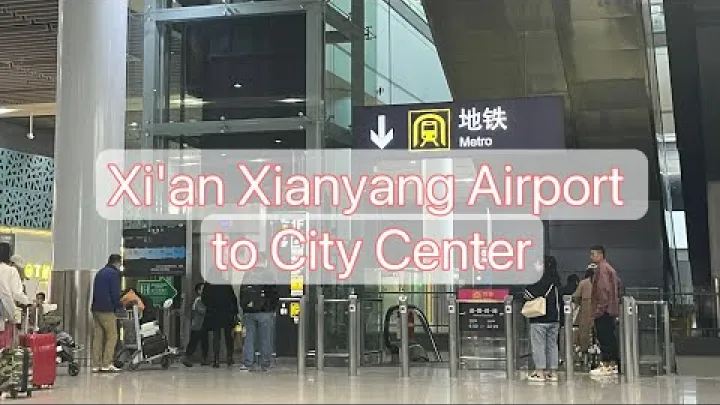
As an indicative comparison, TravelChinaGuide describes the airport metro as a lower-cost option with published fares of about CNY 2 to CNY 9 and a journey of at least 40 minutes. It lists shuttle buses at about CNY 25 with a journey of roughly one to one and a half hours, while taxis can take about 30 to 60 minutes depending on traffic. These figures are planning references, not permanent schedules or prices.
| Option | Useful when | Main trade-off |
|---|---|---|
| Airport metro | You want a lower-cost connection and can manage luggage and transfers | May require walking and a change before reaching your hotel |
| Shuttle bus | Your destination matches a current route and you prefer a surface connection | Traffic and route coverage can make the trip longer |
| Taxi | You arrive with heavy luggage, travel as a group, or need door-to-door service | Road time and cost vary with traffic and destination |
Check the current airport route, service hours, and stop location for your arrival. The Bell Tower area, Ancient City Wall, and railway stations are useful central reference points, but your hotel address determines the real door-to-door journey.
Use the Metro for Central Attractions
The Xi'an Metro is often the most practical way to cross the city for central sightseeing, especially when road traffic is heavy. It is useful for linking the old city with southern areas such as Yanta and Qujiang, although stations can be separated from the attraction entrance by a walk through large streets or public spaces.
Several station names are helpful map anchors: Zhonglou for the Bell Tower area, Yongningmen for the South Gate and Ancient City Wall, Dayanta for the Big Wild Goose Pagoda area, and Xiaozhai for the Shaanxi History Museum area. Treat these as orientation points rather than exact doorways. Use the current local map to choose the best exit and walking route.
Metro fares and ticketing are generally simpler for visitors when planned through the current local system, but fare rules and payment options can change. Allow time for station walking, security procedures, and navigation, particularly when carrying luggage or traveling during busy periods.
Choose Between Xi'an's Railway Stations and Local Transfers
Xi'an North Railway Station is a major high-speed rail hub and is not the same place as Xi'an Railway Station. Xi'an Railway Station is nearer to the central urban area, while Xi'an North Railway Station should be treated as a separate transport destination when choosing a hotel or planning a departure.

Station choice affects more than the rail fare. It influences the time needed to leave the hotel, the ease of carrying luggage, the best metro connection, and whether a direct road transfer is worthwhile. A hotel that is convenient for the Bell Tower may be excellent for sightseeing but less convenient for an early departure from Xi'an North Railway Station.
Plan the complete journey from hotel door to train platform. Confirm the station name on the ticket, identify the most suitable metro or road connection, and allow extra time for the station's size, luggage, and security procedures.
Use Taxis, Ride-Hailing, and Buses Carefully
A taxi or recognized ride-hailing service is useful for late arrivals, heavy luggage, family travel, or attractions that are not close to a metro station. It can also reduce walking during very hot or cold weather. Buses supplement the metro and can reach places that are less convenient by rail, but route information and language support may be less straightforward for an international visitor.
Use a designated taxi rank or a recognized ride-hailing service. Save the destination in Chinese before leaving, show the written address when needed, and retain basic trip or vehicle details until you reach your destination. For a ride-hailing pickup, confirm the vehicle and driver details in the app rather than entering an unverified car.
For buses, check the current route in a local map and allow more time for finding the stop and understanding the direction of travel. When the route is uncertain, a metro journey followed by a short recognized ride may be easier than trying to solve a complex bus connection after dark.
Explore Xi'an's Essential Attractions
Xi'an's highlights are varied enough that a good itinerary should mix major heritage sites with museums, food districts, and unstructured walking. Give the largest sites enough time and choose a few complementary southern attractions instead of treating every landmark as a required stop.
Visit the Terracotta Army and Mausoleum Site Museum
The Terracotta Army is outside central Xi'an and deserves most of a day for many visitors. The official complex includes the Qin Shi Huang Terracotta Army Museum and the Qin Shi Huang Mausoleum Archaeological Site Park, also known as Lishan Garden. These are related parts of the same historical landscape, but they are not simply one small exhibition room beside the city center.

Allow time for the main pits, other museum areas, interpretation, movement between areas, and the return journey. Reading the displays or joining a guided visit can make the scale and organization of the site more meaningful than rushing through for photographs. Wear comfortable shoes and avoid adding several distant attractions to the same day.
Reserve through the museum's current official booking channel and use the identity document associated with the booking. Before visiting, confirm the current ticket rules, opening hours, entry arrangements, and any shuttle or internal transfer information. The museum's official ticketing page is the most relevant place to check these operational details for your date.
Walk or Cycle the Ancient City Wall
The Ancient City Wall is both a historic structure and a way to understand the shape of old Xi'an. From the top, visitors can see how the preserved wall relates to the dense central streets and the modern city beyond them. The experience is more than a quick viewpoint, particularly if you want to walk a long section or pause for photographs.
The South Gate, also called Yongningmen, is a useful access anchor. You can walk a partial route if time or energy is limited, or consider cycling when a current rental service is available and the conditions suit you. A full circuit may require more physical effort and time than first-time visitors expect, so choose the distance according to your pace.
The wall pairs naturally with the Bell Tower, Drum Tower, and central streets. A morning or late-afternoon wall visit followed by central walking can create a coherent day, but leave room for station access, meals, and the amount of time you spend exploring each gate area.
Explore the Muslim Quarter and Great Mosque
The Muslim Quarter is a pedestrian-oriented food and commercial district with a long Hui Muslim history connected to Xi'an's role in Silk Road exchange. Its narrow streets, food stalls, shops, and local activity offer a different experience from the formal archaeological museums and imperial monuments.
The Great Mosque of Xi'an should be understood as a distinct religious and architectural site, not simply another market stop. Its design and setting reflect the city's layered history and the presence of Muslim communities over many centuries. Visiting both places can provide useful context, but they should not be treated as interchangeable attractions.
Dress and behave respectfully at religious premises, follow posted instructions, and remember that the area is also a functioning commercial and residential environment. Food tours, independent tasting, and quiet architectural exploration suit different travelers; you do not need to approach the district only as a street-food experience.
Add Pagodas, Museums, and Tang Dynasty Heritage
The southern heritage cluster is best planned by interest. The Big Wild Goose Pagoda, the Da Ci'en Temple area, and nearby Qujiang public spaces can be combined for travelers interested in Buddhist heritage, Tang-era themes, landscaped areas, and evening activity. This part of the city has a different atmosphere from the dense central core.
The Small Wild Goose Pagoda and Xi'an Museum provide a more compact heritage option near the South Gate and Beilin area. The Beilin Museum is particularly relevant to visitors interested in inscriptions, calligraphy, and historic stonework. The Shaanxi History Museum can help place Xi'an's imperial and archaeological sites in a broader regional story.
Performances and Tang-themed evening areas are optional additions rather than requirements. Choose a few sites that match your interests and group them geographically. Trying to include every pagoda, museum, performance, and public space in one day can leave too little time for interpretation or rest.
Choose Where to Stay in Xi'an
For a short first visit, a central hotel usually saves time because many evenings and at least one sightseeing day will take place around the old city. The best area still depends on noise tolerance, museum interests, airport or rail plans, and how often you want to visit the southern districts.
Stay Near the Bell Tower and Muslim Quarter
The central Lianhu area and nearby streets around the Bell Tower and Drum Tower are a convenient default for first-time visitors. This base places food, shopping, central metro access, the Muslim Quarter, and major old-city landmarks within a practical sightseeing area. It is also easy to continue toward the Ancient City Wall.
The main advantage is evening convenience. You can return from a day trip, eat in the central area, and continue walking without arranging a long transfer. The trade-off is that the most commercial streets can be busy and some hotels may experience more street activity or noise. Compare the hotel's exact street, room orientation, and walking route rather than judging every property by the district name.
Stay Near the South Gate and Beilin Heritage Sites
The South Gate and Beilin area suits travelers who prioritize the Ancient City Wall, Small Wild Goose Pagoda, Xi'an Museum, and Beilin Museum. It offers a heritage-focused base while remaining connected to the Bell Tower and other central districts by metro and surface transport.
This area can be a good compromise for visitors who want historic surroundings but do not need to stay beside the busiest food and shopping streets. Atmosphere varies from one street to another, so check the exact hotel location, late-night transport, and walking route to a metro station before booking.
Stay in Yanta or Qujiang for Museums and Evening Areas
Yanta and Qujiang are useful bases for travelers focused on the Big Wild Goose Pagoda, the Shaanxi History Museum, Tang-themed public spaces, landscaped areas, restaurants, and evening activities. They can feel more oriented toward leisure and modern city life while still offering substantial heritage attractions.
The geographic trade-off is distance from the Bell Tower, Drum Tower, and Muslim Quarter. Choose this area when the southern cluster is central to your plan or when you prefer its evening environment. Check metro access and the distance to your preferred restaurants and attractions instead of assuming that the whole district is equally walkable.
When a Railway Station or Outlying Base Makes Sense
Staying near Xi'an North Railway Station can make sense for an early high-speed train, frequent rail travel, business, family logistics, or a hotel that better fits your needs. An outlying base may also work when airport access or a specific event matters more than central sightseeing.
For a short first visit, however, the central historic areas are usually the simpler default. A lower room rate or larger property may not save money if it adds repeated long transfers to the Ancient City Wall, central towers, museums, and evening food areas. Compare the complete door-to-door plan, including arrival, departure, luggage, and late returns, before choosing a base outside the main visitor zones.
Set a Budget and Build Your Itinerary
Xi'an costs vary with season, hotel location, booking date, attraction choices, and travel style. A useful budget separates fixed admissions from flexible daily spending, then adds a reserve for transfers or optional experiences.
Estimate Accommodation, Transport, Food, and Admission Costs
Build the trip budget in separate categories:
- Accommodation: Central hotels, holiday dates, room size, and service level can change the total substantially. Compare location and transport savings with the nightly rate.
- Local transport: Metro journeys usually support a lower-cost sightseeing plan, while taxis and ride-hailing add convenience for luggage, late travel, or distant sites. Airport and railway transfers deserve their own line.
- Food: Casual local meals and snacks allow a moderate daily spend, while hotel restaurants, specialty dining, and frequent cafés raise it. Leave room to try regional dishes without making every meal a premium booking.
- Admissions: Major museums, the Ancient City Wall, pagodas, and optional performances may have separate charges. Do not assume that a city sightseeing day is free simply because many streets can be explored on foot.
- Extras: Guided services, luggage storage, shopping, and day trips can change the final amount. Keep these separate from the essential city budget.
Rather than using one national or multi-city daily average as a guaranteed Xi'an figure, record current prices for your chosen hotel, transport route, and attractions. A lower-cost plan can rely on metro travel and casual food; a mid-range plan may combine a central hotel with selected taxis and paid museums; a higher-cost plan adds more direct transfers, upgraded accommodation, guided visits, and performances.
Use a Practical Two-Day Xi'an Itinerary
A two-day plan works best when one day is reserved for the out-of-center archaeological complex and the other stays mainly within the central historic area.
- Day one: Terracotta Army and mausoleum complex. Travel to the museum complex for a substantial visit covering the main Terracotta Army displays and, where included and practical for your visit, the related mausoleum archaeological areas. Allow time for interpretation, internal movement, meals, and the return journey. If energy allows, have dinner or take a short evening walk in the central area after returning.
- Day two: Old city and evening food district. Start at the South Gate and visit the Ancient City Wall by walking or cycling at a comfortable pace. Continue toward the Bell Tower and Drum Tower, then explore the Muslim Quarter and Great Mosque area with appropriate respect for the religious setting. Finish with a meal or relaxed central walk rather than adding another distant attraction.
You can reverse the order according to arrival time, ticket availability, weather, or energy. The important principle is geographic grouping: do not combine a full Terracotta Army visit with a tightly timed central sightseeing list unless you accept a rushed day.
Extend the Trip to Three Days or More
Use a third day to slow down and add context. One option is the Shaanxi History Museum followed by the Big Wild Goose Pagoda or another Qujiang attraction. Another is the Small Wild Goose Pagoda, Xi'an Museum, and Beilin Museum near the South Gate. A third option is an unstructured food and neighborhood day with one carefully chosen museum.
Visitors who want a surrounding excursion can consider Mount Huashan, Hanyangling, or another mausoleum or heritage site. These choices require separate transport, opening-hour planning, weather awareness, and physical preparation. Do not hide their travel time inside a central Xi'an day.
Longer stays benefit travelers who read historical displays carefully, prefer slower meals, want to revisit the wall at a different time, or are interested in the contrast between the old city, Yanta, Qujiang, and modern neighborhoods. Select extensions by interest instead of trying to collect every nearby name.
Stay Safe and Handle Common Travel Problems
Most safety planning for a city visit is practical: understand the rules that apply to you, protect documents and valuables, use reliable transport, and plan around your own health needs. Separate national legal guidance from ordinary precautions in crowded tourist settings.
Follow National Legal and Personal Safety Guidance
Current government advice may address local laws, demonstrations, photography, identification, detention, and exit restrictions. Follow posted instructions, avoid photographing restricted places, and do not assume that permission to take photographs at one attraction applies elsewhere. If officials or site staff give a direction, respond calmly and comply with lawful instructions.
Country-level advisories and everyday city safety are different planning questions. A national advisory can identify legal or administrative risks that are not visible during ordinary sightseeing, while a normal day in Xi'an still requires common urban awareness. Keep your consular contact information, travel insurance details, passport information, and accommodation address accessible in case you need assistance.
Use your own government's current guidance for nationality-specific advice. Do not turn broad advisory language into a claim that every ordinary tourist encounter carries the same risk, but do take the listed rules seriously.
Avoid Taxi Scams and Protect Belongings in Crowds
Busy stations, queues, markets, the Muslim Quarter, and major attractions require simple belongings precautions. Keep your phone, wallet, passport, and bag where you can see and control them. A closed, front-facing bag is a practical choice in crowded areas, and important documents should not all be stored in one place.
Check your belongings after crowded transfers, ticket queues, and busy meals. Keep bags closed while taking photographs, and avoid placing a passport or phone on a counter where it can be forgotten. These habits reduce risk without assuming that theft or scams are inevitable.
Manage Food Hygiene and Everyday Health Needs
Use hand hygiene before eating and choose food according to your own tolerance and the condition of the stall or restaurant. Travelers who are uncertain about untreated water or ice can choose sealed bottled water and ask questions before ordering. Street food can be part of the Xi'an experience, but conservative choices are sensible when food has been stored or handled in ways you cannot assess.
Travelers with respiratory conditions, allergies, dietary restrictions, mobility needs, or regular medication should prepare before arrival and plan activities around their own limits. Carry essential medication in its original packaging, bring relevant medical information, and keep a simple personal kit for familiar needs. Appropriate travel insurance is useful, but it is not a substitute for professional medical advice for an existing condition.
Final Xi'an Trip Planning Checklist
Before booking, decide whether two days is enough for your pace or whether a third day would improve the experience. Choose a base by comparing the Bell Tower and Muslim Quarter, South Gate and Beilin, Yanta and Qujiang, and any railway-station option against your actual itinerary.
- Confirm nationality-specific entry, passport, visa, transit, and travel-advisory information.
- Prepare a usable payment method, a small cash backup, maps, translation support, and your hotel address in Chinese.
- Reserve the Terracotta Army through its current official channel and match the booking to the traveler's identity document.
- Plan airport and railway transfers from the exact hotel address, not only from the district name.
- Group the Terracotta Army, central old-city sights, and southern museums into separate geographic blocks.
- Allow time for walking, queues, meals, station procedures, and physical recovery between major sights.
- Use recognized transport services and keep valuables secure in crowded public areas.
With these decisions made in advance, Xi'an becomes easier to navigate and more rewarding to explore. A balanced first trip gives the Terracotta Army the time it needs, leaves space for the living historic city, and uses museums, food, and neighborhood walks to connect the city's ancient past with its modern daily life.
Select area
Create a post
Posting is free and no registration is required.