Shenzhen Travel Guide: Where to Stay, What to Do & Tips

This Shenzhen travel guide is designed for first-time visitors who want to understand the city before booking hotels, transport, and activities. Shenzhen is a modern city on the Hong Kong border, with technology districts, shopping areas, creative spaces, parks, beaches, and large visitor attractions spread across a wide urban area. This guide explains how the districts fit together, where to stay, when to visit, how to arrive, how to move around, and how to plan a realistic short itinerary. The city's official visitor information at Shenzhen Government Online is also a useful starting point when arranging local activities.
Shenzhen at a Glance: What First-Time Visitors Should Expect
Shenzhen rewards travelers who plan by area rather than by an unconnected list of attractions. It can be an efficient city break, a base for Greater Bay Area travel, or a longer stay focused on urban life, food, shopping, and the coast.
Why Visit Shenzhen on a First Trip to China?
Shenzhen is worth visiting if you want to see a contemporary side of China. Its identity is shaped by technology, commerce, design, planned urban districts, public parks, coastal development, and a fast-changing everyday environment. Places such as Huaqiangbei, the Futian CBD, OCT Loft, Shenzhen Bay Park, and the Shenzhen Civic Center offer different ways to observe how the city works.
The city is not the easiest choice for travelers who expect a compact historic center filled with traditional streets and major ancient monuments. Much of Shenzhen's appeal comes from modern architecture, large commercial areas, creative districts, theme attractions, food neighborhoods, and access to beaches and hiking. The experience is more about comparing districts and seeing how people use the city than about visiting one concentrated old town.
Shenzhen is a good fit for travelers interested in urban development, electronics, design, shopping, family attractions, coastal walks, and business or technology culture. It also suits visitors combining mainland China with Hong Kong, Guangzhou, or Macao, provided that the relevant border, rail, ferry, and entry arrangements work for their passport and route.
How Many Days Do You Need in Shenzhen?
Two days is enough for a compact introduction. Use one day for the Futian and Luohu corridor and another for Nanshan or the OCT area. This gives you time for major urban anchors, a meal or shopping stop, and an evening walk without trying to cross the entire city.
Three to five days allows a more balanced Shenzhen travel itinerary. You can add Huaqiangbei, Shekou, Shenzhen Bay, a theme attraction, or a slower neighborhood day. With more time, you can also reserve a dedicated day for Yantian, the Dapeng Peninsula, or Wutong Mountain.
The best length depends on your priorities. A traveler focused on central districts may be satisfied with two or three days, while a visitor adding beaches, hiking, theme parks, or a regional extension will benefit from a longer stay. Extra days can reduce rushed cross-city journeys rather than simply add more sights.
Understanding Shenzhen's Districts and City Layout
Think of Shenzhen as a series of connected urban clusters rather than one walkable sightseeing center. The main visitor corridor runs broadly from Luohu through Futian to Nanshan, while the eastern coast and outer transport districts require more dedicated planning.
Luohu, Futian, and Nanshan: The Main Visitor Corridor
Luohu, Futian, and Nanshan form the most useful east-to-west orientation line for many short visits. They are connected by urban transport, but each area has a different purpose.
Luohu is useful for travelers arriving from Hong Kong through Luohu Port or using Shenzhen Station. Dongmen Pedestrian Street adds a busy commercial and food atmosphere, while the wider area is practical for shopping and border-linked travel. It can feel more crowded and established than the newer business districts.
Futian is the central all-round area for many visitors. The Futian CBD and Shenzhen Civic Center provide recognizable urban landmarks, with shopping, restaurants, hotels, and transport connections nearby. It is a practical middle point between Luohu and Nanshan, although convenience depends on the exact hotel location.
Nanshan is a broad western visitor area associated with technology, creative spaces, the OCT attractions, coastal walks, and Shekou. OCT Loft, Window of the World, Splendid China Folk Village, and Shenzhen Bay Park can be considered as part of a western-city sightseeing plan. Nanshan is often a better fit than Luohu for visitors who want modern attractions and evening walks rather than border access.
Coastal and Outer Districts: Yantian, Dapeng, Bao'an, and Longhua
Yantian and the Dapeng Peninsula matter most for beaches, mountain scenery, and coastal outings. Dameisha Beach is a more accessible choice for a short beach visit, while Xichong and other Dapeng locations are better treated as dedicated coastal trips. Wutong Mountain connects the eastern side of the city with a major hiking option.
Bao'an is especially important for Shenzhen Bao'an International Airport and can be practical for an early departure, a late arrival, or a longer stay away from the central visitor corridor. Longhua is more often a rail, residential, and local-life base, with Shenzhen North Station making it relevant to travelers arriving from or continuing to other mainland cities.
Do not treat an outer-district beach, mountain, airport hotel, or rail station as a quick add-on to a central sightseeing day. The distance between clusters can affect your schedule, especially when traffic, transfers, weather, or access arrangements are involved.
How to Group Sights by Area
A simple map rule makes Shenzhen easier to plan: choose one main cluster for each day and add only nearby stops. This reduces backtracking and leaves more time for meals, shopping, and ordinary city experiences.
- Futian and Luohu: combine the Shenzhen Civic Center, Futian CBD, Dongmen Pedestrian Street, Shenzhen Station, and nearby shopping or dining.
- Nanshan and OCT: group OCT Loft, Window of the World, Splendid China Folk Village, Happy Valley, and selected western parks.
- Shekou and the bay: combine a Shekou meal or evening with a coastal walk or a ferry-related plan when appropriate.
- Yantian and Dapeng: reserve a separate half-day or full day for Dameisha, Xichong, coastal scenery, or hiking.
- Transport-oriented areas: choose Bao'an or Longhua when airport or rail convenience is more important than central sightseeing.
Walking works well inside a compact district cluster. The metro, buses, taxis, or ride-hailing are more practical between clusters. Before booking, identify the nearest useful metro station and compare it with the locations of your two or three highest-priority activities.
Where to Stay in Shenzhen
The best area to stay in Shenzhen depends on the shape of your itinerary. A central hotel can simplify daily sightseeing, while an outer or western base may be better for an airport, ferry, beach, or theme-park focus. Always judge a hotel by its exact station access, not only by the district name.
| Area | Best for | Main trade-off |
|---|---|---|
| Futian | Balanced first visit | Central and business-oriented |
| Luohu | Hong Kong access and Dongmen | Busier commercial atmosphere |
| Nanshan or OCT | Modern attractions and parks | Less convenient for eastern trips |
| Shekou | Dining, evenings, and ferry access | Less central for Luohu and Futian |
| Bao'an or Longhua | Airport, rail, or lower-cost options | More commuting to central sights |
Futian: Best All-Round Base for First-Time Visitors
Futian is the default base for many first-time travelers because it combines central access, metro connections, dining, malls, business facilities, and an urban evening environment. Staying near a useful metro station can make it easier to reach both Luohu and Nanshan without changing hotels.
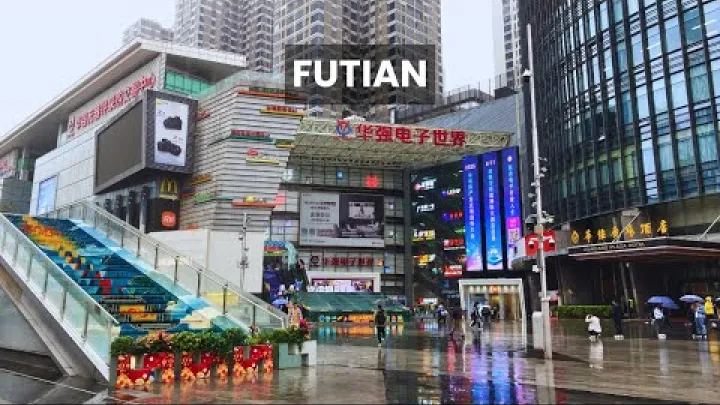
The Shenzhen Civic Center and Futian CBD are helpful orientation points, but not every hotel in Futian is equally convenient. Check the walking route to the station, the distance to restaurants, and whether your preferred attractions require a long transfer. Futian is especially suitable for visitors who want a balanced itinerary rather than a border-focused, airport-focused, beach-focused, or theme-park-focused stay.
The likely disadvantages are a more business-oriented feel and potentially higher accommodation rates in especially convenient locations. Compare exact dates and station access before choosing it solely because it appears central on a map.
Luohu, Nanshan, and Shekou: Choose by Interest
Choose Luohu if Hong Kong access, Luohu Port, Dongmen Pedestrian Street, and a busy commercial setting are central to your plans. It can be a practical first or final base for a cross-border trip, especially when your rail or border route uses Shenzhen Station or Luohu Port.
Choose Nanshan or OCT if you want theme parks, creative districts, technology-related urban sightseeing, and western bayfront walks. This area can reduce repeated travel on days built around OCT Loft, Window of the World, Splendid China Folk Village, Happy Valley, or Shenzhen Bay.
Choose Shekou if you prefer a relaxed dining and nightlife environment, want to spend time near the western coast, or may use Shekou Cruise Homeport. Shekou can feel more self-contained than a Futian base, but it is not automatically the best choice for every central or eastern attraction. An international atmosphere also does not guarantee that every business will offer English service or accept every foreign payment method.
Bao'an and Other Outer Bases: When Lower Cost or Airport Access Wins
Bao'an is practical when your flight schedule matters more than central sightseeing. It can suit an early departure, a late arrival, a longer business stay, or a traveler who prefers a residential setting. If most of your plans are in Futian, Luohu, or eastern Shenzhen, however, the daily travel time may cancel out part of the accommodation saving.

Longhua and other peripheral areas may provide more accommodation choice or a different local atmosphere. They can also be useful when your itinerary begins or ends at Shenzhen North Station. The trade-off is straightforward: a lower room rate or convenient transport gateway can mean more time and transfers each day.
Foreign visitors should confirm that a hotel or serviced apartment accepts international guests and can complete the required local registration process. This is especially important for informal private accommodation, where the booking platform description may not explain the practical arrangements.
When to Visit Shenzhen
Timing affects Shenzhen more through heat, humidity, rain, storms, and crowds than through a simple high-season or low-season rule. Choose the season that matches your balance of outdoor activities and indoor alternatives.
Shenzhen Weather Through the Year
Shenzhen has a subtropical climate with generally mild winters, hot and humid summers, and a wetter part of the year. Autumn through spring is often more comfortable for walking, hiking, beaches, and bayfront areas, while summer can make outdoor sightseeing tiring even when the sky is bright.
A seasonal overview from China Highlights identifies October to April as a generally favorable travel period because of more comfortable conditions and less rainfall. Treat this as a broad planning pattern, not a promise of clear weather. Humidity can affect comfort even when temperatures do not look extreme, and rainfall can change plans quickly.
In warmer or wetter conditions, balance outdoor plans such as Wutong Mountain, Dameisha Beach, Xichong, and Shenzhen Bay Park with indoor options such as malls, markets, museums, restaurants, and theme attractions. In the cooler part of the year, you can usually give more of each day to walking and coastal or mountain activities.
Heat, Rain, Typhoons, and Holiday Crowds
Heat and humidity can make a hike feel harder than expected. Heavy rain and thunderstorms can affect trails, beaches, ferries, theme-park operations, airport transfers, and rail connections. Coastal storm conditions may also change access or make a beach visit unsuitable.
Major domestic holiday periods are a separate planning factor. Lunar New Year, the May holiday period, and the National Day holiday period can bring heavier demand at transport hubs, popular attractions, hotels, and shopping areas. Prices and availability may also change around weekends and holidays.
Keep outdoor activities flexible. Check the local forecast and storm warnings before scheduling beaches, hikes, ferries, or other outdoor activities. Put your most weather-sensitive plan on the clearest suitable day, and keep an indoor alternative for the same general area rather than abandoning the entire itinerary.
Entry, Safety, Payments, and Connectivity
Entry rules and daily logistics can determine whether a Shenzhen trip is smooth. Prepare these practical details before departure instead of assuming that a border crossing, foreign card, or private booking will work exactly as it does at home.
Visa and Transit Eligibility
Do not treat a historic visa-free policy or a general China travel tip as a universal entry rule. Ordinary tourist-visa planning is different from visa-free transit, and some travelers may also encounter organized group-tour arrangements or regional policies connected with Guangdong. The correct option depends on your nationality, passport validity, entry port, onward destination, confirmed ticketing, permitted area, and length of stay.
Traveling from Hong Kong or Macao is also not automatically the same as transiting through mainland China to a third destination. A route may have different documentation and border requirements from a normal round trip. Confirm your eligibility through current official Chinese immigration or consular information and your own government's guidance before booking non-refundable travel.
Keep evidence that matches the entry basis you are using, such as passport details, accommodation information, and onward travel documents when those are required. If your route changes from air to land, or from Shenzhen to another mainland destination, recheck whether the original entry arrangement still applies.
Accommodation Registration, Local Rules, and Safety
Residence registration is an important practical issue for foreign visitors. Established hotels that accept international guests are usually the simpler choice because their staff are familiar with passport check-in and the required registration process. Ask an accommodation provider directly about this before relying on a private apartment, serviced residence, or informal host.
Read the current travel advisory issued by your government. The U.S. Department of State highlights the importance of reviewing entry and exit requirements, local laws, and embassy guidance for China. Depending on your nationality and circumstances, advisories may also discuss politically sensitive situations, demonstrations, detention, or possible exit restrictions.
For ordinary sightseeing, use normal precautions: keep your passport secure, use reputable accommodation and transport, and avoid photographing or entering restricted facilities. Do not participate in demonstrations or sensitive political activity without understanding the legal consequences. Save current police, fire, and ambulance contact information from a reliable official source, your embassy, or your hotel rather than relying on an old number in a travel article.
Payments, Connectivity, and Language Preparation
Mobile payment is widely used in Shenzhen, but acceptance and setup can vary by business, account, phone number, card issuer, and identity-verification process. Many international travelers investigate WeChat Pay and Alipay before arrival. Transport cards and mobile QR payment options may also be useful, but do not assume that one app, foreign card, or device will work everywhere.
Prepare one primary payment method and one backup before arrival. A backup can be a second enabled payment method, a small amount of usable cash, or another arrangement that does not depend on the same phone, card, or network. Test the setup while you still have access to your bank and mobile provider, and keep your phone charged during long travel days.
Arrange a suitable mobile-data solution and install a Chinese map or navigation option if your usual apps may not provide reliable local information. Save your hotel's name, address, and telephone number in Chinese characters. Translation support is useful for restaurant requests, drivers, medical needs, and accommodation questions.
English support is more likely in major transport hubs, larger hotels, and formal visitor services than in every neighborhood business. A short written note with your destination in Chinese can be more useful than relying only on spoken English.
How to Get to Shenzhen and Get Around
Shenzhen has several arrival gateways, and the most convenient one depends on where you are coming from and where you will stay. Treat the station or port name as a transport decision, not as a substitute for the hotel district.
Reaching Shenzhen by Air, Rail, Ferry, or Hong Kong
Shenzhen Bao'an International Airport is the main air gateway for travelers arriving by plane. Before departure, use the airport's current passenger information and transfer guidance; the Shenzhen Bao'an International Airport website provides an official starting point.
Shenzhen Station in Luohu can be useful for travelers arriving from Hong Kong or other mainland routes that serve the older central rail gateway. Shenzhen North Station in Longhua is a major choice for many intercity rail journeys, while Futian Station places travelers closer to the central business district. These stations are not interchangeable: select the one that matches your ticket and hotel area.
Luohu Port and Futian border access are relevant for different Hong Kong crossing plans. Shekou Cruise Homeport may be useful for ferry travel involving destinations such as Macao, but the route and terminal details must match the operating service.
From a long-haul flight, the airport is the natural starting point. From Hong Kong, a border crossing or rail connection may be more practical. From Guangzhou or another mainland Chinese city, compare the railway gateway shown on your ticket with the location of your accommodation. Recheck the exact station or port and the operating carrier's timetable on the day of travel because terminals, ticket rules, border hours, and services can change.
Using the Metro, Buses, Taxis, and Ride-Hailing
The metro is usually the main option for moving between Luohu, Futian, Nanshan, and other major urban clusters. It is useful for travelers who want predictable city movement and do not have large luggage. Buses can reach places beyond convenient rail coverage, but route selection and stop names may be more difficult for visitors who do not read Chinese.
| Mode | Best use | Convenience | Main difficulty |
|---|---|---|---|
| Metro | Central district travel | High for planned routes | Station transfers and crowds |
| Bus | Areas beyond easy rail coverage | Useful with route guidance | Chinese stop information |
| Taxi or ride-hailing | Luggage, late arrivals, beaches, trailheads | Door-to-door | Destination and payment setup |
Taxis or ride-hailing are more practical when you have luggage, several travelers, a late arrival, or a destination such as a beach or trailhead that is not close to a station. They can also reduce transfers when the time saved matters more than the higher cost. Carry the destination in Chinese characters for drivers, station staff, or hotel reception.
Transport cards and mobile QR payment options may be convenient, but availability and setup can differ for international visitors. Ask your hotel which local transport option is currently practical for your phone and payment arrangement.
Managing Long Cross-City Journeys
Shenzhen is polycentric. A short walk within one district does not mean that two attractions on opposite sides of the municipality are close. A city map can make the distance look manageable while transfers, station exits, traffic, and walking between entrances add considerable effort.
Group attractions geographically, avoid unnecessary backtracking, and leave margin for peak commuting periods, station navigation, and weather disruptions. If you want both central sightseeing and the eastern coast, plan the coast as its own day rather than inserting it between two central appointments.
A central base is usually simplest when your priorities are Futian, Luohu, Nanshan, and OCT. A split stay can make sense when you are spending several nights around Shekou or planning an eastern-coast focus, but changing hotels creates packing and transfer time. Choose a second base only when it removes a genuine travel problem.
Best Things to Do in Shenzhen
Shenzhen's attractions are strongest when combined into experiences rather than treated as isolated checkboxes. Pair a modern urban area with food, shopping, public space, or a coastal walk so that your visit includes both planned sights and everyday city life.
Contemporary Shenzhen: OCT Loft, Huaqiangbei, and the CBD
OCT Loft offers a way to explore Shenzhen through creative spaces, design, exhibitions, cafes, and converted or planned cultural environments. It is a better fit for visitors who enjoy atmosphere and urban observation than for travelers seeking a single monumental landmark.
Huaqiangbei is associated with electronics, shopping, and commercial energy. Visit with a clear purpose if you want components, devices, accessories, or market browsing. A public electronics market is not the same as access to private technology campuses or company headquarters, so plan around what can actually be observed and purchased by visitors.
In the Futian CBD, the Shenzhen Civic Center provides civic architecture and a central orientation point. Add a meal, mall visit, or evening walk rather than spending the entire day only looking at office towers. Shenzhen Bay Park provides another public-space perspective on the modern city and works well as part of a western-district day when conditions are suitable.
Theme Parks and Family Attractions
The OCT cluster includes Window of the World, Splendid China Folk Village, and Happy Valley. These are convenient choices for families and for visitors who prefer a curated day of rides, performances, miniature landmarks, or cultural displays.
Choose among them by interest and energy level. Window of the World is built around representations of international landmarks. Splendid China Folk Village presents constructed cultural and landscape experiences. Happy Valley is the more natural choice for visitors prioritizing rides and amusement-park activity. Families with young children, teenagers, and adults may therefore prefer different parks even when they are in the same general area.
These attractions are constructed visitor experiences, not replacements for seeing the original heritage sites. Check the official attraction information for opening dates, ticket rules, event schedules, weather policies, and temporary closures before committing a full day. A park day also requires more tolerance for crowds and scheduled activities than a flexible neighborhood visit.
Beaches, Hiking, and the Dapeng Peninsula
Dameisha Beach is often the easier coastal option for a shorter visit from the urban east. It can suit travelers who want a beach setting without making the Dapeng Peninsula the main purpose of the day. Xichong Beach and the wider Dapeng area offer a more remote coastal and outdoor environment, but they need more planning and are less suitable as casual additions to a central itinerary.
Wutong Mountain is a major urban hiking option. Route difficulty, heat, footing, water needs, shade, and views vary by trail and season. Choose a route that matches your experience, start with enough daylight, and do not treat a mountain outing like an ordinary city walk.
Before leaving, check the attraction, beach, or trail's current opening and access notice, including any closure, reservation, traffic, facility, or weather-related information. Conditions can differ between the named beach or mountain and the particular entrance you plan to use. Treat Yantian, Xichong, Dapeng, and Wutong Mountain as dedicated half-day or full-day plans unless a live route shows a simpler combination.
What a Trip to Shenzhen Costs
There is no useful single daily price for every Shenzhen visitor. Accommodation location, travel dates, weekends, public holidays, hotel category, shopping, theme parks, and taxis can change the total substantially. Build a budget in RMB, also called CNY, by category and check exact prices for your dates.
Indicative Accommodation, Food, Transport, and Activity Costs
When current prices are not available for your exact dates, use relative tiers instead of false precision. The table below shows the main choices that shape a Shenzhen travel budget.
| Category | Lower-cost approach | Mid-range approach | Higher-cost approach |
|---|---|---|---|
| Accommodation | Outer district or basic room | Central hotel near a useful station | Luxury or highly convenient location |
| Food | Local restaurants and casual meals | Mixed local and commercial dining | Hotel, premium, or destination dining |
| Transport | Metro and buses | Public transport with occasional taxi | Frequent taxis or private transfers |
| Activities | Public spaces and neighborhood walks | Selected paid attractions | Several theme parks or premium activities |
| Extras | Limited shopping and basic data | Moderate shopping and connectivity | Electronics, gifts, upgrades, or regional travel |
Accommodation is usually the largest variable. A room in Futian, Luohu, Nanshan, or Shekou may cost more than an equivalent option farther out when demand is high, but the cheaper room can create daily commuting costs. Food can remain flexible because you can combine casual local meals with cafes, malls, or hotel dining. Public transport generally supports a lower routine travel cost than repeated taxis, while theme parks, shopping, and cross-border trips should be treated as optional additions rather than part of a basic city budget.
For a realistic estimate, list the number of nights, the hotel area, planned paid attractions, airport or rail transfers, and any Hong Kong, Guangzhou, or Macao extension. Then add room for data, luggage needs, payment fees, and an occasional last-minute taxi.
How to Control Spending Without Losing Convenience
Choose accommodation near a useful metro station rather than simply choosing the lowest advertised room rate. A slightly more central or better-connected room can save both transport money and time. This is especially relevant when you plan one Futian and Luohu day, one OCT day, and one eastern-coast outing.
Use free or low-cost public spaces to balance ticketed attractions. A day combining the Shenzhen Civic Center, Futian CBD, a neighborhood meal, and a public walk can cost less than a full day at several theme parks. In Nanshan, select one main paid attraction and add OCT Loft or a bayfront walk if you want a fuller day without buying multiple tickets.
Outer-district accommodation can be a good value when you are staying near the airport, Shenzhen North Station, or a specific local destination. It is less attractive when you must pay for long daily transfers to central Shenzhen. Also plan for data access, luggage transfers, peak-date hotel rates, shopping, and last-minute taxis instead of assuming that cash or an international card will work at every point of the journey.
Sample Shenzhen Itineraries and Final Planning Checklist
Use these itineraries as geographic frameworks, not fixed schedules. Start with your arrival gateway and hotel district, then replace optional stops according to weather, age group, interests, and energy level.
A Two-Day First-Time Shenzhen Itinerary
Day one: Futian and Luohu. Begin around the Shenzhen Civic Center and Futian CBD to see the central urban area. Add a meal and nearby commercial stop, then continue toward Luohu if Dongmen Pedestrian Street, Shenzhen Station, or the Hong Kong connection is important to you. Keep the evening for food, shopping, or a relaxed neighborhood walk rather than adding a distant attraction.
Day two: Nanshan and OCT. Build the day around OCT Loft and choose one main attraction, such as Window of the World, Splendid China Folk Village, or Happy Valley. If you prefer a less structured day, replace the theme park with a creative-district visit and a walk near Shenzhen Bay Park. This keeps the plan within a western cluster instead of treating a beach or mountain trip as an automatic part of a short city break.
Adjust the sequence to your base. A Luohu hotel may make the first day easy, while a Nanshan or Shekou hotel may make the second day more convenient. If shopping and electronics are your priority, use Huaqiangbei as a replacement for part of the Futian plan. If your flight arrives late, reduce the first day rather than trying to recover every planned stop.
A Three-to-Five-Day Shenzhen Itinerary
With three days, keep the first two cluster-based days and add one dedicated outdoor or coastal day. Choose between Yantian and Dameisha for a more accessible coastal plan, Dapeng and Xichong for a longer coastal escape, or Wutong Mountain for hiking. The best choice depends on current access, weather, your fitness, and the time available.
With four or five days, add a slower neighborhood day. Options include Shekou dining and waterfront time, a more detailed Huaqiangbei visit, another Nanshan activity, or a relaxed day divided between shopping, food, and public spaces. Families may use the extra day for a theme park, while business visitors or remote workers may prefer fewer tickets and more flexible local exploration.
In hot or wet weather, move indoor attractions earlier and keep outdoor plans flexible. A practical priority order is to reserve fixed-ticket activities only when your schedule is stable, keep public walks as movable options, and avoid placing a mountain, beach, or ferry plan immediately before an important departure.
Splitting your stay between central Shenzhen and Shekou or another secondary base is worthwhile when it removes repeated long journeys or supports an early departure. It is usually unnecessary for a short trip focused on Futian, Luohu, and Nanshan because packing, check-in, and transfers can take more time than they save.
Hong Kong, Guangzhou, and Macao as Extensions
Hong Kong is the most natural cross-border pairing for many travelers. Luohu Port and Futian border access serve different route choices, and your preferred crossing should match your hotel, destination, and border plan. Hong Kong is useful when you want to compare two distinct urban environments rather than add another mainland city.
Guangzhou works as a mainland urban and food extension. Compare the railway gateway shown on your ticket with Shenzhen North Station, Futian Station, or another departure point rather than assuming that every Shenzhen hotel is equally convenient.
Macao can be a short regional add-on through a ferry plan involving Shekou Cruise Homeport, when the service and documentation suit your trip. The ferry is not a reason by itself to stay in Shekou if the rest of your itinerary is in eastern or central Shenzhen.
Border, visa, ticket, and ferry conditions depend on your passport and route. Check the current operator and border information before treating Hong Kong, Guangzhou, or Macao as a simple day trip. Keep the extensions secondary to the main Shenzhen plan, especially if this is your first visit.
Before You Go: A Final Shenzhen Travel Checklist
- Confirm your passport validity and the entry basis that applies to your nationality and route.
- Choose accommodation that accepts foreign guests and can complete the required registration process.
- Arrange travel insurance and save important booking details offline.
- Prepare a primary and backup payment method before arrival.
- Arrange suitable mobile data and a navigation or translation option.
- Save your hotel's Chinese name, address, and telephone number.
- Read the current government travel advisory and save reliable emergency information.
- Review the local forecast before outdoor activities and allow flexibility for storms or heavy rain.
- Match your hotel district with your arrival station, port, airport, and main sightseeing clusters.
- Group activities geographically and recheck transport schedules for important travel days.
The most useful Shenzhen travel tip is to choose a base by district, not just by room price, and to organize each day around one geographic cluster. Shenzhen works best when you combine its contemporary urban character with one carefully chosen coastal, outdoor, or Greater Bay Area experience.
Select area
Create a post
Posting is free and no registration is required.