Guilin Travel Guide: Where to Stay, Itineraries and Costs

This Guilin travel guide helps first-time visitors plan a trip around one of southern China’s most scenic regions. Guilin city, Yangshuo, Xingping, and the Longji Rice Terraces are connected geographically, but they offer very different travel experiences. The right itinerary depends on your available days, preferred landscape, tolerance for transfers, and budget for major activities. This guide compares the main bases and explains transport, seasons, things to do, booking logistics, costs, and practical safety preparation.
Guilin at a Glance for First-Time Visitors
Guilin is both a city and a gateway to a wider landscape region. The urban area has rivers, lakes, parks, caves, restaurants, and railway connections, while the best-known karst scenery extends south toward Yangshuo and Xingping. Longsheng County, home to the Longji Rice Terraces, lies in a different mountain setting to the north. Planning becomes easier once these places are treated as separate stops rather than as attractions within one compact city.
What Guilin Is Known For
Visitors usually come to Guilin for the Li River and the limestone karst peaks that surround it. A river cruise toward Yangshuo offers a structured way to see the landscape from the water, while cycling, walking, and selected river activities provide a closer view of the countryside. Xingping is associated with well-known Li River viewpoints and is often chosen by travelers who want a more focused riverside stay.
The region also combines rural scenery with urban sightseeing. Guilin city has Elephant Trunk Hill, Reed Flute Cave, Seven Star Park, central lakes, and the Two Rivers and Four Lakes area. Longji adds mountain villages, terrace viewpoints, and hiking. Guilin rice noodles are the most recognizable local food anchor, and neighborhood restaurants make it easy to add a regional meal to a sightseeing day. The Visit Guilin destination guide is useful for broad orientation, but individual attraction access and operating details still need attention when you make your plan.
The First Decisions to Make Before Booking
Make four decisions before paying for hotels or nonrefundable activities:
- Trip length: Three days is enough for a focused combination, while five to seven days allows a slower multi-base route.
- Primary base: Choose Guilin for transport and city access, Yangshuo for outdoor activities, Xingping for concentrated river scenery, or Longji for terraces and mountain villages.
- Landscape and season: Decide whether karst rivers, green countryside, or the changing appearance of rice terraces matters most.
- Budget: A city-based trip can rely on walks and public transport, while cruises, private transfers, guided outings, and mountain accommodation increase the total.
For a short visit, prioritize two experiences instead of trying to include every base. For a longer visit, arrange the sequence around transport connections and leave enough time for the places where you actually want to walk, cycle, or relax.
Choose the Best Base: Guilin, Yangshuo, or Longji
There is no single best place to stay in the Guilin region. Your choice affects evening atmosphere, luggage transfers, access to scenery, and how much of each day is spent moving. Guilin city is the practical center, Yangshuo is the most common leisure base, Xingping offers a quieter river-focused alternative, and Longji is a mountain stay that requires more planning.
Downtown Guilin and the Riverside Core
Central Guilin works well for travelers who want a simple arrival, a city sightseeing day, or an easy final night before an early train or flight. Downtown and riverside areas put you near restaurants, central lakes, evening walks, and some of the city’s main attractions. Sanlidian provides another stay environment with a more local residential feel and a different balance of restaurants and transport convenience.
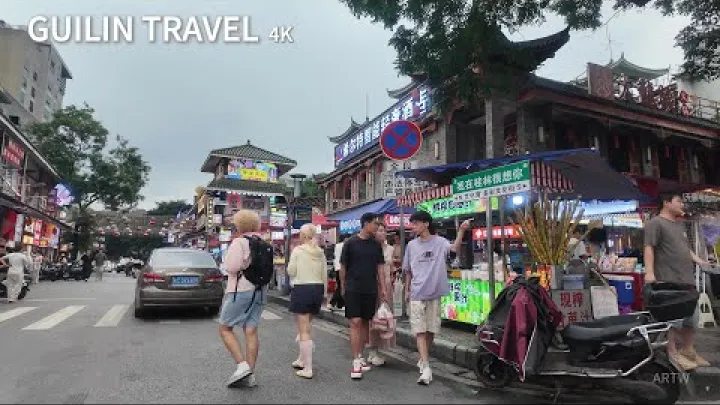
A riverside hotel may suit visitors who value scenery and evening walks. A hotel chosen for transport access may be more useful when you have luggage, an early departure, or a tight connection. Central Guilin is also the safer logistical choice for a first night if you arrive late, because onward transfers to Yangshuo or Longji add another step when you may be tired.
Yangshuo and Xingping for Karst Landscapes
Yangshuo is the main leisure and outdoor base around the lower Li River. The town and surrounding countryside support cycling, countryside walks, Yulong River activities where available, the Ten-Mile Gallery, Moon Hill, restaurants, and evening entertainment. It has a visitor-oriented atmosphere, with more choices for scenic day activities than central Guilin, but it can also feel busier and more commercial.
Xingping is not simply another name for Yangshuo. It is a separate riverside location with a more concentrated connection to celebrated Li River views. Choose Yangshuo when you want a broad choice of food, activities, and evening options. Choose Xingping when photography, river scenery, and a quieter or more focused stay matter more than nightlife and a large activity network. In either case, confirm where an activity begins and ends, because Yangshuo county, Yangshuo town, and Xingping are not interchangeable transfer points.
Longji Rice Terraces: Ping'an or Dazhai
Longji, in Longsheng County, is a mountain region of villages and scenic areas rather than one conventional town center. Ping'an and Dazhai are the two main visitor areas. The best choice depends on your preferred viewpoints, accommodation location, walking plans, and how much road and trail access you are comfortable managing.

Ping'an is commonly selected for a village-based stay with access to terrace viewpoints and shorter organized visits. Dazhai is also known for terrace scenery and may suit travelers who want a more extended mountain experience, including routes that use more hiking or different access arrangements. Paths can be steep, uneven, or tiring, and a hotel that appears close on a map may still require a shuttle, a walk, or porter arrangements. Longji has cultural connections with Yao and Zhuang communities, but visitors should approach villages and local customs respectfully rather than treating them as staged attractions. Confirm the current entrance, shuttle, cable-car, and transfer arrangements for your chosen area.
Match the Base to Your Trip Style
Use this comparison as a planning judgment, not as a fixed rule. The number of nights should include the time needed to reach and leave each base.
| Base | Best for | Main strengths | Main trade-off |
|---|---|---|---|
| Guilin city | Short stays and simple transfers | Rail, airport, lakes, parks, city attractions | Less immersive countryside |
| Yangshuo | Outdoor activities and evening choices | Karst scenery, cycling, river activities | More visitor-oriented and less central to rail travel |
| Xingping | Photography and river views | Focused riverside landscape and quieter pace | Fewer broad town conveniences |
| Longji | Terraces, hiking, and village stays | Mountain scenery, viewpoints, sunrise and sunset | Road transfers and walking logistics |
A three-day visitor can usually choose Guilin plus Yangshuo or Guilin plus Longji. A scenic-focused traveler with more time may spend several nights in Yangshuo or Xingping and add Longji only if the extra transfer is worthwhile. Travelers with limited mobility may prefer central Guilin and carefully selected Yangshuo accommodation over a mountain hotel with unavoidable stairs and trails.
Plan a Guilin Itinerary by Trip Length
A good Guilin itinerary groups each day geographically. Arrival and departure times matter as much as the number printed on the calendar, so do not count a late arrival or a long mountain transfer as a full sightseeing day.
A Focused Three-Day Guilin Itinerary
For three days, choose one main landscape and use the city as either your base or your arrival point. The following templates are flexible rather than fixed schedules.
- City and Yangshuo: Spend the first day in Guilin around the central lakes and one major attraction such as Elephant Trunk Hill or Reed Flute Cave. Use the second day for a Li River cruise or another structured route toward Yangshuo. On the third day, choose cycling, a Yulong River activity where available, the Ten-Mile Gallery, or a Xingping viewpoint before departure.
- City and Longji: Use the first day for Guilin city. Spend the second day and night in Longji to make the road transfer worthwhile and allow time for a viewpoint or village walk. Return on the third day only if your onward departure is comfortably timed.
- Yangshuo-focused: Stay near Yangshuo for most of the trip if karst scenery is the priority. Use one day for a water-based experience and one for cycling or countryside exploration, rather than adding Longji and spending much of the trip in transit.
If you arrive late, remove the first planned attraction and treat that day as an arrival day. If you leave early, avoid an overnight in Longji immediately before departure unless your transport plan provides a generous margin. Visitors who do not want steep walks can replace Longji hiking with a city day or a lower-effort Yangshuo activity.
A More Comfortable Five-to-Seven-Day Itinerary
Extra days make the region more enjoyable because they reduce the pressure to fit a cruise, a mountain transfer, and several outdoor activities into one sequence. A balanced five-day route might use one night in Guilin, two nights in Yangshuo or Xingping, one night in Longji, and a final night based on the departure route. This is a framework, not a requirement to use all three bases.
- Outdoor-focused version: Begin in Guilin, continue to Yangshuo for a cruise or river activity, spend another day cycling around the Yulong River or Ten-Mile Gallery, then travel to Longji for a terrace walk and overnight stay.
- Relaxed version: Use Guilin for city sights and recovery after arrival, stay several nights in Yangshuo with only one or two planned activities, and add Longji only when the mountain stay fits the season and transfer pattern.
- Seven-day version: Add a buffer day in Yangshuo or Guilin, or spend two nights in Longji. This allows a slower village experience and gives you more options if a water or mountain activity does not fit the day.
Reverse the order when your arrival or departure point makes that easier. For example, a traveler arriving by air may begin in Guilin, while someone arriving by rail from another southern city may prefer to continue quickly to Yangshuo and return to Guilin for the final night.
What to Book First
Set the base sequence before selecting hotels. A cruise departure pier, a railway station, a Longji road transfer, and the location of a Yangshuo hotel can all change the practical shape of the itinerary.
- Choose the arrival and departure gateways and identify the relevant Guilin airport or railway station.
- Reserve fixed-date intercity transport when your route depends on a particular connection.
- Book Longji accommodation early if you want a specific viewpoint, village location, or room type.
- Reserve a cruise or central guided activity when it is the main purpose of the trip.
- Leave ordinary walks, local meals, and some cycling or city activities flexible.
Before paying, note release windows, meeting points, included transfers, cancellation rules, and the time required to reach the departure location. Nonrefundable bookings can make a weather-sensitive itinerary difficult to adjust, especially when several bases are connected by road.
Getting to and Around Guilin
Guilin’s transport choices are easiest to understand in layers: reach the region by air or high-speed rail, move between the main bases, then choose buses, taxis, bicycles, or arranged transfers locally.
Arriving by Air or High-Speed Rail
Guilin Liangjiang International Airport is the main air gateway. By rail, travelers may use Guilin Railway Station, Guilin North Railway Station, or Guilin West Railway Station. These are not interchangeable labels when you are arranging a hotel pickup or an onward connection. Select trains according to the route, fare, luggage, arrival time, and the transfer required from the station to your accommodation.
High-speed rail can be convenient for travelers arriving from other Chinese cities, including southern connections such as Guangzhou, but route availability and timetables are not permanent assumptions. Air travel may be preferable when the origin is distant or when the rail route is inconvenient. The transport and visitor information on Visit Guilin can help with orientation, while the final station, hotel transfer, and late-arrival plan should come from your current booking information.
- Save the hotel name and address in Chinese before leaving the airport or station.
- Match the station shown on the ticket to the station used in your transfer plan.
- Allow time for luggage collection, station exits, and the first local ride.
- For a late arrival, arrange a confirmed transfer or choose accommodation with a simple arrival route.
Travel Between Guilin, Yangshuo, and Longji
Coaches and buses are often the lower-cost way to connect Guilin and Yangshuo. Private transfers are more convenient for groups, bulky luggage, early departures, or travelers who want to go directly to a hotel. Longji is more complicated because the scenic areas are in the mountains and the final part of the journey may involve a road transfer, a shuttle, and walking to the accommodation.
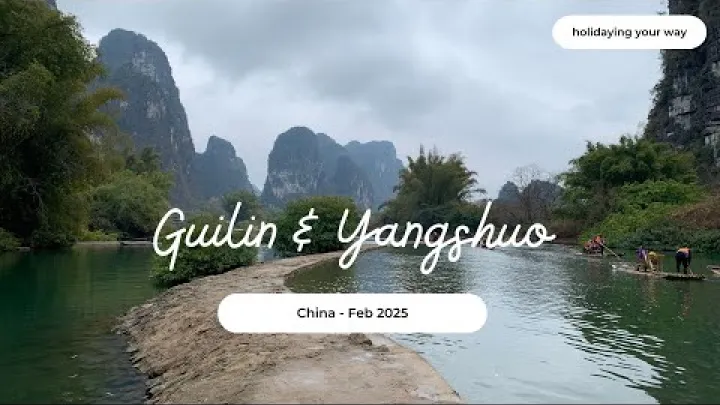
Direct Yangshuo-to-Longji transport may be seasonal, limited, or unavailable for your travel date. Guilin can therefore be a practical transfer point even when it appears to add distance. A cruise arrival near Yangshuo is also not necessarily a hotel drop-off in Yangshuo town, so include the last part of the journey when comparing options.
- Simple route: Guilin city, then Yangshuo, with local activities based in Yangshuo.
- Mountain route: Guilin, Longji, back to Guilin, then Yangshuo or the departure gateway.
- Scenic loop: Guilin, Yangshuo or Xingping, return through Guilin, then Longji if a suitable connection is available.
Confirm current rail, coach, shuttle, and first- or last-mile connections before fixing the sequence of bases or buying nonrefundable tickets. A route that looks direct on a map may require separate tickets and several handoffs.
Use Buses, Taxis, and Bicycles Locally
City buses are useful for inexpensive travel between Guilin attractions when the route and operating period suit your day. Taxis or arranged cars are helpful with luggage, airport transfers, cave visits, and places that are awkward to reach by bus. Bicycles are especially useful around Yangshuo and selected countryside routes, but they are not automatically the best choice in heat, rain, heavy traffic, or on roads that you do not know.
| Option | Best use | Advantages | Limitations |
|---|---|---|---|
| City bus | Central Guilin sightseeing | Low cost and useful on established routes | Less convenient with luggage or route changes |
| Taxi or car | Direct transfers and distant attractions | Door-to-door convenience | Higher cost and need for clear destination details |
| Bicycle | Yangshuo countryside | Flexible pace and close landscape views | Physical effort, traffic, heat, and weather exposure |
| Hotel or tour transfer | Longji and complex connections | Fewer handoffs and easier luggage handling | Less flexibility and possible package cost |
Published local fares should be treated as indicative rather than permanent. The same applies to bicycle rental and airport-transfer quotes. Save your destination in Chinese, carry the hotel contact details, and do not assume that every driver, station, or activity provider will offer extensive English support.
Treat Cruises as Experiences, Not Guaranteed Transfers
A Li River cruise from Guilin toward Yangshuo is a major scenic experience, but it should not be treated as an ordinary point-to-point bus ride. The departure pier, check-in process, included meals, arrival location, and onward transfer all affect the day. Some travelers use the cruise as their main landscape day and continue with a short Yangshuo program afterward; others prefer to travel by road and explore the river region independently.
The Two Rivers and Four Lakes evening cruise is a separate Guilin city activity. It focuses on the urban rivers and lakes, illuminated landmarks, and any cultural programming included in the current product. It does not replace the wider Li River journey. When comparing options, a specialist operator such as Li River Cruises can show how cruise categories are presented, but your booking should be based on the current operator details.
- Check the departure pier and required arrival time.
- Compare cruise class, duration, meals, and included transfers.
- Read the cancellation and weather policy before payment.
- Confirm where the cruise ends and how you will reach your hotel.
Choose the Best Time to Visit Guilin
The best time to visit Guilin depends on whether you value comfortable outdoor conditions, vivid terrace colors, lower demand, or a particular regional event. The broad period from April to October is often used for general trip planning, but conditions differ between the city, the river corridor, and the Longji mountains.
Spring and Autumn for Balanced Conditions
Spring and autumn often provide a useful balance for city walks, river activities, cycling, and terrace visits. They can be more comfortable than the hottest part of summer, while the scenery remains a strong reason to visit. Exact rainfall, temperature, visibility, and crowd levels vary by week, so the best month for one traveler may not be the best month for another.
Spring suits travelers who want fresh countryside scenery and are comfortable with the possibility of wet days. Autumn can appeal to visitors interested in mature terrace colors and clearer-feeling outdoor days, although the timing of the fields is not identical every year. Treat the season as a planning preference rather than a guarantee of a particular view.
Summer and Longji's Green Season
July through mid-September is commonly associated with lush green rice terraces in Longji. This period can produce the vivid agricultural landscape many visitors expect, and mist may add atmosphere around the mountains and river. The trade-off is greater heat and humidity, along with a higher chance that rain will affect cycling, hiking, road transfers, or views.
Summer works best for travelers who value green terraces and can adjust the order of outdoor activities. Pack breathable clothing, reliable walking shoes, sun protection, and enough water for active days. Plan demanding activities for the more comfortable part of the day and avoid building an itinerary in which one delayed transfer causes several missed bookings.
Longji's Seasonal Landscapes
Longji changes noticeably through the agricultural year. Approximate visual phases are often described as water-filled terraces from late April to mid-June, green fields from July to mid-September, and mature or golden fields from late September to late October. These are useful orientation points, not fixed annual dates. Planting and harvest timing, weather, and the viewpoint you visit can change the appearance.
Late April to mid-June may appeal to photographers who want reflective water surfaces, while July to mid-September is associated with green fields. Late September to late October can provide mature or golden colors. January to March may be quieter but generally offers less of the full terrace landscape described by peak-season guides. A Longji guide such as Cereal for Lunch can help explain the seasonal and access differences, but dates should remain approximate.
Festival dates may follow local decisions or lunar calendars. If a festival is central to your trip, confirm the date and local arrangements separately rather than assuming that the same calendar date applies every year. Different villages and viewpoints may also look different in the same season.
Rain, Storms, and Trail or Cruise Changes
Rain can reduce visibility, make mountain paths slippery, slow road transfers, change river conditions, and affect cruise operations. A wider storm system in southern China can also disrupt flights or onward connections even when Guilin itself is not experiencing the most severe conditions. These are reasons to plan for flexibility, not reasons to avoid the region automatically.
Before each water or mountain activity, check the current official forecast and the latest cruise or scenic-area notice. Keep one flexible day when possible, avoid tight same-day connections, and identify city activities that can replace a hike or cruise. If a weather-sensitive booking is important, read its cancellation or rescheduling terms before paying.
What to See, Do, and Taste
Guilin rewards a mix of experiences rather than a checklist of distant attractions. Combine one city anchor, one river or countryside activity, and enough unplanned time to enjoy the landscape at a comfortable pace.
Guilin City Sights and Evening Walks
Organize a Guilin city day by area. Around the central urban and lakeside core, combine the Two Rivers and Four Lakes area, the Sun and Moon Pagodas, and an evening walk. Elephant Trunk Hill is a recognizable city landmark, while Seven Star Park provides a larger park setting. Reed Flute Cave offers a different experience from the open-air river and lake attractions and can be paired with other sights only when the transfer is convenient.
Daxu Ancient Town may work as an additional historic stop when its location fits your route. A practical city day usually includes one main paid attraction, one walk around the central lakes or rivers, and a meal of Guilin rice noodles. Attractions can have different opening hours, ticket rules, and access arrangements, so confirm the details for the specific day instead of building a schedule around an old listing.
Li River and Yangshuo Outdoor Activities
The main choices are a scheduled Li River cruise, bamboo rafting where currently available, cycling near the Ten-Mile Gallery or Yulong River, and viewpoints around Moon Hill or Xingping. A cruise provides structure and a long scenic perspective. A guided activity adds help with equipment and routes. Independent cycling offers freedom but requires more attention to roads, navigation, distance, and changing conditions.
| Activity | Scenery | Planning level | Main consideration |
|---|---|---|---|
| Li River cruise | Karst peaks from the water | Structured | Pier, duration, inclusions, and return transfer |
| River activity | Closer water-level views | Operator-dependent | Availability, water conditions, and equipment |
| Countryside cycling | Fields, villages, and karst roads | Self-guided or guided | Distance, traffic, heat, and route familiarity |
| Xingping viewpoint | Focused Li River landscape | Moderate | Local transport and walking to the viewpoint |
For most visitors, one water-based activity and one land-based activity are enough for a full Yangshuo day. Not every raft, route, rental, or viewpoint operates in the same way throughout the year, so choose activities that match your physical ability and preferred level of structure.
Longji Hiking and Village Experiences
Longji is best understood through its terrace viewpoints, village paths, overnight accommodation, and agricultural mountain setting. A short visit can focus on one village and several viewpoints. An overnight stay gives you more time for sunrise, sunset, and a slower walk without treating the mountains as a rushed day trip from Guilin.
Hiking between viewpoints or villages requires more preparation than visiting a city attraction. Choose footwear for uneven paths, allow enough daylight, and consider how far your accommodation is from the road or shuttle stop. Your route should reflect your mobility and the weather conditions on the day. The cultural setting, including Yao and Zhuang communities in the wider area, is best approached with respect for private homes, local customs, and permission when taking photographs.
Try Local Food Without Overcomplicating the Trip
Guilin rice noodles are the simplest local food starting point. Try them at a neighborhood restaurant, market area, or food street during a city day rather than planning an entire itinerary around restaurant recommendations. Food is also an easy way to control costs when you are spending more on a cruise, private transfer, or mountain accommodation.
Travelers with allergies, dietary restrictions, or religious food requirements should communicate those needs clearly and check ingredients before ordering. A saved translation of key requirements can help, especially outside the main visitor areas. Keep food planning practical: choose places that fit your route, observe local demand, and leave room for different meal preferences within your group.
Guilin Costs, Accommodation, and Booking Logistics
Guilin can suit different budgets, but the cost of a trip depends heavily on location and activities. A low-cost city day and a premium Li River cruise are very different budget choices, even when they occur during the same trip.
Accommodation and Daily Budget Bands
In central Guilin, compare hostels, guesthouses, mid-range hotels, and higher-end properties by access to your next transport connection as well as by room quality. In Yangshuo, location can affect whether you need taxis or local rides for every activity. In Longji, the view and village position may matter more than a familiar hotel category, and a room with easy road access may be more practical than one that requires a long walk with luggage.
| Planning band | Typical choices | What raises the total |
|---|---|---|
| Economical | Guesthouse or hostel, local meals, buses, walks | Several paid attractions or repeated transfers |
| Mid-range | Private room, selected taxis, one major scenic activity | Yangshuo views, Longji lodging, or extra equipment |
| Premium | Boutique hotel, private car, guided activities, upgraded cruise | Multiple private transfers and premium scenic products |
Use these as planning bands, not current Guilin-wide price averages. Accommodation rates change with season, views, demand, and cancellation conditions. Many travelers save money by choosing simpler accommodation in transit-oriented Guilin and spending more on one memorable cruise, a well-located Yangshuo stay, or a comfortable Longji transfer.
Transport, Attraction, and Cruise Costs
Build your budget in separate categories: city transport, intercity coaches or private transfers, attraction admissions, Longji entrance and local access, meals, equipment rental, and river or lake cruises. Low-cost buses and walks may keep a city day moderate, while a cruise, cable car, guided tour, or several private rides can change the total quickly.
| Cost category | Lower-cost approach | Higher-cost approach |
|---|---|---|
| City transport | Bus and walking | Repeated taxis or private car |
| Regional transport | Shared coach or bus | Private transfer or organized tour |
| Activities | City walks and independent cycling | Cruise, guided outing, or equipment package |
| Longji access | Shared arrangements and selected viewpoints | Private vehicle, extra shuttle, or cable-car option |
Before buying, check whether a quoted amount includes admission, transport, meals, equipment, insurance, or optional upgrades. Child prices, seasonal rates, and package inclusions may differ. A useful budget strategy is to choose one premium experience, such as a cruise or private mountain transfer, and keep the remaining days flexible and locally focused.
Booking and Payment Logistics
Book in the same order as your itinerary: establish the base sequence, secure any important intercity transport, choose Longji lodging if you are staying overnight, and then reserve a cruise or central guided activity. Ordinary city walks, local meals, and some countryside activities can usually remain flexible when you do not need a fixed departure.
- Save each reservation with the hotel or operator name, address, date, meeting point, and contact details.
- Check whether meals, scenic-area shuttles, pier transfers, cable cars, or equipment are included.
- Read cancellation, rescheduling, and weather-related terms before payment.
- Confirm the accepted payment method and any identification or check-in information required by the provider.
- Keep a backup plan for an activity that becomes impractical because of timing or conditions.
Do not assume that every local service uses the same ticketing or payment process. Check the current total price and cancellation conditions directly with the accommodation, transport provider, or activity operator before purchase.
Safety and Practical Preparation for China Travel
Most preparation concerns ordinary travel friction: changing transport arrangements, outdoor conditions, language, payment, and local rules. Separate general planning advice from nationality-specific requirements, which must come from current official sources.
Review Current China Travel Advice Before Departure
International visitors should read current official travel advice for China before departure. The guidance from the GOV.UK China travel advice covers areas such as safety and security, insurance, entry and exit requirements, and legal differences. Travelers should also consult the official sources relevant to their own nationality and the latest information from Chinese authorities.
Entry rules, visa or permit conditions, document requirements, and local legal expectations can change. Check them when you begin planning and again close to departure. Carry suitable travel insurance, keep copies of important documents, and understand what your policy covers for outdoor activities, transport disruption, medical care, and cancellations. Avoid making a general safety rating for Guilin; prepare for the specific activities and rules in your itinerary.
Stay Alert Around Water, Boats, and Uneven Trails
Follow crew and guide instructions on cruise decks, rafts, and river activities. Keep children within reach, remain behind protective barriers, and do not lean over rails or enter restricted areas for photographs. Wear shoes with reliable grip around wet lake edges, boat areas, cave approaches, and mountain paths.
Longji trails and some countryside routes may include steep steps, uneven surfaces, or slippery sections. Select a route that matches your ability, allow enough daylight, and do not continue simply to reach a viewpoint if the surface or weather has become unsuitable. Independent activities require more personal judgment than guided ones, so ask the provider about equipment, route difficulty, supervision, and emergency procedures when those details affect your decision.
Handle Language, Navigation, and Last-Mile Friction
Prepare a phone folder with your hotel name, station name, booking details, meeting point, and destination address in Chinese. Keep offline access to maps or translation tools, and save screenshots in case mobile service or an app becomes unavailable. A written address is particularly useful for taxi rides from Guilin Railway Station, Guilin North Railway Station, Guilin West Railway Station, or the airport.
Confirm the meeting point directly with a hotel, transport provider, or tour operator when a booking involves a pier, a coach stop, or a rural pickup. Station layouts, meeting points, and last-mile transfers can be confusing even when the main route is straightforward. Before each transfer, use this short checklist:
- Compare the name on your ticket with the station or pier on your itinerary.
- Keep the next accommodation address and contact number accessible.
- Allow extra time for luggage, finding an exit, and changing vehicles.
- Confirm whether the final stop is the town center, a scenic-area gate, or a separate pickup point.
Final Guilin Trip Checklist
- Decide whether Guilin city, Yangshuo, Xingping, or Longji is your main priority.
- Choose a base sequence that matches your arrival, departure, and available days.
- Allow transfer time instead of counting every travel day as a sightseeing day.
- Book fixed transport, preferred Longji lodging, and essential cruises before flexible activities.
- Choose a season according to your preferred terrace colors, outdoor comfort, and tolerance for rain or heat.
- Check current weather and scenic-area or cruise notices before water and mountain activities.
- Save hotel, station, pier, and booking information in Chinese and offline form.
- Confirm current prices, inclusions, payment methods, cancellation terms, and transfer details before purchase.
- Read current China travel advice and nationality-specific entry requirements before departure.
- Use suitable footwear, follow crew and trail instructions, and keep children close around water and uneven paths.
The most rewarding Guilin trip is not necessarily the one with the most stops. Choose the landscape that matters most to you, give Yangshuo or Longji enough time to justify the transfer, and keep the schedule flexible enough to enjoy the river, mountains, villages, and city at a comfortable pace.
Select area
Create a post
Posting is free and no registration is required.