China Public Holidays 2026: Calendar, Rules & Planning
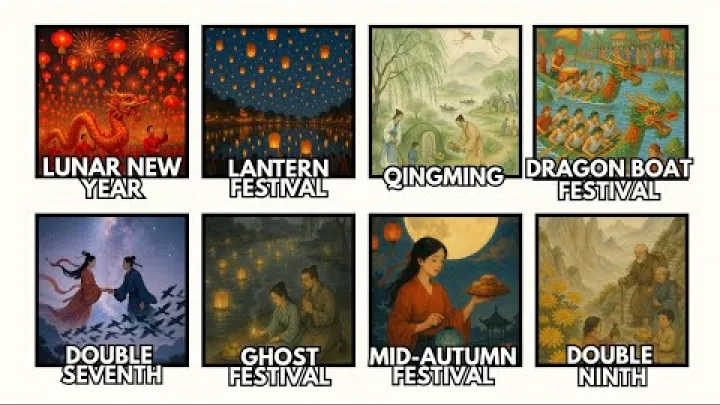
China public holidays in 2026 include 13 statutory days for all citizens, but the official calendar also creates longer rest periods by connecting holidays with weekends. This means a nine-day Spring Festival break or a seven-day National Day break can contain ordinary rest days as well as statutory holidays, while some weekends are designated working days. This guide covers mainland China, explains the confirmed 2026 dates, and separates national holiday rules from local opening schedules. It also shows how to plan work, school, banking, government services, shopping, and transport without treating an estimate as a confirmed calendar.
China Public Holidays in 2026
The 2026 national holiday arrangement distinguishes between announced rest periods, statutory holiday days, and adjusted working days. The calendar below is based on the current official English schedule published by the Beijing Municipal Government. It is intended as a mainland China national reference; a local office, bank, school, venue, or transport operator may publish a separate operating notice.
The Confirmed 2026 Holiday Calendar
The table uses the full announced rest period rather than listing only the statutory days. The statutory baseline is shown separately so that readers do not mistake every day in a long break for a statutory public holiday.
| Holiday | Announced rest period | Statutory baseline | Adjusted working day or days |
|---|---|---|---|
| New Year's Day | January 1-3, Thursday-Saturday | 1 day | January 4, Sunday |
| Spring Festival | February 15-23, Sunday-Monday | 4 days | February 14 and February 28, Saturdays |
| Qingming Festival | April 4-6, Saturday-Monday | 1 day | None designated |
| Labor Day | May 1-5, Friday-Tuesday | 2 days | May 9, Saturday |
| Dragon Boat Festival | June 19-21, Friday-Sunday | 1 day | None designated |
| Mid-Autumn Festival | September 25-27, Friday-Sunday | 1 day | None designated |
| National Day | October 1-7, Thursday-Wednesday | 3 days | September 20 and October 10 |
The rest period is inclusive. For example, the 2026 Spring Festival period runs for nine calendar days, but only four days belong to the statutory baseline. The other rest days are created by the annual arrangement and the placement of weekends. A date in the final column is not a holiday closure; it is an official working day even when it falls on a Saturday or Sunday.
How to Read Statutory Days, Rest Days, and Working Weekends
China's holiday calendar uses several categories that are easy to confuse:
- Statutory public holiday: A day included in the legal holiday entitlement for all citizens. The 2026 statutory baseline totals 13 days.
- Ordinary rest day: A regular weekly day off, usually Saturday or Sunday, that may be placed next to a statutory holiday.
- Announced rest day: A day included in the longer break published in the annual national arrangement. It may be a statutory day or an ordinary rest day.
- Adjusted working day: A Saturday or Sunday that is officially designated as a workday so that the calendar can create a longer continuous break elsewhere.
The 13 statutory days therefore do not equal the number of consecutive days shown in the annual calendar. A nine-day announced break is a period of rest, not nine separate statutory holidays. This distinction matters for payroll, leave records, school schedules, appointments, and business opening plans.
Example: In 2026, February 14 is a Saturday designated as a working day, February 15-23 is the Spring Festival rest period, and February 28 is another designated working Saturday. The working weekends help create the long break, but they remain workdays for calendar scheduling. Their treatment under labor and payroll rules is a separate question.
When checking a date, use the table in this order: first identify whether it is inside an announced rest period; then check whether it is one of the statutory days; finally check whether the official notice labels a nearby weekend as a working day. A normal Saturday or Sunday may be a rest day, but a listed adjusted working weekend should not be treated as an automatic closure. This three-step check is useful when coordinating a mainland China team with colleagues or service providers that follow another country's calendar.
The Structure of China’s Public Holiday System
China's national holiday system combines fixed Gregorian dates, traditional-calendar dates, and an annual adjustment notice. The legal baseline explains the holiday entitlement, while the yearly notice determines the exact pattern of rest days and working weekends.
The Seven Public Holidays for All Citizens
A statutory public holiday is a day recognized in the national legal framework as a holiday for all citizens. The seven all-citizen holidays and their statutory lengths are summarized below. The National Administrative Regulations Database provides the underlying national rules.
| Holiday | Calendar basis | Statutory length |
|---|---|---|
| New Year's Day | Fixed Gregorian date | 1 day |
| Spring Festival | Traditional lunar calendar | 4 days |
| Qingming Festival | Solar term around early April | 1 day |
| Labor Day | Fixed Gregorian date | 2 days |
| Dragon Boat Festival | Traditional lunar calendar | 1 day |
| Mid-Autumn Festival | Traditional lunar calendar | 1 day |
| National Day | Fixed Gregorian dates | 3 days |
These statutory lengths add up to 13 days under the revised framework. They are the legal baseline, not a promise that each holiday will produce a break of the same length every year. The annual arrangement may connect a statutory day with nearby weekends and may use an adjusted working day to form a longer rest period.
Fixed Dates, Lunar Dates, and Qingming
New Year's Day, Labor Day, and National Day use fixed Gregorian calendar dates. Their statutory dates do not move from year to year, although the surrounding rest period can change depending on the weekday pattern. In 2026, the main dates are January 1, May 1, and October 1.
Spring Festival, Dragon Boat Festival, and Mid-Autumn Festival are based on the traditional Chinese lunar calendar. Their dates therefore move between Gregorian calendar dates. In 2026, the announced periods are February 15-23 for Spring Festival, June 19-21 for Dragon Boat Festival, and September 25-27 for Mid-Autumn Festival.
Qingming is linked to a solar term rather than a simple fixed Gregorian date. It falls around early April and is observed from April 4-6 in the 2026 announced arrangement. Traditional-calendar dates can be calculated in advance, but the official national notice still determines the civil rest period and any adjusted working days. For readers familiar with religious or traditional calendars, the practical point is that a moveable underlying date should not be used as a substitute for the annual government schedule.
Holidays for Specific Groups
China also recognizes several holidays or partial holidays for specific groups. These are not part of the seven all-citizen statutory public holidays and do not create a universal nationwide closure.
| Day | Date | Eligible group | General entitlement |
|---|---|---|---|
| International Women's Day | March 8 | Women | Half day |
| Youth Day | May 4 | Youths aged 14 or older | Half day |
| Children's Day | June 1 | Children under 14 | One day |
| Army Day | August 1 | Active-duty military personnel | Half day |
How these group-specific days are implemented depends on the relevant school, public institution, military unit, or employer. A school may address Children's Day in its own calendar, while a private company may have an internal policy for Women's Day or Youth Day. These dates should not be read as additional nationwide closure days.
How Holiday Arrangements and Make-Up Working Days Work
The annual holiday arrangement is designed to create practical blocks of rest around the statutory baseline. It does this by joining statutory holidays with nearby weekends and by identifying other weekend dates as working days.
Why Statutory Holidays Become Longer Breaks
The national rules allow all-citizen holidays to be arranged together with ordinary weekly rest days. The arrangement may also take account of paid annual leave so that a short statutory entitlement becomes a longer period away from work. This is why the public holiday calendar can show three, five, seven, or nine consecutive days of rest even though the legal statutory total is only 13 days across the year.
Recent arrangements under the revised framework have generally aimed for a longer Spring Festival period, a five-day Labor Day period, and a seven-day National Day period. These are planning patterns, not permanent guarantees. The official notice for each year controls the result, and the 2026 schedule provides a nine-day Spring Festival period, a five-day Labor Day period, and a seven-day National Day period.
Calendar example: The 2026 Labor Day break runs from Friday, May 1 through Tuesday, May 5. May 9, a Saturday, is designated as a working day. The five-day rest period is therefore a combination of statutory holiday days and arranged rest days; May 9 is not an extra holiday.
Employees can sometimes combine an announced break with paid annual leave to create a longer personal absence, but annual leave normally requires approval under the employer's leave process. It is not an automatic extension of the national holiday.
How to Spot an Adjusted Working Day
The 2026 arrangement identifies six adjusted working dates: January 4, February 14, February 28, May 9, September 20, and October 10. They are shown separately in the calendar because they should be treated as workdays when employees, employers, schools, and service providers plan their schedules.
- January 4: A Sunday working day following the New Year's Day rest period.
- February 14 and February 28: Saturdays designated around the nine-day Spring Festival period.
- May 9: A Saturday working day connected with the five-day Labor Day period.
- September 20 and October 10: A Sunday and a Saturday designated around the National Day period.
A weekend date in a phone calendar or booking system does not override the official designation. A company may schedule work on one of these dates, an appointment may be available because the date is a working day, and a school or local institution may use a separate academic or service calendar. The national rules generally seek to keep consecutive working periods before or after a holiday within six days, except in special circumstances, but the published annual arrangement remains the practical calendar to follow.
Public Holidays, Work, and Pay
For employees, the most important distinction is not simply whether a date is a Saturday or Sunday. It is whether the date is a statutory holiday, an ordinary rest day, or an adjusted working day under the official arrangement.
Paid Statutory Holidays and Overtime
Statutory public holidays are treated as paid days off under the labor framework. The Shanghai Municipal Government explains that statutory holidays are paid days off under Article 51 of the Labor Law and discusses how added statutory holidays can affect salary calculation.
Work performed on a statutory public holiday is different from work performed on an adjusted working day. A Saturday that has been designated as a working day is not automatically a statutory holiday simply because it falls on a weekend. Conversely, a statutory holiday does not lose its legal character because it appears inside a longer announced break.
For this reason, an overtime calculation should not be based on the weekday label alone. The applicable work-hour system, the date's official classification, the employment arrangement, and current labor rules can all matter. Employer policies and local implementation may also affect scheduling and payroll administration. Before relying on a specific overtime payment amount or compensation method, check the current labor and payroll rules or ask the employer's human resources department or qualified labor adviser. This article explains the calendar distinction and is not individualized payroll advice.
Employer Scheduling and Leave Planning
Employers use the official calendar to plan staffing, production pauses, customer support, duty rosters, annual leave, and work on designated weekends. The national calendar does not require every company, industry, or workplace to use identical opening hours or leave procedures.
Employees and employers can use this short checklist:
- Mark each statutory holiday, ordinary rest day, announced rest day, and adjusted working day separately.
- Compare the national calendar with the internal roster, shift plan, or workplace closure notice.
- Confirm annual leave approval rather than assuming that a long public holiday period includes personal leave.
- Check whether a team, factory, store, or service desk uses a duty arrangement during the announced break.
Attendance planning benefits from keeping two records: the national date classification and the workplace's actual roster. The first helps identify an official working weekend or rest period; the second tells an employee whether they are personally scheduled to work, on leave, or covered by a duty rotation. This is particularly important for factories, retail, customer-support teams, and international businesses whose operating needs may continue during a national break.
This distinction is especially useful for remote workers and international teams. A foreign office may remain open while a mainland China team is on holiday, or a local team may work an adjusted Saturday while overseas colleagues expect a normal weekend. Written confirmation of the internal schedule can prevent missed deadlines and incorrect availability assumptions.
Effects on Offices, Banks, Schools, Shops, and Transport
The national calendar gives a useful starting point, but it does not provide the operating hours of every local institution. Service arrangements are often announced separately and can vary by city, branch, school, venue, and operator.
Government Offices and Banks
Many routine government offices reduce their hours or close during national holiday periods. Essential public functions may use duty arrangements, but a duty service is not necessarily equivalent to a normal counter service. A time-sensitive permit, document submission, registration, payment, or appointment may not be accepted during the closure period.
Bank branches also vary by bank and location. Some branches may offer limited holiday service, while others close or change their hours. Online banking and mobile services may remain available, but they do not always replace an in-person identity check, document submission, or branch-specific transaction.
For a government office, identify the exact office and confirm its last acceptance time, holiday closure, appointment rules, and emergency contact. For a bank, check the specific branch through the bank's official website, application, telephone service, or branch notice. Complete time-sensitive administrative and banking tasks before the closure period when possible, rather than assuming that a nearby branch or a digital channel will provide the same service.
Schools and Academic Calendars
Schools generally observe the national public holiday periods, but the public holiday calendar is not a complete academic calendar. Local education authorities and individual schools set term dates, winter and summer breaks, make-up classes, examinations, and other academic arrangements.
A national calendar working weekend also does not automatically mean that every school will hold classes on that date. A school may follow a local education bureau notice or publish its own adjustment. Families and students should therefore compare the national holiday arrangement with the school's calendar and the relevant local education authority notice.
Group-specific dates can be handled separately. Children's Day on June 1 may affect a school's activities or schedule, but it should not be confused with a nationwide closure for all workers and students. The school's own notice is the practical reference for attendance.
Shops, Restaurants, and Transport During Long Breaks
Spring Festival, Labor Day, and National Day can concentrate travel and consumer demand, but the national calendar does not determine whether a particular shop, restaurant, attraction, train, bus, airline, or local transport service will operate. Some businesses remain open with shorter hours or staff rotations; others close for part of the break. Transport operators may add, reduce, or change services according to demand and local conditions.
The scale of demand can be substantial. Xinhua reported 9.41 billion inter-regional passenger trips during the 40-day 2026 Spring Festival travel rush, illustrating why popular routes and transport hubs require early planning. That national figure does not provide a timetable for a specific route, station, airport, venue, or city.
Before arranging travel or a time-sensitive service, check:
- Venue: Opening dates, entry times, reservation rules, and temporary capacity limits.
- Carrier: The official train, airline, coach, ferry, or local transport schedule for the exact departure and return dates.
- Booking: Ticket release times, cancellation terms, and whether the reservation can be changed if plans move.
- Payment: Accepted payment methods and whether an identification document or local booking account is required.
- Return travel: A confirmed return option rather than assuming that an extra service will be available after the holiday peak.
Higher demand is not proof that every route will have the same prices, queues, or service frequency. Use the national calendar to identify likely peak periods, then rely on the specific operator, station, venue, and local service notice for the details.
How to Verify and Plan for Any Year
A reliable holiday plan uses two layers of information: the national annual arrangement for dates and working weekends, followed by local notices for actual services. This approach is more reliable than copying dates from an old calendar or assuming that a familiar holiday pattern will repeat.
Use the Official Notice for the Target Year
The target year for this article is 2026. The confirmed calendar above should be read as a 2026 table, not as a general template for every year. The annual State Council holiday arrangement is the authoritative reference for exact national rest periods and adjusted working days. Local government pages, including English-language pages, can provide useful summaries for international readers, but they do not replace a specific local operating-hours notice.
Use this verification workflow:
- Find the official national holiday arrangement for the target year.
- Confirm that the notice and the calendar table refer to the same year.
- Read both the announced rest periods and the listed adjusted working weekends.
- After identifying the dates, check the separate notice from the relevant employer, school, government office, bank, venue, or transport operator.
Keep the national schedule and the local service schedule separate in your planning notes. The national notice answers when the countrywide arrangement applies; it does not guarantee that every branch, school, shop, or route will use the same hours.
For a page or personal calendar that will be reused, record the year beside every date and retain the original official notice. If a later correction or local adjustment appears, update the service-specific entry rather than silently changing the national holiday classification. This prevents a branch closure, school adjustment, or operator timetable from being mistaken for a change to the nationwide calendar.
Plan Around Closures and Peak Demand
Different readers need different actions around the same holiday dates:
- Workers: Compare the official calendar with the employer's roster, especially before booking travel around an adjusted working weekend.
- Visitors: Check the holiday period first, then confirm venue admission, transport schedules, reservations, and the return journey.
- Students and families: Use the school or local education authority calendar for term dates, make-up classes, and attendance.
- People handling official or banking tasks: Submit documents, make payments, and confirm appointments before the relevant closure period.
The safest sequence is simple: verify the national calendar, confirm local operations, and then book, submit, or finalize the plan. Treat this as practical planning guidance rather than a replacement for an employer instruction, school notice, payroll rule, or institutional requirement.
What to Do With Future-Year Estimates
Lunar-calendar and solar-term dates can often be calculated before the start of a year. That makes it possible to estimate when Spring Festival, Dragon Boat Festival, Mid-Autumn Festival, or Qingming may occur on the Gregorian calendar. It does not establish the exact combination of rest days and adjusted working days.
Calendars for 2027 and later should be labeled estimated or provisional until the State Council issues the relevant annual arrangement. Do not place forecast dates in the confirmed 2026 calendar or treat an unofficial calendar aggregator as final when an official notice is available.
Before buying nonrefundable tickets, finalizing payroll, setting a contractual deadline, or promising availability to a client, compare the plan with the latest official notice for that year. If the notice has not yet been issued, keep the date provisional and avoid making a commitment that depends on an unconfirmed working weekend or rest period.
Conclusion: Use the Official Calendar as the Final Reference
China's public holiday system is easiest to understand as two connected layers. The first is the 13-day statutory baseline for all citizens. The second is the annual arrangement that combines those statutory days with ordinary weekends and designates certain weekends as working days.
For 2026, use the confirmed calendar to identify the nine-day Spring Festival period, five-day Labor Day period, seven-day National Day period, and the adjusted working dates. Then check the specific employer, school, office, bank, venue, and transport notices that affect your plan. For 2027 and later, treat the dates as provisional until the official annual arrangement is released.
Select area
Create a post
Posting is free and no registration is required.