Where to Stay in Lijiang: Best Areas by Travel Style

Choosing where to stay in Lijiang is mainly a choice between an atmospheric pedestrian old town, a quieter ancient-town setting, and a practical urban or transport base. For a first visit, Dayan Old Town, also called Lijiang Ancient Town, is the strongest default for walkable sightseeing and evening options, but it is not best for every arrival, sleep preference, or excursion plan. This guide compares Dayan, Shuhe, Baisha, New Town, station areas, and nature bases near Jade Dragon Snow Mountain, Lashihai, and Wenhai Lake. It also explains how to choose an accommodation type and check access, noise, facilities, transport, and everyday movement before paying.
Quick Answer: Where Most Visitors Should Stay
For most first-time visitors, the best area to stay in Lijiang is Dayan Old Town or a property immediately outside one of its gates. This gives you the easiest access to traditional lanes, canals, restaurants, shops, cultural sights, and evening activity. The best choice within Dayan depends on whether you want to sleep inside the pedestrian core, need a vehicle-accessible arrival point, or want to stay close to the busy areas around Sifang Street.
The Default Recommendation for First-Time Visitors
Choose Dayan Old Town when the main purpose of your trip is to experience Lijiang itself. You can spend the day walking through historic lanes and return to the same area for dinner or an evening stroll without arranging transport for every activity. The area has a broad range of accommodation, including courtyard inns, boutique guesthouses, hostels, and hotels near Lijiang Old Town.
There is an important difference between a room deep inside the old town and a property beside a gate. Internal lanes offer stronger atmosphere, but vehicles may not reach the door. Guests may need to walk over stone surfaces with luggage from a meeting point. Accommodation near the North Gate or South Gate is usually a more practical compromise for visitors arriving late, carrying large bags, or planning frequent taxi transfers. A hotel just outside the gates can offer even easier drop-off while remaining close enough for daily walks.
Use this simple distinction when comparing listings:
- Maximum immersion: stay deeper inside Dayan, preferably on a quieter side lane rather than directly beside an entertainment area.
- Best balance of atmosphere and access: look near the North Gate or South Gate, and confirm the road used for vehicle drop-off.
- Easy arrival and predictable access: choose a property outside the pedestrian core but within a convenient walk or short local transfer.
- Lower cost or more room: compare nearby New Town accommodation as well as old-town guesthouses, because a central label does not guarantee the best total value.
When to Choose a Quieter or More Practical Base
Dayan is the default, not a universal answer. Choose Shuhe Ancient Town if you want historic character with calmer evenings and accept additional travel to Dayan. Choose Baisha Ancient Town if village atmosphere, cultural heritage, photography, and views toward Jade Dragon Snow Mountain matter more than nightlife. Choose New Town or another Gucheng urban area if you need wide roads, parking, standardized facilities, or an easier vehicle arrival.
A station-area hotel can be useful for a late arrival, an early train, or a single logistics-heavy night. A mountain or countryside property is better treated as a specialist stay or an extension, not as the automatic base for a short first visit. A quick decision path is:
- Sightseeing first: Dayan, especially near a gate or on a quieter lane within walking range of the core.
- Quiet evenings: Shuhe, Baisha, or a carefully chosen edge location away from nightlife.
- Transport first: New Town, a station area, or a road-accessible gate location.
- Mountain scenery: Baisha or a specific mountain or foothill property after checking its actual position and services.
- Budget and a longer stay: compare hostels, urban hotels, and apartments by total cost, facilities, and commuting needs.
Compare the Main Areas of Lijiang
Lijiang accommodation is spread across several very different settings. The name of a district may cover both pedestrian lanes and modern roads, so compare the exact location rather than relying on the area label alone. The following sections explain what each base is best suited to and where its practical limits appear.
Dayan Old Town: The Default Sightseeing Base
Dayan Old Town is the historic pedestrian core of Lijiang. Its traditional lanes, canals, bridges, courtyard buildings, restaurants, shops, and evening venues make it the most convenient base for visitors who want to explore on foot. It is also the area most people mean when they search for hotels near Lijiang Old Town or accommodation in Lijiang Ancient Town.

However, Dayan is not one uniform lodging zone. Your experience changes according to the distance from Sifang Street, the nearby canal and bar areas, and the nearest vehicle-accessible road.
| Position in Dayan | Atmosphere | Access | Nighttime pattern | Cost level | Best for |
|---|---|---|---|---|---|
| Deep internal lanes | Most atmospheric | Often pedestrian access | Varies by lane | Medium to high | Old-town immersion |
| North or South Gate edge | Atmospheric and practical | Easier drop-off | Usually less concentrated than bar areas | Medium to high | First visits and luggage |
| Sifang Street and bar areas | Busy and central | Easy for walking | Most active and potentially noisy | Medium to high | Nightlife and convenience |
| Outside the gates | Less immersive | More direct vehicle access | Depends on the road and property | Wide range | Late arrivals and practical stays |
Prime positions in the old town can command a premium, but Dayan also has hostels, simple inns, boutique properties, and nearby urban hotels across a broad range of budgets. Treat cost as a property-and-date question rather than a fixed feature of the neighborhood. A room with a courtyard may look appealing, but its location beside a restaurant, canal, or busy lane can matter more for sleep than its design.
For the best compromise, search by a named gate and inspect the map pin. A property described only as being in Lijiang Old Town may be deep in a pedestrian lane, near a crowded central area, or outside the walls on a road. These locations can all be useful, but they solve different problems.
Shuhe Ancient Town: A Quieter Old-Town Alternative
Shuhe Ancient Town offers preserved lanes, canals, small bridges, guesthouses, boutique inns, and a slower evening rhythm than the busiest parts of Dayan. It suits travelers who want an ancient-town setting but do not need to step directly into Lijiang's main nightlife every night. Couples, slower travelers, and visitors with a longer itinerary often value this balance.
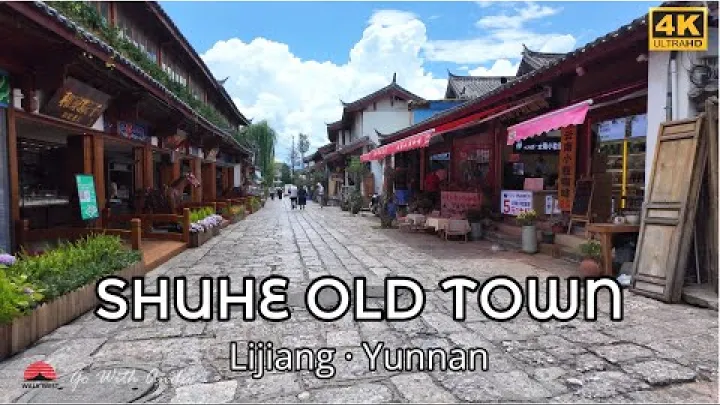
The trade-off is additional transport planning. A stay in Shuhe means extra travel when you want to visit Dayan, use Lijiang Railway Station, reach a bus departure, or return from a late evening in the central old town. This does not make Shuhe isolated, but the exact road position still matters. Some properties are inside pedestrian lanes, while others are near an edge where a car can stop more easily.
A booking search such as the Shuhe Old Town listings on Booking.com can help you compare the accommodation mix for your dates. Read the map and recent reviews alongside the photos. Shuhe is generally described as quieter, but a property beside a restaurant, event space, or active lane may not feel quiet at room level. It is also not automatically cheaper than Dayan; boutique and resort-style properties can be priced above simple old-town inns.
Baisha Ancient Town: Culture and Mountain Views
Baisha Ancient Town is a low-key base north of Dayan, associated with Naxi heritage, village streets, traditional culture, and views toward the Jade Dragon Snow Mountain landscape. It is a good match for travelers who prefer murals, walking, photography, sunrise or mountain scenery, and a small-scale homestay experience to bars and shopping.

Baisha works particularly well when the accommodation is part of the experience. A courtyard, terrace, garden, or view can make sense here because the purpose is to slow down and spend time in the surrounding setting. These features are not guaranteed across the whole area, however. A mountain view may depend on the exact room, weather, nearby buildings, and the property's orientation.
The main limitation is the smaller supply of evening services. If your itinerary includes frequent trips to Dayan, regular late dinners, or several early transport connections, Baisha may require more planning than its map distance suggests. Use the property's current map pin and transport information when comparing it with Shuhe or Dayan, and treat any stated transfer time as specific to that property and route.
New Town and Gucheng: The Practical Urban Base
Lijiang New Town and the wider Gucheng District offer a modern street grid, everyday restaurants, commercial areas, chain hotels, mid-range hotels, and more direct vehicle access than the pedestrian ancient towns. This is often the easiest choice for travelers who want parking, elevators, larger standardized rooms, predictable facilities, or a simple arrival and departure.
New Town is functional rather than atmospheric. Reaching Dayan may involve a walk, taxi, or another local transfer depending on the hotel's actual position. That trade-off can be worthwhile for families with large bags, remote workers who need a desk and reliable room facilities, or travelers who plan to spend much of the day outside the old town on organized excursions.
Gucheng is a broad label, not a precise neighborhood. When a listing says it is near the old town, identify the actual map position, nearby gate, road, plaza, or commercial landmark. Compare the full cost of the room and local transfers rather than assuming that a lower nightly rate is cheaper overall.
Special Bases for Transport and Nature
Not every Lijiang trip should use an ancient town as its base. Transport hubs and nature areas can solve a specific problem, but they may reduce spontaneous sightseeing and evening choice. Consider them when the itinerary gives that practical or scenic priority enough weight.
Railway and Bus Station Areas
Station-area accommodation is most useful for a late arrival, an early departure, a regional road journey, or a short transit night. It is usually a functional base rather than an old-town experience. Before booking, identify whether your next journey begins at Lijiang Railway Station or at a bus station, because these are different transport considerations and should not be treated as interchangeable.
Some station hotels advertise very short walking distances. For example, a property shown on the Lijiang Railway Station listings on Trip.com is marketed as a four-minute walk from the station. Such descriptions can be useful for comparing logistics, but the actual route, entrance, luggage requirements, and current availability still belong to the individual listing.
Consider a staged stay when the transport schedule makes it worthwhile:
- Arrival night: stay near an accessible road, New Town, or the relevant station if you arrive late and want to avoid moving through old-town lanes with luggage.
- Sightseeing nights: move to Dayan, Shuhe, or Baisha once you can travel in daylight and settle into the area that matches your interests.
- Departure night: remain near the departure point when an early train or bus would make a cross-city transfer stressful.
Jade Dragon Snow Mountain Stays
Accommodation associated with Jade Dragon Snow Mountain can include scenic-area properties, tent accommodation, resorts, and foothill stays. These should be distinguished from Baisha, Yuhu Village, and other nearby cultural or village bases. A listing that uses the word mountain may offer a view without being close to the attraction entrance, so the map position matters.
An overnight mountain stay suits travelers who value scenery, a resort setting, an early start, or a deliberate nature extension. It is less suitable as a general-purpose base for visitors who want easy access to Dayan restaurants, shopping, and evening activity. For many itineraries, staying in Dayan, Shuhe, or Baisha and making a day excursion is simpler, while an overnight stay adds value only when the property experience is itself a priority.
Before booking near the mountain, confirm the property's elevation and available services, including food, heating, reception hours, and communication. Weather can affect views and attraction access, and transport may be limited outside the main service periods. Ask how guests reach the property, whether transfers are available at the planned arrival time, and what the return plan is before choosing a remote location. Do not assume that a mountain listing guarantees cable-car access, trail access, clear views, or convenient connections.
Lashihai and Wenhai Countryside Bases
Lashihai offers a rural lake and wetland setting, while Wenhai Lake is associated with a quieter highland meadow and lake environment. These bases appeal to travelers seeking photography, riding, open landscapes, or a retreat-style stay rather than dense urban convenience.
Their service pattern can be very different from Dayan, Shuhe, Baisha, or New Town. Food choices, reception hours, payment methods, luggage handling, and local transport may depend heavily on the individual property. The same countryside setting that creates a peaceful experience can make an unplanned late arrival or an evening meal more difficult.
Choose Lashihai or Wenhai mainly for a deliberate countryside extension or a specialized itinerary. Before committing, confirm a car or transfer, the check-in arrangement, food availability, accepted payment methods, luggage needs, and a realistic return plan. For a short first visit focused on historic Lijiang, keeping one central base is usually simpler.
Choose Your Base by Travel Purpose
The best area changes with the purpose of the trip. A visitor who wants nightlife needs a different room position from a visitor who must leave before sunrise, and a long-stay guest should evaluate facilities that may not matter for one night.
For First-Time Sightseeing and Evening Activity
Choose Dayan Old Town when you want the simplest combination of historic sightseeing, restaurants, shops, and evening activity. A short visit benefits from reducing transfers, so staying near the old town is usually more useful than choosing a cheaper but less central address.
- Nightlife and central activity: choose a room near Sifang Street or the busier canal and bar areas, but accept a greater chance of crowds and nighttime noise.
- Sightseeing with better sleep: choose a quieter internal lane away from the main entertainment areas, or a property near a gate with a confirmed walking route.
- Late arrival or heavy luggage: choose the North Gate, South Gate, or a road-accessible location outside the pedestrian core.
- Quieter ancient-town experience: choose Shuhe if you are comfortable arranging transport to Dayan.
On a longer trip, a split base can combine Dayan's convenience with Shuhe's slower evenings or Baisha's mountain setting. On a short stay, the extra move may take more time than it adds, particularly if bags and early excursions are involved.
For Hiking and Mountain Excursions
Dayan, Shuhe, and Baisha can all serve as lower-basin bases for Jade Dragon Snow Mountain and other regional excursions. The best choice depends less on a general area ranking than on the operator's pickup point, your preferred evening environment, and how easily the property can handle an early departure.
For excursion-heavy travel, road access, luggage storage, early breakfast, transfer assistance, flexible cancellation, and a clear reception process may be more valuable than being in the most atmospheric lane. Ask the accommodation provider and the current excursion operator where pickup occurs and how early guests must be ready. A property that is close to a sightseeing area may still be inconvenient if the vehicle cannot reach its entrance.
Tiger Leaping Gorge and other multi-day routes require separate planning. If the itinerary continues along a trail or gorge route, an overnight near that route may be more sensible than returning to a Lijiang hotel after every excursion. Keep the Lijiang base for the nights when you actually need city or old-town access, and distinguish it from accommodation on the route itself.
For Budget Travelers, Long Stays, and Work-Friendly Practicality
Budget travelers can compare dormitories and private hostel rooms in or near Dayan and Shuhe with budget hotels and modern chain properties in New Town. Hostel dormitories usually reduce the nightly cost, while private rooms provide more privacy but may approach the price of a simple hotel once demand and dates are considered.
Lijiang hostel listings on Hostelworld illustrate the range of backpacker-oriented facilities, including gardens, social areas, and in some cases on-site bars. These features are useful for solo travelers, but they may also mean more shared activity or noise. Compare the room type, bathroom arrangement, heating, and location rather than choosing only by the headline rate.
For a longer stay or remote work, prioritize reliable Wi-Fi, heating, laundry, a usable desk or work surface, daytime quiet, access to food, and a practical cancellation policy. An inexpensive room that requires frequent taxi rides to reach meals or sights may cost more in total. Serviced apartments or urban hotels can be useful when space and routine matter, but confirm what services are actually included.
For Families, Couples, and Quiet Nights
Shuhe, Baisha, quieter edges of Dayan, and selected New Town hotels can work well for travelers who value rest, space, or easier vehicle access. The right choice depends on the room and its exact position. A quiet area can still contain a noisy courtyard, restaurant, or event space, while a central area can sometimes offer a well-insulated room away from activity.
Pedestrian ancient towns are attractive for families because children can explore lanes without normal city traffic in the immediate core, but stone surfaces, steps, bridges, and narrow routes can make strollers and large suitcases difficult. Couples should compare a mountain-view or courtyard property with a room near nightlife according to whether the priority is scenery, convenience, or evening activity.
- Ask whether the property has an elevator or only stairs.
- Confirm room size, bed arrangement, heating, hot water, and bathroom facilities.
- Check whether breakfast is included and whether it is available at the planned departure time.
- Ask about luggage assistance and the distance over pedestrian lanes.
- Read recent reviews for sleep quality, room condition, and family facilities instead of assuming that an area label means quiet or family-friendly.
Choose a Lodging Type and Booking Location
Area selection and lodging type should be considered together. A traditional inn can be ideal in Dayan but awkward for heavy luggage, while a full-service hotel can be less atmospheric but better for an early excursion or a longer working stay.
Ancient-Town Inns and Boutique Guesthouses
Courtyard inns and boutique guesthouses are the strongest choice for travelers who want traditional architecture, gardens, atmospheric lanes, and an immersive old-town stay. Their design can make the accommodation feel like part of the destination rather than simply a place to sleep.
The practical trade-offs are narrow lanes, steps, limited vehicle access, variable sound insulation, and the possibility of carrying luggage from a gate or road. A property deep inside Dayan may be excellent for walking but inconvenient for a taxi transfer. The same applies to internal lanes in Shuhe and Baisha.
Compare the position within the town as carefully as the town itself. Near the North Gate or South Gate can be more practical; set back from Sifang Street may be better for sleep; near a main canal or bar area may be better for evening access. Look for recent information about heating, hot water, Wi-Fi, luggage assistance, and room condition. Traditional design does not automatically mean better service, quieter rooms, or easier access.
Hotels, Resorts, Hostels, and Serviced Apartments
Match the lodging type to the purpose of the stay:
- Full-service and chain hotels: useful for predictable facilities, elevators, parking, larger standardized rooms, business amenities, or a simple arrival and departure.
- Resorts and scenic properties: suitable for a celebration or nature-focused extension when views and on-site facilities justify the higher cost or longer transfer.
- Hostels: useful for solo travelers and backpackers seeking lower costs, social spaces, gardens, and local travel information.
- Serviced apartments: useful for longer stays when a kitchen, laundry, or extra living space is confirmed and genuinely needed.
Do not assume that an apartment-style listing provides hotel services. Confirm kitchen equipment, laundry, registration arrangements, length-of-stay rules, payment details, reception hours, and cleaning. Compare categories by purpose and total convenience rather than by brand name or a ranking that may change after your booking dates.
Verify the Listing Before You Pay
Marketing labels such as near Lijiang Old Town, mountain view, station hotel, or ancient-town inn are useful starting points, not precise guarantees. Use this pre-payment checklist to compare the listing with the experience you actually need:
- Map and address: compare the map pin, full address, nearby landmark, and named gate with the description. Make sure the property is in the intended town or district.
- Arrival route: identify the road where a vehicle can stop, the walking route from that point, stairs or bridges, and whether staff help with luggage.
- Room evidence: read recent reviews for noise, heating, hot water, Wi-Fi, cleanliness, bed comfort, stairs, and any difference between room categories.
- Booking terms: confirm cancellation, payment, check-in hours, language support, transfer fees, breakfast, and any deposit or registration process shown by the current listing.
- Important claims: treat a view, short walking distance, parking statement, or transport promise as a point to confirm with the property when it affects your decision.
Recent reviews and direct replies from the property are more useful than an old travel post when a detail affects access, sleep, or a time-sensitive transfer. Keep a written record of any transfer arrangement or special request made before arrival.
Check Access, Walkability, Noise, and Safety
Lijiang's old towns are easy to explore on foot once you are settled, but sightseeing walkability is not the same as door-to-door accessibility. Transport schedules, luggage routes, nighttime noise, and ordinary crowd awareness should all be part of the accommodation decision.
Airport, Railway, and Bus Connections
Lijiang Sanyi International Airport is outside the central accommodation areas, so airport transport is especially relevant for late arrivals. The airport information described by Yunnanexploration reports that Airport Shuttle Bus Line 1 connects toward Lijiang Ancient Town and takes approximately one hour. Treat this as a planning reference rather than a fixed timetable: check the current route, stop, operating hours, and final walking connection for your travel date.

Lijiang Railway Station is a separate logistics point from Lijiang Bus Station. The railway station matters for train arrivals and departures, while the bus-station areas matter for regional road journeys. Identify the exact departure terminal shown on your current ticket or route information. A hotel that is convenient for one station may not be convenient for the other or for an old-town sightseeing plan.
Before booking a transport-focused night, check current airport, railway, and bus connections and ask the property to confirm the transfer route for your planned arrival time. For an arrival after dark, a road-accessible hotel may be worth more than an atmospheric room that requires a long walk. For an early departure, staying close to the exact station can remove one transfer and reduce the risk of a rushed morning.
Luggage, Walkability, and Nighttime Movement
Dayan, Shuhe, and Baisha include pedestrian lanes and uneven stone surfaces. A short distance shown on a map can still be difficult with a large suitcase, a stroller, or equipment for a hiking trip. Bridges, steps, narrow lanes, and an entrance that differs from the map pin can change the practical route.
New Town and station areas generally offer wider roads and more direct vehicle access, while ancient-town accommodation offers more immediate walking access to historic streets. Decide which type of walkability matters to you: walking from the room to sights, or getting from a vehicle to the room without carrying bags through lanes.
Before booking, confirm the property's exact gate, vehicle drop-off point, and luggage route. Ask about the final walking surface, steps, lighting, and luggage assistance, especially for a late arrival or a mobility limitation. Gate-adjacent accommodation is often the simplest compromise when you want the old-town atmosphere without a difficult first transfer.
Noise, Nightlife, and Sleep
Central Dayan, including areas around Sifang Street and nearby bar or canal zones, is the most natural choice for visitors who want evening activity close to the room. It is also where crowds, music, restaurant activity, and late movement are most likely to affect sleep. A listing can be convenient for nightlife and unsuitable for an early excursion or remote work at the same time.
Shuhe and Baisha are commonly associated with calmer evenings, but the room's exact position can override the broader area pattern. A property on a quiet town edge may sleep better than one in a central lane, while a courtyard room can still hear activity from shared spaces. Read recent reviews rather than relying only on a quiet or boutique description.
If you are sensitive to noise, request a room away from bars, main canals, and busy lanes. If nightlife is the priority, accept that a central position may involve more sound and choose a listing whose location makes that trade-off clear. Families, light sleepers, early-departure travelers, and remote workers should give noise control as much weight as walking distance.
Safety and Everyday Movement
There is not enough reliable evidence here to rank Lijiang neighborhoods by crime risk. General accommodation guidance from Agoda recommends normal vigilance in crowded areas and keeping belongings secure. Use that practical standard rather than assuming that one district is inherently safe or unsafe.
Everyday precautions include securing valuables in busy streets, watching for traffic and electric bikes near roads, taking care on uneven stone lanes, and using a clearly understood route when returning late. A property with a clear address, a known entrance, and a confirmed late check-in process can reduce logistical stress, but it does not replace normal awareness.
Check current local travel guidance before the trip. Ask the accommodation provider how late arrivals are handled, how to contact staff, which route to use after dark, and how to communicate in an emergency. Choose transport and walking arrangements that you understand rather than taking an unfamiliar late-night route solely to save a small amount on the room.
Final Recommendation: Match the Base to the Trip
If you want one answer, stay in Dayan Old Town or near the North Gate or South Gate. That is the most convenient base for a first visit centered on Lijiang's historic streets, cultural sightseeing, restaurants, and evening atmosphere. Choose a gate-adjacent or outside-the-gates property when luggage and vehicle access matter more than maximum immersion.
Choose Shuhe for quieter old-town evenings, Baisha for culture and mountain scenery, New Town for practical facilities and road access, a station area for a transport-heavy night, and Jade Dragon Snow Mountain, Lashihai, or Wenhai for deliberate nature extensions. The best Lijiang accommodation is not necessarily the most highly rated or most central listing; it is the property whose exact position, room conditions, access, and transport fit the way you plan to travel.
Select area
Create a post
Posting is free and no registration is required.