China Immigration Procedures: Arrival, Registration & Stay Guide
China immigration procedures begin before you travel and continue until you leave the country. The arrival card, border inspection, foreigner accommodation registration, address changes, stay administration, and departure-date checks are separate steps, even when they happen during the same trip. This guide follows that timeline and explains which tasks are usually handled nationally and which depend on a city, accommodation provider, or local public-security office. Visa issuance and detailed visa eligibility are outside the main scope, but the guide explains how your visa, visa-free record, or residence permit affects the procedures during your stay.
What China Immigration Procedures Cover
For an international visitor, immigration administration in China is a chain of records and decisions rather than one single registration. Some information is submitted before arrival, some is checked at the port, and some must be completed after you have an address in China.
The Difference Between Immigration Procedures and Visa Services
Visa services deal mainly with whether and how a person receives an entry document. China immigration procedures are broader. They include preparing entry information, completing border inspection, registering accommodation, managing a stay or residence permit, updating records after a move, and leaving before the permitted stay ends.
A visa, visa-free entry record, temporary entry authorization, or residence permit establishes the legal basis for the person’s stay. An arrival card does not replace that basis. Similarly, accommodation registration confirms where a foreign national is staying; it does not grant a visa, extend a stay, authorize employment, or authorize study.
The national legal baseline is set by the Exit and Entry Administration Law. Local public-security and exit-entry departments can provide different online systems, service windows, document instructions, or operating procedures. This is especially important for private accommodation, where the correct office depends on the address and local service coverage.
A Timeline From Preparation to Departure
Use the following workflow to separate the tasks that are easy to confuse. The table is a planning guide; the applicable record and local process depend on your entry category, accommodation, and status.

| Stage | Main task | Record to keep |
|---|---|---|
| Before departure | Prepare documents and complete the current arrival-card route if applicable | Submission confirmation, if provided |
| At the port | Complete border inspection and check the permitted-stay information | Entry and stay record |
| First accommodation | Complete or confirm hotel or non-hotel accommodation registration | Accommodation registration evidence |
| After a move | Register the new address and review any separate permit update | Old and new address records |
| Longer stay | Apply for an extension or permit service when the status requires it | Application receipt and official decision |
| Before departure | Compare the permitted-stay date with the itinerary | Confirmed departure plan |
The arrival card and border inspection are national entry steps, while accommodation registration and online services often have a local operating layer. A hotel may submit information through its own system, while a private host may need to use a police station, a municipal online service, or a public-security service window. Treat each new address or change of status as a possible new administrative event.
Before Entry: Prepare for China's Arrival Card and Border Formalities
Good preparation reduces errors at the border and makes later registration easier. The most important details are the same details that appear on your passport, travel booking, entry authorization, and first address in China.
China Arrival Card Online: Verify the Official Filing Channel
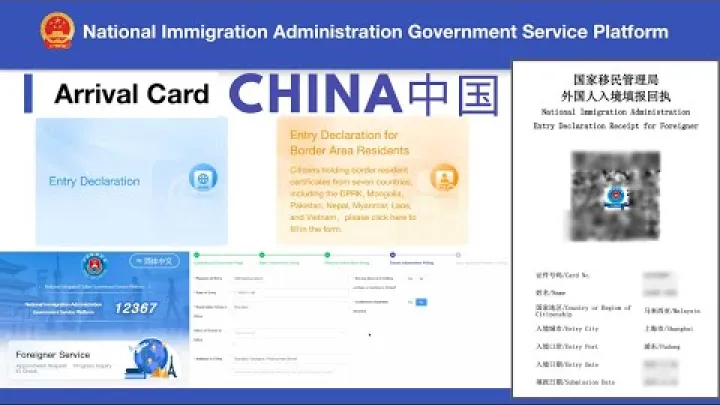
The official online route identified for China’s arrival information is the NIA Arrival Card Filling portal. Use the service name and address displayed on the current National Immigration Administration or other official government page. Before entering passport, travel, or address information, confirm that you are on the official service rather than a commercial application page that charges a fee or requests unnecessary data.
An online arrival-card submission is an entry-information step. It is not a visa application, a residence-permit application, a guarantee of admission, or permission to stay beyond the period granted by border authorities. A confirmation screen or reference number, if the system provides one, should be saved, but it does not replace your passport or entry authorization.
Do not assume that every traveler uses the same form. The portal displays instructions for different categories, including a separate route for certain holders of border resident certificates. Travelers using direct transit, cruise, group, crew, permanent-resident, border-resident, or other special arrangements should read the category instructions shown by the official service and follow the port’s directions if the online route does not apply.
Travel Details to Prepare Before the Journey
Prepare a small set of stable information before starting the form. Keep the original documents available while entering the data, because a minor spelling or date mismatch can create questions at check-in or border inspection.
- Travel document: Use the passport or other document that you will present for entry, and check its number, name, nationality, and expiration date.
- Entry basis: Have the applicable visa, visa-free entry basis, permit, or other authorization available. This article does not determine whether a particular traveler qualifies for one of these routes.
- Transport details: Prepare the flight, train, vessel, or other arrival information requested by the current form.
- China address: Keep the name and address of your first hotel, rental, private host, university, employer, or other accommodation provider available.
- Contact details: Have a usable telephone number and, where relevant, the host or accommodation provider’s contact information.
Check names, passport numbers, dates, and addresses against the documents before submitting. If your itinerary or first address changes after submission, use the current official correction or port procedure rather than relying on an old confirmation. Travelers who cannot complete the online form should follow the instructions at their departure airport, carrier, or Chinese port; an on-site digital or paper route should be used only when officially offered.
At the Port of Entry: Complete Border Procedures
At the port, the arrival information becomes part of a wider border-inspection process. The officer’s decision and the entry record control the start and duration of the lawful stay.
Border Inspection and the Start of the Permitted Stay
Border inspection can involve checking your identity, travel document, entry authorization, itinerary, declared information, and the purpose or conditions associated with the entry route. Submitting an arrival card helps provide information, but it does not determine whether entry is granted.
The permitted stay is determined by the applicable visa-free record, visa, temporary entry permit, residence-related document, or other official entry record. It is not determined by the arrival-card submission date alone. A visa’s period of validity for entry can also be different from the duration of stay allowed after entry, so do not use the visa expiration date as a substitute for the permitted-stay date.
At the border, identify the date by which you must leave or complete another lawful status procedure. Depending on the entry route, that date may appear in an entry record, document annotation, electronic record, or official communication. Save a photograph or written note of the relevant information where permitted, and keep it with your passport records.
If an officer asks for clarification about your accommodation or travel plans, answer consistently with your documents and current itinerary. If the actual destination changes after entry, deal with the accommodation record for the new address rather than assuming that the arrival card updates automatically.
Exemptions and Special Entry Categories
China has different entry arrangements for different travelers and itineraries. A person using a special route should not assume that the ordinary arrival-card process, border interview, or stay-management process applies in exactly the same way.
Examples that may have separate instructions include direct transit, cruise travel, group travel, crew travel, permanent-resident documents, and border-resident documents. The relevant official notice or portal should identify whether an arrival card is required, whether a particular transit condition applies, and what information must be presented at the port. An itinerary that changes from controlled transit to a normal stay can change the applicable process.
An exemption from an arrival card does not automatically remove accommodation registration or other obligations during the stay. The entry category and the accommodation arrangement should therefore be checked separately. If your route is unusual, ask the carrier or the relevant port authority before departure and retain the instruction you receive.
Accommodation Registration for Foreigners in China
Accommodation registration is one of the most important China foreigner registration steps after arrival. It records where a foreign national is staying and is separate from the arrival card and from the permitted duration of stay.
Hotels Versus Private Accommodation
The national baseline is that a hotel registers foreign guests through the public-security system when they stay at the hotel. The hotel normally collects the passport or accepted travel-document information during check-in and submits or records the accommodation details through its required process.

For lodging other than a hotel, the foreign national and the host or accommodation provider must follow the local registration process. The usual national deadline is within 24 hours after check-in. This can apply to a rented apartment, a private home, a friend’s home, a guest room, university housing, employer-provided lodging, or another non-hotel arrangement. A serviced apartment or guesthouse should not automatically be treated as a hotel simply because it is paid accommodation; ask the provider which registration route it uses.
The NIA accommodation-registration guidance describes the distinction between hotel and non-hotel lodging. A 72-hour rule should not be treated as a universal national default. If you are staying outside a hotel, ask the host or local public-security authority how to file and complete or confirm the registration within the applicable deadline, normally 24 hours after check-in.
| Accommodation | Usual route | What to confirm |
|---|---|---|
| Hotel | The hotel records the foreign guest at check-in | That the registration was completed and how evidence is provided |
| Private home or rental | The host and foreign national follow the local police or online process | Deadline, required documents, and registration evidence |
| University or employer lodging | The institution may support the submission or direct the resident to the local office | Who submitted it and how the foreign national can confirm it |
Keep an electronic or printed accommodation-registration record when one is issued. It can be useful when changing addresses, applying for a stay or residence service, checking in at another property, or explaining a record mismatch. A hotel booking confirmation alone is not necessarily the same as an accommodation registration record.
Online Accommodation Registration and In-Person Options
China online immigration registration is not one nationwide accommodation portal for every address. Municipal and local public-security authorities may provide different systems, eligibility rules, and service channels. The online system may also accept only certain document types or cover only selected districts and accommodation arrangements.
For example, Beijing municipal guidance describes an online accommodation-registration module accessed through the official Beijing Municipal Public Security Bureau Exit-Entry Administration account. The official guidance calls the service Online Accommodation Registration. Use the current municipal instructions and check whether the service covers your address, passport type, and host arrangement.
Shanghai provides a different local example through the Self-help Declaration System for Overseas Personnel’s Accommodation Registration. A system used in Shanghai should not be assumed to work for an address in Beijing, Guangzhou, Chengdu, a rural area, or another city. The name, login route, accepted documents, and service coverage can differ.
If the online application is unavailable, rejected, outside its coverage area, or unable to process your document, use the fallback named by the local authority. This may be a neighborhood police station, a public-security service window, or an authorized service station. Bring your passport, the host’s identification or contact details when requested, and proof of the address or accommodation arrangement. Ask how you will receive evidence of completion before leaving the office or closing the online session.
Moving to a New Address and Keeping Registration Records
A move to a new address can create a new accommodation-registration event. Do not assume that registration at your first hotel or previous apartment follows you automatically. Tell the new hotel, host, university, employer, or accommodation provider that you are a foreign national and ask which registration route applies at the new address.
Use this move checklist:
- Record the old address, check-out date, and existing accommodation-registration evidence.
- Give the new accommodation provider the travel document information required for the new record.
- Complete or confirm the new accommodation registration through the local online or in-person channel.
- If you hold a residence permit or another status tied to registered details, ask the local exit-entry authority whether a separate address or permit update is required.
- Keep evidence for both the old and new address, including submission dates and any official reply.
Accommodation registration and a residence-permit amendment are different procedures. A new accommodation form does not by itself change the address or other information recorded on a residence permit. After moving, obtain the new accommodation record and ask the local exit-entry authority whether the residence-permit record also needs updating, including which documents and deadlines apply to your circumstances.
Managing a Longer Stay or a Change of Circumstances
A longer stay can require a different administrative path from the one used for a short visit. The key question is whether you are extending the duration of a current visa-based stay or applying for, changing, or renewing a residence permit.
When a Visa Stay Extension Procedure Becomes Relevant
A visa stay extension is a separate administrative procedure from obtaining the original visa. It is handled by the competent exit-entry department of a Chinese public-security organ, and the applicant must provide the supporting materials required for the particular case.
Current NIA entry-exit and stay guidance states that a foreign national seeking an extension of the duration of stay specified in a visa should apply seven days before that duration expires. The NIA entry-exit and stay guidance should be read together with the instructions of the local exit-entry office that will receive the application, because service arrangements and supporting-document requirements can differ.
Do not wait until the last day to begin the process. Before applying, identify the office with jurisdiction, the appointment or submission method, the required supporting materials, and the date by which the application must be accepted. Until the authority confirms a different lawful period, do not assume that submitting an application automatically extends your stay. A late application should not be treated as a cure for an overstay.
If your travel purpose, employer, school, host, or other circumstance has changed, explain that change to the authority instead of selecting a procedure based only on the original itinerary. This guide does not determine which visa category or extension ground applies; it directs you to the official stay-extension procedure that matches your record.
Residence Permits and Changes to Registered Details
A residence permit becomes relevant when a foreign national has an approved basis for longer-term residence rather than only a short permitted stay. Residence-permit administration can include issue, extension, change, and reissuance. It is handled through the appropriate exit-entry administration, with the exact process depending on the person’s residence purpose and local authority.
Common events that may require an inquiry include a passport or other identity-document change, a change in identity information, a change in residence purpose, or another change to a registered item. These examples are not a complete legal checklist. The authority must determine whether the event requires an amendment, reissuance, a new application, or only a supporting record.
Use this simple decision path:
- If you are making a short visit, start with the permitted stay shown in the entry record and complete the required accommodation registration.
- If you have an approved residence permit, use that permit and its expiry information as the starting point for residence administration.
- If your address, passport, residence purpose, or other registered detail changes, contact local exit-entry administration about a separate change procedure.
A residence permit does not replace accommodation registration. Likewise, an accommodation-registration form does not extend a residence permit or change the purpose recorded on it. Ask the local exit-entry department for case-specific instructions before relying on an old document.
The Role of Hosts, Hotels, Schools, and Employers
Accommodation providers and institutions often help foreign nationals complete administrative steps, but their involvement does not change the underlying immigration status. A hotel may collect passport details and register the guest during check-in. A university may direct a student in campus housing to a designated registration channel. An employer or private host may help arrange registration for a rented apartment or hosted stay.
Use the following examples as practical questions rather than separate legal regimes:
- Hotel: Ask whether the hotel registration has been completed and how you can obtain or view the record if you later need it.
- University housing: Ask the international office or housing office whether it submits the accommodation information, which local authority handles it, and how students confirm completion.
- Private host or employer: Ask who will attend the police station or use the online service, which address documents are needed, and when the final record will be available.
Keep your own copy even when an institution handles the submission. An institution’s registration assistance does not extend your permitted stay, authorize work, authorize study, or replace a required visa or residence-permit service. If an institution gives you an instruction that differs from the local authority’s published process, ask the authority to clarify which record is required.
Before Departure and When a Requirement Is Missed
Departure compliance depends on the date attached to your current immigration record, not simply on your original booking or the date printed on a visa. If a registration or document problem appears, deal with it through the relevant authority rather than relying on informal advice.
Check the Permitted Stay Before Leaving China
Identify the latest lawful departure date from the entry record, visa-free authorization, visa-related stay record, temporary permit, or residence permit that applies to you. For a short visit, the important date is usually the permitted duration after entry. For a residence-permit holder, check the permit’s validity and any related entry or residence record. A visa’s validity for entering China is not automatically the final departure date.
Complete a date check before booking or confirming a non-refundable departure:
- Write down the permitted-stay or residence-permit expiry date.
- Compare it with the date and local time of your planned departure.
- Account for changes to flights, trains, connecting routes, or border crossings.
- Check whether an approved extension, document replacement, or status change created a new date.
- Keep the relevant document and official confirmation available while traveling to the port.
If the permitted date and your itinerary conflict, resolve the issue with the official exit-entry or other competent authority before the permitted period expires. Do not assume that a canceled booking, a pending application, an airline change, or a short delay creates a grace period. Overstay consequences depend on the facts and the authority’s decision, so this article does not predict the outcome of an individual case.
What to Do After Late Registration or a Record Mismatch
The official framework treats failure to complete required non-hotel accommodation registration as an administrative matter that can result in a warning and may result in a fine. The response can depend on the facts, the length of the delay, the documents involved, and the decision of the relevant authority. Do not rely on forum reports that quote a fixed result for every traveler.
Use a calm escalation sequence:
- Correct the record: Contact the accommodation provider, local police station, public-security service window, or online service responsible for the address.
- Explain the facts: State the check-in date, address, accommodation type, and why the registration was late or incorrect.
- Bring documents: Take your passport, visa or residence permit, lease or host documents, hotel information, and any previous registration or submission evidence.
- Ask about the next step: If the problem affects a stay, residence permit, or departure date, ask whether the exit-entry department must also review it.
- Record the response: Keep the receipt, corrected certificate, official message, appointment record, or written instruction you receive.
If the issue is an overstay, do not treat it as only an accommodation problem. Contact the relevant exit-entry authority promptly and follow its instructions. The same applies when the passport number, address, name, check-in date, or permitted-stay date in a record does not match the underlying documents.
How to Verify Current Requirements and Keep Records
Online services and local instructions can change more quickly than national legal summaries. A reliable process uses the authority connected to the specific task and keeps a personal record of what was submitted and when.
Confirm the Correct Authority and Current Online Procedure
Start with the National Immigration Administration for national information and the current arrival-card service. For a city or address-specific task, use the relevant municipal public-security or exit-entry administration. The port, hotel, university, employer, host, or accommodation provider may also know which local channel handles the immediate registration, but the official authority remains the best place to resolve uncertainty.
Before using an online immigration registration system, confirm five points:
- System identity: Check the current name and link on an official NIA or municipal government page.
- Coverage: Confirm that the service covers your city, district, address, accommodation type, and travel document.
- Documents: Check which passport, permit, lease, host, or provider documents must be uploaded or shown.
- Deadline: Identify whether the deadline is connected to arrival, check-in, a move, permit expiry, or another event.
- Fallback: Find the police station, public-security window, port desk, or other official alternative if the online process fails.
China immigration reporting does not mean that every foreign visitor must submit a universal periodic report. In practice, the term may refer to an arrival declaration, accommodation registration, an address or residence-permit change, or a report specifically required by a person’s location or status. Do not invent a recurring reporting schedule from a general website. Follow the official instruction tied to your own entry category, address, and immigration record.
Keep a Personal Immigration Procedure Record
A personal record makes later procedures easier and helps identify a mismatch quickly. Store copies securely, both in a protected digital location and, when practical, in a separate offline location.
- Arrival-card confirmation or reference number, if the service provides one.
- Passport identity page, visa, entry record, temporary permit, or residence permit.
- Hotel registration evidence or non-hotel accommodation-registration form.
- Address, host, lease, university, employer, or accommodation-provider information used for registration.
- Check-in date, check-out date, move date, submission date, and the name of the office or system used.
- Permitted-stay or residence-permit expiry date and any approved extension record.
- Appointment receipts, corrected records, official emails, messages, or written replies.
When uploading identity or lease documents, use the official portal or a channel named by the competent authority. Check the web address before entering personal data, avoid sending passport images to unknown intermediaries, and keep access credentials private. Update the record after every move, extension, permit change, or correction.
Key Takeaways for China Immigration Procedures
China immigration procedures are easiest to manage as a timeline. Prepare the arrival information and travel documents before departure, complete border inspection, check the permitted-stay date, and handle accommodation registration at the first address. A hotel usually registers its guests, while a private host or foreign national must follow the local non-hotel process, normally within 24 hours of check-in.
Online accommodation registration is local rather than one universal service, and a move can require both a new accommodation record and a separate residence-permit inquiry. Apply for a visa stay extension through the competent exit-entry department in the stated lead time, and never assume that an application automatically extends lawful stay. Keep the official records, confirm the current authority for each task, and address late registration, mismatches, or date conflicts promptly.
Select area
Create a post
Posting is free and no registration is required.