China Flag: Design, Meaning, History, and Display Rules
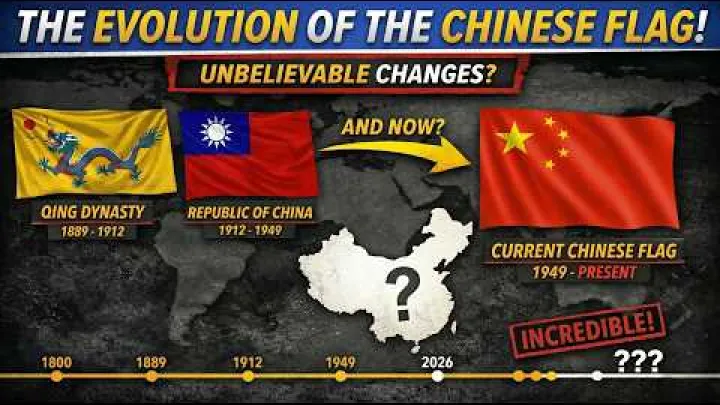
The China flag is the red national flag of the People's Republic of China, commonly called the Five-Star Red Flag. Its simple design is easy to recognize, but the five stars, the color choices, and the rules for displaying it all have specific historical and official contexts. This guide explains the flag's design, colors, symbolism, adoption in 1949, display procedures, and differences from the Republic of China, Hong Kong, and Macao flags.
What the China Flag Looks Like
The quickest way to identify the current China national flag is to look for a red field and a group of five golden-yellow stars near the upper-left area when the flag is viewed from the front.
The Red Rectangle and 3:2 Proportion
The current national flag of the People's Republic of China is a red rectangle with five golden-yellow five-pointed stars in the upper hoist corner. The hoist is the edge nearest the flagpole, so the stars appear at the upper side next to the pole rather than in the center of the flag.
The official length-to-height ratio is 3:2. In practical terms, the flag is one and a half times as long as it is high. For example, a flag that is two units high should be three units long. The Chinese Embassy describes the flag as a red rectangle with five stars and confirms this proportion.
There are no horizontal bands, shield, coat of arms, or additional emblematic field in the current design. The large red area is intentionally open, with the star group providing the main visual focus.
The Geometry of the Five Stars
One large five-pointed star appears closest to the hoist. Four smaller five-pointed stars form an arc to its right. The large star is not centered on the flag, and the smaller stars do not form a straight line or a regular five-star cluster.
Each smaller star is positioned and rotated so that its arrangement points toward the center of the large star. This creates a visual relationship between the five symbols. The design therefore communicates connection and organization through placement as well as through the number of stars.
The stars are not five equal decorative elements. Their different sizes and positions are standardized features of the flag. A version with randomly placed stars, equal-sized stars, or stars spread across the entire red field is not an accurate representation of the national design.
Official Specifications Beyond the Basic Shape
Official specifications govern more than the general appearance. They set the relative positions, sizes, colors, and orientations of the stars so that the design remains consistent when flags are made in different sizes. Enlarging or reducing the flag should preserve the relationship between the large star and the four smaller stars rather than stretching the image unevenly.
For a fabric flag, construction standards also help keep the motif clear and recognizable when the flag is viewed from either side during ordinary use. This is one reason an official template or carefully prepared reproduction is preferable to a freehand drawing.
For most readers, the 3:2 ratio is the main technical detail needed for identification or basic reproduction. Exact color settings and specialist manufacturing measurements are less useful unless a particular official production standard is being followed.
China Flag Colors and Stars: Official Meaning
The China flag has both official political symbolism and wider cultural associations. These layers should be kept separate: an official explanation describes the intended meaning of the national emblem, while broader cultural interpretations may vary across history and context.
The Official Meaning of Red and Yellow
Official explanations associate the red field with revolution and the founding history of the People's Republic of China. Red is therefore more than a strong background color in the state interpretation of the flag. It refers to the revolutionary history through which the modern PRC was established.
The stars are golden-yellow. Official explanations commonly describe this color in terms of brightness, radiance, or light. Against the red field, the stars appear highly visible and create the flag's defining contrast. The China Government provides official national-symbol context for the design and its meaning.
These explanations should be labeled as official or state-associated interpretations. Red and yellow can have different meanings in other cultures, and a general association with celebration or prosperity is not automatically the formal meaning assigned to the national flag.
The Large Star and Four Smaller Stars
The commonly stated official meaning of the large star is the leadership of the Communist Party of China. The four smaller stars represent the unity of the Chinese people under the Party's leadership. Together, the five stars express a relationship between the leading political organization and the people represented by the smaller symbols.
The orientation of the smaller stars toward the large star reinforces this interpretation visually. It gives the design a clear center of attention while keeping all five stars within one connected group. The smaller stars are not presented as separate national or regional flags.
Readers may encounter older educational explanations that assign the four smaller stars to particular social classes or groups. The broader official explanation used today is safer to summarize as the unity of the Chinese people under Party leadership. Each smaller star should not be assigned an individual group unless a reliable historical source is specifically discussing that interpretation.
Broader Cultural and Historical Associations
Outside the formal political explanation, red has broad associations in Chinese cultural contexts with celebration, happiness, good fortune, vitality, and festive occasions. These associations help explain why red is widely visible in public decorations and traditional celebrations, but they are broader cultural meanings rather than a replacement for the flag's official revolutionary interpretation.
Yellow also has historical associations with imperial authority and earlier Chinese state symbolism. Those associations are relevant when studying the history of Chinese colors, but they should not be presented as the current official meaning of the five stars. The stars' official interpretation is political and national, while the color's older cultural history provides additional context.
These meanings can coexist. A person may recognize red as a color of celebration in daily cultural life while also understanding that the red field of the national flag refers officially to revolution. Similarly, historical associations with yellow do not change the present explanation of the stars as symbols of light and political unity.
When the Current China Flag Was Adopted
The current flag was created during the formation of the People's Republic of China in 1949. Its adoption took place in the same founding period as the establishment of the new state, which is why the flag remains closely connected with the history of the PRC.
The Design Submission and Adoption in 1949
A public design submission process was held while the new national symbols of the People's Republic of China were being selected. The adopted red five-star design is commonly credited to Zeng Liansong. His proposal was chosen from the designs considered during this process.

On 27 September 1949, the Chinese People's Political Consultative Conference approved the proposal to use the red five-star flag as the national flag of the People's Republic of China. This date marks the approval of the design. It is different from the date of the flag's first public raising.
The distinction matters when describing the history. A flag can be approved before it is formally raised at the founding ceremony, so 27 September and 1 October refer to two connected but separate events.
The First Raising on 1 October 1949
The flag was first publicly raised on 1 October 1949 at Tiananmen Square in Beijing during the proclamation of the People's Republic of China. That ceremony gave the design a direct place in the founding story of the modern Chinese state.

1 October is now associated with National Day, and the flag's continuing use in public ceremonies connects present-day state identity with the founding moment. Tiananmen Square remains a prominent historical and ceremonial reference point, although the first raising and later ceremonies should not be treated as one identical event.
Earlier Chinese Flags in Context
The current flag replaced symbols associated with earlier political systems. The late Qing dynasty used the Yellow Dragon Flag, while the early Republic of China used a five-color flag. These designs belonged to different constitutional and political periods and should not be confused with the current PRC flag.
A later Republic of China flag has a red field with a blue canton containing a white sun. It remains associated with the Republic of China and Taiwan, and it appears in historical, political, and regional contexts distinct from the national flag of the People's Republic of China.
The Five-Star Red Flag therefore marked a major political and visual break from both imperial and Nationalist symbols. At the same time, its use of red, yellow, and a five-part star arrangement can be understood as part of a wider Chinese visual history. That limited visual continuity does not mean that the political meanings of the older flags and the current flag are the same.
China Flag Rules, Display, and Etiquette
Displaying the national flag is not only a design question. In the People's Republic of China, national flag legislation and official protocol address how the flag is produced, protected, raised, lowered, and displayed with other flags.
The National Flag Law and Its Current Framework
The National Flag Law of the People's Republic of China was adopted in 1990 and amended in 2020. The basic five-star design remained unchanged. The law treats the national flag as a symbol and hallmark of the People's Republic of China and establishes a framework for its protection and use.
The legal framework covers production, display, protection, and conduct that may damage the dignity of the flag. It is therefore different from a simple etiquette guide. The rules can matter in public institutions, schools, official events, public spaces, and other settings where the flag is used in an organized or formal way.
An English translation of the 2020 edition is available through China Law Translate. Before displaying, reproducing, or using the flag in a public, institutional, or commercial setting, check the current National Flag Law and any applicable venue rules. A general article cannot replace the requirements that apply to a particular event, organization, or location.
Raising, Lowering, and Half-Mast Procedures
The law and ceremonial practice set out basic procedures for handling the flag. These procedures should be treated as formal requirements rather than casual suggestions.
- Raise it slowly: The flag should be raised in a controlled and respectful manner.
- Raise it to the top: When the flag is raised, it should reach the top of the pole.
- Keep it off the ground: When the flag is lowered, it should not be allowed to touch the ground.
- Use the correct half-mast sequence: For mourning displays, the flag is first raised to the top of the pole and then lowered to the prescribed mourning position.
The details of a half-mast display can depend on the applicable official instruction or ceremony. The essential sequence is that the flag reaches the top first and is then lowered, rather than being raised only part of the way.
Public Display and Combined Flag Arrangements
The national flag commonly appears at public institutions, schools, major ceremonies, official gatherings, and national holiday events. It can also be used in public decorations and commemorations connected with national occasions.
Hong Kong and Macao are special administrative regions with their own regional flags. When a regional flag appears with the national flag, the arrangement is governed by official protocol. Display order, relative size, height, and placement may depend on the venue and the type of event rather than following one universal arrangement.
The official Hong Kong Protocol information explains the relationship between the national flag and regional symbols in Hong Kong. Its guidance is useful for understanding formal combined displays, but a rule for one official venue should not automatically be applied to every public or private setting.
How the China Flag Differs from Other Chinese Flags
The phrase “China flag” can be ambiguous in search results because several flags are connected with Chinese history, political institutions, or regions. The most useful first step is to identify whether a source means the national flag of the People's Republic of China, the Republic of China flag, or a regional flag.
The PRC Flag and the Republic of China Flag
The practical visual distinction is clear. The PRC flag has a red field with one large yellow star and four smaller yellow stars. The Republic of China flag has a red field with a blue canton in the upper hoist corner and a white sun inside that canton.

| Flag | Main visible design | Common reference |
|---|---|---|
| People's Republic of China | Red field with one large yellow star and four smaller yellow stars | Current PRC national flag |
| Republic of China | Red field with a blue canton and a white sun | Flag associated with Taiwan and the Republic of China |
The Republic of China flag appears in historical, political, and regional contexts distinct from the current PRC national flag. The two flags should not be treated as interchangeable simply because both use a red field and are sometimes described with the word “China.”
For clear writing, use “flag of the People's Republic of China” or “PRC flag” when that is the design being discussed. This avoids repeating an unclear description when a source uses “China flag” in a broad or politically ambiguous way.
The PRC Flag and Hong Kong or Macao Regional Flags
Hong Kong and Macao have regional flags with designs different from the PRC national flag. A regional flag represents the relevant special administrative region in its official context; it is not an alternative version of the five-star national flag.
Hong Kong's regional flag is a red flag featuring a stylized white Bauhinia design. This makes it visually different from the PRC flag, whose main symbol is the group of five yellow stars. Macao also has a distinct regional flag and should be identified separately when the setting is the Macao Special Administrative Region.
Official arrangements can require the national flag and a regional flag to appear in a particular order or relationship. The applicable protocol may differ between Hong Kong, Macao, mainland venues, and specific types of events. Regional flags should therefore not be described as interchangeable with the national flag or displayed according to assumptions based only on appearance.
The China Flag in Public and Cultural Life
The flag is visible not only in official documents and government buildings but also in recurring public rituals, education, commemorations, and international events. These uses give the design a strong presence in everyday public life.
National Day and Tiananmen Square
1 October National Day is one of the most visible occasions for the China flag. Public decorations, official ceremonies, and commemorative events use the flag to mark the founding of the People's Republic of China.
Tiananmen Square in Beijing is a central historical reference because the flag was first raised there on 1 October 1949. Contemporary ceremonies associated with the square connect the flag's founding history with the present identity of the state. The repeated use of the same national symbol makes the original adoption date a continuing part of public memory.
These ceremonies are formal expressions of state identity. Their public meaning can vary among observers, so a factual description should explain what the flag represents in the official setting without assuming that every person experiences the ceremony in the same way.
Schools, Ceremonies, and International Events
The national flag may appear in school ceremonies, civic events, official gatherings, public commemorations, and other organized activities. In these settings, it is used as a shared national symbol rather than simply as a decorative pattern.
The flag is also visible at international sporting events, where it is displayed alongside other national flags and may accompany the national anthem during medal ceremonies or formal presentations. These events make the design familiar to an international audience and help distinguish the PRC from other flags associated with Chinese history or regional institutions.
Ritual use and legal meaning are related but not identical. A ceremony can express collective identity and historical memory, while the formal meaning of the stars, colors, and display procedures comes from official explanations and national rules.
Conclusion: Understanding the China Flag
The current China flag is a red rectangle with one large golden-yellow star and four smaller stars arranged near the upper hoist corner. Its 3:2 proportion, standardized star geometry, and official symbolism make it distinct from the Republic of China flag and from the regional flags of Hong Kong and Macao.
Approved on 27 September 1949 and first raised publicly on 1 October 1949 at Tiananmen Square, the Five-Star Red Flag is closely tied to the founding of the People's Republic of China. Understanding the difference between official meaning, broader cultural associations, historical comparison, and display rules makes it easier to identify and describe the flag accurately.
Select area
Create a post
Posting is free and no registration is required.