Xi'an Getting There: Flights, Trains, and Buses

Getting to Xi'an is straightforward once you identify the right arrival gateway for your origin and travel date. International visitors usually compare flights to Xi'an Xianyang International Airport with one-stop itineraries, while travelers from major Chinese cities can often choose between air and high-speed rail. Conventional trains and long-distance buses remain useful for overnight journeys, smaller regional origins, and lower-cost travel. This guide compares the main options, explains the difference between Xi'an North and Xi'an railway station, and shows how to include the final journey into Xi'an city center in your plan.
Plan Your Arrival in Xi'an
Xi'an has several arrival points rather than one central terminal. The most convenient choice depends on your starting city, the time available, your budget, and where you will stay after arrival.
The Main Gateways at a Glance
The main air gateway is Xi'an Xianyang International Airport, with the airport code XIY. It serves international and domestic flights but is outside the central urban area. High-speed trains generally arrive at Xi'an North railway station, also outside the central city and north of the main urban districts. Conventional long-distance trains generally use Xi'an railway station, a separate station that is more closely integrated with the city.
Long-distance coaches use several terminals, including Xi'an Bus Station of Shaanxi, Xi'an Coach Station, Sanfuwan Long-Distance Bus Station, Fangzhicheng Bus Station, and West Xi'an Bus Station. These terminals serve different directions, so a ticket to Xi'an does not by itself identify the most convenient arrival point. In simple terms, choose a flight for overseas access or some longer domestic journeys, high-speed rail for major domestic corridors, conventional rail for overnight travel, and a coach when it provides a direct regional connection.
Choose by Origin, Time, and Budget
For Beijing, Shanghai, Chengdu, and Guangzhou, compare high-speed rail with flights using the complete itinerary. A train may depart from a central station and arrive at Xi'an North, while a flight may have a shorter time in the air but require airport access, check-in, security, and a transfer from XIY into the city.
For Hong Kong or an overseas origin, begin with the current flight search to XIY. A direct service may be the simplest choice when it operates on your date; a one-stop itinerary can widen the available dates and prices. Conventional rail may suit travelers who prefer an overnight journey, and a bus can be practical when the origin is a smaller city with no convenient high-speed rail connection. There is no single best mode for every traveler: compare total time, total cost, arrival location, comfort, and schedule reliability together.
Flying to Xi'an Xianyang International Airport
Flights are the main choice for international arrivals and can also be competitive on long domestic routes. Search for both the city name and the airport code XIY, then treat the displayed schedule as a starting point for confirmation rather than a permanent timetable.
International Flights and One-Stop Connections
Xi'an Xianyang International Airport is the principal air gateway for the city. Current route information has listed selected international connections, including routes associated with Hong Kong and Seoul, as well as other services that may change with the season and airline decisions. The FlightsFrom route map can help you see which cities have been connected with XIY, but a route listing does not guarantee that a flight operates every day or throughout the year.
If no direct flight is available from your origin, compare one-stop itineraries through major Chinese aviation hubs. Look at the complete connection: airport changes, minimum connection time, baggage handling, immigration or transit requirements, and whether the tickets are issued as one itinerary or as separate bookings. A cheaper separate-ticket connection may require you to collect baggage and check in again, so it deserves a larger time margin and a backup plan.
Domestic Flights from Major Chinese Gateways
XIY has a broad domestic network, and travelers commonly compare flights from Beijing, Shanghai, Guangzhou, Chengdu, and Shenzhen. These routes can be useful when the flight schedule matches your arrival plans, when your origin is far from a suitable high-speed rail station, or when rail tickets are unavailable.
Do not compare only the published flight time with the train time. Add the journey to the departure airport, the recommended airport arrival period, check-in and security, possible delays, baggage collection, and the final trip from XIY to your accommodation. Air fares can change substantially according to the date, demand, airline, booking time, baggage allowance, and change conditions. Use a current search for the exact travel date instead of relying on a fixed fare or frequency.
Know the Airport Name, Code, and Terminal
Search for Xi'an Xianyang International Airport or XIY; Xi'an does not have a main commercial airport in the city center. The airport is in neighboring Xianyang, so the local journey continues after you land. This matters when comparing a flight with a train that arrives at a more central station.

Published airport information describes terminals T1, T2, T3, and T5. The Xi'an Xianyang International Airport reference is useful for identifying the airport, but use the airline or airport information for the terminal assigned to your specific flight. Terminal assignments and ground-transport arrangements can change, and a flight search result may not show every operational detail.
Taking High-Speed Rail to Xi'an
High-speed rail is one of the strongest options for travel between Xi'an and major cities in China. It avoids many airport procedures and often provides a comfortable same-day journey, but the correct station must be selected before payment.
Xi'an North Is the Main High-Speed Station
High-speed services to Xi'an are generally associated with Xi'an North railway station. The station is in Weiyang District, roughly north of the city center; a station reference places it about 10 kilometers from the central area. The Xi'an North railway station name should not be treated as interchangeable with Xi'an railway station.

When a booking system offers both Xi'an and Xi'an North, inspect the train number, station name, and station code. A high-speed ticket normally means a local connection is still needed after arrival at Xi'an North. Include that connection, the time needed to leave the station, and your luggage in the door-to-door calculation rather than stopping the calculation at the train platform.
Key High-Speed Routes from Beijing, Shanghai, Chengdu, and Guangzhou
As indicative planning ranges, searches have reported journeys of about 3 to 4 hours from Chengdu, 4 to 6 hours from Beijing, around 6 hours from Shanghai, and roughly 7 to 10 hours from Guangzhou. These ranges describe representative services, not a guaranteed timetable. A faster or slower train may be available on a particular date, and the number of departures can vary.
The departure station is also part of the route. A Beijing search may display Beijing West, Beijing Fengtai, or another station; a Shanghai search may show Shanghai Hongqiao or another station; Guangzhou services may use Guangzhou South or another station; and Chengdu services may depart from Chengdu East or a different listed station. Read the complete ticket rather than assuming that the city name identifies one terminal.
For each route, compare the fastest service with the departure time, arrival date, seat class, and local transport at both ends. A train that is fastest on paper may be less useful if its departure station is difficult to reach or if it arrives after your accommodation's check-in period.
High-Speed Rail Versus Flying
High-speed rail can be competitive with flying on central domestic corridors because the station process is often simpler. You generally avoid airport check-in and aviation security procedures, and you can arrive at a station with a more direct connection to the city than XIY provides. Rail also offers different seat classes, which makes it possible to compare comfort with the actual price of a flight.
Flying remains useful when the origin is far away, when a direct flight has a much better schedule, or when an international itinerary connects conveniently to XIY. Compare second-class, first-class, or premium rail seats with the full flight fare, including baggage, seat selection, airport transfers, and change fees. The shortest vehicle journey is not necessarily the shortest or cheapest complete journey.
Using Conventional Rail and Overnight Trains
Conventional rail is slower than high-speed rail but can offer a useful alternative on long corridors. It is especially relevant to travelers who prefer to travel overnight, want to reduce daytime travel, or find a direct service from an origin that has limited high-speed options.
Xi'an Railway Station and Conventional Services
Xi'an railway station and Xi'an North railway station are different destinations. Xi'an railway station is the older central passenger station commonly associated with conventional services, while Xi'an North is the main high-speed gateway. A train search may place both options under the general city name, so the station shown on the selected service determines where you will arrive.
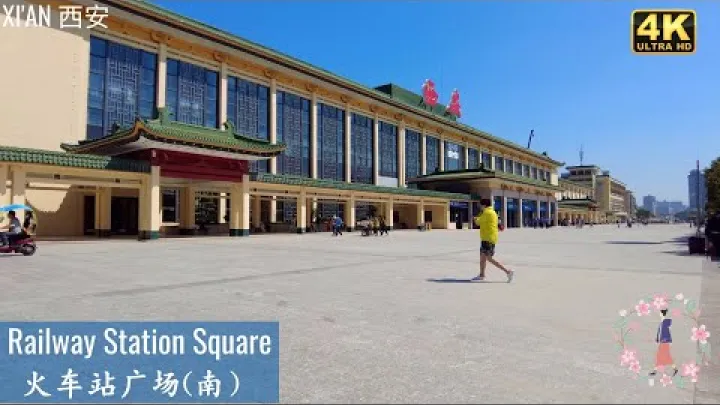
Booking interfaces may show Z-, T-, and other conventional train categories. Treat these letters as service labels rather than as a promise of identical speed, facilities, or availability on every route. Check the actual train, seat or sleeper option, departure station, arrival station, and calendar date. If your ticket says Xi'an rather than Xi'an North, plan the onward journey from Xi'an railway station and do not follow directions intended for the northern station.
When Overnight Rail Is the Better Fit
An overnight conventional train can save a daytime travel block and may reduce the need to pay for one night of accommodation. It can suit a traveler who values a direct route, has flexible time, or prefers to arrive in the city by conventional rail. Longer corridors such as Beijing, Shanghai, and Guangzhou have been reported as examples where overnight services may be considered, but the available service depends on the date.
The trade-off is time and comfort. A seat can be much less restful than a sleeper, and conditions vary by service and class. Compare the ticket, sleeper class if available, meals, local transfers, and the accommodation you may save. A high-speed ticket or flight may cost more but provide a shorter and more predictable arrival, so the lowest headline fare is not automatically the lowest total cost.
Long-Distance Buses to Xi'an
Coaches extend the Xi'an transport network to smaller cities, counties, and regional destinations that may not have a convenient rail or air connection. They can also provide a direct journey when changing trains would be inconvenient.
Bus Stations and Route Coverage
Available travel information names several coach hubs, including Xi'an Bus Station of Shaanxi, Xi'an Coach Station, Sanfuwan Long-Distance Bus Station, Fangzhicheng Bus Station, and West Xi'an Bus Station. The TravelChinaGuide overview is useful for understanding the reported station network, but station names, routes, and departure patterns require confirmation for the date of travel.
Different terminals serve different directions. A search for Xi'an may therefore return a route with a departure or arrival terminal that is not the one closest to your accommodation. Record the exact terminal name shown on the ticket, including its Chinese name when available. Several terminals are in urban areas, but a more central location does not guarantee that it is the right terminal for your route.
Booking and Comfort Considerations
Coach booking is more decentralized than train booking, and English-language information about schedules, fares, and seat availability is less consistent. Confirm the destination, departure station, fare, luggage allowance, and departure time through the station, an authorized seller, or a trusted local helper. Ask specifically whether the ticket is for a direct coach or includes a change.
Long road journeys are affected by traffic, weather, road conditions, and rest stops. Travel time can therefore vary more than a rail journey on the same broad corridor. A bus is a sensible regional option or fallback, but for a major city-to-city route compare it with high-speed rail and flights before choosing it only because the initial ticket price appears lower.
Book and Verify Your Transport
Transport information can change by date, season, operator, and demand. Use discovery tools to compare options, then confirm the final service with the relevant airline, railway platform, airport, or bus terminal.
Book Train Tickets through 12306
12306 China Railway is the official China Railway platform for train information, ticket sales, refunds, and related services. A basic booking sequence is to select the departure city and exact station, select Xi'an or Xi'an North as appropriate, choose the date and train, select the seat class, enter the passenger identification details, and confirm payment.
Do not assume that the booking window, release time, or refund conditions are permanently the same. The 12306 site publishes its current service rules, and the English interface may not display every detail in the same way as the Chinese interface. Foreign travelers should prepare the passport or other identification document that they will use for the journey and enter the details consistently. For popular dates, check the current official booking window and reserve as soon as the relevant date becomes available.
Verify Flight and Route Status
Flight aggregators and route maps are useful for discovering possible connections, but confirm the final schedule with the operating airline or airport. Check the flight number, operating carrier, departure and arrival airports, terminal, baggage conditions, and any connection requirements. A route displayed in a broad schedule search may be seasonal, limited to certain days, or no longer available.
Give special attention to tight onward connections. A same-ticket itinerary may offer different handling and protection from separate tickets, while a separate-ticket journey may require more time for baggage, immigration, and check-in. Compare the total itinerary before paying, and verify the selected flight, route status, terminal, and operating airline on the airline or airport website close to departure.
Check Every Station, Date, and Arrival Detail
Before paying for any transport, use a short gateway checklist:
- Confirm the exact departure city and station, not only the city name.
- Confirm whether the Xi'an arrival is at Xi'an North railway station, Xi'an railway station, XIY, or a named bus terminal.
- For flights, match the XIY airport code and the terminal shown for the specific service.
- Check the departure date and the local arrival date, especially for overnight trains and long-distance coaches.
- Compare the seat or sleeper class, baggage rules, change conditions, and all-in price.
- Save the Chinese and English name of each gateway and the address of your accommodation.
- Read the onward connection after arrival rather than treating the station or airport as the final destination.
Make station-name verification the final step before payment and repeat it before leaving for the gateway. This is particularly important when a booking interface uses Xi'an as a general city label but displays Xi'an North or another station in the detailed itinerary.
Compare Routes by Time, Cost, and Convenience
The most useful comparison is door to door. Include access to the departure gateway, waiting and security, the vehicle journey, baggage, the arrival transfer, and any cost caused by a late arrival or a change.
A Practical Air, Rail, and Bus Comparison
The table below gives a qualitative comparison. It is intended to guide the search, not to replace a date-specific fare and schedule check.
| Mode | Typical use | Time pattern | Cost pattern | Booking difficulty | Xi'an arrival gateway |
|---|---|---|---|---|---|
| Flight | International access and long domestic routes | Shortest in the air; add airport and city transfers | Changes by date, demand, baggage, and fare conditions | Usually clear, but schedules and operators can change | XIY |
| High-speed rail | Major domestic corridors | Several hours on many routes; station-to-station time is not the full itinerary | Depends on date and seat class | Use 12306 or an authorized seller; popular services need early booking | Usually Xi'an North |
| Conventional rail | Overnight or long-distance travel | Much longer; may reduce daytime travel | Lower-cost potential, but sleeper class and meals affect the total | Use the official rail system; category and availability vary | Often Xi'an railway station, as shown on the ticket |
| Coach | Smaller cities and direct regional routes | Variable because of traffic, weather, and road conditions | Can be practical for a direct route; comfort and fare information vary | More decentralized, with less consistent English information | The named bus terminal on the ticket |
Use current searches for Beijing, Shanghai, Chengdu, Guangzhou, and Hong Kong rather than inserting one permanent fare into your plan. A date-specific comparison should include the actual flight fare or rail class, baggage, station transfers, and change rules. If those details are not available, qualitative guidance is safer than a universal claim that one mode is always cheapest.
Best Fit for Common Starting Points
- Beijing: Compare a high-speed service with a flight by checking the departure station, the time to reach it, and the transfer from Xi'an North. A conventional overnight service can suit a traveler who wants to save daytime or accommodation costs.
- Shanghai: High-speed rail can be attractive when a same-day station-to-station schedule works well. Flying may be better when the airport connection is easy, the fare is competitive, or the departure time is more useful.
- Chengdu: High-speed rail is often a strong first comparison for a journey in the approximate three-to-four-hour range. Check the actual departure station and service before choosing it over air.
- Guangzhou: Compare the longer high-speed journey, possible conventional overnight service, and flight. Rail may suit travelers who prefer stations and have time, while air may reduce the total journey on a tight schedule.
- Hong Kong: Start with current direct or connecting flights to XIY. Consider rail only when the booking system shows a workable itinerary, since a rail journey may involve an interchange and additional border or station planning.
- Smaller inland origins: Look first for a direct high-speed or conventional rail service. If the nearest suitable rail gateway is inconvenient, a coach may provide a more practical regional connection.
These recommendations are conditional on the date, budget, luggage, and location of your starting point. The best option for a city-center traveler may not be best for someone who begins near an airport or a regional bus terminal.
Add the Last-Mile Journey to Your Calculation
Arrival at XIY or Xi'an North is not the same as arrival at your hotel in central Xi'an. Both gateways are outside the central urban area and normally require a further local connection. Xi'an railway station and some urban bus terminals are generally more integrated with the city, but the correct terminal may be farther from your accommodation district.
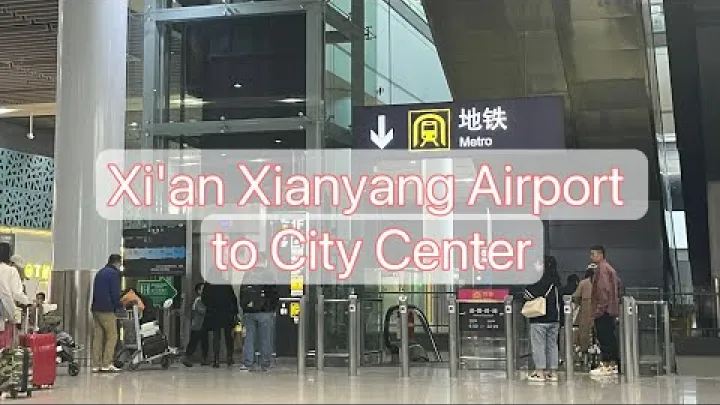
Compare the full route with your luggage and expected arrival time. A lower ticket price can lose its advantage if it requires a costly taxi, a long wait, or a late-night transfer. Conversely, a slightly more expensive train or flight may be worthwhile if it arrives at a gateway with a simpler connection to your destination. Detailed metro and airport-transfer instructions should be checked separately because local routes, pickup areas, and operating times can change.
Arriving Safely and Reaching Central Xi'an
Once you know the arrival gateway, choose the onward connection according to price, speed, operating hours, and the location of your accommodation. Keep the exact hotel address available in both English and Chinese if possible.
Choose the Right Onward Connection from Each Gateway
From XIY, public transport can be a lower-cost option during its published operating hours, while an official taxi or verified ride-hailing pickup can be more convenient with luggage. From Xi'an North, the same comparison applies: public transport may reduce the cost, while a direct vehicle may be simpler when you are carrying bags or staying outside the central districts.
From Xi'an railway station and the main urban bus terminals, the city connection may be more direct because these gateways are closer to established urban districts. That does not make every route equally convenient. Check the destination district, the final walking distance, and whether your accommodation accepts late check-in. Use designated taxi areas and the official or verified pickup location shown by the transport service.
Plan for Late-Night or Changed Arrivals
A late flight, train delay, or overnight coach can leave you with fewer public-transport choices than a daytime arrival. Before departure, check the last available public service for the expected arrival time, confirm your hotel's check-in rules, and identify the official taxi or ride-hailing option as a backup.
Do not assume that a local service runs all night unless a current official notice confirms it. Leave flexibility for delays, especially when arriving at XIY or Xi'an North. If the timetable is uncertain, arrange a hotel-verified arrival plan in advance and keep the accommodation address, booking details, and a working phone or data connection available.
Avoid Ticket Touts and Booking Traps
Buy tickets through official or authorized channels and be cautious about unsolicited offers near airports, railway stations, and bus terminals. Avoid anyone who offers to change the station, bypass the normal booking process, or place you in an unmarked vehicle without clear details.
At departure, match the ticket with the passenger name, train or flight, station, and date. At pickup, match the vehicle and driver details with the verified information in your booking. If something does not match, do not board immediately; ask an official transport counter, station employee, airport desk, or designated taxi-area staff for help.
Final Checklist for Getting to Xi'an
Use this checklist when you are ready to book and again when you begin the journey:
- Choose the mode that fits your origin, available time, budget, comfort needs, and onward destination.
- Search the exact gateway: XIY, Xi'an North, Xi'an railway station, or the named bus terminal.
- Compare door-to-door time, not only flight time or train time.
- Check the current flight operator, schedule, terminal, rail service, seat class, or coach departure details.
- Include baggage, local transport, change conditions, and any accommodation cost saved by overnight travel.
- Confirm the local arrival date and your hotel's check-in arrangements.
- Save the gateway name in English and Chinese, your ticket details, and your accommodation address.
- For a late arrival, keep a confirmed public-transport option and a hotel-verified taxi or ride-hailing backup.
- Use official or authorized booking channels and confirm that the ticket and vehicle match before boarding.
For most international travelers, the first search is a flight to XIY. For major domestic corridors, compare that flight with high-speed rail to Xi'an North, then add the local connection. Conventional trains and coaches are valuable when an overnight journey, direct regional route, or lower-cost option matters more than speed. With the exact station, airport, date, and last-mile plan confirmed, getting to Xi'an becomes a manageable part of the itinerary rather than a source of avoidable surprises.
Select area
Create a post
Posting is free and no registration is required.