Hangzhou Getting There: Air, Train, Bus & Shanghai Routes
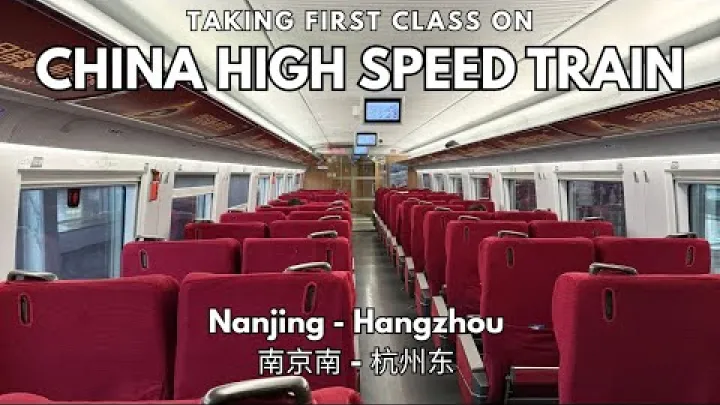
Getting to Hangzhou is usually straightforward, but the best route depends on where you start, the location of your hotel, your luggage, and how much transfer time you can accept. International and distant travelers will usually compare flights to Hangzhou Xiaoshan International Airport with flights or trains through Shanghai. Travelers already in China may find high-speed rail more convenient, while coaches can serve nearby cities and destinations with less convenient rail coverage. This guide compares the main ways to get to Hangzhou, explains which railway station or terminal to choose, and covers booking, late-night arrivals, last-mile connections, and basic arrival safety.
Choose the Best Way to Get to Hangzhou
Start with a door-to-door comparison rather than looking only at the time shown for a flight or train. Include the journey to the airport or railway station, check-in or security, waiting time, baggage collection, the final transfer into Hangzhou, and the distance from the arrival point to your hotel.
Compare Air, Rail, Coach, and Combined Routes
Your origin is the first filter. Air is normally the main option for international journeys and very long domestic trips. High-speed rail is often attractive when a direct train leaves from a convenient city station. Coaches can be practical for nearby cities, county towns, and scenic areas that do not have a convenient direct train. A combined route, such as flying to Shanghai and then taking a train to Hangzhou, may be useful when the international itinerary is much better than the flights available to Hangzhou itself.
| Mode | Best fit | Main advantage | Main trade-off |
|---|---|---|---|
| Flight to HGH | International or distant origins | Direct access to Hangzhou's main airport | Airport procedures and city transfer |
| High-speed rail | Origins with direct rail service | City-station access and generous luggage flexibility | Station and seat availability vary by date |
| Long-distance coach | Nearby or secondary destinations | Some direct routes and flexible coverage | Road traffic and less predictable travel time |
| Combined route | Better itinerary through Shanghai or another gateway | More flight or train choices | At least one additional transfer |
For most international travelers, compare the total price of a flight to HGH with the price of flying to Shanghai plus the land connection to Hangzhou. For a traveler already in a major Chinese city, search direct high-speed trains before choosing a domestic flight. Rail can avoid airport access, check-in, and baggage delays, but a direct flight may still be better when the rail journey is long or the station is difficult to reach.
- Choose air when the distance is long, the itinerary is international, or a direct flight saves a major surface transfer.
- Choose rail when a direct high-speed train leaves from a convenient station and your final destination is easier to reach from the selected Hangzhou station.
- Choose a coach when it provides a direct route to a nearby or secondary destination and the road journey does not create a difficult connection.
- Choose a combined route only after adding the transfer time, baggage handling, and connection risk between separate tickets.
Fares, departure times, and available seats change with the travel date. Use current operator results for exact figures rather than treating a typical fare or duration as a guarantee. The most useful Hangzhou transport comparison is the one that ends at your hotel, not at the runway, platform, or bus terminal.
Consider Shanghai as an Alternative Gateway
Shanghai can be a sensible alternative when the international fare, airline network, or arrival time is better than the available itinerary to Hangzhou. It can also help travelers whose wider East China journey already includes Shanghai. The decision is less attractive when a cheaper-looking Shanghai ticket requires a tight airport-to-station transfer or a separate ticket that cannot be protected if the first journey is delayed.
After arriving at a Shanghai airport, you still need a land connection to a Shanghai railway station, commonly Shanghai Hongqiao Railway Station for a high-speed journey to Hangzhou, unless the live booking result shows another suitable departure point. A cruise or port arrival also requires a transfer from the port terminal to the railway station or coach terminal. These are separate legs, even when they appear close on a map.
Compare three complete options: a direct flight to Hangzhou, a direct train from your current city to Hangzhou, and a Shanghai gateway followed by rail. Add immigration, baggage collection, airport or port transfers, station navigation, waiting time, and the journey from the Hangzhou station to your hotel. When using separate tickets, leave a substantial margin instead of planning to board the next train immediately after a scheduled arrival.
Fly to Hangzhou Through Xiaoshan International Airport
Air travel is the most practical way to reach Hangzhou from many international origins and from distant parts of China. The airport is outside the central tourist area, so the flight choice and the first city connection should be planned together.
Check Direct and Connecting Flights to HGH
Hangzhou Xiaoshan International Airport uses the code HGH and is Hangzhou's principal air gateway. It handles international, regional, and domestic travel, but the available route list and service frequency depend on airlines, season, demand, and current operating decisions. Use the Hangzhou Xiaoshan International Airport portal for current airport information and use the airline's own booking result to confirm the flight you intend to take.
A direct flight is usually easier because it removes a connection and reduces the chance of missed baggage or a disrupted onward segment. A connecting itinerary may offer better timing, a lower fare, or a more useful regional hub. Check whether the connection requires a terminal change, a new security process, or a separate ticket. Those details can matter more than the advertised flight time.
For a domestic journey, compare HGH with high-speed rail on a complete-trip basis. A flight may have a shorter time in the air, but it also requires travel to the airport, check-in, security, boarding, and a transfer after landing. Rail may take longer between cities while providing a more central departure or arrival point. Luggage size, flexibility, and the location of your hotel can change the result.
Do not rely on an old route count or a third-party list as proof that a service still operates. Search the airport or airline listing for the exact date, then check the flight number, terminal, baggage rules, and arrival time before paying.
Use the Airport for Hangzhou and Regional Connections
Xiaoshan Airport serves two different planning needs: arriving in Hangzhou and continuing from the airport toward another destination in Zhejiang. Keep those purposes separate. A regional airport coach may take you directly toward another city or county, but it is not automatically the best way to reach a hotel in central Hangzhou.
The airport currently identifies metro lines 1, 7, and 19 as serving the airport. Metro is generally useful for travelers who want a lower-cost city connection and can manage transfers with their luggage. An airport coach can be more convenient when its destination matches your route or when you prefer to avoid changing trains. An official taxi is more direct and can be useful with heavy bags, several travelers, or a hotel that is not close to a practical metro stop.
Regional coach departures are affected by demand, road conditions, weather, and operator decisions. Before choosing the airport as a transfer point, confirm the destination, departure area, ticket method, and final arrival terminal. If your final destination is central Hangzhou, identify the hotel-side connection separately instead of assuming that every airport coach is a city-center service.
Reach Hangzhou by High-Speed Rail
High-speed rail connects Hangzhou with many major Chinese cities and is often the clearest alternative to a domestic flight. The main planning issue is not only the train number but also the exact Hangzhou station printed on the ticket.
Choose the Correct Hangzhou Railway Station
Station warning: Hangzhou East, Hangzhou West, Hangzhou South, and Hangzhou Railway Station are different stations. They are not interchangeable, and a taxi or metro plan for one station may be unsuitable for another. Match the exact East, West, South, or City Station shown on the ticket to the station you enter.
Hangzhou East Railway Station, or Hangzhou East and 杭州东站, is a major rail gateway commonly used for high-speed services. Hangzhou West Railway Station, or Hangzhou West and 杭州西站, is a separate station with its own services and urban connections. Hangzhou South Railway Station, or Hangzhou South and 杭州南站, is also separate. Hangzhou Railway Station, written as Hangzhou Railway Station or 杭州站, is often called City Station in travel directions.
These names should be treated as navigation instructions, not as interchangeable labels. A search result may show a train arriving at East while another train on a similar route arrives at West or South. The station selected by the train booking is the station that controls your last-mile plan. Copy the English and Chinese name into your phone if you will use a taxi, map search, or station information desk.
When your hotel is near the West Lake area, compare the route from the actual arrival station to the hotel rather than choosing a train by its line-haul duration alone. One station may look preferable on a general map, but the best choice can change with the train schedule, luggage, transfers, and time of day. Avoid a universal rule that one Hangzhou station is always fastest for the center or West Lake.
Take the Shanghai–Hangzhou High-Speed Route
Shanghai Hongqiao Railway Station to Hangzhou is one of the most useful regional rail comparisons. It can suit a traveler who is already in Shanghai and wants to continue from a major urban railway gateway without taking a short flight. It can also be part of an international itinerary that lands in Shanghai instead of Hangzhou.

The train segment is only part of the journey. A traveler starting in central Shanghai must first reach Hongqiao, while a traveler landing at a Shanghai airport must allow time for baggage, immigration when applicable, and the airport-to-station transfer. After arriving in Hangzhou, the trip continues from the exact railway station on the ticket to the hotel or West Lake area.
High-speed rail may be attractive because it links major city gateways and avoids airport check-in. Flying can still make sense if the flight schedule, ticket price, or onward connection is substantially better. Compare seat class, baggage arrangements, departure availability, and the time required at both ends. Search the current origin and destination station pair in China Railway 12306 before booking; do not assume that every Shanghai train uses the same Hangzhou station.
Use Longer-Distance Rail from Major Chinese Gateways
Beijing, Guangzhou, Shenzhen, and Hong Kong are useful examples of longer-distance origins, but the right choice between rail and air depends strongly on the date. A direct high-speed train may simplify the trip and provide a city-center departure, while a domestic flight may reduce the line-haul time. A flight connection through another hub can also be more practical when direct rail seats are unavailable.
For each origin, search the live rail result and compare it with an airline result. Confirm whether the service is direct, which station it leaves from, which Hangzhou station it reaches, the available seat class, and the total price. A train duration shown in a general guide is not a current timetable, and availability can change quickly around holidays and busy travel periods.
| Origin station or airport | Hangzhou arrival station | Typical current duration | Booking channel | Verification note |
|---|---|---|---|---|
| Beijing rail or air gateway | Exact station shown in result | Varies by date and service | 12306 or airline | Compare full rail and air journeys |
| Guangzhou rail or air gateway | Exact station shown in result | Varies by date and service | 12306 or airline | Check direct service and seat class |
| Shenzhen rail or air gateway | Exact station shown in result | Varies by date and service | 12306 or airline | Check origin station carefully |
| Hong Kong cross-border gateway | Exact station shown in result | Varies by date and service | 12306 or airline | Check cross-border requirements |
The Hong Kong option needs an additional legal and administrative check. For any cross-border train, confirm current passport, immigration, and entry requirements for your nationality before booking. Also check whether the ticketing channel requests identity verification or uses a different collection procedure. Do not treat a Hong Kong rail search as identical to a domestic mainland journey.
Use Coaches and Sea Gateways When They Fit
Coaches and sea-based itineraries can work well when the route is regional or when a wider trip already includes a port. They require more attention to the exact terminal and to road or sailing conditions than a direct train journey.
Use Long-Distance Coaches for Nearby and Secondary Destinations
Long-distance coaches complement rail by serving nearby cities, county towns, scenic destinations, and places with less convenient train coverage. A coach may be a direct option when the rail route requires a change, even if the coach is slower. It can also offer a practical last-minute alternative, although ticket rules and availability depend on the terminal and operator.
Hangzhou transport searches may refer to the Hangzhou Passenger Transport Central Station, also called Jiubao Passenger Transport Center, as well as South, West, and North Bus Stations. There is also a highway bus station associated with Hangzhou East Railway Station. These are city coach terminals, not interchangeable names for one building. The Hangzhou Airport Coach Station is a separate airport facility with regional services; the Hangzhou Airport Coach Guide is the appropriate place to check its current destinations and departures.
Before buying a coach ticket, confirm the departure terminal in the booking result and allow time to find the correct entrance. Compare the coach with high-speed rail on directness, fare, luggage handling, seating comfort, traffic exposure, and the ease of reaching your hotel after arrival. A coach can be cheaper or more direct on a particular date, but neither is guaranteed for every route.
If a coach leads to a flight, train, hotel check-in deadline, or timed attraction, add a road-traffic buffer. Normal-condition journey estimates do not protect against congestion, weather, road works, or a delayed departure. For a fixed connection, an earlier coach or a different rail option may be safer than choosing the shortest scheduled interval.
Treat Ferry and Cruise Arrivals as Multi-Leg Journeys
A cruise call or regional ferry arrival should be planned as a multi-leg journey to Hangzhou. Do not assume that a ship or ferry arriving in the Shanghai region places you at a railway station or provides a direct passenger connection into central Hangzhou. The port terminal, immigration process, baggage arrangements, and onward land transport are separate parts of the route.
Shanghai can be used as a regional port example, but the correct plan depends on the current cruise or ferry operator, arrival terminal, sailing status, and available train or coach connection. Check the port instructions and then plan the transfer to the railway station or coach terminal. Leave flexibility for a late docking, weather disruption, immigration, and traffic. Keep this option for itineraries where the sea journey is already important, rather than assuming it will be a simple substitute for a direct flight or train.
Get from the Arrival Gateway to Central Hangzhou
Central Hangzhou is not one precise drop-off point. Your practical destination may be a hotel near the West Lake area, a business district, a university, or a residential neighborhood elsewhere in the city. Choose the first city connection based on the actual hotel address and the time you arrive.
Travel from Xiaoshan Airport to Central Hangzhou
From Xiaoshan Airport, the main choices for reaching central Hangzhou are metro, airport or city coach services, and an official taxi. Metro is usually the most useful option for travelers who want a lower-cost route and can manage a transfer. A coach may be easier when it serves a convenient stop or when you have luggage that is uncomfortable on a busy train. A taxi provides a direct hotel journey but is more exposed to road traffic and normally costs more than public transport.
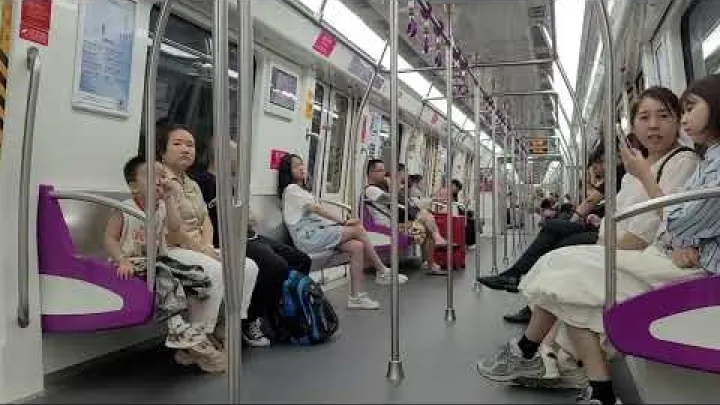
The airport metro guide identifies lines 1, 7, and 19 at Hangzhou Xiaoshan International Airport. Use the current Hangzhou Airport Metro Guide to check the relevant first and last services, station access, and operating information for your date. Do not choose a hotel connection based only on a line number; check where you must change and how far the final station is from the accommodation.
| Airport option | Best for | Cost and speed | Luggage and traffic |
|---|---|---|---|
| Metro | Daytime arrivals and light luggage | Lower-cost; time depends on transfers | No road traffic, but walking and stairs may be needed |
| Airport or city coach | A matching stop or direct regional route | Route fare and journey time vary | More luggage space; affected by traffic |
| Official taxi | Heavy luggage, groups, or a difficult hotel route | Direct but usually higher cost | Convenient; affected by traffic |
For a hotel near West Lake, a metro journey may still need a bus, walk, or short vehicle ride at the end. An airport coach may be convenient for one address and awkward for another. Compare the final ten minutes of the journey as carefully as the airport-to-city segment.
Continue from a Railway or Coach Station
After a train or coach arrives, confirm the station before choosing the final route. The best connection depends on the hotel, luggage, time of day, and the public transport services available from that gateway. Metro is often useful for travelers who can make a transfer, while a city bus may serve a route that does not align with the railway network. A regulated taxi or ride-booking option can reduce walking when the hotel is far from the nearest station.
- Hangzhou East Railway Station: check the route from 杭州东站 to the hotel rather than assuming that every East Station exit has the same connection.
- Hangzhou West Railway Station: search using 杭州西站 and confirm the route shown from the actual station, especially when the hotel is near central Hangzhou or West Lake.
- Hangzhou South Railway Station: use 杭州南站 in map searches and compare the final transfer with the train time.
- Hangzhou Railway Station or City Station: search both the English station name and 杭州站 if a map or booking application uses different translations.
- Coach terminals: confirm whether the result says Passenger Transport Central, Jiubao, South, West, North, or another terminal before selecting a city route.
Use a current metro map or reliable local map search after the arrival station is confirmed. Similar English station names can send a traveler to the wrong side of the city. Avoid claiming that one station is always closest to central Hangzhou; the answer changes with the hotel and the selected route.
Plan for Late-Night Arrivals
Late arrival planning should begin with the scheduled landing or train arrival, then add immigration, baggage collection, walking through the terminal, and possible delay. Compare that expected time with the current last metro and airport coach departures. Public transport should not be treated as an all-night service unless the operator specifically confirms it for the date and route.
- Check the current last metro and coach departures from the airport or station, including the time needed to reach the platform or coach area.
- Confirm that the hotel accepts late check-in and save its phone number.
- Keep the hotel name and address in Chinese, along with a screenshot that can be shown without an internet connection.
- If public transport is no longer practical, use the designated taxi queue or a regulated ride option rather than trying to find an informal transfer.
- If the arrival is very late, consider a first-night base or route that does not depend on catching the final connection with no margin.
International arrivals need extra allowance because immigration and baggage can take longer than the scheduled flight time. A late-night plan is strongest when the fallback is decided before departure, not after the last metro has left.
Book, Verify, and Arrive Safely
Booking the first leg is only part of getting to Hangzhou. Save the exact details of every segment and make sure that the arrival station, terminal, and last-mile plan match one another.
Book Transport Through Current Operator Channels
Use airline or airport channels for flights, China Railway 12306 for trains, and the current coach-station or coach-operator channel for buses. Aggregator sites can help compare options, but the final result should be checked against the operating airline, railway system, airport, or terminal. This is particularly important when a search result uses a translated station name.
China Railway 12306 is the official railway information and ticketing channel for checking current train availability, stations, tickets, and refunds. Its service notices also explain the operating hours for different online functions. Use the current instructions rather than assuming that every booking or refund function is available at all hours.
International travelers should check the current passport, payment, identity-verification, and ticket collection instructions that apply to their booking. Do not assume that one foreign-passport procedure works for every platform or route. There is also no universal advance-booking rule that is safe to apply to every train, holiday period, or ticket channel.
Save the train or flight number, departure date, exact origin and arrival station, terminal, and Chinese destination name offline. Keep the booking confirmation accessible even if mobile data fails. When changing a plan, read the new result carefully rather than assuming that the replacement service uses the same station.
Avoid Common Taxi and Station Traps
At the airport or railway station, use the marked taxi queue or a regulated booking channel. Decline unsolicited rides from people approaching inside or near the terminal, especially when they offer an unexplained flat fare. Use a meter where appropriate or confirm the documented fare through the regulated service before the vehicle moves.
Keep the hotel name and address in Chinese and check the destination on the phone or map before leaving. At the end of the ride, confirm that all luggage has been removed before completing payment. If the fare, route, or destination is unclear, ask station or airport staff for help through an official information point.
These are general arrival precautions, not a claim that Hangzhou is uniquely unsafe. They are useful because a tired traveler with luggage is more likely to accept a convenient-looking offer without checking the destination or price.
Keep a Backup for Sold-Out or Changed Services
Transport plans can change because of demand, construction, weather, road conditions, or an operator decision. Frequencies, fares, station assignments, airport services, coach departures, and ferry operations should therefore be treated as live information. A route that appeared in an old guide may no longer be available at the same time or from the same terminal.
Close to departure, recheck the operator's live route, station, and service status. Save one realistic alternative, such as another train, a different Hangzhou station, a coach, or a later arrival. The alternative should be practical for your budget and hotel, not merely a theoretical route shown on a general map.
Build a separate time buffer when connecting an international arrival, a port, a Shanghai airport, a Shanghai railway station, and a Hangzhou train. These are points where immigration, baggage, traffic, and station navigation can affect the next leg. Do not build a fixed connection around an unconfirmed timetable, and do not rely on a non-current departure page as a guarantee.
The simple decision rule is: confirm the exact gateway, station, service, and last-mile plan before leaving for the first departure point. Then keep the booking details and the backup route available offline.
Final Checklist for Getting to Hangzhou
Before starting your journey, run through this short Hangzhou transport checklist:
- Compare the complete door-to-door journey from your origin, including airport or station access and the trip to your hotel.
- Choose between HGH, a direct Hangzhou train, a coach, or a Shanghai connection based on the actual date and itinerary.
- Read the ticket carefully and match the exact Hangzhou East, West, South, or City Station to your route plan.
- Use the current airline, airport, coach operator, or China Railway 12306 result for schedules, fares, identity rules, and refunds.
- Plan the final connection to central Hangzhou or the West Lake area, including a late-night alternative if necessary.
- Save the booking, Chinese hotel address, transport numbers, and one workable backup before you leave.
For many travelers, the best way to get to Hangzhou is simply the route with the fewest difficult transfers. For others, a Shanghai gateway, high-speed train, regional coach, or combined itinerary offers better timing and value. Confirm the live details, choose the correct arrival station, and plan the last mile as part of the journey rather than as an afterthought.
Select area
Create a post
Posting is free and no registration is required.