Lhasa Getting There: Flights, Trains & Overland Routes
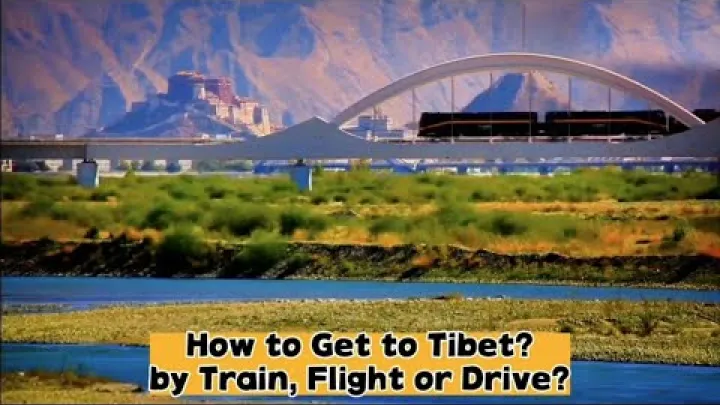
Getting to Lhasa requires more planning than choosing the fastest ticket. The city is served by Lhasa Gonggar International Airport and Lhasa Railway Station, while multi-day highway and border routes offer a different kind of journey. This guide compares flights, the Qinghai–Tibet Railway, buses, and organized overland travel by time, cost pattern, booking difficulty, altitude profile, scenery, and flexibility. It also explains the documents to check, the main gateways from China and Nepal, and the final transfer into central Lhasa.
Choose the Best Way to Get to Lhasa
The best route depends on whether your priority is reaching Lhasa quickly, experiencing a long railway journey, or making the journey itself part of the trip. First compare the long-distance route to Tibet, then plan the separate road transfer from the arrival point to your accommodation in central Lhasa.
Compare Flights, Trains, and Overland Travel
For most itineraries, a flight is the time-saving option. A train takes substantially longer but offers a scenic rail experience and a different travel rhythm. Overland travel is usually a multi-day itinerary chosen for landscapes, photography, and stops along the route rather than for simple point-to-point transport.
| Mode | Time pattern | Typical cost pattern | Booking difficulty | Altitude planning | Scenery | Flexibility |
|---|---|---|---|---|---|---|
| Flight | Usually the fastest | Fares vary by date, connection, and baggage | One itinerary is simple, but document checks matter | More abrupt arrival at high elevation | Limited during the flight | Good when several dates have seats |
| Train | Long; a full journey can take a day or more | Seat and sleeper prices vary by class and service | Official booking or agent assistance may be needed | Longer journey profile, but no acclimatization guarantee | High | Lower after the ticket is booked |
| Overland | Multi-day | Tour, vehicle, accommodation, and guide costs vary | Highest coordination | Can be staged, but the route profile varies | Highest | Lowest when road conditions affect the plan |
These are planning categories, not fixed prices or promises. A connecting flight may be faster than a train, but a short connection or a self-transfer between airports can create more risk than the headline flight time suggests. A rail ticket may look inexpensive until you add the cost of reaching the departure city, while an overland quotation should be assessed by what it includes: vehicle, driver or guide, accommodation, meals, sightseeing stops, and document support.
The final transfer is separate from all three choices. A flight ends at Lhasa Gonggar International Airport, and a train ends at Lhasa Railway Station. Neither arrival point is the same as central Lhasa, so include the city transfer when comparing total time and cost.
Plan Around Altitude, Time, and Flexibility
Lhasa is a high-elevation destination, so altitude should influence your transport decision even though this article is not a medical guide. A flight can place you at the destination quickly, which is efficient but gives your body less time to adjust during the journey. A train or road trip takes longer and may include a more gradual change in elevation, but gradual travel does not guarantee that every traveler will acclimatize comfortably.
Protect the first day after arrival. Avoid planning a tight onward connection, a demanding hike, or a full sightseeing schedule immediately after reaching Lhasa. A late arrival also makes a confirmed hotel check-in and transport arrangement more valuable than a theoretical saving on an unplanned local transfer.
If you have a relevant medical condition, take medication that may affect travel, or have previously had difficulty at high elevation, consult a qualified clinician before finalizing the route. Ask for advice that considers the elevation, pace, and activities of your complete itinerary rather than choosing a transport mode based on a general claim that one option is medically safer.
Check Documents and Entry Rules Before Booking
Paperwork should come before route selection. A traveler may have permission to enter China but still need a separate Tibet travel arrangement, and requirements can depend on nationality, entry point, destination beyond Lhasa, and the rules in force on the travel date.
Tibet Travel Permit and Required Documents
Foreign visitors should check four separate issues: passport validity, permission to enter China, permission or arrangements for travel in Tibet, and the documents required for the exact route. Chinese entry permission may mean a visa or current visa-free eligibility for travelers who qualify. It is not the same question as whether a traveler can board a flight or train to Lhasa.

The Tibet Travel Permit is also commonly referred to as the Tibet Tourism Bureau Permit. An authorized Tibet travel provider can explain the current process and whether the planned itinerary requires additional arrangements. For a basic explanation of the terminology and its practical role, see Great Tibet Tour. Treat that information as a starting point, not as a permanent substitute for confirmation of current rules.
Route-specific requirements may apply if you continue beyond Lhasa, especially on border or remote-area itineraries. Ask the provider to identify every destination on the proposed route and state which documents cover each part. Also ask how the permit will be issued or held, when you will receive the information needed for boarding, and what must be shown at the airport, railway station, hotel, or checkpoint.
Use this sequence before paying for a non-refundable ticket:
- Check that your passport name and number are recorded exactly as they appear in the travel document.
- Confirm your Chinese visa or current visa-free eligibility for the planned entry date and entry point.
- Ask an authorized Tibet travel provider to confirm Tibet Travel Permit eligibility and any guide or tour requirement.
- List all destinations beyond Lhasa and ask whether route-specific documents are needed.
- Confirm with the carrier or authorized booking agent which documents must be available when you check in or board.
Do not assume that a ticket can be used first and the permit solved later. Ask an authorized Tibet travel provider to confirm your passport, visa or visa-free status, Tibet Travel Permit, and route-specific documents before buying a non-refundable ticket.
Entering from Nepal: Kathmandu, Gyirong Port, and Visa Coordination
Entering through Nepal is a separate workflow from traveling to Lhasa through mainland China. The plan may begin at Kathmandu Tribhuvan International Airport, continue by road on the Nepal side, cross the China–Nepal border at Gyirong Port, and then continue under the arrangements made for travel in Tibet.
A land itinerary normally consists of linked legs rather than one ordinary bus journey. These legs can include transport from Kathmandu to the Nepal-side border area, border formalities, a handover or vehicle change, and organized onward travel toward Lhasa. The party responsible for your documents and luggage may change at the border, so ask the operator to explain the process in writing.
Visa coordination can also differ from the process used by someone who enters mainland China independently. Ask whether the planned entry permission is arranged through Nepal, which organization holds the documents, and whether the same itinerary can be used if you change from a flight to a land crossing. Do not rely on an old description of border procedures or assume that a standard Chinese tourist visa workflow applies unchanged.
A direct Kathmandu–Lhasa flight, if operating on your chosen date, should be compared with the multi-day Gyirong route as two different products. The flight prioritizes time but still requires document and itinerary coordination. The road route prioritizes the overland experience but needs more buffer for border timing, vehicle changes, and overnight stops.
- Confirm the Nepal-side departure point and transport arrangement.
- Confirm whether Gyirong Port and the planned onward road itinerary are available on your dates.
- Ask who keeps your passport and travel documents during border processing.
- Confirm luggage handling, vehicle changes, accommodation, and the response to a border delay.
Fly to Lhasa Through Lhasa Gonggar International Airport
Flying is usually the most direct long-distance access option for travelers who have limited time. The important planning distinction is that the flight reaches Lhasa Gonggar International Airport, not the center of Lhasa, so the airport transfer must be treated as a separate final leg.
Lhasa Gonggar Airport and the Air Arrival Experience
Lhasa Gonggar International Airport uses the code LXA and is outside the urban center. An airport guide published by Air China places the airport about 98 kilometres southwest of Lhasa, in Gonggar County. The exact transfer time depends on traffic, weather, the road situation, and the destination hotel.

Airport arrival therefore has two stages: completing the flight arrival process and arranging a road transfer into Lhasa. Keep enough time for baggage collection, document questions, meeting a driver, and reaching accommodation. A ticket that arrives late in the day may be suitable when a pickup and hotel check-in are already confirmed, but less suitable when it depends on finding an unplanned onward service.
Terminal layouts, check-in procedures, baggage rules, and ground transport services can change. Use the airline and airport information available for your exact departure and arrival date. Do not treat a static travel guide as proof that a particular bus, counter, or service will be operating when you arrive.
Domestic Flight Routes from Major Chinese Gateways
Search for Lhasa flights from several Chinese gateways rather than assuming that the nearest-looking city will produce the best itinerary. A direct flight and a connecting itinerary have different risks: a direct flight has fewer handovers, while a connection may offer more date choices but adds a second airport process and a possible missed-connection problem.
| Gateway | Route pattern to compare | Main planning question |
|---|---|---|
| Beijing | Direct or connecting flight; full rail is another option | Does the faster flight justify the fare and connection plan? |
| Chengdu | Search Chengdu Shuangliu and Chengdu Tianfu for flights; compare rail and road plans | Which airport is shown, and is the connection self-managed? |
| Kunming | Flight search or a Yunnan–Tibet overland itinerary | Are you choosing speed or a longer road journey? |
| Xi’an | Usually compare connecting air itineraries and rail alternatives | How many separate travel stages are involved? |
| Shanghai | Connecting flight or a long-distance rail comparison | Does the extra domestic leg fit your arrival buffer? |
| Guangzhou | Connecting flight or through-train options where available | Are baggage, tickets, and document checks on one booking? |
| Chongqing | Compare air and rail access with an organized road itinerary | Is the route selected for speed or for overland scenery? |
Chengdu and Kunming are often researched as practical approaches, but a search result is not a permanent schedule. Check the exact date with the airline or airport and distinguish direct service from a connection. When using Chengdu, check whether the ticket departs from Chengdu Shuangliu or Chengdu Tianfu. They are separate airports, so a self-transfer between them should not be treated like a normal connection.
For Beijing, Xi’an, Shanghai, Guangzhou, and Chongqing, compare the complete journey from your actual starting point. A low fare can become less attractive if it requires a long transfer across a city, a separate overnight stay, or a short connection on separate tickets. Include baggage, airport transfers, and the time needed for document checks in the comparison.
International Flight Options and Current Schedule Checks
International access to Lhasa should be treated as date-specific. Kathmandu is the most important international gateway to investigate for a possible direct air route, but travelers should not assume that a flight is operating simply because it appeared in an older itinerary, search result, or travel article.
Reconfirm whether any direct international flight to Lhasa is operating with the airline or airport for the exact travel date. Check the permitted itinerary, passenger document requirements, baggage rules, and connection buffer with both the carrier and the Tibet travel provider. The provider may know whether the proposed flight aligns with the current Tibet travel arrangement, while the carrier controls its own boarding and ticket rules.
A flight-status page is useful close to departure, but a status display is not proof of a stable seasonal schedule. If the route is important to your plan, keep a practical alternative, such as an approved mainland-China gateway or a coordinated Gyirong overland route, until the operating service and documents are confirmed.
Take the Qinghai–Tibet Railway to Lhasa
The Qinghai–Tibet Railway is the main rail approach to Lhasa. It appeals to travelers who want the journey to be part of the experience, but the rail option trades time and booking effort for scenery and a slower transition into Tibet.
The Qinghai–Tibet Railway and Lhasa Railway Station
The railway connects the Lhasa area with the mainland Chinese rail network through the Qinghai side. Lhasa Railway Station is the arrival station in Liuwu New Area, rather than a platform in the historic center. After leaving the train, you still need a road transfer to your hotel or tour meeting point.
Travelers choose the train for the changing landscape, the sleeper experience, and the opportunity to spend more time traveling across the plateau. The journey is longer than flying and can occupy a day or more depending on the origin and service. It should not be presented as a way to prevent altitude problems. The route profile is different from a flight, but no transport mode guarantees comfortable acclimatization.
Some itineraries may include rail travel within or onward from Tibet when current services and permissions allow. That does not remove the need to plan your initial long-distance access to Lhasa, confirm the correct arrival station, and arrange the station-to-city transfer.
Common Long-Distance Train Routes and Trade-Offs
Representative origins to compare include Beijing, Shanghai, Guangzhou, Chengdu, Chongqing, Xining, and Lanzhou. A full-distance train can make sense when the railway journey is a central purpose of the trip. It is less suitable when you have a fixed arrival appointment, a short holiday, or little tolerance for a long transit stage.
| Origin | When it may fit | Main trade-off |
|---|---|---|
| Beijing | Choose the full rail experience from the capital | Long transit time compared with a flight |
| Shanghai | Combine an eastern China visit with a long rail journey | More time committed to transport |
| Guangzhou | Compare rail with a connecting flight from southern China | Availability and class choice must be checked for the date |
| Chengdu | Compare rail, air, and a Sichuan–Tibet road itinerary | Each option offers a different balance of time and scenery |
| Chongqing | Use the city as a western China starting point | Compare the complete journey, not only the rail segment |
| Xining | Reach a major rail gateway first, then continue by train | Requires a separate connection into Xining |
| Lanzhou | Compare northwest China access with the available rail connection | May require a separate movement to the rail departure point |
Flying to a rail gateway such as Xining and continuing by train can be a useful compromise. It reduces the time spent on the mainland part of the rail journey while preserving the Qinghai–Tibet Railway experience. The correct choice depends on current train availability, the time of your flight into the gateway, and whether the tickets are protected as one booking or separate arrangements.
When both seats and sleepers are available, compare more than the price. A seat may reduce the fare but make a long journey less comfortable. A sleeper can make the duration easier to manage but may sell out sooner or cost more. Also consider the opportunity cost of spending a day or more in transit instead of in Lhasa or elsewhere in China.
Book and Board the Train with the Right Documents
Start with China Railway 12306 for current train times, ticket availability, station information, and ticket-service rules. The official system is the right place to check whether a service exists on your date. Foreign-user identity steps and payment workflows can be less straightforward than a domestic booking, so allow time to understand the process.

Use this practical sequence:
- Confirm that your intended train, origin station, destination station, and travel date are available.
- Enter passport details exactly as shown in the passport, including the spelling and order of the name required by the booking system.
- Choose the available seat or sleeper class after comparing price, comfort, and journey length.
- Ask your Tibet travel provider or booking agent which permit or travel document must be available at the station and how it will be delivered or held.
- Check the ticket name and passport details again before payment, and review the current change and refund rules.
- Arrive with enough time for station security, identity checks, and finding the correct entrance or waiting area.
An authorized rail agent can be convenient when the official foreign-user process, payment, or document coordination is difficult. The trade-off is an added service cost and the need to understand exactly what the agent has purchased. Ask for the railway booking information, refund conditions, and responsibility for permit delivery rather than accepting only a general confirmation message.
Do not rely on an old ticket-release deadline or a remembered station procedure. Check the current rule for the relevant travel date and confirm what must be presented when you board.
Reach Lhasa Overland by Highway, Bus, or Border Route
Overland travel is best understood as an itinerary rather than a single transport ticket. It can be rewarding for travelers who value scenery and gradual movement, but it requires more days, more coordination, and more tolerance for changes than a flight or train.
Chinese Highway Corridors, Buses, and Guided Road Travel
The main overland route families commonly considered for Lhasa include the G109 Qinghai–Tibet corridor, the G318 Sichuan–Tibet corridor, the G219 Xinjiang–Tibet corridor, and the Yunnan–Tibet approach. These names describe broad highway corridors, not guaranteed tourist bus products with one timetable and one fare.
The G109 is associated with access from the Qinghai side. G318 is the well-known Sichuan–Tibet route, often considered by travelers starting around Chengdu or elsewhere in Sichuan. G219 is a more remote route family from the Xinjiang side. The Yunnan–Tibet approach can suit a longer southwestern China itinerary. Each route has a different starting point, length, landscape, accommodation pattern, and document question.
Separate three types of road travel:
- Scheduled bus: a public service with a published departure, seat arrangement, and destination. Confirm that the current service covers the route you actually need.
- Organized private-vehicle tour: a planned vehicle, driver or guide, accommodation, and itinerary arranged as one trip. This is a different product from a bus ticket.
- Self-drive: an independent plan that may require separate confirmation of visitor eligibility, vehicle arrangements, driver rules, guide requirements, and route permissions.
Lhasa Long-distance Bus Station can be used as a local verification point for current departures, but its existence does not prove that a regular tourist bus operates for an entire named highway. Ask the station or current operator about the exact origin, destination, departure date, ticket conditions, and whether foreign passengers can use the service.
A route guide from GoToTibet is a useful reminder that studying a corridor is different from finding a simple bus connection. For foreign visitors, confirm current guide, vehicle, and permit requirements before treating any Chinese highway route as an independent journey.
Kathmandu to Lhasa via Gyirong Port
The Kathmandu–Lhasa overland route should be planned as a sequence of responsibilities:
- Travel from Kathmandu or the agreed Nepal-side pickup point toward the border area.
- Complete Nepal-side and China-side border formalities at or around Gyirong Port.
- Follow the operator’s instructions for passport, permit, luggage, and vehicle handover.
- Continue in the organized Tibet vehicle toward Lhasa, with the planned overnight stops.
This route needs more coordination than a flight because different parts of the journey may involve different vehicles, staff, authorities, and operating conditions. Ask the provider who is responsible for each leg, where the vehicle changes, whether luggage is transferred by staff or passengers, and what happens if the border process takes longer than planned.
Do not arrange the Nepal-side transport separately unless you understand how it connects with the Tibet itinerary. The operator should confirm whether the crossing, road segment, accommodation plan, and onward vehicle are available on your chosen dates. Keep a copy of the booking contact and the instructions for meeting the group on both sides of the border.
Road Conditions, Weather, and Altitude on Overland Routes
Mountain road travel can be affected by high passes, landslides, snow, rain, gravel sections, road maintenance, traffic restrictions, and long delays. Conditions are particularly important on routes such as G318, but no named corridor should be assumed to have the same reliability along its entire length.
Overland travel should therefore be treated as a multi-day commitment, not simply as a cheaper substitute for flying. A delay can affect hotel nights, permits, border arrangements, train connections, or a flight booked at the end of the route. Avoid building a tight connection immediately after the planned road arrival.
Before payment, ask the operator about vehicle support, communications, spare-time planning, overnight alternatives, and the response to a road closure or major delay. Build a flexible buffer into the itinerary after checking current road and weather conditions with the operator. Also avoid assuming that self-drive is unrestricted; independent driving needs its own current eligibility and route assessment.
Compare Gateways and Get from the Arrival Point to Central Lhasa
The gateway comparison below brings the main choices together. Use it to select a starting point, then return to the relevant flight, rail, or overland section for the booking details.
Typical Routes from Beijing, Chengdu, Xining, Kunming, and Kathmandu
| Gateway | Best fit | Route pattern | Check for the exact date |
|---|---|---|---|
| Beijing | Choice between speed and a full rail experience | Flight or long-distance train | LXA flight itinerary, baggage, or current 12306 service |
| Chengdu | Flexible air access or Sichuan road planning | Flight from Shuangliu or Tianfu, train, or G318 itinerary | Correct airport, flight type, rail service, or road operator |
| Xining | Travelers who want the Qinghai–Tibet Railway experience | Reach Xining, then continue by train | Connection into Xining and the current onward train |
| Kunming | Air convenience or a southwestern overland journey | Flight or Yunnan–Tibet route | Air service, route permissions, vehicle, and itinerary |
| Kathmandu | International coordination and Nepal-side access | Conditional direct flight or Gyirong overland route | Airline, Tibet provider, Nepal transport, and border status |
Beijing is useful when you want the broadest conceptual choice between a flight and a full rail journey. Chengdu is useful for travelers comparing air, train, and the Sichuan–Tibet road experience, but the two Chengdu airports must be distinguished. Xining is the clearest gateway pattern for travelers whose main goal is the Qinghai–Tibet Railway rather than a long train from the coast.
Kunming suits a traveler who wants to compare air access with a Yunnan–Tibet road itinerary. Kathmandu is the most different gateway because the journey may cross an international border at Gyirong Port. It can be attractive for an international itinerary, but it involves more coordination than a normal domestic connection.
There is no permanent ranking based on price or frequency. A gateway that is convenient in one season may be less useful on another date. Compare the complete itinerary, including domestic positioning, airport changes, permits, hotel nights, and the transfer into Lhasa.
Airport or Railway Station to Lhasa City Center
Lhasa Gonggar International Airport and Lhasa Railway Station are separate from central Lhasa. The airport is southwest of the city, and the railway station is in Liuwu New Area, so both arrivals require a final road transfer. Match the transfer plan to the arrival point printed on your ticket.
| Transfer option | Best for | Main advantage | Limitation |
|---|---|---|---|
| Pre-arranged hotel or tour pickup | Visitors with a fixed arrival and document-managed itinerary | Predictable meeting arrangement and direct hotel transfer | Must be booked with the correct arrival time and location |
| Official taxi service | Travelers who want a point-to-point transfer after arrival | Direct and potentially convenient | Queue, fare, payment, and late-hour availability must be confirmed locally |
| Public transport | Travelers prioritizing a lower-cost option where service is operating | May cost less than a private transfer | Route, schedule, luggage space, and late service require current confirmation |
A pre-arranged pickup is often the most predictable choice after a late flight, a long train journey, or an itinerary with strict document arrangements. A taxi may be suitable when the official service is operating and you can confirm the destination and fare before departure. Public transport may reduce the price, but it is a poor assumption for a late arrival unless the current route and final connection are confirmed.
Do not confuse an airport transfer with a railway-station transfer. A driver waiting at Lhasa Gonggar International Airport will not be waiting at Lhasa Railway Station, and the reverse is also true. Send the operator your train or flight details and the hotel name in advance.
Late Arrival and Final Checks at Lhasa
Use this checklist before leaving for Lhasa and again on arrival:
- Check the correct flight terminal, airport, railway station, travel date, and arrival time.
- Keep your passport, ticket information, and required Tibet travel documents accessible rather than packed where you cannot reach them.
- Confirm that the hotel accepts your scheduled arrival time and has your correct name and booking details.
- Save the pickup contact, meeting point, vehicle description, and a backup contact in a form available without mobile data.
- Confirm the transfer booking and fare before entering a vehicle.
- Check the current status of the flight, train, or connecting service before leaving the departure city.
For a late arrival, arrange and confirm hotel check-in and pickup for the scheduled arrival time before leaving for Lhasa. Use a clearly identified official or pre-arranged transfer. If an unsolicited driver approaches you, compare the person and vehicle with your written booking instead of assuming that anyone offering a ride represents your hotel or tour provider.
If a delay changes your arrival time, contact the hotel and pickup provider before leaving the airport or station. A confirmed late check-in is more reliable than depending on an unverified last public service.
Conclusion: Choose the Lhasa Route You Can Verify
Flights are generally the practical choice for a short schedule, trains suit travelers who value the Qinghai–Tibet Railway experience, and overland routes suit travelers who want a multi-day journey through the plateau or from Nepal. The fastest option is not automatically the simplest once permits, airport connections, altitude planning, and the final city transfer are included.
Start with the documents, compare the complete route from your actual gateway, and use the airline, China Railway 12306, airport, station, border operator, or authorized Tibet travel provider for the details that apply to your date. The best way to get to Lhasa is the route whose operating status, paperwork, arrival transfer, and contingency plan you can confirm.
Select area
Create a post
Posting is free and no registration is required.