Xi'an Where to Stay: Best Areas for First-Time Visitors

Where to stay in Xi'an depends on whether your priority is historic sightseeing, evening food, a quieter cultural setting, a railway connection, or time near the Terracotta Army. For many first-time visitors, the Bell Tower and central area offer the most versatile base because several major sights and central transport links are close by. Yanta and Qujiang provide a calmer alternative, while the Muslim Quarter, railway areas, and Lintong suit more specific travel plans. This guide compares the main areas, explains the trade-offs, and shows how to choose a hotel, hostel, resort, or serviced apartment for your budget and length of stay.
Where to Stay in Xi'an at a Glance
Xi'an is easier to plan when you choose a base around your daily activities rather than selecting a district name alone. The historic core is efficient for a short sightseeing visit, the southern cultural areas suit a slower trip, the railway districts help with early or late train journeys, and Lintong works best for a focused archaeological or resort stay. The exact hotel address still matters because each named area covers a broad zone. A neighborhood guide from China Highlights also presents the Bell Tower area as the general first-time choice and the Big Wild Goose Pagoda area as a more relaxed alternative.
The Default Recommendation for First-Time Visitors
For a first visit focused on Xi'an's main city attractions, choose a hotel in or near the central City Center, preferably within practical walking distance of the Bell Tower or Zhonglou metro station. This places you close to the Bell Tower, Drum Tower, the city walls, the Muslim Quarter, central restaurants, and other historic sites inside or around the walled core. It is a particularly useful base when you have only a few nights and want to combine daytime heritage visits with evening food and shopping.
“City Center” is a broad description, not a guarantee that every property is equally convenient. A hotel near a major road may have a different experience from one on a quieter side street, and a property described as being near Bell Tower may still require a meaningful walk to the station or a specific attraction entrance. Use the central recommendation as a starting point, then inspect the map pin and walking route.
Yanta or Qujiang is the main alternative for travelers who prefer a calmer cultural setting, more open surroundings, or a modern full-service hotel. These areas are less efficient than Bell Tower for a short itinerary concentrated on the old town, but they can be more comfortable for families, couples, museum visits, and longer stays.
Choose by Travel Priority, Not Only by District Name
The best area to stay in Xi'an changes with your itinerary. Bell Tower and the wider City Center are the most balanced options for first-time sightseeing. Yanta and Qujiang are better suited to cultural visits and quieter evenings. The Muslim Quarter or another location within the walls is attractive for travelers who want immediate access to food streets and central nightlife. Weiyang and the area around Xi'an North Railway Station are practical for high-speed rail, business, or government-related travel. Lintong is a specialized choice for the Terracotta Army, Huaqing Palace, Lishan, and a resort-style stay.
The table below gives an initial comparison. Cost levels are indicative only. Room rates vary with dates, demand, room type, cancellation rules, and the individual property.
| Area | Best for | Main trade-off | Indicative cost level |
|---|---|---|---|
| Bell Tower and City Center | First-time sightseeing | Busy streets and possible noise | Budget to luxury |
| Yanta and Qujiang | Museums, families, quieter stays | Less efficient for old-town evenings | Mid-range to luxury, with varied inventory |
| Muslim Quarter and inner city | Food walks and central atmosphere | Crowds, market activity, and noise | Budget to mid-range, with some higher-comfort hotels nearby |
| Weiyang and Xi'an North Railway Station | High-speed rail and business trips | Farther from the historic core | Budget to business and higher-comfort options |
| Xi'an Railway Station | Conventional rail and short arrivals | Busy, practical station surroundings | Budget to mid-range, with central options nearby |
| Lintong | Terracotta Army and resort stays | Less spontaneous access to central Xi'an | Resort and hotel options; compare individually |
Use Stay Length to Decide Between One Base and Two
For a two- or three-night visit centered on the city walls, Bell Tower, the Muslim Quarter, museums, and other urban highlights, one central base is usually the simplest choice. You avoid packing, checking out, transferring luggage, and waiting for a new room when your time is limited. A central hotel can also make it easier to return for a rest between sightseeing and an evening meal.
With four or more nights, a second base becomes possible, but it should have a clear purpose. You might combine a central hotel with Yanta or Qujiang if a slower cultural stay is important, or add Lintong if you want several nights devoted to archaeology and resort facilities. Moving is worthwhile only when the second area offers an experience that is difficult to enjoy as a day trip.
Do not divide a short trip simply to visit more districts. A longer transfer and a second check-in can consume time that would otherwise be spent at the city walls, Shaanxi History Museum, Big Wild Goose Pagoda, or the food streets. For most short leisure trips, choose one base and make day visits from it.
How Xi'an's Layout Shapes the Best Base
Xi'an has several distinct accommodation patterns rather than one single hotel zone. The historic core sits within and around the city walls. Yanta and Qujiang form a southern cultural and leisure corridor. Weiyang and the northern station area serve transport, business, and newer development. Lintong functions as a tourism satellite outside the main urban core. Understanding these relationships helps explain why a hotel can be excellent for one itinerary and inconvenient for another.
The Walled Core and the Main Sightseeing Clusters
The old city area is organized around the Bell Tower and Drum Tower, with the Great Mosque, Muslim Quarter, Stele Forest, city walls, and many central streets forming a compact group of urban and historic anchors. Staying here gives you the strongest choice of central restaurants, evening activity, and accommodation styles. It is the most natural location for travelers who want to explore the historic center on foot where the exact route allows.
South of the central core, Yanta and Qujiang group several major cultural and leisure attractions. The Big Wild Goose Pagoda and Shaanxi History Museum are the most useful reference points for choosing a hotel in Yanta. Tang Paradise, Qinglong Temple, Qujiang Pavilion, shopping areas, restaurants, and planned public spaces help define Qujiang. These southern areas can feel more spacious and organized, but their attractions are spread across a wider zone than the central old-town cluster.
North of the old center, Weiyang and Xi'an North Railway Station are primarily useful for transport and business purposes. They should not be confused with the conventional Xi'an Railway Station, which is closer to the downtown and city-wall area. Farther from the urban core, Lintong is associated with the Terracotta Army, Huaqing Palace, and Lishan. These clusters are why the same hotel price or comfort level can produce very different daily travel patterns.
Transport, Walkability, and the Exact Hotel Location
For a short sightseeing trip, proximity to Zhonglou metro station can be more valuable than a general claim that a hotel is in the City Center. A walkable central street reduces the need for a taxi or ride-hailing trip every time you want to reach a historic landmark, restaurant, or evening market. However, walking convenience and transport convenience are not identical. A hotel may be close to one attraction but poorly positioned for your arrival station or the next area on your itinerary.
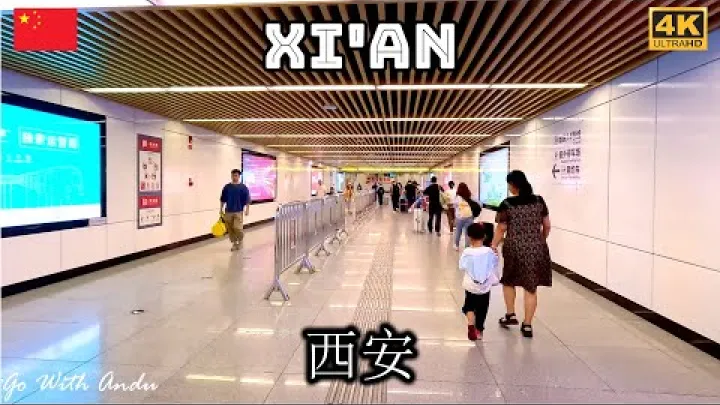
Keep the transport nodes separate in your planning. Xi'an North Railway Station serves high-speed rail journeys and is in the northern part of the city. Xi'an Railway Station is the conventional railway station near the downtown area. Lintong requires a different road-based or arranged-transfer plan for its attractions. A hotel near one station is not automatically convenient for the other.
Before booking, enter the exact hotel address into a current map or transit app. Check the route to your priority sights, the station you will actually use on arrival or departure, and the walking approach to the hotel entrance. Look for the difference between a map pin, a station exit, and the front door. This check is more reliable than a broad district label or an unqualified promise of citywide travel times.
Bell Tower and City Center: The Best All-Round Base
The central Bell Tower area is the strongest all-purpose choice for many visitors who are deciding where to stay in Xi'an for the first time. It combines historic sights, food, transport, and a wide range of lodging in one part of the city. The right property can make a short itinerary feel simpler, although the central position also brings activity and noise that will not suit every traveler.
Why First-Time Sightseeing Works Well Here
The central area's main advantage is the concentration of places you may want to visit. The Bell Tower and Drum Tower provide recognizable orientation points, while the city walls, Great Mosque, Muslim Quarter, and Stele Forest add different types of historic and cultural experiences. Central streets also provide access to restaurants and evening activity without requiring a separate cross-city journey after a full day of sightseeing.
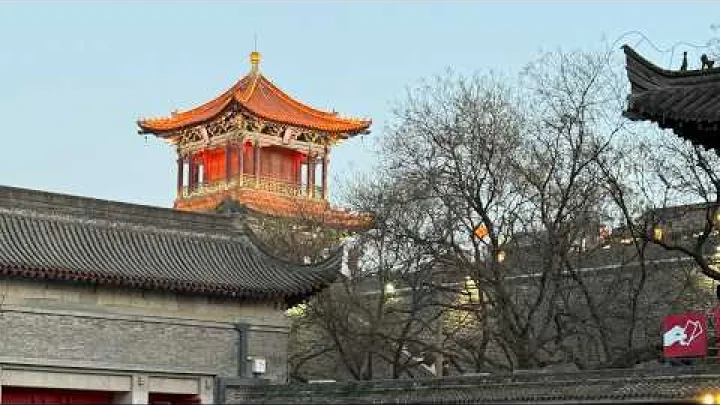
This location is efficient for visitors with limited time. You can plan a morning around the walled city, return to the hotel for a break, and go out again in the evening. Depending on the precise address, some core sights may be reachable on foot, while Zhonglou metro station provides a useful transport reference for destinations that are farther away.
The area is not ideal for every itinerary. Travelers whose main goals are the Shaanxi History Museum and Big Wild Goose Pagoda may prefer Yanta, while high-speed rail passengers may value the northern station area more. Even within the center, compare the distance to the landmark or station that matters most to you rather than choosing a property based only on the words “Bell Tower” in its name.
Hotels, Hostels, and Price Tiers to Look For
The central area has a broad lodging mix. Traditional full-service hotels and international chains appeal to travelers who want private rooms, front-desk support, predictable facilities, and a comfortable base between sightseeing days. Independent budget hotels can reduce accommodation costs while preserving a central location, but amenities and room insulation may vary more between properties.
Hostels are useful for solo travelers, students, and visitors who prioritize a lower room cost or a social atmosphere. Check whether the listing offers a private room or a shared dormitory, and look at the bathroom arrangement, luggage storage, check-in hours, and recent comments about noise. The cheapest room is not necessarily the best value if it places you beside a busy street or does not match your need for privacy.
At the higher end, central hotels may offer larger rooms, stronger service coverage, restaurants, and facilities that matter after a long day. Treat examples on booking platforms as date-specific options rather than permanent rankings. Room rates, availability, renovation status, and cancellation conditions can change, so compare current listings for your dates instead of relying on an old price or a hotel name alone.
Night Atmosphere, Noise, and Everyday Precautions
Bell Tower and the adjacent Muslim Quarter are lively at night. Bright commercial streets, food activity, traffic, and pedestrians are part of the appeal for visitors who want to step out into an active city environment. They are also the main reason that the central area may not provide the quietest sleep, especially when a hotel faces a major road, a market entrance, or a busy restaurant street.
Traveler impressions of nighttime comfort are anecdotal and can differ by street, time, and personal expectations. Use normal urban awareness, keep your belongings secure, and choose a route that feels comfortable for your party rather than treating the district as part of a formal safety ranking. For light sleepers, request a room away from the main road or market-facing side. A higher floor or interior-facing room may help, but only the property can confirm the available room position.
Yanta, Big Wild Goose Pagoda, and Qujiang: A Calmer Cultural Base
Yanta and Qujiang offer a different answer to where to stay in Xi'an. Instead of placing you in the densest historic and food streets, they put cultural attractions, planned leisure areas, and modern hotel developments closer to the center of your stay. An Expedia neighborhood guide similarly frames Xi'an's bases around the purpose of a trip rather than treating one area as suitable for every traveler.
The Big Wild Goose Pagoda and Shaanxi History Museum Area
Yanta is a strong choice for a cultural itinerary built around the Big Wild Goose Pagoda and the Shaanxi History Museum. These attractions give the area a clear focus and make it appealing to visitors who would rather spend time in museums, landscaped public spaces, and major cultural sites than in the most crowded central streets.
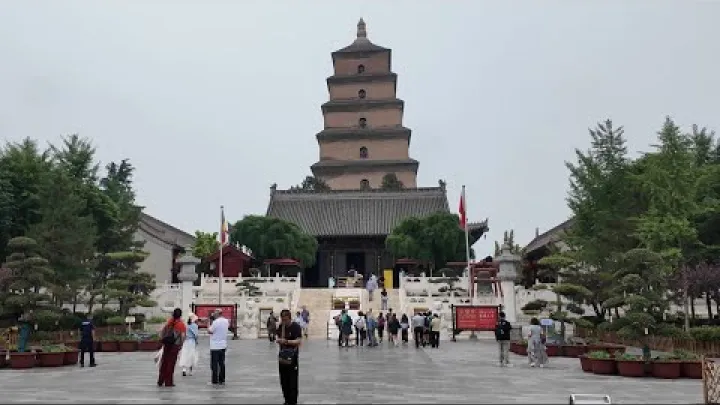
The atmosphere is often a better match for families, couples, and travelers who prefer a more relaxed evening base. You can still travel to the Bell Tower, Drum Tower, Muslim Quarter, and city walls, but these central sights are no longer the immediate organizing points of every day. The exact walking experience varies considerably within Yanta, so confirm whether a hotel is near the attraction or simply somewhere in the wider district.
Yanta can also work well for a longer stay in which you divide your time between southern cultural attractions and the old town. It is less efficient when your plan is to spend nearly every evening around Huimin Food Street or to make repeated short visits to the city walls. In that case, the central area usually saves more daily travel.
Qujiang New District for Modern Hotels and Planned Leisure
Qujiang New District is associated with Tang Paradise, Qinglong Temple, Qujiang Pavilion, shopping, dining, and newer hotel infrastructure. It appeals to travelers who value modern rooms, larger developments, open spaces, and organized cultural or entertainment venues. The setting can feel more planned than the dense streets around Bell Tower and the Muslim Quarter.
This is a useful area for a hotel-centered trip. Families may appreciate space and on-site facilities, while couples may prefer the combination of cultural attractions and a less compressed evening environment. Some properties in the district may offer full-service facilities and a higher level of comfort, but the best choice depends on the individual listing rather than the district label.
The trade-off is distance from the central old-town cluster. A Qujiang hotel may require metro travel, a taxi, ride-hailing, or another road journey for the Bell Tower, Muslim Quarter, Drum Tower, and city walls. Do not assume that newer buildings or larger public spaces automatically mean a safety advantage; choose the area for its setting and itinerary fit, not for an unsupported ranking.
Who Should Choose Yanta or Qujiang
Choose Yanta or Qujiang when your trip includes several nights and you value calm surroundings, museums, cultural attractions, planned leisure, or a modern full-service hotel. These areas are especially suitable for families with children, couples who want a less hectic base, and travelers who expect to spend substantial time near the Big Wild Goose Pagoda, Shaanxi History Museum, or Tang Paradise.
Mid-range and higher-budget travelers may find distinctive modern or full-service options in the southern districts. Budget travelers should still compare properties individually because inventory and value vary by location. A lower room rate can lose its advantage if frequent taxi rides or long cross-city journeys are needed.
Bell Tower remains the more efficient choice for a short itinerary centered on old-town sights, central walking, and evening food streets. Yanta or Qujiang is not a weaker version of the center; it is a different base for travelers who give more weight to calm, cultural surroundings, or hotel comfort than to immediate access to the historic core.
Muslim Quarter and Within the Walls: Food, Nightlife, and Budget Bases
The Muslim Quarter is both a major attraction and a possible micro-location for accommodation. It sits within the old city, west of the Bell and Drum Towers area, with Huimin Food Street and the Great Mosque serving as useful reference points. Staying nearby can make evening food walks easy, but the most convenient position for visitors is not always the best position for sleeping.
Stay Near Huimin Food Street for Immediate Evening Access
Choose the Muslim Quarter when repeated access to food streets, market browsing, and an active nighttime atmosphere is one of the main reasons for your Xi'an visit. You can step out for a meal, return to the hotel without arranging transport, and continue exploring the central area on foot where the route is practical. The location also keeps you close to other old-town anchors.
There is an important difference between staying directly beside the busiest part of Huimin Food Street and staying elsewhere within the walls or around Bell Tower. The first option maximizes convenience and atmosphere. The second can provide a quieter compromise while preserving access to the food quarter and central sights. Read the property description carefully and inspect the entrance route, not just the district name.
This area often suits budget travelers, solo visitors, and people who view evening food exploration as a central part of the trip. It may be less suitable for travelers who need quiet mornings, large hotel facilities, or a calm resort-like setting. Families should consider how easily they can move through dense evening pedestrian areas with children or luggage.
Crowds, Noise, Food Hygiene, and Price Transparency
The Muslim Quarter's dense nighttime crowds and intense sensory environment are part of its appeal, but they can also create noise, congestion, and a less predictable pace around the hotel. A room directly above or beside a busy commercial street may be a poor choice for light sleepers, even when the hotel receives good reviews for its location.
Comments about food handling, hygiene, or unclear pricing should be treated as practical traveler warnings rather than official findings about every vendor. Conditions differ between venues, and a single experience does not establish a general rule for the whole quarter. Use your own judgment about food handling, turnover, cleanliness, and whether a venue appears established and busy.
For evening meals, choose a busy or sit-down venue with clearly displayed prices. Confirm any unclear price before ordering, especially when selecting items sold by weight or choosing from a menu that is not easy to read. This is a simple way to keep the food experience enjoyable without making broad claims about the quarter's vendors.
Weiyang and the Railway Stations: Choose for Connections
Railway areas are useful when transport timing matters more than immediate access to Xi'an's historic sights. The two main station references have different locations and purposes, so match the hotel to the station you will actually use. A connection-focused base can save stress on an early departure, but it may add travel to the city center every day.
Xi'an North Railway Station and Weiyang for Rail or Business Trips
Hotels near Xi'an North Railway Station suit passengers using high-speed rail, particularly those with an early departure or late arrival. The wider Weiyang area can also work for business travelers whose meetings are in northern commercial or government areas. The main benefit is logistical: you are organizing the stay around the station or work location rather than around the Bell Tower sightseeing cluster.
The station belt is a practical transport base, not a substitute for staying in the historic core. It may offer a range of nearby hotels, but a property advertised as being in Weiyang can still be some distance from the station entrance, a convenient station approach, or central attractions. Check the exact property position and the route at the time of day you expect to travel.
Choose this area when the train schedule or work appointment is the dominant factor. If you have several full days for the city walls, Muslim Quarter, Drum Tower, and central museums, compare the cost and time of daily transfers against the convenience of a central hotel. For a mixed itinerary, one night near the station can sometimes be considered, but moving should have a clear practical benefit.
Xi'an Railway Station: Downtown Access with a Different Feel
Xi'an Railway Station is distinct from Xi'an North Railway Station. It is near the downtown and city-wall area, making it relevant for conventional rail arrivals and short overnight stays. A central hotel can sometimes provide a useful compromise: reasonable arrival access while keeping you closer to old-town sightseeing than a northern station hotel would be.
The immediate station surroundings can feel busy and utilitarian rather than like a quiet historic neighborhood. That character is a matter of personal preference, not evidence that the area is officially unsafe. Compare a station-adjacent property with a hotel closer to Bell Tower or the city walls, especially if you want to spend the evening exploring rather than simply connecting to another train.
Booking listings provide examples of central properties described as convenient for Xi'an Railway Station while also being within walking reach of central landmarks. Use such listings to identify possibilities, not as a promise that every hotel in the wider station area has the same access. For a late arrival, arrange the final hotel transfer in advance and verify the entrance route before leaving the station. This is particularly useful when you have luggage, arrive after dark, or are unfamiliar with the street layout.
Lintong: A Focused Base Near the Terracotta Army
Lintong is outside the main urban sightseeing pattern and should be chosen for a specific reason. It is associated with the Terracotta Army, Huaqing Palace, Lishan, scenic surroundings, and resort-style accommodation. It can be a rewarding destination base, but it is not the most flexible location for visitors who want to experience central Xi'an every day.
When a Lintong Resort Stay Makes Sense
A Lintong stay makes sense when archaeology, scenic surroundings, resort amenities, or a slower multi-night experience matter more than spontaneous access to the city center. It can be convenient for an itinerary focused on the Terracotta Army, Huaqing Palace, and Lishan, particularly when you want time to rest at the property rather than return to central Xi'an after every visit.
Property-specific information is more useful than a general claim that all of Lintong is close to the attractions. For example, the Garrya property page presents Garrya Xi'an Lintong as a five-star resort near the Terracotta Army and gives a location illustration of 3 km, or about 5 minutes by car. That description applies to the property and its stated context; it is not a universal travel-time guarantee for every hotel or attraction in Lintong.
Before committing to a Lintong hotel, confirm the current resort transfer, taxi, or tour arrangements and how attraction access will work from that exact property. Check whether the hotel can help with transport, whether your preferred sights are open and accessible as planned, and whether returning to central Xi'an later would be practical. These details determine whether the resort's apparent proximity is useful for your itinerary.
Why Lintong Is Usually Not the Default for a Short City Visit
A Lintong base can make central attractions less convenient. Visitors who also want the city walls, Muslim Quarter, Bell Tower, Shaanxi History Museum, and central evening life may spend more time arranging road transfers and less time exploring. The fame of the Terracotta Army should not automatically determine the location of every night of a broad Xi'an itinerary.
For a short trip with several city highlights, staying centrally and visiting Lintong as an excursion is usually the simpler plan. It keeps your evening options open and avoids changing hotels for a single attraction cluster. The best choice still depends on the current route, your mobility, and whether you prefer independent travel or an arranged visit.
With a longer trip, a split stay can be worthwhile. You might spend the first part in the central city and the final part in Lintong for a resort experience or easier access to the eastern attractions. Make the move only when the benefits of early access, scenic surroundings, or resort facilities outweigh the time and effort of changing accommodation.
How to Match Accommodation Type, Budget, and Booking Priorities
The right lodging type depends on how you will use the property. A central hotel may be valuable because it reduces daily transfers, while a cheaper room farther away may not be economical once transport and time are included. Consider privacy, space, social atmosphere, facilities, flexibility, and the number of nights alongside the headline room rate.
Hotel, Hostel, Resort, or Serviced Apartment?
Hotels: Conventional hotels are the most flexible choice for travelers who want private rooms, predictable services, reception support, and convenient locations. They range from simple budget properties to full-service and luxury hotels. For a first visit, a hotel near Bell Tower or a well-positioned southern property can provide a straightforward base, depending on the itinerary.
Hostels: Hostels suit solo travelers, students, and budget-conscious visitors who are comfortable with shared facilities or want a social setting. They can be especially attractive in central areas where location is more important than room size. Check dormitory occupancy, private-room availability, lockers, bathrooms, quiet hours, and recent comments before booking.
Resorts: Resorts are most appropriate when the property itself is part of the trip. In Xi'an, that most clearly applies to Lintong, where a resort stay can support a slower visit focused on the Terracotta Army, Huaqing Palace, Lishan, and time on site. A resort is less suitable if you plan to spend most of each day in the central city.
Serviced apartments: A serviced apartment may be worth evaluating for a longer stay when you need more living space, a kitchen, or a layout that works better for a family or extended visit. Availability, facilities, housekeeping, and value vary by listing, so do not assume that every advertised apartment offers the same services as a hotel. Confirm what is included and whether the check-in process suits your arrival.
Use budget as a framework rather than a district ranking. Budget travelers can compare hostels and simple hotels in central or inner-city areas. Mid-range travelers should weigh room quality against station or metro access. Higher-budget travelers can choose between central service, modern southern hotels, and destination-style resorts in Lintong. The best value is the option that supports your actual itinerary with acceptable sleep, access, and flexibility.
Use a Practical Booking Checklist Before Paying
A hotel name or district label does not show the full travel experience. Use this checklist for the same dates and compare the final booking details:
- Map pin: Confirm the exact address and whether the pin represents the hotel entrance rather than a nearby landmark or commercial complex.
- Daily routes: Check the walking route to the attraction, metro station, railway station, or food street that matters most to your trip.
- Arrival logistics: Distinguish Xi'an North Railway Station from Xi'an Railway Station and see how you will complete the final part of the journey.
- Room position: Read recent reviews and ask whether the room faces a major road, market, restaurant, lift, or courtyard if sleep quality is important.
- Current property information: Check recent comments, available facilities, reception hours, check-in requirements, and whether the room type matches the photographs and description.
- Total price: Compare the final total for the same dates, including taxes, fees, breakfast, extra guests, and any transport or resort charges shown during booking.
- Cancellation terms: Confirm the deadline, refund conditions, payment timing, and rules for changing the reservation before you pay.
Run this comparison across current booking listings rather than relying on an old rate, a generic neighborhood page, or a hotel name that includes a famous landmark. A small difference in map position can affect walking, noise, arrival convenience, and the amount of transport you need during the stay. Before paying, compare the final total price and cancellation terms for the same dates so that the apparent bargain is also the right practical choice.
Final Recommendation for Where to Stay in Xi'an
For most first-time visitors, the Bell Tower and central City Center are the best default bases. They combine access to the Bell Tower, Drum Tower, city walls, Muslim Quarter, central dining, and Zhonglou metro station, making them especially useful for short leisure trips. Choose Yanta or Qujiang instead when you want a calmer cultural setting near the Big Wild Goose Pagoda, Shaanxi History Museum, or Tang Paradise. Choose the Muslim Quarter for immediate food-street access, Weiyang or a railway station for a connection-led trip, and Lintong for a focused Terracotta Army or resort stay.
The final decision should come from your priority sights, arrival station, preferred nighttime atmosphere, budget, and number of nights. Select the area first, then verify the exact property location, room conditions, total cost, and arrival plan. That approach will help you find where to stay in Xi'an without treating a broad district label as a guarantee of convenience.
Select area
Create a post
Posting is free and no registration is required.