Nanjing Getting There: Air, Rail, Bus and River Routes

Getting there in Nanjing is easiest when you choose the right gateway before comparing fares. Nanjing Lukou International Airport, code NKG, handles air arrivals, while Nanjing South Railway Station and Nanjing Railway Station serve different parts of the rail network. For nearby East China cities, high-speed rail is often the first option to check; for overseas and longer domestic journeys, flying may be simpler. This guide compares air, rail, bus, and specialized river access, then explains how to continue to central areas such as Xinjiekou, Gulou, and Confucius Temple.
Choose the Best Way to Get to Nanjing
The best way to reach Nanjing depends on your starting city, the availability of a direct service, the location of the departure and arrival gateways, and the amount of luggage you have. A low advertised fare may not be the lowest total cost after airport transfers, station travel, baggage fees, or a long wait between connections.
| Mode | Best use | Main advantage | Main limitation | Booking channel |
|---|---|---|---|---|
| Air | International and longer domestic routes | Useful when a direct NKG flight operates | Airport access and city transfer add time | Airline or airport-linked booking channel |
| High-speed rail | Nearby East China cities and many domestic corridors | Central stations and simple city-to-city travel | Station and seat availability vary by date | 12306 China Railway or a suitable booking platform |
| Long-distance bus | Smaller destinations or sold-out trains | May provide direct road coverage | Traffic, comfort, and English booking limitations | Current bus terminal or operator channel |
| River or cruise | A confirmed Yangtze itinerary | Specialized travel experience | Not a routine substitute for rail or air | Passenger or cruise operator |
Start with High-Speed Rail for Nearby East China Cities
If you are starting in Shanghai, Hangzhou, or another nearby East China city, check a current direct high-speed train before looking at flights. Rail usually removes the need to travel out to an airport, complete airport check-in, and then return from Nanjing Lukou Airport to the urban area.

Nanjing South Railway Station is the main anchor for high-speed rail. Nanjing Railway Station is also important, but it has a different urban position and service mix. The train result matters as much as the city pair: a train from a convenient departure station to Nanjing South may be more useful than a slightly cheaper service that requires a difficult connection or arrives at an inconvenient time.
Compare the complete journey. Add the time from your hotel to the departure station, the recommended station arrival buffer, the scheduled train time, the walk through the arrival station, and the final metro or taxi trip to your accommodation.
Know When Air, Bus, or River Travel Is More Practical
Use air when NKG has a suitable direct service, when your origin is far from Nanjing, or when the rail journey would require an inconvenient connection. Use rail when the departure station is easy to reach and the train arrives close to your intended area. A long-distance bus is a useful fallback for smaller cities, limited rail corridors, and sold-out trains. River travel is best treated as part of a confirmed cruise or passenger itinerary rather than as a standard Nanjing transport option.
Budget, luggage, comfort, and booking difficulty can change the result. Rail tickets may be attractive on a short regional route, but availability can be limited on busy dates. Flights may offer more choices for a long domestic journey, but the airport transfer and airport waiting time reduce the advantage of a short timetable duration. Bus booking can be less clear in English, while river services require direct confirmation from the operator.
Choose the gateway that gives you the fewest uncertain steps. For a first visit, a slightly higher fare can be worthwhile if it provides a direct route, a clearly identified station, and a manageable arrival transfer.
Fly to Nanjing via Lukou International Airport
Nanjing Lukou International Airport is the city's principal air gateway. The Nanjing Municipal Government identifies the airport as being in Lukou Town, Jiangning District, and notes its distance from Shanghai. Because it is outside the central urban area, an air booking should always be assessed together with the final journey into Nanjing.
Check International and Domestic Flight Availability
Search for Nanjing by its airport code, NKG, as well as by its full name. Separate a nonstop flight to Nanjing from a one-stop itinerary and from a trip that first lands at another Chinese gateway before continuing by train or domestic flight.
Route pages are useful for discovering possible city pairs, but they are not a substitute for a live airline or airport search. For example, an indicative NKG network listing from FlightConnections includes examples such as Melbourne and Sydney. Such listings can help you identify a possible direct route, but airlines can change frequencies, operating seasons, and travel dates.
Recheck the Nanjing Lukou route and operating dates with the airline or airport before paying for a direct flight. Also check whether the itinerary is on one ticket, whether baggage is checked through, and whether a connection requires a new terminal or a separate airport transfer.
Compare Flying with Rail Before Booking
Flight time is only one part of the comparison. Include the trip to the departure airport, the required check-in and security buffer, baggage drop, possible delays, baggage collection at NKG, and the onward transfer to central Nanjing. A flight that looks short on the timetable may take longer door to door than a train leaving from a central station.
| Factor | Air to NKG | Rail to Nanjing |
|---|---|---|
| Departure access | Depends on airport distance and check-in requirements | Often depends on access to the departure railway station |
| Arrival access | Requires a transfer from Lukou Airport into the city | Arrives at Nanjing South or Nanjing Railway Station |
| Cost | Fare, baggage, and airport transfer may all matter | Fare depends on train, seat class, and date |
| Booking | Usually familiar for international travelers | Requires accurate passenger and station information |
| Best fit | Longer routes or a convenient direct service | Shorter East China corridors and simple connections |
Air can still be the practical choice for an overseas arrival or a long domestic journey. Compare the available departure times, total price, baggage rules, and connection risk rather than choosing only by the advertised flight duration.
Take the Train to Nanjing
Rail is the main regional arrival method for many travelers in East China. The important planning detail is not only the destination city but also the exact Nanjing station printed on the ticket.
Nanjing South or Nanjing Railway Station?
Nanjing South Railway Station is the main high-speed rail hub and is south of the historic and commercial core. Nanjing Railway Station is a major northern urban station with conventional services and some higher-speed services. They are not interchangeable arrival points for a traveler staying near Xinjiekou, Gulou, Confucius Temple, or Xuanwu Lake.
| Arrival station | Typical role | Planning implication |
|---|---|---|
| Nanjing South Railway Station | Main high-speed rail hub | Use the metro or taxi for the central districts; allow time to cross a large station complex |
| Nanjing Railway Station | Northern urban station with conventional and some higher-speed services | Can be convenient for Xuanwu Lake, the city wall, Gulou, and northern areas |
Search the exact station name shown in the booking result. When sharing your arrival details with a hotel or driver, give the full station name rather than saying only Nanjing railway station. This avoids a preventable transfer to the wrong side of the city.
Station access also affects the choice. A train arriving at Nanjing South may be ideal for a high-speed journey but still require a longer final metro or taxi leg to northern accommodation. Conversely, Nanjing Railway Station may be a better arrival point for a central northern itinerary even if the train itself is not the fastest option.
Common Routes from Shanghai and Hangzhou
Shanghai and Hangzhou are the clearest examples of journeys where high-speed rail should normally be checked first. In Shanghai, Shanghai Hongqiao is a common departure point when it appears in the live results. In Hangzhou, Hangzhou East is the relevant station when the booking result shows it. The useful comparison is not simply Shanghai or Hangzhou to Nanjing, but your accommodation to the departure station and your Nanjing arrival station to the hotel.
Use this sequence:
- Plan the local journey to Shanghai Hongqiao or Hangzhou East, if that is the station on the ticket.
- Confirm whether the Nanjing arrival is at Nanjing South or Nanjing Railway Station.
- Compare the current train time, seat class, fare, departure choices, and ticket availability.
- Plan the metro or taxi journey from the arrival station before you leave.
A bus is usually a secondary option on these major corridors when a convenient train is available. It can still be useful if the railway result is sold out, if a direct bus terminal is much closer to your starting point, or if its departure time fits your plans better. All times and fares should be treated as date-dependent rather than permanent route facts.
Common Routes from Beijing, Wuhan, and Guangzhou
Beijing, Wuhan, and Guangzhou show how the balance between rail and air changes with distance. High-speed rail can remain comfortable and straightforward on some long domestic routes, especially when you prefer to arrive at Nanjing South without an airport transfer. A flight may become more competitive when the complete rail journey is long, when several departure times are available, or when a suitable fare includes baggage.
For each city, compare the departure station or airport, the number of connections, the total scheduled journey, the fare for the class or baggage allowance you need, and the arrival gateway. Rail normally means planning the final leg from Nanjing South or Nanjing Railway Station. Air means planning the transfer from NKG as well as the airport check-in process.
Do not treat Beijing, Wuhan, or Guangzhou as proof that one mode is always faster or cheaper. Your travel date, departure location, ticket availability, and tolerance for transfers can change the recommendation.
Book Tickets and Confirm the Arrival Station
Use 12306 China Railway as the official railway information and ticketing reference. International-facing booking services can be convenient when language or payment support is important, but their prices, service fees, payment methods, and collection instructions may differ.
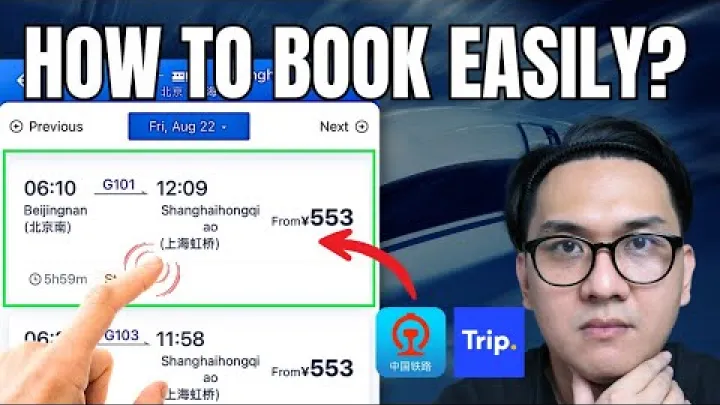
Before going to the station, check:
- Passenger name and identity-document details are entered exactly as requested.
- Train number, departure date, departure station, and arrival station are correct.
- Seat class, carriage information, and the number of passengers match the booking.
- The confirmation format and any station collection or identity-check instructions are clear.
- The refund, change, and ticket deadline rules apply to your booking.
- Your arrival transfer is planned for the station printed on the ticket.
For an international visitor, the most difficult part may be matching identity data or understanding the ticket process rather than finding the route. If a passport, payment, collection, or refund question is not clear in the booking channel, ask railway staff at an official counter instead of relying on an unsolicited intermediary.
Use Long-Distance Buses, Roads, and River Connections
Buses and river services can extend the range of ways to reach Nanjing, but they require more route-specific planning than the main air and rail gateways.
When a Long-Distance Bus Is a Practical Alternative
A long-distance bus can be useful when your starting city is smaller, rail coverage is limited, trains are sold out, or the available bus leaves from a much more convenient location. It may also provide a direct road connection without a change of train.
Compare more than the ticket price. Road traffic can make the arrival time less predictable than the timetable suggests. Consider seat comfort, luggage storage, rest stops, weather, and the time needed to reach the departure terminal. A bus that avoids a long trip to a railway station may still be worthwhile even if its scheduled journey is longer.
For major Shanghai and Hangzhou corridors, buses are generally a fallback when a suitable high-speed train is available. For smaller destinations, they may be the most direct practical option. English-language booking may be less transparent, so use a current terminal or operator channel and keep the destination written clearly.
Choose and Verify the Bus Terminal
Nanjing's long-distance bus services are distributed across more than one terminal. Names that may appear in local information include Zhongyangmen Long-Distance Bus Station, Eastern or Xinzhuang, Hanzhongmen, and Zhonghuamen. These names should not be treated as interchangeable, and a general search for Nanjing bus station may not identify the terminal for your route.

The terminal name is part of the ticket information. Match it with the destination, departure time, and street address. Check the current notice, ticket window, or official inquiry channel for the station before leaving. Confirm the bus terminal, departure time, and destination through the station's current ticket channel before leaving.
Allow extra time for a terminal that is outside your accommodation area. A taxi or ride-hailing journey to the correct bus station may be more practical with large bags, but use the address shown by the current ticket information rather than an old map label or an informal translation.
Treat River and Ferry Access as a Specialized Option
Nanjing can appear on Yangtze cruise itineraries, but a cruise arrival is not the same as a regular city-to-city ferry. River travel may suit a planned cruise or a specific passenger sailing; it should not be presented as a routine substitute for a train from Shanghai or Hangzhou.

Distinguish a passenger or cruise terminal from cargo-port infrastructure. If an itinerary names Wumadu Passenger Terminal or another river facility, use the operator's boarding information to identify the exact location and the onward route to your accommodation. A port shown on a map does not by itself prove that passengers can arrive there.
Confirm that the passenger sailing or cruise service operates on your dates, and verify the boarding terminal directly with the operator. Also ask how passengers leave the terminal after disembarkation, since a river arrival may require a separate taxi or local transit leg.
Reach Central Nanjing from Each Gateway
Nanjing's arrival gateways are separated from one another and from the city center. Plan the last mile to your accommodation, not only the long-distance ticket.
Lukou Airport to Central Districts
The broad choices from Nanjing Lukou International Airport are the Nanjing Metro Airport Line S1, an airport bus, and a taxi or recognized ride-hailing service. The Nanjing Municipal Transport Portal provides an official starting point for railway transport and airport-bus information.
| Transfer | Best for | Trade-off |
|---|---|---|
| Metro Airport Line S1 | Daytime budget travel with manageable luggage | Usually requires continuation on the urban network or a final walk |
| Airport bus | Travelers whose route matches a current downtown stop | Route, stop, and operating pattern depend on current service information |
| Taxi or ride-hailing | Heavy luggage, groups, or door-to-door travel | Higher cost and possible road delays |
For Xinjiekou, Gulou, or Confucius Temple, start by identifying the closest practical metro stop or bus stop to your accommodation. S1 can form the airport part of a rail-based transfer, while an airport bus may be convenient when its stop is close to your hotel. A taxi is often easier when a group is sharing the fare or when bags make station changes difficult.
Nanjing South to Xinjiekou, Gulou, and Confucius Temple
Nanjing South is south of the historic and commercial core, but it has a major transport interchange. The metro is usually the lower-cost choice for Xinjiekou, Gulou, and Confucius Temple, while a taxi can reduce walking and changes for travelers with heavy luggage.
Inside the station, follow signs for the metro concourse, taxi rank, or authorized ride-hailing pickup area. Do not assume that the station exit closest to the train platform is the best exit for your final destination. If you use the metro, check the current Nanjing Metro map for the line and transfer sequence to your destination; line numbers, exits, and station arrangements should be confirmed against the current map rather than copied from an old route description.
Give the driver or hotel the full accommodation address and the name of the district or nearby landmark. Confucius Temple is a broad visitor area rather than one single hotel entrance, so a precise address is more useful than the attraction name alone.
Nanjing Railway Station, Bus Terminals, and River Terminals
Nanjing Railway Station is in the northern part of the urban core. It can be convenient for Xuanwu Lake, the city wall, Gulou, and other northern districts, reducing the final journey compared with an arrival at Nanjing South.
Bus and river-terminal arrivals require separate planning. A bus terminal may be some distance from the attractions or hotel area, and a river terminal may have a different access pattern again. Do not assume that every bus or river terminal has a direct metro connection or the same taxi arrangement as a railway station.
Use the exact terminal name from the ticket or cruise confirmation in your map search. Then compare the route to your accommodation by current metro, bus, or taxi options. If the terminal name is unfamiliar, show the written address to station staff or the driver rather than relying on a spoken translation.
Compare Time, Cost, and Booking Difficulty
Travel times and fares change with the date, ticket class, demand, and operator. The most useful comparison is a live result that includes every transfer between your starting point, Nanjing, and your accommodation.
Shanghai and Hangzhou: Rail-First Comparisons
For Shanghai to Nanjing and Hangzhou to Nanjing, high-speed rail should normally be the first comparison. Shanghai Hongqiao and Hangzhou East are useful departure anchors when they appear on the booking result, but the time needed to reach either station can change the calculation.
| Origin | First option to check | Compare in the live result | Fallback |
|---|---|---|---|
| Shanghai | High-speed rail from the station shown, often Shanghai Hongqiao | Station access, train time, fare, departure choice, Nanjing arrival station, and final transfer | Bus if the terminal or departure time is more convenient |
| Hangzhou | High-speed rail from the station shown, often Hangzhou East | Local access, seat class, availability, fare, arrival station, and city-center connection | Bus when rail availability or station access is poor |
Rail can remain preferable even when a flight has a short time in the air because flights add airport access, check-in, security, baggage, and the transfer from NKG. A bus can be useful when it offers direct coverage, a better departure location, or a practical alternative after trains sell out. Treat all journey and fare figures shown by booking services as indicative and date-dependent.
Beijing, Wuhan, and Guangzhou: Rail versus Air
For Beijing, Wuhan, and Guangzhou, compare high-speed rail and air instead of applying the short-route rail rule automatically. Rail may offer a comfortable city-center departure and an arrival at Nanjing South. Air may offer a shorter overall schedule or more suitable departure times, but it ends at NKG and requires a separate city transfer.
Use these questions:
- How long does it take to reach the departure airport or railway station from your actual location?
- Does the rail option require a change, and does the flight involve a separate ticket or airport connection?
- What is the total fare after baggage, seat class, station access, and airport transfer?
- Which Nanjing arrival point is closer to your accommodation?
- How much buffer do you need if a delay would affect a hotel check-in or onward booking?
Do not compare flight time alone with complete rail journey time. Conversely, do not assume rail is automatically better because it arrives at a station. The right choice is the one with a realistic total duration, acceptable cost, and fewer uncertain transfers for your travel date.
International Arrivals: Direct Flight or a Nearby Hub
International travelers generally have two strategies: fly directly to NKG when a suitable service operates, or arrive through another major Chinese or regional gateway and continue to Nanjing by rail or domestic flight. A direct flight can reduce the number of separate travel steps. A nearby hub may provide more departure dates or fares when a nonstop NKG service is unavailable.
| Strategy | Potential benefit | Main issue to examine |
|---|---|---|
| Direct flight to NKG | One air itinerary and a clear Nanjing arrival gateway | Route season, operating dates, fare, baggage, and city transfer |
| International arrival plus rail | May open more international flight choices and a city-to-city rail leg | Immigration, baggage, airport-to-station transfer, and separate-ticket risk |
| International arrival plus domestic flight | May suit a hub with a convenient onward flight | Connection time, terminal changes, baggage rules, and delay risk |
Do not assume a direct route operates year-round or on every date. Before choosing a hub, check transit and entry requirements for your passport, whether baggage is transferred through, the terminals involved, and the consequences of booking separate tickets. A rail connection from a hub can be convenient only if the airport-to-station transfer and its time buffer are realistic.
Plan the Booking and Arrival Details
A short verification routine can prevent the most common transport problems: a discontinued route, the wrong station, an unclear bus terminal, or a missed final connection.
Verify Schedules, Operators, and Ticket Rules
Use the operator that controls the service for the final decision. For air, check the airline and Nanjing airport information. For rail, check the current train result and ticket rules through 12306 China Railway. For buses, use the relevant terminal's current ticket channel. For a river journey, use the confirmed passenger or cruise operator rather than a general port directory.
Third-party route pages can help with orientation, but they may not reflect timetable revisions, seasonal services, changed terminals, or temporary operating conditions. Before departure, confirm:
- Operator and service status.
- Travel date and departure time.
- Train number, if traveling by rail.
- Exact departure and arrival station or terminal.
- Ticket status, passenger identity details, and refund or change rules.
- Airport, station, bus, or cruise transfer arrangements after arrival.
Check the current timetable, service status, train number, and arrival station on the official operator channel before departure. Save the confirmation on your phone and keep the accommodation address available offline in case mobile access or translation support is limited.
Handle Late Arrivals and Transfer Buffers
A late arrival changes the transfer decision. At Lukou Airport, a delayed flight may leave less time for the metro or airport bus. A late train may also arrive after the most convenient public transport has reduced frequency. The same issue can arise when an international connection takes longer because of immigration, baggage, or a terminal change.
For a daytime arrival, compare the public transport route with the location of your accommodation and the amount of luggage you have. For a late-night arrival, check the last metro or airport-bus service and prepare an official taxi or recognized ride-hailing alternative in advance. Do not rely on an unconfirmed final service when reaching a hotel after a long international journey.
For an airport-to-train or train-to-flight connection, leave a realistic buffer for walking through a large station, collecting bags, finding the correct exit, and handling a delay. A tightly timed separate-ticket connection may be cheap but can create a costly problem if the first service runs late.
Avoid Unofficial Rides and Common Station Mistakes
Use official ticket desks, marked taxi ranks, and recognized ride-hailing channels. Decline unsolicited transport offers outside the airport, railway station, or bus terminal, even when the person claims to offer a faster route.
Before getting into a vehicle, confirm the correct railway station, bus terminal, airport terminal, and destination address. Check the meter where applicable or the confirmed app fare, and keep your accommodation address in a form the driver can read. These simple steps reduce the risk of going to the wrong gateway or paying for an unclear journey.
Final Recommendations for Getting to Nanjing
For a nearby East China journey, check high-speed rail first and compare the complete trip from your starting location to your hotel. For an overseas or longer domestic trip, search NKG and compare a direct flight with a hub itinerary that may continue by rail or domestic flight. Use buses when they provide useful coverage or a practical fallback, and treat river travel as a confirmed cruise or passenger service rather than a standard route.
Before paying, identify the exact Nanjing arrival point: NKG, Nanjing South Railway Station, Nanjing Railway Station, a named bus terminal, or a confirmed river terminal. Then plan the last mile to Xinjiekou, Gulou, Confucius Temple, Xuanwu Lake, or your accommodation. This gateway-first approach makes getting there in Nanjing clearer, safer, and easier to manage when schedules or route availability change.
Select area
Create a post
Posting is free and no registration is required.