China National Symbols: Animal, Bird, Flower & Emblem
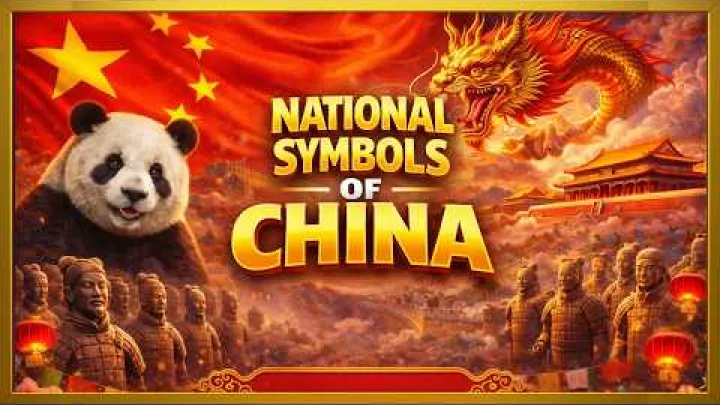
China’s national symbols are not all official in the same legal sense. The national emblem is defined by law, while the giant panda is the widely recognized national animal and the red-crowned crane is a leading but unsettled answer for the national bird. The peony is the leading PRC floral symbol, while the ginkgo and fuzzy kiwifruit appear in common lists with weaker official support. This guide focuses on the People’s Republic of China and mainland context, while noting when a designation belongs to the Republic of China or to broader Chinese culture.
What Counts as a National Symbol in China
In everyday English, national symbol can mean either a legally adopted state emblem or an object that strongly represents a country. Those meanings overlap, but they are not identical. A legal emblem has a clear foundation in legislation or a formal state decision. An animal, bird, flower, tree, or fruit may instead become well known through history, art, conservation, public opinion, institutional recommendations, or international media.
For China, this distinction is especially useful because popular lists often place official, proposed, and cultural symbols together. The most accurate answer therefore gives both the name and its status.
Official State Symbols and Widely Recognized Cultural Symbols
An official symbol is supported by PRC law or by a formal decision from the relevant state authority. The national emblem is the clearest example. Its design, meaning, authorized uses, and protection are addressed in law.
A proposed or semi-official symbol may have received public support, appeared in an institutional recommendation, or been described as selected in a report without having the same status as a legally defined emblem. A cultural symbol can be even broader: it may be deeply associated with Chinese history and identity without any formal government designation.
The following snapshot gives the safest short answers for the main questions about China’s national symbols.
| Category | Common answer | Best status description |
|---|---|---|
| National emblem | National Emblem of the PRC | Official state symbol defined by law |
| National animal | Giant panda | Widely recognized national treasure and de facto symbol |
| National bird | Red-crowned crane | Leading proposed or commonly listed symbol |
| National flower | Peony | Leading PRC floral symbol; formal legal status requires care |
| National tree | Ginkgo | Commonly listed cultural symbol without a clear legal basis |
| National fruit | Fuzzy kiwifruit | List-based claim without a clearly established official designation |
| Plum blossom | Plum blossom | Important Chinese cultural symbol; some formal claims concern the ROC |
These categories are not a ranking of importance. The giant panda may be more recognizable internationally than a legal emblem, while the emblem has stronger formal standing. A careful article, school assignment, or presentation should state the status instead of treating every familiar image as an official national symbol.
Why China’s Symbolic Categories Can Be Ambiguous
Ambiguity often begins when a public preference is reported as a national selection. A poll can show strong popular support, and an association or media organization can recommend a symbol, but neither automatically creates a legal designation. The same issue affects lists of national birds, trees, and fruits, which may include both official and unofficial entries.
Political and historical context also matters. In this article, China primarily means the PRC and mainland usage. A source discussing the Republic of China, or ROC, may use the word China in a different historical and political context. The plum blossom is the most important example of this distinction.
China also has political slogans and phrases that appear in official communication, public ceremonies, or tourism material. They should not automatically be called a formal national motto. A motto requires its own authoritative designation, not simply frequent public use.
When a source gives a national-symbol claim, check three points:
- Which authority named or adopted the symbol?
- Does the wording say official, selected, proposed, considered, favorite, or culturally associated?
- Which jurisdiction and date does the claim concern?
An overview such as National Symbols of China can help identify the labels that circulate, but a compiled list is best treated as a starting point. Legal claims should be checked against a law or a formal state announcement.
China’s National Emblem and the Coat of Arms Question
Unlike many animal and plant designations, China’s formal state emblem has a clear legal foundation. It is the National Emblem of the People’s Republic of China.
What the National Emblem Represents
The direct answer to the coat of arms question is that China’s official symbol in this category is a national emblem, not a separate traditional European-style coat of arms. It performs many functions that international readers associate with a coat of arms, but its official name and legal treatment are different.
The legally defined design places Tiananmen at the center, with five stars above it. Ears of grain and a cogwheel surround the central scene. The Law on the National Emblem sets out this composition and explains the emblem’s connection with the new-democratic revolutionary struggle waged by the Chinese people since the May Fourth Movement in 1919 and with the founding of New China.
This legal explanation is more reliable than decorative interpretations that assign a separate meaning to every visual detail. The emblem links the revolutionary history of the PRC with the state established in 1949. Its grain and cogwheel frame the composition in a way that connects the design with the country’s political and social foundations, while Tiananmen identifies the national center represented by the emblem.
For international readers, the key point is simple: when a form, document, building, or official publication displays China’s formal state insignia, it is the national emblem. Calling it a coat of arms may be understandable in casual conversation, but national emblem is the more accurate term.
Where the Emblem Is Used and Protected
The law limits official use of the national emblem to designated state buildings, official documents, and other legally specified settings and materials. This is why the emblem appears in formal government contexts rather than functioning like a general decorative logo.
The legal framework also protects the emblem’s integrity. Improper display, damage, defacement, and some commercial uses are regulated. A reproduction in a news report, classroom explanation, museum display, or commercial design should not automatically be assumed to have the same legal status as use by a state institution.
For practical purposes, readers should distinguish an authorized state display from a decorative image that merely copies some of the emblem’s features. That distinction is important when preparing official-looking documents, educational materials, merchandise, or public signage.
China’s National Animal: The Giant Panda
The animal category is more cultural than legal. The giant panda is the strongest and most widely recognized answer to the question, What is China’s national animal?
Why the Giant Panda Is Widely Treated as China’s National Animal
The giant panda is the animal most closely associated with China. Chinese official-facing material commonly describes it as a national treasure, and the Chinese Consulate Fast Facts uses that description. In international education, conservation, diplomacy, and media, the panda functions as a highly recognizable national animal symbol.

Its importance comes from several qualities. The panda is distinctive to China’s natural heritage, has a strong public appeal, and represents the country’s conservation efforts. It also gives China a positive and immediately understood international image. For a general question or a short cultural profile, giant panda is therefore the most useful answer.
That recognition should still be described accurately. National treasure and widely recognized national animal do not necessarily mean that a specific PRC statute formally declares the giant panda to be the national animal. In formal writing, use wording such as widely recognized, commonly regarded as, or de facto national animal unless a current authoritative designation is being cited.
This distinction does not reduce the panda’s symbolic importance. It simply separates cultural and official-facing recognition from a precise legal category. The panda can be China’s best-known animal symbol even when the legal basis is different from that of the national emblem.
The Chinese Dragon as a Cultural Symbol
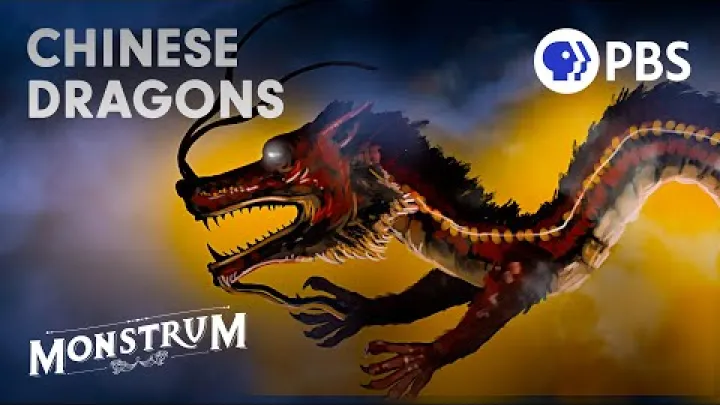
The Chinese dragon also appears in searches for China’s national animal, but it answers a different question. The dragon is a mythic cultural symbol, not a biological species designated as the country’s national animal.
Across Chinese tradition, the dragon is associated with power, continuity, authority, protection, and auspicious meaning. Its presence in traditional art, literature, festivals, architecture, and public imagery reflects a long civilizational history. Those associations make it an important Chinese cultural icon.
The dragon and the giant panda can therefore both represent China, but they should not be placed in the same status category. The panda is a real animal widely treated as a national treasure and national symbol. The dragon represents mythology, cultural memory, and historical identity rather than an official biological designation.
China’s National Bird: The Red-Crowned Crane Question
China’s national bird is less settled than its national animal. The red-crowned crane is the leading answer in many lists and discussions, but cultural prominence should not be confused with confirmed formal adoption.
Why the Red-Crowned Crane Is a Leading Candidate
The red-crowned crane is widely proposed or listed as China’s national bird. It is associated with longevity, peace, grace, and elegance, which gives it a strong symbolic role in Chinese art and cultural expression.
The bird also represents China’s natural heritage. Its appearance in national-symbol discussions reflects admiration for a distinctive species and for the landscapes and wetlands connected with it. Those associations explain why it is often selected when a list requires one Chinese national bird.
The safest direct answer is therefore that the red-crowned crane is China’s leading candidate or commonly recognized national bird, not that it is unquestionably an official PRC national bird. Unless a current formal decision is cited, this wording preserves the distinction between a popular or institutional recommendation and a state designation.
How to Explain China’s Unsettled National Bird Status
Conflicting search results often arise because national-bird lists combine species with different levels of authority. Some countries have a bird named in law. Others use a bird as a cultural emblem without a formal decision. A reference list may include both types, sometimes with only a brief note about whether the status is official or unofficial.
For China, a species can be culturally prominent and repeatedly described as the national bird without having the same legal standing as the national emblem. The red-crowned crane’s repeated appearance in lists is evidence of its symbolic importance, but it is not by itself proof of a current central-government designation.
For a school paper, formal profile, or government-focused explanation, state the uncertainty in the answer itself: the red-crowned crane is the leading commonly listed candidate, while a clearly documented official PRC national-bird designation should not be assumed. When the exact current status matters, look for a dated PRC law or formal state announcement that identifies both the species and the approving authority.
China’s Floral Symbols: Peony and Plum Blossom
China’s floral symbols require two distinctions: the difference between cultural popularity and legal adoption, and the difference between PRC and ROC usage. The peony is the leading floral answer for the PRC, while the plum blossom remains an important Chinese cultural symbol and may refer to a different political jurisdiction.
Peony as the Leading PRC Floral Symbol
The peony is widely regarded as China’s leading floral symbol. It has a long association with beauty, honor, prosperity, status, and imperial heritage. Those meanings help explain why it has attracted strong public support as a national flower.
A 2019 report from the State Council Information Office described the peony as selected after overwhelming public support in an online poll about China’s national bloom. This report is important evidence of the flower’s public and cultural standing.
However, a news report about a poll or selection process is not automatically the same as a completed legal designation by the central government. The careful description is that the peony is China’s leading PRC floral symbol and a widely supported national-flower choice. A definitive claim that it is legally adopted should identify the later formal decision and its issuing authority.
Botanical wording also deserves care. Tree peony and herbaceous peony are different horticultural groups, while the broad word peony can refer to the cultural category as a whole. If a source names tree peony specifically, it should not automatically be rewritten as a claim about every peony species. For most cultural discussions, peony is the useful general term.
Plum Blossom and the PRC–ROC Distinction
The plum blossom appears in answers that call it China’s national flower, but that claim may refer to the Republic of China rather than the People’s Republic of China. A designation associated with the ROC, including Taiwan’s political and historical context, should not be presented as a current mainland PRC decision.
Regardless of jurisdiction, the plum blossom is an important Chinese cultural motif. Its ability to flower in winter supports associations with resilience, endurance, renewal, and strength under difficult conditions. It also has a long presence in classical Chinese painting, poetry, gardens, and decorative art.
This explains why readers encounter both plum blossom and peony answers. The two flowers belong to overlapping cultural traditions, but the claims may rely on different jurisdictions, different historical periods, or different standards of official recognition. A precise answer should name the jurisdiction and use a status label such as cultural symbol, ROC designation, proposed choice, or leading PRC floral symbol.
National Tree and Fruit Claims to Handle Carefully
Claims about China’s national tree and national fruit are less securely established than the national emblem and less consistently recognized than the giant panda. They are useful cultural associations, but they should be presented with cautious status wording.
Ginkgo as a Commonly Listed National Tree
The ginkgo is often listed as China’s national tree or treated as a major cultural tree symbol. Its appeal comes from its longevity, ancient lineage, distinctive fan-shaped leaves, and presence in historic landscapes. These qualities make it a natural symbol of endurance, continuity, and connection between past and present.
In a PRC-focused article, however, ginkgo is best described as commonly listed or culturally associated unless a current formal designation is confirmed. The available evidence does not establish a clear legal basis comparable to the national emblem. A reference-list entry can show that the label is widely circulated without proving that the government has adopted it as an official national tree.
General tree-planting policy or the presence of old ginkgo trees in important places should not be used as substitute evidence for a national-tree designation. The symbolic meaning is strong, but the legal status remains a separate question.
Fuzzy Kiwifruit and the National Fruit Label
Some national-symbol compilations identify fuzzy kiwifruit as China’s national fruit. This claim is weaker and less consistently supported than the panda, peony, or national emblem. No clear official PRC legal basis for the label is established in the authoritative material used for this overview.
When the claim is retained, fuzzy kiwifruit can be described as a commonly listed or claimed symbol connected with China’s botanical origins and agricultural identity. It should not be presented as a confirmed official national fruit unless a current authoritative source names the designation and its adopting authority.
This cautious wording is also useful because commercial origin, export popularity, or tourism branding does not by itself create a national-symbol status. The fruit may be strongly associated with China while remaining an unofficial entry in international lists.
Conclusion: Match Each Chinese Symbol to Its Status
China’s national symbols are easiest to understand when the name and status are given together:
- The National Emblem of the PRC is the clearest official state symbol and is defined by law.
- The giant panda is the widely recognized national animal and a Chinese national treasure, although that wording is not automatically a specific statutory designation.
- The red-crowned crane is a leading commonly listed national bird, but its formal PRC status should not be assumed without a current state decision.
- The peony is the leading PRC floral symbol, while the legal force of reported selection claims requires careful wording.
- The ginkgo and fuzzy kiwifruit are commonly listed or culturally associated symbols with weaker official support.
- The plum blossom is a major Chinese cultural symbol, but formal claims may concern the ROC rather than the PRC.
The most reliable habit is to avoid treating a popular list as a legal register. For travel, study, or general cultural writing, these symbols can be explained clearly by distinguishing official emblems, proposed designations, and symbols recognized through Chinese history and culture.
Select area
Create a post
Posting is free and no registration is required.