Wuhan Getting There: Flights, Rail, Buses & Arrival Tips
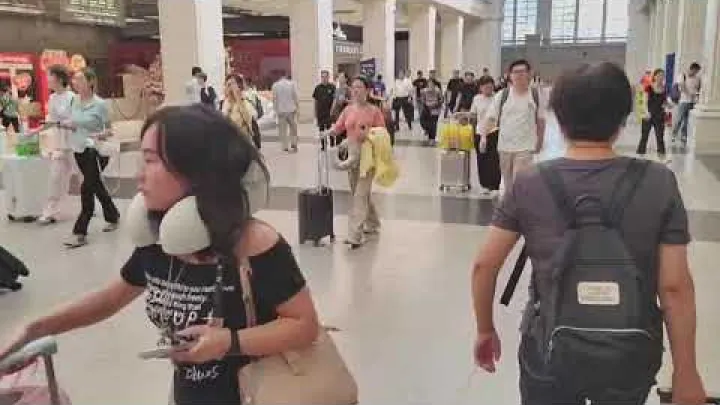
Wuhan getting there is simplest when you choose the arrival gateway before you buy the ticket. The city has one main airport, three major passenger railway stations, and several bus terminals, but they do not serve the same part of Wuhan. This guide compares flights, high-speed rail, conventional trains, buses, and road travel by total journey, cost, comfort, booking difficulty, and arrival time. It also explains how to connect from each gateway to Hankou, Wuchang, and other central areas.
Start with Wuhan's Main Arrival Gateways
Wuhan is a large transport hub in Hubei, so the best route depends as much on your starting point and accommodation district as on the distance shown in a booking search. First identify whether your ticket ends at Tianhe Airport, Wuhan railway station, Hankou railway station, Wuchang railway station, or a bus terminal. Then compare the final city connection as part of the same itinerary.
The Airport and Three Main Railway Stations
Wuhan Tianhe International Airport is the city's main air gateway. Its airport code is WUH. It is the natural choice for many international arrivals, long domestic journeys, and travelers who need a direct connection to Wuhan rather than a second trip from a coastal gateway.
Wuhan has three principal long-distance passenger railway stations: Wuhan railway station, Hankou railway station, and Wuchang railway station. A general station overview is available from Wuhan Railway Station. These are not interchangeable names. They are in different parts of the metropolitan area, and the station printed on your ticket can change the last part of your journey considerably.
Regional buses provide another way to reach Wuhan, especially from smaller cities and counties that do not have a convenient direct train. A bus may arrive at an urban terminal rather than at a railway station, so you should plan the final taxi, ride-hailing, or metro connection separately. The terminal name is part of the route, not a minor booking detail.
Choose by Origin, Budget, Speed, and Arrival Time
Use the following comparison as a starting point. The most useful measure is door-to-door time: travel from your starting hotel or home to the Wuhan accommodation, including access to the departure gateway and the final city transfer.
| Mode | Best use | Main drawback | Booking difficulty |
|---|---|---|---|
| Flight | International travel and long domestic journeys | Airport access, check-in, security, and delay exposure | Usually easy online, but rules vary by airline |
| High-speed rail | Major Chinese cities with direct city-center service | Station choice and busy travel periods | Moderate; identity details and availability matter |
| Conventional rail | Lower fares, regional routes, and overnight travel | Longer journey and variable comfort | Moderate; seat or berth type must be understood |
| Long-distance bus | Smaller regional origins without convenient rail | Traffic, less predictable information, and terminal changes | Can be difficult for international travelers |
| Private car or coach | Groups, flexible stops, or luggage-heavy trips | Traffic, parking, tolls, and driver arrangements | Depends on the provider and origin |
Flying can be the most practical option from another country or a distant Chinese region, but a train may be faster overall when the airport is far from your starting point and the railway station is central. A bus may cost less than a train on some dates, but not automatically; traffic and a distant terminal can remove the advantage. Late arrival, heavy luggage, children, mobility needs, and the location of your hotel should all influence the decision.
Getting to Wuhan by Air
Air travel is the clearest option for international visitors who can find a suitable service to WUH. It also works well for long domestic routes when rail tickets are unavailable or when the origin is far from central China. Treat the flight segment and the airport-to-hotel segment as two parts of one journey.
Wuhan Tianhe International Airport as the Air Gateway
Wuhan Tianhe International Airport, or WUH, serves a broad domestic network and selected international and regional connections. The exact network is date-specific: airlines add, remove, or change services according to season, demand, and operating plans. The Wuhan Tianhe International Airport website provides the airport's main arrival, departure, service, and transport areas.
For travelers focused on Hubei or central China, arriving directly at Wuhan can be more efficient than landing in a larger coastal city and arranging another domestic transfer. A direct WUH ticket avoids a second airport or railway station, a separate luggage plan, and the risk of missing a separately booked connection. On the other hand, a gateway city may offer more departure choices or a better fare, so compare the complete itinerary rather than choosing by flight price alone.
Typical Direct and Connecting Flight Routes
For a domestic search, useful origin examples include Shanghai, Guangzhou, Shenzhen, Chengdu, and Chongqing. Enter the specific departure airport as well as the city because large cities may have more than one airport. For example, a search from Shanghai may show different results from its two main airports, while a search from Chengdu may distinguish services from its available passenger airports. The result displayed for your date is more important than a general route description.
Hong Kong is another useful comparison point. A direct flight to WUH may compete with high-speed rail, especially when the airport is convenient for the traveler. Travelers from other countries may also see Wuhan connections through a mainland Chinese gateway or a regional Asian hub. A connecting ticket can provide more schedule choices, but it adds airport time, baggage and transfer conditions, and the possibility of disruption at the intermediate gateway.
When comparing flights, record the departure airport, arrival airport, total elapsed time, number of stops, baggage allowance, and current fare. The elapsed time in the search result should include the connection, but it does not include travel to the first airport or from WUH to the hotel. Do not describe an intercontinental route as a permanent service unless the current airport or airline search shows it for the planned dates.
Flight Booking, Terminal, and Status Checks
Before paying, confirm the destination as Wuhan Tianhe International Airport and check which airline is actually operating the flight. A codeshare may be sold by one airline and operated by another. The operating carrier controls many practical details, including check-in, baggage acceptance, and some disruption procedures. An airport-information page from China Southern Airlines identifies Terminal 3 and gives airport access information, but such information should not be treated as a permanent terminal assignment for every flight.
Use the current airline booking and airport information before departure. The airport's own Wuhan Tianhe International Airport information should take priority over an undated route page. Terminal assignments, passenger procedures, and transport arrangements can change even when the flight number remains familiar.
- Check the flight status and operating airline.
- Confirm the passenger terminal shown for your flight.
- Review check-in, baggage, and connection requirements.
- Allow enough time for airport access and any transfer between terminals or flights.
- Save the planned route from WUH to your accommodation.
Do not rely on a precise gate number or a remembered terminal from a previous visit. Recheck the current details immediately before leaving for the airport, particularly when using a separate ticket or traveling during a busy period.
Getting to Wuhan by High-Speed and Conventional Rail
Rail is often the strongest alternative to flying from major Chinese cities. High-speed trains provide city-center departures and arrivals, while conventional trains can offer lower fares or overnight travel. The most important rail decision is not only the train type; it is the Wuhan station printed on the ticket.
Wuhan, Hankou, and Wuchang Railway Stations
The three main stations serve different sides of the urban area. Their broad roles are useful for orientation, but a live booking result determines where a particular train actually stops.
| Station | Broad location | Typical planning role | Metro connection to check |
|---|---|---|---|
| Wuhan railway station | Eastern Wuhan, near Hongshan-side districts | Important high-speed gateway | Metro Line 4 and current connecting services |
| Hankou railway station | Hankou, in the north-central urban area | Convenient for many Hankou bases and intercity journeys | Metro Line 2 |
| Wuchang railway station | Wuchang, south of the Yangtze River | Major long-distance station for the Wuchang side | Metro Line 4 and nearby current connections |
If your hotel is near Xinhua Road, central Hankou, or another Hankou district, Hankou station may reduce the final road journey. Accommodation around Wuchang, university areas, or the south side of the river may be better matched with Wuchang station or Wuhan station, depending on the train. These are planning examples, not a reason to reject a faster train at another station.
High-Speed Rail from Major Chinese Gateways
Representative high-speed rail searches include Shanghai to Wuhan, Guangzhou to Wuhan, Hong Kong to Wuhan, Chengdu to Wuhan, Chongqing to Wuhan, and Yichang to Wuhan. These routes show the range of rail use: long east-west journeys, links from southern China, an international-border city connection, and shorter regional trips. The departure station may vary by city, so search the complete city and station names.
High-speed rail can compete with flying because the departure station is often closer to the urban center and the arrival process is more direct than an airport itinerary. You still need time to reach the station, pass station security, find the correct waiting area, and travel onward from the Wuhan station. A train that looks longer on the timetable can therefore be competitive from a central hotel.
Hong Kong is a useful example of why live comparisons matter. One published Hong Kong-to-Wuhan rail guide presents a broad indicative journey range of about four to six hours and a wide fare range of approximately USD 111 to USD 335, depending on service and class. That page is not a current quotation for every date. Use it only to understand the type of comparison, then check the current train number, departure station, arrival station, journey time, fare class, and availability in the live booking system.
Do not assume that a route has the same number of trains every day. Timetables, service patterns, and ticket availability can vary by date, season, and travel demand. Compare the fastest advertised train with a realistic itinerary that includes station access and the final Wuhan transfer.
Regional and Overnight Rail from Hubei and Nearby Destinations
Yichang is a practical regional example for travelers combining Wuhan with the Three Gorges area or other parts of Hubei. Search both high-speed and conventional services because the best choice can depend on the departure station, the day, and the time you want to arrive. If a direct train is not suitable, compare a connection with a long-distance bus rather than assuming that rail is always the simplest route.
Zhangjiajie is another useful example for a central China itinerary. Depending on the date, a traveler may compare a direct conventional service, a connecting train, or a road journey. High-speed and conventional rail should be treated as different products: the former prioritizes a shorter journey, while the latter may offer a lower fare or a useful overnight schedule.
For conventional rail, check whether the ticket is for a seat, a soft or hard sleeper, or another berth category. A lower fare can mean a longer journey, more people sharing the carriage, or less convenient arrival timing. An overnight service may save a hotel night, but an early-morning arrival can leave you waiting for a metro, bus, hotel check-in, or onward connection.
Rail Booking and Station-Day Checks
Book through the current official railway channel or a reputable booking platform that clearly explains passenger identity requirements, payment, changes, refunds, and collection or boarding instructions. Enter the passenger name and passport information exactly as required by the booking record. International travelers should keep the same passport available for the journey and allow time for any station identity check.

- Search the complete departure and arrival cities.
- Read the English and Chinese arrival station name before selecting a train.
- Check the train type, departure time, arrival time, seat or berth class, and total fare.
- Confirm that the passenger name and passport details match the booking record.
- Save the booking confirmation and the Chinese station name for the travel day.
Pay particular attention to the difference between Wuhan railway station, Hankou railway station, and Wuchang railway station. The ticket may say 武汉站, 汉口站, or 武昌站. Confirming this before booking the final city connection prevents a station mix-up that can affect both travel time and cost.
On the day of travel, allow time to reach the station entrance, pass security, find the correct waiting area, and follow the boarding display. Demand can rise sharply during major travel periods. A ticket being available in a search does not mean that a later, more convenient train will remain available.
Getting to Wuhan by Bus or Road
Bus and road travel remain useful when your origin is a smaller city, county, or regional destination without a convenient direct train. They can also help when rail tickets are sold out or when a group wants a direct drop-off. The trade-off is that terminal information and road times are usually more sensitive to local traffic and service changes.
When Intercity Buses Are Practical
Choose an intercity bus when it offers a direct departure from your area and the Wuhan terminal is convenient for your accommodation. This is especially relevant for regional origins where the nearest railway station is far away. A bus may have fewer formal booking steps than an international flight, but information in English may be limited and the boarding location may not be obvious.
Compare a bus with high-speed rail using four values: the fare, the full travel time, the location of both terminals, and the comfort of the ride. Add the trip from your starting point to the bus station and the final trip from Wuhan's bus terminal to your hotel. Road congestion can make a nominally shorter bus route less predictable than a train, while a bus can be more useful if it avoids a distant station or a connection.
The Wuhan Municipal Government transport information page provides a government reference point for public transport and long-distance bus station information. Use the current terminal information to confirm the departure location, destination name, ticket method, and service status. Before boarding, match the terminal and destination shown on your booking with the signs at the station.
Airport Shuttle and Long-Distance Bus Anchors
Several names are useful as orientation points when researching airport access: Fujiapo Long-Distance Bus Station, Wuchang Hongji Passenger Terminal, Xinhua Road in Hankou, and Jinjiadun. A Hubei Provincial Government information page names airport shuttle lines associated with these places, including routes described between Fujiapo and Tianhe Airport, Wuchang Hongji and the airport, Xinhua Road in Hankou and the airport, and Jinjiadun and the airport.
These names should be treated as location anchors rather than proof that every line still operates in exactly the same way. An airport express shuttle connects the airport with Wuhan urban areas; a long-distance coach takes travelers between cities. They may use different counters, boarding areas, tickets, and operating hours even when their names appear on the same transport page.
Confirm the current stop, departure time, fare, and last departure for your arrival date. If you are connecting from a late flight or train, check whether the service runs late enough and whether the stop is close to your hotel. A terminal that is convenient in daytime may require a separate road transfer after the final scheduled bus.
Road Access by Private Car, Taxi, or Coach
Road travelers may enter Wuhan through the city's ring-road network and airport corridors such as the S19 Airport Second Expressway. This named corridor can help a driver or coach provider identify the airport approach, but it does not provide a fixed travel time from an unspecified origin.
A private car offers flexibility for groups, equipment, and stops, but the driver must account for tolls, parking, traffic, and the exact hotel entrance. An organized coach can simplify group luggage and a fixed itinerary. A taxi is more suitable for a shorter transfer or a direct final drop-off than for an unplanned long-distance trip from another province.
Ask where the road journey ends. A coach may stop at Fujiapo, Wuchang Hongji, Xinhua Road, Jinjiadun, or another terminal rather than at your accommodation. From there, the final route may require metro, taxi, or verified ride-hailing. Plan that last leg separately instead of treating the coach arrival as the end of the journey.
From Wuhan's Gateways to the City Center
Arrival planning continues after the long-distance ticket ends. Tianhe Airport is outside the central urban area, and the three railway stations sit in different districts. For a simple arrival, compare the final connection by distance, operating time, luggage, and the location of your accommodation.
From Tianhe Airport to Hankou and Central Wuhan
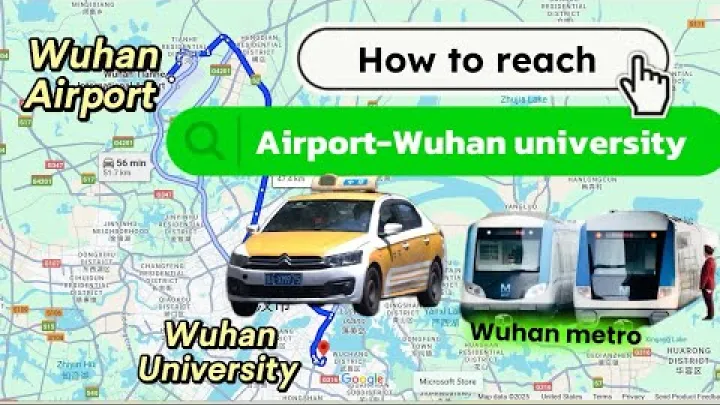
From Tianhe Airport, the main choices for Hankou and central Wuhan are Metro Line 2, airport buses, taxis, and, where suitable, an intercity rail connection. Metro Line 2 is often the most economical public transport choice for travelers whose destination fits its route. Airport buses may reduce walking with luggage, while a taxi or verified ride-hailing vehicle is more direct for groups and awkward hotel locations.
| Arrival situation | Usually worth comparing first | Reason |
|---|---|---|
| Daytime, light luggage | Metro Line 2 | Lower-cost public transport and useful central access |
| Heavy luggage | Airport bus or direct vehicle | Less walking or fewer changes |
| Small group | Taxi or verified ride-hailing | Direct drop-off can improve the total value |
| Late-night arrival | Official taxi or verified app | Metro and bus availability may be limited |
A current airport transport overview from China Airline Travel describes metro, airport bus, taxi, and intercity train options. Use such an overview to identify possible modes, then confirm the exact metro hours, bus route, fare, and taxi arrangements close to arrival. The best choice may change if your flight is delayed or your hotel is outside the central route.
From the Three Railway Stations to Your Base
Hankou railway station is the most natural starting point for many Hankou accommodations. Metro Line 2 is the key connection to check there. For hotels on the Wuchang side, Wuchang railway station may reduce the road journey, while Metro Line 4 is an important connection associated with the main Wuhan and Wuchang rail gateways.
Wuhan railway station is farther toward the eastern side of the urban area. It can be the right choice when it is the station served by a much faster train, but travelers should include the onward route to Hankou or another district. Metro Line 7 may be useful for selected Wuchang-side journeys and nearby corridors, subject to the current network and the exact destination. Do not select a station only because its name contains Wuhan.
For any station, compare the metro route with a taxi or verified ride-hailing trip when you have large luggage, mobility needs, several passengers, or an arrival outside normal public transport hours. Save the hotel's name and address in Chinese, and identify the station exit or pickup point before leaving the station. Large stations can have several entrances and vehicle collection areas.
Late-Night Arrivals and Safe Taxi Choices
Late-night arrivals require a separate final-connection plan because the metro or airport bus may no longer be a practical option. This is particularly important after a delayed flight, an overnight train, or a coach that reaches Wuhan after the last convenient connection. Decide in advance whether the hotel can receive a late check-in and which transport option you will use from the gateway.
If public transport is unavailable or unsuitable, follow signs to the marked taxi rank and use an official taxi. Use the meter where applicable, or book through a verified ride-hailing app whose vehicle and driver details are visible. Keep the hotel booking confirmation, address, and phone number available in Chinese. This makes it easier to show the destination without relying on a spoken English explanation.
Decline unsolicited offers from people approaching inside or outside the arrival area. Do not follow a person to an unmarked vehicle simply because they offer a faster ride. The safest simple procedure is to leave through the signed passenger route, use the marked rank or verified app, confirm the destination, and retain the receipt or trip record.
Compare Time, Cost, and Booking Difficulty
No single transport mode is best for every Wuhan route. Compare the full itinerary, the conditions attached to the fare, and the arrival time. A lower ticket price is not necessarily better if it creates a distant transfer, an expensive taxi, or an arrival when the hotel and public transport are difficult to access.
The Fastest Door-to-Door Option
A flight's time in the air is only one part of the journey. Add the trip to the departure airport, the recommended airport arrival time, check-in and security, any connection, baggage collection, and travel from WUH to the hotel. For a connecting flight, include the transfer between flights and the risk created by separate tickets.
High-speed rail can be faster in practice when the origin hotel is close to a city-center station and the Wuhan station has a convenient metro or road connection to the accommodation. This is often worth comparing for Shanghai, Guangzhou, Hong Kong, Chengdu, and Chongqing. For Hong Kong, treat a published four-to-six-hour rail segment as an indicative train time, not a door-to-door promise. Station access, border or immigration procedures where applicable, and the final Wuhan transfer are additional parts of the itinerary.
- Write down the time from the origin hotel to the departure gateway.
- Add the required airport or station processing time.
- Include the scheduled flight or train segment and any connection.
- Add luggage collection, the trip from the Wuhan gateway, and the walk to the accommodation.
- Compare the arrival time as well as the total duration.
The fastest option is therefore origin-specific. A direct train may beat a flight from a central Chinese city, while a direct flight may be the practical winner from a distant region or another country.
The Lowest-Cost and Most Flexible Option
For a budget comparison, look at economy flight fares, high-speed rail classes, conventional rail seats or berths, regional bus fares, and the cost of the final city transfer. Rail and bus prices are not automatically lower than promotional air fares, and the cheapest displayed fare may have inconvenient conditions or limited availability.
Conventional rail or a regional bus can suit travelers who value a lower base fare or an overnight journey. High-speed rail may offer a better balance when the shorter trip lets you avoid a hotel night or a long airport transfer. A flight can become more attractive when luggage is included, the train is sold out, or the departure station is far from the origin.
Separate price from booking difficulty. A bus may require Chinese-language terminal information. Rail may require exact passport details and careful station selection. An airline may have clearer online booking but stricter baggage or change conditions. Compare the total price, luggage rules, refund conditions, departure frequency, terminal access, and arrival convenience before choosing the lowest headline fare.
Best Options for International and Multi-City Trips
International travelers can compare two broad plans: fly directly to WUH when a suitable service is available, or enter through a larger mainland or regional gateway and continue by domestic flight or high-speed rail. Direct arrival is simpler because it reduces the number of transfers. A larger gateway may offer more flight choices, but it adds another airport procedure and a longer total itinerary.
Hong Kong can be considered as both an air gateway and a rail gateway. Major mainland hubs such as Shanghai, Guangzhou, Shenzhen, Chengdu, and Chongqing can also serve as connection points. When using a gateway, compare a single through-booking with separate tickets. A through-booking may provide clearer protection for the connection, while separate tickets can offer flexibility but leave you responsible for missed connections, baggage, and rebooking.
Build a generous buffer for a self-transfer, especially when changing from an airport to a railway station or bus terminal. For a Hong Kong or other cross-border itinerary, check the current entry, transit, and document requirements with the relevant official authorities rather than relying on an old route page. Once in Wuhan, the three rail stations and Tianhe Airport can support onward journeys to Yichang, Zhangjiajie, and other central Chinese destinations.
Plan for Schedules, Peak Periods, and Late Arrivals
The final planning stage is a check of every link in the itinerary. Route maps and general travel pages are useful for orientation, but the live operator record should determine the flight, train, bus, terminal, and connection you use. Keep the gateway name visible from the first booking search through the final city transfer.
Verify Route, Schedule, Terminal, and Station Details
Use the airport operator, operating airline, current railway booking system, bus terminal, and government transport information in that order of relevance. The airport operator's Wuhan Tianhe International Airport site is the appropriate starting point for airport arrivals, departures, and transport information. For public transport and bus-terminal orientation, the Wuhan Municipal Government transport information is a useful government reference.
- Confirm the airport, railway station, or bus terminal name in the booking.
- Confirm the airline, operating carrier, train number, or bus service.
- Check the passenger terminal or station entrance where applicable.
- Record departure and arrival times, fare class, luggage rules, and passenger details.
- Plan the final route from the Wuhan gateway to the hotel.
- Write down the date and time when you checked the information, then review it again close to departure.
Check both sides of the journey. A departure gateway may be correct while the Wuhan arrival station is wrong for your accommodation. Likewise, a flight may arrive at a suitable time but leave too little time for the final metro, bus, or hotel check-in.
Build Buffer for Peak Travel and Disruptions
Major holiday demand can reduce ticket availability and increase crowding. Weather can affect flights and road travel, while traffic can affect buses, cars, airport access, and the final hotel transfer. Railway and airline operators can also adjust services or procedures. These conditions are reasons to plan with a buffer, not reasons to assume that one mode is always unreliable.
Avoid tight connections between separate tickets. This is especially important when moving between Tianhe Airport, a railway station, and a bus terminal on the same day. If one part of the itinerary is delayed, the next operator may not be responsible for the unused ticket. Leave time for baggage, station entry, road traffic, and finding the correct platform or counter.
Before leaving for the departure gateway, check the live operator notice and keep one reasonable alternative in mind. The alternative might be a later train, a different station connection, a taxi instead of a bus, or an overnight stay near the gateway. Rechecking on the travel day is more useful than relying on a fixed route schedule saved weeks earlier.
Conclusion: Choose the Gateway That Matches Your Trip
For international and very long domestic journeys, start with flights to Wuhan Tianhe International Airport and compare the total itinerary with a connection through another gateway. For major Chinese cities, high-speed rail often deserves a close comparison because it links city centers and avoids many airport procedures. Conventional rail and buses are useful for lower-cost, regional, or overnight travel, while road transport gives groups more flexibility.
The best Wuhan getting there plan is the one that matches your starting point, budget, luggage, arrival time, and hotel district. Read the exact airport, terminal, station, or bus terminal on the ticket; include the last-mile journey; and choose a buffer that leaves room for real travel conditions.
Select area
Create a post
Posting is free and no registration is required.