Guangzhou Getting There: Air, Rail, Bus, and Ferry Guide
Getting to Guangzhou is straightforward once you match your origin with the right arrival gateway. International travelers usually compare flights with connections through Hong Kong, while travelers from mainland China often choose between high-speed rail and air. Coaches can be useful for regional journeys or direct urban drop-offs, and ferries are a specialized option with changeable service status. This guide compares speed, relative cost, booking difficulty, border procedures, and the final transfer to districts such as Tianhe, Yuexiu, Panyu, and Nansha.
Plan Your Arrival in Guangzhou
Guangzhou is a large city with several airports, railway stations, bus terminals, and a ferry terminal. The fastest vehicle may not produce the easiest complete journey if it arrives far from your accommodation. Before buying a ticket, identify both your origin and the Guangzhou district where you will stay.
Start with Your Origin and Final Guangzhou District
First separate your journey into one of four broad scenarios: an international flight, a domestic journey from another Chinese city, a trip from Hong Kong, or a regional journey by coach or ferry. This immediately narrows the useful options. A traveler arriving from Europe or Southeast Asia will normally begin with an international flight search. A traveler from Shanghai, Beijing, or Wuhan can compare air with high-speed rail. A traveler from Hong Kong may choose the direct rail link, a cross-boundary coach, or a ferry if a suitable sailing is operating.
Your final district is just as important. Baiyun International Airport is north of the traditional central districts. Guangzhou South Railway Station is in Panyu District, while Guangzhou East Railway Station is in Tianhe District. Guangzhou Railway Station is closer to older central areas, and Nansha Ferry Terminal is in the far south of the municipality. The gateway that looks best on a map of China may therefore create a longer urban transfer at the end.
- Staying in Tianhe: compare Guangzhou East, Tianhe Bus Terminal, and the airport according to the route available.
- Staying in Yuexiu or another older central area: Guangzhou Railway Station or Yuexiu South Bus Station may reduce the final road journey.
- Staying in Panyu: Guangzhou South can be a practical arrival point, especially after a long high-speed rail journey.
- Staying in Nansha: a southern road or maritime arrival may be more relevant than a gateway designed for central Guangzhou.
Compare Air, Rail, Bus, and Ferry Before Booking
Compare the complete journey rather than only the time spent in the vehicle. Airport security, station entry, immigration, baggage collection, road congestion, and the last trip to your hotel can change the result. Fares also vary by date, booking channel, seat or cabin class, baggage allowance, and refund conditions.
| Mode | Best starting point | Relative speed | Cost and booking | Border and arrival factors |
|---|---|---|---|---|
| Air | International and very long domestic routes | Fast onboard; more airport time | Wide fare range; airline or agency booking | International documents; arrives at CAN |
| High-speed rail | Mainland China and Hong Kong | Often efficient from central stations | Variable fare; real-name rail booking | Domestic rail is simpler; Hong Kong trips cross a border |
| Coach | Guangdong, Hong Kong, and regional origins | Road traffic can affect arrival | Often flexible by route; operator booking | Hong Kong coaches use land checkpoints and selected drop-offs |
| Ferry | Specific maritime routes | Depends on sailing and port access | Limited and changeable; terminal or operator booking | Port is in Nansha; cross-border procedures apply |
Air is usually the broadest choice for international access. High-speed rail is often the strongest option on major mainland corridors and for Hong Kong journeys. Coaches are valuable when the terminal or drop-off point is more convenient than a railway station. Ferries should be treated as a route-specific choice, not as a general substitute for rail or air. Departure times, fares, and service status are date-dependent, so use the current airline, railway, coach operator, or ferry terminal information when making the final decision.
Getting to Guangzhou by Air
Air travel is the main long-distance arrival method for visitors coming from outside mainland China. It is also useful for domestic routes where rail is sold out, requires a connection, or takes longer than the traveler prefers.
Fly into Guangzhou Baiyun International Airport (CAN)
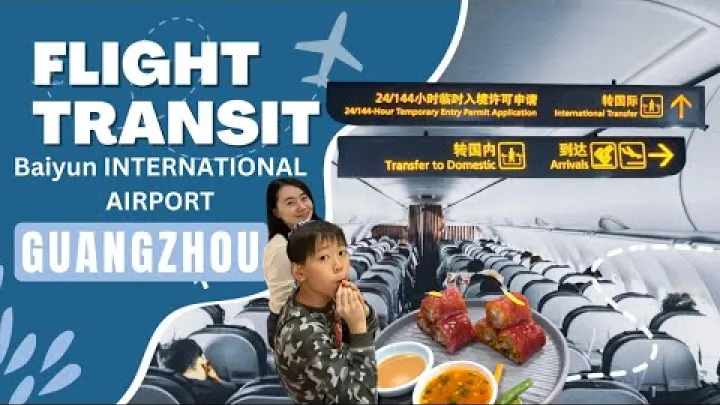
Guangzhou Baiyun International Airport, identified by the code CAN, is Guangzhou's principal international and domestic air gateway. It serves travelers arriving directly from overseas as well as passengers connecting through another Chinese or regional airport.
CAN is north of central Guangzhou, so landing there is only the first part of the journey. A booking that appears convenient because it reaches Guangzhou directly may still require a substantial final trip to Tianhe, Yuexiu, Panyu, or Nansha. When comparing flights, check the airport arrival time against the public transport options and accommodation check-in plan for that date.
Use the current airport and airline route information to distinguish direct flights to CAN from itineraries with a connection. Route networks change, and a static list of destinations can become misleading. Also compare baggage rules, connection airports, minimum connection arrangements, fare restrictions, and whether separate tickets are involved. A low headline fare may be less useful if it excludes luggage or creates a difficult connection.
Choose Between a Flight and High-Speed Rail
Air and high-speed rail compete on several major domestic corridors. Shanghai, Beijing, and Wuhan are useful examples: for each city, compare the available flight to CAN with a train to Guangzhou South, rather than comparing only the time in the air with the time on the train. The rail journey begins and ends at a station, while a flight includes travel to the airport, check-in, security, boarding, baggage handling, and the onward trip from CAN.
- Choose air when: you are connecting with an international itinerary, traveling a very long domestic distance, need a departure time not served by rail, or find a suitable through-ticket with reasonable baggage terms.
- Choose high-speed rail when: your origin is well connected to its city railway station, your destination is near Guangzhou South or has a simple onward connection, and you prefer to avoid airport procedures.
- Compare carefully when: the train arrives in Panyu but your accommodation is in northern Guangzhou, or the flight arrives late and reduces your last-mile choices.
Rail fares usually depend on train type and seat class. Air fares depend on airline, fare family, baggage, and connection conditions. Search the exact travel date for both options and record the total door-to-door plan. A slightly longer onboard journey can be the better choice if it avoids a separate airport transfer, a distant station, or a late-night arrival.
Handle Flight Booking and Entry Documents
Book through the airline, a recognized travel agency, or a reputable flight platform. Before payment, read the fare rules for changes, cancellations, baggage, seat selection, and missed connections. Enter the passenger name and passport details exactly as shown on the travel document that will be used for the journey.
International travelers should confirm current Chinese entry and transit requirements for their specific nationality, passport type, route, and length of stay. Check official Chinese immigration or consular information as well as the airline's document guidance before buying a non-refundable ticket. Visa rules, transit-without-visa arrangements, exemptions, customs requirements, and onward-ticket conditions do not necessarily apply in the same way to every traveler.
- Passport: check validity, condition, and the document required for check-in and entry.
- Entry eligibility: confirm whether your itinerary requires a visa, qualifies for a transit arrangement, or has another applicable rule.
- Connections: check whether the connection is protected on one booking or requires you to manage separate tickets and baggage.
- Baggage: compare the included allowance and rules for domestic sectors after an international arrival.
- Fare conditions: understand change, refund, no-show, and missed-connection terms before payment.
Keep the passport used for booking available during check-in and travel. If a route involves a connection, confirm the document requirements for every part of the itinerary, not only the final arrival in Guangzhou.
Getting to Guangzhou by Rail
Rail is a strong choice for travel within mainland China and for many journeys from Hong Kong. The main planning issue is not only finding a train to Guangzhou, but also selecting the Guangzhou station that fits the service and your final neighborhood.
Use Guangzhou South for Long-Distance High-Speed Trains
Guangzhou South Railway Station, shown in Chinese as 广州南站, is the main high-speed gateway for many long-distance and intercity journeys into Guangzhou. It is in Shibi, Panyu District, south of the traditional central area. It serves an important role on the Beijing–Guangzhou high-speed corridor and on the Guangzhou–Shenzhen–Hong Kong Express Rail Link, although the available trains and ticket classes depend on the date.
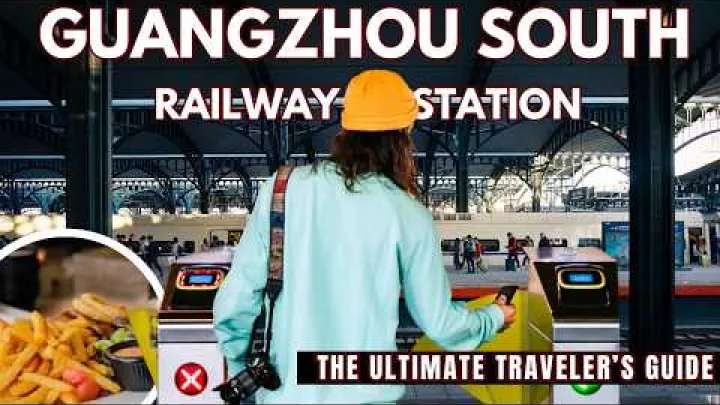
For a traveler arriving from a distant mainland city, Guangzhou South can be the natural destination shown in the rail search. It is also useful for people staying in Panyu or visiting attractions in southern Guangzhou. For a hotel in Tianhe or Yuexiu, however, the station's urban location becomes part of the journey. Allow time to leave the large terminal, reach local transport, and complete the final trip with luggage.
Search the current train timetable rather than relying on a remembered service pattern. When comparing train options, review the departure station, arrival station, train number, seat class, arrival time, and the transport connection after Guangzhou South. The station name alone does not indicate how close it is to the final destination.
Choose the Railway Station That Matches Your Route
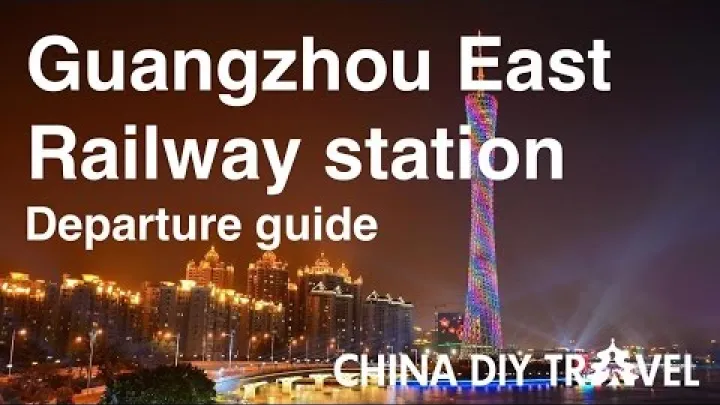
Guangzhou has several railway stations with similar English names. Guangzhou South is associated with many cross-province high-speed services. Guangzhou East, in Tianhe District, handles selected intercity and mixed services. Guangzhou Railway Station is closer to older central districts and continues to serve conventional routes. Guangzhou North in Huadu District, Guangzhou Baiyun Railway Station, and other suburban stations serve more specialized or regional flows.
| Station | Chinese name | Broad location | Best fit |
|---|---|---|---|
| Guangzhou South | 广州南站 | Shibi, Panyu District | Many long-distance high-speed and Hong Kong trains |
| Guangzhou East | 广州东站 | Tianhe District | Selected intercity and mixed services; convenient for Tianhe |
| Guangzhou Railway Station | 广州站 | Near older central districts | Conventional and selected regional services |
| Guangzhou North | 广州北站 | Huadu District | Services serving northern Guangzhou and nearby areas |
| Guangzhou Baiyun Railway Station | 广州白云站 | Baiyun area | Selected regional and longer-distance services; route-specific |
Before leaving for the station, match the exact English and Chinese station name on your ticket with the train route and your final Guangzhou district. Do not enter a map or taxi destination based only on the word Guangzhou. Guangzhou South, Guangzhou East, Guangzhou North, and Guangzhou Baiyun Railway Station are different gateways, and a mistake can affect both the departure and the last-mile journey.
Book China Railway Tickets with Passport Details
China Railway 12306 is the official rail information and ticketing platform. It provides train searches and ticket services, including information about refunds and other booking functions. Foreign travelers should use the passport details requested by the system and allow time for any account or identity verification required by the current booking process.

China Railway uses real-name ticketing. The name, passport number, and other identity information must be accurate, and the traveler should carry the same passport during station checks. Electronic ticket arrangements are linked to the identity document used for the booking, so do not switch to another passport without checking how the change is handled.
- Search the route for the correct origin and intended Guangzhou station.
- Select the train, departure time, seat class, and passenger details.
- Enter the passport information exactly as requested.
- Complete any verification and payment steps shown by the current platform.
- Save the booking reference and arrive with the travel document used for the ticket.
An English-language third-party rail platform may be easier for some visitors, especially if it offers customer support in a familiar language. It may also add fees or apply different refund and change terms. Compare its conditions with the official railway information, and do not assume that every booking channel provides the same support or ticket release options.
Take the Hong Kong–Guangzhou High-Speed Rail
The direct high-speed connection between Hong Kong West Kowloon Station and Guangzhou South is a major alternative to flying from Hong Kong International Airport or using a cross-boundary coach. It is particularly useful when your trip begins in central Hong Kong and you want to arrive at a major Guangzhou railway terminal.
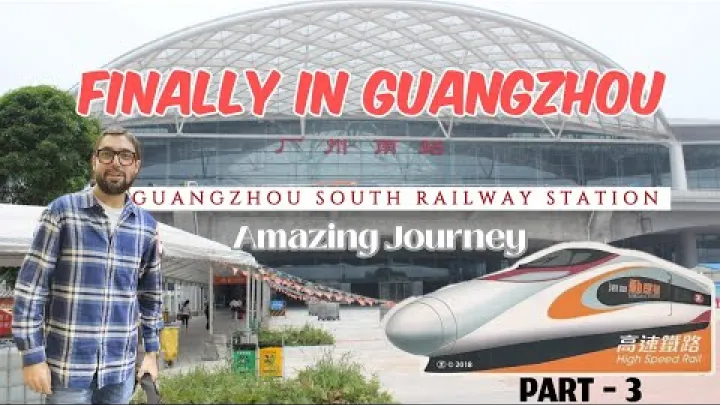
The actual departure frequency, journey duration, fare, and available seat classes depend on the current timetable. Reserve suitable tickets early during busy travel periods, and include time for station entry and the onward journey from Guangzhou South. A short station-to-station journey is not the same as a short hotel-to-hotel journey.
This is a cross-border trip, not a domestic train ride. Passengers complete Hong Kong and mainland China immigration and customs procedures at the stations. Keep the travel document connected with the booking accessible, and allow enough time for border processing before a separate train, flight, event, or hotel check-in. Use the current Hong Kong railway and China Railway timetable for exact departure, duration, and fare information.
Getting to Guangzhou by Bus and Cross-Boundary Coach
Long-distance buses can connect Guangzhou with Guangdong and nearby regional origins, while cross-boundary coaches provide an alternative for travelers starting at Hong Kong International Airport. Their main advantage is not always speed. It is the possibility of reaching a selected urban drop-off point without first traveling to a major railway station.
Arrive at Tianhe Bus Terminal or Yuexiu South Bus Station
Tianhe Bus Terminal is a useful arrival point for travelers staying in Tianhe or northeastern central Guangzhou. Yuexiu South Bus Station is closer to Yuexiu and older central districts. The terminal location can matter as much as the ticket price because a cheaper coach may still create a long local journey after arrival.
A current station listing for Tianhe Bus Terminal reports daily opening hours of approximately 6:10 a.m. to 10:00 p.m.; treat this as a planning reference rather than a guarantee for every service or date. The listing for Yuexiu South identifies Tuanyida Square on Guangzhou Metro Line 6 as a local metro approach and notes that English-language assistance may be limited. The practical terminal details can be reviewed through China Bus Guide, but the operator and route should still be confirmed for the intended journey.
Coaches are most useful when the origin has a direct road connection, rail tickets are inconvenient, or the hotel is near the terminal. They are less attractive when a long road journey is exposed to peak traffic or when the arrival time is important. Check the terminal name, operator, departure platform, opening hours, luggage policy, and payment method before setting out.
Use a Cross-Boundary Coach from Hong Kong International Airport
When operating, direct or semi-direct coaches from Hong Kong International Airport can reach selected Guangzhou drop-off points. Published route listings have included destinations such as Jinan University, Dongpu, Huadu, Panyu, and Grandview Mall. These points may be closer to a hotel or meeting location than Guangzhou South, so choose the destination by final district rather than by the first available departure.
Schedules, fares, departure windows, and destination lists are operator information and can change. A current Hong Kong Airport to Guangzhou coach listing can help identify possible services, but use the booking channel shown for the selected departure and confirm the drop-off point before payment. The route may be direct in the road sense but still involve a formal border process.
Cross-boundary coaches may pass through a land checkpoint such as Shenzhen Bay Port. Passengers can need document checks, immigration and customs processing, and movement between vehicles or designated passenger areas. Instructions for luggage can differ by operator and checkpoint. Keep essential items with you, listen for staff instructions, and avoid planning a tight connection immediately after the coach's published arrival.
- Drop-off point: confirm the exact Guangzhou destination and its relationship to your hotel.
- Border process: understand whether passengers stay with the vehicle or move through a checkpoint procedure.
- Luggage: ask whether bags remain with you or must be moved during the crossing.
- Backup: keep a rail or later coach option in mind if the selected service is full, delayed, or unavailable.
Decide When Bus Travel Is Worth the Trade-Off
Choose a coach when regional coverage and arrival location are more important than the shortest headline travel time. A direct drop-off can be valuable for travelers with bulky luggage, groups, or accommodation far from a practical railway station. Coaches can also be useful when a regional origin has limited high-speed rail service.
- Advantages: possible direct urban drop-offs, useful regional coverage, and a choice of departure points that may be closer to your origin.
- Disadvantages: road congestion, less predictable arrival time, varied vehicle comfort, and less consistent English-language support.
- Cross-boundary trade-off: a Hong Kong coach may avoid a trip to West Kowloon, but the land checkpoint can add waiting and passenger movement.
Do not assume that a bus is always cheaper or faster. Compare the full price, luggage conditions, departure location, expected road conditions, arrival terminal, and schedule flexibility with the equivalent rail journey. For a fixed meeting or same-day connection, the more predictable option may be worth a higher fare.
Getting to Guangzhou by Ferry
Ferry travel is a specialized way to reach Guangzhou from Hong Kong and is not as broadly available as air, rail, or road transport. It may appeal to travelers who are already near a ferry terminal or who prefer a maritime route, but the Nansha arrival point must be included in the complete plan.
Check Nansha Ferry Terminal and Hong Kong Sailings
Nansha Ferry Terminal is in southern Guangzhou, in Nansha District. It is not a central-city arrival point, so a ferry passenger may need a separate road or public transport journey to reach Tianhe, Yuexiu, or another central district.
Ferry listings may show links between Nansha and Hong Kong destinations such as China Hong Kong City when services are operating. Treat each sailing as a route-specific service. Check the current operator or terminal for the departure time, boarding deadline, ticket conditions, baggage rules, border process, and arrival terminal. A ferry can be attractive when the port connection is convenient, but its value decreases if the sailing is infrequent or the final transfer across Guangzhou is difficult.
Compare the ferry with high-speed rail and cross-boundary coach using total journey time, port access, check-in requirements, luggage handling, and the final district. The ferry experience alone should not replace a review of the complete route.
Do Not Assume a Guangzhou–Skypier Ferry Is Running
Do not plan on a direct Nansha-to-Hong Kong International Airport Skypier ferry without confirming its current status. The current route listing from Direct Ferries says that no ferries are currently running between Guangzhou Nansha and Hong Kong Airport Skypier and notes that ferry schedules can change seasonally.
Older travel pages and booking listings can continue to describe a historical departure after the service has been suspended or changed. A route that appears in a search result is not automatically a bookable sailing. Confirm the service directly with the ferry operator or terminal for your date, including the boarding location and the required arrival time.
If the Skypier service is unavailable, use Hong Kong West Kowloon high-speed rail or a cross-boundary coach as a practical alternative. If you take a ferry to a Hong Kong city terminal such as China Hong Kong City, plan a separate land journey to Hong Kong International Airport. Keep that transfer and a backup route in your schedule before relying on a ferry for a flight connection.
Reach Your Guangzhou District After Arrival
The best Guangzhou arrival gateway depends on where you will sleep, work, study, or meet someone. Guangzhou's main gateways are spread across the municipality, so the final local connection should be considered while you are comparing long-distance tickets.
Match the Arrival Gateway to Your Guangzhou District
The following orientation uses broad locations rather than fixed distances or journey times. Traffic, service hours, luggage, and the exact hotel address can change the final result.
| Gateway | Broad location | Likely traveler | Last-mile consideration |
|---|---|---|---|
| Guangzhou Baiyun International Airport (CAN) | North of central Guangzhou | International and domestic air travelers | Plan the urban trip south or toward the final district |
| Guangzhou South Railway Station | Panyu District | Long-distance high-speed rail and Hong Kong rail travelers | Convenient for Panyu; requires a city transfer for many central hotels |
| Guangzhou East Railway Station | Tianhe District | Selected rail and intercity travelers | Potentially convenient for Tianhe and eastern central areas |
| Guangzhou Railway Station | Near older central districts | Conventional and selected regional rail travelers | Can reduce the final transfer to Yuexiu-area accommodation |
| Guangzhou North Railway Station | Huadu District | Travelers whose route or destination is in the north | Less convenient for central Guangzhou unless the route requires it |
| Guangzhou Baiyun Railway Station | Baiyun area | Travelers on services using this specialized gateway | Check the local connection and final district carefully |
| Tianhe Bus Terminal | Tianhe District | Regional coach passengers | Useful for hotels and meetings in Tianhe |
| Yuexiu South Bus Station | Yuexiu District | Regional coach passengers | Useful for older central areas; local metro access is available nearby |
| Nansha Ferry Terminal | Southern Guangzhou | Passengers using a confirmed ferry | Allow a separate journey to central Guangzhou or another district |
This geography can change your choice of ticket. For example, a traveler staying in Tianhe may value Guangzhou East or Tianhe Bus Terminal, while a traveler visiting Panyu may prefer Guangzhou South. A traveler staying in Yuexiu may accept a conventional train or coach that arrives closer to the older center, even if a high-speed train is faster between the original cities.
Choose Metro, Official Taxi, or a Pre-Booked Transfer
Metro is often the lower-cost choice when the service is operating and you can manage the walk, transfers, and luggage. It can be practical for daytime arrivals and accommodation near a station. Check the route, operating hours, station exits, and transfer demands before choosing it, especially after a long international or cross-border journey.
An official taxi is usually more convenient for heavy bags, groups, Panyu or Nansha destinations, and hotels away from a useful station. It provides door-to-door travel but costs more than public transport and can be affected by traffic. Use the official taxi queue at the airport, station, terminal, or port, or use a verified booking channel for a pre-arranged vehicle. Decline unsolicited rides from people approaching inside or outside the gateway.
A pre-booked transfer can suit families, late arrivals, business travelers with a fixed meeting time, or anyone who needs a known meeting arrangement. Compare the provider's cancellation terms, vehicle size, passenger and luggage limits, meeting instructions, and contact method. A low advertised price is less useful if the vehicle cannot carry the group or the pickup instructions are unclear.
Plan for Late-Night Arrivals and Heavy Luggage
The published arrival time of a flight, train, coach, or ferry is not the same as the time you will leave the gateway. Baggage, border procedures, station exits, delays, and walking through a large terminal can all extend the process. Metro or bus service may have ended by the time you are ready to travel.
- Check the last public transport: look up the final metro and bus departures from the exact gateway for your arrival date.
- Check the exit and pickup point: confirm which station exit, taxi rank, or terminal area is practical after arrival.
- Confirm accommodation access: ask whether late check-in is available and save the property's arrival instructions.
- Arrange a fallback: consider an official taxi or verified transfer in advance if you arrive very late, travel with children, or carry bulky luggage.
- Prepare the address: keep the hotel, residence, school, or office address in a form that can be shown to a driver or local transport staff.
These steps are useful at Baiyun Airport, Guangzhou South, and the other major gateways. They also help when a coach or ferry reaches Guangzhou later than its advertised time.
Build a Reliable Guangzhou Arrival Plan
A reliable plan connects the long-distance ticket with the local journey. Write down the gateway, district, operator, and fallback before payment so that a late arrival does not become a search for basic information while carrying luggage.
Create the Booking Sequence in the Correct Order
Use the following sequence for most trips to Guangzhou:
- Identify the origin: note the city, airport, railway station, or ferry terminal where the journey begins.
- Compare the main modes: review air, high-speed rail, coach, and ferry using total journey time, cost, luggage, and arrival location.
- Confirm the Guangzhou gateway: record the exact airport, railway station, bus terminal, or port shown for the selected service.
- Choose the final district: identify whether your destination is in Tianhe, Yuexiu, Panyu, Nansha, or another area.
- Review border and document steps: for Hong Kong journeys, understand the crossing procedure before committing to a tight onward connection.
- Arrange the last mile: select metro, taxi, or a pre-booked transfer based on arrival time, luggage, and the accommodation address.
- Save the details: keep the booking reference, terminal name, operator contact, pickup instructions, and destination address accessible offline.
For rail, use the station shown in the actual train result when arranging accommodation or local transport. For air, coach, and ferry travel, save both the terminal name and the operator's contact details. A sample planning note can be as simple as: origin and departure point, long-distance mode, Guangzhou gateway, final district, local connection, and backup option.
Allow Time for Transfers and Missed Connections
A separate ticket creates a separate risk. You may need to collect baggage, pass immigration or customs, clear security again, move between terminals or stations, wait at a border checkpoint, or travel through Guangzhou traffic. A published arrival time should therefore be treated as the time the vehicle is expected to reach its gateway, not the time you will arrive at a hotel or meeting venue.
Leave a generous buffer before a separate flight, train, ferry, event, or same-day regional connection. The appropriate buffer depends on the type of connection, the border, the luggage, the time of day, and whether the tickets are protected together. Avoid building a plan around the final possible departure unless you are prepared to pay for a replacement ticket.
Save one practical backup. For example, a traveler who considered a ferry can keep Hong Kong West Kowloon rail or a cross-boundary coach as an alternative. A traveler arriving after the last metro can use an official taxi or verified transfer. Flexibility is especially valuable when the journey combines separate operators or a cross-border checkpoint.
Final Tips for Getting to Guangzhou
The best way to get to Guangzhou is the option that balances the origin, the exact gateway, and the final district. Use Baiyun Airport for the broadest international and domestic air access, Guangzhou South for many long-distance high-speed rail journeys, Guangzhou East or the central railway and bus terminals when the route allows a closer arrival, and Nansha only when a ferry is confirmed and its southern location suits your plan.
Before payment, compare door-to-door time, total cost, luggage rules, border steps, arrival hour, and last-mile transport. Enter passport details carefully for flights and rail tickets, match the English and Chinese station name for every train, and keep a realistic backup for late or changeable services. With those checks in place, getting there becomes a manageable route choice rather than a guess based only on the fastest vehicle.
Select area
Create a post
Posting is free and no registration is required.