Guangzhou Where to Stay: Best Areas for Every Trip
Where to stay in Guangzhou depends on the balance you want between modern convenience, historic atmosphere, exhibition access, and transport efficiency. For most first-time visitors without one overriding priority, Tianhe is the easiest default base, while Yuexiu and Liwan offer more heritage and local character. Pazhou, Canton Tower, and station or airport areas make more sense when your trip has a specialized purpose. This guide compares Guangzhou's main bases, explains how to choose a convenient micro-area, and shows which hotel, hostel, or serviced apartment type fits different trips.
Where to Stay in Guangzhou for First-Time Visitors, Tourists, and Business Trips
Guangzhou is large enough that two hotels in the same district can provide very different experiences. A neighborhood name may cover shopping streets, office towers, older lanes, residential blocks, and areas that require a transfer to reach the places on your itinerary. Use the following guide as a starting point, then narrow your search to a specific station, landmark, or exhibition venue.
| Main priority | Best base | Why it works | Main trade-off |
|---|---|---|---|
| First visit and mixed itinerary | Tianhe | Modern services, shopping, dining, and broad accommodation choice | Less historic atmosphere |
| Sightseeing and central shopping | Yuexiu | Beijing Road, Haizhu Square, Gongyuanqian, and central metro access | Busier streets and older urban layouts |
| Old-town character | Liwan | Xiguan streets, traditional architecture, and walking-focused exploration | Less uniform hotel supply and navigation |
| Canton Fair or exhibitions | Pazhou in Haizhu | Closer to the Canton Fair Complex and exhibition-focused accommodation | Less convenient for a classic sightseeing itinerary |
| Views and riverfront leisure | Canton Tower area | Landmark views, promenades, and modern leisure hotels | Landmark proximity does not guarantee wider city convenience |
| Early train or multi-city route | Guangzhou Railway Station area | Location-led convenience for a particular departure | More utilitarian and less atmospheric |
| Early flight or late arrival | Near Guangzhou Baiyun International Airport | Reduces the risk of a long pre-flight transfer | Usually a poor base for central sightseeing |
Choose Tianhe for the easiest all-round first visit
Tianhe is the strongest default recommendation when you want a modern hotel, a wide choice of restaurants and shopping, and straightforward city logistics without building the entire trip around one attraction. It is especially practical for a mixed itinerary that combines business meetings, shopping, restaurants, and sightseeing in different parts of Guangzhou. The district also has a broad range of accommodation, from budget urban hotels to high-end properties and serviced apartments.
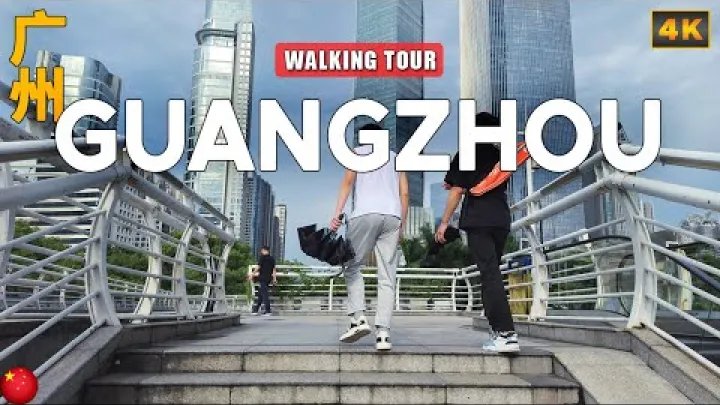
Tianhe should not be treated as one uniform hotel zone. Zhujiang New Town is the more upscale, business-oriented sub-area, with modern towers, higher-end hotels, and access toward the Pearl River. The Tiyu Xilu and Tianhe Sports Center area is more useful for travelers who want shopping, busy commercial streets, food, and a practical urban base near places such as Teemall. These two areas can both be described as Tianhe, but they suit different daily routines.
The trade-off is atmosphere. Tianhe generally feels more polished and modern than the older parts of Yuexiu or Liwan, but it does not provide the same concentration of historic streets and traditional architecture. An anecdotal traveler discussion makes a similar preference-based comparison between Tianhe's modern convenience and Yuexiu's old-town character. Treat that kind of discussion as personal guidance rather than a universal ranking.
Choose Yuexiu or Liwan for history, food, and local atmosphere
Choose Yuexiu when you want a practical heritage-and-commercial base. The areas around Beijing Road and Haizhu Square combine active pedestrian shopping, food access, and central sightseeing, while Gongyuanqian can work well for visitors who want an old-city setting with a metro-oriented connection to other parts of Guangzhou. Yuexiu is often the better compromise for a first-time tourist who wants historic surroundings but does not want to give up easy daily transport.
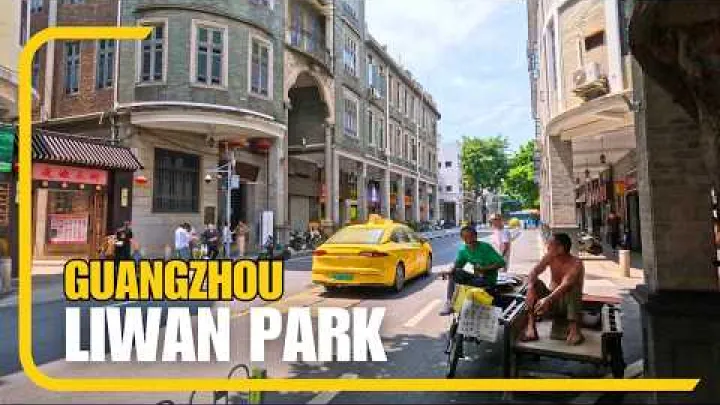
Liwan is the more immersive choice for travelers who care more about historic urban texture than about a standardized modern hotel environment. Xiguan offers older streets, traditional architecture, local shops, and a walking-focused experience. Shamian Island provides a different atmosphere, with tree-lined streets and distinctive historic buildings that can feel calmer than the dense commercial core.
Both districts can suit food-focused travelers, but the experience is based on exploring the surrounding streets rather than selecting a hotel inside a single guaranteed dining zone. If shopping means wholesale or trade markets, identify the exact market or trading building first. A hotel near Beijing Road is not automatically convenient for every specialized market. Liwan's older streets can also be narrower or less regular, so travelers who prefer clear roads, large lobbies, and predictable late-night access may find Tianhe or central Yuexiu easier.
Choose Haizhu, Pazhou, or a transport-oriented base for specialized trips
Haizhu contains several different reasons to stay. Pazhou is the logical choice when the Canton Fair Complex or another exhibition is the main purpose of the trip. The Canton Tower and nearby riverfront areas suit visitors who prioritize skyline views, promenades, and modern leisure accommodation. These are not interchangeable recommendations: the best Haizhu base depends on whether your daily destination is an exhibition hall, a landmark, a riverside attraction, or another metro station.
Accommodation near Guangzhou Railway Station or near Guangzhou Baiyun International Airport is useful for a specific transport problem, such as an early departure, a late arrival, or a multi-city itinerary. It is rarely the best default for a sightseeing trip because a transport-led base may feel more functional than central Tianhe, Yuexiu, Liwan, or leisure-oriented Haizhu. Choose it when the departure schedule makes the location materially easier, not simply because the hotel appears close to a transport name on a booking page.
How to Choose a Convenient Place to Stay in Guangzhou
The most useful question is not only which Guangzhou district is best, but which small area within that district will support your daily route. Station exits, walking distance, street layout, noise, and the location of your main destinations can change the practical value of an otherwise attractive hotel.
Start with the metro station, not only the district name
Tianhe, Yuexiu, Liwan, Haizhu, and Baiyun each contain multiple micro-areas. A hotel described as being in Tianhe may be convenient for Zhujiang New Town but awkward for the Tianhe Sports Center, while a property in Yuexiu may be close to Beijing Road but far from the station exit you need. Search for the exact property on a current map and judge the route on foot rather than relying only on the district label.
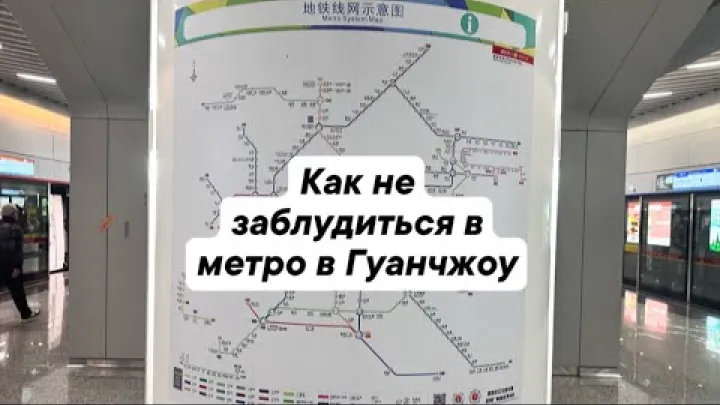
Guangzhou Metro Line 11 is useful context because a Chinajob report describes the circular route as linking Tianhe, Baiyun, Yuexiu, Liwan, and Haizhu. The wider network can make a central base more flexible, but a route description is not a substitute for checking the current system. Before booking, compare these details:
- The nearest station that is actually useful for your itinerary, not simply the nearest station by straight-line distance.
- The station exit that leads toward the hotel and whether the walking route crosses large roads or busy commercial areas.
- The number of transfers needed for your two or three most important daily destinations.
- The final walking distance after leaving the station, including any large blocks, bridges, or internal roads.
- Current metro lines, station access, operating information, and service details for the dates and times you expect to travel.
This station-first method is particularly important for short stays. Saving a little on the room can be less useful if every sightseeing day begins with a long walk and several transfers. It is also useful for exhibition travelers, because the station that serves the hotel may not be the station that provides the simplest route to the exact exhibition entrance.
Compare walkability, night-time comfort, and noise at street level
Guangzhou's main bases have different street patterns. Tianhe tends to offer broad modern streets, large commercial complexes, and substantial evening activity. Yuexiu's pedestrian shopping areas can be lively and convenient, while Liwan includes older lanes and more irregular streets. Haizhu varies again: exhibition and riverfront areas may be modern but more dispersed, with quiet stretches between major destinations.

Night-time comfort should be assessed through lighting, pedestrian activity, the condition of the route, and how easy it is to identify the hotel entrance. Informal traveler discussions often describe mainstream Guangzhou districts as comfortable for ordinary evening movement, but that is not crime data and does not guarantee that every street or property will feel the same. A district name alone cannot establish that a hotel is risk-free or unsuitable.
Use a street-level check before choosing a property. Read recent accommodation reviews for comments about late arrivals, entrances, elevators, and the immediate surroundings. Study the map view for the route between the property and its station or evening destination. If you expect to return late, choose a route that is well-used and well-lit, and avoid assuming that a shorter route on the map will be the more comfortable route after dark.
Noise is a separate issue from safety. Major roads, shopping streets, nightlife, and exhibition periods can all create noise even in otherwise convenient locations. A quieter hotel may be set farther from the station or behind a residential street, so compare the likely sleep benefit with the extra walking and transfers. Recent reviews are more useful than a hotel description that simply says the property is in a central area.
Match the area to your budget and length of stay
Price in Guangzhou is shaped by sub-area, date, room type, event demand, and the type of property you choose. Zhujiang New Town and Pazhou have visible luxury and upper-upscale supply, so they can be expensive when business or exhibition demand is strong. Central Yuexiu has hostel and budget-hotel options, while Tianhe contains a wide range from simple rooms to premium city hotels. These are broad patterns, not fixed price rules.
Compare the total cost of the stay rather than the room rate alone. A cheaper property on the edge of the city may require more metro travel, additional transfers, or occasional taxis. A slightly more expensive room near the station and your main destinations can reduce both daily travel time and the chance of paying for convenience later.
Trip length also changes the answer. A short visit usually benefits from a well-connected hotel with a simple check-in process and a private bathroom. A longer stay can justify a serviced apartment if the extra space, kitchen, laundry access, or work area will be used often. Families and small groups should compare the cost of several hotel rooms with the cost and sleeping arrangement of one larger apartment.
Tianhe: The Default Base for First-Time Visitors and Business Travelers
Tianhe is best understood as two complementary bases rather than one single neighborhood. Zhujiang New Town emphasizes business, upscale hotels, and the Pearl River area; Tiyu Xilu and Tianhe Sports Center emphasize shopping, dining, and practical commercial access.
Zhujiang New Town for upscale hotels, riverfront culture, and mixed trips
Zhujiang New Town suits travelers who want modern accommodation, business facilities, restaurants, and a contemporary city setting. It can work particularly well for a combined business-and-leisure trip: meetings can be handled in the business district, while evenings can include dining or travel toward the Pearl River area. It is also a reasonable choice for visitors who prefer a polished hotel environment over an older neighborhood.
Current accommodation listings for Guangzhou include high-end examples such as Four Seasons Hotel Guangzhou and Conrad Guangzhou. A Booking accommodation page illustrates that range, but the presence of a luxury property does not make it the best choice for every traveler. Use named hotels as examples of the type of inventory available, not as a ranking.
Before choosing a property in Zhujiang New Town, decide whether you value a river-facing setting, a business address, a particular metro route, or on-site facilities. Premium positioning can mean a higher room rate and a more office-oriented environment. If your main plan is old streets, traditional architecture, or low-cost local food exploration, Yuexiu or Liwan may provide a better match even if the room is less modern.
Tiyu Xilu and Tianhe Sports Center for shopping, food, and practical access
The Tiyu Xilu and Tianhe Sports Center corridor is a practical choice for travelers who want a busy modern base close to shopping and dining. Teemall and nearby commercial centers make this area useful for visitors who prefer to combine shopping, restaurants, and city movement without staying in a quiet residential zone. It can suit first-time tourists who want visible urban activity and a choice of budget, mid-range, and higher-end accommodation.
This sub-area also works for business travelers whose meetings are in northern or central Tianhe, although the exact station and office location still matter. Search around the station that best serves your route rather than treating every hotel in the district as equally convenient. A property may be close to a shopping complex but require a longer walk from the metro than its headline location suggests.
The trade-off is commercial intensity. Busy roads, shopping complexes, events, and nightlife can bring traffic and noise. If you sleep lightly, compare room orientation and recent guest comments. If you want the most convenient access to shopping and food, accept that the surrounding streets may be more active than a residential pocket farther from the main corridor.
Yuexiu and Liwan: The Best Bases for Heritage, Markets, and Cantonese Atmosphere
Yuexiu and Liwan are the main choices for travelers who want Guangzhou's older urban character. Yuexiu is usually the more practical heritage base, while Liwan is better for visitors who want a deeper old-town experience and are willing to accept more irregular streets and a less uniform accommodation supply.
Beijing Road, Haizhu Square, and Gongyuanqian in Yuexiu
Beijing Road is a strong Yuexiu base for visitors who want pedestrian shopping, food access, and an active central street environment. Haizhu Square can appeal to travelers who want another central commercial and sightseeing position. These areas are useful when you want to step out into a lively urban setting rather than depend on a hotel restaurant or a taxi for every meal.
Gongyuanqian is a useful metro-oriented option for combining old-city visits with wider exploration. It can be a good compromise when you want heritage and shopping nearby but also expect to travel to Tianhe, Haizhu, or other parts of Guangzhou. The exact station exit still matters, especially in dense commercial areas where a short map distance can involve a complicated crossing or a long route around a block.
Be careful with the word shopping. Beijing Road is not automatically close to every wholesale market or trade complex. If your trip is focused on wholesale goods, list the specific market, building, or trading area first and select accommodation near the route you will use each day. Check the current location and opening arrangements for that destination rather than assuming that all central shopping areas are interchangeable.
Xiguan and Shamian Island in Liwan for a deeper old-town stay
Xiguan is a good fit for travelers who value historic streets, traditional architecture, local shops, and walking. Areas around traditional lanes and Lychee Bay can provide a stronger sense of older Guangzhou than the modern towers of Tianhe. This makes Liwan attractive for photographers, repeat visitors, and travelers who want the neighborhood itself to be part of the trip.
Shamian Island offers a different version of the same appeal. Its tree-lined streets and distinctive historic architecture create a calmer alternative to dense commercial areas, although the best fit depends on where your hotel sits and what you plan to do after leaving the island. A peaceful landmark setting should not be confused with continuous tourist activity on every nearby street.
Expect older buildings, narrower or irregular streets, and a smaller or more mixed accommodation supply than in Tianhe. Some visitors will appreciate the character; others may find luggage movement, taxi drop-off, or late-night navigation less simple. Liwan is therefore an atmosphere-first recommendation, not the universal best base. Choose it when cultural texture and walking matter more than a standardized modern environment.
Haizhu: Choose Between Pazhou, Canton Tower, and Riverfront Areas
Haizhu is a broad district with separate exhibition, landmark, residential, and riverfront settings. Choose the exact sub-area according to the reason for your stay, because being in Haizhu does not by itself indicate whether you are near the Canton Fair Complex, Canton Tower, or a useful metro route.
Pazhou for Canton Fair and exhibition access
Pazhou is the clearest choice when reducing travel to the Canton Fair Complex is more important than staying near historic streets or central shopping. It is especially practical for exhibitors, buyers, and business travelers who need to reach the venue repeatedly. An accommodation close to the relevant station or venue route can make the working day simpler, even if the area feels less interesting after exhibition hours.
Current listings near Pazhou Station include hotels, serviced apartments, and apartment-style properties. The Booking page shows examples such as Pazhou exhibition-center serviced apartments and Prime Pazhou Aparthotel. These listings illustrate the range of accommodation, not a ranking or guarantee of quality. Read the exact address because a property marketed as near Pazhou may still require a taxi, shuttle, or a longer walk to the relevant entrance.
Pazhou can also have venue-oriented services during exhibition periods, including possible shuttle arrangements, but these depend on the property and event. Confirm the Canton Fair dates, the exact venue route, and any shuttle schedule directly with the accommodation provider before paying. If you want to combine the fair with sightseeing, Zhujiang New Town may be a better compromise, provided its daily route to the exhibition is acceptable.
Canton Tower and the riverfront for views and leisure
The Canton Tower area suits travelers who prioritize a landmark setting, skyline views, riverside walks, and modern leisure accommodation. It can be appealing for a short leisure stay, a special occasion, or a visitor who wants the Pearl River landscape to shape the trip rather than simply use Guangzhou as a transport base.
The riverfront experience is concentrated around particular attractions and promenades. Some nearby residential areas may be quieter or less continuously walkable, with shops and services spread farther apart. When comparing hotels, distinguish between being close to Canton Tower, being close to a metro station, and being on a convenient route to the rest of the city. These are three different advantages.
Choose this area over Zhujiang New Town when the landmark or riverfront setting is the main priority. Choose Zhujiang New Town when business access, a broader central routine, or a specific hotel-service package matters more. In either case, check the current listing's walking distance from the property entrance to the station and attraction instead of relying only on a river-view or landmark label.
When Baiyun or Railway Station Areas Make Sense
Transport-oriented accommodation solves a scheduling problem rather than a sightseeing problem. It can be the right decision for one night before a very early departure, but it is usually not the most satisfying base for a longer visit focused on Guangzhou's food, heritage, shopping, or riverfront attractions.
Choose transport-oriented lodging for early departures and multi-city trips
Accommodation near Guangzhou Railway Station can be useful when you have an early train, a late arrival, or a multi-city itinerary that makes station access more important than atmosphere. A current Agoda page lists location-led examples including Guangdong Baiyun City Hotel, Liuhua Hotel, and T Social Hotel Guangzhou Railway Station Branch. These names illustrate the type of station-area accommodation available, not a recommendation that any one property is best.
Near Guangzhou Baiyun International Airport is a separate logistics case. It can make sense for an early flight or a late arrival when a long cross-city journey would create unnecessary pressure. An airport hotel may be convenient for the terminal but inconvenient for central sightseeing, so avoid treating the airport and railway station as one general neighborhood. Select the one that matches the actual departure or arrival point.
For an early train or flight, test the exact route from the property at the time you need to leave. Check whether public transport is operating then, how long the walk to the station or terminal connection will take, and whether luggage changes the route. If public transport is not operating or the transfer is too uncertain, arrange a confirmed taxi or transfer with enough time for the actual departure schedule.
Choose the Right Accommodation Type for Your Budget and Stay Length
The right lodging type depends on how much time you spend at the property, how many people share the room, and whether location or facilities matter most. A hotel is not automatically better than an apartment or hostel; each category solves a different travel need.
Hotels and resort-style stays for predictable comfort
Full-service hotels suit short visits, business trips, and travelers who value predictable reception, housekeeping, dining, fitness facilities, pools, or other on-site services. They are also useful when you arrive late, need help arranging transport, or prefer not to manage a residential-style check-in. Modern, amenity-led city hotels are particularly visible in Zhujiang New Town, Pazhou, and the Canton Tower corridor.
Use the service package as a selection criterion, not simply the star rating. A luxury hotel near the wrong daily destination may be less convenient than a simpler hotel near the right station. Compare the hotel setting, entrance, breakfast arrangements, workspace, and cancellation terms with the amount of time you will actually spend there.
Resort-style accommodation should be treated as an amenity-first choice rather than the default Guangzhou base. The available accommodation evidence is centered mainly on city hotels and apartments, so confirm that a property genuinely offers the setting and facilities you expect. A pool or large room may be valuable for a family stay, but it may not justify a longer daily route if your plan is focused on museums, old streets, or business meetings elsewhere.
Serviced apartments for families, work, and longer stays
Serviced apartments can suit longer stays, families, small groups, and remote workers who need more space than a standard hotel room. A living area, kitchen, laundry access, or work surface can make a noticeable difference when you stay for several nights or need a residential routine. They can also provide better value for a group if the sleeping arrangement is suitable.
Examples in current accommodation listings include Dan Executive Apartment Guangzhou Zhujiang New Town and apartment-style properties near Pazhou. The Zhujiang New Town example fits a general business or mixed trip, while Pazhou apartments are more relevant when the Canton Fair Complex is the main daily destination. Neither category should be treated as interchangeable.
Check the exact unit rather than assuming every serviced apartment includes the same facilities. Confirm the kitchen equipment, living area, laundry access, cleaning frequency, workspace, number of beds, maximum occupancy, and whether reception is available at the time you arrive. For families, also check whether the listed sofa bed or extra bed is suitable for the people who will use it.
Mid-range urban hotels for most short city visits
Mid-range hotels near metro stations and commercial streets are often the practical compromise between price, private-room comfort, and daily access. In Tianhe, they can place you near modern shopping and business areas. In Yuexiu or Liwan, they may provide a private base for heritage exploration. In Haizhu, they can work for a mixed route if the exact station is useful for both the riverfront and the rest of the itinerary.
Compare properties within the same price band using a short checklist:
- Exact walking distance to the useful metro station and the likely route after dark.
- Room size, bed arrangement, bathroom type, and suitability for the stated occupancy.
- Front-desk hours, check-in conditions, breakfast, internet access, and luggage storage.
- Recent guest comments about noise, cleanliness, elevators, and the immediate street.
- Cancellation rules and the final total shown for your dates.
A well-located mid-range hotel can outperform a cheaper peripheral property once transport time, fares, and the inconvenience of repeated transfers are included. Location remains the main comparison point even when two properties have similar ratings.
Hostels and budget hotels for central low-cost stays
Yuexiu is a strong budget base for travelers who want central access to heritage streets, shopping, food, and metro connections. Tianhe is an alternative for budget travelers who prefer modern shopping and infrastructure, although its price range is broad and premium sub-areas can be more expensive. In both districts, compare the exact station distance and room conditions rather than assuming that a low price means poor access.
An Agoda hostel page for Guangzhou used a 2025 snapshot of approximately 24 US dollars per night for hostels in Yuexiu. That figure is a variable reference, not a guaranteed rate: dates, availability, currency conversion, room privacy, taxes, and booking conditions can change the final amount. A Agoda listing should be treated as a starting point for current comparison rather than a promise of what every hostel costs.
Hostels can provide a social atmosphere and the lowest price, but shared bathrooms, dormitory rules, limited storage, or reduced privacy may not suit every visitor. Budget hotels offer more privacy, while small private rooms may trade space or facilities for a central location. Choose the category according to whether your priority is a bed at the lowest rate, a private room, a social stay, or a reliable station connection.
A Practical Booking Checklist for Guangzhou Accommodation
Once you know your main priority, booking becomes a matter of testing the exact property against your daily route. The following steps help prevent a good-sounding district recommendation from becoming an inconvenient hotel choice.
Select the micro-area that matches your daily route
Use this decision map as the final shortlist: Tianhe for broad modern convenience; Yuexiu for a practical heritage and shopping base; Liwan for deeper old-town immersion; Pazhou for the Canton Fair and exhibitions; Canton Tower for riverfront leisure; and railway-station or airport areas for transport-led trips.
List the two or three places you will visit most often, then choose the base that reduces repeated cross-city travel. For a tourist, those places may be Beijing Road, a museum or heritage area, and a shopping district. For a business traveler, they may be an office, the Canton Fair Complex, and a restaurant or meeting area. For a family, the most important destinations may be an attraction, a convenient dining area, and the station used for day trips.
A split stay can make sense when the purposes are genuinely different. For example, an exhibition visitor might stay in Pazhou during working days and move to Tianhe or Yuexiu for leisure. This can reduce exhibition travel while preserving time for sightseeing, but changing hotels adds packing, check-in, and transfer costs. For a short trip, one well-connected base is usually simpler.
Verify the exact listing before you pay
Do not rely only on the neighborhood name, hotel title, or a prominent landmark. Use the current listing and map to confirm:
- The complete address and the actual district or sub-area.
- The nearest useful metro station, the likely exit, and the walking route from that exit.
- The room type, bed arrangement, maximum occupancy, bathroom, and any extra-bed conditions.
- Facilities that matter to your trip, such as a kitchen, laundry access, breakfast, workspace, fitness area, pool, or reception hours.
- The final date-specific total, including taxes, service charges, cleaning charges, deposits, or other fees shown at checkout.
- The cancellation policy, check-in conditions, identification requirements, and recent reviews.
- For a Canton Fair stay, the exact route to the relevant venue and any shuttle arrangement offered during your dates.
- For an early train or flight, the route to the correct station or terminal at your planned departure time.
Compare the final booking total and conditions on the current listing immediately before payment. Room availability, promotional prices, facilities, transport schedules, event-period services, and cancellation terms are dynamic. If a property markets itself as near Pazhou, Canton Tower, a station, or the airport, compare its full address on a current map so that the description matches the route you will actually use.
Final Recommendation: Where to Stay in Guangzhou
For most first-time visitors, stay in Tianhe, choosing between Zhujiang New Town for upscale business-and-leisure convenience and Tiyu Xilu or Tianhe Sports Center for shopping, food, and practical urban access. Choose Yuexiu if historic sightseeing and central shopping matter more, or Liwan if you want a deeper old-town atmosphere and are comfortable with older, less regular streets.
Choose Pazhou when the Canton Fair Complex controls your schedule, Canton Tower when riverfront leisure is the main purpose, and Guangzhou Railway Station or Guangzhou Baiyun International Airport when an actual departure or arrival time makes a transport base worthwhile. Finally, select the lodging type by trip length and daily needs: a full-service hotel for predictable short-stay comfort, a serviced apartment for space and longer stays, a mid-range hotel for balance, and a hostel or budget hotel for a lower-cost central base.
Select area
Create a post
Posting is free and no registration is required.