Chongqing Getting There: Flights, Trains, Buses & Cruises

Getting to Chongqing is less about finding one universally best route and more about matching the gateway to your origin, budget, luggage, and onward plans. The city is served by an international airport, several major railway stations, regional bus hubs, and Yangtze cruise docks, but these gateways are not interchangeable. This guide compares flights, high-speed rail, conventional trains, buses, road travel, and river cruises by practical journey time, cost level, comfort, and booking difficulty. It also explains how to identify your exact arrival point and continue safely to areas such as Jiefangbei and Chaotianmen.
Choose the Best Way to Reach Chongqing
Start with the whole journey rather than the time shown beside a flight or train. Chongqing transport decisions can change significantly when you include travel to the departure airport or station, check-in and security, baggage, the arrival gateway, and the final urban transfer.
Compare Air, High-Speed Rail, Conventional Rail, Bus, and River Travel
| Mode | Typical fit | Total journey profile | Cost level | Booking difficulty | Chongqing arrival point |
|---|---|---|---|---|---|
| Flight | Long domestic and international trips | Short in the air, but includes airport access and procedures | Medium to high, depending on date | Usually straightforward | Jiangbei International Airport, CKG |
| High-speed rail | Chengdu and major Chinese corridors | Direct station-to-station travel with fewer airport procedures | Medium and class-dependent | Real-name booking required | North, West, East, or Shapingba station |
| Conventional train | Lower budgets and overnight journeys | Longer travel, with seated and sleeper choices | Low to medium | Real-name booking required | A railway station shown on the ticket |
| Long-distance bus | Smaller cities and places without convenient rail | Direct in some cases, but exposed to road delays | Often low to medium | Station and route dependent | A regional bus terminal |
| Road travel | Multi-stop trips, groups, and remote areas | Flexible but affected by traffic, tolls, and road conditions | Varies widely | Legal and vehicle checks required | Hotel, private address, or tour meeting point |
| Yangtze cruise | River itineraries rather than simple transport | Multi-day travel with fixed boarding arrangements | Usually package and operator dependent | Operator-specific | Chaotianmen-area dock or assigned wharf |
Flights are usually most attractive when the origin is far from Chongqing, when an international connection is already convenient, or when a traveler values the shortest time in transit. High-speed rail is particularly competitive on major Southwest China routes because the station process can be simpler than an airport journey. Conventional rail, buses, and cruises each solve a different problem: saving money or a hotel night, reaching a smaller regional destination, or turning transport into a river itinerary. Frequencies, fares, train types, airport assignments, and route availability vary by date, season, demand, and operator.
Confirm Your Actual Arrival Gateway Before Booking
Search results that show only Chongqing are incomplete. Record the exact gateway in the booking: Chongqing Jiangbei International Airport, Chongqing North railway station, Chongqing West railway station, Chongqing East railway station, Shapingba railway station, a named bus station, or the cruise operator's assigned dock. Chongqing North is Chongqing Bei Zhan or 重庆北站, Chongqing West is 重庆西站, Chongqing East is 重庆东站, and Shapingba is 沙坪坝站. Chinese names are useful when checking railway, bus, and map applications.
Jiefangbei, or 解放碑, and Chaotianmen, or 朝天门, are helpful reference points for central Chongqing, but they do not describe every hotel or district. Before paying, check five details:
- Your origin airport or station and the exact departure time.
- The full Chongqing gateway name, not just the city name.
- Your arrival date, local time, and expected luggage.
- The district, hotel, or cruise meeting point you will reach next.
- Whether the last connection still operates when you arrive.
Fly to Chongqing Jiangbei International Airport
Chongqing Jiangbei International Airport, with the code CKG, is the principal air gateway for the city. It handles domestic travel and international or regional services, but a route shown by a search engine is not a permanent promise of operation. For airport identity and network context, Routesonline is a useful reference; the airline and airport should determine the final booking and flight-status decision.
International Access and Connecting Flights
International travelers may find a direct flight to CKG on the selected date, but many itineraries require a connection. Common planning hubs can include Hong Kong, Shanghai, Beijing, Seoul, or another Chinese or Asian gateway. These are route examples rather than a fixed list of active services. Airline schedules can be seasonal, reduced, suspended, or changed, so search the complete itinerary for your dates instead of relying on an old destination list.
A single-ticket itinerary normally makes missed-connection support and baggage arrangements clearer, although the exact protection depends on the airlines and fare. A self-built itinerary can combine an international flight with a separate domestic flight or high-speed train and may offer more choice, but it requires more work. Depending on the routing, you may need to collect baggage, pass immigration and customs, change terminals, and check in again. If the tickets are separate, a delay on the first booking may not be protected by the second booking. Check the passport, transit, entry, and baggage conditions for the exact itinerary before selecting this option.
Domestic Flights from Major Chinese Gateways
Domestic flight searches to Chongqing commonly begin with major cities such as Beijing, Shanghai, Guangzhou, Wuhan, Chengdu, Xi'an, and Shenzhen, as well as other Chinese gateways. Whether flying is the best choice depends on the date and on the location of the departure airport. A flight's time in the air is only one part of the journey. Add the trip from your hotel to the airport, the airline's check-in deadline, security, boarding, baggage collection, and the transfer from CKG to your final district.
High-speed rail can be more convenient on shorter corridors or when a central railway station is easier to reach than the origin airport. A flight can be more suitable on a long route, for a time-sensitive traveler, or when the fare and connection are favorable. Compare the full departure-to-hotel journey, not only the displayed flight duration. In a large origin city, also confirm which airport the airline uses; the most convenient airport for you may not be the one used by every service.
Terminal and Flight-Connection Checks at CKG
Confirm the assigned terminal at Chongqing Jiangbei International Airport because domestic and international operations may use different buildings or procedures. Do not depend on a terminal number copied from an old travel guide. The airline booking, the airport's current information, and the flight-status display should be the final references.
Connecting passengers should allow time for movement between terminals or buildings, security, immigration, customs, baggage procedures, and possible re-check-in. This is especially important when an international arrival connects to a separate domestic ticket. Check the flight status again before leaving for the airport and keep the next address or train information available in case the arrival plan changes.
Take High-Speed or Conventional Rail to Chongqing
Rail is one of the most useful ways to reach Chongqing from other parts of China, but the station name is as important as the train number. A journey sold as Chongqing may end at North, West, East, or Shapingba station, each with a different urban connection.
Chongqing North, West, East, and Shapingba Stations
| Station | Likely role | What to check | Central-area planning |
|---|---|---|---|
| Chongqing North 重庆北站 | Major long-distance and high-speed gateway | The service assignment and departure or arrival hall | Plan the exact metro exit, taxi route, or ride-hailing pickup |
| Chongqing West 重庆西站 | Major high-speed railway gateway | Whether your train uses West rather than North or East | Compare the urban route to your hotel before choosing the train |
| Chongqing East 重庆东站 | Newer major passenger hub | Current train pattern and surrounding connections | Use a current map and allow time for the onward transfer |
| Shapingba 沙坪坝站 | Urban railway stop used by selected services | Whether the train actually stops there and which exit is useful | It may suit some west or central urban destinations |
These stations are separate gateways, not alternative names for one building. Train search results may show different stations for similar origins, and the cheapest or fastest-looking service may leave you with a more difficult final transfer. Check the station printed on the ticket, then compare it with your hotel location. Metro, official taxi, and ride-hailing are the main types of onward connection, but the best choice depends on the station, luggage, time of arrival, and current urban transport service.
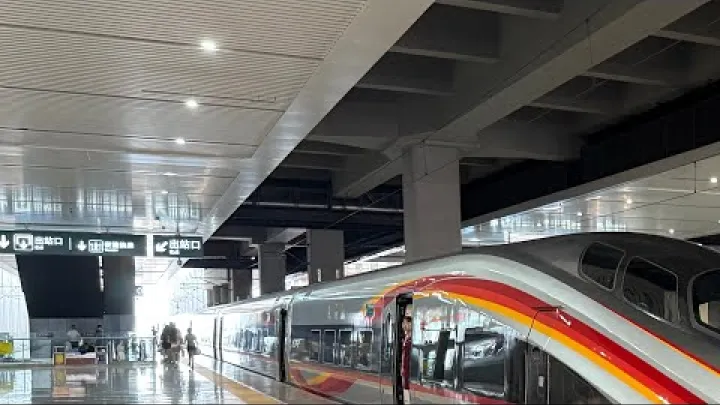
High-Speed Rail from Chengdu, Beijing, Shanghai, Guangzhou, Wuhan, and Lanzhou
Chengdu–Chongqing is the leading regional example for high-speed rail. It is often a strong choice for Southwest China itineraries because travelers can avoid airport access and use a direct railway connection when seats and times fit. Beijing, Shanghai, Guangzhou, Wuhan, and Lanzhou require a broader comparison because distance, departure frequency, station access, and the value of an overnight option can change the result.
| Origin | Rail case | Flight case | Main Chongqing check |
|---|---|---|---|
| Chengdu | Often convenient for a regional, station-to-station trip | Useful when the airport schedule fits better | Confirm the assigned Chongqing station |
| Beijing | Direct rail can avoid airport transfers and may support an overnight plan | Useful when reducing total journey time matters most | Check Beijing departure station and Chongqing arrival station |
| Shanghai | Suitable for travelers who prefer rail or find the station access simple | Often attractive for a time-sensitive itinerary | Compare airport access with the rail station journey |
| Guangzhou | Useful for travelers who value train boarding and a city-center departure | Often worth comparing because of the long corridor | Check the service's origin and destination stations |
| Wuhan | Can be practical when a direct service and good departure time are available | May suit a tight schedule or favorable fare | Compare total time, not only travel duration |
| Lanzhou | Provides a rail alternative for a long-distance overland itinerary | May be preferable when the schedule is more efficient | Check current route, class, and arrival station |
Do not use a static duration or fare list for these corridors. Enter the intended date in the current railway and airline booking systems and compare the complete journey. On high-speed trains, second class is usually the value benchmark, first class costs more for a different seating environment, and business class is the premium option on services that offer it. The train's actual classes and price should be treated as date-specific. A service with a slightly longer onboard time may still be easier if its station is closer to your departure hotel or Chongqing base.
Conventional Trains and Overnight Options
Conventional trains remain useful when high-speed tickets are sold out, when the origin has limited high-speed service, or when a lower-cost overnight journey is more important than arrival speed. Seated tickets suit travelers who accept a long journey, while sleeper tickets can make an overnight route more manageable. In common booking terminology, a hard sleeper generally describes an open sleeper arrangement, while a soft sleeper generally describes a more enclosed compartment; the exact layout and comfort depend on the train.
An overnight train may save a hotel night, but it can also arrive early and require a longer urban transfer before a room is available. Check the current train type, full duration, departure station, arrival station, and ticket class. Do not assume that a conventional train uses the same station as a high-speed service on a similar route.
Booking Rail Tickets with 12306 or an English-Language Platform
China Railway 12306 is the official reference for train information, real-name ticketing, changes, and refunds. Its English-language pages publish service information, but operating hours and ticket rules should be read as current instructions rather than permanent guarantees. The site states that information queries and refund services are available around the clock, while some ticket sales and change functions have their own published operating hours.
Foreign travelers generally need to enter passport details accurately and use the same passport when traveling. Follow the form's requested name order and spelling instead of creating a Chinese name. The booking sequence is straightforward but easy to get wrong: choose the exact date, origin station, Chongqing station, train, class, and passenger identity, then follow the current instructions for identity boarding or ticket collection.
An English-language intermediary such as Trip.com can be easier for international payment, interface navigation, and customer support, although its final price and service fees may differ from direct booking. Direct 12306 booking can be useful when you want the official process and direct access to railway rules. For a sold-out train, compare other departure times or stations and use any current official availability or waiting functions offered by the booking channel. For name errors, passport changes, refunds, and timetable changes, use the platform's current instructions rather than assuming a ticket can be edited freely.
Use Long-Distance Buses or Road Routes When They Make Sense
Long-distance buses can fill the gaps between Chongqing and smaller cities, counties, or regional destinations without a convenient high-speed rail connection. A transportation overview from Yangtze River Cruises identifies several Chongqing transport options, but bus routes and terminal operations still need local confirmation for the travel date.
Intercity Buses and Regional Bus Stations
Useful local names include Sigongli Transportation Hub, or 四公里交通换乘枢纽, Chenjiaping Bus Station, or 陈家坪汽车站, and the Caiyuanba long-distance bus area, or 菜园坝长途汽车区域. Treat these as separate search terms and possible departure points, not as interchangeable stations. A route may move to another terminal, change its timetable, or stop selling through a particular channel.
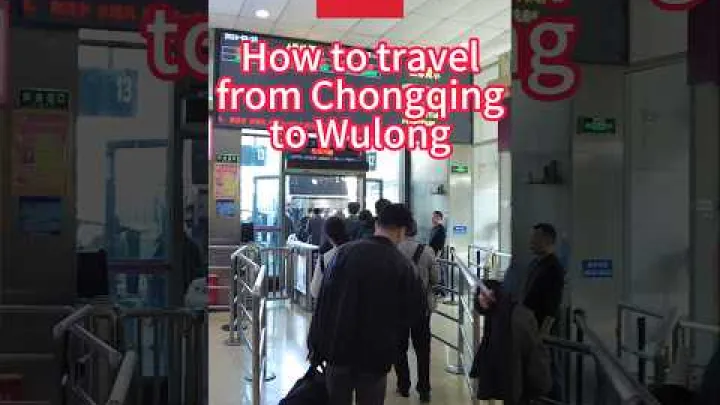
Buses may be more direct than a train for a smaller destination and can be less expensive, but they are exposed to traffic and road conditions. Comfort, luggage handling, English signage, and payment options also vary more than on major rail routes. Before departure, confirm the departure station, Chinese destination name, time, ticket channel, payment method, and luggage rules. Save the destination in Chinese or in a map application so you can show it at the station and after arrival. A bus is not automatically faster than rail; its value is often direct access to a place that rail does not serve well.
Self-Drive, Chartered Cars, and Expressway Access
Chongqing connects by road with major approaches from Chengdu, Xi'an, Wuhan, and other parts of China. These corridors are useful for planning a multi-stop trip, but a map estimate is not a guaranteed journey time. Traffic, weather, toll stations, rest stops, mountain roads, and the final urban approach can all affect the result.
Separate four choices before booking: driving yourself, hiring a licensed driver, joining an organized tour, or taking an intercity bus. Self-drive is specialized for many international visitors. Licensing, permits, insurance, vehicle rental eligibility, and local traffic requirements must be confirmed with a current official authority and the rental provider. Do not assume that a foreign license or an international driving permit by itself establishes your right to drive a rented vehicle in China.
A chartered car or organized transfer can be more practical when you need road access but cannot independently meet local requirements. Compare the full cost, including fuel, tolls, parking, driver time, waiting, and any intercity return charge. Choose the option according to legal eligibility, driver reliability, road conditions, and total cost rather than convenience alone.
Reach Chongqing by Yangtze River Cruise
A Yangtze cruise is a destination itinerary as much as a transport method. It can be a good fit for travelers who want a river journey between Chongqing and another port, but it is not a simple substitute for a scheduled flight or train.
Chaotianmen Dock and Cruise Boarding
Chaotianmen Dock is the main Chongqing reference point for many Yangtze cruise plans. It is associated with the meeting point of the Yangtze and Jialing Rivers and with the riverfront area near central landmarks. The exact ship, wharf, pontoon, and boarding arrangement can differ by operator and sailing date, so the word Chaotianmen alone may not be enough for the final transfer.
Downstream Chongqing–Yichang journeys, upstream arrivals, and longer river itineraries may use different schedules and boarding instructions. Some operators may direct passengers to a particular pier or meeting point away from the general dock area. Save the operator's instructions offline, including the Chinese dock name, ship name, meeting time, and contact details. Do not treat one dock number, check-in process, or boarding procedure as universal.
Coordinate a Cruise with Flights or Trains
Cruise passengers need more arrival buffer than visitors who can simply check in at a hotel. The transfer from CKG or a railway station to the dock can involve luggage, city traffic, terminal exits, and a walk or vehicle connection from the general riverfront to the operator's meeting point. The operator's boarding window and instructions control the practical deadline.
A lower-risk plan is to arrive in Chongqing the previous day, stay somewhere suitable for the confirmed meeting area, and travel to the assigned meeting point with time to spare. A higher-risk plan is a same-day morning flight or train followed by a cross-city transfer to the dock. That option can fail if the first service is delayed, baggage takes longer, or the meeting point is different from the map pin. If a same-day connection is unavoidable, use a generous buffer, carry the cruise instructions offline, and ask the operator how late arrivals are handled before paying for the separate ticket.
Compare Typical Routes into Chongqing
The following route comparisons are decision frameworks rather than permanent timetables. Use the exact travel date to compare current services, fares, and gateways.
Beijing and Shanghai to Chongqing
| Corridor | When rail is attractive | When flying is attractive | Best-fit traveler |
|---|---|---|---|
| Beijing to Chongqing | A direct rail journey from Beijing West can provide a simple city-station departure and may suit an overnight plan | Useful when reducing total journey time is the main priority | Rail for train-focused or central-departure travel; air for time-sensitive plans |
| Shanghai to Chongqing | Suitable when the traveler prefers rail, wants a station departure, or finds the rail schedule convenient | Often worth prioritizing when airport access and flight timing are favorable | Air for speed; rail for comfort preference, flexibility, or an overland itinerary |
For Beijing, compare the journey to the departure airport with the route to Beijing West, then include the transfer from the Chongqing arrival station. For Shanghai, compare the relevant airport with the actual railway station shown for the train; neither a flight nor a train is automatically easier for every hotel location. Budget travelers should compare the cheapest available class and any accommodation saved by an overnight option. Travelers who value simplicity should favor the itinerary with fewer separate tickets and fewer city transfers, even if its onboard time is not the shortest.
Chengdu, Guiyang, Wuhan, and Guangzhou to Chongqing
| Origin | Typical decision | When a bus or road option helps | Best fit |
|---|---|---|---|
| Chengdu | Check high-speed rail first when a suitable seat and station are available; compare air if the airport schedule is better | A bus can help with regional Sichuan origins or when rail seats are unavailable | Regional rail travelers and flexible city itineraries |
| Guiyang | Compare rail and air by date, price, and the final Chongqing station | Road travel may suit a multi-stop Guizhou plan rather than a direct city transfer | Travelers balancing Southwest China route flexibility |
| Wuhan | Compare a long rail journey with a flight by total time and airport access | Bus is mainly a fallback for nearby regional origins | Air for tight schedules; rail for a station-to-station journey |
| Guangzhou | Compare the long rail corridor with flight availability and the location of each departure point | Bus or private road travel is more useful for intermediate stops than for a simple direct trip | Air for time savings; rail for train preference or city-center boarding |
Chengdu is often the clearest high-speed rail choice in this group, but availability and station assignment still matter. Guiyang, Wuhan, and Guangzhou require a closer air-versus-rail comparison because the longer corridor can make airport access and total time more important. During holidays and other busy periods, fares and seat availability can change quickly. Check the actual departure station, arrival station, seat class, and onward transport before deciding that one mode is always best.
Hong Kong and International Hub Connections
Overseas travelers generally have three broad choices: a direct flight to CKG when operating, a connection through Hong Kong or another Chinese or Asian hub, or an international flight followed by high-speed rail from a different Chinese city. A single ticket is usually simpler because the booking may coordinate the connection and baggage more clearly. A separate flight and rail itinerary can provide flexibility, but it transfers the responsibility for timing, station changes, baggage, and missed connections to the traveler.
An itinerary through Hong Kong may include a cross-border segment rather than a simple domestic transfer. A flight into Shanghai, Beijing, or another hub followed by rail may also require moving from an airport to a railway station in that city. With separate tickets, allow time for immigration, customs, baggage collection, terminal movement, station access, and a possible overnight stay. Check the current entry, transit, and border requirements for your passport and complete itinerary before buying separate international and domestic tickets. Do not assume that another traveler with a different nationality has the same transit options.
Continue from the Gateway to Central Chongqing
Reaching Chongqing means reaching the correct district, not simply arriving inside the municipality. Jiefangbei and Chaotianmen are useful central reference points, but your actual hotel address should determine the final route.
From Jiangbei Airport to Central Districts
From CKG, the main onward categories are metro, taxi, ride-hailing, and bus-type services. Practical airport guides such as Trip.com compare these choices for destinations including Jiefangbei and Hongya Cave, but line numbers, fares, journey times, and late-service details should come from the current airport information and route display.
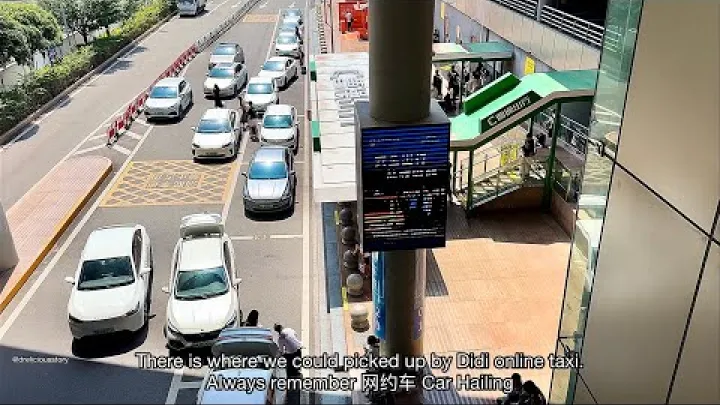
For a daytime arrival with light luggage, metro is often the price-focused choice when the current route matches your destination. For heavy luggage, several travelers, or a hotel away from a convenient station, an official taxi or in-app ride can be simpler because it goes closer to the address. For a late arrival, check whether the metro or regular bus still operates and arrange the remaining option before leaving the terminal. Use the exact hotel or district address rather than entering only downtown, because Chongqing's central areas are separated by steep terrain, rivers, and bridges.
From Rail Stations to Jiefangbei, Chaotianmen, and Other Bases
| Arrival station | Planning issue | First onward decision |
|---|---|---|
| Chongqing North | Confirm the correct hall, exit, and urban connection for the ticketed service | Compare metro with a direct taxi or ride for the actual hotel address |
| Chongqing West | Do not assume the route to the central peninsula is the same as from North station | Check the current map route before choosing a vehicle or metro transfer |
| Chongqing East | It is a newer major hub and its surrounding connections may change as services develop | Use a current urban transport map and allow extra orientation time |
| Shapingba | It is an urban railway gateway but still serves a different area from North, West, and East | Check whether its metro connection or a direct vehicle best matches your base |
When searching maps, distinguish a railway station from a district, metro station, or hotel area. Metro can be economical when service is running and your luggage is manageable. An official taxi or ride-hailing vehicle is more direct for bulky luggage, multiple passengers, or a hotel that is not close to a useful station. After leaving the train, check the exact station exit and the current urban transport connection rather than following a generic route written for another Chongqing station.
Late-Night Arrival, Taxis, and Touts
If you arrive after metro or regular bus services have reduced, use a marked taxi queue or an in-app ride-hailing service. Verify the vehicle details, license plate, and destination before getting in, and keep your hotel address written in Chinese or saved in a map application. Confirm how payment will work before departure, particularly when using a service booked outside an app.
Decline unsolicited transport offers inside or outside the airport or railway station and use the designated pickup process instead. This does not require a confrontational response; simply continue to the official rank, service counter, or app pickup point. Travelers with late arrivals or heavy luggage should choose this onward plan before leaving the terminal or station so they are not making a rushed decision on the curb.
Final Chongqing Arrival Checklist
Use this checklist before you pay and again on the day of travel:
- Match the route to the whole journey. Compare airport or station access, onboard time, baggage, arrival gateway, and the final transfer.
- Write down the exact gateway. Record CKG, Chongqing North, Chongqing West, Chongqing East, Shapingba, the bus terminal, or the cruise dock. Keep the Chinese name when possible.
- Check date-specific operation. Confirm the current schedule, operating status, fare, terminal or station assignment, train class, and any route change before paying.
- Check the onward connection. Make sure metro, taxi, ride-hailing, bus, hotel check-in, or cruise transfer still fits your arrival time and luggage.
- Protect separate bookings. Leave extra time between separate flights, flights and trains, or a flight or train and a cruise. Check current passport, entry, transit, and border requirements for international connections.
- For road travel, confirm eligibility. Check current licensing, permits, insurance, vehicle, and driver requirements with an official authority or licensed provider before self-driving.
- For cruises, follow the operator. Confirm the exact wharf, pontoon, ship, boarding time, and meeting instructions shortly before departure, and save them offline.
- For late arrivals, use official transport. Choose a marked taxi queue or in-app ride, verify the vehicle, and keep the destination in Chinese.
For many travelers, the best route to Chongqing will be a flight for a long-distance or international journey, or high-speed rail for a strong Southwest China corridor such as Chengdu. Buses, conventional trains, road travel, and Yangtze cruises become valuable when they match a regional destination, overnight plan, multi-stop itinerary, or river schedule. The safest choice is the one with the correct gateway, a realistic total journey time, and a confirmed onward plan.
Select area
Create a post
Posting is free and no registration is required.