Where to Stay in Hangzhou: Best Areas for First-Time Visitors

Where to stay in Hangzhou depends less on finding one perfect hotel than on choosing the right daily base. For most first-time leisure visitors, the central belt between the eastern side of West Lake, Hubin CBD, Wulin Square, and Wushan Square offers the best balance of sightseeing, dining, transport, and accommodation choice. Other areas make more sense when your trip centers on business meetings, a railway journey, an early flight, Xixi National Wetland Park, or a slower stay near Lingyin and Longjing. This guide compares the main places to stay in Hangzhou by access, atmosphere, budget, walkability, and length of stay.
How to Choose Where to Stay in Hangzhou
Hangzhou is a large city, and a hotel that looks close to a landmark on a booking map may still require a substantial walk, transfer, or cross-city journey. Begin with your itinerary rather than the hotel category. List the places you expect to visit, then decide whether you value direct access to West Lake, central restaurants and shopping, a railway connection, a quieter setting, or extra space.
Visitor areas and administrative labels are not always the same. A booking platform may show Xihu, Shangcheng, Jianggan, Binjiang, or Xiaoshan, while travelers may think in terms of West Lake, Wulin Square, Qianjiang New City, or the airport. Treat the district name as a broad guide and inspect the exact hotel address and map pin.
| Trip priority | Useful base | Main advantage | Main tradeoff |
|---|---|---|---|
| First-time sightseeing | Hubin, eastern West Lake, Wulin, or Wushan | Balanced access to sights and services | More visitors and mixed noise levels |
| Scenery and walking | West Lake or western scenic areas | Lake, hills, tea areas, and relaxed atmosphere | Higher cost or weaker evening transport |
| Business or rail travel | Qianjiang New City or a station area | Practical route to offices and trains | Less historic atmosphere |
| Early or late flight | Airport zone in Xiaoshan | Reduced airport transfer burden | Inconvenient for central sightseeing |
| Nature-focused stay | Xixi or the western hills | Quieter surroundings and slower pace | Fewer central services nearby |
The Default Base for First-Time Sightseeing
For most first-time leisure visitors, start with the central belt connecting the eastern side of West Lake, Hubin CBD, Wulin Square, and the Wushan area. This is the most useful default because it keeps major sightseeing areas, restaurants, shopping, everyday services, and onward travel within a manageable part of the city. It also gives you more choice among luxury hotels, mid-range properties, local chains, hostels, and smaller accommodation than a specialized outer district.
Central does not mean that every hotel is equally convenient. A property directly beside the lake offers a different experience from one several streets inland near a commercial road. Likewise, Wulin Square and Wushan Square have different atmospheres even though both can work as central bases. Area guides such as China Discovery use West Lake, Wulin Square, Hubin CBD, and western scenic locations as distinct accommodation choices, which is a useful way to read hotel maps.
Choose another base when a specific practical need dominates. Qianjiang New City or Binjiang can be better for office visits, Xiaoshan can be sensible for an early flight, and a station-area hotel can suit a rail-focused itinerary. Xixi, Lingyin, Longjing, Manjuelong, or Four-eyed Well are better for a nature, tea, temple, or retreat experience. For a short first visit, however, staying centrally usually avoids spending too much of each day traveling to and from the main sights.
Choose by Access, Atmosphere, Budget, and Length of Stay
Use four questions before comparing individual hotels:
- What will you visit? If your days center on West Lake, Hefang Street, and historic Hangzhou, choose a central visitor area. If you will attend meetings or visit a company, start with the workplace location.
- How will you move? Compare walking, metro, taxi, ride-hailing, and railway access as a complete journey. A lower room rate is less useful if you need long transfers every day.
- What atmosphere do you want? Lakeside and western areas feel more scenic or quiet, while Hubin, Wulin, and Wushan offer more activity, shopping, and evening dining.
- How much space and service do you need? A basic central room may suit a solo traveler who is out all day. Families, remote workers, and longer-stay guests may gain more from a serviced apartment or residence-style hotel.
For one or two nights, location normally matters more than extra facilities. For a family trip, a lift, breakfast, laundry access, and a simple route to the entrance may be worth paying for. For a business stay, a modern district near meetings may save more time than a scenic hotel on the other side of the city. For several weeks, space, cleaning arrangements, workspace, and access to everyday shops can outweigh proximity to a single attraction.
Best Central Areas to Stay in Hangzhou
Central Hangzhou offers the widest range of bases for travelers who want to combine West Lake with food, shopping, historic streets, and flexible daily plans. The following areas are close in broad terms but differ significantly in scenery, noise, and lodging style.
West Lake: Best for Scenic Sightseeing
West Lake is the strongest choice for travelers who want scenery immediately outside the hotel. It suits walking, photography, romantic trips, relaxed mornings, and visitors who expect to spend much of their time around the lake rather than in office districts. The eastern lakeside and northern lakeside are especially attractive to people who want a scenic setting while remaining connected to central Hangzhou.

There is an important difference between staying directly beside West Lake and staying a short walk inland. A true lakeside position may provide easier access to waterfront paths, gardens, and viewpoints, but direct scenic access and resort-style grounds often come with a premium. An inland hotel may offer more restaurants, shops, transport choices, and potentially better value, even if the listing uses West Lake in its name. Current Booking.com listings illustrate the broad range of accommodation marketed within the West Lake scenic area.
West Lake also has tradeoffs. Popular areas can be busy, and a room with a lake view may cost more than a room with similar facilities elsewhere. Some properties feel quiet and resort-like inside but have fewer casual dining options immediately outside. Before booking, look at the exact side of the lake, the nearest usable entrance or road, and the walking route to restaurants. Do not assume that every hotel labeled West Lake is directly beside the water or equally convenient for evening activities.
Wulin Square and Hubin: Best for Downtown Convenience
Wulin Square and Hubin CBD are practical city-center choices for travelers who want shopping, restaurants, offices, and a broad selection of hotels. They are often more convenient than a resort setting for visitors who plan mixed days: part sightseeing, part dining, part shopping, and perhaps a railway or business appointment. They can also suit travelers who want centrality without paying specifically for a lakefront view.
Hubin is a natural choice for visitors who want to remain close to the eastern side of West Lake while keeping urban services nearby. Wulin Square feels more like a major downtown base, with commercial activity and business-oriented accommodation. The exact hotel position matters in both areas. A property near a mall or major road may be useful during the day but less pleasant for light sleepers. If you want central access with less street noise, compare rooms facing a courtyard or side street, ask about higher or quieter room positions, and read recent comments about traffic and commercial activity.
These areas generally offer a mixed price level rather than one fixed budget category. Premium full-service hotels, select-service chains, and simpler rooms can appear within the same broad central zone. Compare the walk from the hotel entrance to the nearest station or main road, not only the distance shown to West Lake. A slightly inland hotel can be a better overall base when you value everyday convenience more than a scenic outlook.
Wushan Square and Hefang Street: Best for Historic Atmosphere
Wushan Square and Hefang Street suit visitors who want traditional shopping, local food, historic atmosphere, and lively evening streets. The area also provides useful access to the southeastern side of West Lake and nearby cultural sights. It is a good choice when the character of the neighborhood matters as much as the hotel itself.
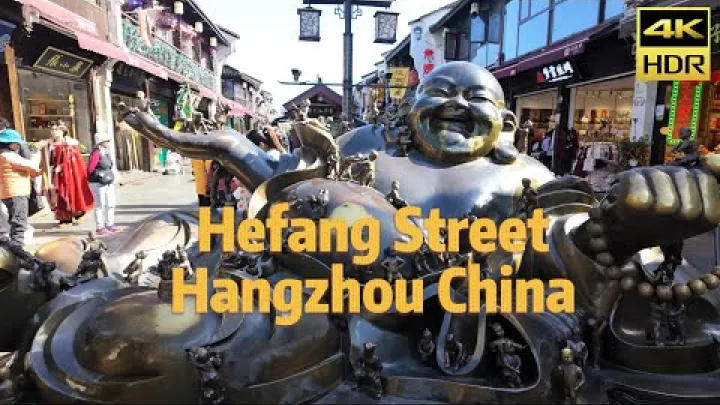
Accommodation here is mixed. You may find local hotels, boutique properties, domestic or international chains, and smaller guesthouses rather than one uniform style. This variety can make the area attractive for different budgets, but quality and room layout can differ from one street to the next. The streets around Hefang Street may be especially active during busy travel periods, so a hotel a few blocks away may offer a better balance between atmosphere and sleep.
Inspect the walking route from the property to Wushan Square or Hefang Street, including the final entrance and any pedestrian-only section. When possible, choose a room that does not face the busiest shopping street. Wushan is a strong base for culturally focused visitors, but those who prefer modern malls, office services, or a quieter resort environment may prefer Hubin, Wulin, or the western scenic areas.
Where to Stay for Business, Rail, and Airport Access
Hangzhou has several specialized bases that are excellent for a particular purpose but less efficient for a short sightseeing trip. Choose them when the work location, train, or flight schedule controls your itinerary.
Qianjiang New City: Best for Business and Modern Surroundings
Qianjiang New City and the wider Jianggan area are modern bases for financial, civic, conference, and office-related trips. They can suit travelers who prefer newer urban surroundings, larger contemporary hotels, or a location connected to Hangzhou East Railway Station. The area is more practical than historic, so it is usually chosen for the schedule rather than for immediate access to traditional streets.
Current accommodation pages for the area, including Agoda, show hotel inventory around Qianjiang New Town and Hangzhou East Railway Station. This is useful for comparing categories, but the district label does not guarantee that every property has the same station access or service quality. Read the complete address and check the route from the hotel to your meeting venue.
Qianjiang New City can work for leisure travelers who value modern facilities or have a rail-heavy plan. It is less suitable when the main goal is to walk out of the hotel and begin exploring West Lake, Wushan Square, or Hefang Street. Map the full daily route to West Lake before booking. A metro connection may be helpful, but it does not make every hotel in the district equally convenient.
Binjiang: Best for Technology Corridors and Longer Stays
Binjiang is most useful for technology-company visits, office work, study, residential stays, and longer trips concentrated south of the Qiantang River. It is not the default base for a first-time sightseeing visit because the main historic and scenic attractions require planned transport. Choose Binjiang when your workplace or project is there, not simply because a room appears less expensive.
The district can offer modern facilities, larger rooms, residence-style accommodation, or a different price balance from prime lakeside locations, depending on the property and dates. Current listings on Agoda can help identify the available range, but district-level pages do not replace individual reviews. Compare comments about location accuracy, room condition, reception, cleaning, and transport.
Use a simple commute test: put the hotel, your workplace, and West Lake into a map and examine the expected journeys at the times you will actually travel. If you are staying several weeks, the space and everyday services may justify the location. If you have only a weekend for sightseeing, a central base will usually leave more time for the city.
Xiaoshan and the Airport Zone: Best for Flight Logistics
Xiaoshan and the area around Hangzhou Xiaoshan International Airport are specialized bases for late arrivals, early departures, short layovers, airport-related work, and some nearby business trips. They are not the normal answer to where to stay in Hangzhou for a leisure visit. A lower room rate does not compensate for an inconvenient transfer if most of your itinerary is around West Lake or the old town.

Separate terminal-adjacent accommodation from broader Xiaoshan district hotels. Current Booking.com airport listings include properties marketed close to Hangzhou Xiaoshan International Airport, while other hotels in the wider area may depend on a shuttle or an additional ground transfer. Check the actual terminal distance, not only the airport name in the listing.
Before choosing this base, compare the hotel's current door-to-door travel time with the first and last destinations on your itinerary. Also check the terminal route, shuttle schedule, late-night arrival procedure, luggage handling, reception hours, and the available taxi or ride-hailing option. Use the airport zone for a clear flight-related reason. If you simply want to save money on a normal sightseeing stay, compare the total cost in time and transport with a central hotel.
Quiet and Nature-Focused Places to Stay
Hangzhou's scenic identity extends beyond the main West Lake visitor belt. Xixi and the western hills offer a slower setting, but they work best when the lodging experience or a specific attraction is central to the trip.
Xixi National Wetland Park: Best for Nature
Xixi National Wetland Park is a good base for travelers who want park access, quiet mornings, and a slower pace than central Hangzhou. It can suit a dedicated wetland visit, a retreat, a family break, or a repeat trip for someone who has already seen the central sights. The setting may feel more relaxed than Hubin or Wulin, especially for guests who plan to spend substantial time near the park.
Proximity varies considerably. Some properties are marketed within walking distance of a park entrance, while others use Xixi as a broader area label. Current accommodation results from Expedia show examples of hotels positioned close to the park, but the exact entrance and route still matter. Confirm which entrance is nearby and whether the walk is practical with luggage.
Xixi may be inefficient for a short itinerary centered on West Lake, Wushan Square, and Hefang Street. Check nearby restaurants, evening transport, the route to the central visitor belt, and the hotel's reception arrangements. A peaceful location is valuable only if it matches your daily plan. For many first-time visitors, a central hotel with a day visit to Xixi is simpler; for a nature-focused stay, remaining near the park can be worthwhile.
Lingyin, Longjing, and Manjuelong: Best for a Slower Stay
The western hills and tea-growing areas around Lingyin, Longjing, Manjuelong, and Four-eyed Well offer a quieter alternative to the central city. These locations suit visitors interested in tea culture, temple visits, walking, photography, romantic stays, and a more nature-oriented experience. They are also attractive for repeat visitors who do not need to be near central shopping every day.
The tradeoff is last-mile convenience. A small inn or guesthouse may provide a scenic setting but have fewer nearby restaurants, less frequent public transport, and a more complicated arrival with luggage. Check whether the property is reachable by public transport, taxi, or a pre-arranged transfer. Confirm that nearby dining will be open at your expected arrival time, especially if you plan to arrive after an evening in central Hangzhou.
Availability and English-language information can be thinner for small properties than for major hotels. Read recent reviews and inspect the exact location, room photographs, bed arrangement, reception hours, and access instructions. A rural-feeling property is not automatically easier or more convenient than a central hotel. Choose this group when calm surroundings are a main purpose of the trip, not as a general substitute for the central visitor belt.
Choose the Right Accommodation Type and Budget
The best lodging type depends on what you will do at the property and how long you will stay. Compare the purpose of the room, the location, and the included services rather than relying only on a star category.
Luxury Lakeside Resorts and Full-Service Hotels
Luxury accommodation in Hangzhou falls into several useful categories. Lakeside resorts emphasize scenery, gardens, privacy, and a relaxed stay. Luxury city hotels near central commercial areas emphasize restaurants, business services, meeting facilities, and convenient city access. Full-service hotels near the airport focus on flight logistics and practical amenities rather than West Lake sightseeing.
For a short celebration or a trip built around the hotel, a premium location can justify its cost. A lake view, garden setting, pool, spa, breakfast, bicycles, or family facilities may be valuable when you plan to spend time on the property. If you will leave early each morning and return only to sleep, a simpler central room may provide better value.
Compare each feature with a real purpose. Direct access to West Lake is different from a prestigious brand name, and both are different from full-service convenience near a terminal. Rates and availability change with dates, events, room types, and cancellation conditions, so avoid treating any published price as a stable cost.
Mid-Range Hotels, Local Chains, and Hostels
Mid-range hotels and domestic or international select-service chains are the broadest practical category for many visitors. They can provide a clean, predictable base without the cost of a resort or extensive facilities. A central basic room may be more useful than a larger new room in a peripheral district if you are in Hangzhou for only a few days.
Budget hotels and hostels can suit solo travelers, short stays, and guests who spend most of the day outside. Hostels may also appeal to travelers who prefer a social environment. Evidence for smaller hostels and guesthouses can be less consistent in English than evidence for major hotel listings, so inspect recent reviews, room photographs, bathroom arrangements, storage, reception hours, and the exact location.
Use a purpose-budget-location framework. Decide whether you need a private bathroom, breakfast, luggage storage, a lift, a desk, or late check-in, then compare those features in the areas that fit your itinerary. A low advertised room rate is not a complete comparison if it excludes important services or comes with restrictive conditions. The final booking checklist below covers the details to compare.
Serviced Apartments and Longer Stays
Serviced apartments and residence-style hotels can suit families, remote workers, students, relocating visitors, and anyone staying more than a few nights. Extra space, a separate living area, a kitchen, or laundry access can make a longer stay easier than using a conventional hotel room every day.
Modern districts such as Qianjiang New City and Binjiang, along with areas near major rail or business hubs, may have more residence-style inventory, although the available choice varies by date. These locations can provide better space and everyday convenience than a prime lakeside room, but they may reduce the ease of spontaneous sightseeing.
Check the kitchen equipment, laundry facilities, cleaning frequency, workspace, bed configuration, internet access, deposit, minimum-stay rule, and reception arrangements. Do not assume that every residence listing provides a staffed hotel desk or daily hotel-style service. Families should confirm the sleeping arrangement and lift access. Remote workers should confirm the desk, internet reliability, and noise conditions described in recent reviews.
Transport, Walkability, and Booking Checks
A good Hangzhou hotel is not only near a landmark. It should also make the first walk of the day, the return journey, and any rail or airport transfer reasonably simple. These checks help you compare central and specialized areas without relying on vague descriptions such as near downtown.
Compare the Exact Hotel Location with Your Daily Routes
Start by placing the exact hotel pin on a current map. Then mark West Lake, Wulin Square, Hefang Street, Hangzhou Railway Station, Hangzhou East Railway Station, and Hangzhou Xiaoshan International Airport according to your itinerary. Add Xixi National Wetland Park, Lingyin, Longjing, or your workplace if they are important to the trip.
Next, test the route for the times you expect to travel. Include the walk from the hotel entrance to the station, bus stop, main road, or pickup point. A district label such as Xihu, Shangcheng, Jianggan, Binjiang, or Xiaoshan can cover very different visitor experiences. The exact building position may matter more than the name of the district.
- Write down your first destination and your last destination for each day.
- Compare the hotel with those destinations using the transport modes you are willing to use.
- Check the final walking segment, including road crossings, entrances, and luggage access.
- Compare the total journey with the room-rate difference between a central and peripheral base.
- Choose the location that saves time on the largest number of important days.
Central accommodation is often more efficient for a sightseeing-heavy trip. A rail, airport, or business base can be better when departure timing or work location dominates. Use current maps and route information before relying on precise metro lines, fares, operating hours, or journey durations.
Check Evening Walkability, Noise, and Last-Mile Access
Night-time convenience should be assessed through observable details rather than a blanket judgment about an entire district. Look at the route between the hotel, a station, nearby restaurants, and the property entrance. Check street lighting, road crossings, isolated paths, construction, building access, reception hours, and the instructions for a late check-in.
Travelers arriving late should check the current metro operating hours and keep a backup taxi or ride-hailing route for the expected arrival and return times. Confirm a well-lit public route, a clear late check-in procedure, and a staffed property entrance before arriving late at night. Travelers with luggage, children, or mobility needs should favor a simple entrance and reliable lift access over a small distance shown on a map.
Room position also affects sleep. Rooms facing pedestrian streets, malls, major roads, nightlife, or transport corridors may be noisier than rooms facing a courtyard or side street. In central commercial areas, read reviews for traffic and late activity. Near Hefang Street, inspect the room orientation and the distance from the busiest pedestrian section. Around the airport, ask about aircraft or road noise. In western settlements, check the final road and lighting rather than assuming that a quiet landscape means an easy arrival.
Verify Current Rates, Reviews, and Cancellation Terms
Accommodation prices, availability, room categories, facilities, and review scores change by date and booking platform. Before payment, recheck the total price, date-specific availability, room condition, and cancellation terms on the booking page. Compare the amount you will actually pay rather than only the headline nightly rate.
- Confirm whether breakfast, taxes, service charges, or other fees are included.
- Check the cancellation deadline and the cost of changing the reservation.
- Read the deposit policy and accepted payment arrangements.
- Confirm room size, bed configuration, window information, and maximum occupancy.
- Review recent comments about noise, cleanliness, location accuracy, staff communication, and transport access.
- Check check-in hours, identification requirements, luggage storage, and late-arrival instructions.
Booking-platform evidence is useful for seeing current inventory, but a listing does not guarantee future availability or a particular quality level. Save the hotel's full address, telephone number, and arrival instructions in a form that can be shown to a driver or used for route checking. This is especially useful when the booking page displays a broad district name rather than the neighborhood name you expected.
Final Recommendation: Where to Stay in Hangzhou
If you are visiting Hangzhou for the first time and your main goals are West Lake, historic streets, food, and flexible sightseeing, choose the central belt around the eastern side of West Lake, Hubin, Wulin Square, or Wushan Square. Pick West Lake for scenery, Hubin or Wulin for practical downtown convenience, and Wushan Square or Hefang Street for historic atmosphere.
Choose Qianjiang New City or Binjiang when work, modern surroundings, or a longer stay matters most. Choose Xiaoshan and the airport zone for flight logistics, Xixi for a wetland-focused visit, and Lingyin, Longjing, Manjuelong, or Four-eyed Well for a slower tea and nature stay. The best place to stay in Hangzhou is the one that fits your complete daily routes, not simply the one with the most attractive area name.
Select area
Create a post
Posting is free and no registration is required.