Chengdu Getting There: Flights, Trains & Buses

Getting to Chengdu is not simply a choice between the fastest flight and the cheapest ticket. The city is served by two airports, several passenger railway stations, and multiple long-distance coach terminals, so the arrival gateway can change the total journey significantly. This guide compares flights, high-speed and conventional rail, and buses by door-to-door time, cost, booking difficulty, luggage convenience, and access to central Chengdu. It also explains how to avoid the common mistake of booking the wrong airport or railway station.
Choose The Best Way To Get To Chengdu
The right route depends on where you start and where you will go after arriving. International travelers and people coming from very distant cities will usually begin with flight options. Travelers from major mainland cities should compare those flights with high-speed rail, while buses and rail-and-coach combinations can be practical for regional destinations in Sichuan and nearby parts of Southwest China.
Compare Flights, Rail, And Buses Before Booking
Compare the complete journey instead of looking only at the time spent in the air or on the train. A flight may have a short travel time but require a long trip to an airport, early check-in, security screening, baggage collection, and a further journey from the airport into Chengdu. A train may take longer on the timetable but arrive at a railway station with a simpler metro or taxi connection to your accommodation.
| Transport | Usually best for | Main advantages | Main limitations |
|---|---|---|---|
| Flight | International and very long domestic routes | Broad network and useful for distant origins | Airport procedures and possible long city transfer |
| High-speed rail | Major mainland city corridors | City-based departure and arrival, with fewer airport steps | Availability and price vary by date and station |
| Conventional rail | Remote or less direct rail corridors | Can offer lower-cost or overnight travel | Longer journey and more variable comfort |
| Long-distance bus | Regional, scenic, and mountain destinations | Can reach places without a convenient direct train | Road conditions, traffic, and terminal location matter |
Cost is also more than the ticket price. Add airport or station transfers, meals during a long journey, baggage charges where applicable, and the value of your time. Booking difficulty matters for international visitors as well. An airline website may be familiar, while Chinese railway and coach systems may require exact passenger identity details, Chinese station names, or payment methods that are less convenient for overseas travelers.
For a high-speed rail journey, compare the available seat classes and the location of the departure and arrival stations. For a bus, compare the terminal and the possibility of a later taxi or metro ride. If two options have similar total costs, the route with fewer changes and a clearly verified last mile is often the better choice.
Match The Arrival Gateway To Your Final Base
Chengdu has no single gateway that is best for every traveler. Chengdu Tianfu International Airport, or TFU, is southeast of the established urban core and is the main international starting point in the current operating pattern. Chengdu Shuangliu International Airport, or CTU, is closer to the central urban area and is primarily associated with domestic services in the current pattern. Railway bookings can show Chengdu East Railway Station, Chengdu South Railway Station, or Chengdu Railway Station, and coach tickets may use Xinnanmen, Chadianzi, or another terminal.
Look at your accommodation area, arrival time, luggage, and onward destination before paying for a ticket. A traveler staying near Chunxi Road may prefer a gateway with a straightforward metro route, while a traveler continuing toward western Sichuan may value a coach terminal that avoids crossing the city. The shortest advertised flight or train journey is not always the simplest arrival.
Arriving By Air At Chengdu’s Two Airports
When searching for flights, treat TFU and CTU as separate destinations. The airport code is part of the route, not a minor detail, because the two airports are in different parts of the metropolitan area. The official Chengdu Airport portal is a useful starting point for airport arrival, transfer, traffic, and terminal information.
Chengdu Tianfu International Airport (TFU)
Chengdu Tianfu International Airport is the principal international gateway for Chengdu in the current operating pattern. It also handles domestic services, so TFU is not only relevant to travelers arriving from outside China. Many long-haul and regional international searches begin with TFU, but a route shown in a general search is not a permanent guarantee for every origin, airline, or date.
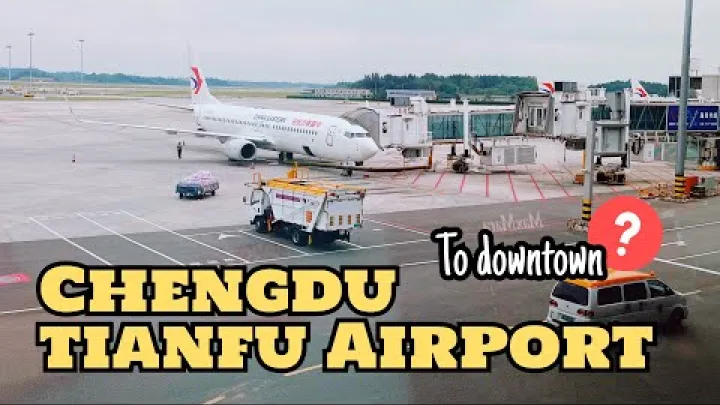
TFU is southeast of the established city center. That location can affect the total value of a flight. A convenient international arrival may still require a substantial onward journey to a hotel or university in central Chengdu, especially when the arrival is late or when several pieces of luggage make a public transport transfer difficult.
Before leaving for the airport, read the final airline itinerary carefully. Confirm that it shows TFU, review the terminal information, and check whether the booking includes a connection that requires changing airports or making a separate transfer. Airline assignments and terminals can differ from what appeared in an initial search, so use the final booking rather than a generic Chengdu destination label.
Chengdu Shuangliu International Airport (CTU)
Chengdu Shuangliu International Airport is closer to the central urban area than TFU. In the current operating pattern, CTU functions largely as a domestic airport, which can make it a useful option for travelers comparing mainland flights. Its formal name includes International Airport, but that name does not mean that every international route operates there.
When searching for a domestic flight, enter or select CTU specifically if the airline or booking platform offers that choice. This is particularly important when a search page combines both Chengdu airports under one city name. A flight that looks attractive may arrive at CTU while another option departs from or arrives at TFU, creating a more complicated journey than the search results suggest.
CTU’s closer location can reduce the city portion of the journey, but it is not automatically the fastest choice. Compare the actual flight schedule, terminal, traffic conditions, and your final address. A flight arriving at an inconvenient time may still require a taxi or another alternative to the metro.
Check Airport Codes And Entry Rules
Make the airport check part of the booking process, not something you do after landing. Confirm all of the following on the final itinerary:
- The arrival or departure airport code: TFU or CTU.
- The terminal shown by the airline or airport.
- Every airport used during a connection.
- Whether the connection is protected by one booking or requires you to arrange the next ticket yourself.
- The airport and city where you will complete immigration formalities, if the journey is international.
A general flight search, an airline route summary, or a third-party travel page is not proof that your particular itinerary meets the entry rules. If you are changing airports, staying in China during a connection, or combining separate tickets, examine the complete route rather than only the first flight. Arriving at TFU does not automatically satisfy an immigration requirement, and the same is true of CTU.
Arriving By High-Speed And Conventional Rail
Rail is often the most useful alternative to a domestic flight when the origin city has a direct or well-connected service to Chengdu. It can reduce airport procedures and place you within the urban transport network, but the benefit depends on the exact Chengdu station and the availability of a suitable train.
Chengdu East And The Other Passenger Stations
Chengdu East Railway Station is the main high-speed rail node in the researched network and a major arrival point for long-distance trains. It is not the only passenger station in the city. Chengdu South Railway Station and Chengdu Railway Station are separate gateways, and a booking may use one of them even when the destination field is shown simply as Chengdu.
Station names should be treated as part of the route. Chengdu East, Chengdu South, and Chengdu Railway Station are not interchangeable locations. They can lead to different metro journeys, taxi routes, walking distances, and onward connections. A traveler carrying luggage or arriving late may find that the station choice matters as much as a small difference in train duration.
Chengdu East has urban rail connections, making it practical for many city arrivals, but do not assume that every train or onward route uses this station. Match the full English or Chinese station name in the ticket with the station in your route plan. This prevents a common error in which a traveler reaches the right city but the wrong railway gateway.
Typical High-Speed Rail Corridors Into Chengdu
Beijing, Shanghai, Guangzhou, Chongqing, and Xi’an are useful representative corridors when comparing high-speed rail with domestic flights. They are not a complete list of origins, and the best choice changes with the travel date. Use them as decision examples: search the rail journey, search a flight to each Chengdu airport, and compare the complete city-to-city itinerary.
Rail is especially competitive when the departure and arrival stations are near the urban areas where you are staying. You generally avoid the separate trip to an airport, airline check-in, airport security, and baggage collection after landing. That advantage can be important for business travelers, students with large bags, and visitors who prefer a direct city-based route.
Flights may still be preferable for the longest corridors, for dates with limited rail availability, or when a good airport connection is substantially cheaper. A train arriving at Chengdu East may also be less convenient than a flight arriving at the airport if your onward destination is outside the city or near another regional transport link.
Journey times, ticket prices, seat availability, and daily frequency are date-specific. Compare the actual search results rather than relying on a typical duration copied from an old guide. Check the available seat classes and whether the lower-priced option gives you an acceptable balance of space, comfort, and luggage handling.
Conventional Rail For Southwestern And Remote Routes
High-speed rail does not provide a direct or suitable option for every destination in Southwest China. Conventional trains and older rail corridors can still matter for remote routes, overnight travel, or journeys where the rail network reaches closer to a smaller place than a high-speed service does.
The Chengdu–Kunming railway is an example of a legacy corridor associated with southwestern travel. Its historical or geographic existence does not confirm that a particular passenger train is operating on every section or that it is the best option for your date. Search the complete origin and destination in the current railway system instead of assuming that a historic route name represents a bookable service.
Conventional rail can trade a lower fare or overnight potential for a longer journey and a different level of comfort. It may be useful when the alternative is an expensive flight or several road transfers, but it can be a poor choice when you have a tight schedule. Compare the total time, seat or sleeper type, transfers, and arrival station with a high-speed train or bus combination.
Booking On 12306 Or An English-Language Booking Platform
China Railway’s official China Railway 12306 platform is the primary place to search trains, confirm the station names, review availability, and examine current ticket conditions. It is the best reference for the service that actually appears in the railway system, even if you later use another platform to complete the purchase.
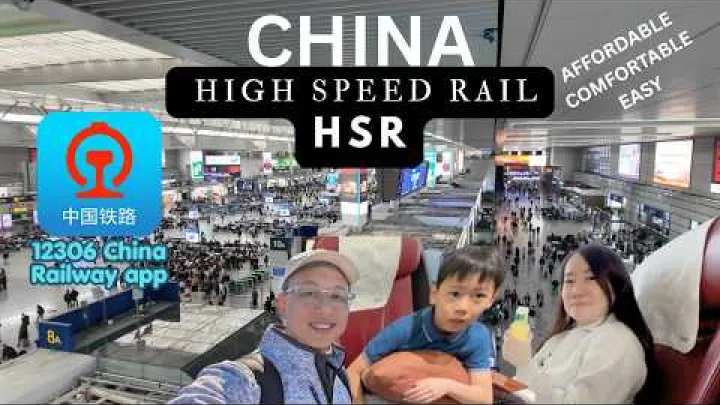
Some international travelers choose an English-language intermediary because the interface, payment process, or customer support may be easier to use. This can be convenient, but an intermediary should not replace the official railway search for operational details. A third-party result may use a shortened station name or display a route differently from the official booking system.
Use a simple process:
- Search the exact origin and destination city or station.
- Compare Chengdu East, Chengdu South, and Chengdu Railway Station when more than one result appears.
- Review the date, departure time, arrival time, train number, and seat availability.
- Enter each passenger’s identity information exactly as shown on the travel document used for the booking.
- Check the final ticket again before traveling, including the departure station and any change of train.
Do not assume that a train ticket to Chengdu means a train to Chengdu East. Keep the full station name with the booking confirmation, especially if you are connecting from an airport or continuing to a coach terminal.
Arriving By Long-Distance Bus
Long-distance buses remain important for regional trips from Chengdu. They can reach scenic areas, mountain destinations, and smaller cities that do not have a convenient direct high-speed rail service. A coach is not always faster or cheaper than rail, but a direct departure can be easier than combining a train with a separate road transfer.
Know Chengdu’s Main Coach Terminals
Xinnanmen Bus Station, also known as the Chengdu Tourist Bus Center, is commonly associated with tourist-oriented routes, including services toward Leshan and Emeishan. This makes it a familiar starting point for travelers planning regional sightseeing from Chengdu, but the destination assignment should be treated as a current route pattern rather than a permanent rule.
Chadianzi Bus Terminal is commonly associated with routes toward western and northern Sichuan and some mountain destinations. The East Railway Station Bus Station and other city terminals provide additional options. The most convenient terminal depends on both the destination and where you are staying in Chengdu.
Do not choose a terminal only because it has the word tourist in its name or because it appears first in a search. Match the terminal with the destination, departure time, ticket instructions, and your planned route to the station. Terminal names and route assignments can change, so use the relevant live information channel for the specific date.
When a listing gives only a broad destination such as western Sichuan, look for the full terminal name and boarding location. If the English name is unclear, keep a copy of the Chinese name shown on the ticket or booking page. This is more useful than asking a driver to find a generic Chengdu bus station.
Use Buses For Secondary Cities And Mountain Areas
Buses can be practical for destinations such as Jiuzhaigou, Emeishan, Leshan, and other parts of western Sichuan when there is no convenient direct high-speed rail route. They can also provide a direct road connection to a regional center where a traveler would otherwise need to change from train to coach.
Compare a direct coach with a rail-and-coach combination using five questions: How many transfers are required? Which option has the more manageable luggage process? How long is the road portion likely to be? Does the departure time fit your arrival in Chengdu? Where will you arrive, and how will you reach the final destination from there?
A direct bus may save a transfer while taking longer on the road. Rail may offer a more predictable main journey but still require a coach at the other end. Prices and travel times can vary by date, road conditions, vehicle, and operator, so treat published figures as examples unless they come from the current terminal or operator listing.
For mountain areas, leave room for a separate local connection after the coach arrives. A ticket that reaches a regional town is not necessarily a ticket to the scenic area or accommodation itself. This distinction is important when planning a late arrival or carrying equipment.
Use Airport-Linked Coaches Only When They Fit Your Route
An airport-based long-distance coach can be useful when it takes an arriving passenger directly toward a regional destination. This may avoid traveling from TFU or CTU into central Chengdu before continuing by bus. For a traveler with luggage, fewer transfers can be more valuable than a small difference in ticket price.
Airport-to-city buses and regional long-distance coaches are different services. An airport shuttle may stop within Chengdu, while a regional coach may depart from a separate counter or boarding area and continue to another city or scenic region. Confirm the destination, ticket counter, boarding area, and terminal relationship before relying on an airport-linked service.
This option works best when the coach departure is compatible with the actual flight arrival and immigration or baggage process. If the flight is delayed or the regional coach is infrequent, traveling into Chengdu first may provide more alternatives. Use the live-verification routine in the service changes section to confirm the route rather than relying on an undated route list.
Get From Your Arrival Gateway To Central Chengdu
The final leg can determine whether an apparently efficient route is comfortable in practice. Compare metro, airport bus, coach, walking, and taxi options according to your exact arrival time, luggage, accommodation address, and tolerance for transfers.
From Tianfu Airport Into Central Chengdu
The main high-level options from Chengdu Tianfu International Airport to central Chengdu are Chengdu Metro Line 18, an airport bus, and a taxi. Line 18 is generally the public transport option to examine first when the station and operating time fit your destination. It can reduce the cost of the city transfer, but a traveler may still need to change lines, walk through a large station, or complete a final taxi ride.
An airport bus can be useful when its stop is close to your accommodation or when your luggage makes multiple metro changes inconvenient. A taxi gives the most direct door-to-door journey and can be practical for several travelers sharing the cost, heavy luggage, or an address that is difficult to reach by metro. It normally exposes you more directly to road traffic and has a higher cost than public transport.
TFU’s distance from central Chengdu should be included when comparing a flight with a train arriving at an urban railway station. One travel guide describes downtown as about 63 kilometers northwest of TFU; use that figure as a sense of scale, not as a promise of a fixed travel time. The China Air Travel guide outlines metro Line 18, an airport shuttle bus, and taxi as the main broad options.
For a late arrival, check the last metro or bus departure against the actual landing, baggage, and immigration time. Keep a marked taxi or another verified fallback available if public transport will end before you can reach it. Do not build a tight plan around a scheduled last service when a flight delay could remove that option.
From Shuangliu Airport Into Central Chengdu
From Chengdu Shuangliu International Airport, compare Chengdu Metro Line 10, airport buses, and taxis. Line 10 may be suitable for travelers heading toward a connected part of the city, while an airport bus can be simpler when its stop is near the accommodation. A taxi is the most direct choice for a door-to-door arrival, especially when the hotel address is outside a convenient metro route.
CTU’s location closer to the established urban area can make the last leg simpler than the equivalent trip from TFU, but this is only a potential advantage. Traffic, the terminal used by the flight, the time of arrival, and the location of the hotel all affect the result. A flight to CTU is not automatically faster than every flight to TFU once the complete journey is counted.
After checking the actual arrival time, identify the terminal exit, the metro connection, and the available late-night alternative. Keep the accommodation address in a form that can be shown to transport staff or used in a booking app. This is particularly helpful if the English spelling of a hotel differs from its local name.
From Railway And Coach Stations To Your Accommodation
For a railway arrival, compare the metro and taxi route from Chengdu East Railway Station, Chengdu South Railway Station, or Chengdu Railway Station with the location of your accommodation. A short walk may be reasonable with a small bag, while a marked taxi can be more practical after a long train journey or when the station is large and crowded. The cheapest option is not always the easiest when you are tired or carrying several bags.
The same principle applies at Xinnanmen Bus Station, Chadianzi Bus Terminal, and the East Railway Station Bus Station. A coach terminal may be closer to your final destination than a central railway station, or it may require an additional cross-city journey. Use Chunxi Road as a useful central orientation point if it appears in directions, but plan the last leg to your actual hotel rather than to a famous area.
Use marked official transport services and follow signs to the designated taxi area or recognized public transport entrance. Decline unsolicited rides, ticket offers, and help from people who approach you outside the official channel. If you are uncertain, ask at a staffed airport, railway, or terminal information point instead of accepting an unknown vehicle or ticket.
Plan For Connections, Late Arrivals, And Service Changes
Chengdu journeys often combine more than one transport system. A small amount of planning can prevent a missed train, a cross-city airport transfer, or a difficult arrival after public transport has stopped.
Allow Time For Airport And Station Connections
A flight-to-train or train-to-flight itinerary includes more than the published travel time. Allow for baggage collection, immigration where relevant, security screening, walking through a large terminal, finding the correct platform or check-in area, and the journey between gateways. These steps can be significant even when two tickets appear to connect on the same day.
A connection between TFU and CTU is a cross-city transfer, not a normal airport connection. You must leave one airport, travel across the Chengdu area, and complete the procedures required at the second airport. Treat this as a separate journey with traffic and service risks rather than as a simple terminal change.
Self-connected tickets require more responsibility than a protected connection. With separate airline or railway bookings, a delay on the first ticket may not protect the second ticket, and you may need to collect baggage and check in again. Read the ticket conditions and confirm whether the connection is covered before choosing a short gap.
When the price difference is small, a same-gateway flight, same-station rail itinerary, or direct coach can be worth choosing because it removes a transfer. If a change is unavoidable, plan the route between gateways in advance and avoid treating the timetable as the only time you need.
Verify Current Services Before Departure
Use one clear verification routine close to departure and after any itinerary change. The general route described in a guide is useful for planning, but the live operator listing is the source for the service you will actually use.
- For flights, check the airline booking and the airport information for the airport code, terminal, departure or arrival status, and any airport change.
- For trains, search the exact date and route on China Railway 12306, then record the complete station name, train number, departure time, and arrival time.
- For buses, check the relevant coach terminal or airport information channel for the destination, departure point, boarding area, and service status.
- Review the information again after a flight change, missed connection, booking modification, or major change to your arrival time.
- Confirm the final city connection, including the metro line, airport bus, taxi arrangement, or onward coach that matches your actual arrival.
Flight assignments, rail schedules, coach routes, ticket prices, and operating hours can change after a travel guide is published. Do not rely on a broad Chengdu route page to confirm a particular service. Recheck the official airline, airport, railway, or terminal listing close to departure, and use the relevant operator information if the itinerary changes during the journey.
Keep the confirmation details consistent across your plans. The airport code, terminal, railway station, coach terminal, boarding time, and accommodation address should match the tickets and the route you intend to follow. If two sources disagree, give priority to the current operator or official airport information and ask a staffed information desk for clarification.
Prepare A Simple Arrival Backup Plan
Before leaving your departure city, save the airport code and full name of the railway or coach station. Keep the booking confirmation, accommodation address, and any onward ticket in an offline format as well as in your booking account. This helps if mobile data, battery power, or access to an application becomes unreliable.
Your backup plan does not need to be complex. Identify one alternative for a delayed arrival, one way to reach the accommodation if the preferred metro or bus is unavailable, and the official information desk or transport channel you will use if the ticket does not match the expected route. If you miss a connection, pause and confirm the next step through the airline, railway, airport, or terminal rather than purchasing a replacement from an unknown person.
Travelers differ in phone access, payment methods, language ability, and comfort with navigation. Carry the address in a format that can be shown to transport staff, keep a charged phone when possible, and retain enough flexibility for a short delay. A practical backup is more useful than a plan that depends on one exact connection.
Final Checklist For Getting To Chengdu
Getting to Chengdu is easiest when the transport mode and arrival gateway fit the entire journey, not just the first ticket.
Choose A Route You Can Verify
For international travel, start by comparing flights to TFU and checking whether the itinerary actually uses that airport. For major mainland city routes, compare domestic flights with high-speed rail, including the time needed to reach the airport or railway station. For regional and mountain destinations, compare a direct coach with a rail-plus-coach plan and consider whether Xinnanmen, Chadianzi, the East Railway Station Bus Station, or an airport-linked service best fits the route.
Before departure, confirm the airport code or full railway station name, the current service status, the terminal or boarding point, the applicable entry requirements, and the final route into Chengdu. Include the last mile to your accommodation in the cost and time calculation. A route that is slightly slower on paper may be the better choice if its connections are clear and manageable.
The best way to get to Chengdu is the option you can verify and complete with confidence. Choose the gateway that matches your final base, protect yourself against unnecessary cross-city transfers, and keep a simple arrival backup plan for delays or service changes.
Select area
Create a post
Posting is free and no registration is required.