China Major Cities: Population, Roles & Travel Guide

China’s major cities do not form one simple population list. Shanghai can lead when cities are compared by urban-district population, while Chongqing can lead when the full population of an exceptionally large municipality is counted. Beijing is the national capital, but capital status and population size are different measures. This guide uses the 2020 Seventh National Population Census as a common baseline, then explains the administrative, economic, cultural, and travel role of each major city.
How to Compare Major Cities in China
A useful China cities list must define what “city” and “population” mean before ranking entries. China’s administrative system includes municipalities, prefecture-level cities, districts, counties, and wider metropolitan regions. These units often overlap in everyday language but do not describe the same geographic area.
Administrative City, Urban District, and Metropolitan Area
China has four province-level municipalities: Beijing, Shanghai, Tianjin, and Chongqing. They have the same administrative rank as a province, even though they are commonly described as cities. Each municipality includes a dense central urban area as well as suburban districts and, in some cases, extensive rural territory.
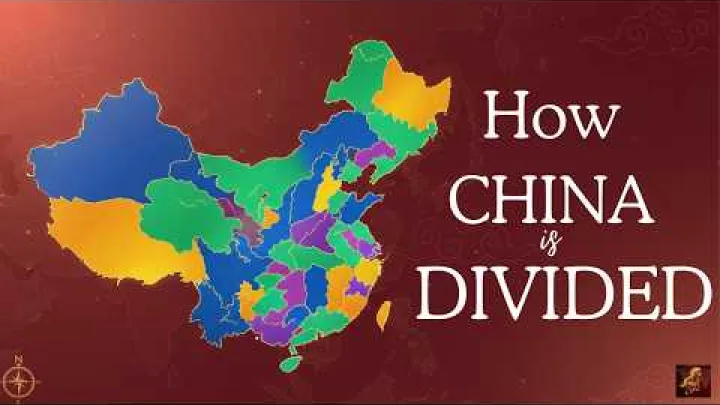
Many other major cities, including Guangzhou, Shenzhen, Chengdu, Wuhan, Xi’an, Hangzhou, and Nanjing, are prefecture-level cities. Some also have sub-provincial status, but their administrative areas can still include multiple districts and less densely populated areas. A municipality or prefecture-level city total is therefore not automatically the population of one continuous built-up area.
An urban-district population adds the residents of the officially designated urban districts within a city-level unit. A built-up-area population measures a physically continuous urban landscape and may not follow district borders. A metropolitan or urban-agglomeration estimate is broader still, often including nearby cities linked by commuting, industry, transport, and housing markets.
The phrase “city proper” is not always used consistently in international rankings. For example, a full Chongqing municipality includes a much larger territory than the continuous central urban area most visitors experience. The CityPopulation administrative tables are useful for seeing how these levels are organized.
For a fair comparison, check the geographic unit and date beside every figure. Do not compare one city’s municipality-wide total with another city’s urban-district or metropolitan estimate. The same city can appear with several valid population figures because each figure answers a different geographic question.
The Census Baseline and Its Limits
The main common baseline in this article is the Seventh National Population Census, conducted in 2020. It provides a dated national reference and makes it possible to compare cities without combining figures from unrelated years. The census measures resident population, meaning people ordinarily residing in an area, rather than only people holding local household registration.
Resident population is different from registered household population, often associated with hukou. It is also different from an annual estimate, a built-up-area count, or a metropolitan projection. These terms should not be treated as interchangeable. The official National Bureau of Statistics of China census communiqué provides the dated national foundation for the comparison.
A 2020 census baseline is valuable because it is consistent, but it is not a live population counter. Cities have continued to change through migration, urban development, university enrollment, employment, and changes in household location. If you are making a current business, study, relocation, or investment decision, check the latest official release for the relevant city and confirm whether it reports resident, registered, urban-district, or total administrative population.
What Makes a City Major
Population is only one reason a city may be considered major. This guide also considers administrative importance, economic influence, cultural significance, education and research, transport or regional connections, and travel relevance. A city with fewer residents than the largest municipalities can still be the leading political, educational, manufacturing, or cultural center of its region.
Each entry is a named city, not a province, metropolitan area, island, or individual attraction. The profiles follow a common order: population context, administrative role, economy, culture, and travel significance. This makes the list useful both for broad research and for readers deciding which city deserves a separate trip, study plan, or business focus.
China's Largest Cities: A Consistent Population Baseline
The following comparison uses one dated measure rather than mixing total administrative populations with metropolitan estimates. It is designed to show the scale of the continuous urban districts associated with leading city-level units, while the later sections explain why a different definition can produce a different ranking.
A Comparable List of Major Cities by Population
The table uses approximate 2020 census urban-district populations, rounded to the nearest 0.1 million. “Municipality” identifies a province-level municipality; “sub-provincial city” identifies a major city with that administrative status. The comparable city table from CityPopulation provides the population and geographic context for this type of comparison.
| City | Administrative status | 2020 urban-district population | Main role |
|---|---|---|---|
| Shanghai | Municipality | About 19.9 million | Finance, commerce, and maritime gateway |
| Beijing | Municipality | About 18.6 million | National capital and cultural center |
| Shenzhen | Sub-provincial city, Guangdong | About 17.4 million | Technology, finance, and innovation |
| Chongqing | Municipality | About 16.3 million | Western regional and logistics hub |
| Guangzhou | Sub-provincial city, Guangdong | About 14.9 million | Trade, services, and Lingnan culture |
| Chengdu | Sub-provincial city, Sichuan | About 13.6 million | Western services and cultural center |
| Tianjin | Municipality | About 11.0 million | Northern port and regional center |
| Wuhan | Sub-provincial city, Hubei | About 9.8 million | Central transport and education hub |
| Xi'an | Sub-provincial city, Shaanxi | About 8.7 million | Historic capital and northwest center |
| Hangzhou | Sub-provincial city, Zhejiang | About 8.7 million | Digital economy and regional innovation |
| Nanjing | Sub-provincial city, Jiangsu | About 7.7 million | Historic, educational, and industrial center |
These figures indicate urban concentration, not the total population of every administrative area. Shanghai and Beijing are both very large municipalities, but they also have different national roles. Shenzhen and Guangzhou show the scale of southern China’s connected urban economy. Chongqing demonstrates why administrative status matters. Chengdu, Wuhan, Xi’an, Hangzhou, and Nanjing are included because their regional, cultural, educational, or economic importance extends beyond a simple population threshold.
- Shanghai: China’s leading financial and commercial gateway and the largest entry under this urban-district measure.
- Beijing: The national capital, with exceptional political, institutional, educational, and cultural importance.
- Shenzhen: A modern technology and finance center beside Hong Kong.
- Chongqing: A western municipality whose full administrative population is much larger than its central urban population.
- Guangzhou: A historic Guangdong port and a major center for trade, manufacturing, services, and food culture.
- Chengdu: The principal administrative, service, and cultural center of Sichuan and a major western city.
- Tianjin: A northern municipality with port, industrial, and Beijing–Tianjin–Hebei significance.
- Wuhan: A central Chinese city known for transport, universities, research, and industry.
- Xi’an: A former capital with a major heritage role and a modern research and technology economy.
- Hangzhou: A Yangtze River Delta city associated with technology, digital business, services, and cultural tourism.
- Nanjing: A historic Jiangsu capital with strong education, research, industry, and regional-service functions.
Because population data are rounded and boundaries differ among datasets, the table should be read as a structured comparison rather than a claim that every city has one universally correct number. Check the census year and the geographic unit used by the source before treating any ranking as current.
Why Different Lists Name Different Largest Cities
China’s largest-city rankings disagree mainly because they count different areas. A municipality-wide list counts the entire administrative territory of Beijing, Shanghai, Tianjin, or Chongqing. A city or urban-district list focuses more closely on the districts that form the main urban settlement. A built-up-area list follows continuous development, while a metropolitan list may include nearby cities and commuting zones.
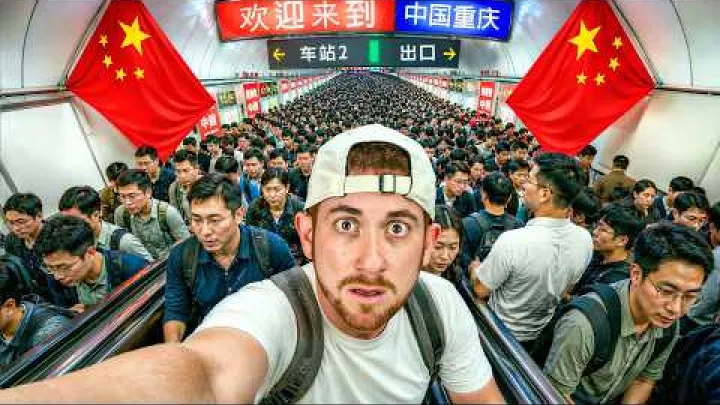
Chongqing is the clearest example. Its full municipality-wide population was about 32.1 million in the 2020 census, but its urban-district population was much smaller. The municipality covers an extensive area with central districts, outer districts, and less densely settled territory. A list using the full administrative total can therefore place Chongqing first, even though a visitor comparing continuous urban environments may experience Shanghai, Beijing, Shenzhen, or another city differently.
Beijing is China’s capital regardless of whether it ranks first, second, or lower in a population table. Under the 2020 urban-district measure used here, Shanghai is the largest city in the comparison. Under a full administrative measure, Chongqing can be largest, while a metropolitan measure may produce another ordering. The definition and date must appear before the reader interprets any claim about the “biggest city in China.”
Beijing and Shanghai: Capital Versus Largest City
Beijing and Shanghai are often compared because both are national-level cities, but they serve different purposes. Beijing represents political and historical China, while Shanghai is associated more strongly with finance, trade, maritime connections, and modern international commerce.
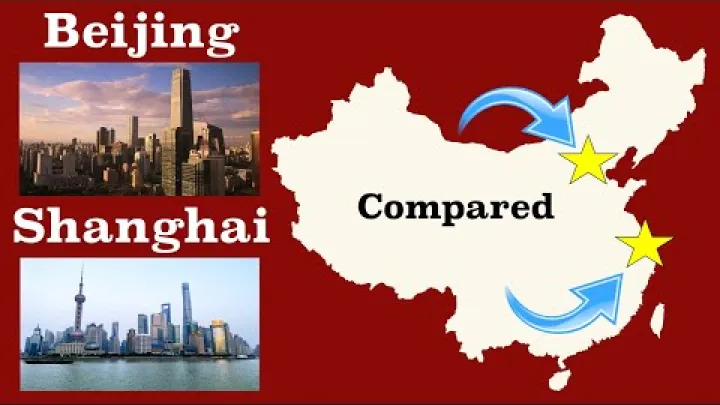
Beijing: National Capital and Cultural-Educational Center
Beijing is the national capital and a province-level municipality. Its importance comes from the concentration of central government institutions, national organizations, universities, research bodies, museums, and cultural institutions. This role does not depend on whether another city has a larger population under a particular definition.
Beijing also has one of China’s strongest historical identities. Imperial and republican-era urban layers, formal civic spaces, historic neighborhoods, museums, and universities create a city experience that combines national history with contemporary administration and education. For travelers, the city is especially relevant when the goal is to understand China’s political history, major cultural institutions, and long-term urban development.
Its population should be compared with Shanghai using the same unit and census date. A municipality-wide Beijing figure includes more than the historic central districts, just as a Shanghai municipality figure includes more than its most intensely urban neighborhoods. Keeping the population question separate from capital status produces a clearer comparison.
Shanghai: Largest City Under the Chosen Measure and Economic Gateway
Shanghai is the largest city under the urban-district population measure and 2020 census baseline used in this article. That statement is deliberately limited to the stated date and geographic unit. It does not mean that every metropolitan or administrative ranking will place Shanghai first.
Shanghai is a province-level municipality and a central city in the Yangtze River Delta. Its national role is closely connected to finance, commercial services, international business, shipping, and the movement of goods through eastern China. The city’s economic influence also extends through its links with neighboring cities in Jiangsu and Zhejiang.
For travelers, Shanghai offers a modern international urban experience shaped by business districts, historic commercial areas, museums, creative spaces, riverfront development, and diverse neighborhoods. Its cultural identity is not only a collection of heritage sites; it also comes from the interaction of local history, migration, commerce, design, food, and global connections.
Wider urban-area estimates should be kept separate from the census comparison. A regional population for the Yangtze River Delta is not a Shanghai city figure, even when the region functions as a closely connected economic system.
When to Choose Beijing or Shanghai
Choose Beijing when your main interests are national political history, imperial and modern heritage, museums, universities, research, or the institutions that shape the country. Choose Shanghai when your main interests are finance, international commerce, maritime history, contemporary architecture, design, and a modern business-oriented city environment.
The distinction is not absolute. Beijing also has major business, technology, education, and contemporary cultural sectors, while Shanghai has important museums, historic districts, universities, and deep local traditions. A useful decision should be based on your purpose, such as the type of study, business meeting, research environment, or travel experience you want, rather than on a claim that one city is universally better.
Guangzhou and Shenzhen in Southern China
Guangzhou and Shenzhen are separate cities in Guangdong, but their economies and transport networks are closely connected. Guangzhou has older port, commercial, and cultural roots, while Shenzhen is strongly associated with rapid modern development, technology, and cross-border business.
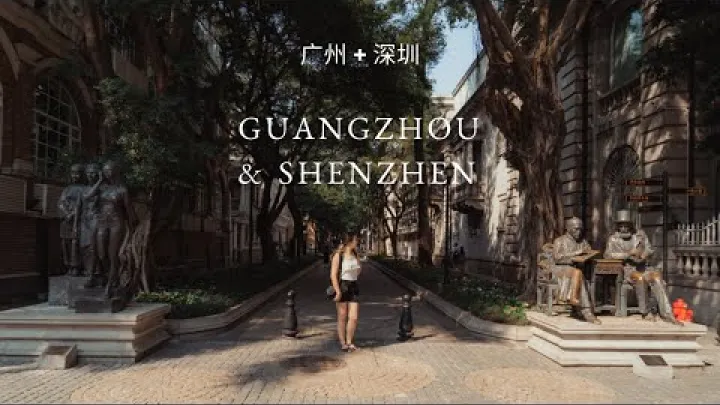
Guangzhou: Historic Port, Trade Center, and Lingnan City
Guangzhou is the capital of Guangdong and one of southern China’s historic port cities. Its city role combines trade, manufacturing, services, wholesale markets, regional administration, and connections with the wider Pearl River network. It is a major business center even when a ranking uses a narrower urban-district figure or a different city boundary.
Guangzhou’s Lingnan identity is visible through its food traditions, climate-adapted urban culture, language environment, architecture, and history as a southern trading city. The city is a strong choice for travelers interested in Cantonese cuisine, commercial history, local neighborhoods, and the relationship between traditional southern culture and modern economic activity.
Population figures for Guangzhou need careful labels. The permanent-resident total for the full city-level administrative area is larger than the population of selected urban districts. Use the same 2020 census unit as the rest of a comparison, and do not place a municipality-wide Guangzhou total beside another city’s metropolitan estimate.
Shenzhen: Special Economic Zone and Technology Metropolis
Shenzhen became one of China’s most prominent modern cities after its designation as a Special Economic Zone. Its development is associated with technology, electronics, finance, advanced manufacturing, research, and business services. The city’s economy is closely linked to the wider Guangdong urban network and to its position beside Hong Kong.
Shenzhen has a highly modern urban character and a population shaped by large-scale internal migration and economic opportunity. These descriptions should be tied to a date when they are used to explain growth. The 2020 census is the common baseline here; later estimates and projections should not be presented as confirmed census totals.
For travel, Shenzhen is useful for readers who want to study China’s contemporary urban development, technology economy, design, business environment, and cross-border regional connections. It is different from Guangzhou rather than simply a newer version of it: Shenzhen’s strongest identity is modern and innovation-oriented, while Guangzhou combines that southern economic network with a much longer port and cultural history.
The Pearl River Delta as Context, Not a City Entry
The Pearl River Delta helps explain why Guangzhou, Shenzhen, Dongguan, Foshan, and nearby cities are often discussed together. Manufacturing, logistics, services, infrastructure, supply chains, and daily commuting cross municipal boundaries. A company, university, or traveler may interact with several of these cities during one regional visit.
That regional connection does not turn the Pearl River Delta into one city. Guangzhou, Shenzhen, Dongguan, and Foshan remain distinct administrative and urban entities, each with its own local government, neighborhoods, population count, and city role. A regional or metropolitan total must therefore remain separate from a city-by-city population table.
For practical comparison, treat Guangzhou as a historic trade and service center, Shenzhen as a technology and innovation metropolis, Dongguan as a major manufacturing and urban-network city, and Foshan as a major southern manufacturing center closely connected to Guangzhou. This approach provides context without ranking an urban agglomeration beside an individual city.
Major Inland Cities: Chongqing, Chengdu, Wuhan, and Xi'an
China’s inland cities are major centers of administration, education, research, industry, logistics, and regional culture. They show why a city guide should include more than coastal financial centers.
Chongqing: The Administrative Population Exception
Chongqing is a province-level municipality with an unusually large administrative territory. Its full municipality-wide resident population was about 32.1 million in the 2020 census, while the urban-district population used in the table was about 16.3 million. Both figures can be valid because they count different parts of the municipality.
This difference is important for interpreting China’s largest-city lists. A full Chongqing total includes the central urban districts together with outer districts and less densely settled areas. It should not be compared directly with a different city’s urban-district count as though the two figures represented the same physical type of city.
Chongqing is also a major western manufacturing, logistics, and regional-services hub. Its dense central neighborhoods are shaped by steep terrain, rivers, bridges, and layered development. The contrast between its huge administrative population and its distinctive central urban environment makes Chongqing the clearest example of why population ranking and everyday city experience can diverge.
Chengdu: Western Regional Hub and Cultural Center
Chengdu is the capital of Sichuan and one of western China’s principal administrative, service, technology, industry, and logistics centers. Its influence reaches beyond the city into the wider Sichuan basin and western regional economy, but Chengdu itself should not be treated as a synonym for Sichuan or for the entire western interior.
The city’s population growth is best understood through the common 2020 census baseline rather than through unverified forecasts. Chengdu’s importance also comes from its universities, business services, technology activity, regional administration, food traditions, and distinctive pace of urban life. For travelers, it offers a major-city experience with a strong local cultural identity rather than only one famous attraction.
Wuhan: Central Transport, Education, and Industry Hub
Wuhan is the capital of Hubei and a major central Chinese hub for river transport, rail connections, education, research, industry, and regional services. Its position around the Yangtze and Han rivers has contributed to its historical role as a meeting point for movement and commerce, while its universities and research institutions support a strong student and knowledge economy.
The 2020 census recorded about 12.3 million residents in the wider Wuhan city-level area. A smaller urban-district figure is more appropriate for the comparable table. Wuhan also has a three-part historical urban identity associated with Wuchang, Hankou, and Hanyang. This layered structure helps explain its cultural character and its role in central China without relying on temporary news coverage.
Xi'an: Ancient Capital and Modern Regional Center
Xi’an is the capital of Shaanxi, a former capital of China, and one of the most important cultural and travel cities in the northwest. Its historical significance is part of the city’s identity, expressed through urban heritage, museums, research, and the memory of earlier political and commercial networks.
Modern Xi’an also has roles in technology, aerospace, research, advanced manufacturing, higher education, and regional administration. The 2020 census recorded about 13.0 million residents in the wider city-level area, while the urban-district population is lower. For visitors, Xi’an works best as both an ancient and modern regional center: its heritage matters, but so do its universities, technology sectors, contemporary neighborhoods, and growing urban economy.
Other Major Regional Centers
Several cities remain major because of their regional influence even when they do not appear at the top of every population ranking. Hangzhou, Nanjing, Tianjin, Suzhou, Dongguan, and Foshan show different combinations of history, industry, technology, administration, and urban-network importance.
Hangzhou: Digital Economy, Culture, and Lifestyle Appeal
Hangzhou is the capital of Zhejiang and a major Yangtze River Delta city. It is associated with technology, e-commerce, digital business, services, finance, and regional innovation. Its economic role is strengthened by its connection with other eastern cities, but Hangzhou remains a distinct city with its own administration, neighborhoods, institutions, and culture.
Hangzhou also has strong cultural and travel relevance through its historic setting, traditional urban landscape, food, museums, and relationship with water and green space. Its reputation as a comfortable or attractive place to live is subjective and can vary by neighborhood and personal circumstances, so it is better to describe the city’s urban environment than to present a universal quality-of-life ranking.
A census-based city figure should be kept separate from later urban-resident or metropolitan estimates. Hangzhou belongs in a major-city guide because of its economic and cultural role, even if a particular population threshold or boundary definition places it below other cities.
Nanjing: Historic Capital and Yangtze River Delta Center
Nanjing is the capital of Jiangsu and a city with major historical, cultural, educational, research, industrial, and service roles. Its history as a former capital gives it a different cultural profile from Shanghai or Hangzhou, while its universities and research institutions support its continuing importance in eastern China.
Nanjing is part of the Yangtze River Delta economic system but should not be confused with the region as a whole. It remains a major city even when its population total is below the largest national entries because it combines provincial administration, education, industry, services, and city-based historical travel. It is a strong choice for readers who want a large eastern city with a substantial historical and academic identity.
Tianjin, Suzhou, Dongguan, and Foshan
Tianjin is a northern municipality and an important center in the Beijing–Tianjin–Hebei region. Its port, industrial, commercial, and administrative roles make it significant beyond its position in a population table.
Suzhou is a major Yangtze River Delta manufacturing and economic center. Its importance is not captured by population alone because its industrial links, services, historic urban character, and proximity to Shanghai connect it to a much wider economic system.
Dongguan and Foshan are major southern cities within the broader Guangzhou–Shenzhen urban network. Dongguan is strongly associated with manufacturing and regional production networks, while Foshan is a major manufacturing and commercial city closely linked to Guangzhou. They should be counted as separate city entries, not absorbed into a single Pearl River Delta population.
Precise population or economic figures for these four cities should use the same census date and geographic unit as the rest of the comparison. Their inclusion here is based on distinct regional roles rather than an attempt to create a second, unsupported ranking.
How to Choose Among China's Major Cities
A population ranking answers a question about scale, not suitability. Travelers, students, researchers, and business professionals may need different types of city: historical, institutional, technological, commercial, academic, or regionally connected.
Best Cities for History and Cultural Travel
Start by identifying the kind of culture you want to experience. The relevant criteria may include historical depth, museums, heritage areas, food traditions, living local culture, and the balance between older districts and modern city life.
- Beijing is the strongest choice for national political history, imperial and modern heritage, museums, universities, and institutions that represent the country as a whole.
- Xi’an suits travelers interested in ancient capital history, archaeological context, northwestern culture, and the relationship between historical China and a modern research city.
- Nanjing offers layered capital history, educational institutions, museums, and a major eastern city environment that is different from Beijing.
- Guangzhou is a good choice for Lingnan culture, Cantonese food traditions, port history, commercial neighborhoods, and southern Chinese urban life.
- Shanghai is most suitable for travelers who want modern international culture, commercial history, museums, design, architecture, and the contrast between historic neighborhoods and contemporary development.
These are different strengths rather than a single ranking of cultural quality. A reader interested in ancient political history may prefer Xi’an or Beijing, while someone interested in living commercial culture may find Guangzhou or Shanghai more relevant.
Best Cities for Business, Technology, and Study
Use the same criteria for each city: the type of institutions present, the dominant economic role, the city’s regional connections, and the kind of study or professional environment you need. This is a purpose-based guide, not a salary, visa, housing, or cost-of-living ranking.
- Beijing is closely associated with national institutions, universities, research, policy, and organizations with countrywide influence.
- Shanghai is a leading choice for finance, international commerce, professional services, maritime business, and a global-facing corporate environment.
- Shenzhen is strongly associated with technology, innovation, electronics, finance, advanced manufacturing, and cross-border business links with Hong Kong.
- Guangzhou offers broad trade, manufacturing, logistics, services, and regional-business connections, alongside a deep local commercial culture.
- Hangzhou is particularly relevant to digital business, technology, e-commerce, services, and innovation within the Yangtze River Delta.
- Chengdu and Wuhan are important inland options for regional services, technology, education, research, industry, and connectivity beyond the coastal megacity network.
Students should compare the specific university, program, language of instruction, and admission requirements rather than choosing only by city reputation. Business visitors should identify whether their work is tied to finance, technology, manufacturing, trade, public institutions, or regional supply chains.
A Regional Map of China's Major Cities
A geographic grouping makes the list easier to understand. It shows that China’s major cities are distributed across several connected urban systems rather than concentrated in one part of the country. The broad regional pattern is consistent with the eastern, central, and western population groupings described by the National Bureau of Statistics of China, although individual city boundaries and regional definitions vary.
- North: Beijing and Tianjin form the main pair for national administration, northern commerce, port activity, industry, and the wider Beijing–Tianjin–Hebei network.
- East: Shanghai, Hangzhou, Nanjing, and Suzhou belong to the broad Yangtze River Delta context, with different combinations of finance, technology, manufacturing, education, history, and services.
- South: Guangzhou, Shenzhen, Dongguan, and Foshan are separate cities within the connected Pearl River Delta economy.
- Central China: Wuhan is a major transport, education, research, industrial, and administrative center.
- West and northwest: Chongqing and Chengdu anchor important southwestern networks, while Xi’an is a leading historical, educational, technological, and administrative center farther northwest.
For a simple map, label each city separately and show its province or municipality. If you add metropolitan or urban-agglomeration boundaries, use a different visual label from the city point. When planning a route, check current transport connections and access information separately from the geographic grouping; a regional map explains relationships but does not replace city-specific travel details.
Conclusion: China's Major Cities Are More Than a Ranking
The largest cities in China depend on the population measure being used. Shanghai is largest under this article’s 2020 urban-district comparison, Beijing is the national capital, and Chongqing can lead a municipality-wide ranking because its administrative territory is exceptionally large.
The best China cities list combines population with administrative role, economic influence, cultural identity, education, regional connections, and travel purpose. Beijing and Shanghai suit different priorities, Guangzhou and Shenzhen represent complementary southern strengths, and Chengdu, Wuhan, Xi’an, Hangzhou, Nanjing, Tianjin, Suzhou, Dongguan, and Foshan show why major-city importance cannot be reduced to one number.
Select area
Create a post
Posting is free and no registration is required.