Dunhuang Getting There: Air, Train and Bus Guide
Getting to Dunhuang is less about finding one universal route and more about matching the gateway to your starting city, schedule, and tolerance for transfers. Travelers can fly to Dunhuang Mogao International Airport, take a conventional train to Dunhuang Railway Station, use high-speed rail through the Liuyuan area, or travel overland by bus and road. This guide compares these options by journey pattern, relative cost, comfort, booking difficulty, and transfer risk. It also explains how to continue from each arrival point and why the Mogao Caves require a separate visit plan.
Choose the Best Way to Get to Dunhuang
Dunhuang is an important destination in the western part of the Hexi Corridor, but it is not equally convenient from every part of China. A route that works well from Lanzhou or Jiayuguan may be unnecessarily complicated from Beijing or Shanghai.
Air, Rail, and Bus at a Glance
The main choices are a flight to Dunhuang Mogao International Airport, a conventional train to Dunhuang Railway Station, a high-speed train to the Liuyuan area followed by a road transfer, and a long-distance bus or private road journey. The table uses relative cost and time descriptions because exact fares, departure times, and route availability depend on the travel date.
| Method | Arrival point | Time pattern | Cost pattern | Comfort | Transfers | Booking |
|---|---|---|---|---|---|---|
| Flight | Dunhuang Airport, DNH | Often fastest from distant cities | Usually higher | Good | Short city transfer after landing | Moderate and date-sensitive |
| Conventional train | Dunhuang Railway Station | Long; overnight travel may be possible | Often lower than air | Sleeper or seated | No rail change if direct, then city transfer | Moderate |
| High-speed rail via Liuyuan | Liuyuan or Liuyuan South | Fast rail leg plus long road leg | Rail fare plus transfer cost | Good on rail; variable on road | Road transfer required | Higher because it uses two legs |
| Bus or road | Dunhuang bus terminal or road destination | Regional to very long; traffic-dependent | Often budget-oriented | Most variable | Depends on route | Varies by operator and terminal |
Air travel usually reduces the number of long ground segments, but the airport is outside the center. Conventional rail can be better value and may offer a sleeper, but a long train journey takes much more time. High-speed rail can make the rail portion more comfortable or faster without removing the road transfer. Buses are most useful when they fit a regional itinerary or when a lower-cost overland journey is more important than speed.
Choose by Starting Point, Time, and Booking Tolerance
From distant eastern and coastal cities, start by comparing the complete flight itinerary to DNH. A direct flight may be the simplest option when one operates on your date. If it does not, compare a one-stop flight through a larger gateway such as Xi'an or Lanzhou with a long conventional train or a rail-and-road combination.
Rail and buses become more attractive within the Hexi Corridor and nearby Northwest China. Travelers moving between Xi'an, Lanzhou, Zhangye, Jiayuguan, Dunhuang, and cities farther west may prefer overland travel because it follows the geography of a Silk Road itinerary. The route may take longer, but it can avoid returning to a major airport and can make intermediate stops part of the trip.
- Choose air when reaching Dunhuang quickly is the main priority and the fare and schedule work for your date.
- Choose a direct conventional train when you value a sleeper, lower relative cost, or a simple rail itinerary more than total travel time.
- Choose high-speed rail via Liuyuan when the available rail timetable is useful and you accept a separate road transfer.
- Choose bus or road travel when you are building a regional overland journey, traveling on a strict budget, or need a route not covered conveniently by air or rail.
Fly to Dunhuang Mogao International Airport
Flying is often the first option to compare for visitors coming from far away. It brings you to Dunhuang itself, but the final airport-to-hotel transfer still needs to be included in your plan.
Use Dunhuang Airport as the Direct City Gateway
Dunhuang Mogao International Airport has the IATA code DNH and is the main air gateway for the city. It is outside the urban center, roughly a dozen kilometers away, so landing at DNH does not mean that you have arrived at your hotel or the main sightseeing area.

After landing, investigate the official taxi area, a traceable ride-hailing service if one is available for your arrival time, or a transfer arranged directly with your accommodation. An airport shuttle or lower-cost bus should be treated as an option only when its current route, operating hours, and payment method are confirmed. For a late flight, ask the hotel in advance whether it can receive your arrival time and what transport it recommends.
Plan Flights from Major Chinese Gateways
Xi'an, Lanzhou, Xining, Chengdu, Beijing, and Shanghai are useful starting points for a flight search. Xi'an and Lanzhou may be practical connecting gateways for a Northwest China itinerary, while Chengdu, Beijing, and Shanghai can provide broader airline and departure-time choices. Other major Chinese cities may also appear in the available route network.
Do not treat a general route list as a permanent timetable. The FlightsFrom listing can help you see currently listed nonstop destinations and airlines, but the useful question is whether a flight is bookable on your exact date. Compare nonstop and one-stop itineraries by total journey time, not only by time in the air. A short flight with a long airport connection can be less convenient than a longer direct service.
When comparing flights, record the departure airport, connection airport, arrival time at DNH, baggage allowance, and whether the booking is on one ticket. A one-ticket connection generally presents the itinerary more simply than separate tickets, but the fare rules and baggage arrangements still need to be read before purchase.
Treat International and Seasonal Routes as Date-Sensitive
International access to Dunhuang is limited compared with the network of larger Chinese airports. Travelers arriving from abroad will often need to enter China through a major aviation gateway and then take a domestic flight or another form of transport to Dunhuang.
If a current search shows a possible service from Hong Kong or Kuala Lumpur, treat it as an example of date-specific access rather than a year-round connection. Confirm the exact operating date and live status with the airline or a current route listing before paying. Seasonal services can appear during periods of higher tourism demand and disappear outside those periods.
For an international-to-domestic itinerary, check visa and transit rules, baggage collection, airport changes, and the conditions for separate tickets. If the international and domestic flights are booked separately, allow enough time to complete any arrival procedures and collect baggage before the domestic departure.
Take the Train to Dunhuang
Rail is an important choice for travelers who want a lower-cost or more scenic overland journey. It is also the option that requires the clearest distinction between Dunhuang Railway Station and the Liuyuan railway stations.
Arrive at Dunhuang Railway Station
Dunhuang Railway Station is the city's conventional rail gateway and is located outside the downtown accommodation area. A train ticket to Dunhuang therefore solves the long-distance part of the journey, but you still need a local ride from the station to your hotel or the city center.
Search for direct or through services only when the current railway timetable shows them. The official 12306 China Railway platform is the primary place to check train availability, station names, ticket rules, refunds, and itinerary details. Search using the exact Chinese or English station name displayed by the system rather than relying on a third-party description.
From eastern China, a conventional train can be a very long journey, potentially lasting more than a day. The main advantage is the possibility of a sleeper and a relatively straightforward rail route. For a long trip, compare hard or soft sleeper categories, departure and arrival times, luggage needs, and the cost of reaching the departure station. A low rail fare is less useful if the itinerary requires several unprotected transfers.
Use Liuyuan and Liuyuan South for High-Speed Connections
Liuyuan Railway Station and Liuyuan South Railway Station are different stations. They should not be treated as interchangeable search results. Travelers may use the Liuyuan area for conventional or high-speed rail connections on the Lanzhou–Xinjiang corridor, then travel by road between Dunhuang and the relevant station.

Liuyuan South is a connecting station in this regional rail network. One current local transportation guide places it about 210 kilometers from central Dunhuang, which shows why this is a combined rail-and-road itinerary rather than a direct arrival in the city. The China Discovery transportation guide also distinguishes Liuyuan South from the Liuyuan urban area. Treat the distance as planning guidance, not as a guaranteed transfer time.
- Search the train ticket and read whether the station is Liuyuan Railway Station or Liuyuan South Railway Station.
- Plan the road segment from Dunhuang to the correct Liuyuan-area station, or from the station to Dunhuang if you are arriving from elsewhere.
- Confirm the road departure point, estimated journey time, payment method, and final drop-off location.
- Continue by rail only after allowing a buffer for the road leg, luggage, and possible delays.
The most common mistake is booking the right general area but the wrong station. Station names, road distances, bus departure windows, and local connections can differ by travel date, so check the complete sequence rather than searching only for Liuyuan.
Compare Direct and Multi-Leg Rail Itineraries
A direct conventional train to Dunhuang is the simplest rail pattern: board once, sleep or sit through the journey, then take a local ride from Dunhuang Railway Station. It may be attractive from cities such as Beijing, Shanghai, Xi'an, Lanzhou, or Urumqi when a suitable service appears in the current timetable.
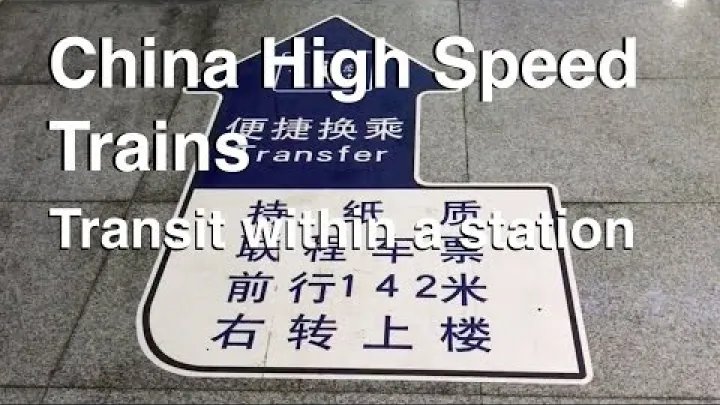
A multi-leg itinerary can use Lanzhou or Xi'an as a railway connection, or it can use high-speed rail to Liuyuan South followed by a road transfer. High-speed rail may shorten the rail portion, but it does not automatically make the full journey shorter or easier. A road transfer at the beginning or end can add distance, uncertainty, and another ticket.
Compare each itinerary using four practical questions: Does it require a station change? Are the rail and road tickets separate? Can you manage luggage during the transfer? What happens if the first train or road vehicle is late? A generous connection buffer is especially important when the onward leg is not protected by the same booking. Travelers with limited Chinese-language support may prefer a longer direct train over a theoretically faster itinerary with several independent steps.
Travel by Long-Distance Bus or Road
Buses can connect Dunhuang with regional destinations and with railway gateways outside the city. They are most useful when they support an existing overland itinerary, but their schedules and booking systems can be less predictable than those of major airlines or China Railway.
Use the Dunhuang Long-distance Bus Station for Regional Routes
The Dunhuang Long-distance Bus Station is the main place to investigate regional coach services. It may be relevant for journeys toward nearby destinations in Gansu and Qinghai, as well as for links that connect with a wider Silk Road route. A destination shown on an old travel page should not be assumed to have a current daily departure.
Ask at the station or through a current operator channel about the destination, departure time, travel duration, ticket price, and arrival point. A bus may arrive at a terminal that is not close to your hotel or next railway station. Also ask what identification is accepted, whether a passport can be used by an international visitor, which payment methods are available, and what the cancellation rules are.
For international travelers, a station counter may require more preparation than an airline or railway website. Keep the destination written in Chinese, carry your passport, and allow time for the ticket purchase. If a bus is important to a same-day connection, confirm both the departure and arrival locations rather than relying only on the route name.
Connect Dunhuang with Liuyuan by Bus
The Dunhuang–Liuyuan bus link matters because many high-speed rail journeys do not begin or end at Dunhuang. The transfer is not a single railway journey; it is a sequence that combines a bus or other road vehicle with a train.
- Go to the current departure point in Dunhuang, usually investigated through the long-distance bus station or a confirmed local transport provider.
- Take the road segment toward the Liuyuan area and identify where the vehicle will stop.
- Continue to Liuyuan Railway Station or Liuyuan South Railway Station, depending on the train ticket.
- Take the onward train, or reverse the sequence when arriving in Dunhuang from another city.
Published distances, journey times, departure windows, and fares can differ according to the starting point, the exact railway station, and the source of the information. Do not schedule a close train connection until the bus departure and arrival point have been confirmed. If the bus and train are separate bookings, a missed train may not be protected or refunded under the other ticket's rules.
Choose Overland Routes toward Jiayuguan, Jiuquan, and Xinjiang
Travelers following the Silk Road may consider road routes toward Jiayuguan and Jiuquan, or longer overland journeys toward Hami, Turpan, and Urumqi. These are itinerary possibilities rather than fixed recommendations. The useful route depends on whether you want to stop along the way or reach the next city as quickly as possible.
- Bus: Usually the budget-oriented choice when a suitable regional departure exists, but the ride may be long and the timetable may offer little flexibility.
- Private vehicle: Offers more control over stops and luggage, but usually requires a higher budget and careful planning for a long road journey.
- Bus and rail: Can balance cost and comfort by using a coach for the local connection and a train for the longer corridor segment.
- Air and rail: May reduce the longest road sections when current services align with your itinerary.
Use these city names to understand the geography, not as proof that a direct bus or a particular frequency is operating. Check the current transport channel for the intended travel date before building the rest of the itinerary around a long direct road segment.
Get from the Gateway to Dunhuang and Mogao Caves
Long-distance arrival and local sightseeing are separate planning tasks. The airport, railway station, bus terminal, downtown hotels, and Mogao Caves access point are different locations.
Reach Downtown from the Airport
Dunhuang Airport is outside the center, so include a final road transfer when comparing total flight time with a train arriving at Dunhuang Railway Station. The fastest practical choice is normally a direct vehicle to the accommodation, while a lower-cost shuttle or city bus should be considered only if it is operating at the time of arrival.
The main factors are arrival time, luggage, hotel location, and whether you can contact the accommodation after landing. A taxi from the official airport transport area, a traceable ride-hailing booking, or a transfer arranged with the hotel may each be suitable depending on current availability. Do not build a late arrival around an unconfirmed shuttle timetable.
Continue from the Railway Station or Bus Terminal
Dunhuang Railway Station and the Dunhuang Long-distance Bus Station are not the same place as the downtown hotel area. After a long train or coach journey, allow time for the final city ride and for checking into the accommodation. City buses, taxis, ride-hailing, or hotel-arranged transport may be available, but late-night service should not be assumed.
If you will arrive outside normal sightseeing hours, confirm the transfer with your accommodation or an official and traceable transport provider before departure. At a station or terminal, confirm the destination and fare through an official ticket counter or a traceable ride-hailing channel before boarding. Be cautious with unsolicited offers and do not enter a vehicle when the destination or price is unclear.
Plan the Mogao Caves Digital Exhibition Center as a Separate Stop
The Mogao Caves Digital Exhibition Center is the visitor gateway for the Mogao Caves and should not be confused with the grottoes themselves, the airport, or either railway station. Under the current access arrangement described by China Discovery, visitors reach the Digital Exhibition Center and then use the authorized shuttle arrangement to continue to the cave area.
Before choosing a same-day arrival flight or train, check the ticket category, reservation requirement, seasonal opening hours, and shuttle times. The center may be near enough to fit into a local transport plan, but the exact relationship between your arrival point and the center should be treated as approximate. Arriving in Dunhuang does not automatically mean that a same-day Mogao visit is available.
Compare Typical Routes by Time, Cost, and Complexity
The best route becomes clearer when the major origins are compared as complete journeys. The examples below describe route patterns; they are not promises of current service.
Travel from Beijing and Shanghai
For travelers from Beijing or Shanghai, flying is usually the first option to compare because the cities are far from Dunhuang. A direct or connecting flight can reduce the long-distance travel time substantially, but the total journey still includes travel to the departure airport, airport processing, any connection, the ride from DNH to the city, and hotel check-in.
Conventional rail is a much longer alternative from these eastern gateways. Published travel examples have placed rail journeys from Beijing and Shanghai at more than a day, with some Shanghai itineraries involving a transfer through Lanzhou. Exact durations and fares change, so use the current railway timetable rather than retaining historical figures.
Choose rail when the overland experience, sleeper accommodation, or lower relative fare is more important than speed. A high-speed route through Liuyuan may improve the rail experience but still requires the road segment into Dunhuang. For most time-sensitive visitors, compare the full door-to-door flight against the full door-to-door rail itinerary before deciding.
Travel from Xi'an and Lanzhou
Xi'an and Lanzhou are useful comparison points because they connect naturally with a wider historical and Silk Road itinerary. From Xi'an, compare a flight to DNH, a conventional train to Dunhuang, and a rail itinerary that uses Lanzhou or Liuyuan as an intermediate point. From Lanzhou, compare the available direct rail or air options with high-speed rail toward Liuyuan followed by a road transfer.
A direct arrival in Dunhuang is simpler when the timetable fits. A Liuyuan itinerary may offer a faster rail section, but it adds a separate road leg and requires the correct station. Travelers who want to include Zhangye or Jiayuguan may accept the additional planning because those stops become part of the route rather than obstacles between two airports.
For these origins, compare departure time and overnight comfort as carefully as headline duration. An overnight conventional train may save a hotel night, while a daytime rail-and-road itinerary may provide more predictable rest but more transfer work.
Travel from Xining, Urumqi, and Jiayuguan
These origins can fit naturally into a Northwest China itinerary, but the most convenient combination depends strongly on the current timetable.
- From Xining: Compare a flight to DNH with rail through Lanzhou or the Liuyuan area. The latter may work well for an overland itinerary, but include the road transfer to the correct Liuyuan station.
- From Urumqi: Search current flights, conventional trains, high-speed rail connections, and long-distance buses. A direct road journey can be lengthy, so compare its complete duration and arrival time with a rail-and-road combination.
- From Jiayuguan: Investigate regional bus, road, rail, and any currently listed flight options. A road route may be convenient for a short regional connection, while rail can be preferable when the departure time and station location are better.
For each origin, write the route as a sequence before booking: origin, transport mode, arrival gateway, local transfer, and hotel. This makes hidden transfers visible and prevents a city name such as Liuyuan from being mistaken for a downtown Dunhuang arrival.
Book and Verify Your Dunhuang Journey
A reliable Dunhuang itinerary depends on checking each leg as a current, bookable service. Static route pages are useful for orientation, but they do not replace the airline, railway, bus station, or operator information for your date.
Check Live Flight and Bus Availability
For flights, compare the airline or a current booking page with a route listing. Confirm the departure airport, terminal, arrival at DNH, connection time, baggage allowance, ticket type, and cancellation conditions. A destination shown in a general airport list may not have a bookable departure on the day you want to travel.
For buses, use the current station or operator channel to confirm the destination, departure point, departure time, arrival point, fare, accepted identification, payment method, and ticket-change rules. The name Dunhuang–Liuyuan may describe a regional link without making clear whether the vehicle stops near Liuyuan Railway Station or Liuyuan South Railway Station.
Keep the final ticket details accessible offline, especially if your route includes several separate bookings. Note the Chinese names of stations and terminals, since these can be more useful to local transport staff than an English translation alone.
Book Rail Tickets and Protect the Liuyuan Transfer
Use 12306 as the primary railway reference for current trains, station names, ticket availability, refunds, and itinerary details. The departure station printed on the rail ticket is the railway station you must reach; it is not automatically the bus terminal or the Liuyuan town stop used for a road connection.
For a Liuyuan itinerary, check both the train and the road segment. Confirm whether the ticket says Liuyuan Railway Station or Liuyuan South Railway Station, then identify the local vehicle's departure and arrival points. If the bus and train are booked separately, choose a generous buffer. Luggage, language support, road delays, and difficulty finding the correct station can all make a short connection unrealistic.
Do not assume that a rail-and-bus combination is a protected connection. If a late bus causes you to miss the train, the railway ticket and the road ticket may be handled under separate rules. A longer buffer or an overnight stop near the railway gateway can be better value than paying for a rushed itinerary.
Build a Practical Arrival Buffer
Leave time between arrival in Dunhuang and hotel check-in, local transport, or a scheduled Mogao visit. A tightly timed first day is fragile when it depends on several independent legs, a long road transfer, or a same-day change between airport, station, and attraction.
As a simple planning rule, do not attach a fixed-time attraction to a tight same-day multi-leg arrival unless every segment is confirmed and you have a realistic alternative. This is especially important for the Mogao Caves because the Digital Exhibition Center, reservation process, and shuttle arrangement create a separate access schedule.
Check departure-day weather and operator notices before setting out on a long flight or road segment. Keep the first sightseeing commitment flexible where possible, and check the final transport status before leaving the departure city. A spare half-day can protect the rest of a Dunhuang itinerary when a long-distance arrival takes longer than expected.
The Best Way to Get to Dunhuang Depends on Your Route
For most travelers from Beijing, Shanghai, Chengdu, or another distant city, begin with a flight search to DNH and compare the complete door-to-door time. For travelers already in Northwest China, compare conventional rail, high-speed rail through the correct Liuyuan station, and regional buses. The cheapest ticket is not always the least expensive journey once road transfers, overnight stays, luggage, and missed connections are included.
Rail and road travel are particularly suitable for a Silk Road itinerary that includes Xi'an, Lanzhou, Zhangye, Jiayuguan, Jiuquan, or cities farther west. A direct train or flight is better when simplicity and arrival time matter most. Whichever route you choose, identify the exact gateway, plan the last-mile transfer into Dunhuang, and treat the Mogao Caves Digital Exhibition Center as a separate stop rather than an automatic part of arrival.
Select area
Create a post
Posting is free and no registration is required.