Indonesia Official Language: Bahasa Indonesia Explained

Bahasa Indonesia is the official language of Indonesia. Knowing this matters whether you are traveling, studying, or doing business, because it is the common language used in government, schools, media, and contracts nationwide. A little Indonesian goes a long way across the archipelago.
Quick Answer: What is the official language of Indonesia?
Bahasa Indonesia is the official language of Indonesia, established by Article 36 of the 1945 Constitution. It uses the Latin alphabet and functions nationwide across government, education, media, business, and public services. It is mutually intelligible with Malay and serves as Indonesia’s unifying lingua franca.
For a snapshot, see the key facts below, then continue for history, usage, and comparisons with Malay.
Indonesian appears in daily life everywhere: announcements at airports and train stations, national TV news, school textbooks and exams, banking forms, doctor’s prescriptions, and standardized road signs. Identity cards, birth certificates, court filings, and parliamentary debates are in Indonesian. Shops post menus and receipts in Indonesian, and companies use it for internal memos and inter-island logistics. Even when two Indonesians speak different local languages at home, they switch to Indonesian in mixed settings such as university seminars, official meetings, and online marketplaces. Foreign businesses typically prepare an Indonesian version of agreements alongside a foreign-language text, ensuring both parties share a common, legally recognized wording. In short, Indonesian is the language you will encounter on the street, in the classroom, and at the service counter, making it the essential tool for communication across Indonesia’s many islands and cultures.
Key facts at a glance
- Name: Bahasa Indonesia (Indonesian)
- Legal status: Official language in the 1945 Constitution (Article 36)
- Main domains: Government, education, media, business, public services
- Script: Latin alphabet
- Relation to Malay: Closely related; broadly mutually intelligible
- Speaker share: Over 97% can speak Indonesian (2020)
- Schools: Taught nationwide as the medium of instruction and subject
Why Indonesian was chosen as the national and official language
Indonesian was selected to unite a diverse country with hundreds of ethnic groups and languages. It already functioned as a neutral lingua franca based on Malay in ports, markets, and administration. Choosing it avoided favoring the largest ethnic group and offered an accessible bridge among communities.
Practicality also mattered. Indonesian has relatively straightforward morphology, consistent spelling, and lacks complex hierarchical speech levels. This made it suitable for mass education and clear communication across regions. In contrast, Javanese, while widely spoken, has layered honorific levels that can be challenging for non-native learners and can signal social hierarchy in ways the new republic aimed to simplify.
A concrete example is schooling: a child from Aceh, another from Sulawesi, and a teacher from Java can all use Indonesian to share one curriculum and sit standardized exams. This choice helped launch literacy drives and national media after independence. The sections below preview how the 1928 Youth Pledge, the 1945 Constitution, and demographic realities cemented Indonesian’s role.
The 1928 Youth Pledge and independence in 1945
In 1928, young nationalists declared the Youth Pledge with three pillars: one motherland, one nation, and one language—Indonesian. “Indonesian” was chosen from a Malay base because Malay already bridged communities in trade and education and was not tied to a single dominant ethnic group, aligning with the unity goals of the independence movement.

When Indonesia proclaimed independence in 1945, the Constitution’s Article 36 affirmed Indonesian as the national language, paving the way for standardization in spelling and grammar. Key milestones include the van Ophuijsen orthography (1901) under Dutch administration, the Soewandi spelling reform (1947) in the early republic, and the 1972 Enhanced Spelling System that harmonized modern usage. These steps built a consistent, teachable standard for schools, media, and law.
Why not Javanese? Demographics and neutrality
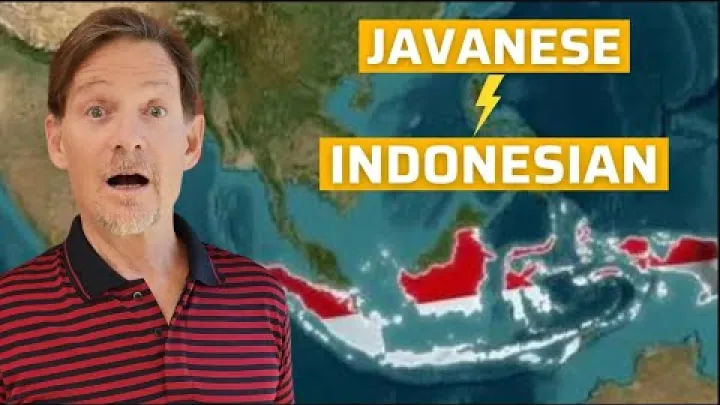
Javanese is the largest local language, but making it official risked perceptions of Javanese political and cultural dominance. Indonesian provided neutrality, signaling that the new state belonged equally to speakers from Sumatra, Java, Kalimantan, Sulawesi, Papua, and beyond. This helped the language serve as a shared platform rather than a symbol of any single group.
There were also practical reasons. Javanese has multiple speech levels (krama, madya, ngoko) that encode hierarchy, while Indonesian’s simpler morphology and flatter register are easier for mass schooling and public administration. Sensitivities around rank and politeness can be expressed in Indonesian through vocabulary and tone without complex grammatical changes. Today, many people are bilingual: they use Javanese or another regional language at home and Indonesian in school, work, and mixed-group communication, a reality explored in later sections.
Where and how Indonesian is used today
Indonesian anchors government, law, and public services. Laws, court hearings, ID cards, driver’s licenses, and standardized signage use Indonesian to ensure equal access across provinces. Ministries publish regulations and forms in Indonesian, and civil servants correspond in the national standard to avoid ambiguity.
Education relies on Indonesian as the medium of instruction from primary school through secondary education, with textbooks, exams, and national assessments written in standardized Indonesian. Universities teach in Indonesian for many programs, even when they incorporate English-language literature, ensuring broad comprehension and consistent learning outcomes.
Media and culture use Indonesian to reach national audiences. Television news, nationwide radio, streaming platforms, and publishers produce content in standardized Indonesian, while films and music may blend regional flavor through accents or vocabulary. Product labels, safety manuals, and advertisements appear in Indonesian so consumers everywhere can understand them.
In business, Indonesian is the default for inter-island operations, customer support, and documentation. Companies commonly provide Indonesian versions of contracts, including those with foreign parties, to comply with regulations and reduce disputes. From airport announcements to e-commerce chat support, Indonesian ensures that services work smoothly across Indonesia’s many islands.
Government, law, and public services
Legislation, court proceedings, and official correspondence are conducted in Indonesian to maintain clarity and legal certainty. Identity documents, birth and marriage certificates, tax filings, and voter information are issued in Indonesian. Public signage—road directions, safety notices, and disaster warnings—uses standardized wording to ensure all residents and visitors understand instructions.
A concrete example of standardization preventing misunderstandings is interprovincial traffic regulation: the same Indonesian terms for “one-way,” “yield,” and “speed limit” appear from Sumatra to Papua, reducing accidents due to inconsistent phrasing. For agreements involving foreign entities, Indonesian versions are required alongside other languages, helping courts interpret liabilities and warranties without ambiguity if disputes arise.
Education and academic publishing
Indonesian is the medium of instruction in public schools nationwide. Curricula, textbooks, exam papers, and national assessments are written in standardized Indonesian so students in different regions study the same content. A student moving from Ambon to Bandung can join a class without changing language or syllabus.
At universities, publishing practices vary by field: journals in law, education, and social sciences often publish in Indonesian, while engineering and medicine may use both Indonesian and English to reach global audiences. Training in academic Indonesian supports literacy and mobility; for example, a thesis may be written in Indonesian with an English abstract, enabling both local evaluation and international visibility.
Media, culture, and business
National TV, radio, newspapers, and major online outlets rely on standardized Indonesian to reach the whole country. Advertising, product labels, user manuals, and app interfaces are provided in Indonesian, helping consumers compare products and follow safety instructions regardless of their local language background.
Creative works frequently blend regional flavor—dialogue may include local terms or accents—while remaining broadly understandable. In business, Indonesian streamlines inter-island logistics and customer support: a warehouse in Surabaya, a courier in Makassar, and a client in Medan coordinate shipments, invoices, and return policies in Indonesian, ensuring consistent operations and service quality.
What language is spoken in Jakarta?
Indonesian is the official and working language in Jakarta’s administration, schools, courts, and business. Government offices, hospitals, and banks operate in Indonesian, and schools use it for instruction and exams. Public signage, transport announcements, and media also default to Indonesian.

On the street, you will hear Betawi-influenced colloquial Indonesian and many regional languages due to migration. People often switch between informal Indonesian and regional speech with friends and family. Practical tip: learn polite Indonesian greetings and service phrases; in offices and shops, clear Indonesian is expected and appreciated, even if everyday banter sounds more casual.
Speaker numbers and multilingual reality
Most Indonesians are multilingual. Over 97% of people reported they can speak Indonesian in 2020, reflecting decades of schooling and nationwide media. Many first acquired a regional language at home and learned Indonesian in school, using it for wider communication, administration, and work.
Code-switching is common: someone may greet in a local language, shift to Indonesian for problem-solving, and use English loanwords for technology or finance. Urban centers show higher daily usage of Indonesian in workplaces, universities, and services, while rural communities may rely more on local languages at home and in neighborhood interactions, switching to Indonesian for formal tasks.
Broadcast media, social platforms, and e-commerce expand exposure to Indonesian, raising proficiency across age groups. Schools reinforce literacy through Indonesian-language textbooks and standardized assessments, helping students move between regions and pursue national exams. This widespread competence in Indonesian supports national cohesion for public life and markets while allowing people to maintain local identities, arts, and traditions in their regional languages.
Bilingualism with Javanese, Sundanese, and other regional languages
Home and public language use often differ. A family in Yogyakarta might use Javanese at the dinner table, but switch to Indonesian with teachers, health workers, and government offices. Code-switching happens naturally, with Indonesian providing common terms for bureaucracy, science, or technology.

Media reflects this mix: TV talk shows and YouTube creators use Indonesian for broad reach yet sprinkle regional humor or vocabulary. A typical scenario is a courier arriving at a home in West Java: the greeting may be in Sundanese, the delivery confirmation in Indonesian, and a joke in a blend of both—preserving local identity while staying accessible.
Fluency and usage rates (2020 census)
By 2020, over 97% of Indonesians reported they can speak Indonesian, but many learned it as a second language through school and media. This means national comprehension is high even where local languages dominate in family settings. The share speaking Indonesian as a first language is far smaller—roughly around one-fifth—highlighting the country’s multilingual foundations.
Daily patterns differ: in large cities, Indonesian is used at school, work, and on public transport, whereas in rural areas local languages may dominate informal conversation and community events. Ongoing literacy and adult education programs continue to strengthen reading and writing in Indonesian, ensuring that official information, health guidance, and emergency alerts remain widely understood.
Indonesian vs. Malay: similarities and differences
Indonesian and Malay share origins and are largely mutually intelligible in everyday conversation. Both use similar grammar and much shared vocabulary. Separate standardization paths in Indonesia and Malaysia/Brunei produced differences in spelling, preferred loanwords, and formal registers, but speakers usually follow along with minimal difficulty.
Spelling and vocabulary contrasts are common: Indonesian uang vs. Malay wang (money), sepeda vs. basikal (bicycle), bus/bis vs. bas (bus), kantor vs. pejabat (office). Indonesian tends to reflect some Dutch-influenced terms historically (kantor), while Malaysian Malay shows more English influence in certain domains (telefon bimbit for mobile phone, while Indonesians say ponsel or HP). For learners, exposure to both standards improves cross-understanding.
In practice, travelers and students can read signs, news, and menus across borders with little trouble. Formal legal or academic texts show bigger differences in terminology and style, but clear context and shared roots keep comprehension high.
Mutual intelligibility and shared origins
Malay served for centuries as a maritime lingua franca across Southeast Asia, facilitating trade from Sumatra to Borneo and the Malay Peninsula. Indonesian emerged from this Malay base, so the two share grammar structures, pronouns, and core vocabulary, enabling conversation without prior study of the other standard.
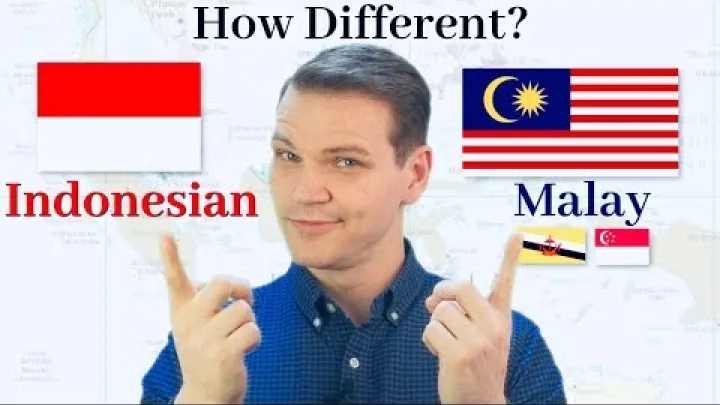
Cross-border media illustrates this: many Indonesians can follow Malaysian news clips or Bruneian variety shows, and Malaysians often understand Indonesian films and songs. Accents and a handful of words differ, but storylines and information remain accessible to general audiences.
Spelling, vocabulary, and register differences
Separate standardization created notable contrasts. Examples include Indonesian uang vs. Malay wang (money), kereta in Malay meaning car while Indonesian uses mobil, and Indonesian sepeda vs. Malay basikal (bicycle). Loanwords reflect different histories: Indonesian kantor (office) from Dutch kantoor; Malay pejabat influenced by broader Malay usage and English administration culture.
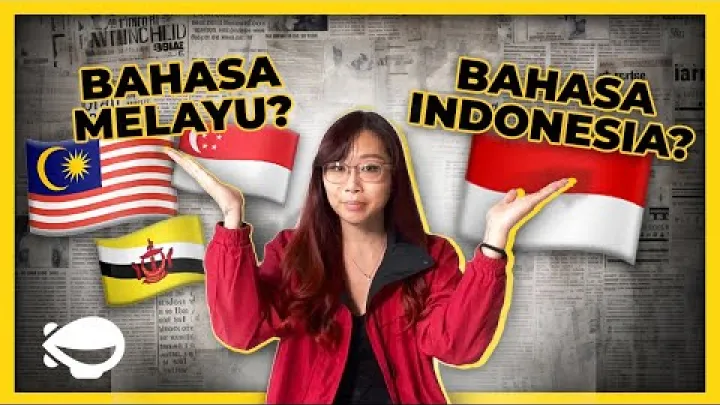
The 1972 spelling agreement promoted convergence (e.g., tj → c, dj → j), making reading across standards easier. Differences remain in formal and informal registers—Indonesian often uses ponsel or telepon genggam, while Malay prefers telefon bimbit. Still, everyday speech remains highly intelligible across borders.
Official languages of Brunei, Indonesia, and Malaysia
Brunei’s official language is Malay. Indonesia’s official language is Indonesian (Bahasa Indonesia). Malaysia’s official language is Malay (Bahasa Malaysia).
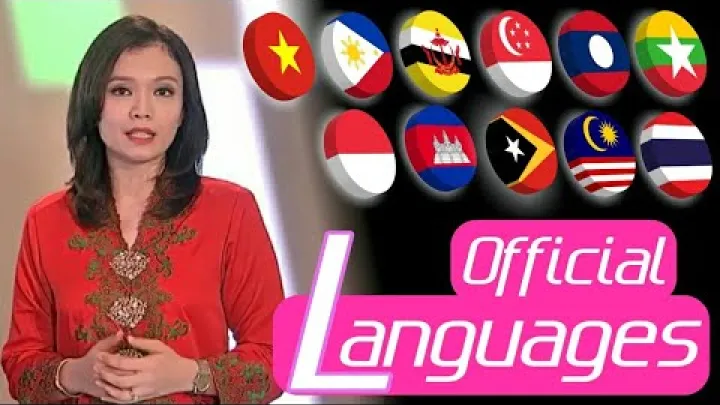
English is widely used in Brunei for business and education, and many people in the region navigate among Malay, Indonesian, and English depending on context. Cross-border work, media, and travel encourage flexible, pragmatic language choices in daily life.
A brief history and timeline of Indonesian
Old Malay functioned as a trade language across island Southeast Asia, carrying religious, legal, and commercial texts between ports. Under colonial administration, Latin script gained prominence, culminating in the 1901 van Ophuijsen orthography, which set early spelling norms for printed materials and schooling.
Nationalists embraced a Malay-based “Indonesian” in the 1928 Youth Pledge, and the 1945 Constitution established it as the language of the new state. The early republic introduced the Soewandi spelling (1947), simplifying forms for mass education. In 1972, the Enhanced Spelling System refined conventions, aligning Indonesian spelling more closely with phonology and improving readability.
These milestones enabled mass literacy campaigns, standardized textbooks, and national media, helping citizens from different islands share information and education. Chronology in brief: Old Malay as lingua franca; 1901 van Ophuijsen orthography; 1928 Youth Pledge; 1945 constitutional status; 1947 spelling reform; 1972 spelling reform—laying the foundation for modern Indonesian used today.
From Old Malay to modern Bahasa Indonesia
Old Malay linked traders and communities across the archipelago, spreading through inscriptions, religious texts, and port commerce. During colonial times, the Latin script became standard for administration and schooling, making the language easier to print and teach at scale.
After independence, Indonesia consolidated grammar and spelling in curriculum, media, and government. A key milestone was the 1972 spelling reform, which streamlined orthography and supported a modern, teachable standard for nationwide education and public communication.
Loanwords and lexical sources
Indonesian draws vocabulary from Sanskrit (religion, culture), Arabic (religion, administration), Dutch and Portuguese (law, trade, governance), English (science, technology), and regional languages (local flora, food, arts). Examples include budaya (culture, Sanskrit), kamar (room, Portuguese), kantor (office, Dutch), and ponsel (mobile phone, English influence).

As new fields emerge, Indonesian adapts by coining terms or adopting international words with local spelling, such as teknologi, internet, and vaksin. This layered lexicon helps the language cover modern science and business while preserving links to history and local knowledge.
Policies and regulations (including 2019 Presidential Regulation No. 63)
Indonesia’s legal framework begins with Article 36 of the 1945 Constitution, which designates Indonesian as the national language. Law No. 24 of 2009 elaborates on its use in official settings, education, media, and product information. Presidential Regulation No. 63 of 2019 provides implementing details for public communication and documentation.

In practice, this means government bodies use Indonesian for laws, decrees, correspondence, and services. Public signage, identity documents, and official portals must be in Indonesian. Companies must provide Indonesian versions of user instructions, labels, and safety information, and agreements with foreign parties require an Indonesian version to ensure legal clarity. A foreign-investment contract, for example, is often prepared in both Indonesian and another language so any dispute can be resolved using a text that courts recognize unequivocally.
These rules emphasize inclusivity and legal certainty: citizens should access essential information in a language understood nationwide, and businesses benefit from consistent documentation standards across provinces.
2019 Presidential Regulation No. 63 on language use
The regulation specifies Indonesian in public services, product information, advertising, and signage, including transport hubs and government facilities. It clarifies that manuals, warranties, and safety notices must be available in Indonesian so consumers across the country can understand them.

It also requires Indonesian versions of agreements involving foreign entities. In a real-world scenario, a joint venture producing medical devices issued bilingual contracts and manuals; when a device recall arose, the Indonesian documents provided clear liability and procedure language, reducing disputes and speeding compliance nationwide.
Constitutional and legal basis
The hierarchy is clear: the 1945 Constitution (Article 36) establishes Indonesian as the national language; Law No. 24/2009 sets domains and obligations; Presidential Regulation No. 63/2019 and related rules implement practical details. Together they guide how institutions communicate and educate in Indonesian.
Government agencies, schools, and companies must use Indonesian for official documents, services, and public information. Enforcement typically involves administrative oversight, procurement requirements, and compliance checks—for example, ensuring product labels and public signage include standardized Indonesian to protect consumers and travelers.
The wider language landscape: 700+ languages in Indonesia
Indonesia is home to more than 700 indigenous languages spanning large communities and small islands. Urbanization, schooling in Indonesian, migration, and media encourage a gradual shift toward Indonesian in public life, while many families maintain local languages at home and in ceremonies.
Balancing multilingual goals means supporting Indonesian for national access while nurturing regional languages as cultural heritage and community identity. Documentation projects produce dictionaries and story collections, schools develop local-language readers, and community radio broadcasts preserve songs and oral histories alongside Indonesian news.
Local governments and the Language Development Agency collaborate with universities and elders to record vocabulary, grammar, and traditional narratives. An intergenerational example is weekend language clubs where grandparents teach children folk tales and everyday conversation, paired with Indonesian-language glossaries so learners bridge both worlds. This combination preserves local speech while ensuring everyone can participate in national education and services.
Language endangerment and preservation efforts
Many smaller languages face pressure from migration, intermarriage, and the dominance of Indonesian in work and school. Researchers and communities assess vitality using internationally inspired criteria such as intergenerational transmission, number of speakers, and domains of use to prioritize revitalization.

The Language Development Agency supports documentation, dictionaries, and school materials, and partners with communities on revitalization. One project might record elders’ stories, publish a bilingual booklet, and host after-school classes. An actionable step any community can take is to create simple picture glossaries in both the local language and Indonesian for use in kindergartens and homes.
Frequently Asked Questions
What is the official language of Indonesia?
Bahasa Indonesia is the official language, as stated in the 1945 Constitution. It uses the Latin alphabet and is the common language of government, education, media, and public services nationwide.
When did Indonesian become the official language?
Indonesian was affirmed as the national language in the 1945 Constitution after independence. The Youth Pledge of 1928 had already declared “Indonesian” as the language of national unity.
Why was Indonesian chosen over Javanese?
Indonesian offered neutrality across ethnic groups and was already a widespread lingua franca. It is also simpler to teach at scale compared with Javanese’s hierarchical speech levels.
Is Indonesian the same as Malay?
They share origins and are largely mutually intelligible. Differences remain in spelling, preferred loanwords, and some vocabulary, but most everyday conversations are understood across borders.
What language is spoken in Jakarta?
Indonesian is the official and working language in administration, schools, and business. On the street, people often use colloquial Indonesian influenced by Betawi and other regional languages.
How many languages are spoken in Indonesia?
Indonesia has more than 700 languages. Indonesian serves as the shared national language while regional languages thrive in homes, culture, and local media.
What percentage of Indonesians speak Indonesian?
Over 97% reported they can speak Indonesian in 2020. Many learned it as a second language through schooling and nationwide media.
What does the 2019 Presidential Regulation No. 63 require?
It mandates Indonesian in public services, signage, and product information, and requires Indonesian versions of agreements involving foreign parties. The goal is clarity, access, and legal certainty.
What are the official languages of Brunei, Indonesia, and Malaysia?
Brunei’s official language is Malay, Indonesia’s is Indonesian, and Malaysia’s is Malay. English is also widely used in Brunei and in regional business and education.
Conclusion
Bahasa Indonesia is the official language of Indonesia and the glue of daily public life. Rooted in the 1928 Youth Pledge and enshrined in the 1945 Constitution, it underpins government, schools, media, business, and public services. Over 97% of Indonesians can speak it, enabling inter-island mobility and shared understanding.
Regulations such as Law No. 24/2009 and Presidential Regulation No. 63/2019 ensure that documents, signage, and consumer information are accessible in Indonesian. At the same time, hundreds of regional languages continue in homes, arts, and local media, reflecting rich cultural diversity. For travelers, students, and professionals, learning basic Indonesian greetings and service phrases makes everyday interactions smoother and more rewarding across the archipelago.
Select area
Create a post
Posting is free and no registration is required.