Indonesia Stock Exchange (IDX): Guide to JCI, Trading, Indices, Listing Rules, and How to Invest

The Indonesia Stock Exchange (IDX) is the country’s unified marketplace for equities and related securities. It connects issuers seeking capital with investors looking for exposure to Southeast Asia’s largest economy. This guide explains how the exchange operates, the role of its indices such as the Jakarta Composite Index (JCI), and what investors should know about access, rules, and timelines. It also covers listing pathways for companies, new initiatives like IDXCarbon, and practical information about the Indonesia Stock Exchange building in Jakarta.
Indonesia Stock Exchange (IDX) overview and quick facts
The Indonesia Stock Exchange serves as the national hub for listing and trading, enabling transparent price discovery and efficient settlement. Understanding who operates the marketplace, which institutions supervise it, and what is traded helps investors and issuers navigate the system with confidence. Readers should note that statistics and rules evolve; when making decisions, always consult the latest official publications from the exchange and regulator.
Beyond equities, IDX supports exchange-traded funds (ETFs) and facilitates access to bonds and other instruments through related platforms and participants. Post-trade functions are handled by specialized infrastructure providers to ensure reliable clearing and custody. The result is a modern, scripless environment that records beneficial ownership and reduces operational risk. The following sections provide definitions, core numbers, and references to confirm current policies and calendars.
What is the Indonesia Stock Exchange (IDX)?
The Indonesia Stock Exchange (IDX) is the country’s unified securities exchange, formed in 2007 through the merger of the Jakarta Stock Exchange and Surabaya Stock Exchange. IDX’s role is to operate the marketplace: it runs the trading system, sets and enforces its listing and trading rules, provides market data, and offers services to issuers and member brokers. Products include equities, exchange-traded funds (ETFs), and access to fixed income via related boards and participants, all within a scripless environment.
Regulation and supervision are carried out by Indonesia’s Financial Services Authority, known locally as Otoritas Jasa Keuangan (OJK). Post-trade is split between two institutions: KPEI acts as the central counterparty that clears trades, and KSEI serves as the central securities depository that maintains beneficial ownership records and supports settlement. Together, IDX, OJK, KPEI, and KSEI aim to deliver fair, orderly, and efficient markets for both domestic and international investors.
Key numbers: listed companies, investors, and market capitalization
Indonesia’s equity market has expanded steadily in listings, investor participation, and value. As of December 2024, there were approximately 943 listed companies on IDX. The investor base continued to broaden as digital onboarding and education improved access.

By July 2025, investor accounts exceeded 17 million, and domestic investors contributed roughly two-thirds of recent trading activity. All figures are time-stamped and updated periodically by official sources. For the most current counts and breakdowns, consult IDX Statistics, OJK reports, and monthly summaries published on the exchange’s website. Users should also consider currency effects and sector composition when comparing capitalization across markets.
How trading works on IDX
Understanding how orders are matched, what a “lot” means, and when trading sessions occur is essential for accurate order placement and risk control. IDX operates a modern order-driven market with continuous trading and auction phases for opening and closing, supported by safeguards that manage volatility. Settlement occurs through tightly integrated clearing and depository systems designed for reliability and transparency.
Investors should confirm the current trading calendar, lot size, and price band rules before placing orders, because these parameters can be adjusted by the exchange. A basic grasp of T+2 settlement, the role of the central counterparty (KPEI), and how assets are held at KSEI will help reduce operational surprises. The following sections break down structure, sessions, and protections with simple examples.
Market structure, lot size, and settlement cycle
IDX uses an order-driven model where buy and sell orders interact in a central order book, and a matching engine executes trades based on price-time priority. Continuous trading is supplemented by auction phases that discover prices at the start and end of the day. The standard board lot is set at 500 shares per lot (subject to rule changes and pilot programs). This lot size directly affects the minimum trade value required to buy or sell a single lot of a stock.

Trades clear through KPEI on a T+2 basis, meaning that securities and cash settle two business days after the trade date. Securities are fully dematerialized and held in book-entry form at KSEI, which records beneficial ownership and supports corporate actions and investor protection mechanisms.
Trading sessions, price limits, and halts
IDX operates two daily trading sessions separated by a midday break, with a pre-opening auction to establish the opening price and a pre-closing auction to help determine the closing price. In the auction phases, orders are collected without immediate matching; a single equilibrium price is then calculated to maximize matched volume, after which continuous trading resumes. This structure supports orderly price discovery at the day’s key transitions.
Price bands and auto-rejection rules limit extreme order prices and help stabilize trading. When volatility spikes, instrument-level trading halts or cooling-off periods may be triggered, temporarily pausing activity to allow information to be processed. Session times and certain measures can change due to holidays, system updates, or special market conditions. Always check the official IDX trading calendar and the latest circulars to confirm session schedules and any temporary adjustments.
Indonesia Stock Exchange index guide: JCI and beyond
Indices summarize market performance in a single number and serve as benchmarks for portfolios and funds. On the Indonesia Stock Exchange, the Jakarta Composite Index (JCI/IHSG) captures the broad market, while families such as LQ45 and IDX30/IDX80 focus on liquidity and size. Factor and Sharia indices further segment the market to align with specific strategies and ethical mandates.
Knowing how these indices are constructed helps investors interpret performance and track exposure. Free-float adjustments, liquidity screens, and periodic rebalances shape membership and weights over time. The sections below explain how the JCI is built, outline key liquid and factor indices, and highlight Sharia-compliant benchmarks and regional comparators used by global allocators.
Jakarta Composite Index (JCI/IHSG) explained
The Jakarta Composite Index is IDX’s broad benchmark, covering all listed stocks that meet eligibility criteria. It is market capitalization weighted with a free-float adjustment so that only shares available for public trading influence a company’s weight. In plain language, a company’s index weight is proportional to (share price × free-float shares outstanding) relative to the sum of the same for all constituents.

The JCI is widely used by investors and media to gauge Indonesia’s equity performance. It reached an all-time high of 8,272.63 on October 8, 2025. Methodology documents outline eligibility screens, corporate action adjustments, and calculation details, including the historic base value set by IDX when the index was launched. As with all indices, periodic reviews ensure that the JCI remains representative of the investable market.
LQ45, IDX30/IDX80, Quality30, and Value30
Beyond the JCI, IDX maintains indices that emphasize liquidity, size, and investment factors. LQ45 includes 45 highly liquid, large-cap stocks and is commonly used for derivatives underlyings and benchmarked funds. IDX30 and IDX80 offer broader, liquid baskets designed to help diversify exposure while maintaining tradability. Factor indices such as Quality30 and Value30 apply rules to select stocks with stronger quality characteristics or more attractive valuations.

Typical selection criteria include turnover and trading frequency, minimum free-float percentage, market capitalization thresholds, and financial metrics related to profitability, leverage, and stability. Rebalances usually occur on a periodic schedule, commonly semiannually (for example, in February and August), with interim reviews possible when required. Investors should review the latest index handbooks for the exact screening formulas and timelines.
Sharia indices (ISSI, JII) and regional benchmarks
Indonesia’s Sharia indices help investors align portfolios with Islamic finance principles. The Indonesia Sharia Stock Index (ISSI) represents the broad universe of Sharia-compliant stocks, while the Jakarta Islamic Index (JII) focuses on a narrower set of 30 leading Sharia-compliant names. Screening excludes prohibited activities and applies financial ratio thresholds to limit leverage and non-compliant income.

At a high level, Sharia screening in Indonesia considers caps on interest-bearing debt and non-halal revenue contributions, with ratios set by relevant Sharia boards and standards. Regional benchmarks, such as the FTSE/ASEAN series, allow cross-market comparisons and are often used by global funds to assess relative performance. Sharia indices support ethical investing mandates for institutional and retail investors seeking compliant exposure to Indonesia’s market.
Listing pathways and requirements
Companies can access Indonesia’s public capital markets through listing boards designed for different stages of corporate development. The Main Board focuses on established issuers with multi-year track records, while the Development Board enables earlier-stage or high-growth companies, including those not yet profitable, to go public under a different set of thresholds. Both routes require strong governance, transparency, and ongoing disclosure.
Understanding float requirements, shareholder distribution, and fees is essential for planning. Audited financials, audit opinion standards, and minimum asset or profit criteria help ensure quality and comparability across issuers. Because rules can evolve, prospective issuers and advisors should always consult the most recent IDX listing regulations, fee schedules, and OJK guidance when preparing documentation.
Main Board vs Development Board
The Main Board is intended for established companies with a multi-year operating history and demonstrated profitability. Typical requirements include at least 36 months of operations, three years of audited financial statements with recent periods carrying unqualified or clean audit opinions, positive operating profits in defined periods, and minimum net tangible assets at a level set by rule (commonly cited at around IDR 100 billion or higher). Governance structures, independent directors, and robust internal controls are expected.

The Development Board offers a pathway for earlier-stage businesses, including those that may not yet be profitable but show strong growth prospects. The financial thresholds are more flexible, though companies must still meet disclosure, governance, and reporting standards. In both boards, OJK and IDX review prospectuses and ongoing filings to ensure investors receive accurate, timely information. Issuers should verify exact criteria and any sector-specific provisions before filing.
Public float, shareholder distribution, and fees
Minimum public float and shareholder count thresholds apply at listing to promote liquidity and fair price discovery. Free float is the portion of shares available for public trading after excluding strategic holdings, insiders, and restricted shares. For example, if a company has 1,000,000 total shares and 600,000 are held by the public, the free-float percentage is 60%; this percentage can influence index eligibility and investor demand.

Listing and annual fees vary by market capitalization, number of shares, or other factors, and are published in IDX fee schedules. Ongoing obligations include periodic financial reports, immediate disclosure of material information, and compliance with corporate governance codes. Because fee tables and thresholds can change, issuers should consult the latest official schedules and consider budgeting for investor relations, audit, legal counsel, and other recurring compliance costs.
Investor access and participation
Both domestic and foreign investors can access the Indonesia Stock Exchange through member brokers and licensed custodians. Market participation has broadened rapidly due to digital onboarding, education programs, and low-cost trading tools. However, rules for account opening, documentation, and taxes differ by investor type and domicile, and some sectors may carry foreign ownership limits or special approvals.
Understanding the Single Investor Identification (SID) system, how beneficial ownership is recorded at KSEI, and the role of OJK in supervising conduct helps investors protect their rights. The sections below outline participation patterns, access channels, and protections available to retail and institutional clients, along with practical notes on currency and settlement.
Domestic vs foreign investor participation
Domestic investors have accounted for the majority of recent trading turnover, supported by growing retail participation and local institutions. Foreign investors typically access IDX through international-capable member brokers and global or local custodians that support KSEI registration. Some industries are subject to foreign ownership caps or additional approvals under Indonesia’s investment framework, so investors should review sector rules before trading.

As examples, media-related activities, certain natural resources segments, and strategic infrastructure can have restrictions or review requirements for foreign ownership. Tax treatment, including withholding tax on dividends and capital gains considerations, varies by investor domicile, and tax treaty benefits may apply under qualifying circumstances. Foreign inflows should also account for currency conversion, settlement funding in Indonesian rupiah, and potential FX transfer procedures set by banking partners.
Investor protection, Single Investor Identification (SID), and supervision
Every investor receives a Single Investor Identification (SID), which is a unique number used to track accounts and holdings across the market. In a typical onboarding flow, a prospective client selects a licensed IDX member broker, completes electronic know-your-customer (e-KYC) procedures, provides identification documents, and is registered with KSEI to obtain an SID and a segregated securities sub-account. KSEI records beneficial ownership, supports corporate action processing, and underpins investor protection mechanisms.

OJK supervises market conduct and enforces regulations across brokers, custodians, and issuers, while IDX monitors trading activity and exchange rule compliance. Retail investors can access complaint channels through their broker, IDX’s customer service, and OJK’s consumer protection portals. Mediation and dispute resolution processes are available for issues such as order handling, settlements, or disclosures. Investors should keep accurate records of orders, confirmations, and statements to support any inquiry.
Regulation, infrastructure, and market integrity
Indonesia’s capital market ecosystem is designed to balance access with safeguards. OJK sets the regulatory framework and supervises participants, while exchange rules and post-trade infrastructure manage operational and counterparty risks. The use of a central counterparty (KPEI) and a central securities depository (KSEI) helps standardize processes and improve resilience.
Technology also plays a central role. IDX’s matching engine, JATS-NextG, supports high-throughput order processing, while co-location and robust data center arrangements help maintain uptime. Market-wide and instrument-level risk controls, combined with straight-through processing, reduce the chance of operational errors and disorderly trading. The next sections detail these roles and controls, along with compliance expectations for issuers.
OJK oversight, and the roles of KPEI and KSEI
OJK is the primary regulator for the capital market. It issues regulations, supervises brokers and custodians, and oversees issuer disclosures. Within this framework, IDX operates the trading venue and enforces exchange rules, while KPEI and KSEI handle post-trade functions. KPEI acts as the central counterparty, novating trades and managing clearing risk through margin and guarantee mechanisms.

KSEI is the central securities depository, maintaining securities in dematerialized form and recording beneficial ownership at the account level. In a typical settlement chain, the investor places an order with a broker, KPEI clears the matched trade, and KSEI settles the securities delivery-versus-payment on T+2. Issuers must meet recurring obligations such as timely financial reporting, immediate disclosure of material information, holding shareholder meetings as required, and maintaining governance standards consistent with exchange rules and OJK regulations.
JATS-NextG, data centers, and risk controls
JATS-NextG is IDX’s matching engine that processes orders using price-time priority and supports auction phases for opening and closing. To enhance resilience, the exchange operates production and disaster recovery (DR) sites and conducts periodic failover tests to validate continuity. Co-location services and connectivity options help members reduce latency while adhering to operational guidelines.

Risk controls include daily price limits, auto-rejection thresholds, instrument-level halts, and margin requirements for leveraged activities. Brokers apply pre-trade risk checks—such as credit limits, fat-finger controls, and price collars—before orders reach the market. Straight-through processing (STP) links front-office order entry with back-office clearing and settlement, reducing manual touchpoints and operational error risk.
IDXCarbon and new market initiatives
Indonesia is developing new markets alongside its equity platform to support sustainability goals and broaden investor participation. IDXCarbon, the official carbon exchange, was launched to enable trading of allowances and offsets under regulatory oversight. Programs related to securities lending and short selling are being phased in carefully to balance market development with investor protection.
These initiatives continue to evolve through pilots, rule updates, and connectivity to registries and international systems. Participants should monitor official announcements, eligible instrument lists, and broker communications to understand access, product specifications, and risk disclosures. The following sections summarize timelines, product categories, and safeguards.
Carbon exchange basics, timeline, and milestones
IDXCarbon launched in September 2023 as Indonesia’s official platform for trading carbon units. It supports two broad product categories: compliance allowances issued under domestic schemes and carbon offsets from qualifying projects. International carbon trading commenced on January 20, 2025, with initial volumes linked to state-owned utility and energy-related programs, reflecting early participation from large institutions aligned with national climate objectives.

Project types seen in early stages included renewable energy, energy efficiency, and land-use initiatives consistent with recognized methodologies. Registry linkages are important for integrity and traceability; eligible units are recorded to prevent double counting and to ensure retirement or transfer is captured accurately. As frameworks mature, more participants and product variants may become available, but users should always confirm current eligibility rules and documentation requirements.
Short-selling program status and eligible securities
Indonesia maintains a cautious approach to short selling. Retail short-selling rollout has been postponed to 2026 to ensure market readiness and investor protection. Where permitted, short selling is limited to designated eligible securities and must be conducted under strict safeguards, typically requiring the borrower to locate and borrow shares before executing the sale.
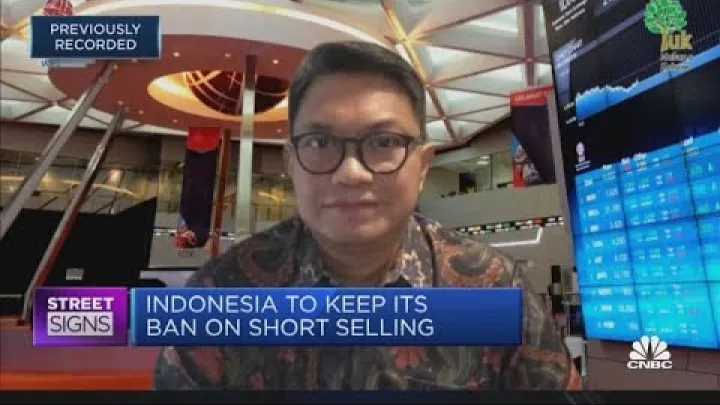
It is important to distinguish covered short selling—where the seller has borrowed or arranged to borrow the shares—from prohibited naked short selling, which involves selling without securing borrow. Securities lending and borrowing frameworks, collateral requirements, and eligible lists are central to compliance. Investors should verify the latest permissions, eligible instruments, and broker-level risk disclosures before pursuing any short-selling strategy.
Recent performance snapshot
Performance in Indonesian equities reflects domestic growth, global risk appetite, and commodity cycles. The market has experienced periods of strength, consolidation, and sector rotation, with liquidity often anchored by large banks and consumer names. Volatility controls and a deepening investor base help maintain orderly trading during rapid moves, even when global conditions are unstable.
When reviewing recent outcomes, use date-stamped references because market levels and leadership change over time. Consider currency effects, earnings trends, and regulatory developments alongside index performance to form a balanced view. The following sections provide historical context on highs, drawdowns, and sector drivers without implying forward-looking predictions.
JCI highs, drawdowns, and volatility context
The Jakarta Composite Index recorded an all-time high of 8,272.63 on October 8, 2025. Over multi-year horizons, cycles have been influenced by global liquidity, commodity prices, and domestic policy. Periods of drawdown were followed by recoveries driven by earnings stabilization, inflows, or sector rotation. Liquidity and risk controls, including price bands and halts, have helped reduce disorderly moves during stress.

When comparing performance, anchor analysis to specific dates and ranges, and avoid extrapolating short-term trends. A balanced approach considers valuation metrics, earnings revisions, and macro variables such as interest rates and exchange rates. Historical mechanisms like auction price discovery and volatility management are designed to support market function rather than predict outcomes.
Sector trends, flows, and macro drivers
Banks and consumer companies tend to hold large index weights, providing depth and liquidity. Commodity-linked names, including energy and materials, can significantly influence cycles given Indonesia’s resource base. Shifts in the balance between foreign and domestic flows have, at times, redirected sector leadership. Index reviews and rebalances can also affect sector weights at the margin as constituents are added or removed.
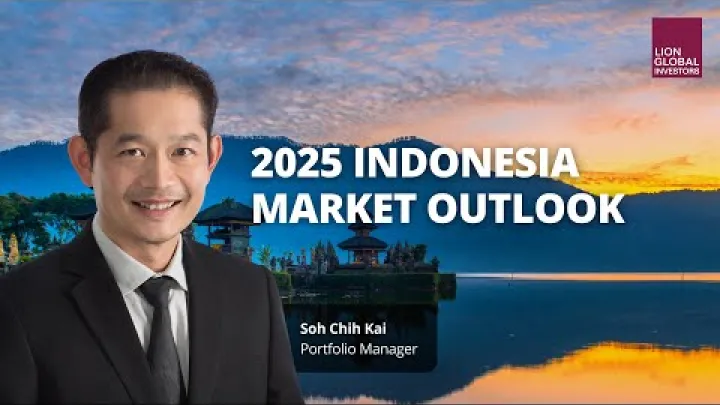
Recent periods saw active primary markets with IPOs across consumer, technology, and resources, illustrating investor demand for diversified growth. Macro drivers to watch include policy changes, interest rate paths, and currency dynamics, all of which shape earnings and valuations. Investors often diversify across sectors and use indices like LQ45 or IDX80 to manage liquidity and execution.
How to invest in the Indonesia Stock Exchange
Investing in Indonesian equities can be straightforward when you understand account setup, trading mechanics, fees, and taxes. Domestic investors typically open accounts with licensed member brokers, while foreign investors work with brokers and custodians that support cross-border onboarding and KSEI registration. In both cases, orders are placed via broker platforms and settle on T+2 through KPEI/KSEI.

Before trading, confirm the current minimum lot size, fee schedules, and any sector-specific foreign ownership restrictions. Align your approach with risk controls such as limit orders, diversification, and currency management for inbound or outbound funds. The following step-by-step outlines highlight essentials for local and foreign investors.
Steps for domestic investors
Start by selecting a licensed IDX member broker that fits your platform, research, and service needs. Complete e-KYC, during which you will provide identification and residency documents, then obtain your Single Investor Identification (SID) and a KSEI securities sub-account. Brokers usually offer online onboarding; ensure that your name and tax details match your bank records to avoid settlement delays.

Fund your account in Indonesian rupiah, review the broker’s commission, exchange fees, taxes, and confirm the current minimum lot size before placing your first order. Use limit orders to control execution price and consider diversifying across sectors or using index funds and ETFs where appropriate. Trades settle on T+2 via KPEI/KSEI. Keep copies of confirmations and monthly statements, and review your broker’s fee schedule periodically, as charges can change.
Steps for foreign investors and key considerations
Foreign investors should choose a broker and custodian that support non-resident onboarding and KSEI registration. Prepare required documents such as passports, proof of address, tax forms, and corporate resolutions where applicable. After compliance checks, your SID and securities account are created, and you can fund in line with Indonesian banking and FX rules. Confirm trading hours relative to your home time zone and plan settlement funding on a T+2 basis.
Review foreign ownership limits at the sector and company level, dividend withholding tax rates, and whether your domicile qualifies for tax treaty benefits. Clarify FX transfer rules, hedging options, and bank requirements for inbound funds. Many foreign investors use limit orders and monitor the official trading calendar for holidays or special sessions to reduce operational risk.
Visiting the Indonesia Stock Exchange building
It consists of Tower 1 and Tower 2 and is commonly referred to as the Indonesia Stock Exchange building. Public areas may include a gallery or visitor center, and access can vary based on scheduled events and security protocols.

Plan your visit by checking the official website for visitor guidance, potential appointment requirements, or group tour policies. Security screening is standard, and valid identification may be required for entry beyond public areas. Nearby transport options include Jakarta MRT’s Istora Mandiri station, as well as taxis and app-based ride services. Allow extra time for traffic during peak hours, and confirm building hours before you go.
Frequently Asked Questions
What is the Indonesia Stock Exchange and what does IDX stand for?
The Indonesia Stock Exchange (IDX) is the country’s unified securities exchange formed in 2007 from the merger of the Jakarta and Surabaya exchanges. It operates under the supervision of OJK and provides trading, listing, and market data services. Clearing and depository functions are handled by KPEI and KSEI. IDX aims to ensure fair, orderly, and efficient markets.
What is the Jakarta Composite Index (JCI) and how is it calculated?
The Jakarta Composite Index (JCI/IHSG) is the broad benchmark that tracks all listed stocks on IDX. It is a market capitalization–weighted index with free-float and other methodology rules applied by IDX. JCI reached an all-time high of 8,272.63 on October 8, 2025. It is widely used to gauge overall market performance.
What are the trading hours of the Indonesia Stock Exchange?
IDX operates on business days with a morning session and an afternoon session separated by a midday break. There is a short pre-opening phase for price discovery before continuous trading begins. Exact times can be updated; always confirm the current schedule on the official IDX website. Trading halts and special sessions may apply during volatile periods.
How can a foreign investor invest in Indonesian stocks on IDX?
Foreign investors typically open an account with an IDX member securities firm that supports foreign clients and KSEI registration. After onboarding and SID creation, funds are transferred in compliance with Indonesian regulations and trades are placed via the broker’s platform. Investors should review foreign ownership limits and tax rules before investing.
What are the listing requirements for Main Board vs. Development Board?
The Main Board targets established issuers with at least 36 months of operations, three years of audited financials (two with unqualified opinions), positive operating profits, and minimum net tangible assets of IDR 100 billion. The Development Board is more flexible, allowing earlier-stage or loss-making issuers with a path to profit. Public float and shareholder distribution thresholds apply to both.
Is short-selling allowed on the Indonesia Stock Exchange?
Retail short-selling has been planned but its implementation has been postponed to 2026 to ensure readiness and investor protection. Professional arrangements can exist under strict rules and with eligible securities. Always verify the latest permitted instruments and risk controls with IDX and your broker.
What is IDXCarbon and how does carbon credit trading work in Indonesia?
IDXCarbon is Indonesia’s official carbon exchange launched in September 2023 to trade allowances and offsets under OJK oversight. International carbon trading began on January 20, 2025 with initial volumes from PLN projects. The platform emphasizes secure, transparent records and alignment with national climate goals.
How many companies are listed on IDX and how big is the market?
As of December 2024, IDX had 943 listed companies and about US$881 billion in market capitalization as of September 2024. Indonesia has become one of the largest markets by capitalization in ASEAN at that time. The investor base exceeded 17 million by July 2025. Figures are updated periodically by IDX and OJK.
Conclusion and next steps
The Indonesia Stock Exchange (IDX) is a modern, regulated marketplace supported by OJK oversight and robust post-trade infrastructure through KPEI and KSEI. Trading combines continuous order matching with auction phases, and settlement occurs on T+2 in a fully dematerialized environment. Indices such as the JCI, LQ45, and Sharia benchmarks provide clear ways to track and segment performance, while listing pathways accommodate both established and growth companies.
Investors—domestic and foreign—can participate via licensed brokers and custodians after obtaining a Single Investor Identification (SID). Practical considerations include confirming trading sessions, understanding lot size and fees, and reviewing sector-specific ownership rules and tax treatment. New initiatives like IDXCarbon and carefully staged short-selling programs reflect ongoing market development. Time-stamped figures and calendars should be verified on official channels, as policies and metrics are updated periodically.
Select area
Create a post
Posting is free and no registration is required.