Indonesia University Ranking: Top Universities in Indonesia (QS 2026, THE 2025)
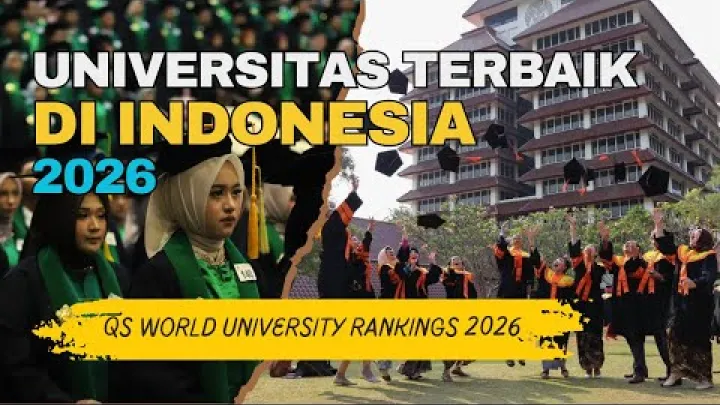
Indonesia university ranking results help students, researchers, and employers compare institutions across different metrics such as research quality, reputation, and graduate outcomes. The most consulted global systems are QS World University Rankings (QS), Times Higher Education (THE), Webometrics, and SCImago Institutions Rankings. In the QS WUR 2026 edition, Universitas Indonesia (UI) ranks #189, Gadjah Mada University (UGM) ranks #224, and Institut Teknologi Bandung (ITB) ranks #255. The sections below explain what these rankings measure, summarize the latest placements, and provide short profiles of leading universities.
Quick summary: top Indonesian universities (QS 2026)
For a fast view of the qs ranking university indonesia landscape, start with the QS World University Rankings 2026. Indonesia’s three highest-placed institutions are UI, UGM, and ITB. Their positions reflect performance on indicators such as academic reputation, citations per faculty, internationalization, and employment outcomes.
The list below shows exact positions and the ranking year to avoid ambiguity. Readers searching for the top 10 university in indonesia qs world ranking can begin with these three, then consult the QS tables for additional institutions in exact or banded positions. Note that other Indonesian universities appear across rank bands (for example, 401–450, 601–650, or 801–1000+), depending on the year and methodology updates.
- Universitas Indonesia (UI) — QS WUR 2026: #189
- Gadjah Mada University (UGM) — QS WUR 2026: #224
- Institut Teknologi Bandung (ITB) — QS WUR 2026: #255
These placements are shaped by QS’s nine-indicator framework, which balances global reputation surveys with research-impact metrics and international collaboration. Because QS also reports banded results outside the very top positions, you will see many Indonesian entries distributed across tiers beyond the top 300. Always check the table year, as scores and methodologies may change slightly over time.
Ranked list and key facts
The QS World University Rankings 2026 places Universitas Indonesia (UI) at #189, Gadjah Mada University (UGM) at #224, and Institut Teknologi Bandung (ITB) at #255. Stating the year next to each rank is important, because universities can shift from one edition to the next when indicators like citations per faculty, employer reputation, or the international research network change.
These results align with broader patterns: UI leads nationally on academic reputation and graduate outcomes, UGM shows breadth across disciplines and strong societal engagement, and ITB excels in engineering and technology. If you are exploring the top 10 university in indonesia qs world ranking, begin with these leaders and continue through the QS 2026 tables, where other Indonesian institutions appear either with exact positions or within rank bands.
How many Indonesian institutions appear in global rankings
In THE World University Rankings 2025, 31 Indonesian institutions are listed, signaling wider participation in international benchmarking and data submission. In QS WUR 2026, Indonesia is represented from the top 200 down to banded tiers beyond 800. Some universities have exact ranks, while others are grouped into bands when precision is not provided for that range.

Coverage varies by system. Webometrics and SCImago include broader sets of institutions due to their inclusion criteria and focus on web presence or research/innovation metrics. When reading tables, distinguish between exact ranks (for example, #255) and banded placements (for example, 801–1000). This distinction matters for interpreting year-over-year changes and for comparing institutions near the boundaries of each band.
Ranking methods explained (QS, THE, Webometrics, SCImago)
Each ranking system emphasizes different dimensions of university performance. Understanding the methodology helps you read results correctly, especially when the same institution appears higher in one system than another. QS blends large-scale reputation surveys with research impact and internationalization. THE builds a composite picture of teaching, research environment, research quality, international outlook, and industry engagement. Webometrics focuses on a university’s web footprint and visibility. SCImago concentrates on research, innovation, and societal impact using publication and patent data.

The table below offers a concise comparison of what each system measures and how to use the results. Use QS and THE for broad, global comparisons across teaching and research quality. Turn to Webometrics to gauge digital reach and openness. Consult SCImago for research productivity, impact, and innovation signals. Because methodologies evolve, always check the edition year cited in any result.
| System | Primary focus | How to use it |
|---|---|---|
| QS WUR | Reputation, research impact, internationalization, outcomes | Compare global standing and subject strengths; examine reputation and citations per faculty |
| THE WUR | Teaching, research environment/quality, international outlook, industry | Assess balance of teaching and research performance across 18 indicators |
| Webometrics | Web presence, visibility, openness, excellence | Gauge digital footprint and open-access activity; not a teaching-quality measure |
| SCImago | Research, innovation, societal impact | Track research output/impact and knowledge transfer patterns |
When comparing Indonesian universities, align your selection with your goals. For studying or hiring, QS and THE provide broad-brush comparisons. For digital engagement or repository openness, Webometrics adds context. For lab strength and innovation pipelines, SCImago is useful. The next sections unpack the criteria in more detail.
QS World University Rankings: criteria and weights
QS uses a nine-indicator framework in its 2026 edition. Core weights include Academic Reputation (30%), Employer Reputation (15%), Citations per Faculty (20%), and Faculty/Student ratio (10%). International Faculty (5%) and International Students (5%) capture cross-border diversity, while Employment Outcomes (5%), International Research Network (5%), and Sustainability (5%) reflect graduate success, collaboration breadth, and institutional commitments to environmental and social priorities.

Because new or reweighted indicators like International Research Network and Sustainability can shift outcomes, rapidly internationalizing universities may move upward even if their publication volume is stable. Indonesian institutions that improve citation density in targeted fields and expand co-authorship networks often see gains in the QS framework. For subject-specific decisions, check QS by Subject tables, which can highlight strengths in areas such as engineering, computer science, or social sciences.
- Academic Reputation: 30%
- Employer Reputation: 15%
- Citations per Faculty: 20%
- Faculty/Student Ratio: 10%
- International Faculty: 5%
- International Students: 5%
- Employment Outcomes: 5%
- International Research Network: 5%
- Sustainability: 5%
THE World University Rankings: criteria and weights
THE World University Rankings groups 18 indicators into five pillars: Teaching, Research Environment, Research Quality, International Outlook, and Industry. For the 2025 edition, indicative weights are approximately Teaching ~29.5%, Research Environment ~29%, Research Quality ~30%, International Outlook ~7.5%, and Industry ~4%. THE applies field-normalized citation measures and analyzes collaboration patterns, including international co-authorship ratios.
These features explain why an institution strong in industry income or teaching environment may perform differently in THE than in QS. Minor annual adjustments occur, so results are edition-specific. When comparing Indonesian universities, examine pillar scores to see where a university excels (for example, teaching environment versus research quality), and compare them with regional peers to understand relative strengths.
Webometrics and SCImago: what they measure
Webometrics emphasizes a university’s web presence and scholarly visibility. Its indicators cover visibility, openness/transparency (often linked to openly accessible outputs), and excellence in highly cited papers. It does not evaluate teaching quality directly. For webometrics university ranking indonesia queries, this system is best used to compare digital footprints, repositories, and the reach of online academic content.
SCImago Institutions Rankings assesses three broad dimensions: Research (output and impact), Innovation (knowledge transfer, patent-related signals), and Societal impact (web and community measures). These results complement QS/THE by highlighting research pipelines and innovation capacity. For Indonesian universities building technology transfer offices or deepening industry collaborations, SCImago trends can be a practical leading indicator.
Profiles of leading universities in Indonesia
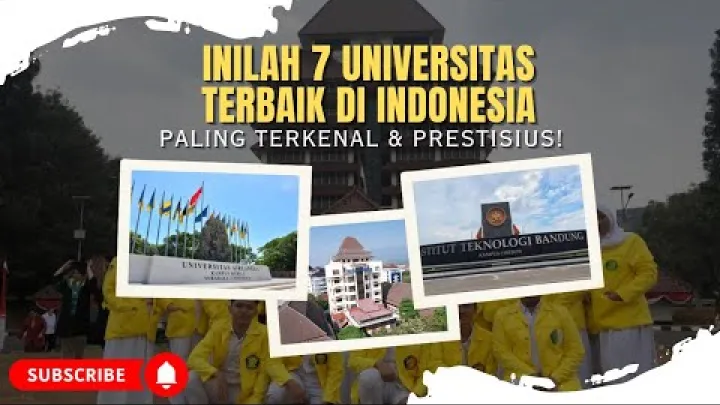
Indonesia’s top universities combine strong national roles with rising global visibility. The institutions below illustrate different strengths across research, teaching, and community engagement. UGM offers breadth across social sciences, engineering, and public policy from its base in Yogyakarta. ITB is known for engineering, computing, and design, with close links to industry in Bandung’s innovation ecosystem. Airlangga University (UNAIR) stands out for health sciences and community-facing research in Surabaya.
When reading profiles, align your priorities with the appropriate metrics. Prospective students might weigh employment outcomes and subject reputation more heavily, while researchers may focus on citation density, co-authorship networks, and lab infrastructure. Institutions can excel in different rankings or subjects, so consider QS/THE by subject, SCImago’s research and innovation lens, and Webometrics’ visibility indicators to assemble a complete picture.
Universitas Indonesia (UI): ranking and strengths
UI ranks #189 in QS WUR 2026 and remains Indonesia’s highest-placed institution in that edition. The university of indonesia ranking narrative is shaped by strong academic reputation, competitive graduate outcomes, and a growing international research network.

UI’s interdisciplinary strengths span health, social sciences, engineering, and business, supported by research centers that collaborate across faculties.
- QS WUR 2026 rank: #189 (national leader)
- Locations: Depok and Jakarta
- Standout indicators: academic reputation, employment outcomes, international research network
- Profile: interdisciplinary research, strong public and industry partnerships
Gadjah Mada University (UGM): ranking and strengths
UGM places #224 in QS WUR 2026 and is known for balanced strengths across social sciences, engineering, and public policy. The university’s public mission is reflected in programs that integrate community service with applied research.
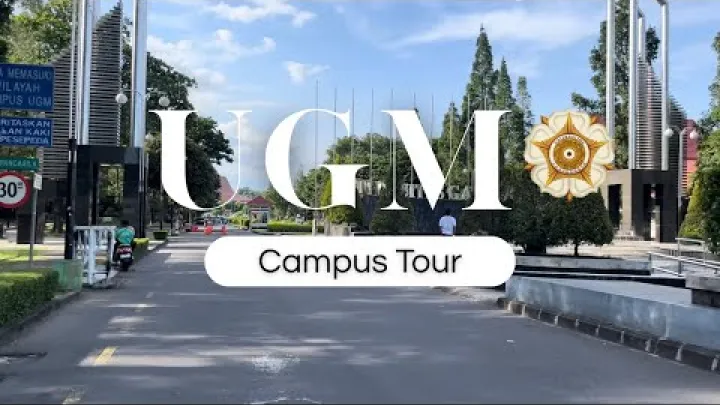
Flagship faculties commonly referenced by applicants include the Faculty of Engineering and the Faculty of Medicine, Public Health, and Nursing. UGM also supports research centers focused on areas such as disaster risk reduction and food security, aligning academic work with national development priorities and international agendas.
Institut Teknologi Bandung (ITB): ranking and strengths
ITB is #255 in QS WUR 2026 and is widely recognized for engineering and technology. Subject-level strengths often highlighted include chemical engineering, electrical and electronic engineering, and computer science-related disciplines. Strong STEM foundations and competitive labs support both theoretical and applied research.

Industry collaboration is a defining feature of ITB’s profile, with ties to energy, telecommunications, and manufacturing. Bandung’s innovation ecosystem—startups, tech communities, and design firms—provides a fertile environment for internships and graduate employability, reinforcing ITB’s position in technology and design fields.
Airlangga University (UNAIR): health sciences focus
UNAIR is recognized for health sciences and medical research, with clinical networks anchored in Surabaya. The university has developing strengths in public health, pharmacy, and biomedical research. In the THE Impact Rankings, UNAIR has been cited among strong global performers, with top-10 recognition in selected SDGs reported in recent editions; for example, results in the 2023–2024 cycle highlight achievements related to SDG 3 (Good Health and Well-Being) and SDG 17 (Partnerships for the Goals). Always confirm the exact placement in the official tables for the specific year.
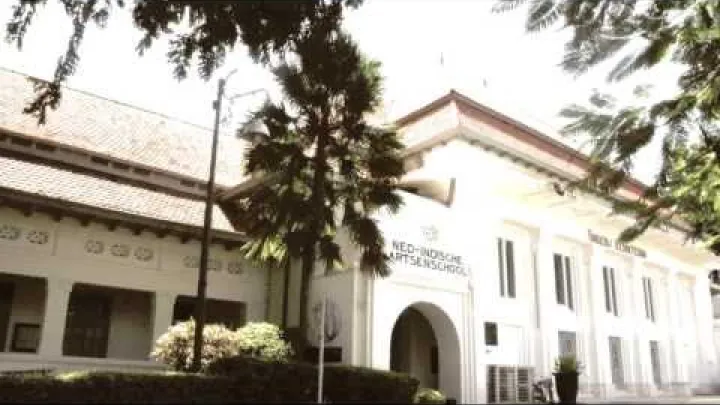
These impact-focused outcomes reflect outreach programs, hospital partnerships, and collaborative research that address regional and global health priorities. For students and researchers seeking a health-oriented environment in Indonesia, UNAIR’s combination of clinical access and community engagement offers a clear thematic choice.
Private universities and specialized strengths
Private universities play an important role in Indonesia’s higher education landscape, often specializing in industry-connected fields such as business, computing, design, and communication. While fewer private institutions appear near the top of global research-led rankings, they feature more prominently in subject tables, regional rankings, and systems that consider innovation or web visibility. Many institutions maintain strong internship pipelines, employer partnerships, and professional certification pathways, which can positively influence outcomes-focused indicators.

Examples include BINUS University, Telkom University, Universitas Pelita Harapan (UPH), President University, and others. These providers invest in experiential learning, capstone projects, and multi-campus delivery in major cities. When reviewing placements, note that some private universities appear in QS WUR with banded positions, many are present in QS by Subject or QS regional tables, and several are visible in Webometrics and SCImago due to strong digital output and applied research. Applicants should compare program-level features—curriculum design, lab facilities, and co-op structures—alongside the rankings to judge overall fit.
BINUS University: ranking and subject highlights
BINUS appears in QS WUR 2026 in the 851–900 band and holds a QS Five-Star rating. Its profile emphasizes Business, Computer Science, and selected engineering areas, supported by strong industry partnerships. Multiple campuses and a wide network of corporate collaborators help deliver internships and project-based learning that map to employment outcomes.

In recent QS by Subject editions, BINUS is regularly listed in areas such as Computer Science & Information Systems and Business & Management, reflecting sustained program development and graduate placement. For prospective students, it is practical to compare the specific department’s curriculum, accreditation status, and internship track record alongside the overall banded position.
Indonesia’s position in ASEAN and globally
Indonesia’s world ranking university indonesia footprint shows breadth across tiers rather than concentration at the very top. In ASEAN comparisons, Indonesia trails Singapore’s elite institutions but demonstrates steady gains in research output, international collaboration, and data participation. The country’s leading entries appear within the top 300 of QS WUR 2026, with many others distributed across banded ranges. THE WUR 2025 provides additional coverage, particularly reflecting teaching and industry-linked performance.
Growth areas include collaborative publications, targeted subject strengths in engineering and health sciences, and expanded international research networks. Challenges remain in citation density for some fields and in scaling doctoral training and lab infrastructure at pace with demand. Nevertheless, the increasing number of ranked institutions points to a more diverse ecosystem and growing visibility across global systems.
Representation in global rankings
THE World University Rankings 2025 lists 31 Indonesian institutions, indicating broader participation and improved data transparency. QS WUR 2026 shows representation from the top 200 through banded positions beyond 800, capturing a wide spread of institutional profiles and missions. This range illustrates how different universities contribute to the national system in distinct ways.
Within ASEAN, Indonesia’s leading entries trail Singapore but show steady improvement and diversification. Drivers include higher publication volumes, stronger international co-authorship, and better alignment of graduate skills with industry needs. Because counts vary by methodology and edition, focus on tiers and trend direction rather than on a single aggregate number.
Impact rankings and sustainability leadership
Indonesian universities perform strongly in the THE Impact Rankings, which assess contributions to the UN Sustainable Development Goals. Airlangga University is frequently highlighted among top performers for health-related and partnership-focused SDGs. In recent editions, including 2024, Indonesian institutions have earned notable placements for SDG 3, SDG 9, SDG 11, and SDG 17, underlining community programs and cross-sector collaboration.
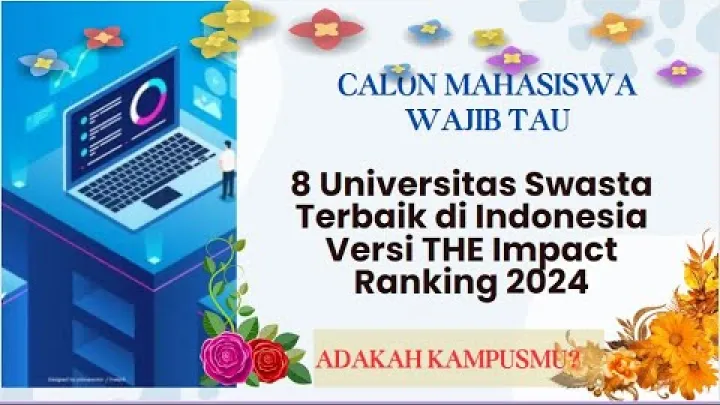
These outcomes complement QS/THE global rankings by emphasizing societal impact and sustainability practice. For readers comparing institutions, reviewing SDG-specific profiles can reveal distinctive strengths that may not be visible in overall rankings—especially for universities with strong local engagement or niche research agendas aligned with community needs.
Frequently Asked Questions
What is the number one university in Indonesia in the QS 2026 ranking?
Universitas Indonesia (UI) is the highest-ranked in Indonesia in QS 2026 at #189 globally. It leads on academic reputation, research output, and graduate outcomes. UI also shows strong industry links and internationalization metrics.
Which universities are the top three in Indonesia according to QS 2026?
The top three are Universitas Indonesia (UI) #189, Gadjah Mada University (UGM) #224, and Institut Teknologi Bandung (ITB) #255. These institutions consistently lead Indonesia across reputation, research, and teaching indicators.
How do QS and THE rankings differ for Indonesian universities?
QS emphasizes reputation, citations per faculty, and internationalization, while THE weights teaching, research environment, research quality, international outlook, and industry income. An institution can rank differently because the weightings and data sources are not the same.
How many Indonesian universities are ranked in THE World University Rankings 2025?
Thirty-one Indonesian institutions are ranked in THE World University Rankings 2025. This is the largest representation in ASEAN for that edition, reflecting growing visibility and data participation.
Is BINUS University included in the QS World University Rankings?
Yes. BINUS University is listed in QS WUR 2026 in the 851–900 band and holds a QS Five-Star rating. It also has recognized strengths in Business, Computer Science, and selected engineering subjects.
Which ranking should I use to compare universities in Indonesia?
Use QS and THE for global comparisons by teaching, research, and reputation; use Webometrics for web visibility; and SCImago for research and innovation metrics. For subject-level choices, consult QS/THE by subject to match your field.
How often are global university rankings updated and when do they change?
QS, THE, Webometrics, and SCImago publish updates annually. Most editions are released mid-year for QS and early autumn for THE, while Webometrics and SCImago also follow yearly cycles with stable release windows.
Conclusion and next steps
Indonesia’s latest global placements show a system with clear leaders and growing depth across tiers. In QS WUR 2026, Universitas Indonesia (#189), Gadjah Mada University (#224), and Institut Teknologi Bandung (#255) anchor the national profile, while many institutions appear in banded positions. THE WUR 2025 lists 31 Indonesian universities, underscoring increased visibility and participation. Alternative systems, including Webometrics and SCImago, complement these views by highlighting web presence, research output, and innovation. Methodologies differ, so read results in context and verify the edition year attached to any rank. As future cycles (for example, indonesia university ranking 2025 and beyond) are released, expect incremental shifts driven by collaboration patterns, citation density, and sustainability initiatives.
Select area
Create a post
Posting is free and no registration is required.