Indonesian Alphabet (Bahasa Indonesia): Letters, Pronunciation, and Spelling

For learners, this means you can often pronounce a new word correctly from its spelling alone. This guide explains the letter names, core vowel and consonant values, and the few digraphs that represent single sounds. You will also see how the 1972 spelling reform simplified older Dutch-style spellings and how the international NATO/ICAO spelling alphabet is used in Indonesia.

Whether you are traveling, studying, or working with Indonesian colleagues, understanding letters and sounds will speed up your reading, listening, and spelling. Use the quick facts first, then explore the detailed sections with examples you can practice aloud.
By the end, you will know why Indonesian is considered highly phonetic, how to handle the letter e, and when to switch from everyday letter names to Alfa–Zulu words in noisy situations.
What is the Indonesian alphabet? Quick facts
The Indonesian alphabet is a straightforward Latin-based system designed for clarity. It contains 26 letters, with five vowels and 21 consonants that behave predictably across different positions in a word. This predictability helps learners move quickly from the alphabet to real words. It also supports clean translation and consistent pronunciation in education, media, and public communication.

Core features and letter count (26 letters, 5 vowels, 21 consonants)
Indonesian uses the 26-letter Latin alphabet A–Z. It has five core vowels (a, i, u, e, o) and 21 consonants. The system is intentionally simple: most letters map to one sound, and the same letter usually keeps the same value regardless of the surrounding letters. This reduces guesswork when reading or spelling new words.
Indonesian also uses a few digraphs—pairs of letters that represent single consonant sounds: ng for /ŋ/, ny for /ɲ/, sy for /ʃ/, and kh for /x/. These digraphs are written as two characters in ordinary spelling, but each pair is pronounced as a single sound. Letters such as q, v, and x occur mostly in loanwords, technical terms, and proper names (for example, Qatar, vaksin, Xerox). In native vocabulary, these letters are relatively rare compared with the rest of the alphabet.
Why Indonesian is highly phonetic
Indonesian is known for its consistent sound-to-letter mapping. There are virtually no silent letters, and most written consonants and vowels are pronounced. Once you learn the fixed values for a few key letters—such as c always being /tʃ/ and g always being a “hard” /g/—you can read with confidence. The main ambiguity is the letter e, which can represent either /e/ (as in meja) or schwa /ə/ (as in besar). Teaching materials sometimes add accents to clarify this (é for /e/ and ê for /ə/), but standard writing uses plain e.

Stress patterns also support predictability. In many words, the stress falls on the penultimate syllable, and the overall stress is light compared with English. While pronunciation can vary slightly across regions, the core rules are stable nationwide and in formal contexts such as news broadcasts or education. This consistency is a practical advantage for learners and travelers who need reliable pronunciation cues.
Full Indonesian alphabet chart and letter names
The alphabet used in Indonesia shares the Latin letters A–Z but assigns stable names and sounds that differ from English in several places. Learning the letter names improves your ability to spell your name, read signs, and follow classroom instruction. The table below lists each letter, its common Indonesian name, a typical sound value, and a simple example word you can practice.
| Letter | Indonesian name | Common sound | Example |
|---|---|---|---|
| A | a | /a/ | anak |
| B | be | /b/ | batu |
| C | ce | /tʃ/ | cari |
| D | de | /d/ | dua |
| E | e | /e/ or /ə/ | meja; besar |
| F | ef | /f/ | faktor |
| G | ge | /g/ (hard) | gula |
| H | ha | /h/ | hutan |
| I | i | /i/ | ikan |
| J | je | /dʒ/ | jalan |
| K | ka | /k/ | kaki |
| L | el | /l/ | lima |
| M | em | /m/ | mata |
| N | en | /n/ | nasi |
| O | o | /o/ | obat |
| P | pe | /p/ | pagi |
| Q | ki | /k/ (loanwords) | Qatar, Quran |
| R | er | tap/trill | roti |
| S | es | /s/ | susu |
| T | te | /t/ | tiga |
| U | u | /u/ | ular |
| V | ve | /v/ or /f/ (loanwords) | visa |
| W | we | /w/ | warna |
| X | eks | /ks/ or /z/ in loans | X-ray |
| Y | ye | /j/ (y-sound) | yakin |
| Z | zet | /z/ | zebra |
Letter names used in Indonesia (cé, ér, etc.)
Standard Indonesian letter names are: a, be, ce, de, e, ef, ge, ha, i, je, ka, el, em, en, o, pe, ki, er, es, te, u, ve, we, eks, ye, zet. In some teaching materials you may see accents (bé, cé, ér) to guide how to pronounce the names. These accents are optional classroom aids; they are not part of normal spelling or official orthography.

Several names differ from English. Q is called ki (not “cue”), V is ve (not “vee”), W is we (not “double u”), Y is ye (not “why”), and Z is zet (not “zee/zed”). X is eks, and C is ce, which helps learners remember that c represents /tʃ/ instead of an English-like /k/ or /s/. Recognizing these name differences makes everyday spelling on the phone or at a service counter much faster.
Basic letter-to-sound guide with examples
Indonesian letters usually keep a single sound. C is /tʃ/ as in church: cara, cinta, cucu. J is /dʒ/: jalan, jari, jujur. G is always a hard /g/: gigi, gula, gado-gado. R is a tap or trill and is pronounced in all positions: roti, warna, kerja. These reliable values are a major reason the system is easy to learn.
Vowels are stable: a = /a/, i = /i/, u = /u/, e = /e/ or /ə/, o = /o/. As a learner, read every letter you see, because Indonesian avoids silent letters. Borrowed names and technical terms may keep unusual clusters (for example, streaming, truk, vaksin), but native patterns remain consistent. Proper names can vary in pronunciation, especially those of foreign origin, so listen to how speakers say a name locally.
Vowels and the “e” distinction
Indonesian vowels are simple and steady, which removes many of the challenges English speakers face. The main point to master is the letter e, which can stand for two sounds. Knowing when to expect /e/ and when to expect schwa /ə/ helps you sound natural and understand fast speech. The other vowels—a, i, u, o—remain stable across syllables and do not diphthongize the way English vowels often do.

e as /e/ vs schwa /ə/ (é and ê in learning materials)
The letter e represents two main sounds: close-mid /e/ and schwa /ə/. Learning resources sometimes mark é for /e/ and ê for /ə/ to remove ambiguity (for example, méja vs bêsar), but in everyday writing both sounds are written with plain e. You will learn which one to use through vocabulary and context.
As a rule of thumb, schwa /ə/ is common in prefixes and unstressed syllables, such as ke-, se-, pe-, meN-, and per- (for example, bekerja, sebesar, membeli). The /e/ value often appears in stressed syllables and many loanwords (meja, telepon, beton). Because Indonesian stress is generally light, focus on vowel quality rather than strong emphasis when you practice.
Stable vowels a, i, u, o
The vowels a, i, u, and o are stable and do not change quality between open and closed syllables. This makes words predictable: kata, makan, ikan, ibu, lucu, botol, and motor keep their clear vowels regardless of position. You do not need to adjust vowel length or add glides as you might in English.
Sequences like ai and au are usually read as straightforward vowel sequences rather than English-style diphthongs. Compare ramai and pulau: pronounce both vowels clearly in sequence. Near-minimal contrasts such as satu vs soto and tali vs tuli help you hear and produce the steady quality of a, i, u, and o. Practicing slow, even timing across syllables will help you keep these vowels consistent.
Key consonants and digraphs
Consonant rules in Indonesian are transparent and learner-friendly. A small set of digraphs covers sounds not written with single letters, and several high-impact consonants have fixed values that differ from English. Mastering c, g, r and the digraphs ng, ngg, ny, sy, and kh removes the biggest uncertainties in reading and pronunciation.
c = /tʃ/, g = hard /g/, rolled r
Indonesian c is always /tʃ/. It never sounds like /k/ or /s/. This rule applies in all positions: cucu, kaca, cocok. G is always a hard /g/ before any vowel: gigi, gado-gado, gembira. You do not need a special rule like English’s “soft g.”
R is typically a tap or trill and is pronounced in all positions: rokok, kereta, warna. In careful or emphatic speech, some speakers produce a stronger trill, especially in formal contexts or when reading aloud. Because r is never silent, practicing a light tap will already bring your pronunciation closer to the Indonesian norm.
ng, ngg, ny, sy, kh explained
Indonesian writes several single sounds with two letters. ng represents /ŋ/ as in nyaring, ngopi, and mangga. When the nasal is followed by a hard g, it is written ngg for /ŋg/, as in nggak and tunggu. ny represents /ɲ/ as in nyamuk and banyak. These are digraphs in writing but single consonants in pronunciation.
The digraphs sy (/ʃ/) and kh (/x/) appear mainly in Arabic or Persian loanwords such as syarat, syukur, khusus, and akhir. In terms of syllables, ng and ngg help mark boundaries: singa is si-nga with /ŋ/ starting the second syllable, while pinggir includes /ŋg/. In everyday Indonesian, sy and kh are less frequent than ng and ny, but you will see them regularly in religious, cultural, and formal vocabulary.
Pronunciation and stress patterns
Indonesian speech rhythm is even and clear, with light stress and full articulation of written letters. This predictability makes it easier to decode new words and follow announcements or instructions. Understanding where stress usually falls and how consonants behave at the end of words will strengthen both your listening and your accent.
Penultimate stress rule and schwa exceptions
The default pattern is penultimate stress: many words carry primary stress on the second-to-last syllable, as in ba-ca, ma-kan, ke-luar-ga, and In-do-ne-sia (often with the stress on -ne-). Because Indonesian stress is light compared with English, it will not sound exaggerated. Keeping an even rhythm across syllables helps you sound natural.

Schwa /ə/ is often unstressed and can appear in prefixes and connecting syllables (besar, bekerja, menarik). Affixes sometimes shift the perceived stress: baca → ba-ca, bacakan → ba-ca-kan, and bacai (with -i) can feel like ba-ca-i. Loanwords may preserve original stress, but native patterns remain regular enough that learners quickly internalize them.
No silent letters; final stop articulation
Indonesian has no tradition of silent letters. If a letter is written, it is generally pronounced. This rule helps with accurate spelling and clear enunciation. The letter h is pronounced in many words, including those of Arabic origin such as halal and akhir.

Final stops p, t, and k are unaspirated and may be unreleased at the end of a word (rapat, bak, tepat). You will hear a clean stop without a strong burst of air. The exact degree of release can vary by region and speaking style, but the absence of aspiration is consistent and easy to adopt for learners.
Old vs. new spelling: 1972 EYD reform
Modern Indonesian spelling was standardized in 1972 through the EYD (Ejaan Yang Disempurnakan, “Perfected Spelling”). The reform reduced older Dutch-influenced conventions and aligned Indonesian more closely with contemporary Malay usage in neighboring countries. For learners, this history explains why some street signs, brand names, or older books still show unfamiliar spellings.
Why the reform happened and key changes
The 1972 EYD reform aimed to modernize and simplify Indonesian orthography. Before EYD, many words were written with Dutch-style digraphs such as oe for /u/ and tj for /tʃ/. EYD replaced these with single letters that match actual sounds, making spelling easier to learn and more consistent across Indonesia.
Beyond letter mappings, EYD clarified capitalization, punctuation, and the handling of loanwords. It also supported cross-border readability with Malay in Malaysia, Singapore, and Brunei. For everyday users, the main impact is practical: modern spellings better reflect pronunciation and reduce exceptions that can confuse learners.
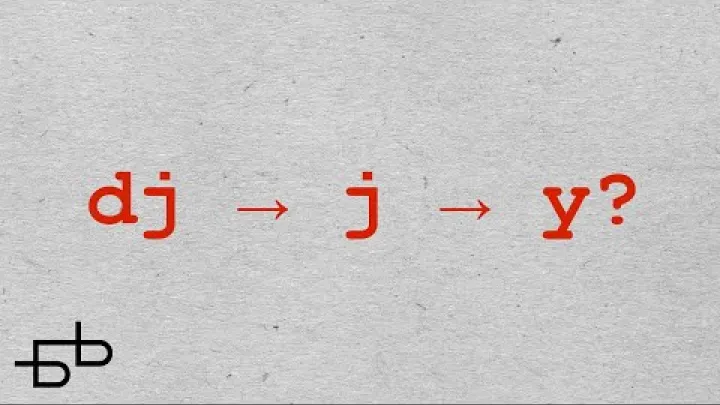
Conversion table (oe→u, tj→c, dj→j, j→y, sj→sy, ch→kh, nj→ny)
The table below shows the most common old-to-new mappings. Recognizing these pairs helps you read historical texts and understand legacy brand names or place names that keep traditional forms.

| Old spelling | New spelling | Example |
|---|---|---|
| oe | u | goeroe → guru; Soerabaja → Surabaya |
| tj | c | tjinta → cinta; Tjepat → Cepat |
| dj | j | djalan → jalan; Djakarta → Jakarta |
| j | y | jang → yang; Soedjadi → Soedyadi → Soeyadi/Soeyadi variants to Y-based forms |
| sj | sy | sjarat → syarat; Sjamsoel → Syamsul |
| ch | kh | Achmad → Ahmad; Rochmat → Rohmat |
| nj | ny | nja → nya; Soenjong → Sunyong/Ny-based modernization |
Many companies and families preserve older spellings for identity and tradition, so you may still encounter forms like Djakarta or Achmad on signs, documents, or logos. Understanding the mappings lets you connect them to their current standard forms instantly.
Indonesian vs Malay: similarities and small differences
Spelling rules are highly aligned, especially after Indonesia’s 1972 reform and subsequent standardization efforts in the region. Most differences are lexical (choice of words) and phonetic (accent), not orthographic.

Shared Latin script and harmonized spelling
Both Indonesian and Malay use the Latin alphabet and share many spelling rules for everyday words. Common vocabulary items such as anak, makan, jalan, and buku are spelled identically and pronounced similarly. This overlap supports cross-border literacy and media consumption throughout Southeast Asia.
Post-1972 reforms increased alignment, which helps learners reuse what they know. When differences arise, they tend to be in word choice or meaning rather than the alphabet itself. For example, spelling remains close even when pronunciation varies slightly from Indonesia to Malaysia or Singapore.
Different letter names (Indonesia vs Malaysia/Singapore/Brunei)
While the core alphabet is the same, spoken letter names differ by country. In Indonesia: Q = ki, V = ve, W = we, Y = ye, Z = zet. In Malaysia, Singapore, and Brunei, English-influenced names are common: Q = kiu, V = vi/vee, W = double-u, Y = wai, Z = zed. These differences matter when spelling names over the phone or in class.

Classroom conventions can vary, especially in international schools, so you may hear both styles. As a practical tip, be ready to switch to the local set of letter names, or clarify by saying “Indonesian names” or “English names” before spelling important information.
NATO “phonetic alphabet” in Indonesian (clarification)
People searching for “phonetic alphabet Indonesia” often mean the NATO/ICAO spelling alphabet (Alfa, Bravo, Charlie, …) used to transmit letters clearly over radio or in noisy settings. This is different from Indonesian phonology and spelling rules described in the rest of this guide. Understanding both senses prevents confusion when studying language versus communicating in aviation, maritime, and emergency services.
What people mean by “phonetic/spelling alphabet”
In linguistics, “phonetic” refers to the sounds of a language and how letters map to those sounds. In radio and aviation, “phonetic alphabet” means the NATO/ICAO list of code words used to spell letters, such as Alfa for A and Bravo for B. Indonesia follows the same international list as other countries.

This radio spelling system is separate from Indonesian letter-sound rules. If you are learning the Bahasa Indonesia alphabet for everyday reading and speaking, focus on the A–Z letters, their names, and their sounds. Use the NATO/ICAO words only when clarity is critical or the audio channel is noisy.
Using Indonesian letter names vs ICAO words (Alfa–Zulu)
In daily life, Indonesians use local letter names to spell words: er–u–de–i for RUDI. In aviation, call centers, or security contexts, speakers switch to the international ICAO words: Romeo–Uniform–Delta–India. These terms are standardized worldwide and are not localized into Indonesian.
If you need the full set for reference, the sequence is: Alfa, Bravo, Charlie, Delta, Echo, Foxtrot, Golf, Hotel, India, Juliett, Kilo, Lima, Mike, November, Oscar, Papa, Quebec, Romeo, Sierra, Tango, Uniform, Victor, Whiskey, X-ray, Yankee, Zulu. Note that Alfa and Juliett have standardized spellings to improve transmission clarity.
Frequently Asked Questions
How many letters are in the Indonesian alphabet?
The Indonesian alphabet uses 26 Latin letters (A–Z). There are 5 vowels (a, i, u, e, o) and 21 consonants. Digraphs like ng, ny, sy, and kh represent single sounds but are written as two letters.
Is Indonesian pronunciation phonetic and consistent?
Yes, Indonesian spelling is highly phonetic and predictable. Most letters map to one sound with few exceptions. The main ambiguity is the letter e, which can be /e/ or schwa /ə/ depending on the word.
What sound does the letter “c” make in Indonesian?
In Indonesian, c always represents /tʃ/ as in “church.” It is never pronounced /k/ or /s/ like in English. This rule is consistent across positions.
What do ng, ny, sy, and kh represent in Indonesian?
They are digraphs for single sounds: ng = /ŋ/, ny = /ɲ/, sy = /ʃ/, and kh = /x/. Kh appears mainly in Arabic loanwords, while the others are common in native vocabulary.
What is the difference between é and ê in Indonesian?
Standard Indonesian does not require accents, but teaching materials may use é for /e/ and ê for schwa /ə/. In regular writing both are written as plain e, with pronunciation learned from context.
What changed in the 1972 Indonesian spelling reform?
The 1972 EYD replaced Dutch-style spellings with simpler forms: oe→u, tj→c, dj→j, j→y, sj→sy, ch→kh, and nj→ny. It also standardized punctuation, capitalization, and loanword treatment.
Does Indonesian have a NATO/ICAO spelling alphabet?
Indonesia uses the international ICAO/NATO spelling alphabet (Alfa, Bravo, Charlie, etc.) in aviation and radio contexts. In everyday spelling, people usually say Indonesian letter names (a, be, ce, and so on).
Do Indonesians roll the letter “r”?
Yes, the Indonesian r is typically a trill or tap. It differs from the English “r” and is pronounced clearly in all positions without being silent.
Conclusion and next steps
Key takeaways on letters and sounds
Indonesian uses 26 Latin letters with consistent values. C is always /tʃ/, G is always hard /g/, and R is a tap or trill. Digraphs such as ng, ny, sy, and kh represent single sounds even though they are written with two letters. The letter e can be /e/ or schwa /ə/ depending on the word.
Stress is generally predictable and light, and there are no silent letters. While some old spellings persist in names and brands, current rules are clear and uniform. This stability lets learners read and pronounce new words accurately from day one.
Suggested next steps for learners
Drill the digraphs ng, ngg, ny, sy, and kh with examples like ngopi, nggak, nyamuk, syarat, and khusus. Pay special attention to e by listening for /e/ vs /ə/ in pairs such as meja vs besar.
Familiarize yourself with the 1972 mappings (oe→u, tj→c, dj→j, and related pairs) so you can recognize older signage and traditional spellings. For clear spelling in noisy environments, use the ICAO list (Alfa–Zulu); in everyday situations, use Indonesian letter names.
Select area
Create a post
Posting is free and no registration is required.