Shenyang Getting There: Flights, Trains & Bus Routes
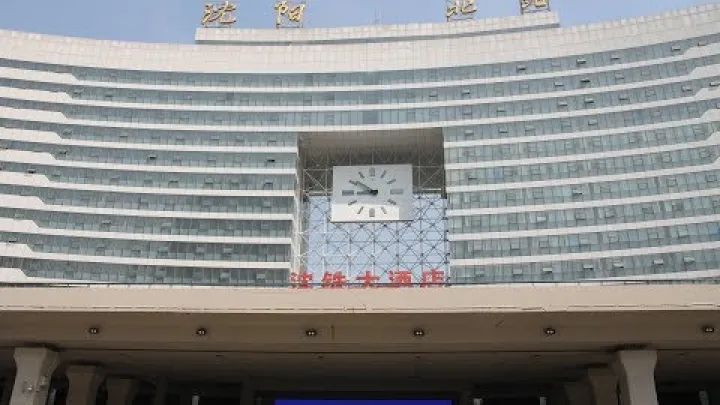
Getting to Shenyang is straightforward when you match the gateway to your distance, budget, and final hotel district. High-speed rail is often the most practical choice from Beijing and other Northeast China cities, while flights become more useful from distant domestic cities and international gateways. Long-distance buses and private cars can fill regional gaps, but they require more attention to road conditions and terminal arrangements. This guide compares the main routes, explains which Shenyang station or airport to choose, and gives a practical booking and arrival checklist.
How to Choose the Best Way to Get to Shenyang
Shenyang is the capital of Liaoning and an important transport point in Northeast China. The best route is not always the one with the shortest time in the air or on the train. Airport transfers, station access, security procedures, luggage, and the distance from your arrival point to your accommodation can change the total journey considerably.
Compare Air, Rail, Bus, Car, and Ferry Connections
Use the following comparison as a starting point. The labels are general planning guidance rather than guarantees for every date or service.
| Mode | Best fit | Door-to-door pattern | Cost and booking | Main limitation |
|---|---|---|---|---|
| Air | Distant domestic and international trips | Flight plus airport access and city transfer | Easy to compare online; price varies widely | Airport procedures and schedule changes |
| High-speed rail | Beijing, Dalian, Harbin, and nearby cities | Usually urban station to urban station | Often a strong value; ticket demand can be high | Several Shenyang stations require careful checking |
| Conventional rail | Overnight travel and lower-cost journeys | Longer journey with possible sleeper accommodation | Lower-cost potential; booking class matters | Longer travel time and variable comfort |
| Long-distance bus | Nearby cities or places without a convenient train | Terminal to terminal, with road traffic exposure | Can be economical; terminal and operator vary | Less predictable comfort and road conditions |
| Private car | Groups, heavy luggage, and multi-stop trips | Flexible door-to-door travel | Convenient for groups but includes tolls and parking | Driving rules, navigation, weather, and fatigue |
Fastest practical option: For many journeys from Beijing, Dalian, Harbin, Changchun, and other Northeast China cities, high-speed rail is a strong benchmark because it connects urban stations without the extra airport journey. Best for long distances: A direct flight to Shenyang Taoxian International Airport can make more sense from cities such as Shanghai, Guangzhou, Shenzhen, or Xi'an, depending on the fare and departure airport.
Lowest-cost potential: Conventional rail, a long-distance bus, or an early-booked flight may be cheaper than the most convenient high-speed train. Compare the complete fare, including airport or station transfers, baggage charges, booking fees, and any overnight accommodation you would otherwise need.
Ferry travel is not a direct way to arrive in Shenyang because the city is inland. A ferry would take you to a coastal gateway, after which you would need a separate rail, bus, flight, or car connection. For most travelers, this adds transfers rather than simplifying the trip.
Match the Route to Your Starting Point and Final District
These are useful route patterns for common starting points, but they should be treated as examples rather than a promise that a named service operates every day.
- Beijing: Compare high-speed rail with flights. Rail often offers a simpler city-to-city journey, especially when your hotel is convenient to a Shenyang railway station.
- Dalian: High-speed rail is usually the first option to investigate for a regional trip. A bus or car may be useful when your starting point is away from central Dalian or when you need several stops.
- Harbin: High-speed rail is commonly more practical than flying for a Northeast China itinerary of this length.
- Shanghai: Compare a direct flight with a rail journey through Beijing or another suitable connection. A flight may reduce travel time, but the airport transfer and check-in process still count.
- Seoul: Look first for a direct flight to Shenyang if one is available for your date. If not, compare a Chinese hub connection with a route through another regional gateway.
- Tokyo: A direct international flight may be convenient when scheduled. A connection through Beijing, Shanghai, or another hub can provide more choices but adds border, baggage, and transfer issues.
Your final district matters as much as the intercity leg. Shenyang Railway Station, Shenyang North Railway Station, and Shenyang South Railway Station are separate arrival points, and Taoxian Airport is south of the central urban area. A slightly slower train to a more convenient station can be better than a faster service that leaves you with a long cross-city transfer.
As a simple rule, choose high-speed rail for a convenient Northeast China city connection, choose air for a genuinely long journey or a useful direct international service, choose a bus for a nearby route with no convenient rail option, and choose a car when flexibility or group travel outweighs the extra driving responsibilities.
Getting to Shenyang by Air
Air travel is the main long-distance option for travelers arriving from far away in China or from another country. The most important planning step is identifying the correct airport and then connecting it with the right city transport for your arrival time.
Use Shenyang Taoxian International Airport for Air Arrivals
Shenyang Taoxian International Airport uses the IATA code SHE and is the principal air gateway for Shenyang and the surrounding Liaoning region. An overview from Wikipedia identifies it as the international airport serving Shenyang, the capital of Liaoning in Northeast China.
The airport is south of central Shenyang. Domestic route examples commonly associated with the city include Beijing, Shanghai, Guangzhou, Shenzhen, and Xi'an, while international service is more limited and focused on selected regional gateways. These examples help you understand the network, but they should not be read as a current frequency list.
Airline schedules, route availability, airport operating arrangements, and terminal assignments can change. Before paying, check the airline or airport's live listing for the exact operating date, departure and arrival terminal, and any route suspension or seasonal change. This is especially important when a search result is supplied by a third-party booking site or when you are building a separate-ticket connection.
For the city transfer, compare Metro Line 2, airport shuttle buses, official taxis, and app-based ride-hailing. The most suitable option depends on your hotel, luggage, traffic, and arrival time, so treat the airport-to-city leg as part of the itinerary rather than an afterthought.
International Arrivals: Direct East Asia Flights or Chinese Hub Connections
Travelers from Seoul, Tokyo, and other East Asian gateways may find a direct flight to SHE on some dates or in some seasons. A direct service is usually the simplest option because it avoids a second airport, an additional domestic check-in, and the risk of a missed separate-ticket connection. Availability is date-sensitive, so search the exact travel date rather than assuming that a route shown in an old guide is still operating.
A common alternative is to fly to a larger Chinese gateway such as Beijing or Shanghai and then continue to Shenyang by domestic flight or high-speed rail. The best choice depends on how the international and domestic legs are ticketed. A protected airline connection may provide more assistance if the first flight is delayed, while separate tickets can offer more flexibility but leave you responsible for a larger buffer and any missed-connection costs.
When comparing a direct flight with a Chinese hub, include the following parts of the journey:
- Arrival formalities and any required immigration or transit procedures.
- Baggage collection, recheck, and the time needed to move between terminals or airports.
- The transfer from the hub airport to a railway station if you continue by train.
- The buffer needed for delays, security checks, and finding the correct boarding area.
- The final transfer from Taoxian Airport or a Shenyang railway station to your accommodation.
Do not assume that a transit label automatically means you can leave the airport or board a domestic train. Before booking a Chinese hub connection, confirm the current entry and transit rules for your nationality with an official Chinese immigration or consular source. A high-speed train from Beijing or Shanghai can be a practical alternative only when you have enough connection time and are legally permitted to enter or transit through China.
Getting to Shenyang by High-Speed and Conventional Rail
Rail is central to travel in Northeast China. It can offer a more direct city-center arrival than air travel, but the station name on the ticket is essential because Shenyang has multiple passenger stations.
Know Which Shenyang Railway Station Your Ticket Uses
The three names most travelers need to distinguish are Shenyang Railway Station or Shenyang Station, Shenyang North Railway Station, and Shenyang South Railway Station. In Chinese, they are commonly shown as 沈阳站, 沈阳北站, and 沈阳南站. They are separate passenger gateways with different locations and service patterns, so a ticket for one station cannot be treated as a ticket for another.
| Ticket name | Chinese search name | Planning implication |
|---|---|---|
| Shenyang Railway Station | 沈阳站 | Check the hotel transfer and the exact services shown for your date |
| Shenyang North Railway Station | 沈阳北站 | Often a useful urban arrival point, but confirm the service and onward connection |
| Shenyang South Railway Station | 沈阳南站 | Allow for a different last-mile journey from the other two stations |
Station choice affects your final taxi, metro, or bus journey and can also affect an onward connection. Public transport maps may show links involving the main stations and Shenyang Metro Line 2, but operating hours, transfers, and station entrances should be checked in a current map or transport application for your arrival time.
When a booking platform displays similar English translations, use the exact station name shown on the ticket as the controlling reference. Do not rely only on labels such as north station, south station, or main station. Save the Chinese name as well as the English name so that you can show it to a driver or use it in a map search.
Beijing to Shenyang by High-Speed Rail
Beijing to Shenyang high-speed rail is one of the strongest typical routes for visitors arriving in Northeast China. Published timetable examples have shown journey times of roughly two and a half to four hours, depending on the train and the stations used. A current route overview from China Airline Travel can be useful for understanding the range, but it is not a substitute for live ticket inventory.
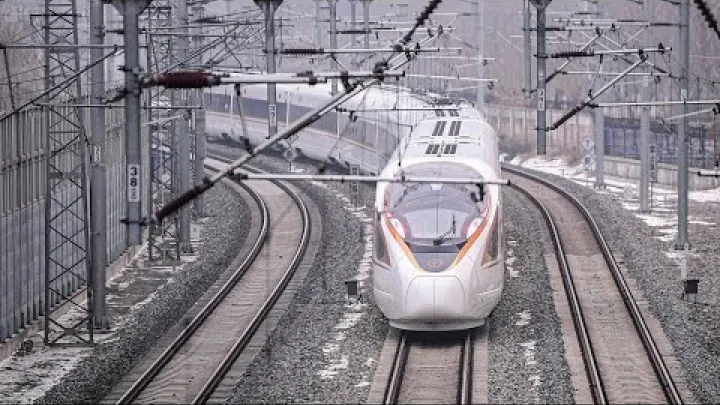
Check both ends of the journey carefully. A train may leave from one Beijing station and arrive at Shenyang North, Shenyang South, or Shenyang Railway Station. The city names in a search result are not enough to plan the transfer. Put the complete departure and arrival station names into your itinerary, hotel directions, and any connection plan.
Rail can compete well with a Beijing flight even when the flight itself is shorter. A flight also involves travel to the airport, a check-in deadline, security screening, boarding, baggage collection, and the transfer from Taoxian Airport into Shenyang. High-speed rail usually brings you to an urban station, which can be more convenient for a central hotel. Air may still win when the airport is closer to your origin, the rail fare is high, or a direct flight has a much better schedule.
Second-class rail is generally the normal lower-priced reserved-seat reference, while first-class provides a higher-priced seating option and premium classes may cost more. Treat these as fare categories rather than fixed prices. The actual fare, seat availability, train type, and change rules should come from the live 12306 result or an authorized booking channel for your date.
Harbin, Dalian, and Other Northeast Rail Connections
Shenyang sits on important rail corridors through Liaoning and the wider Northeast China region. Dalian lies to the south, while Changchun and Harbin are among the major northern connections. This makes Shenyang a useful stop for multi-city itineraries that continue through Liaoning, Jilin, or Heilongjiang.
For Dalian, some high-speed services may take around one and a half hours at their fastest, making rail more attractive than flying for many travelers. For Harbin, published examples commonly show a journey of roughly two to three hours, with the fastest services sometimes close to two hours. These are indicative patterns, not guaranteed times for every date or train.
High-speed rail is often the practical choice on these routes because the stations are integrated with the urban transport network and the journey avoids airport procedures. A conventional train or bus may still suit a traveler who needs a lower fare, a sleeper, a departure from a particular terminal, or a route not served well by high-speed rail.
For every Northeast China connection, check whether the train departs from or arrives at Shenyang Railway Station, Shenyang North Railway Station, or Shenyang South Railway Station. This small detail can affect both your hotel transfer and the time needed to change trains.
Conventional Trains and Rail Ticket Booking
Conventional trains can make sense when you want to travel overnight, reduce the fare, use a sleeper berth, reach a destination outside the high-speed network, or find a seat after high-speed services have sold out. They are slower than high-speed trains, but an overnight sleeper may save a hotel night and can be useful for a flexible multi-city journey.

Compared with high-speed rail, conventional services require a trade-off between price, time, arrival hour, and comfort. A standard seat may be suitable for a shorter daytime trip, while a sleeper can make a longer route more manageable. Sleeper categories and availability vary by train; read the exact class displayed in the booking result instead of assuming that every service offers the same arrangement.
The official 12306 China Railway website is the main place to check current train times, station names, availability, ticket sales, changes, and refunds. International travelers may choose an authorized English-language booking service for payment or interface convenience, but the live result should still be checked against the official railway information where possible.
Use this checklist when booking a conventional or high-speed train:
- Enter the exact travel date and confirm the full departure and arrival station names.
- Use the identity document that you will carry for the journey, and make sure the booking name matches that document.
- Choose the ticket type, seat class, or sleeper category carefully.
- Read the current refund, change, and cancellation conditions before payment.
- Check the connection time if you need to change stations or transfer to a bus or flight.
- Keep the booking confirmation and identity document available during station entry and boarding.
Search the exact travel date on 12306 and confirm both station names before finalizing a rail ticket. Do not build a tight connection around a generic timetable or a search result that does not show the complete station information.
Getting to Shenyang by Long-Distance Bus or Car
Road transport is most useful for nearby regional journeys, origins without a convenient rail station, and travelers who need flexible departure points. For longer Northeast China routes, compare it directly with high-speed rail because a lower headline fare may come with a longer journey and a less central arrival.
Long-Distance Bus Terminals and Nearby Routes
Names reported in Shenyang transport and travel listings include North Station Long Distance Bus Station, South Station Long Distance Bus Station, WuAi Bus Station, and the Liaoning Provincial Rapid Passenger Transport Station. These names should be treated as separate search terms, not as interchangeable labels for one terminal.
The correct bus hub depends on the origin, destination, operator, and current network arrangement. Bus facilities can be relocated, renamed, or reorganized, and a booking platform may display a short English translation that is difficult to match to a map. Confirm the terminal shown on the ticket and allow time to find the correct entrance, ticket counter, and boarding area.
Nearby-city examples that may be useful by road include Fushun, Liaoyang, Benxi, and Tieling. Airport-linked buses and regional passenger services may also connect Shenyang with nearby destinations. Travel China Guide describes airport shuttle services and nearby-city bus options, but its route details should not be treated as a live departure list.
Choose a bus when the departure terminal is close to you, the route is regional, or rail availability is poor. High-speed rail is usually preferable when speed, punctuality, seating comfort, and a simpler experience matter. Buses can be less convenient for international visitors who need clear English information, have large luggage, or are unfamiliar with the terminal layout, so use an official ticket window or a recognized booking channel whenever possible.
Do not confuse a city-center long-distance bus terminal with an airport shuttle stop. They may serve different routes and have different ticketing arrangements. Save the terminal name in Chinese if it is provided and compare it with the address or map location shown by the operator.
When Bus or Car Travel Makes Sense
A bus is a reasonable choice in four situations: your origin is a nearby Liaoning city, the nearest railway station is inconvenient, the bus leaves from a much more useful local point, or the fare is substantially lower and you can accept the longer journey. It can also help with a regional itinerary that does not follow the main high-speed rail corridor.
High-speed rail is generally the stronger option for longer regional trips when you value speed, a more stable timetable, and a predictable seating environment. A private car becomes more attractive for a group with heavy luggage, a family traveling with flexible stops, or an itinerary that includes several places outside the main rail stations.
Driving to Shenyang through the regional expressway network offers flexibility, but calculate more than fuel. Include tolls, parking, navigation, rest stops, traffic, and the time required to return a rental vehicle. Foreign visitors should not assume that an overseas driving licence alone is sufficient. Confirm legal driving eligibility, insurance, rental conditions, and any local documentation requirements before booking a car.
Winter conditions deserve extra planning because snow, ice, reduced visibility, and road congestion can affect a car or bus journey. During winter or other poor-weather periods, check same-day road and operator notices. Keep a buffer for a road journey, and choose rail when a suitable service is available and offers a more dependable alternative.
Use this short decision guide:
- Choose bus: for a nearby city, a convenient local terminal, or a route without a good rail option.
- Choose rail: for a longer Northeast China journey where speed, comfort, and a central arrival matter.
- Choose car: for a group or multi-stop plan after confirming driving eligibility, insurance, weather, and parking.
From the Gateway to Central Shenyang
Arriving in Shenyang is only the first part of the journey. The airport, three main railway stations, and long-distance bus terminals are not the same place, so choose the final transfer according to your accommodation address and arrival time.
Taoxian Airport to Central Shenyang
Reported airport-to-city choices include Shenyang Metro Line 2, airport shuttle buses, official taxis, and app-based ride-hailing. The airport is south of central Shenyang, and the best option changes with traffic, operating hours, luggage, and the location of your hotel.

| Option | Relative price | Strength | Limitation | Best for |
|---|---|---|---|---|
| Metro Line 2 | Lower-cost potential | Less exposure to road congestion while operating | Stations, transfers, and last service need checking | Light luggage and daytime arrivals |
| Airport shuttle | Usually moderate or low | Simple when your destination is covered | Fixed route and departure times | Covered hotel areas or regional destinations |
| Official taxi | Higher than public transport | Direct transfer with luggage | Traffic and queue times | Hotels away from a convenient metro stop |
| Ride-hailing | Variable | App-based destination and pickup record | Pickup zone and payment setup may be difficult | Travelers who can use the local app |
Metro can be economical and may avoid traffic when the relevant service is operating. A shuttle can be easier when it stops near your accommodation or continues to a nearby city. A taxi or ride-hailing vehicle is more flexible for heavy luggage, multiple passengers, or a hotel that is not close to public transport.
Do not promise yourself a fixed airport-to-city travel time. Road conditions vary, and public transport may require a transfer or a walk from the station. Before a late flight, match the landing time to the last metro and shuttle services shown for that date. If public transport has ended, plan an official taxi or ride-hailing pickup instead of improvising after arrival.
Rail Stations and Bus Terminals to the City
Shenyang Railway Station, Shenyang North Railway Station, Shenyang South Railway Station, and the main long-distance bus terminals connect with the city through some combination of metro, local buses, taxis, and ride-hailing. The best last-mile option depends on the hotel district, luggage, arrival hour, and the current links from that specific gateway.
For a central hotel and manageable luggage, an urban rail connection may be efficient when the station entrance and operating hours suit your arrival. A taxi or app-based car is often simpler after an overnight train, with several bags, or when the accommodation is far from a convenient interchange. A local bus may be economical, but it can be harder to navigate with luggage or without Chinese-language support.
Current maps can show metro connections around the main railway stations, including routes involving Shenyang Metro Line 2. Check the live map rather than relying on a city bus route number from an old guide. Public transport arrangements and station entrances can change even when the station name remains the same.
Use your accommodation's complete address and Chinese name when asking for directions or booking a car. The hotel name alone may be insufficient because similar names can exist in different districts. Keep the address in your phone and in an offline form for use after leaving the station.
Booking and Arrival Checklist
A smooth Shenyang journey usually depends on small details: the correct station, a realistic connection buffer, and a plan for the final transfer. Complete the following checks before departure.
Book Each Leg and Recheck the Details
Use the booking channel that matches the mode. Check flights through the airline or airport's current information, rail through 12306 or an authorized rail platform, and buses through the relevant official station or operator channel. A travel search engine can help compare options, but the final ticket should clearly show the operating carrier, terminal or station, and conditions of travel.
- Confirm the date and time: Check the local departure time, arrival time, and whether the service operates on your exact date.
- Confirm the gateway: For flights, check the airport and terminal. For trains and buses, check the full departure and arrival station or terminal names.
- Check the ticket type: Review seat or sleeper class, baggage conditions, reserved-seat rules, and any restrictions attached to the fare.
- Plan the connection: Include time for immigration, baggage collection, airport transfers, station navigation, security, and a delay buffer. Separate tickets need more protection than one protected itinerary.
- Read payment and change conditions: Check service fees, refund rules, change deadlines, and the payment method accepted by the chosen platform.
- Save the essential information: Keep booking confirmations, passport or identity-document details, Chinese station names, the hotel address, and contact information in both online and offline form.
Compare the complete itinerary rather than the lowest headline fare. A cheap flight can become less attractive after airport transfers and baggage fees. A cheap bus can take much longer than rail. A train arriving at the wrong side of the city can also cost more in time and local transport than a slightly different service.
International travelers should keep the same identity document available throughout the journey that was used for the booking. For a multi-leg trip, make sure the name format is consistent across the airline, railway, hotel, and any transfer reservation.
Late Arrivals, Taxis, and Common Scams
Late flights and overnight trains can arrive after the last metro or shuttle. Make this part of your booking decision: check the expected arrival time against the last public service, then prepare an official fallback. At Taoxian Airport or a railway station, use a marked taxi queue or the designated pickup area shown by the ride-hailing app.
For a taxi, ask for a metered fare and avoid accepting an unsolicited fixed-price offer. For ride-hailing, check that the vehicle, driver, and plate details match the app before entering. Keep the destination written in Chinese, especially the complete hotel address and district, and retain the digital or printed receipt after the trip.
Decline transport offers from people who approach you inside or outside the terminal and avoid unlicensed vehicles. If a driver pressures you to change the agreed destination or payment arrangement, end the trip where it is safe to do so and use an official channel instead. These steps are practical precautions; they do not mean that every taxi journey is unsafe.
If public transport has ended, the safest simple plan is to go to the marked taxi queue or use the app's designated pickup point. Confirm the route and destination before leaving the gateway, and keep your phone charged enough to display the booking and hotel address.
Final Takeaways for Getting to Shenyang
For most travelers, the transport decision is simple once the complete journey is compared. Use high-speed rail for many Beijing, Dalian, Harbin, and other Northeast China routes. Use a flight for long domestic journeys or a convenient direct international service to Shenyang Taoxian International Airport. Consider a bus for nearby regional destinations and a car for groups or multi-stop travel, provided the driving and weather conditions are suitable.
Before you leave, confirm the live schedule, the exact airport, station, or bus terminal, and the transfer to your accommodation. At the end of the journey, match public transport hours to your arrival and use marked taxi queues or app-based pickup when they have ended. With those checks in place, getting to Shenyang can be a reliable first step in exploring Liaoning and Northeast China.
Select area
Create a post
Posting is free and no registration is required.