90 Days Report Thailand (TM.47) Guide: Deadlines, Online Filing, Fines

The 90 days report Thailand requirement, also known as TM.47, is a routine obligation for many foreigners who remain in the country for longer than 90 consecutive days. It confirms your current residential address with Immigration and helps keep your records current. This guide explains who must report, when to file, how the reporting window and grace period work, and the four ways to submit your report.
- Who must report: most Non-Immigrant long-stay categories; under 90 days in Thailand are exempt.
- When to report: due every 90 consecutive days; file from 15 days early to 7 days late.
- How to report: in person, online, registered mail, or through an agent.
- Key forms: TM.47 (report), TM.30 (residence notification), re-entry permit if applicable.
What is the 90-day report in Thailand?
Legal basis and purpose
The 90-day report in Thailand is established under the Immigration Act B.E. 2522 (1979), Section 37. It is an administrative duty that requires certain foreign nationals to confirm their current address with Immigration when they have stayed in Thailand for more than 90 consecutive days. The purpose is to maintain accurate, up-to-date records of where non-citizens are residing, without affecting their underlying immigration status.

This duty is separate from visa validity, visa extensions, re-entry permits, or overstay controls. It applies only when you reach a continuous 90-day stay in Thailand. “Continuous” means each day you are physically present in the country is counted, and the count resets when you leave and re-enter. If you depart before reaching 90 days, you are exempt from filing. If you remain, you must report every 90 days from the latest qualifying trigger.
Who must report and who is exempt
Long-Term Resident (LTR) visa holders follow a different interval, reporting annually. By contrast, tourists and others who leave within 90 days are generally exempt, because they never reach a continuous 90-day presence in the country.

Diplomats, consular officers, and certain government or international organization officials are typically exempt under applicable agreements. Dependents usually report individually, but in practice a guardian or the principal holder may handle submissions for minors. For student and volunteer visas, procedures can vary slightly by province, so it is advisable to confirm the local office’s interpretation of eligibility for online filing and any extra documents. Always cross-check local guidance when your category involves study, internships, or unpaid service.
Deadlines, reporting window, and reset rules
First report, subsequent reports, and the 15-day early to 7-day late window
Your first 90-day report is due 90 days from your entry date or from the date your current permission to stay began, depending on what Immigration records as your relevant start point. After that, you must report every 90 days. Thailand’s immigration rules allow a practical window: you can submit the report up to 15 days before the due date and up to 7 days after it without penalty. Filing within this window helps you avoid fines and ensures continuity of your records.

Think of the time line like this: the due date sits at Day 90 of continuous stay. The early filing window opens on Day 75, and the grace period extends through Day 97. For clarity, here is a simple example timeline you can adapt to your situation:
- Entry day: Day 0 (count begins)
- Early filing window opens: Day 75
- Due date: Day 90
- Grace period ends: Day 97
If you file online, submit with at least 15 days remaining before the due date to allow for processing. If you mail your report, send it earlier to account for postal transit and office handling. Always keep proof of timely submission, such as a postal receipt or an online application confirmation.
How exits and re-entries reset the 90-day clock
When you leave Thailand and then re-enter, the 90-day count resets, even if you have a valid re-entry permit. The new 90-day period starts from your most recent entry stamp. This rule often affects business travelers and frequent flyers who exit and return regularly; their continuous 90-day count may never be reached, and they may therefore never have a report due.

It is important to separate this concept from overstay controls. Overstay rules are tied to the permission-to-stay date in your passport and do not change because of 90-day reporting. You must always observe your permitted stay dates, extend where eligible, and use re-entry permits correctly. The 90-day report is only about confirming your address during longer stays and does not authorize a longer stay by itself.
How to file your 90-day report (four methods)
In-person submission (TM.47)
In-person filing is the most straightforward method if you are new to the process or have had an online submission rejected. You will submit a completed TM.47 form and provide required passport copies at your local Immigration office that has jurisdiction over your registered address. Some offices use appointment systems, and queues can vary by province and season.

Follow this 5-step checklist from arrival to receipt issuance:
- Prepare documents: completed and signed TM.47, copies of passport bio page, current visa/extension page, latest entry stamp, re-entry permit (if any), and previous 90-day receipt if you have one. Bring originals.
- Confirm address alignment: ensure the TM.47 address and contact number match your TM.30 record.
- Go to the correct office: attend the Immigration office responsible for your recorded residence; bring a queue number or an appointment confirmation if required.
- Submit and verify: present documents to the officer; answer any clarifying questions and sign where asked.
- Collect receipt: receive a stamped slip or sticker with the next due date; store it safely and take a photo for your records.
Online submission rules and limits
Thailand’s online 90 days report Thailand system is designed for convenience, but it has specific limits. In many cases, online filing is available only after at least one prior in-person or previously approved report is on record. You should submit online with at least 15 days remaining before your due date to allow 1–2 business days for processing and potential corrections. Keep a copy of the electronic approval receipt, as you may be asked to show it when extending your stay or during checks.

To reduce rejections, carefully match your data to official records. Common pitfalls include name format differences (for example, given name versus family name order), TM.30 address mismatches, and passport number typos. A simple 4-step path works well: prepare your details exactly as shown in your passport and TM.30, submit online with enough lead time, monitor status daily, and download or print the approval receipt as soon as it is issued. If your online submission is rejected, correct the data and resubmit if time allows, or file in person before the deadline.
Registered mail submission
Registered mail offers a practical option if you cannot visit in person and are not eligible to file online. You will send your completed TM.47, the required passport copies, and a self-addressed stamped envelope so the office can return your official receipt. Use a trackable postal service and keep all transaction slips as proof of timely dispatch.

Mail your packet to the correct Immigration office that covers your registered address, and ensure it arrives within the allowed window. Some offices consider the date of receipt, not the postmark, for timeliness, so send early enough to avoid disputes. Confirm the current postal address and any cut-off times directly on the local office website or by phone. When your receipt arrives, verify that the next due date is correct and store it with your records.
Filing through an agent (power of attorney)
An authorized representative can file your 90 days report Thailand on your behalf. This method is useful if you are busy or want help navigating local procedures. Provide a signed power of attorney, copies of your passport pages, and any additional documents requested by your local office. Service fees vary, and reputable agents help reduce clerical errors and wait times.

Requirements can differ by province: some Immigration offices require the original passport, while others accept certified copies paired with a power of attorney. Always confirm local rules in advance, including accepted POA formats and whether an office prefers an appointment. Keep copies of everything your agent submits and request the receipt immediately after approval.
Required documents and data accuracy
TM.47 and passport copies checklist
Accurate documents lead to quick approvals. Prepare a signed TM.47 form and clear copies of your passport pages: bio page, current visa or extension page, latest entry stamp, and re-entry permit page if used. Include your previous 90-day reporting receipt when available. Bring your original passport for verification if filing in person, and keep digital scans stored securely for future use.

Ensure your address and contact number match your TM.30 record exactly. Differences in unit numbers, building names, or district spellings can trigger rejection. The table below shows what is typically mandatory versus optional by filing method; always verify local practices before submission.
| Item | In person | Online | Registered mail | Agent |
|---|---|---|---|---|
| TM.47 (signed) | Mandatory | Mandatory (e-form) | Mandatory | Mandatory |
| Passport bio page copy | Mandatory | Mandatory (upload) | Mandatory | Mandatory |
| Visa/extension page copy | Mandatory | Mandatory (upload) | Mandatory | Mandatory |
| Latest entry stamp copy | Mandatory | Mandatory (upload) | Mandatory | Mandatory |
| Re-entry permit copy (if any) | If applicable | If applicable | If applicable | If applicable |
| Previous 90-day receipt | Recommended | Recommended | Recommended | Recommended |
| TM.30 receipt/reference | Often requested | Data must match | Often requested | Often requested |
| Original passport | Bring | Not required | Not required | Varies by office |
| Power of attorney | Not needed | Not needed | Not needed | Mandatory |
| Self-addressed stamped envelope | Not needed | Not needed | Mandatory | Not needed |
TM.30 residence notification and why it matters
TM.30 is the residence notification that links you to a specific address. However, tenants often need to confirm that this notification was made, because Immigration uses TM.30 to verify the address you list on your TM.47. If you have recently moved or re-entered Thailand, your TM.30 may need to be updated.

Mismatches between TM.30 and TM.47 are one of the most common reasons for rejection, especially for online submissions. If your TM.30 is missing or outdated, ask the property owner to file or update it immediately. In many provinces, you can also self-file or follow up with supporting documents such as a lease, utility bill, or ownership letter. Keep the TM.30 receipt or reference number, and bring it to Immigration if you are asked to prove your address.
Penalties, fines, and immigration consequences
Typical fines for late or missed reports
If you file after the 7-day grace period, a late self-report typically results in a fine of about 2,000 THB. If Immigration or another authority discovers the lapse during a check or at a checkpoint, penalties can be higher, often around 4,000–5,000 THB. These ranges reflect common practice and may differ by location or over time.

Fines and administrative approaches can change, so verify current amounts with your local office, especially if you are near or beyond your deadline. Paying promptly and correcting your records usually resolves the issue, but repeated non-compliance may draw closer scrutiny in future applications or during border checks.
Impact on future extensions and work permits
A poor reporting history can complicate immigration processes beyond the 90-day report itself. When applying for an extension of stay, a work permit, or certain program benefits, officers may ask to see a record of timely reporting. Missing receipts, inconsistent dates, or unexplained gaps can lead to questions and delays.

To avoid problems, keep a secure digital archive of all 90-day receipts, online approvals, and related confirmations. Store scans by date and include your passport number in the file names for quick search. If a receipt is lost, prepare a brief written explanation and bring other evidence of compliance such as online submission confirmations, postal tracking, or stamped approval pages.
Planning and troubleshooting
Common rejection reasons and quick fixes
Many rejections are preventable. Data mismatches lead the list: a surname placed in the given name field, an address that does not match the TM.30 record, or a passport number entered with an extra character. Submitting outside the allowed window, using the wrong local office, and sending scans that are cut off or illegible are also frequent causes.

Use this mini pre-submission checklist: confirm your full name exactly as in your passport’s machine-readable line; verify date formats and birthdate; match the address to TM.30 including unit and district; check the passport number and any prefixes; ensure all pages are signed where required; and review whether you are within the 15-day early to 7-day late window. If you still receive a rejection, correct the specific field noted by the system or officer, and resubmit as soon as possible within the window.
Time buffers and recommended timelines
Building time buffers is the simplest way to avoid fines and stress. Begin preparations 20–30 days before your due date by confirming your TM.30 status, checking your passport copies, and reviewing any local office changes. For online filing, aim to submit when at least 15 days remain, so you have room to address a rejection or data mismatch without missing the deadline.

A sample calendar you can adapt: Day -30 to -20: verify TM.30, assemble documents, and book an appointment if your province uses one. Day -18 to -16: complete the TM.47 draft and cross-check spellings. Day -15: submit online or mail your packet by registered post if using mail. Day -10 to -5: follow up on online status or postal delivery. Day 0: due date; if still pending or unresolved, file in person. Keep spare document copies, and save all confirmations and receipts in a single folder for the next cycle.
Special cases: LTR and Thailand Privilege (Elite)
Annual reporting for LTR visa holders
Long-Term Resident (LTR) visa holders enjoy an annual reporting schedule instead of every 90 days. This lighter frequency reflects the design of the LTR category for highly skilled professionals, wealthy global citizens, and eligible dependents. Reporting may be available at designated service centers or through digital channels, depending on your location and the latest procedures.

When you report, carry your LTR approval evidence, passport, and any instructions from the LTR service unit. Because LTR policies continue to evolve, confirm current intervals and methods close to your due date. If you change address or re-enter Thailand, verify whether additional steps are needed to keep your records aligned.
Concierge support but no exemption for Privilege (Elite)
Thailand Privilege (Elite) membership does not exempt you from the 90-day report. Members still need to confirm their address once a continuous 90-day stay is reached. The good news is that concierge services can help with document preparation, scheduling, and liaison with Immigration, which is helpful for frequent travelers and executives.

In practice, many members see smoother coordination in major hubs such as Bangkok, Phuket, and Chiang Mai, where concierge teams are established. However, fines and compliance rules remain the same for everyone, so keep personal copies of your receipts and monitor your due dates, especially after re-entry or a change of address.
Recent and upcoming changes
TDAC replacing TM.6 and documentation during transition
Screenshots from official systems, passport entry stamps, and airline confirmations can help Immigration verify your most recent entry, which is critical for calculating your next 90-day due date.
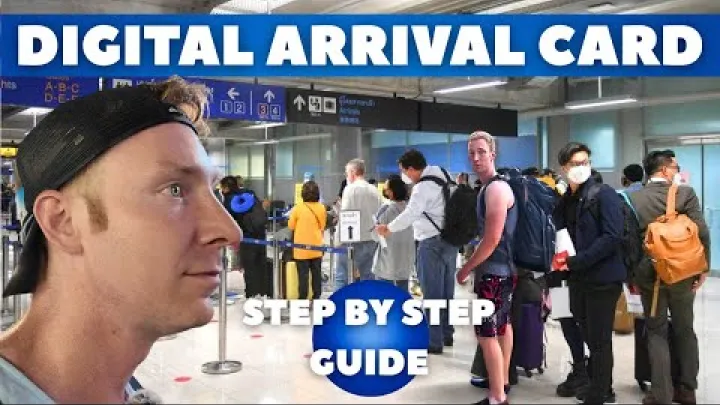
During the transition, some offices may request additional proof of entry, especially if your digital record has not fully synchronized across systems. Retain boarding passes, e-visa confirmations, and any airline itinerary emails for at least one reporting cycle. Presenting clear evidence speeds up verification and reduces the chance of delays or requests for further documentation.
Increasing digitalization and cross-office data checks
Immigration systems are becoming more interconnected across provinces, which means inconsistent records are flagged more easily. A small mismatch in your name format or an outdated TM.30 can trigger an online rejection or a request to update your file before approval. Expect more digital services over time, paired with stricter identity and data matching.

Adopt good privacy and accuracy practices when filing online. Use secure networks, double-check uploaded documents, and avoid storing sensitive files on shared devices. Keep your own master record of entry stamps, re-entry permits, and receipts. When you move or re-enter Thailand, update the TM.30 promptly so it aligns with your next TM.47 submission.
Frequently Asked Questions
What is the 90-day report in Thailand and who must file it?
The 90-day report is a requirement for most foreign nationals staying in Thailand for more than 90 consecutive days to confirm their current address with Immigration. It applies to long-stay visa holders such as Non-Immigrant visas for business, retirement, marriage, or education. Short stays not exceeding 90 days do not need to report. The duty is administrative and separate from visa validity or extensions.
When is my 90-day report due and what is the grace period?
Your first report is due 90 days after your entry date or permission-to-stay date, then every 90 days thereafter. You may file from 15 days before the due date up to 7 days after without penalty. Filing outside this window typically results in a fine. Always track dates from the latest entry if you left and re-entered Thailand.
Can I file the 90-day report online and who is eligible?
Online filing is usually available only after at least one prior in-person (or authorized) report has been recorded. You must submit online with at least 15 days remaining before your due date. Processing typically takes 1–2 days and an electronic receipt should be saved. If the online submission is rejected, you may need to correct data or file in person.
What documents do I need for the 90-day report (TM.47)?
Prepare a completed and signed TM.47, passport bio page copy, current visa or permission-to-stay page, latest entry stamp, any extensions or re-entry permits, and your previous 90-day report receipt. Many offices also ask for the TM.30 receipt from your landlord or accommodation. Keep copies of all submissions and receipts.
What happens if I miss the 90-day report deadline?
Late self-reporting after the 7-day grace period typically incurs a fine of about 2,000 THB. If authorities discover the missed report during checks or at the airport, penalties can be higher (around 4,000–5,000 THB). Repeated non-compliance can negatively affect future extensions or work permit applications.
Does leaving and re-entering Thailand reset the 90-day count?
Yes. Exiting and re-entering Thailand resets the 90-day clock, even if you hold a re-entry permit. The new 90-day period starts from the latest entry stamp. Frequent exits and re-entries can avoid reaching a continuous 90-day stay, and thus avoid 90-day reporting.
Can an agent or another person file my 90-day report for me?
Yes. An authorized representative can file in person with a power of attorney and the required documents. Professional visa agents commonly offer this service for a fee, manage queues, and help avoid errors. Ensure the agent is reputable and licensed where applicable.
Do LTR or Thailand Privilege (Elite) visa holders still need to report?
LTR visa holders report once per year instead of every 90 days. Thailand Privilege (Elite) members must still complete the 90-day report, but concierge services can assist and expedite. Always verify any category-specific updates with Immigration.

Conclusion and next steps
The 90 days report Thailand process is a recurring address confirmation for foreigners who remain in the country for more than 90 consecutive days. It is separate from visa validity, extensions, and re-entry permits, and it resets after each exit and re-entry. Most long-stay Non-Immigrant categories must report, while tourists and others who depart before 90 days are typically exempt. LTR holders report annually, and Thailand Privilege (Elite) members must still comply, often with concierge support.
Plan ahead with the 15-day early to 7-day late window, and choose a filing method that suits your situation: in person, online, registered mail, or through a trusted agent. Keep your TM.30 updated, match your data exactly across all forms, and store every receipt—digital and paper. If you encounter issues, correct data mismatches, confirm you are within the allowed window, and consult the local office for procedure specifics. As digital systems expand and entry documentation transitions to TDAC, retaining clear evidence of arrival and residence will help ensure smooth reporting cycles in the future.
Select area
Create a post
Posting is free and no registration is required.