Thailand Visa (2025): Requirements, E‑Visa, Visa‑Free Rules, TDAC, and Long‑Stay Options

Planning a trip to Thailand in 2025 is simpler than before, thanks to broader visa‑free entry, a global e‑visa platform, and a streamlined digital arrival process. Thailand has also introduced TDAC, a digital arrival card required before you fly. For longer stays, options like the Destination Thailand Visa (DTV), Long‑Term Resident (LTR), and Thailand Privilege visas help remote workers, professionals, and frequent visitors stay legally. This guide consolidates the latest rules and practical steps so you can choose the right path with confidence.
Quick answer: Do you need a visa for Thailand?
In 2025, many nationalities can visit Thailand visa‑free for up to 60 days per entry, with a common option to extend once by 30 days inside Thailand. Some travelers who are not visa‑exempt can use Visa on Arrival (VOA) for short visits of up to 15 days. If neither applies, or if you need a longer or non‑tourist stay, you should apply in advance via the official e‑visa system or at a Thai embassy or consulate.
Regardless of your pathway, Thailand expects your passport to be valid for at least six months on the date of entry and may ask for proof of onward travel, accommodation details, and sufficient funds. As of May 1, 2025, the Thailand Digital Arrival Card (TDAC) is mandatory for foreign entrants and should be submitted online before departure. The sections below explain who qualifies for visa‑free entry, when VOA is available, and when an advance application is required.
Visa‑free entry (60 days) and who qualifies
Thailand’s visa‑exempt policy in 2025 allows eligible passport holders to enter without a visa for up to 60 days per entry. The list includes many countries across the Americas, Europe, and the Asia‑Pacific region, and it has been expanded in recent policy updates. Some nationalities have been temporarily added under promotional measures, while others form part of Thailand’s long‑standing visa‑exempt program. Because lists and temporary inclusions can change, verify your eligibility on the website of the Royal Thai Embassy or Consulate responsible for your area before you book flights.

Most visitors using visa‑exempt entry must present a passport with at least six months of validity, an onward or return ticket within the permitted stay, and a first‑night address in Thailand. Funds may be checked at the border. A single 30‑day extension is commonly available at local immigration offices, allowing a total stay of up to 90 days, but approval remains discretionary. Frequent back‑to‑back visa‑exempt entries or patterns resembling long‑term residence can attract additional questions at the border, so keep documentation that clearly supports tourism or short visits.
Visa on Arrival (15 days): who can use it
Visa on Arrival (VOA) is available to citizens of select countries designated by Thai authorities. It permits a short stay of up to 15 days when arriving at approved points of entry, including major international airports. Eligibility lists, operational checkpoints, and fees can change due to seasonal measures or policy updates, so confirm the latest VOA eligibility before travel. Travelers who qualify should still consider whether a pre‑arranged e‑visa would offer more flexibility or a longer stay.
Typical VOA requirements include a completed VOA form, a passport valid for at least six months, a passport‑sized photo, a confirmed exit ticket within 15 days, details of accommodation, and proof of funds. VOA stays are short and usually not extendable except in narrow, discretionary situations. If you need more than 15 days or plan multiple entries, a tourist visa obtained in advance is usually a better option.
When you must apply in advance (tourist, business, study)
Apply in advance if you are not eligible for visa‑free entry or VOA, if you need a longer stay than your entry option allows, or if your purpose is not tourism. The most common advance visas are Tourist visas (Single‑Entry or Multiple‑Entry), Non‑Immigrant B (business/work), and Non‑Immigrant ED (education). Since 2025, most applicants can use the centralized e‑visa platform to submit documents and receive an electronic decision without surrendering the passport.
Processing times vary by visa type, nationality, and season. Tourist and many non‑immigrant applications typically take about 5–10 working days, but requests for additional documents can extend timelines. Tourist Single‑Entry visas usually allow a 60‑day stay with a possible 30‑day extension; Multiple‑Entry tourist visas are often valid for six months to one year, allowing multiple 60‑day entries during validity. Non‑B applicants should expect employer sponsorship letters, corporate registration documents, and possibly pre‑approval steps, while ED applicants need an acceptance letter from a recognized institution and may be asked to show attendance compliance later.
Thailand visa options at a glance (comparison)
Thailand offers several entry pathways that differ in eligibility, allowed stay, extension options, and re‑entry rules. Visa‑exempt entry is designed for short tourist visits by eligible nationalities and now permits 60 days per entry in 2025. VOA serves a narrower group of nationalities who need a short, quick solution at the airport. Tourist visas obtained in advance provide longer flexibility and are helpful for multiple trips.
The short comparison below highlights practical differences among visa‑exempt entry, VOA, and tourist visas. Use it to identify which option aligns with your trip length, itinerary complexity, and likelihood of re‑entering Thailand during the same travel period. Always verify fees and availability with your local Thai mission or the official e‑visa portal because execution can vary by location and may change without wide notice.
Visa‑exempt vs. VOA vs. Tourist visa (SE/ME)
Understanding how these options compare helps you plan realistic itineraries. Visa‑exempt entry offers the longest visa‑free stay for many nationalities, VOA is a short‑stay fallback for eligible travelers, and tourist visas provide predictable flexibility if you need more time or multiple entries.

The table summarizes core differences. Treat the fees as indicative; confirm locally before you apply or travel.
| Option | Max stay per entry | Extension | Re‑entry | Typical use case | Where to apply | Indicative fee |
|---|---|---|---|---|---|---|
| Visa‑exempt | 60 days | Often +30 days at immigration | Not applicable; new entry on each return | Tourism for eligible nationalities | On arrival | None |
| VOA | 15 days | Generally no | Not applicable; new VOA each time | Short trip when not visa‑exempt | At designated checkpoints | Payable at arrival; varies |
| Tourist SE | 60 days | Often +30 days | Not reusable after exit | One‑off trip requiring certainty | E‑visa or Thai mission | ~1,000 THB equivalent |
| Tourist ME | 60 days each entry | Often +30 days each entry | Yes, within visa validity | Multiple trips over 6–12 months | E‑visa or Thai mission | ~5,000 THB equivalent |
E‑visa availability and typical processing times
Thailand’s e‑visa platform is available globally in 2025 for major categories, including Tourist (Single‑Entry and Multiple‑Entry), Non‑Immigrant B (business/work), and Non‑Immigrant ED (study). The system removes the need for a passport sticker in most cases; decisions are issued electronically and linked to your passport details.

Processing usually takes 5–10 working days, but this can vary by nationality, local workload, and peak travel months. You can typically apply up to 90 days before arrival. Around holidays and busy seasons, expect longer timelines and occasional requests for additional documents. Plan ahead if you must coordinate with employer letters, school enrollment confirmations, or financial records that can take time to obtain.
Typical fees and documents
Fees differ by visa type and the country where you apply. Tourist Single‑Entry visas are commonly priced around the equivalent of 1,000 THB, while Multiple‑Entry tourist visas are often around 5,000 THB. Non‑Immigrant categories such as Non‑B and ED are frequently around 2,000 THB. Local missions or outsourced centers may add service fees and accept only certain payment methods (card, bank draft, exact cash), so check the mission’s instructions before you submit.

Core documents include a passport valid for at least six months, a compliant photo, flight itinerary or exit proof, first‑night accommodation details, and financial evidence. Category‑specific documents are required as well: corporate invitation letters and registrations for Non‑B; enrollment letters and receipts for ED; and travel plans for tourist visas. Ensure that your travel dates align with visa validity and that your funds evidence (bank statements, payslips) clearly matches the applicant’s name.
Thailand e‑Visa (global since 2025): step‑by‑step
The e‑visa portal centralizes most Thai visa applications and lets you apply from anywhere in the world. You create a profile, upload documents, pay online, and receive an electronic decision. Because the system validates document quality and consistency, careful preparation reduces the chance of delays or rework.
The steps below reflect typical tourist and non‑immigrant workflows. Processing timelines can shift during peak periods, and some nationalities may face additional verification. Applying 3–6 weeks before your intended trip is a sensible buffer even though many approvals arrive faster.
Documents to prepare
Prepare these items before you start your application: a passport with 6+ months validity and blank pages, a recent passport‑style photo with a plain background, a flight itinerary or onward travel proof, and accommodation confirmations showing your name and dates. Financial evidence such as recent bank statements or payslips may be required to demonstrate sufficient funds for your trip.

For Non‑B applications, gather an invitation letter on company letterhead, corporate registration documents, and, if applicable, proof of prior coordination for a work permit. For ED visas, you need an acceptance or enrollment letter from a recognized institution and payment receipt. When uploading, follow file rules stated on the portal: common formats are JPEG and PDF, color scans, legible text, and file sizes often capped at a few megabytes per file. Use clear names (for example, Surname_PassportNumber_BankStatement.pdf) to avoid confusion if officers request specific files later.
Application steps and timeline
The process is straightforward once your documents are ready. You should allocate enough time in case officers ask for clarifications or replacements.
- Create an account on the official Thai e‑visa portal and select your country of submission.
- Choose your visa category (Tourist SE/ME, Non‑B, ED, etc.) and complete the online form with accurate personal and travel details.
- Upload the required documents in the specified format and size. Double‑check that names, passport numbers, and dates match your passport.
- Pay the visa fee online using accepted methods. Keep the receipt or confirmation screen.
- Monitor your application status. If requested, provide additional documents or corrections promptly.
- Receive your decision electronically. Print the approval confirmation or save it offline to present with your passport on arrival.
Most applications are processed within 5–10 working days, but apply 3–6 weeks before departure to absorb unexpected delays, public holidays, or additional verification. Remember that in many cases the e‑visa is electronic; you will not receive a physical sticker in your passport.
Common mistakes to avoid
Small errors can slow down an otherwise simple application. A frequent issue is mismatched data across the form and documents, such as name order or passport number typos. Low‑quality scans, cropped pages, or non‑compliant photos can also lead to rejections and re‑uploads. Another pitfall is booking non‑refundable flights before approval; while many visas are issued quickly, timelines can extend during busy seasons.

Use this short pre‑submission checklist to reduce avoidable delays:
- Passport validity is at least six months beyond the date you plan to enter Thailand.
- Names, dates of birth, and passport numbers match across the form and all documents.
- Photos meet size and background requirements and were taken recently.
- Bank statements or payslips clearly show your name and recent transactions.
- Flight and accommodation proofs show dates aligned with your requested stay.
- All files are legible, in color, correctly oriented, and within the size limit.
- You have not purchased non‑refundable tickets before receiving approval.
TDAC: Thailand Digital Arrival Card requirements
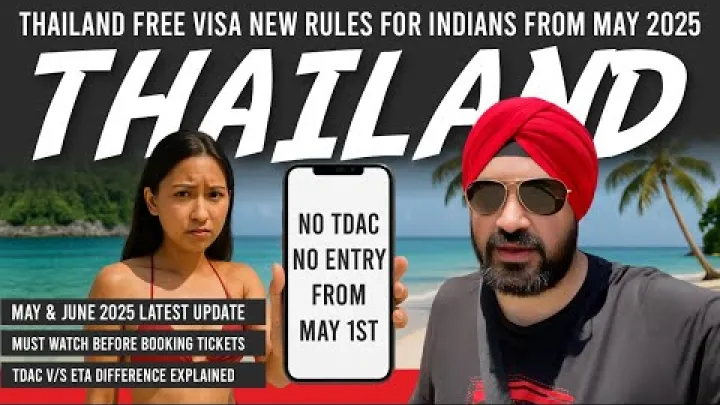
Thailand introduced the Thailand Digital Arrival Card (TDAC) to replace paper arrival forms and speed up border formalities. As of May 1, 2025, TDAC is required for all foreign entrants, regardless of whether you are visa‑exempt, on VOA, or holding an e‑visa. The TDAC links your trip information to your passport data and helps border officers verify your eligibility when you arrive.
TDAC should be submitted online before departure. You will receive a confirmation—often presented as a QR code or reference number—that you should keep accessible. Some airlines may check TDAC completion at check‑in, and immigration officers can scan it on arrival. While early rollout periods may include limited grace provisions or on‑arrival assistance, the safest approach is to submit TDAC a few days before travel and carry proof.
When and how to submit
Submit your TDAC online ideally 72 hours before your scheduled arrival in Thailand. The process takes only a few minutes per traveler and requires basic trip and contact information. Each traveler should complete their own TDAC; parents or guardians can complete TDAC on behalf of minors traveling with them.
Airlines may request TDAC proof at check‑in, particularly during the first months of mandatory use. If you forget to complete it, some airports may allow you to fill it out online before boarding, but do not rely on this. Save the confirmation on your phone and as a printed copy in case your device cannot display the QR code. Keep the TDAC reference handy alongside your passport and e‑visa approval for a smoother arrival.
Information you must provide
TDAC asks for your passport details, flight number, date of arrival, and the address of your first accommodation in Thailand. You will also provide contact information and your purpose of visit. Some travelers may be asked about funds, intended length of stay, and whether they hold travel insurance.

If your plans change after submission—such as a new flight number or hotel—update your TDAC before you travel. Depending on the system design, you can either edit the existing record or submit a new TDAC. In all cases, retain the most recent confirmation and be prepared to show it. Consistency between TDAC, your e‑visa (if any), and your actual travel documents helps avoid delays.
Checks at the border
On arrival, border officers may scan your TDAC and verify that your details match your passport, ticket, and any e‑visa approval. If there are discrepancies—such as different flight information or hotel address—you may be asked to clarify, and in some cases you could be directed to secondary inspection. Having printed confirmations for flights and accommodation can speed up any questions.
If you cannot retrieve your TDAC QR code due to battery loss or connectivity issues, present the printed confirmation or reference number. Officers may also be able to locate your TDAC using your passport details. While airports sometimes provide limited offline fallback options, it is safer to carry both a digital screenshot and a paper copy so you can proceed promptly.
Country‑specific guidance
Entry options in 2025 are broadly consistent across nationalities, but practical steps and documentation standards can vary by country. The sections below summarize typical experiences for travelers from India, the United States, Australia, and Pakistan. Always verify the latest rules on the Royal Thai Embassy or Consulate website responsible for your place of residence, since policies and outsourced service providers can update procedures without much notice.
Where relevant, prepare proof of funds, confirmed accommodation, and onward travel. Complete TDAC in advance and bring your passport with at least six months remaining validity. For longer stays or non‑tourist purposes, expect category‑specific requirements such as employer sponsorship for Non‑B visas or enrollment confirmation for ED visas.
Thailand visa for Indians (eligibility, documents, e‑visa)
Indian passport holders are eligible for visa‑free entry of up to 60 days per entry in 2025, with a commonly available 30‑day extension at a Thai immigration office. For trips longer than this, or for non‑tourist purposes, apply in advance via the e‑visa portal or through a Thai mission. Ensure you complete TDAC before your flight and carry onward travel proof.

For tourist visas, typical documentation includes a passport valid 6+ months, a recent photo, flight itinerary, accommodation proof, and funds (often indicated as at least 10,000 THB per person or 20,000 THB per family). Some applicants may be asked for biometrics or in‑person verification depending on local procedures. For Non‑B and ED categories, include employer or school letters, and be ready for additional checks during peak seasons or if you have limited prior travel history.
Thailand visa for US citizens (visa‑free rules and limits)
US citizens are visa‑exempt for up to 60 days per entry in 2025. You may usually extend once by 30 days at a Thai immigration office, allowing up to 90 days in total per trip. Bring a passport with 6+ months of validity, onward or return travel within your permitted stay, and accommodation details. Submit TDAC before departure.
Frequent, back‑to‑back entries can draw extra questions at the border, especially if your pattern suggests long‑term living rather than tourism. Working in Thailand without proper authorization is not allowed under visa‑exempt status or tourist visas. If you intend to work or stay longer, consider Non‑B, LTR, DTV, or other appropriate pathways.
Thailand visa for Australians (entry options and e‑visa)
Australian passport holders are visa‑exempt for 60 days per entry and can typically extend once by 30 days at immigration. For longer stays or multiple trips, consider a Multiple‑Entry tourist visa via the e‑visa portal. Non‑B (business/work) and ED (study) categories are also accessible online for many applicants.

If you hold an Australian temporary or emergency passport, your eligibility for visa‑exempt entry may differ. In such cases, contact the Thai embassy or consulate before travel or apply for a visa in advance to avoid being denied boarding. Regardless of the passport type, complete TDAC prior to travel and carry standard proofs of funds, accommodation, and onward travel.
Thailand visa for Pakistanis (tourist visa process)
Pakistani citizens generally need a pre‑arranged visa and are not eligible for visa‑free entry or VOA in 2025. Apply through the e‑visa portal if available for your jurisdiction or submit at the Thai embassy or consulate responsible for your residence. Start early and prepare a thorough set of documents, as additional verification is common.
Expect to provide a passport valid 6+ months, photos, travel itinerary, accommodation, and strong financial evidence such as recent bank statements. Some missions require in‑person submission, biometrics, or interviews. Processing can take around 10–15 working days or longer during peak periods, so allow a buffer and avoid non‑refundable bookings until approval is issued.
Extensions, compliance, and overstay rules
Thailand’s immigration rules allow limited in‑country extensions and require compliance with reporting obligations for longer‑term stays. A common case is the 30‑day tourist extension, which adds time to visa‑exempt, VOA (where eligible), or tourist‑visa entries. For those with long‑stay or non‑immigrant permissions, rules on re‑entry permits and 90‑day address reporting apply.
Overstays are taken seriously. Fines accrue daily and can lead to bans from re‑entering Thailand, especially if discovered at a checkpoint rather than voluntarily reported. Understanding the extension process, keeping track of your permission‑to‑stay expiry date, and using re‑entry permits correctly can help you avoid costly mistakes.
30‑day tourist extension process
You can usually apply once for a 30‑day extension of stay at a Thai immigration office before your current permission expires. This option is commonly available for visa‑exempt and tourist entries, though approval is discretionary. Consider applying a few days before your expiry date to allow for processing and any additional document requests.

Bring your passport, entry stamp record (TM.6/entry slip if provided), a completed extension form, a passport photo if requested, an address confirmation, and the fee. The fee is typically 1,900 THB, paid at the counter. Many offices process extensions the same day, often within an hour or two. Officers can ask for proof of funds or accommodation to support your continued stay.
Overstay fines and bans
Thailand imposes an overstay fine of 500 THB per day, capped at 20,000 THB. Paying the fine does not erase the overstay record and may affect future visa applications. Overstays can also lead to detention and removal, particularly if discovered during enforcement rather than self‑reported at a departure checkpoint.
Re‑entry bans differ depending on whether you voluntarily surrender at an airport or are apprehended in the country. Voluntary surrender after significant overstay can result in bans starting from one year, while apprehension can lead to longer bans that may reach five or ten years. Avoid overstaying by monitoring your permission‑to‑stay date and applying for extensions or exiting the country in good time.
Re‑entry permits and 90‑day reporting
If you hold a visa or extension of stay that allows continued validity, a re‑entry permit preserves your remaining permission when you leave and return to Thailand. Without it, your permission usually cancels upon exit. Single re‑entry permits typically cost around 1,000 THB and multiple re‑entry permits about 3,800 THB, payable at immigration or at some international airports before departure. Carry your receipt and check that the re‑entry type matches your plans.

Long‑stay holders must complete 90‑day address reporting while in Thailand. Reporting can often be done in person, by representative, by post, or online where available. Deadlines and grace periods can vary, but a common window is from 15 days before to 7 days after each 90‑day mark. Keep copies of receipts and note that leaving and re‑entering the country resets the 90‑day count.
Long‑stay and work‑related options (DTV, LTR, Elite, Non‑B, ED)
Beyond short visits, Thailand offers several visas for remote workers, investors, skilled professionals, and frequent visitors. The Destination Thailand Visa (DTV) aims at remote work and “Soft Power” activities with flexible entries. The Long‑Term Resident (LTR) program targets high‑income professionals and investors with benefits such as work authorization and fast‑track services in certain cases. Thailand Privilege (formerly Elite) provides membership‑linked, multi‑year stays with concierge benefits.
Traditional routes remain important too. Non‑Immigrant B (work/business) visas continue to rely on employer sponsorship and lead to work permits after entry, while ED visas support study at recognized institutions. Each pathway has specific eligibility criteria, documentation standards, and compliance rules that should be weighed against your goals, budget, and timeline.
Destination Thailand Visa (remote workers, freelancers)
The Destination Thailand Visa (DTV) offers a five‑year multiple‑entry framework. Each entry allows up to 180 days and can be extended once per entry for another 180 days, subject to conditions and fees. The program is designed for remote workers and freelancers who earn from overseas sources, as well as participants in defined “Soft Power” activities, while prohibiting work for Thai‑based clients.

Applicants should be ready to show financial proof—commonly starting from around 500,000 THB—and evidence of remote employment or freelance contracts with non‑Thai entities. Examples include signed contracts, invoices, proof of ongoing engagements, and bank statements showing international income. Because the DTV is new and procedures may evolve, verify acceptable professions and documentation with the Thai mission handling your application.
Long‑Term Resident visa (10‑year residence)
The Long‑Term Resident (LTR) visa targets high‑potential groups such as wealthy global citizens, wealthy pensioners, work‑from‑Thailand professionals, and highly skilled professionals, along with their dependents. It is generally valid for up to ten years and includes benefits like digital work authorization and fast‑track immigration services in certain cases. Applicants must meet income and asset thresholds, maintain qualifying health insurance, and often have a relevant employment or investment profile.
Baseline benchmarks vary by category but commonly include minimum annual income levels, asset or investment holdings, and employer or sector criteria for skilled professionals. As examples, some categories reference annual incomes in the tens of thousands of US dollars, asset thresholds, or targeted industries. Because criteria and documentation can be nuanced, consult the latest official LTR program notes to confirm the exact requirements for your category.
Thailand Privilege (Elite) membership visas
Thailand Privilege (formerly Thailand Elite) offers membership‑linked visas that allow multi‑year stays paired with value‑added services. Packages differ by duration, benefits, and membership fees, with options suitable for frequent visitors who want easier airport procedures and concierge assistance for immigration tasks.

Program benefits and pricing are updated from time to time. Before applying, review the current package list on the official Thailand Privilege channel, compare membership lengths with your travel frequency, and confirm what immigration services are included. As with other long‑stay options, possessing a membership does not replace the need to comply with address reporting and other immigration rules.
Non‑B work and ED study pathways
Non‑Immigrant B (Non‑B) visas are the standard route for employment or business activities. They generally require employer sponsorship, including invitation letters, corporate registrations, and sometimes pre‑approval steps. After entry, employees typically apply for a work permit, and ongoing compliance includes reporting changes in employment or address and maintaining valid health and social security coverage where applicable.

ED visas support study at schools and universities recognized by Thai authorities. Applicants submit acceptance letters, payment receipts, and sometimes course outlines. After arrival, schools may be required to confirm attendance and academic progress for continued stay. In‑country conversion between categories can be limited and requires approval; it is often simpler to apply for the correct category from the start.
Costs, proof of funds, and timing
Budgeting for a Thailand trip or long‑stay plan requires awareness of visa fees, service charges, funds checks, and insurance needs. Fees differ by visa type and submission location, and some missions use outsourced centers that charge additional service fees. Proof of funds is a common requirement at both the visa application stage and the border, with thresholds that may vary by visa type or entry program.
Submitting an accurate application 3–6 weeks before your trip provides a helpful buffer if officers request clarifications or additional documents. Avoid paying for non‑refundable travel before your visa is approved unless you can accept the risk of schedule changes.
Typical fees by visa type
Indicative government fees, which can vary by country of submission and exchange rates, are as follows: Tourist Single‑Entry around 1,000 THB equivalent, Tourist Multiple‑Entry around 5,000 THB equivalent, and many Non‑Immigrant categories (e.g., Non‑B, ED) around 2,000 THB. Re‑entry permits commonly cost about 1,000 THB for single and 3,800 THB for multiple. Some missions and visa centers add service or courier fees and may specify particular payment modes.

VOA fees are paid on arrival in local currency at designated counters and are subject to change or periodic waivers. The 30‑day tourist extension at immigration usually costs 1,900 THB, payable at the office. Because fees can change and local practices differ, confirm the current schedule on the website of the Thai mission handling your application or on the e‑visa portal before you proceed.
Proof of funds and insurance
Proof of funds ensures you can support yourself during your stay. For tourist entries, missions and border officers often cite thresholds around 10,000 THB per person or 20,000 THB per family, shown via recent bank statements or cash if requested at the border. Non‑immigrant categories may require higher amounts or employer sponsorship documents as evidence of financial support.
Medical insurance is strongly recommended for all travelers. Some visas explicitly require insurance with minimum coverage levels, especially long‑stay programs like LTR or for certain age groups. Even when not mandated, carrying travel insurance that covers medical care and unexpected trip changes is a practical risk‑management step.
When to apply to meet travel dates
Apply 3–6 weeks before your intended departure to accommodate the typical 5–10 working day processing time and any rework. Many visas allow applications up to 90 days before arrival, which is helpful if you are planning a complex itinerary or traveling during peak seasons.

Expect slower processing around national holidays in both your country of residence and Thailand, as well as during high‑travel months. Early November to January and the period around April holidays can be especially busy. Monitor your email for requests from the visa office and reply promptly to keep your application on track.
Frequently Asked Questions
Is Thailand visa free for Indians in 2025 and how long can they stay?
Yes, Indian passport holders are eligible for visa‑free entry for up to 60 days per entry. You can extend once inside Thailand by 30 days for a total of up to 90 days, subject to approval. Passport validity of at least 6 months, proof of funds, accommodation, and onward travel may be checked.
Do US citizens need a visa to visit Thailand in 2025?
No, US citizens are visa‑exempt for up to 60 days per entry. A 30‑day extension is possible at a immigration office, allowing up to 90 days total. Ensure passport validity of at least 6 months and complete the TDAC before arrival.
How do I apply for the Thailand e‑visa and how long does it take?
Apply online via the official e‑visa portal, upload required documents, and pay the fee. Processing typically takes 5–10 working days, and you should apply within 90 days before arrival. Supported types include Tourist (SE/ME), Business (Non‑B), and Education (ED).
What is the Thailand Digital Arrival Card (TDAC) and when must I submit it?
TDAC is a mandatory online arrival form for all foreign entrants as of May 1, 2025. Submit it at least 3 days before arrival with passport, flight, and accommodation details. Keep the confirmation for border checks.
Can I extend my 60‑day stay in Thailand and for how long?
Yes, a single 30‑day extension is commonly available for visa‑exempt and tourist entries. Apply at a Thai immigration office before your current permission expires. Approval is discretionary and requires supporting documents and a fee.
What are the overstay penalties and entry bans in Thailand?
The fine is 500 THB per day, capped at 20,000 THB. Voluntary surrender overstay bans start at 1 year for over 90 days, while apprehension can lead to 5–10 year bans. Overstays risk detention, deportation, and future visa difficulties.
What is the Destination Thailand Visa (DTV) and who is eligible?
DTV is a 5‑year, multiple‑entry visa for remote workers, freelancers, and certain “Soft Power” activities. Each entry allows 180 days, extendable by another 180 days, with financial proof (from 500,000 THB) and no Thai‑client work. Apply at Thai embassies or consulates (not e‑visa).
What documents are required for a Thailand tourist visa application?
Typical documents include a passport (6+ months validity), photo, flight itinerary, accommodation proof, and financial evidence (often 10,000 THB per person). Tourist SE/ME visas also require an online form and fee; processing is 5–10 working days.
Conclusion and next steps
Thailand’s 2025 entry framework is clearer and more flexible than in prior years. Many travelers can enter visa‑free for 60 days and often extend by 30 days, while Visa on Arrival remains a short‑stay fallback for select nationalities. For longer visits or specific purposes, the global e‑visa portal supports Tourist, Non‑B, and ED categories with typical processing times of about 5–10 working days, provided your documents are complete and consistent.
Every entrant must complete the Thailand Digital Arrival Card (TDAC) before travel. You should also carry onward travel proof, accommodation details, and sufficient funds in case of inspection at the border. If your plans involve remote work, investment, or multi‑year stays, explore DTV, LTR, and Thailand Privilege options and match them carefully to your profile and goals.
Rules can change by season and nationality, and local missions may have nuanced document or payment requirements. Confirm the latest instructions with the responsible Thai embassy or consulate and apply 3–6 weeks before departure whenever possible. With accurate documents and attention to timing, most travelers find the process straightforward and enjoy a smooth arrival in Thailand.
Select area
Create a post
Posting is free and no registration is required.